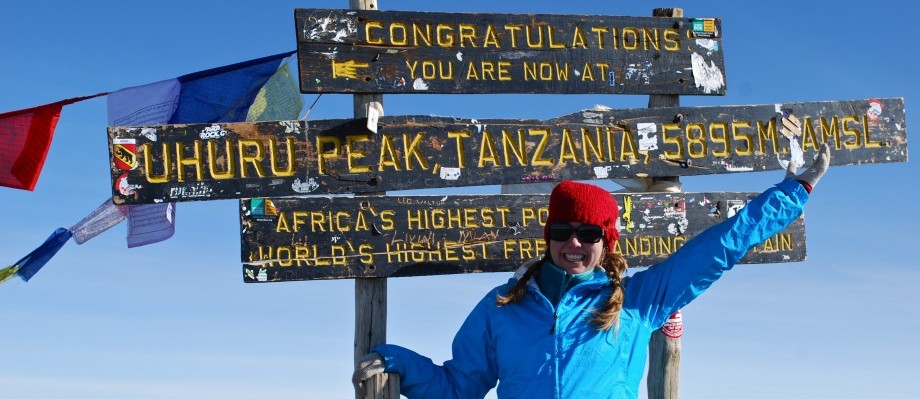
Where in the World
Searching for Gators
While out on the water in Florida, most people are looking to avoid an encounter with the wetlands 8-foot alligators. However, as we board our airboat with Captain Bob and head out into the Indian River County Marshlands in Vero Beach, gators are exactly what we are hoping to find.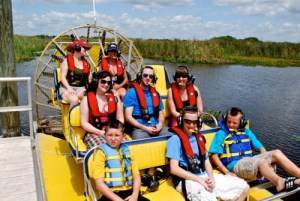
Yukon- Larger Than Life
And the rivers all run God knows where;
There’s a land where the mountains are nameless
There are lives that are erring and aimless,
There are hardships that nobody reckons;
And deaths that just hang by a hair;
There are valleys unpeopled and still;
There’s a land—oh, it beckons and beckons,
And I want to go back—and I will.
~Robert William Service, Spell of the Yukon

It may have been gold that brought Canada’s Yukon Territory to the world’s attention during the Klondike Gold Rush of 1897-1898, but it’s the rich history, vast wilderness and beautiful scenery that keeps intrepid travelers heading into Canada’s North.
As someone who is always cold, driving through the Yukon may not seem like the best vacation for me, but after looking at photos of the beautiful landscape found in the Canadian North, I bundled up, grabbed my camera and set off on a fantastic road trip.


From Skagway, Alaska, we took theWhite Pass & Yukon Route train to Fraser, B.C and then continued by bus into the Yukon Territory.
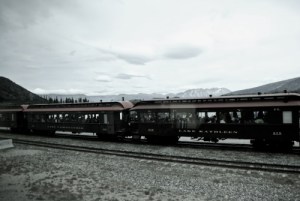
I’ve always been curious about the Canadian North, and its vastness and beauty had me captivated immediately. Our first stop was in the small village of Carcross, Yukon, where the Klondike waterways, scenic drives and the White Pass & Yukon Route Railroad all converge.
Carcross was originally named Caribou Crossing, after the herds of caribou that swam the narrows between Bennett Lake and Nares Lake, but was later shortened to simply “Carcross.”
This historic town is perhaps the most photographed town in the Yukon. 
Buildings dating back as far as 1898 can still be found in use here, like Mathew’s General Store, where you can find everything from moccasins and furs to ice cream and postcards.
Just outside of town lie the barren sand dunes of the world’s smallest desert, the Carcross Desert.
Continuing north along the South Klondike Highway, are the turquoise-green waters of Emerald Lake. The striking rare green colour of this water is created from the sunlight reflecting off of the Mari, a white calcium carbonate that settles on the bottom of the lake. Beyond Emerald Lake stands the Gray Ridge Mountain at an elevation of 6085 ft, making this stop a gorgeous photo opportunity.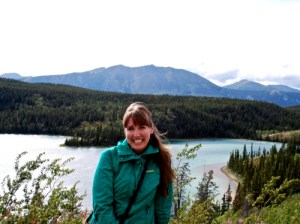
In between each settlement, you find yourself with miles and miles of nature and open road. There’s definitely no rush hour or traffic congestion on the Yukon’s highways!
It’s not until you reach Whitehorse, the territory’s capital, that you actually find yourself around other vehicles and meeting pedestrians on the street. Whitehorse was originally named by the gold miners who thought the rapids at Miles Canyon looked like the manes of white horses running by. The city began as an encampment in the late 1890s as a logical layover for the gold rushers heading north along the Chilkoot Trail to Dawson. The city’s next big population boom came during World War II, as soldiers entered the region to build the Alaska-Canada -“Alcan” Highway.
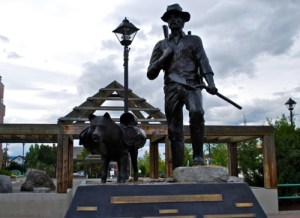
Today, Whitehorse has around 26, 000 people and is the Yukon’s centre for communication, transportation and commerce, and is the home of the territorial government. It’s also here that you will find Walmart, McDonald’s and a truly Canadian landmark; Tim Hortons!

Continuing along the Alcan Highway, we came to the village of Haines Junction. Known to Yukoners as “the Junction,” Haines Junction sits at the corner of Haines Road and the Alaska Highway, nestled at the edge of Kluane National Park and Reserve of Canada. Kluane National Park is part of the largest internationally protected area in the world, made up of four interconnected wilderness parks in Alaska, B.C. and the Yukon, covering 21, 980 sq km of protected wilderness. The park, which hosts the Northcoast Mountain range, ice fields, valleys and lots of plant and animal life, has been designated as a UNESCO World Heritage Site.

Kluane National Park sprawls along the side of the Alcan for miles and miles as we continued our drive through the Yukon’s rugged beauty. Not too far from Haines Junction is Sheep Mountain, located on the shores of Kluane Lake. This area is home to several backpacking adventures and day hikes around the park as well as almost guaranteed sightings of the Dall sheep that call the mountain home. Back on the road, we came across our first Grizzly bear of the trip – such an amazing sight!

After another day on the road, we arrived in Beaver Creek, Yukon, the most western settlement in Canada near the Alaskan border. Depending on who you ask and the time of year, the population here is between 99 and 140 people; a pretty small community, but we were warned that they know how to party!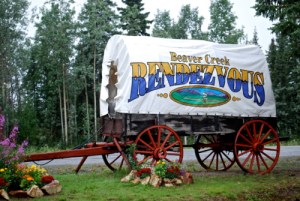
The Beaver Creek Westmark Inn is a cozy, single-bed, no – tv – or- phonekind of lodge reminiscent of childhood days spent at camp. The Inn’s best known for its dinner theatre, “The Beaver Creek Rendezvous,” which is performed nightly during the summer in the dining hall.

While waiting for your dinner of “Beaver Stew” you can make yourself a s’more over the indoor fire pit or enjoy a pint of Yukon beer, whose slogan is “Beer worth Freezin’ For!” (And it is pretty tasty!) After dinner, the Rendezvous begins as guests are entertained by hilarious songs about the Canadian North and the Klondike Gold Rush days. Somehow I ended up being part of the show! (I need to stop smiling at strangers!)

As another day broke, we headed out into the crisp Yukon air to continue our drive to the Alaska border. The signs here all say “Yukon – Larger than Life” and after spending a few days driving through this vast, ruggedly beautiful landscape, it’s definitely been a larger than life experience!
Categories: Blog, North America, Where in the World
Tags: Beaver Creek, Canada, Canada's North, Kluane National Park, Westmark, Whitehorse, Yukon
Leave a comment
The Wizarding World of Harry Potter
Categories: North America, Uncategorized, Where in the World
Leave a comment
Out for a Royal stroll around London
With Royal Wedding fever lingering in the air, London is a great place to visit and take your own “Royal Tour” of the city.
As someone who loves this city, I’ve found myself playing tour guide on several occasions (possibly a future career option if the journalism thing doesn’t work out!)
London is a huge tourist city and there are tons of options for getting out to see the sights. You could take a bus tour to see the highlights, but since many of the major attractions are within walking distance and there are tons of walking tours available, you might as well get out and stretch your legs!
Crystal’s Walking Tour of London begins in Hyde Park. At over 350 acres, it’s one of London’s largest green spaces. Inside the park, you will find Diana Fountain, a memorial to Diana, Princess of Wales, which was opened by the Queen in 2004.

From here, walk through the Marble Arch to Buckingham Palace, where the world just witnessed William and Catherine’s first kiss as a married couple on the balcony. This has served as the Monarch’s London residence since Queen Victoria took the throne, but dates back to 1702 as the Duke of Buckingham’s city home. It’s the largest private house in London with 775 rooms! Weather permitting, you can catch the Changing of the Guard outside Buckingham Palace daily at 11:30 from May-July and on alternating days from August- April.
From the Palace, you can stroll past Canada Gate located at the entrance of Green Park before continuing down the Mall, or wander through St. James Park, past the pond where you’ll be greeted by swans and pelicans.
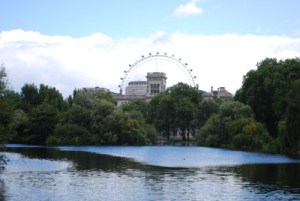
The tree-lined Mall endsat Trafalgar Square. The National Gallery is located behind the notable Nelson’sColumn, which was built to commemorate Admiral Nelson’s naval victory in 1805.
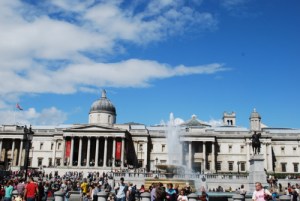
The square also hosts a couple of impressive fountains and a giant ship in a bottle!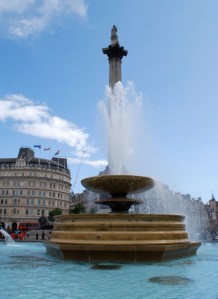
The mayor of London recently banned pigeon food sellers in hopes that this would purge the square of the thousands of pigeons that call it home. So far, he hasn’t had much luck, as tourists continue to feed the birds.
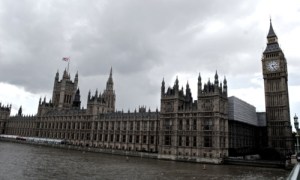
From here you can continue on your tour by heading down Whitehall, which is lined with government buildings. Part way down Whitehall on the West side is 10 Downing Street, where the Prime Minister ‘s residence has been since 1792. At the South end of Whitehall you will find the Houses of Parliament and Big Ben.

The current Parliament Buildings date back to 1840 after a fire destroyed the previous ones. During the summer opening when Parliament doesn’t sit, you can take a tour.
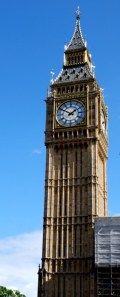
Next to the Houses of Parliament stands Big Ben. The famous old clock can be heard throughout the city as it strikes on the quarter hour. A light in the clock tower signals when the House of Commons is in session.
The beautiful Westminster Abbey where William and Catherine were married is located nearby. The 700-year-old Abbey has been the venue for all but two coronations since William the Conqueror and many of the country’s monarchs and notable celebrities were buried here.
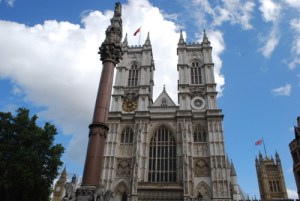
From there, the tour continues across the Thames River on Westminster Bridge after stopping for an excellent photo opportunity of Parliament before reaching Southbank.
Right across the river you’ll find the Aquarium and London Eye- the biggest observation wheel in the world, towering 135 m above the Thames River. The Eye takes 30 minutes to make a full rotation and on a clear day you will have a 25-mile panoramic view, so keep your cameras ready!
Continuing along Southbank you’ll find the National Theatre and the Tate Modern Gallery. The Tate has free admission and hosts modern and contemporary art from around the world.
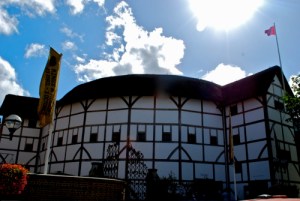
But, it’s Shakespeare’s Globe Theatre that generally attracts the largest crowds on this side of the Thames. The original Globe was built in the late 1500s and by 1599 it was up and running, thrivingfor 14 years with some of Shakespeare’s best known work. Then, in 1613, during a performance of Henry VIII, a cannon ignited the thatched fire and the theatre caught fire. It was quickly rebuilt this time but was closed under Puritan low in 1642 before being demolished in 1644. The current Globe was built in 1993 and continues to perform the best of Shakespeare.
Next, the tour continues back on the other side of the Thames River by crossing the Millennium Bridge and heading to St. Paul’s Cathedral. A cathedral dedicated to St. Paul has been on this site since 604 AD! The current cathedral is the fourth one to reside hereand was built between 1675 and 1710 after the previous one was destroyed by the Great Fire of London.
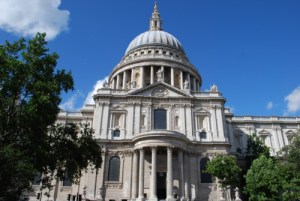
This gorgeous old cathedral has witnessed the weddings of many notable figures and its crypt is known as the foremost burial place, where those who have made an outstanding contribution to the life of the nation are now buried.
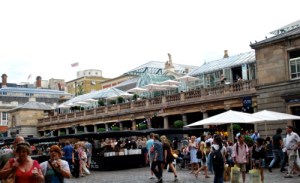
A short walk from here is Covent Garden, where you can take a break and get a much deserved drink or an ice cream cone and rest, wander through the shops or enjoy one of the many street performers found here!
If your feet aren’t killing you yet, you can continue on to Tower Bridge and Tower of London.
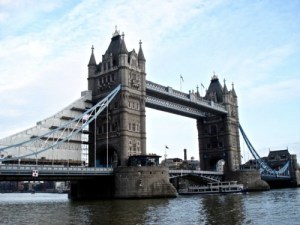
Tower Bridge is just over 100 years old and is one of the most famous attractions in London with its twin drawbridges.
Below the bridge, overlooking the river is the Tower of London. Made famous as a place of imprisonment and execution during King Henry VIII’s reign, it has also been used as a royal residence, an armoury, a mint, a menagerie, an observatory and safe place to display the Crown Jewels, a main attraction for many tourists. Some crown jewels have been there since 1327!
With all this and more easily reached on foot, on your next trip to London make sure you get out and enjoy this Royal City!
Categories: Blog, Europe, Where in the World
Tags: Big Ben, Buckingham Palace, Covent Garden, England, Hyde Park, London, St Paul's Cathedral, Tower of London, Walking tour of London
Leave a comment
White-water rafting on the Nile River in Uganda


A sign not to be ignored!

Standing at the source of the Nile

The steps down to the Nile River

Rafting down the Nile River

Celebrating with a Nile beer

This adorable girl really wanted her photo taken!
Categories: Africa, Photo, Where in the World
Tags: Jinja, Nile beer, Nile River, Source of the Nile, Uganda, White water rafting
Leave a comment
Rafting down the Nile River in Uganda
“Forward, Forward, Hold… GET DOWN” our guide Tutu yells as the water beneath us begins to disappear. We tuck our paddles in and hold on tight as we tip forward and plunge down into the rough water below. No matter how tight I think I’ve closed my mouth, the water finds a way in and as we surface a collective sputtering can be heard. Miraculously, we managed to stay inside the raft- quite the feat considering those aboard the other 9 rafts found themselves thrown out into the crushing waves.
 Continue reading
Categories: Africa, Blog, Where in the World
Tags: Adrift, Jinja, Nile River, Uganda, White water rafting
Leave a comment
The Backpacker’s Hostel in Kampala, Uganda

The Backpackers Hostel, Uganda

The hostel’s bar

A great place to relax!

Off to the shower
Categories: Africa, Photo, Where in the World
Leave a comment
Portsmouth, England- A city with navy and family history
Portsmouth has long been known as a naval city in England’s South end, but to me, this city has a lot more than naval history. Portsmouth is my Grandma’s hometown and during World War II she worked here in the Women’s Land Army. While working, she met a handsome Canadian soldier, fell madly in love, got married and moved to Canada after the war. Then, in the early 1990s she learned she had a younger brother she never knew about. She had been raised by her grandfather as her father took off and her mother wasn’t really around. Long story short, John and his wife Jean came to visit her in Canada and we all got to know each other. Continue reading
Categories: Blog, Europe, Where in the World
Tags: England, Gunwharf Quay, Portsmouth, Spinnaker Tower
Leave a comment
Inverness- Scotland’s Newest City
The Scottish countryside turned out to be a sight pulled directly from a Hollywood film. Lush green rolling hillsides, with sheep roaming around large pastures as bubbly brooks run through the middle! Driving along, every so often a castle would appear in the distance- not something that happens back home in Canada and not something I ever tire of seeing! Traveling around Scotland by bus turned out to be a great way to see the Scottish countryside. It’s also incredibly cheap as my 4 hour Megabus trip from Edinburgh to Inverness cost only 5 pounds! Continue reading
Categories: Blog, Europe, Where in the World
Tags: Inverness, Inverness Castle, River Ness, Scotland
Leave a comment
 Tales of a Travel Addict
Recent Comments