Posts Tagged With: see the world

Exploring Dracula’s Castle

“Once again…welcome to my house. Come freely. Go safely; and leave something of the happiness you bring.”
― Bram Stoker, Dracula

As we are well into spooky season, this year’s Halloween trip is to a place I have been dying to visit for years.

The Transylvania region of Romania instantly makes me think of a mysterious land of bloodthirsty vampires and spooky Halloween scenes with a lonely, medieval castle perched high atop a rocky cliff.

While many of these images come from watching movies about vampires…or the animated ‘Transylvania’ films, this region of Romania is still the perfect spot to visit around Halloween!

And while the whole region has a history of spooky myths and legends, for me, there was one particular spot that made visiting Romania a must: Bran Castle.

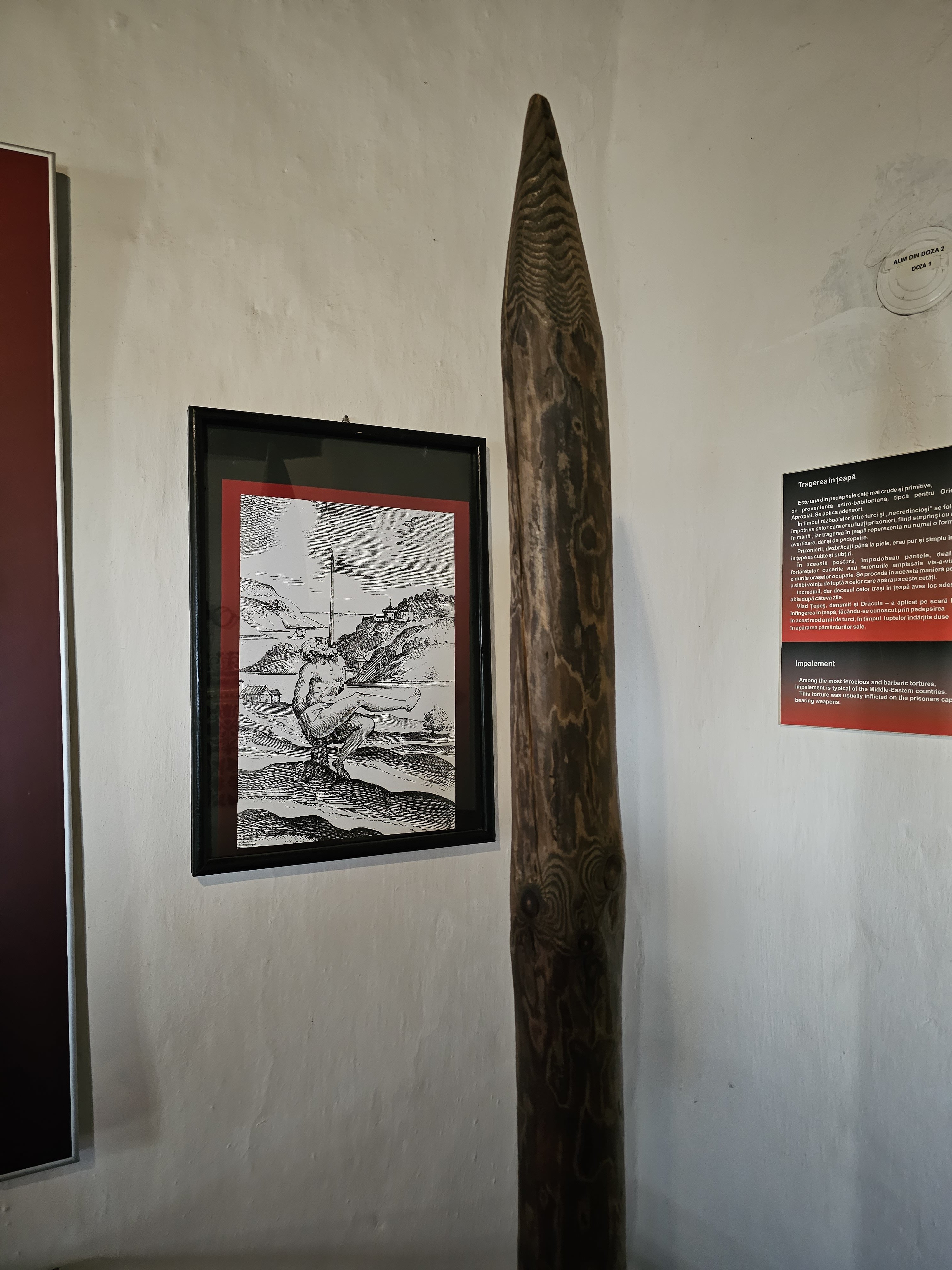
It’s easy to see why Bram Stoker decided to set his 1897 vampire novel, Dracula, here. Although the author never visited Bran Castle, the novel was inspired by superstition and some real-life exploits of the 15th-century Wallachian nobleman, Vlad Dracul III, who was also known as Vlad Ţepeş (the Impaler) as it was said that Vlad liked to impale his enemies on long spikes, leaving them to die in the field. While maybe not a vampire…Vlad definitely left a bloody wake.

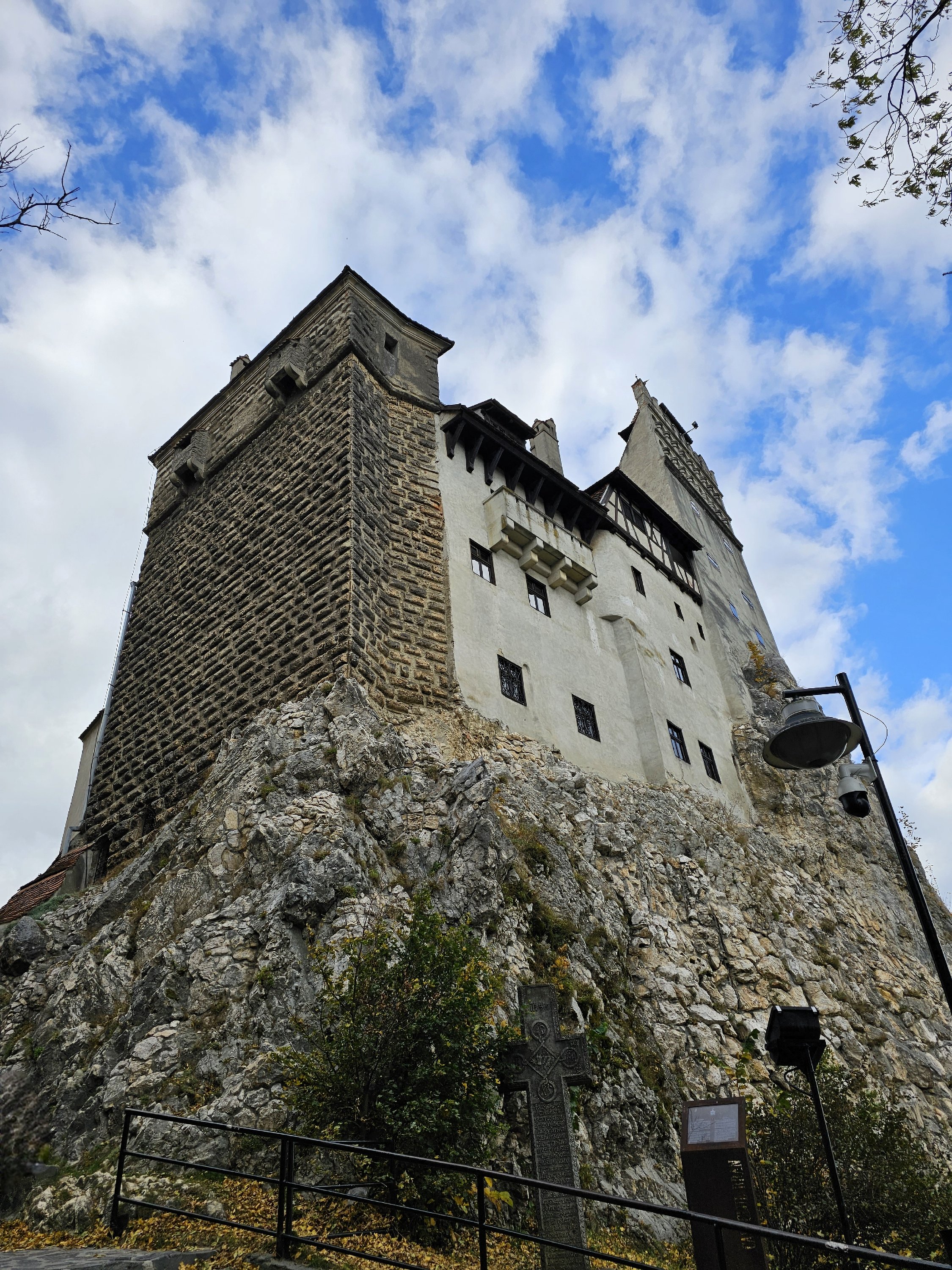
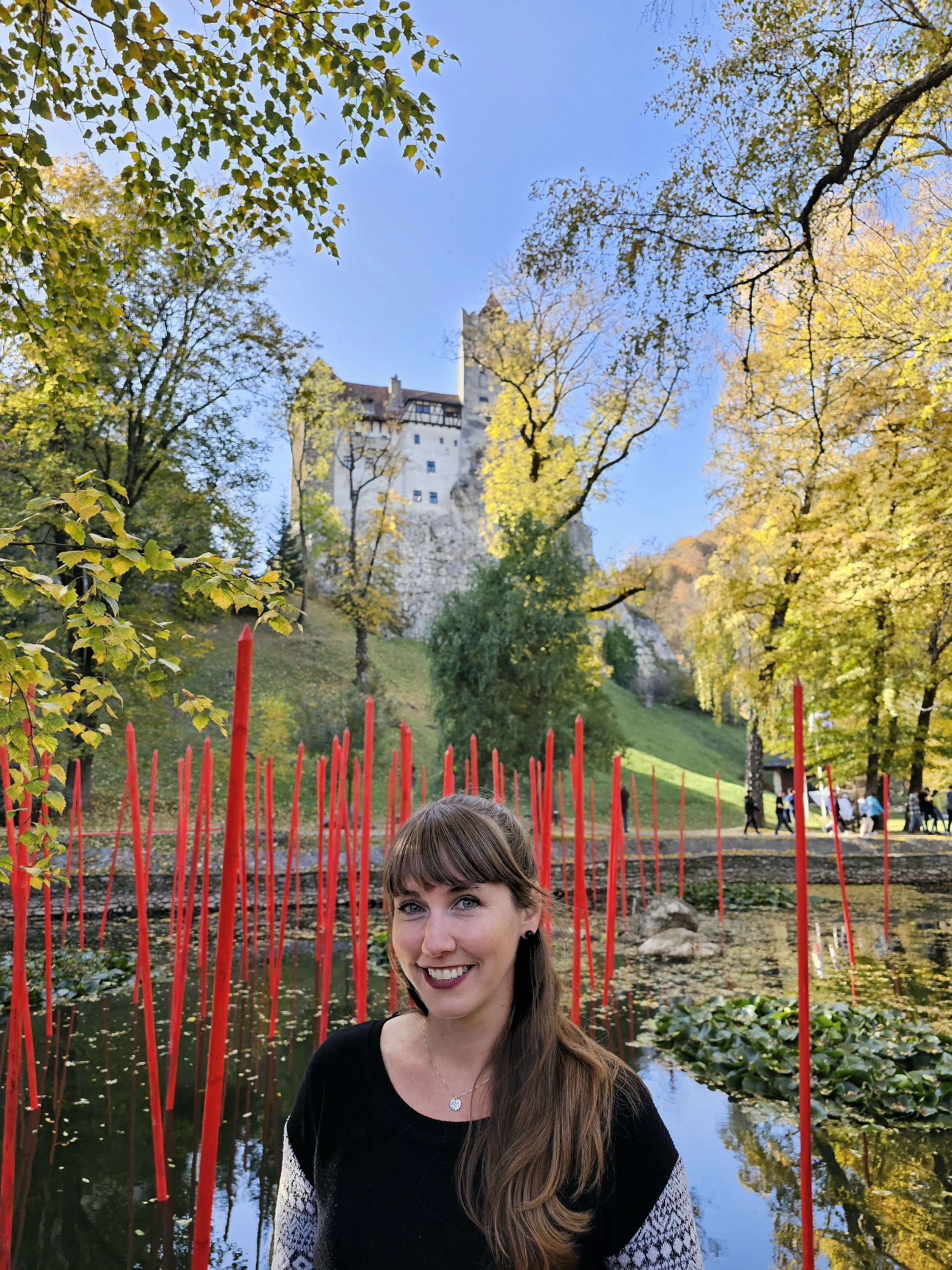
Perched high on a rocky hill with rust-coloured towers, Bran Castle looks just like you’d hope a medieval vampire castle would look.

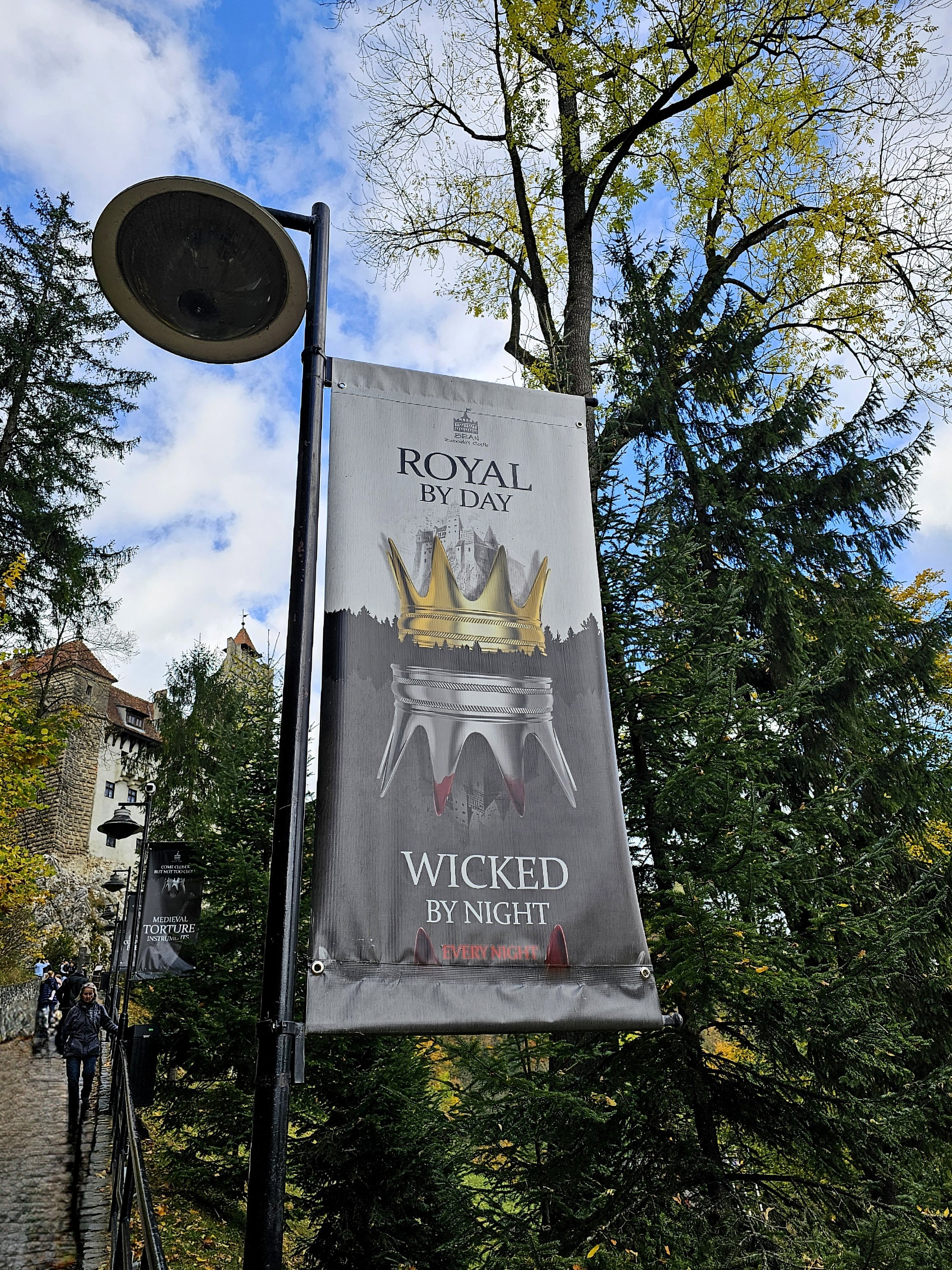
As we climbed up the cobblestone path leading to the castle, there were flags stating ‘Royal by Day. Wicked by Night,’ and looking out over the land where Vlad the Impaler once impaled over 20,000 people, you can easily imagine some angry spooks haunting this place.

Upon entering the castle, you get a brief history of the place.

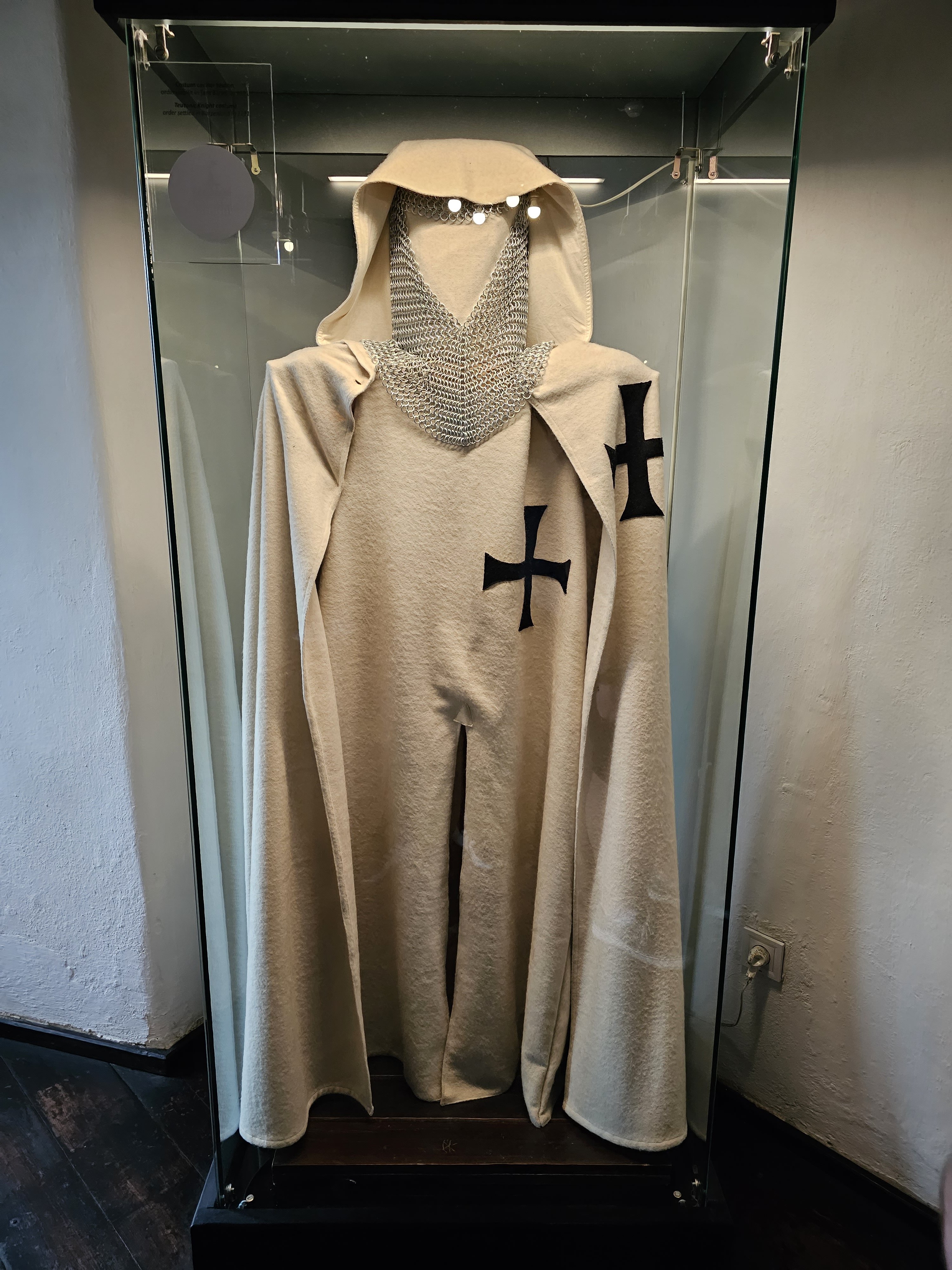
The first residents on this site were the Teutonic Knights, who constructed a wooden fortress in the early 1200s.

Bran Castle was built in 1377, when Hungarian King Louis the Great granted the people of Brasov the privilege of building a castle. It was completed in 1388. The lord of the castle was elected by the King, usually from among the Saxons. This role was increasingly important in the history of Transylvania. 

While Vlad the Impaler never lived in Bran Castle (his castle is now in ruins, located in the Principality of Wallachia), he was allied with Bran and Brasov during his first reign beginning in 1448 and into his next reign, where he was requested to handle the anti-Ottoman resistance at the border. Then, during his second reign, he changed sides and his army passed through Bran in early 1459 to attack Brasov, in order to settle a conflict between Wallachia and the Saxons. He wasn’t much of a negotiator and burned the city’s suburbs to the ground, murdering hundreds of Saxons from Transylvania. During his reign, to many Romanians he was seen as a hero for protecting them and fighting for Romanian independence.

The castle continued to change hands and fell into disrepair and was restored numerous times over the years.

In 1918, Transylvania became part of Greater Romania, and in 1920, the citizens offered the castle to Queen Marie of Romania, who was beloved. The castle became a favourite residence of the Queen, who restored and arranged it to be used as a residence for the royal family. When Queen Marie died on July 18, 1938, Bran Castle was bequeathed to her favourite daughter, Princess Ileana.

In 1948, Princess Ileana and her family were forced to leave the country by the newly installed communist regime. During these years, the castle was turned into a museum. Then, in 1987, restoration began again and in 1993, the castle was reopened as a museum.

In 2006, after years of legal proceedings, the castle was legally returned to the heirs of Princess Ileana of Romania and Archduke Anton of Austria. 

Today, it continues to be a leading tourist attraction in Transylvania and one I couldn’t wait to check out!

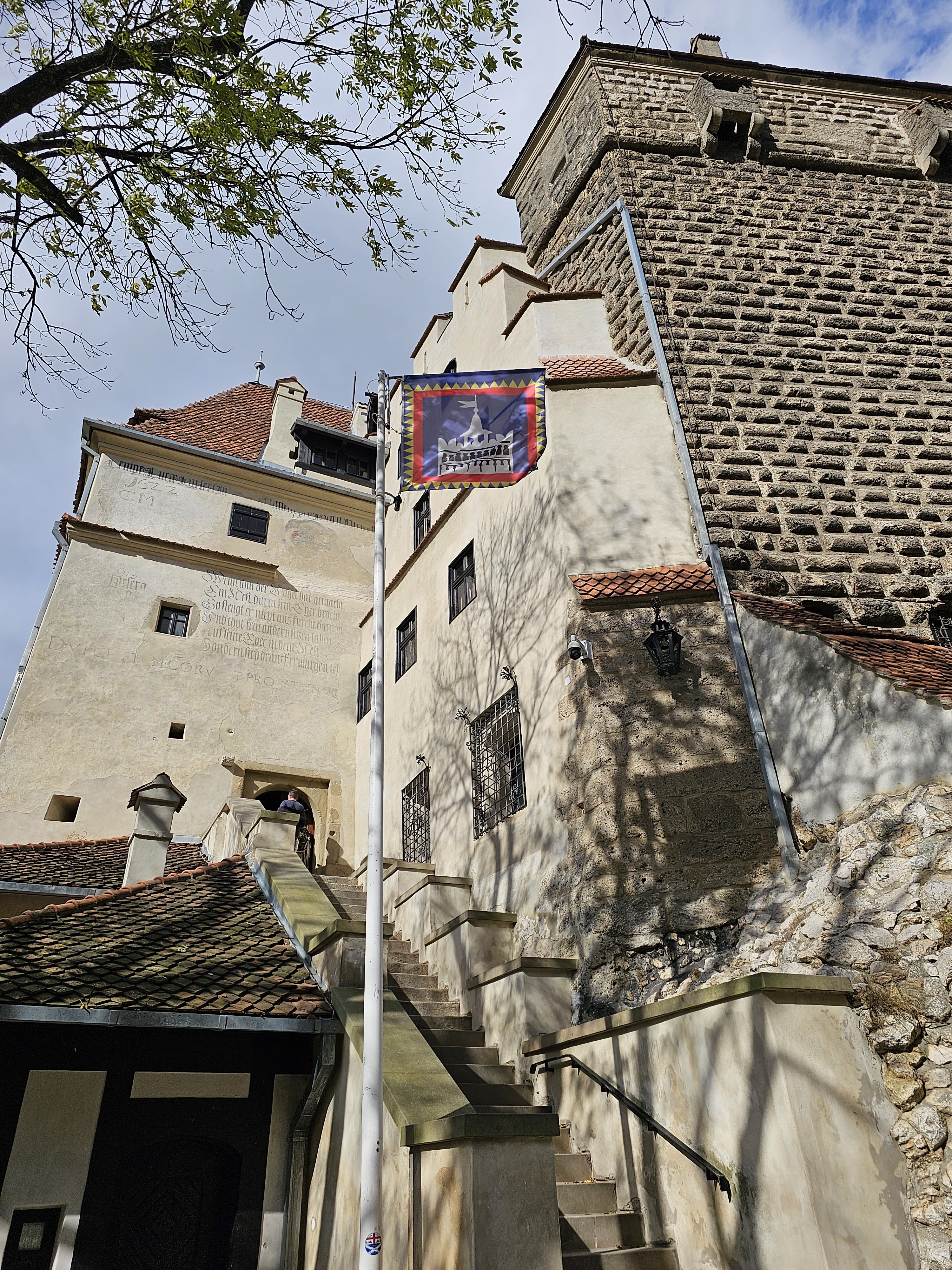
After learning a bit about the castle’s past, you head through the narrow corridors and steep, winding staircases to explore the castle as Queen Marie had it.

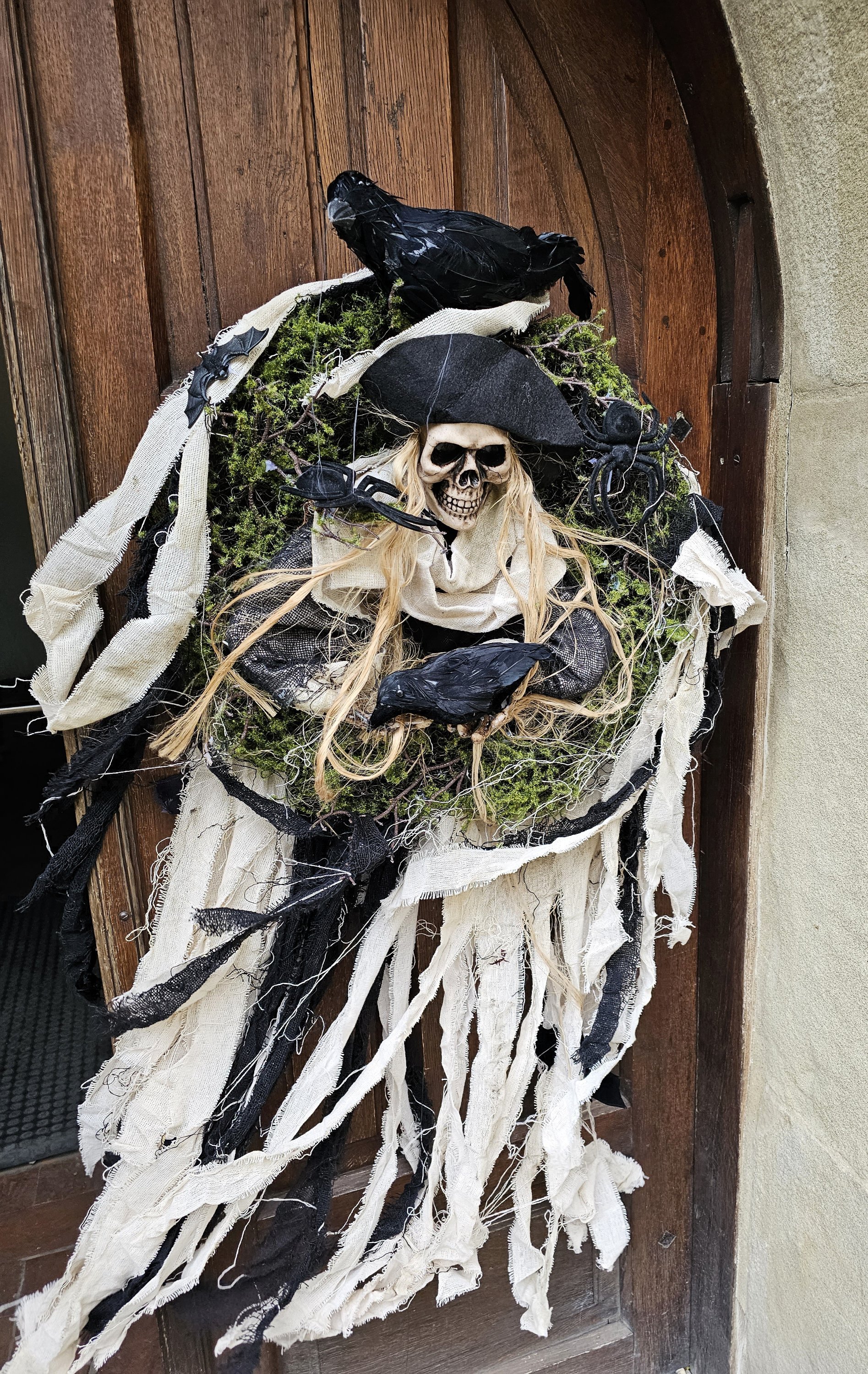
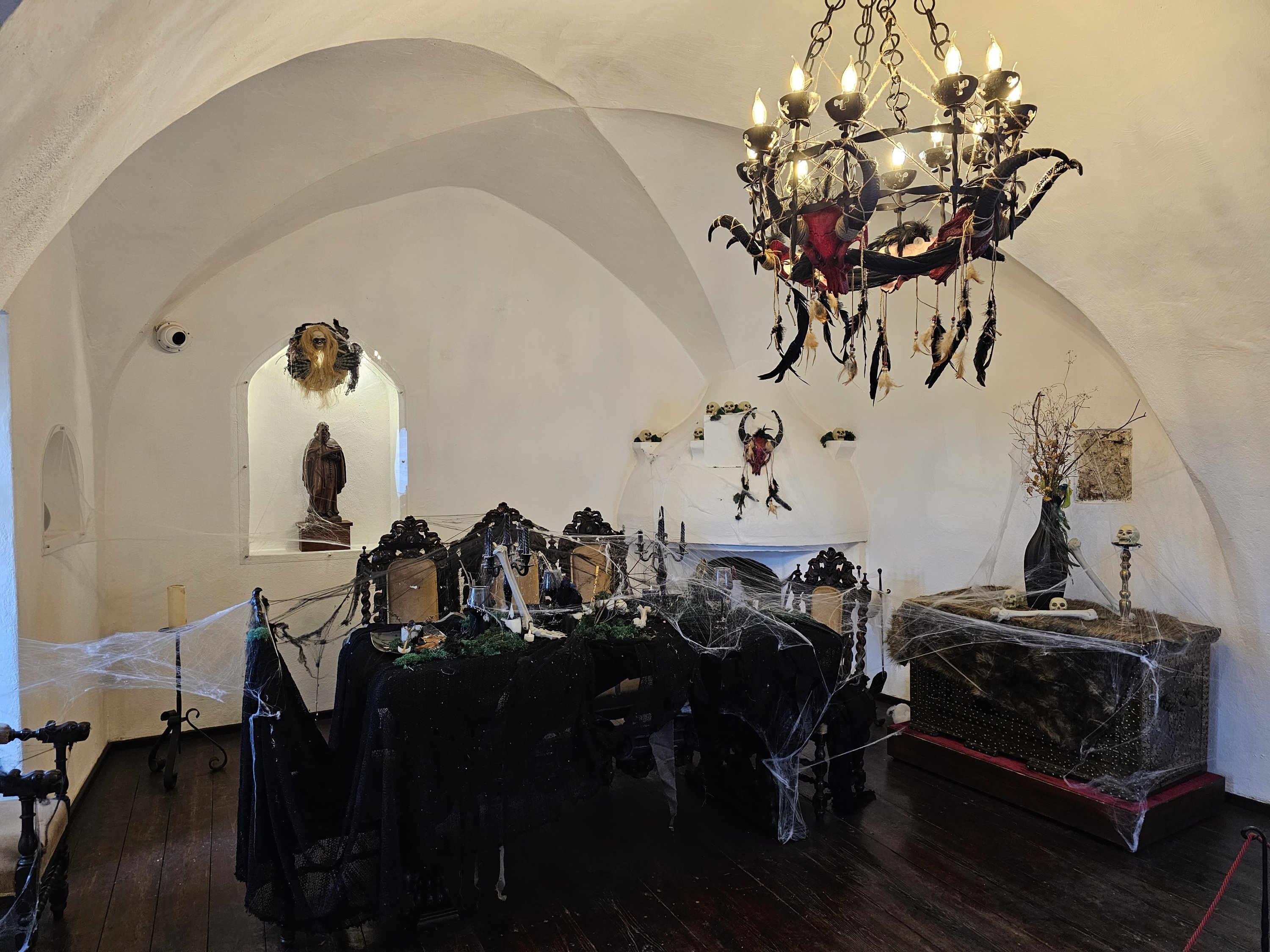
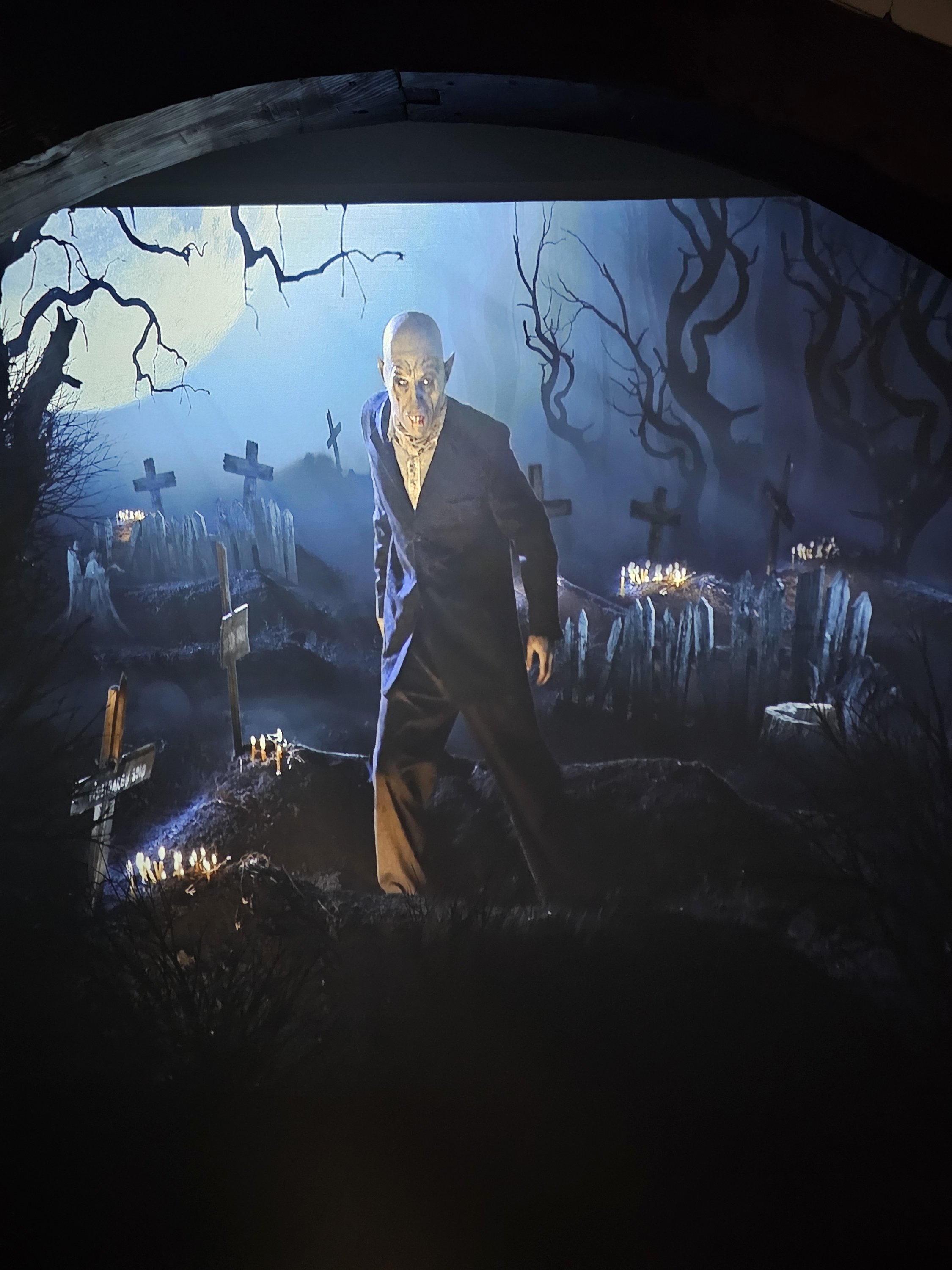
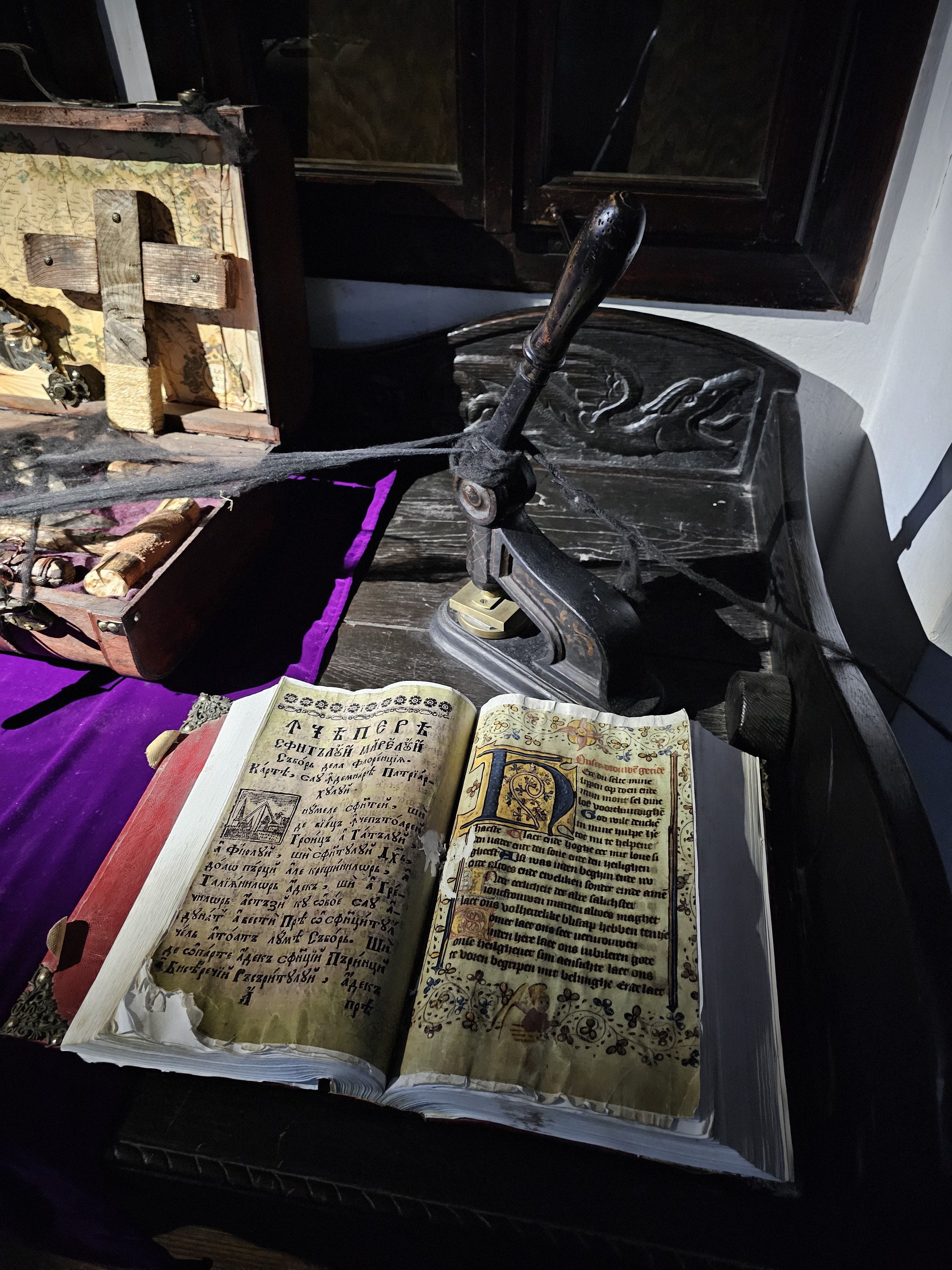
Although, this time of year, there was also a Halloween twist to the decor as they were preparing for the huge Halloween party that takes place here at the end of October. While it changed the regal feel, the whole reason we were here was to explore “Dracula’s Castle,” so the Halloween decor just added to the experience for me. (If, for some reason, Halloween is not your thing, I wouldn’t recommend visiting Bran Castle in late October!!)

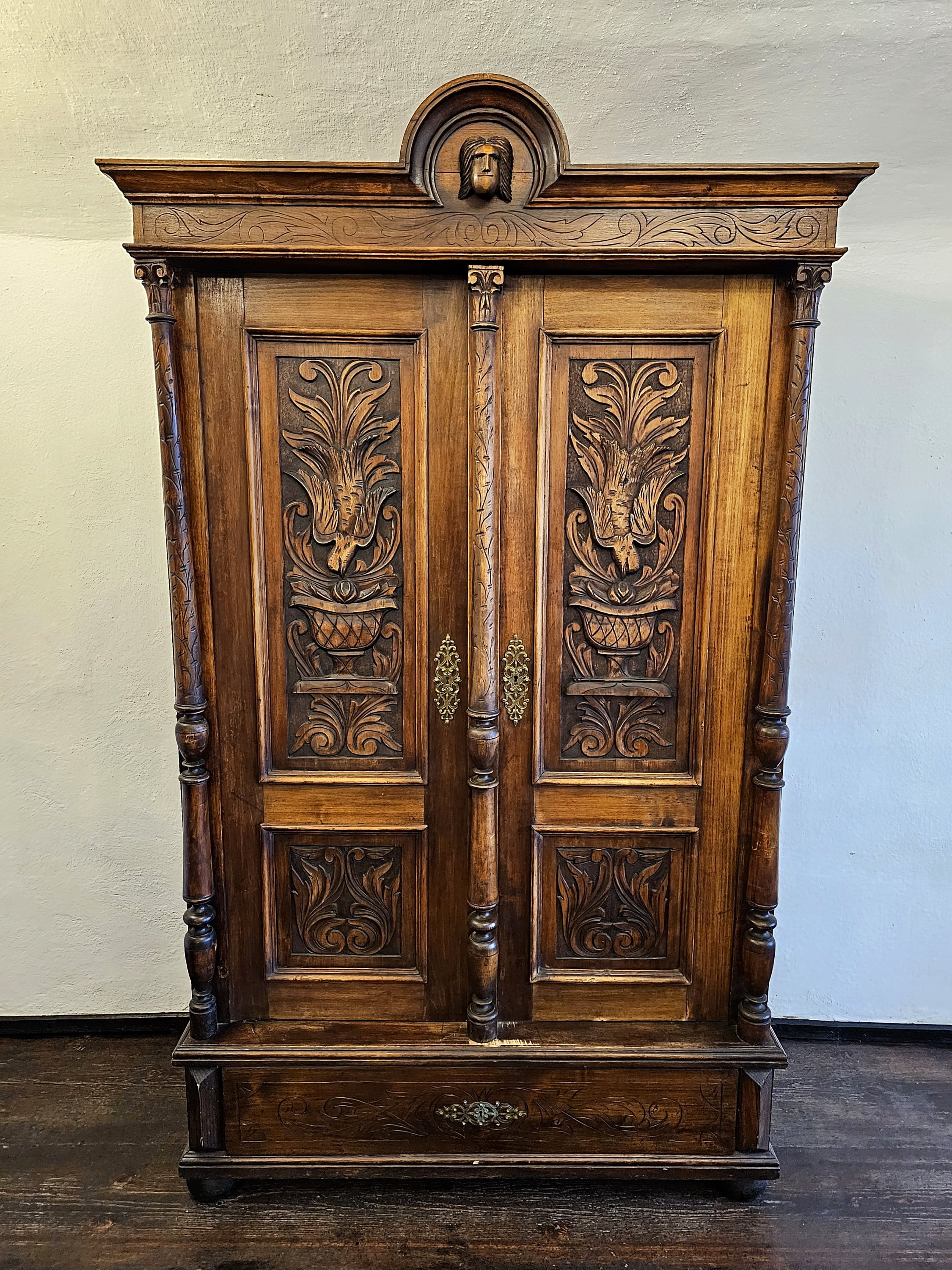
Step inside both Queen Marie’s and King King Ferdinand I’s bedrooms, both filled with beautiful old pieces.

The ornately carved wooden furniture, high arched ceilings, and decor throughout the castle felt like stepping back in time.

The music room, complete with shelves of old books, a big fireplace, and lots of nooks perfect for reading, is where I’d want to spend my time.

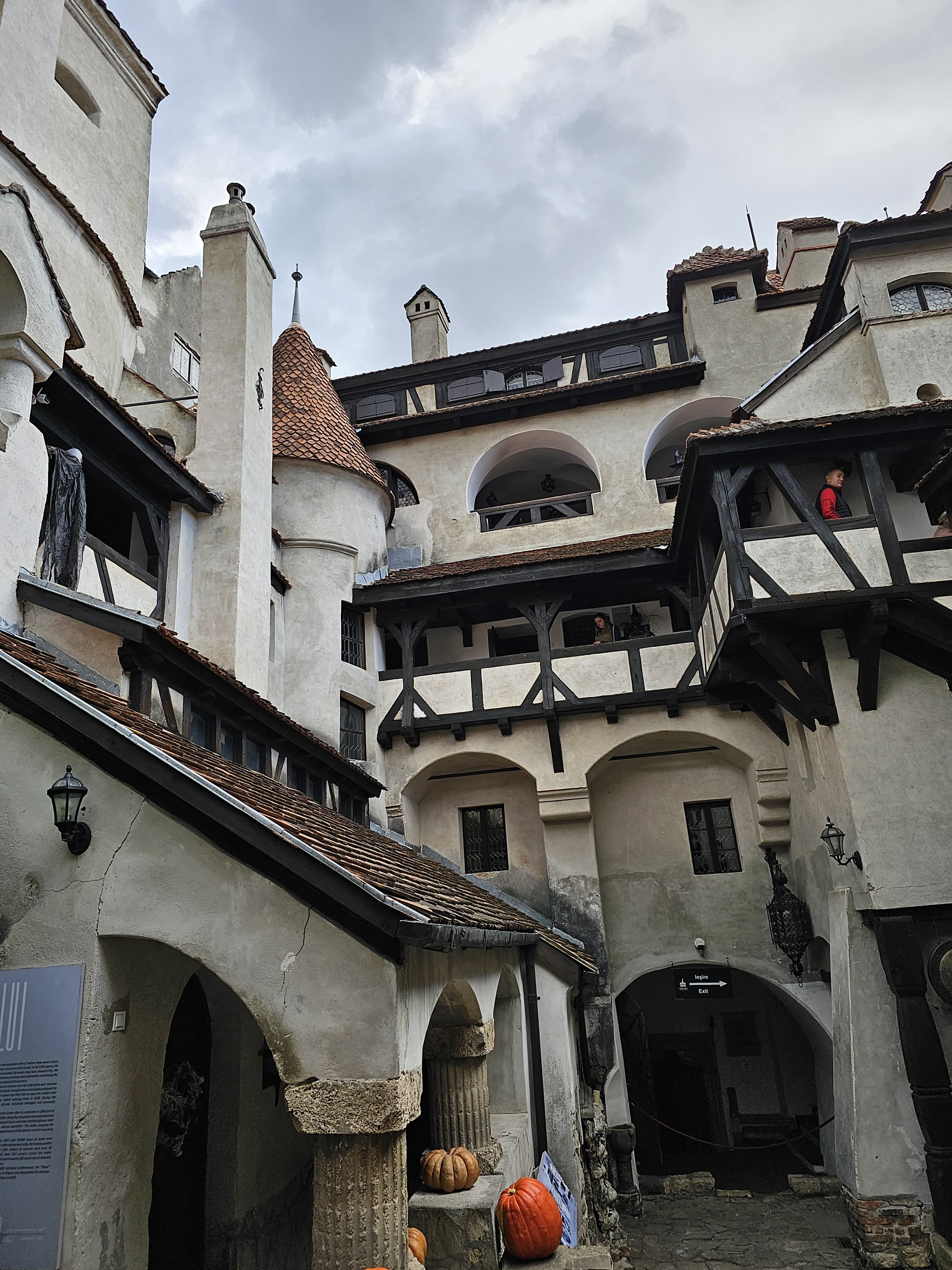
From here, you can head towards the balcony where you will find excellent views of the courtyard. As you explore the castle, you can view the courtyard from the balconies on several levels, offering excellent photo opportunities of the many towers and beautiful fall foliage!

Then head back inside where you will find the narrow secret staircase leading from the 1st floor up to the 3rd floor. This feels exactly like the kind of place you might run into Count Dracula himself.

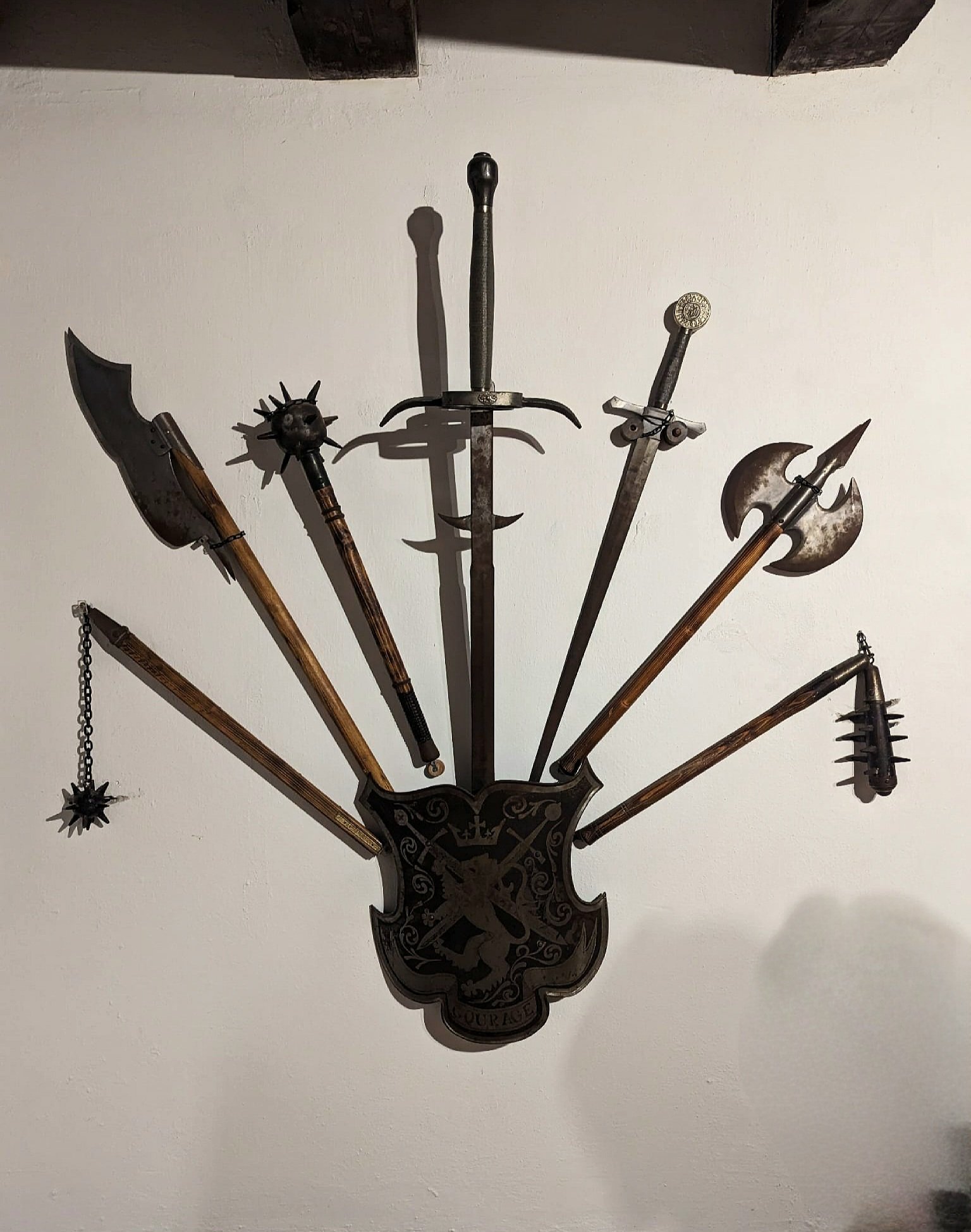
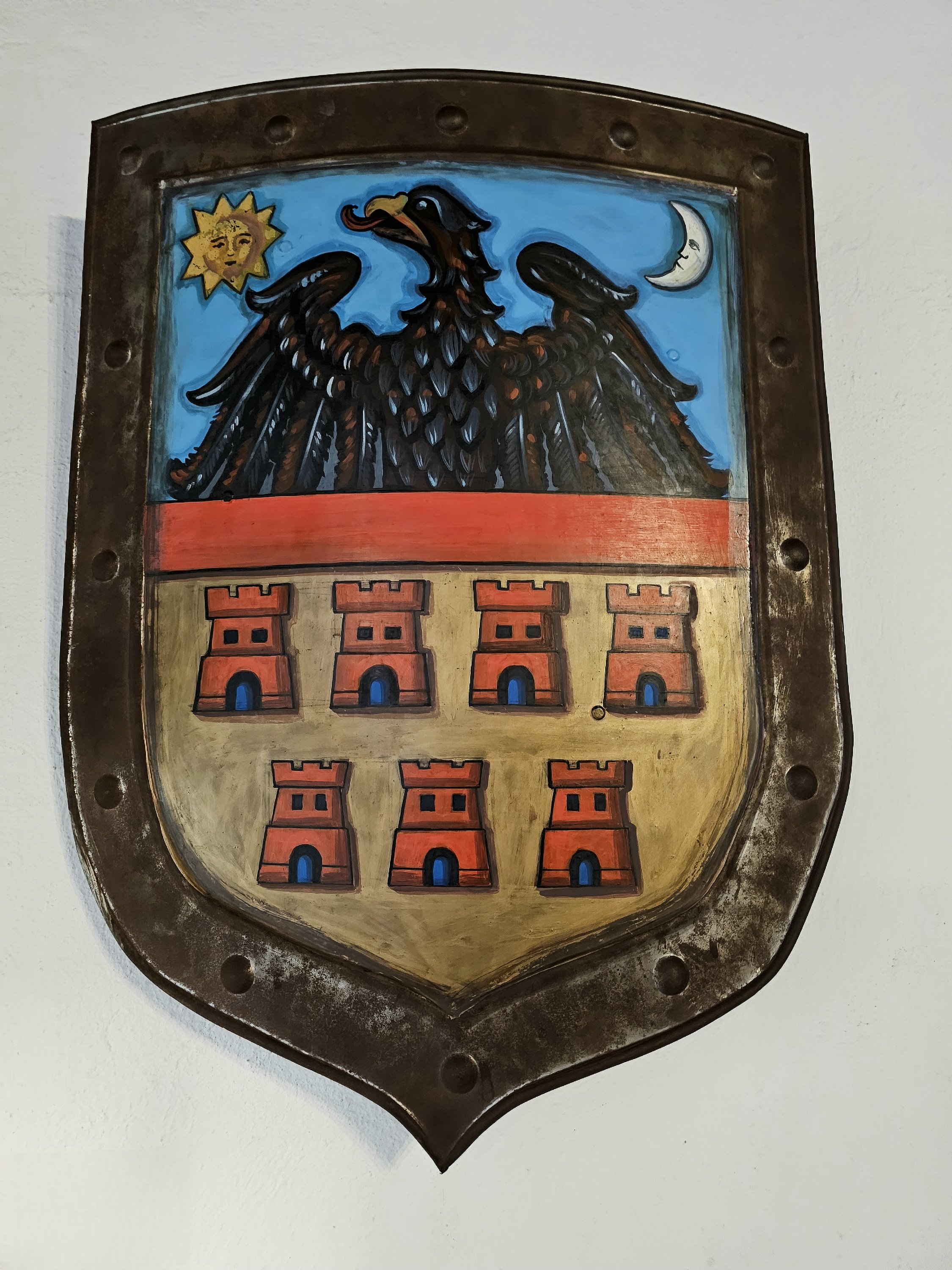
There are various rooms set up with photos, clothing, weapons, coats of arms, suits of armour, and more spread throughout the castle.

If you’re feeling brave, head to the 4th floor for the “A history of dreads in Transylvania” exhibition.

There are several rooms filled with the history of local myths and fears from the 15th century, including the Grim Reaper, the Lele, the Sântoaderi, the Solomonari, ghosts, the Strigoi and werewolves.

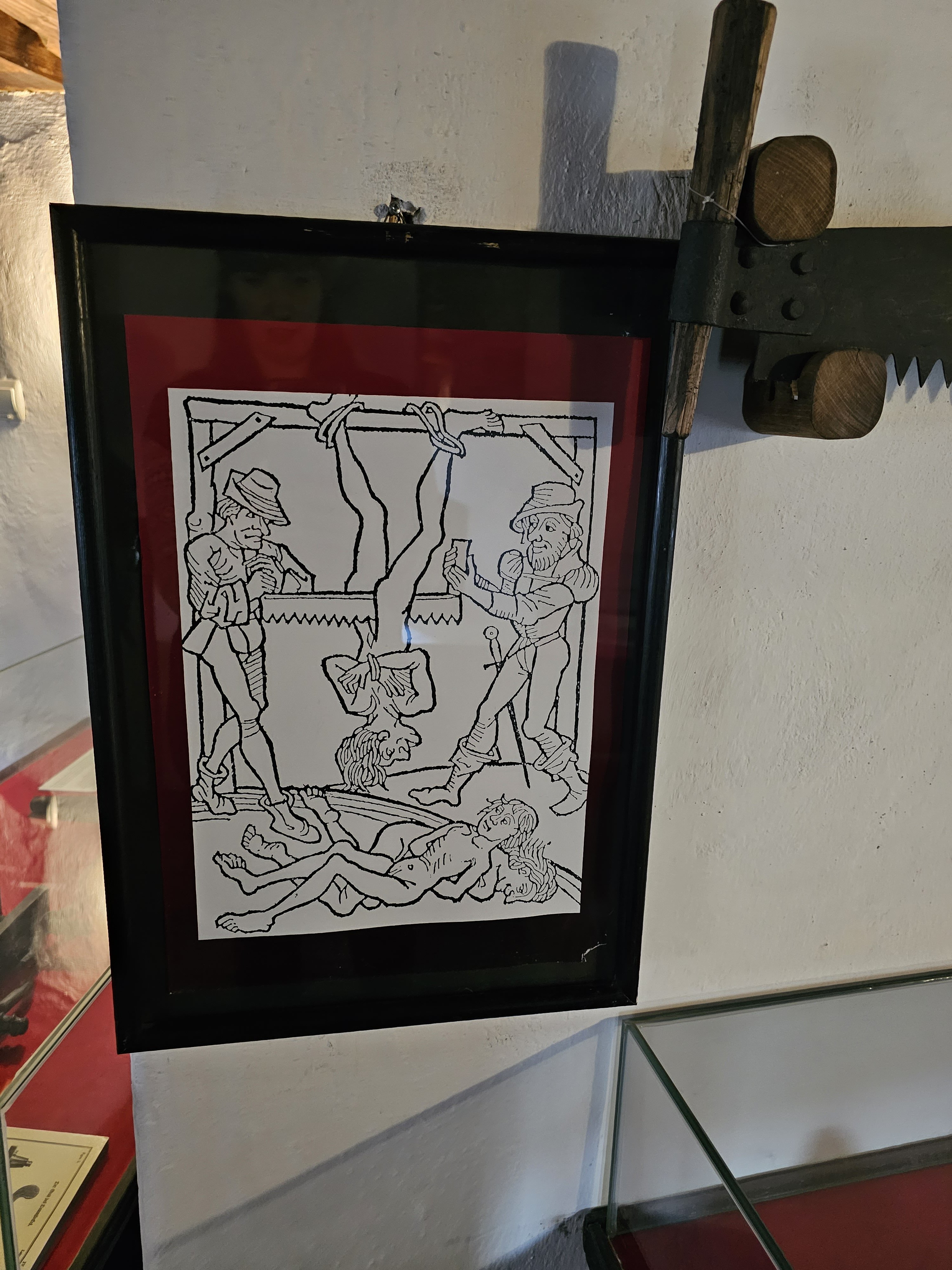
If, like Vlad, medieval torture is your thing, there is another special exhibition on Medieval Instruments of Torture.

Here, there are several rooms filled with various devices used for torture, including photos and descriptions. While all are cruel, some are truly horrifying!

Once you’ve had your fill of Medieval torture, head back downstairs and out into the courtyard, where you will also find a small gift shop.

The final exhibit before exiting the castle is the Time Tunnel. “The only elevator in the world that goes up into history and down into the future.” The castle was built with a 7-metre-deep water cistern, which was converted to a 59-metre well in the 17th century. During Queen Marie’s residence, she decided to put an elevator into the shaft to connect the Royal Park to the castle. After the Royal family was forced to leave, the tunnel remained empty and forgotten for years.

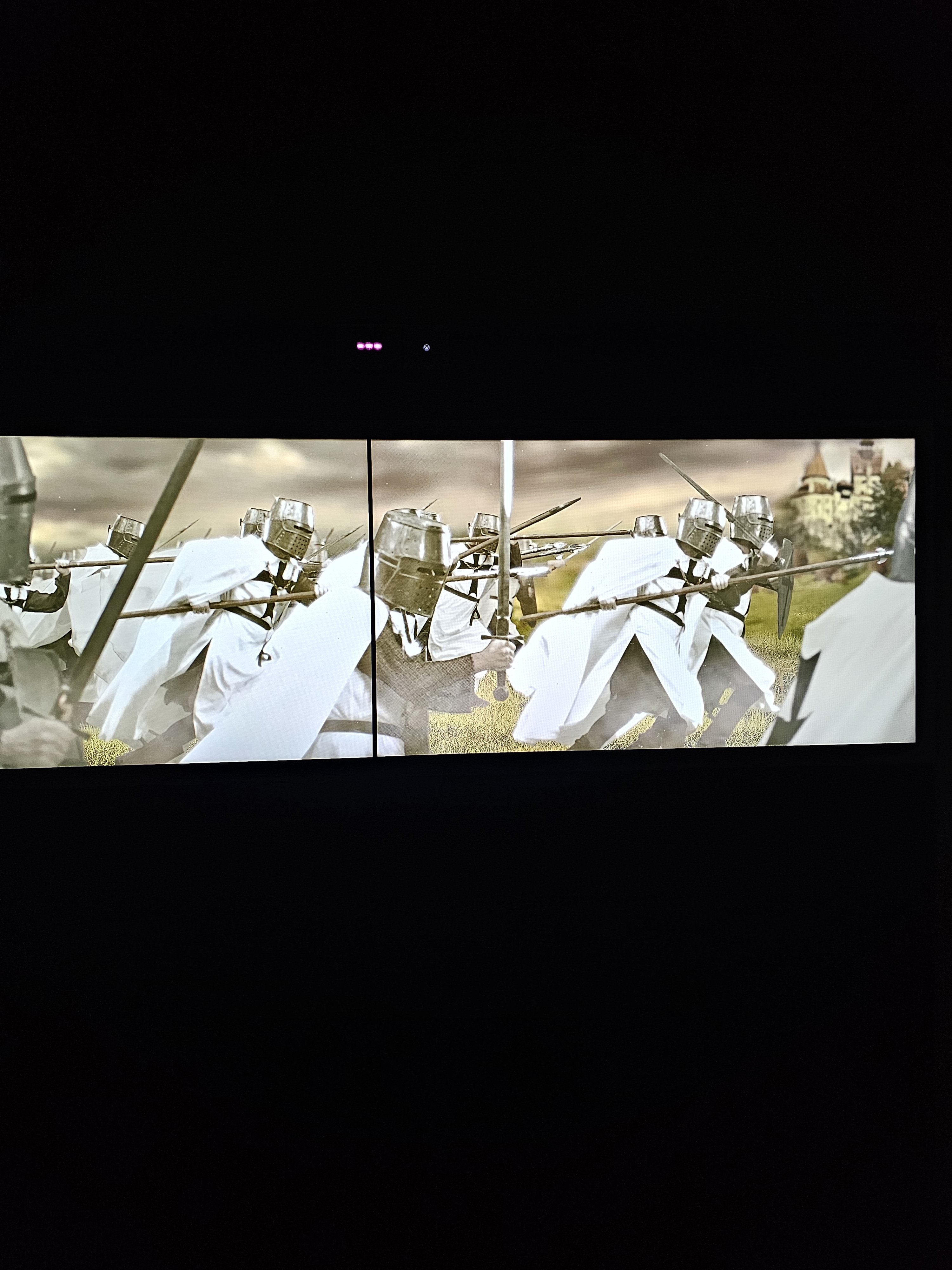
Now, you take the elevator down from the past and head into the future through a multimedia presentation through the years from the Teutonic Knights until present day Bran Castle.

The display ends with a photo opportunity which you can purchase in the gift shop.

Once you’ve finished touring the inside of the castle, be sure to wander the grounds of the Royal Park below for various views of the castle.

You can also visit Queen Marie’s Tea House for a meal or a cup of tea where the Queen used to have her five o’clock cuppa.

As part of the Halloween decor, the pond in the middle of the park was filled with bright red long spikes, to signify the bloody impalements performed by Vlad on his Ottoman soldier enemies.

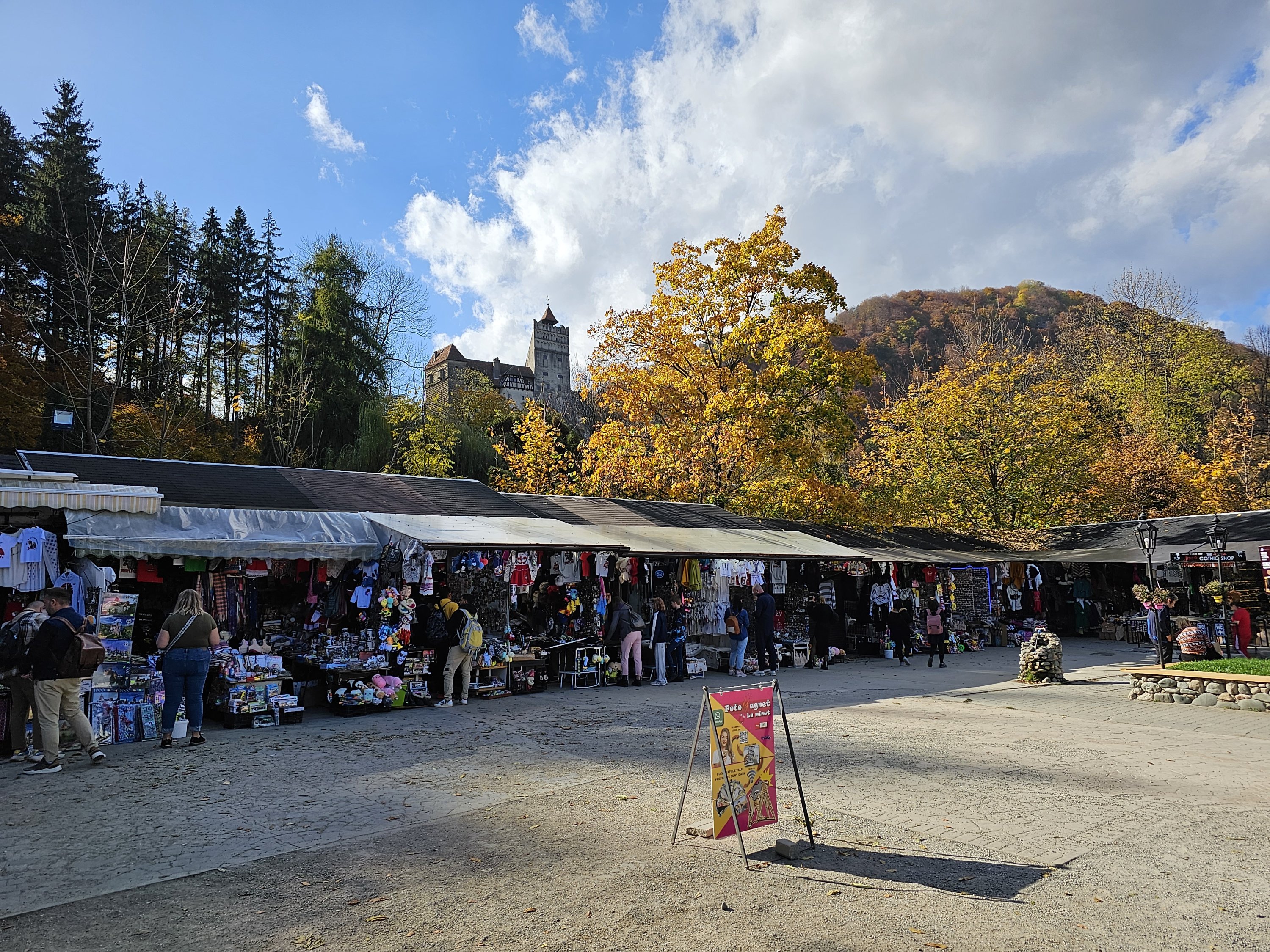
Outside the gates, there are numerous stands set up selling snacks and souvenirs to the hundreds of thousands of guests who visit each year.

While it may not actually be home to bloodthirsty vampires, between the real history and the imagined Count Dracula, Bran Castle is a Halloween lover’s must-see!

Info

You can purchase tickets just inside the main gate

Admission-

Adults – 60lei

Students – 35lei

Seniors – 45lei

Torture chambers -10lei

Time Tunnel – 20 lei

Opening times

October 1 to March 31
12:00 p.m. – 4:00 p.m. on Mondays (last admission is 4 p.m.)
9:00 a.m. – 4:00 p.m. Tuesday to Sunday

April 1 to September 30
12:00 p.m. – 6:00 p.m. on Mondays (last admission is 6 p.m.)
9:00 a.m. – 6:00 p.m. Tuesday to Sunday

Categories: Blog, Europe, Photo, Where in the World | Tags: , , , , , , , , , , , , , , , | Leave a comment

A brief stay in Belfast

Belfast is the capital of Northern Ireland and the largest city in the country. This city is known for being where the RMS Titanic was built and for the violence and suffering here during The Troubles in the later part of the 20th century, although I quickly found out there is so much more to Belfast.

With only two days to explore this city, I set off early to make the most of my time here.

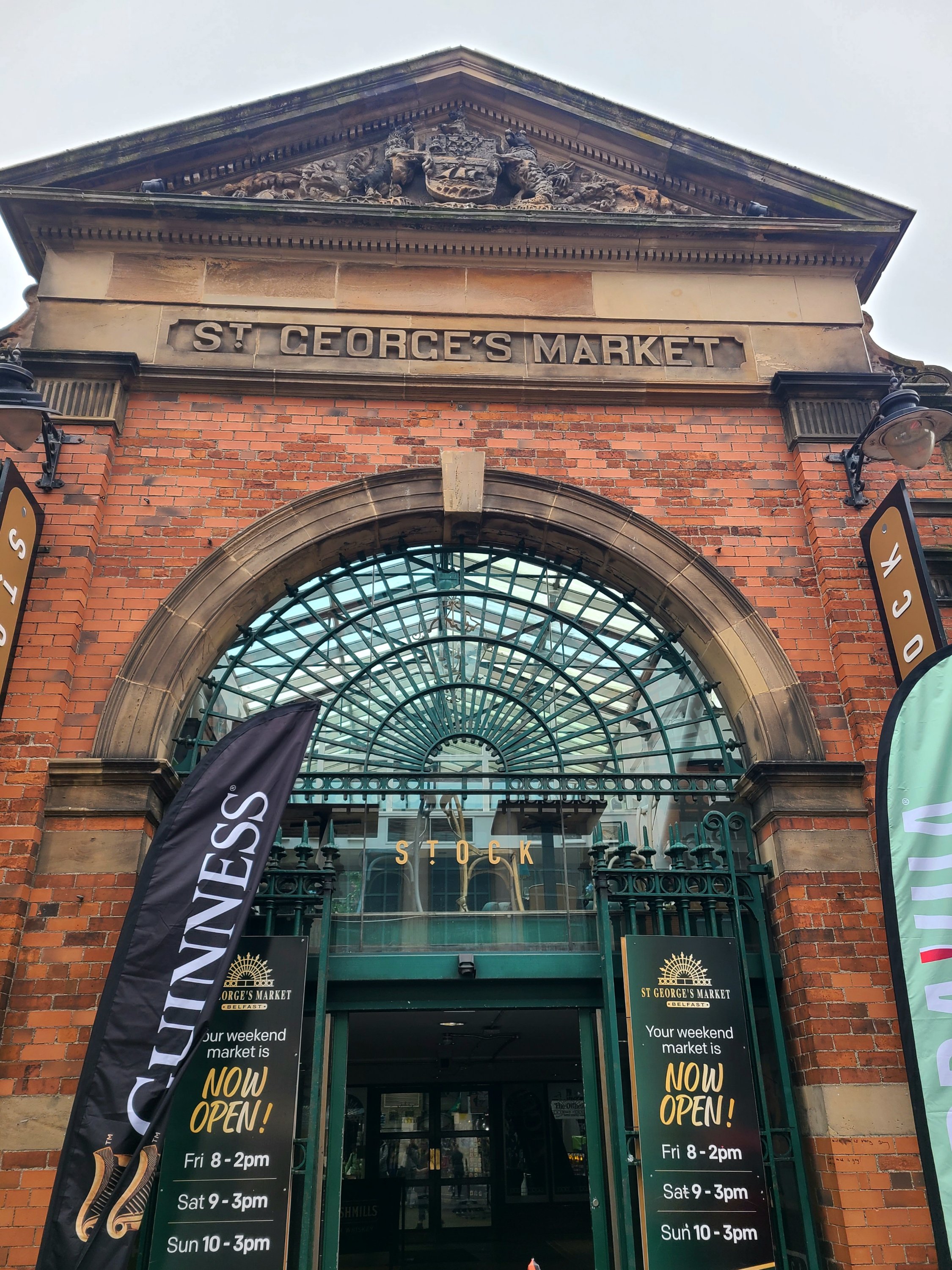
My first stop was at the Victorian St George’s Market, one of Belfast’s oldest attractions. The Friday market has taken place on this site since 1604. The current market was built between 1890 and 1896 and is considered one of the best markets in the UK. The market is only open Friday, Saturday, and Sunday, with each day offering slightly different vendors. Stalls found here include fish, produce, antiques, crafts, meats, food & coffee stands, and more.

After wandering through the market, I grabbed a Belfast Bacon Bap for breakfast before continuing on my way. The Belfast Bap is a large, crusty white bread roll that originated in Belfast to feed the poor during the great famine. It was a bit hard to bite into…but was certainly filling!

Located at 12-20 East Bridge Street, Belfast. Open Friday 8 a.m. – 2 p.m., Saturday 9 a.m. – 3 p.m. & Sunday 10 a.m. – 3 p.m.

The heart of the city is found along the banks of the River Lagan. Before crossing over the Queen Elizabeth bridge, there is a Big Fish sculpture, also known as Salmon of Knowledge.

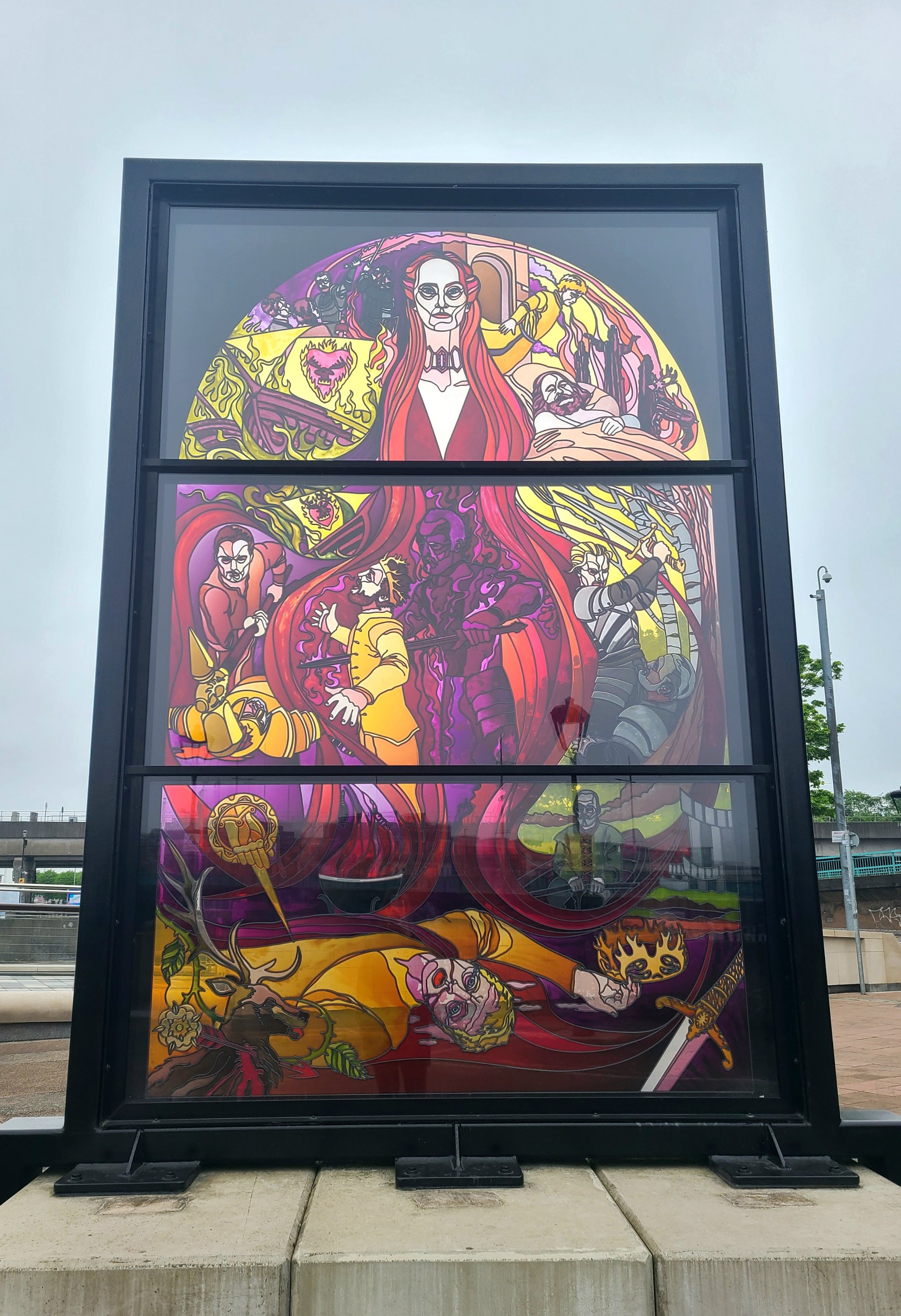
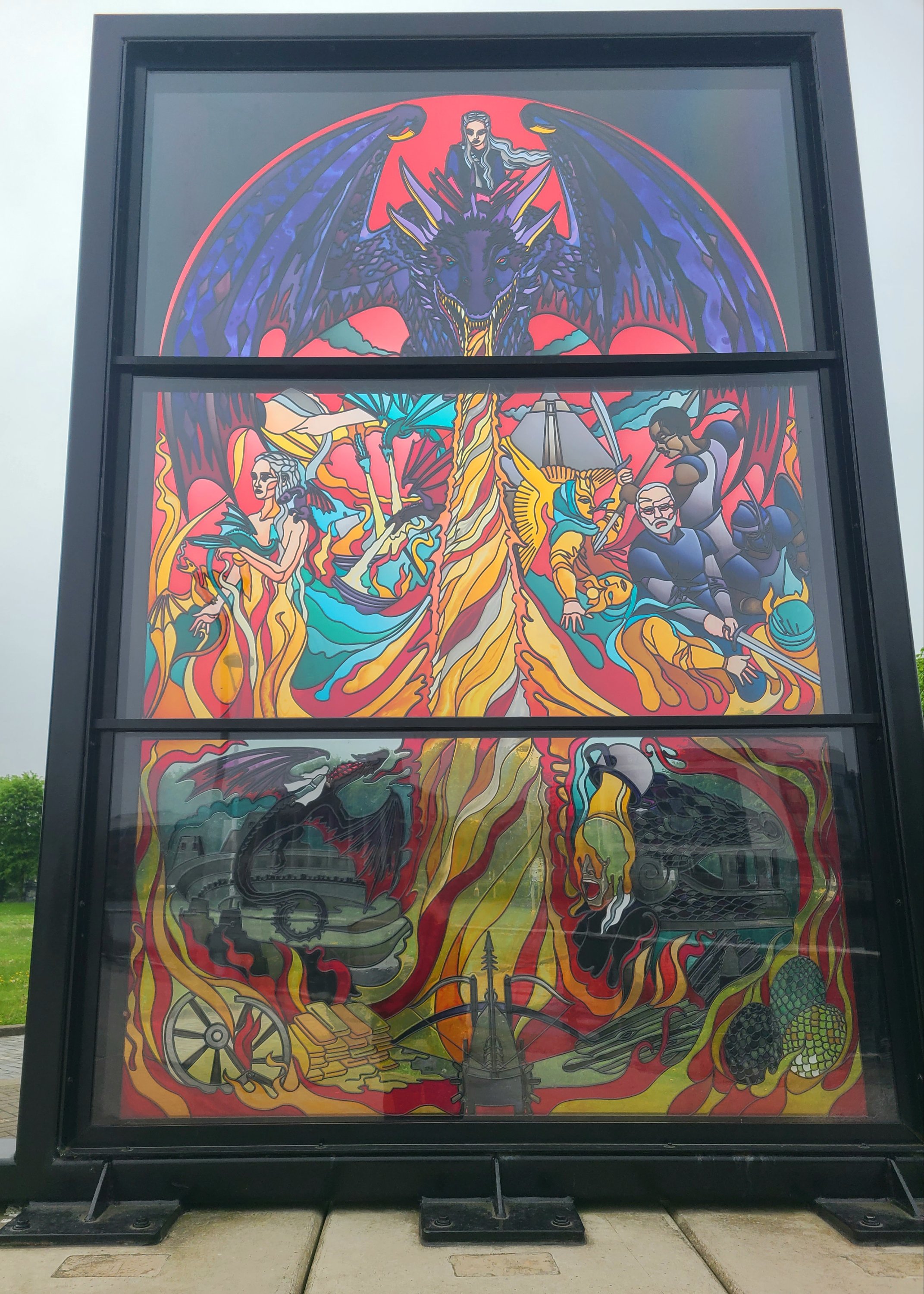
This large fish is also a time capsule covered in ceramic tiles, each one telling a story of the city. There are also a number of Game of Thrones stained glass pieces along the waterfront and the Waterfront entertainment complex.

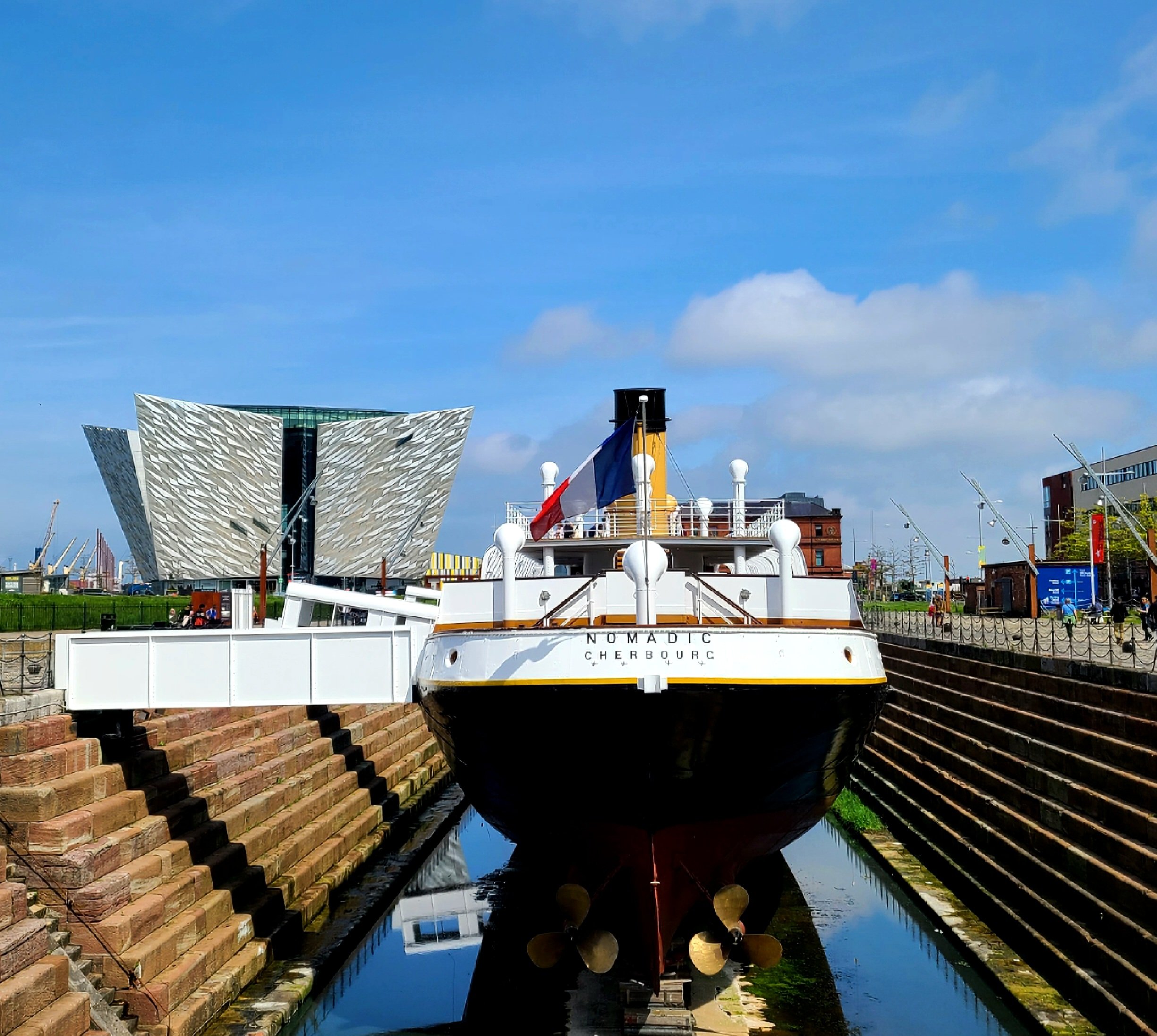
Continuing along the waterfront, I headed to one of Belfast’s most famous attractions – Titanic Belfast. 

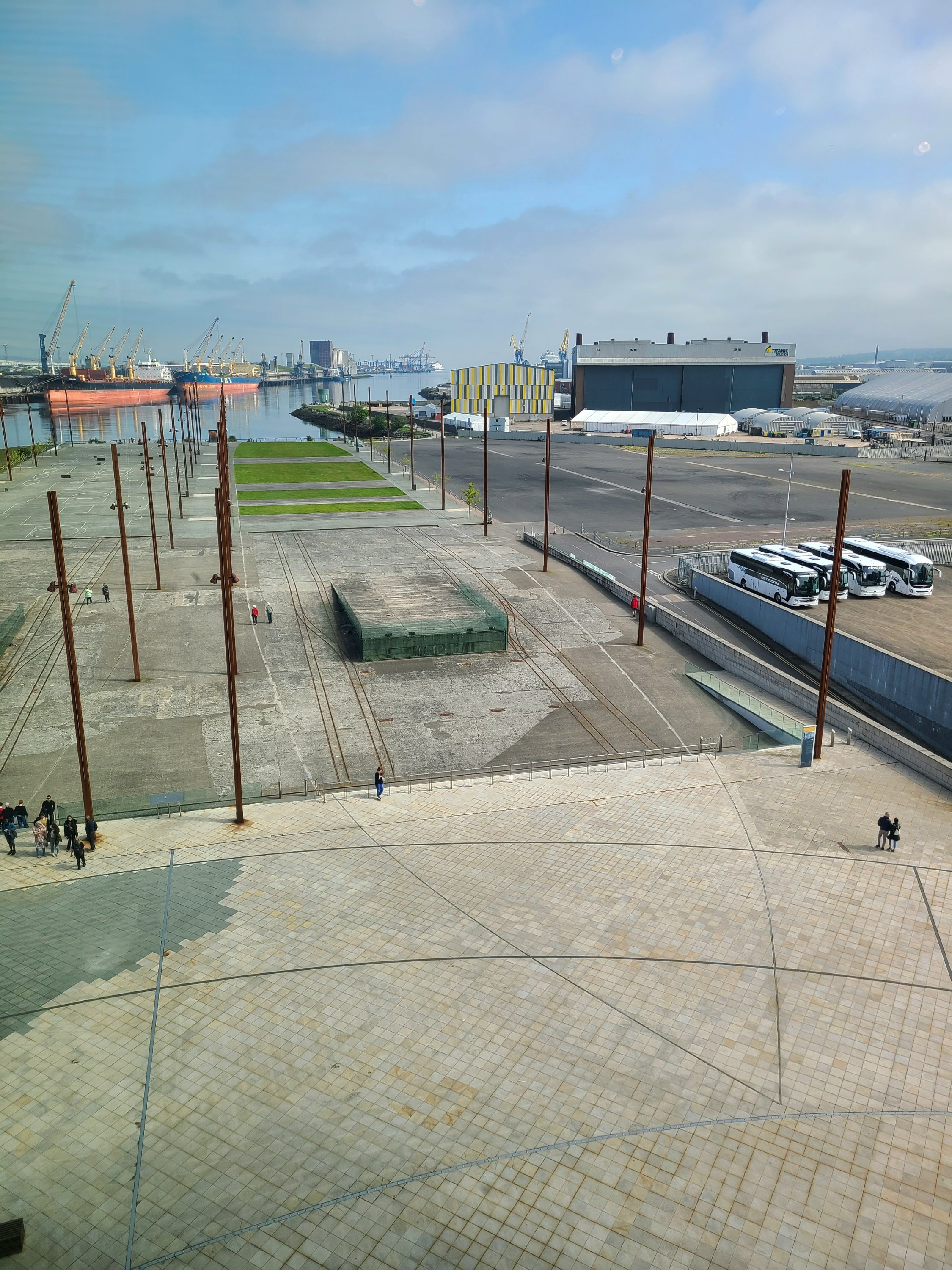
The museum is built on the site of the former Harland & Wolff shipyard where the RMS Titanic was built.

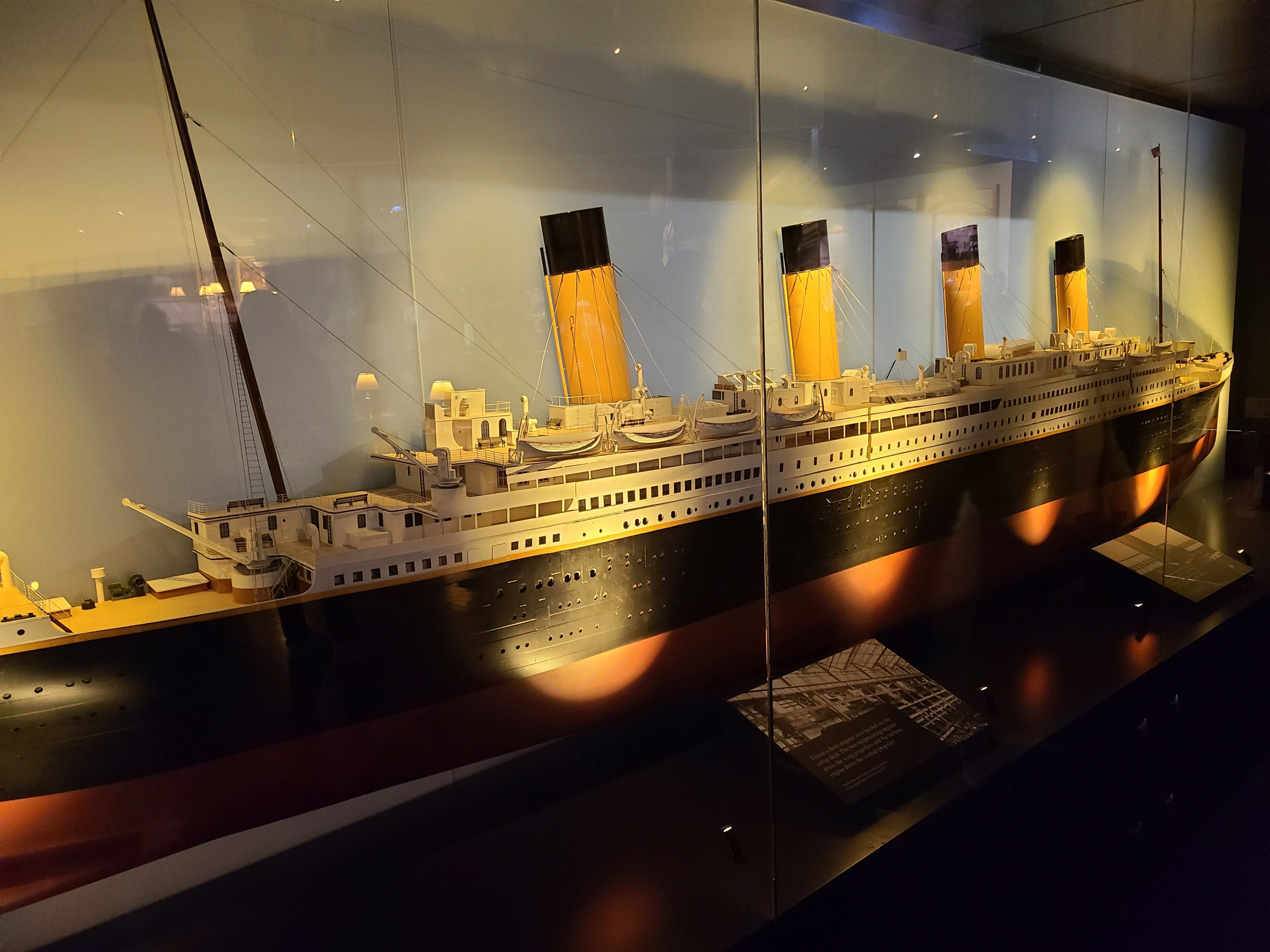
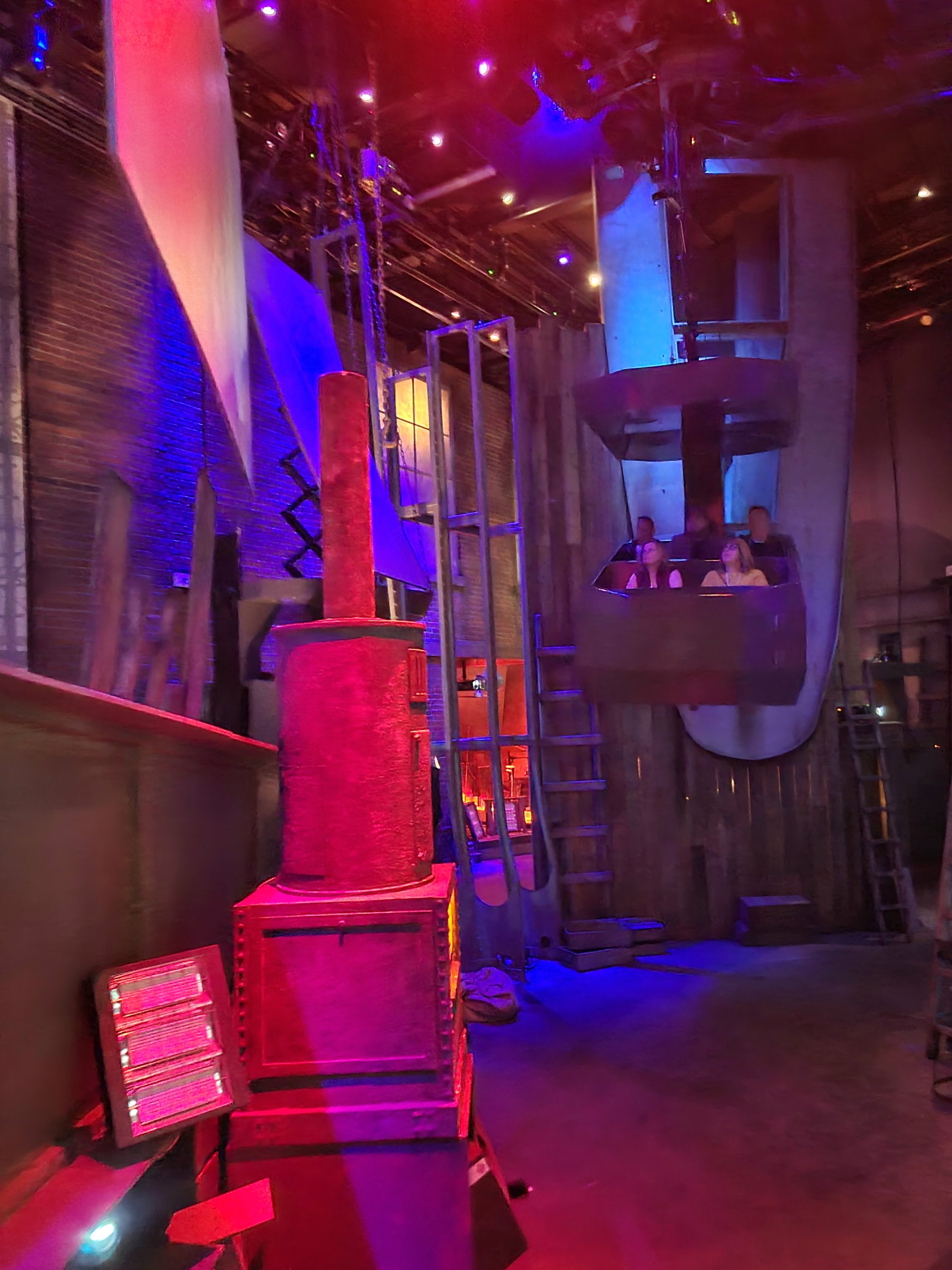
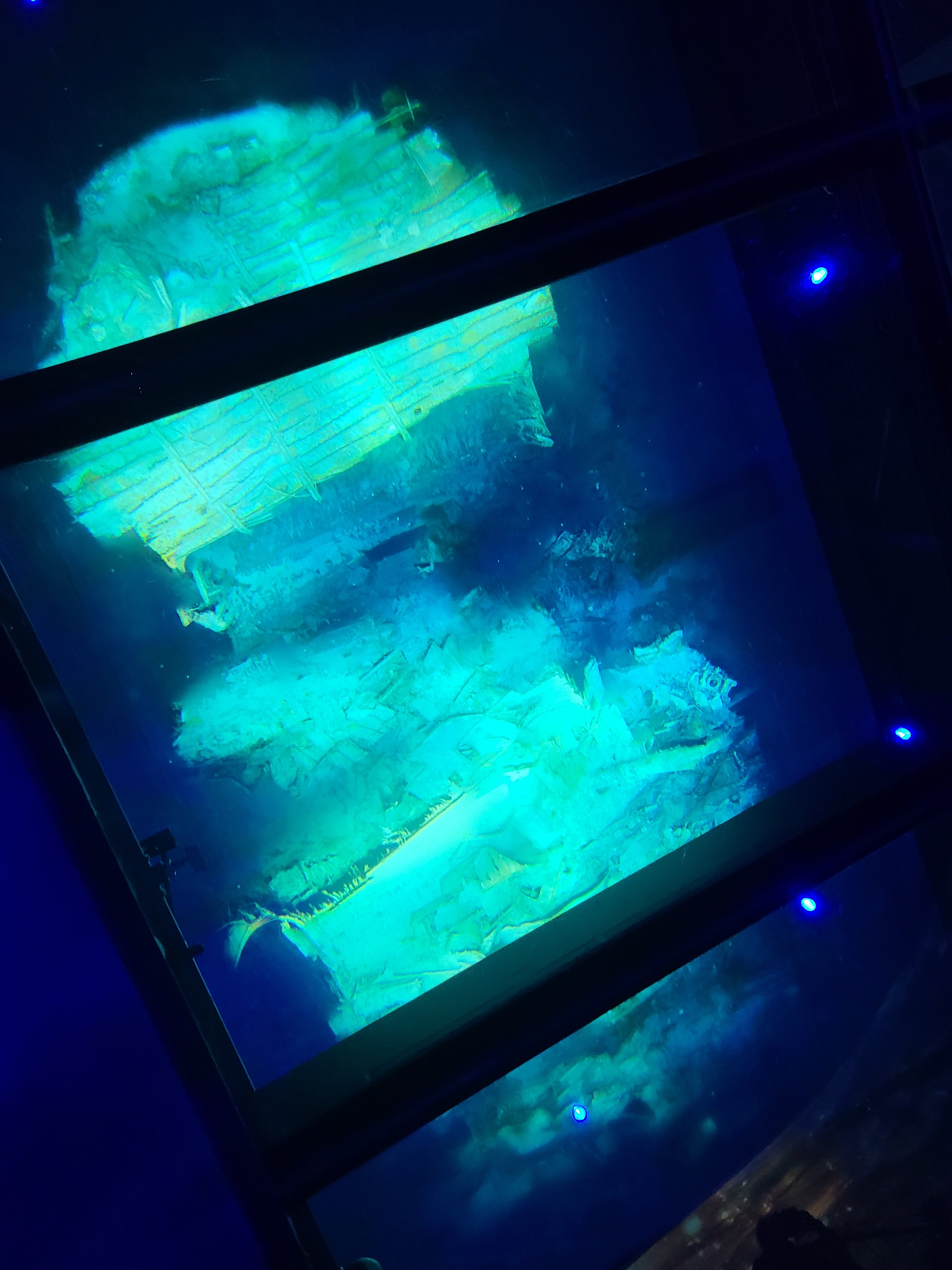
The exhibit tells the story of the Titanic from her start being built in this shipyard until her tragic end and place in history. It is a very interactive exhibit with all the information laid out in a variety of ways to keep you engaged, including a cable car ride to explore life on the docks! If you only do one thing in Belfast, I highly recommend making a stop here. I usually lose interest in reading boards filled with historical facts in museums, but with the use of audio, visual, interactive displays, holograms of people talking about life in Belfast and onboard and more, I was fully engaged. The final exhibit talks about the night the Titanic sank and lists the names of the 713 people who were saved and the 1512 souls that were lost with some info about many of them. I spent 3 hours here and could have likely stayed even longer.

As part of your ticket, you also get access to the SS Nomadic, the last surviving White Star Line ship in the world. This ship was also built by Harland & Wolff and was originally designed to serve as a tender to both the Titanic and the Olympic before serving in both World Wars, becoming a restaurant in Paris, and finally returning home to Belfast. Lots of information found here too, especially for any history buffs.

Located in the Titanic Quarter at 1 Olympic Way, Queen’s Road, Titanic Quarter, Belfast BT3 9EP

Titanic Belfast also has a gift shop, parking, and dining options.

Hours vary throughout the year. Entrance is by time slot. Pre-booking is recommended. Standard admission £24.95.

Other packages are available. Click here for more info.

Belfast City Hall is a fantastic piece of Victorian engineering, built in 1906. With its domed green towers and statue of Queen Victoria out front, this building is definitely something to see. The gardens surrounding City Hall are a popular spot to enjoy lunch on a sunny day.

At the northeast corner, you’ll find a statue of Sir Edward Harland, who founded the Harland & Wolff shipyards and who served as mayor of Belfast from 1885 to 1886. Next to him stands a memorial to the victims of the Titanic.

If you want to learn more about City Hall, guided tours are available daily. For more info and times, click here.

Location – Donegall Square, Belfast

If you’ve read any of my previous blog posts, you’ll know I LOVE a free walking tour. I find they are such a great way to get acquainted with a new place, learn some history and interesting facts, and get tips on the best places to eat, drink, and visit. While the Belfast tour was a little more political than others I’ve been on, our guide grew up in Belfast during The Troubles and had a wealth of information on life here during that time, which he shared as we made our way around the city learning all about what makes Belfast tick. (The Troubles were an ethno-nationalist conflict in Northern Ireland that lasted almost 30 years from the late 1960s to 1998 ending once they struck the Good Friday Agreement in 1998.)

Belfast Free Walking Tours run daily at 11 a.m. & 2:30 p.m. They leave from outside City Hall and can be booked online here. The tours are free and you tip whatever you feel the tour was worth at the end.

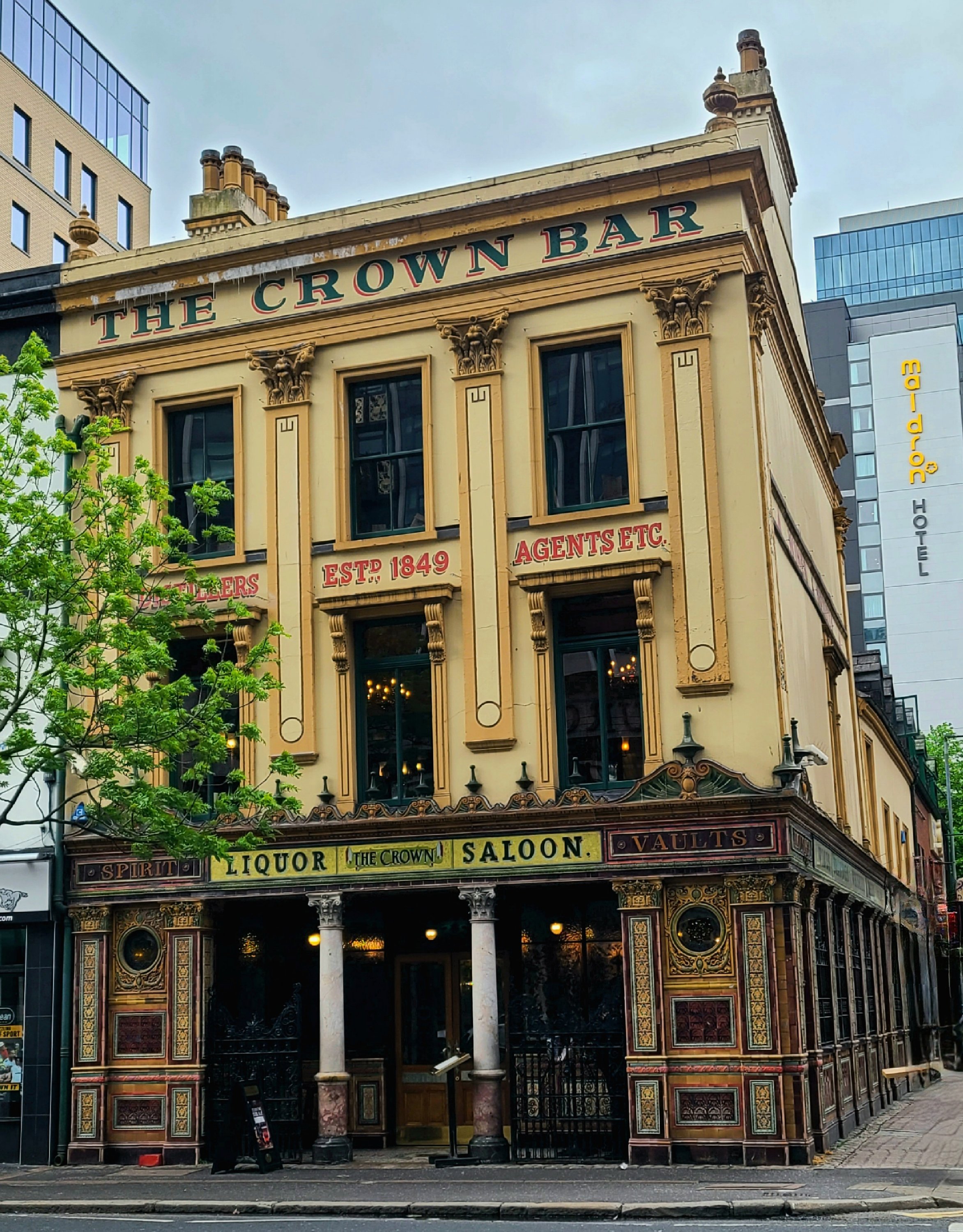
The Crown Liquor Saloon is one of Belfast’s most famous pubs. Formerly known as The Liquor Saloon, it was one of the top Victorian gin palaces found among the industrial cities around the British Isles. The building dates back to 1826 and is now owned by the National Trust.

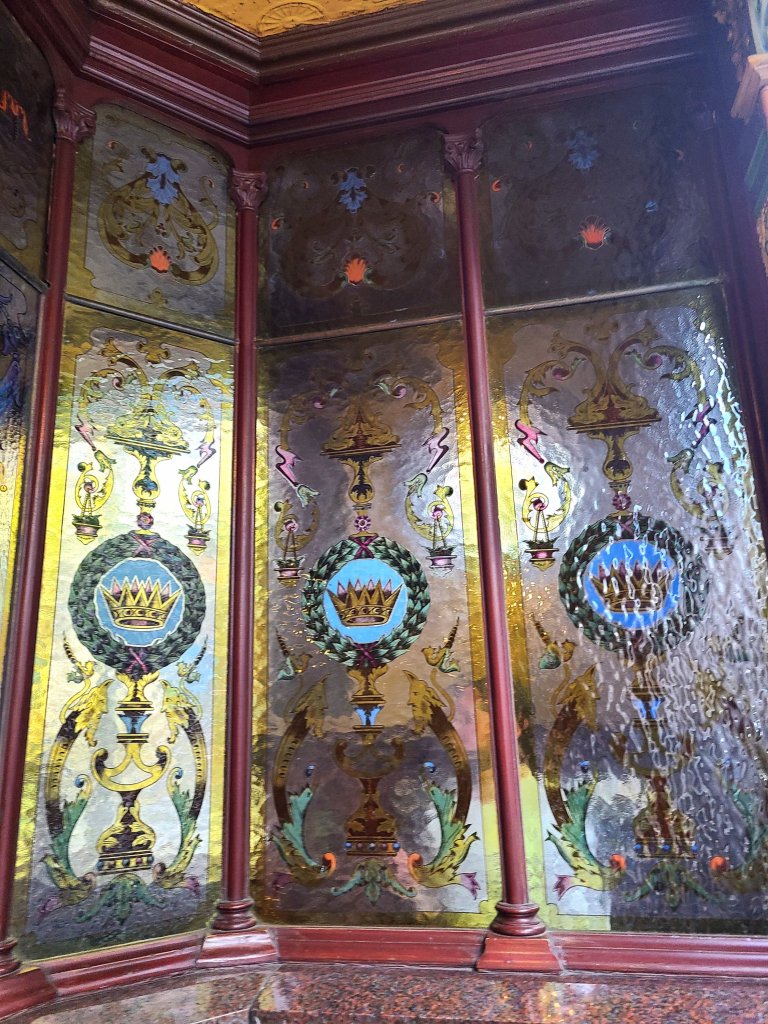
Visually, The Crown remains a true gem. The colourful decor found here is very unique for a pub. Beautiful stained glass, carved pillars, ornate mirrors, beautiful bar top, and a floor laid with colourful mosaic tiles, including the famous Crown found just outside the entrance. It’s impossible to see all the unique details amongst the crowds of people found here. The pub still has the original ‘snugs’ booths with doors that were used to hide those drinking from prying eyes.

The pub was refurbished by Patrick Flanagan in the late 19th century. Our guide told us a legend about how it came to be known as The Crown. Flanagan, a Catholic, argued with his Protestant Royalist wife over what the pub’s name should be. In the end, he told his wife that he would name the pub The Crown in honour of the British monarchy. However, he sneakily took his revenge by placing the crown mosaic just outside the entrance door where customers would tread on it every day!

Stop by for a drink or enjoy a delicious meal here, like I did.

The Crown also has an upstairs dining area. Reservations are highly recommended as most nights it is booked up. Make a reservation here.

Located at 46 Great Victoria St, Belfast

Across from The Crown is the famous Europa Hotel. This is the most bombed hotel in the world after suffering 36 bomb attacks during the Troubles.

At that time, no one was travelling to Northern Ireland except for the journalists who were covering the conflict. What better way to get attention for their cause than by bombing the place the press were staying. It has been fully restored since and is now a 4-star hotel here.

Next door to the Europa is Belfast’s Grand Opera House. This Victorian theatre was built in 1895 and continues to offer a variety of entertainment year-round. During one of the many bombings that occurred next door, the Opera House was hit and ruined on one side. It has since been restored, but if you look closely, you will see that the brickwork along one side doesn’t quite match up.

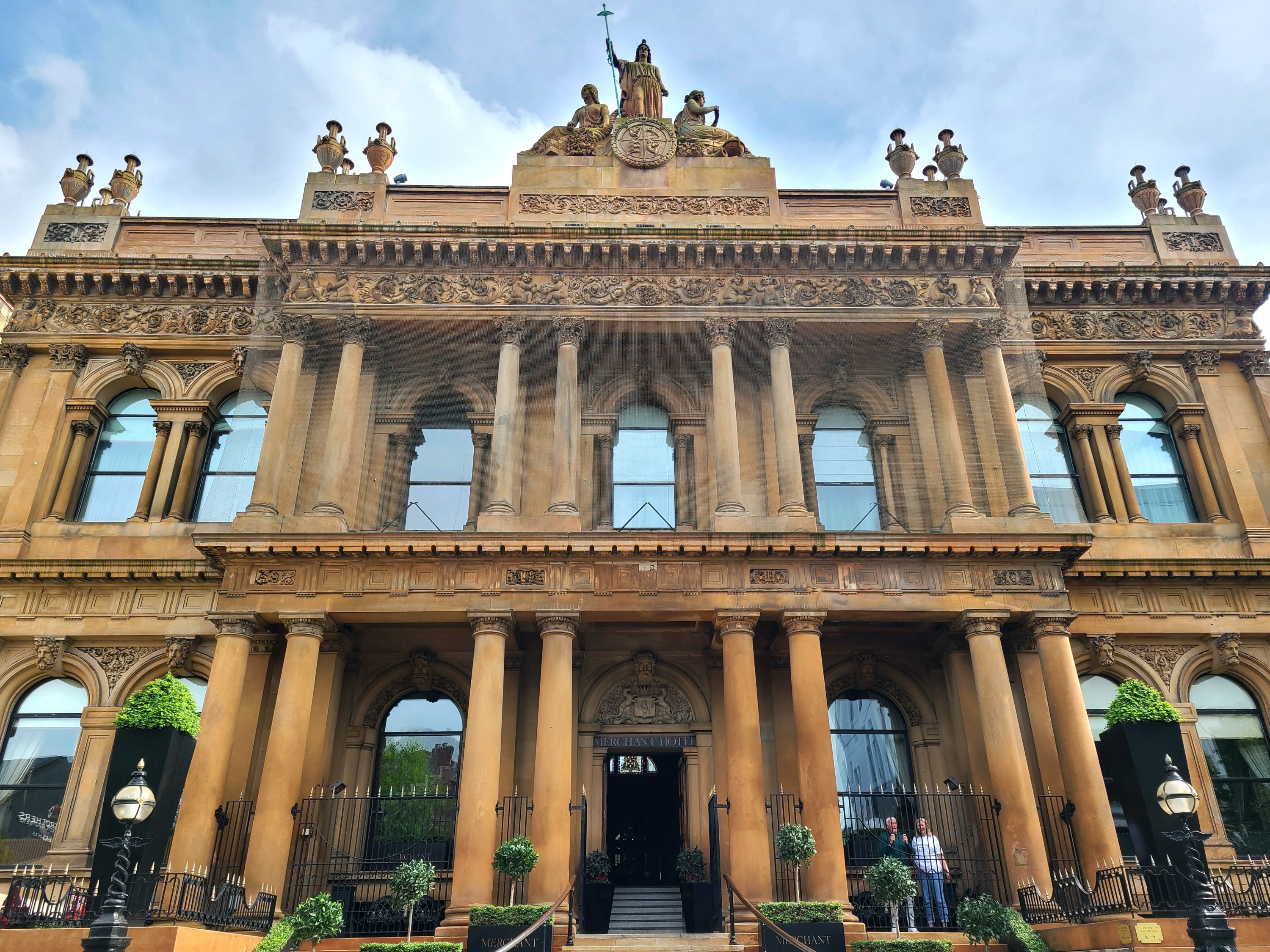
The Merchant Hotel began as the headquarters of the Ulster Bank before being turned into a five-star luxury hotel in 2006. This sandstone building has long been admired for its distinctive architectural style. Belfast has become a popular film destination over the last decade or so and the Merchant Hotel became the go-to place to stay while filming in Belfast.

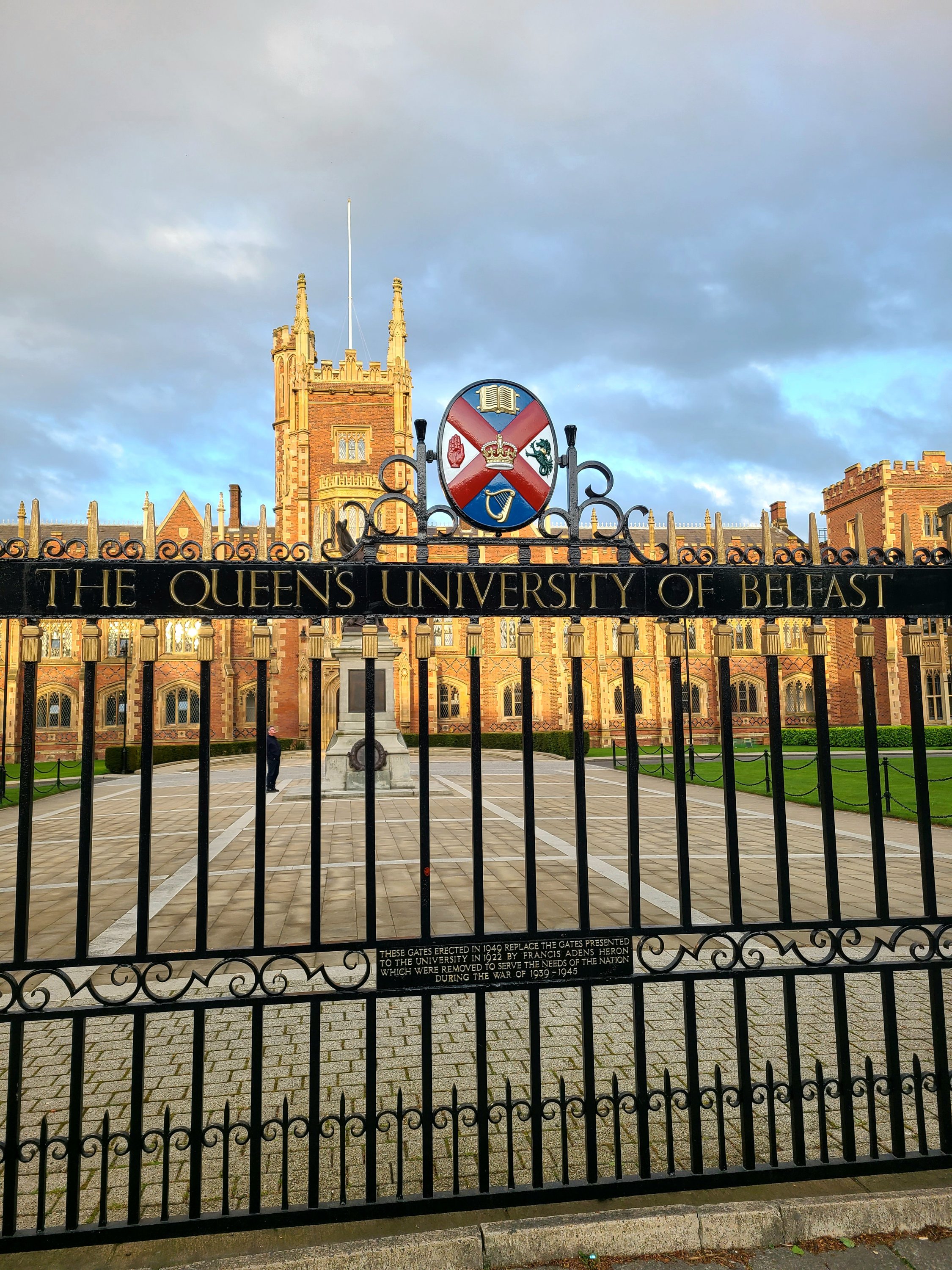
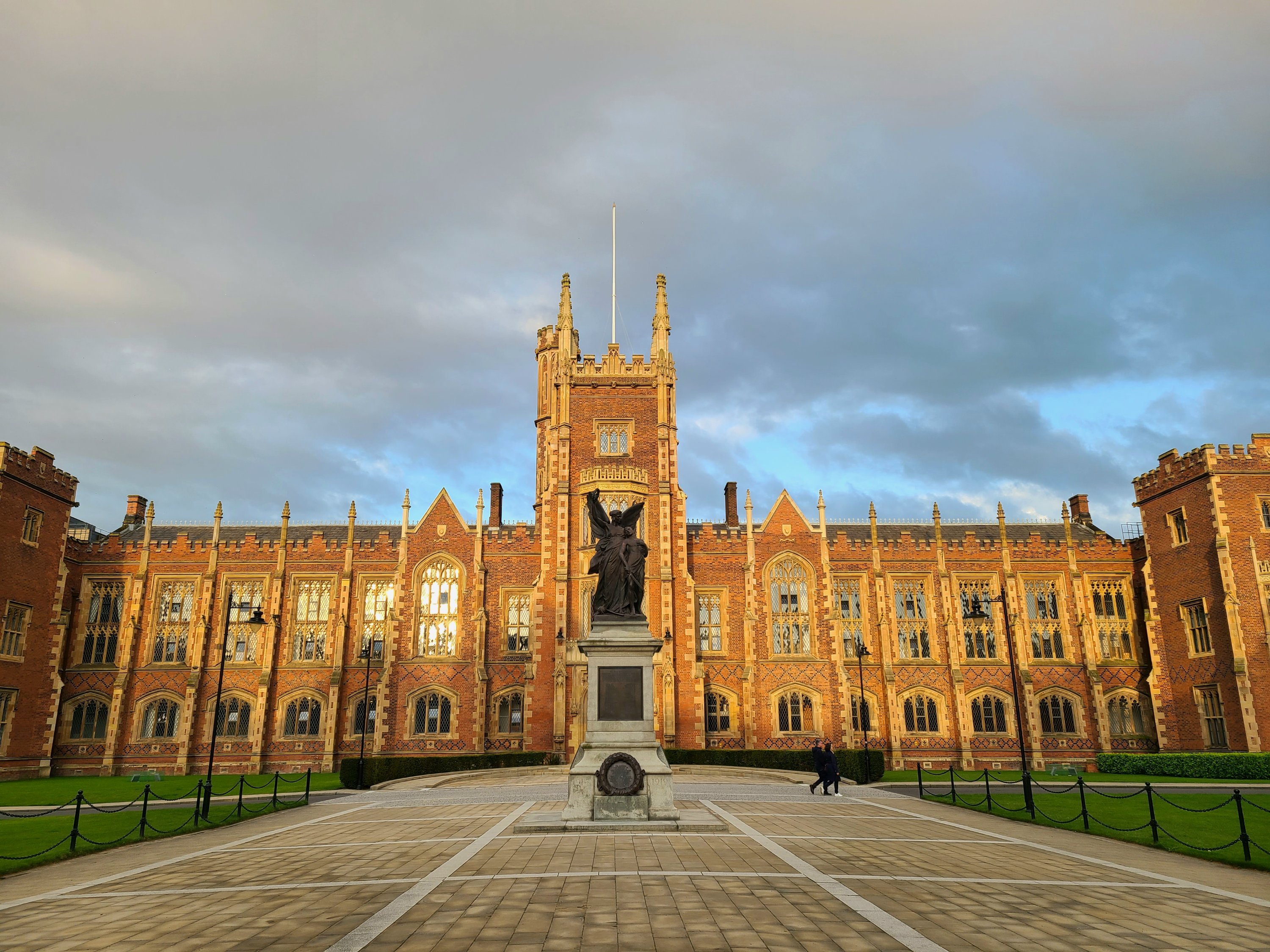
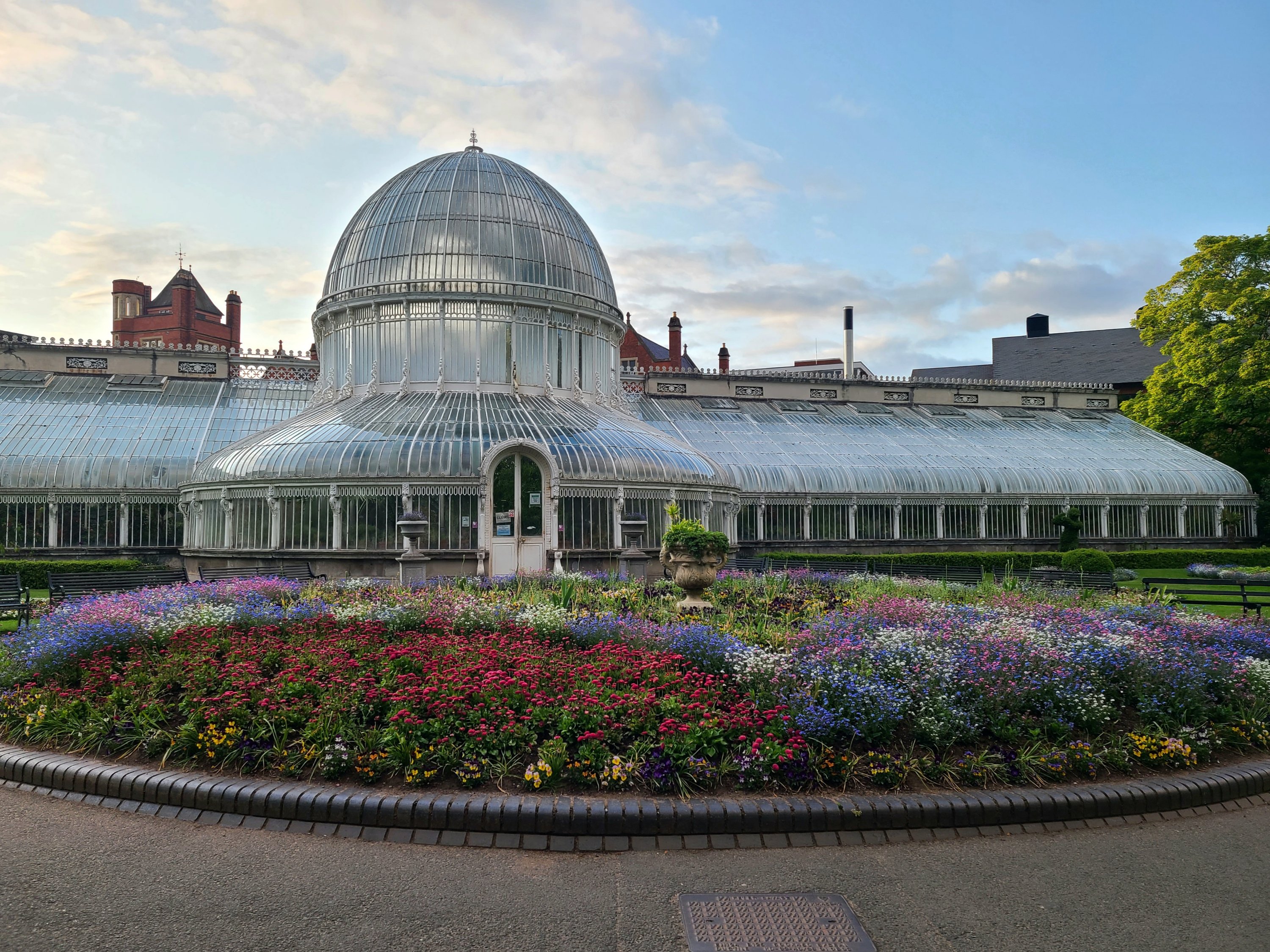
The prestigious Queen’s University has been around since 1845. With a beautiful, leafy green campus and the impressive Lanyon Building, the university is worth checking out as you make your way to the Belfast Botanic Gardens. The gardens were established in 1828 by the Belfast Botanic and Horticultural Society and have become a popular spot among both tourists and locals. Occupying 28 acres, the park is also home to the Palm House and the Tropical Ravine. Entry is free.

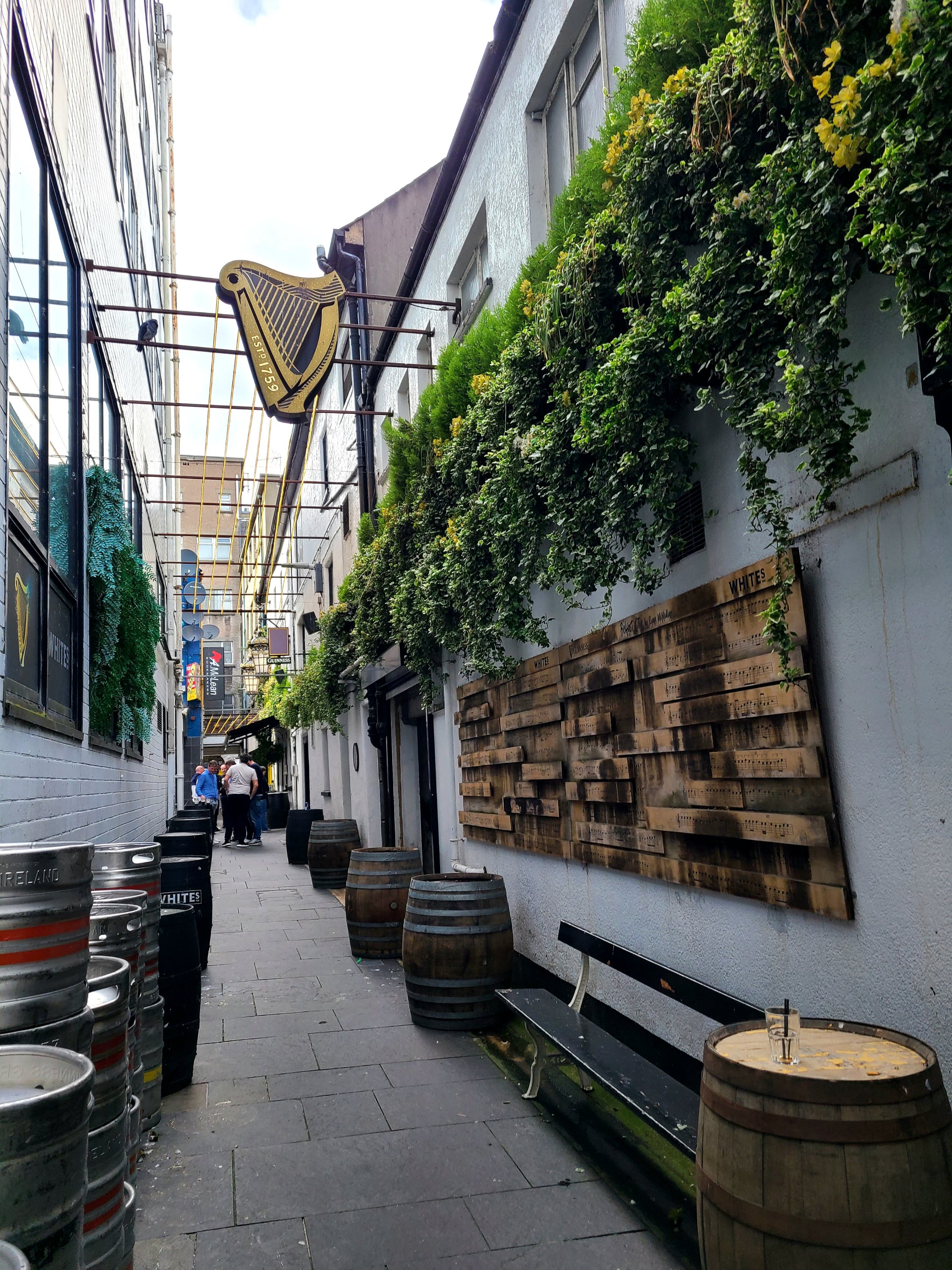
Belfast has numerous pubs, some dating as far back as the 1600s. As I was first walking around the city, I hardly saw any. Then, on my walking tour, I learned that most of the pubs are hidden down alleyways because liquor licenses/operating licenses were mainly granted by people who didn’t drink and didn’t want pubs corrupting the city, so by having them in alleys, they weren’t visible along the streets and more likely to receive their permit!

Grabbing a pint and listening to some live music is the perfect way to end a day in Belfast!

Categories: Blog, Europe, Photo, Where in the World | Tags: , , , , , , , , , , , | Leave a comment

Giant’s Causeway

Are you ready to follow in the footsteps of giants??

When I arrived in Northern Ireland, visiting Giant’s Causeway was at the top of my must- sees during my short stay. I had seen photos of this unique-looking causeway for years and knew I wanted to see it up close.

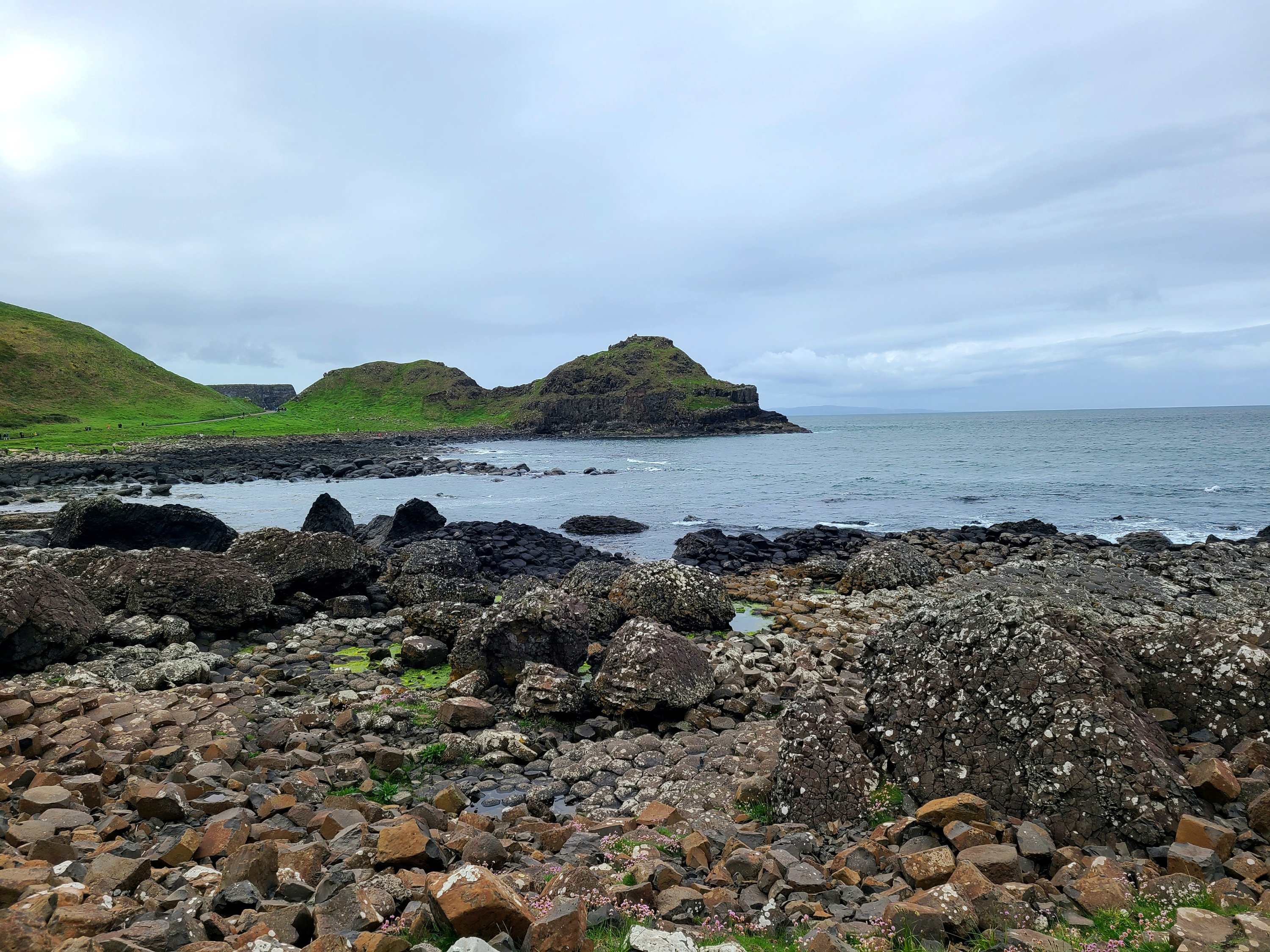
Giant’s Causeway is located in County Antrim on the North Coast of Northern Ireland near the town of Bushmills. It is found along the Causeway Coast Route, which runs from Carrickfergus to Derry. This route is considered to be one of the most beautiful drives in Ireland. I only did part of it, but the views along the way were even better than I imagined.

So where did this unique causeway come from?

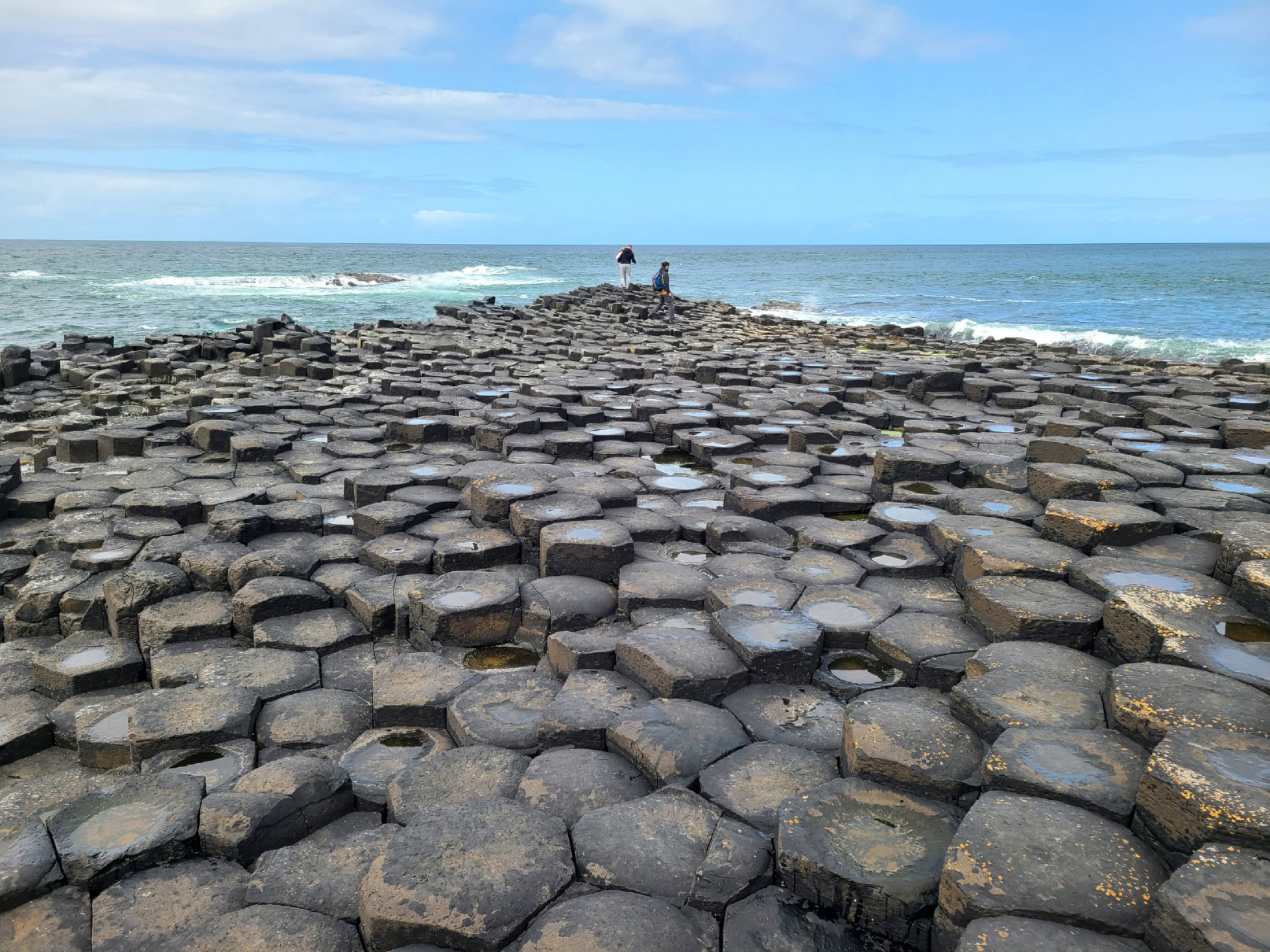
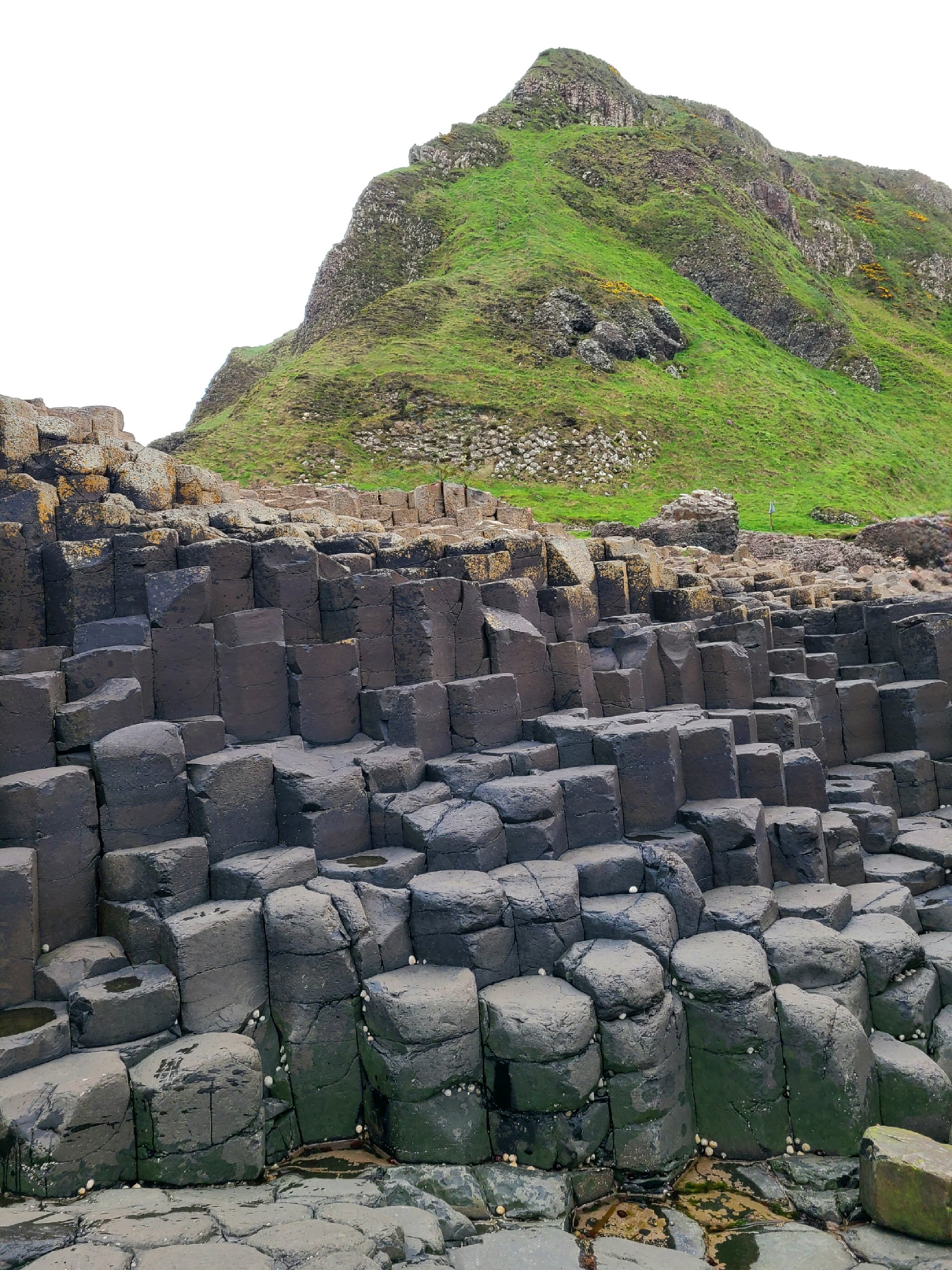
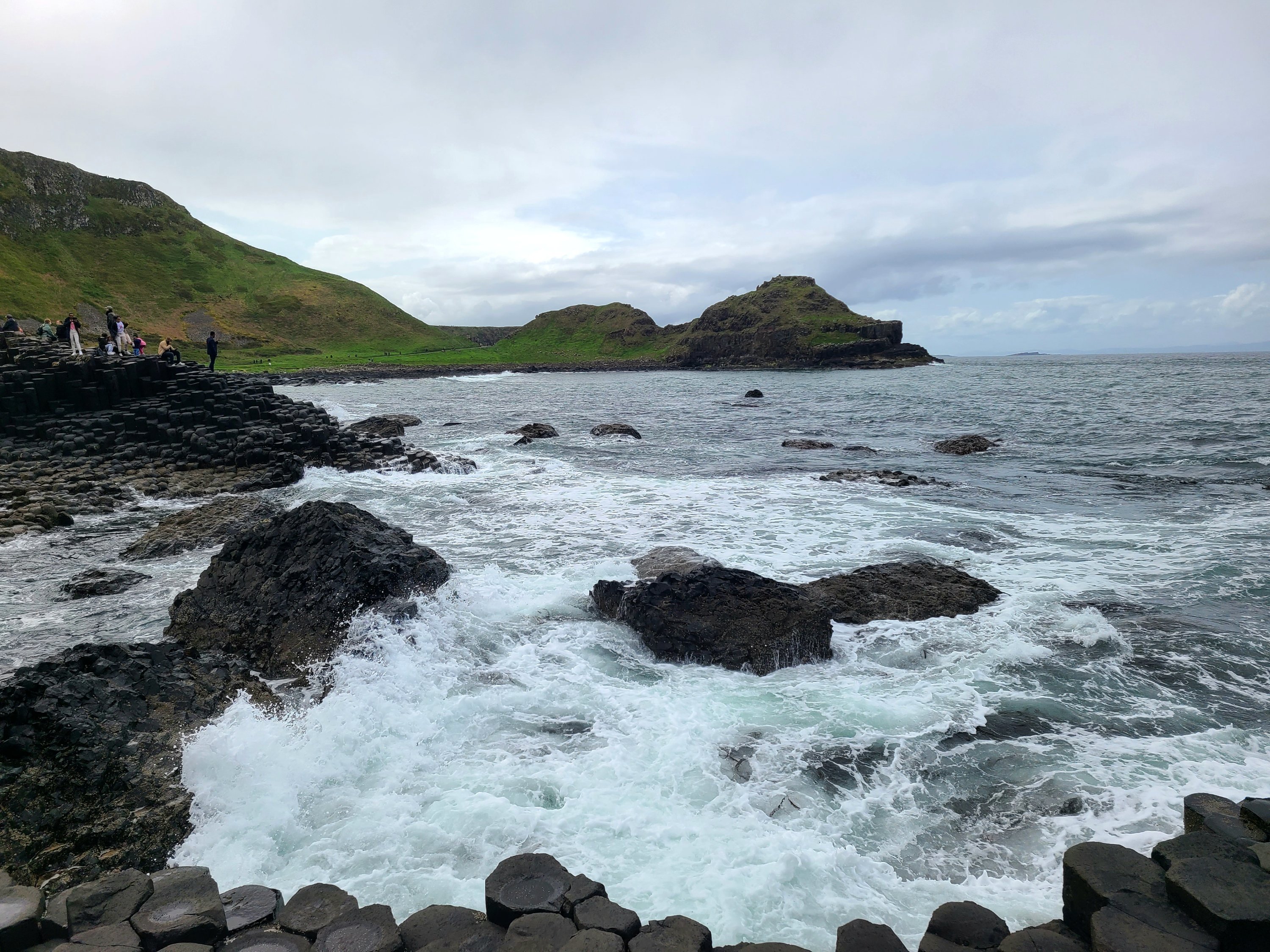
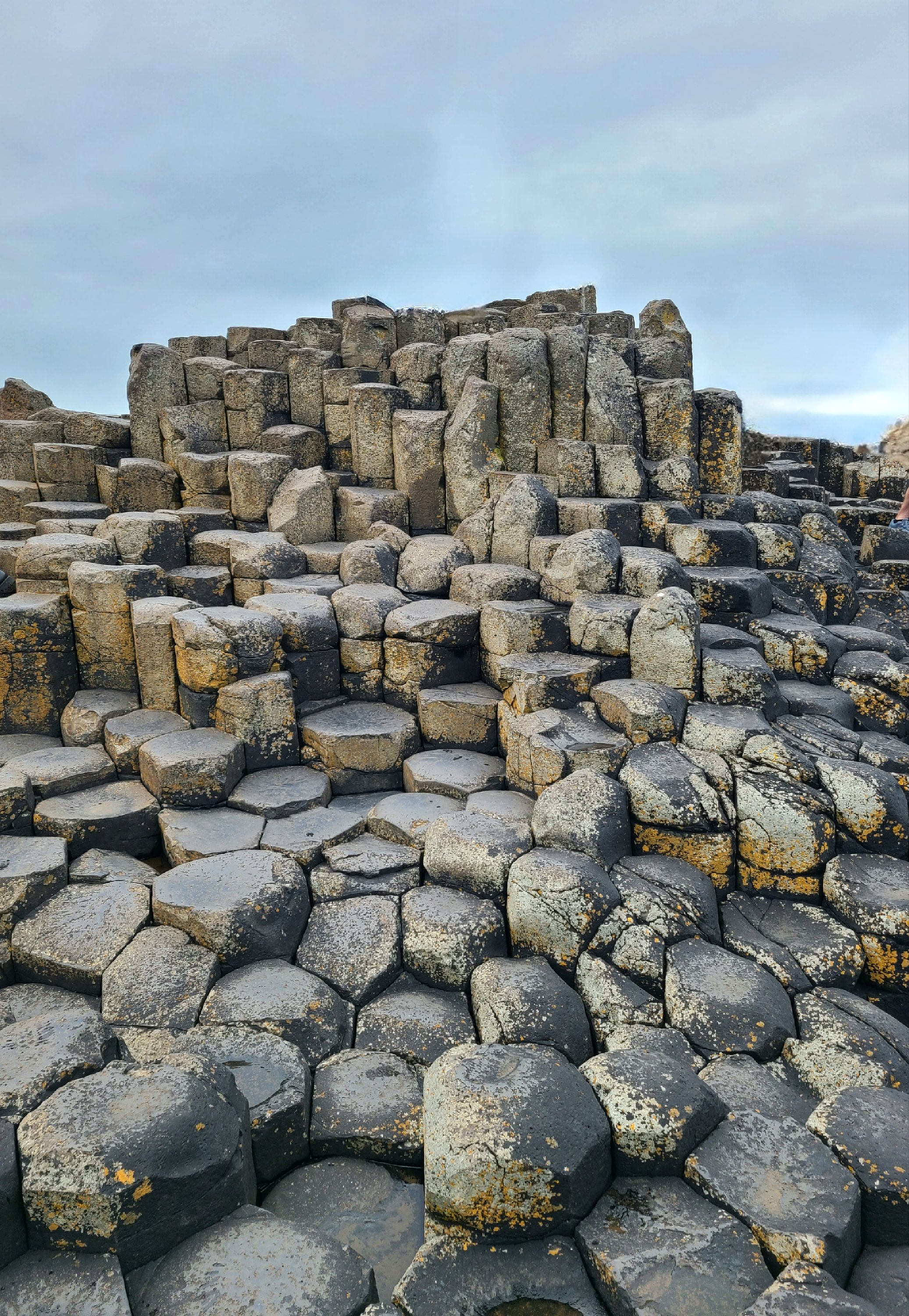
The scientific explanation is that the Giant’s Causeway was formed by volcanic activity 50-60 million years ago. The basalt lava oozed up through the chalk beds and then cooled, forming these awesome pillars. Over 40,000 basalt pillars are found here!

While that explanation is great … I prefer the legend of how the causeway was built by the Irish giant Finn MacCool. After being threatened by Scottish giant Benandonner, Finn began tearing up chunks of the Antrim coastline and hurling them into the sea, creating a bridge—the Giant’s Causeway—to reach Benandonner. However, once he arrived in Scotland, he realized that Benandonner was a far bigger giant than himself and Finn turned and ran back to Ireland. To trick Benandonner, he and his wife disguised him as a baby. When Benandonner saw him, he thought, “If that’s how big the baby is, I don’t want to meet the father,” and he fled back to Scotland, destroying much of the causeway so Finn could not follow.

If you visit Fingal’s Cave in Scotland, you will find it shares a similar geology and appearance to the Giant’s Causeway! 

Whichever version you choose to believe, this UNESCO World Heritage Site should definitely be on your must-see list while in Northern Ireland.

Visiting the Giant’s Causeway:

The Giant’s Causeway itself is free to visit.

However, if you decide to go to the visitor’s centre then you will be required to pay. The National Trust recently built a huge visitor centre here and the signs can be misleading, making you think you are required to pay to see the causeway itself. If you choose to go to the visitor’s centre, you will also have access to an audio guide and the Giant’s Causeway car parks. The entrance fee here is £13.50. I opted to avoid the visitor’s centre and take myself on a free tour of this natural wonder!

There are several trails to hike around the Giant’s Causeway varying in length and difficulty. The easiest one is the Blue Trail, leading from the visitor’s centre down to the Giant’s Boot. If you have a limited amount of time to explore the Giant’s Causeway, this is the trail for you.

The hike down is fairly easy, although the terrain is hilly and uneven in spots. Be sure to wear proper shoes.

If mobility is an issue, there is also a shuttle bus that goes from the visitor’s centre down to the causeway for £1. (Times vary and on busy days you may have to wait as space is limited.)

The whole site is stunning, with green fields leading down to the water, but seeing the unique basalt pillars rising up from the water is truly amazing.

The best time to visit is early in the morning or at dusk, when photos are great and the crowds are minimal.

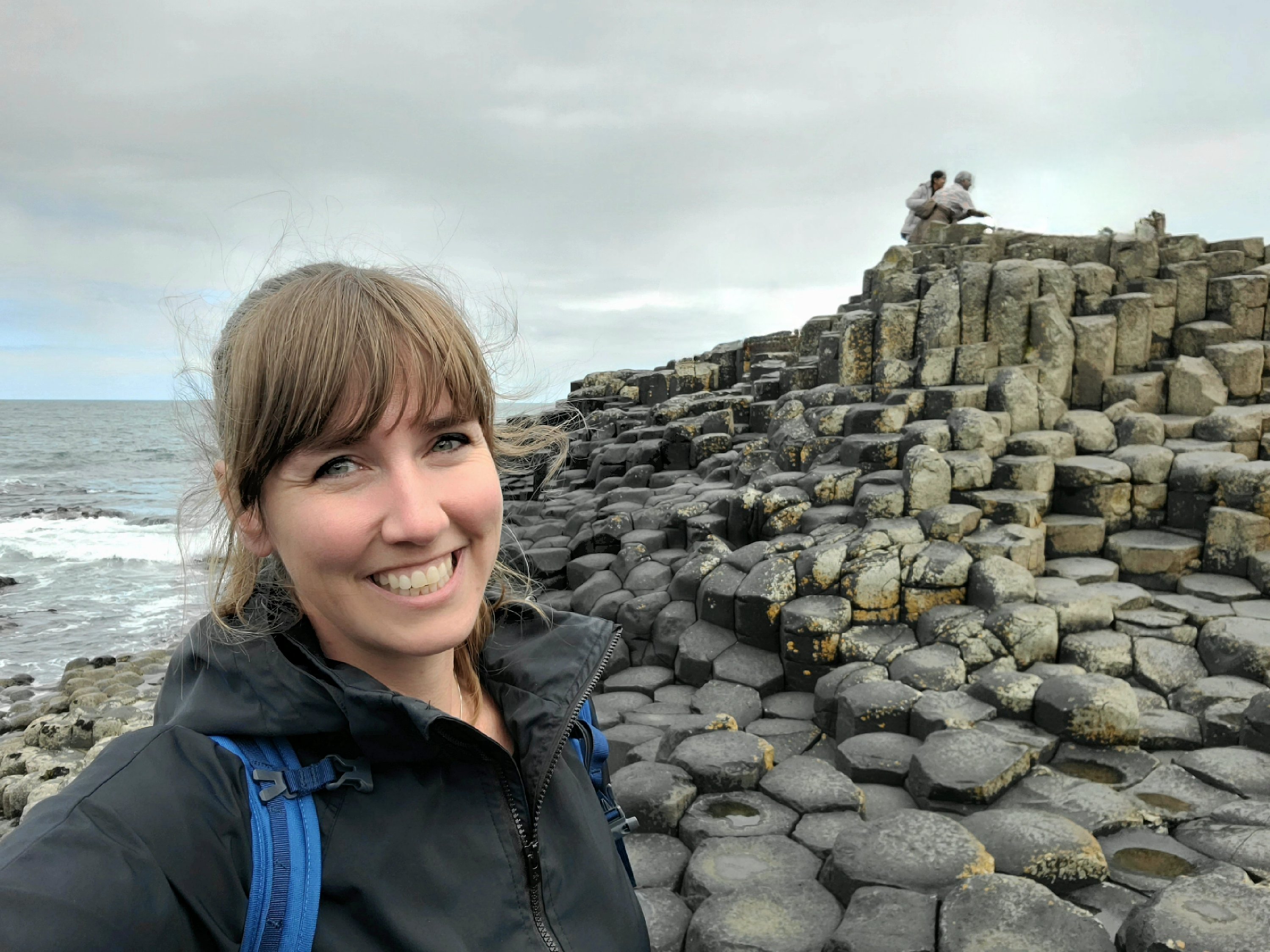
I spent a couple hours here, walking along the coastline, climbing on the pillars, and looking around in awe. It truly is a sight to see up close!

Other stops nearby:

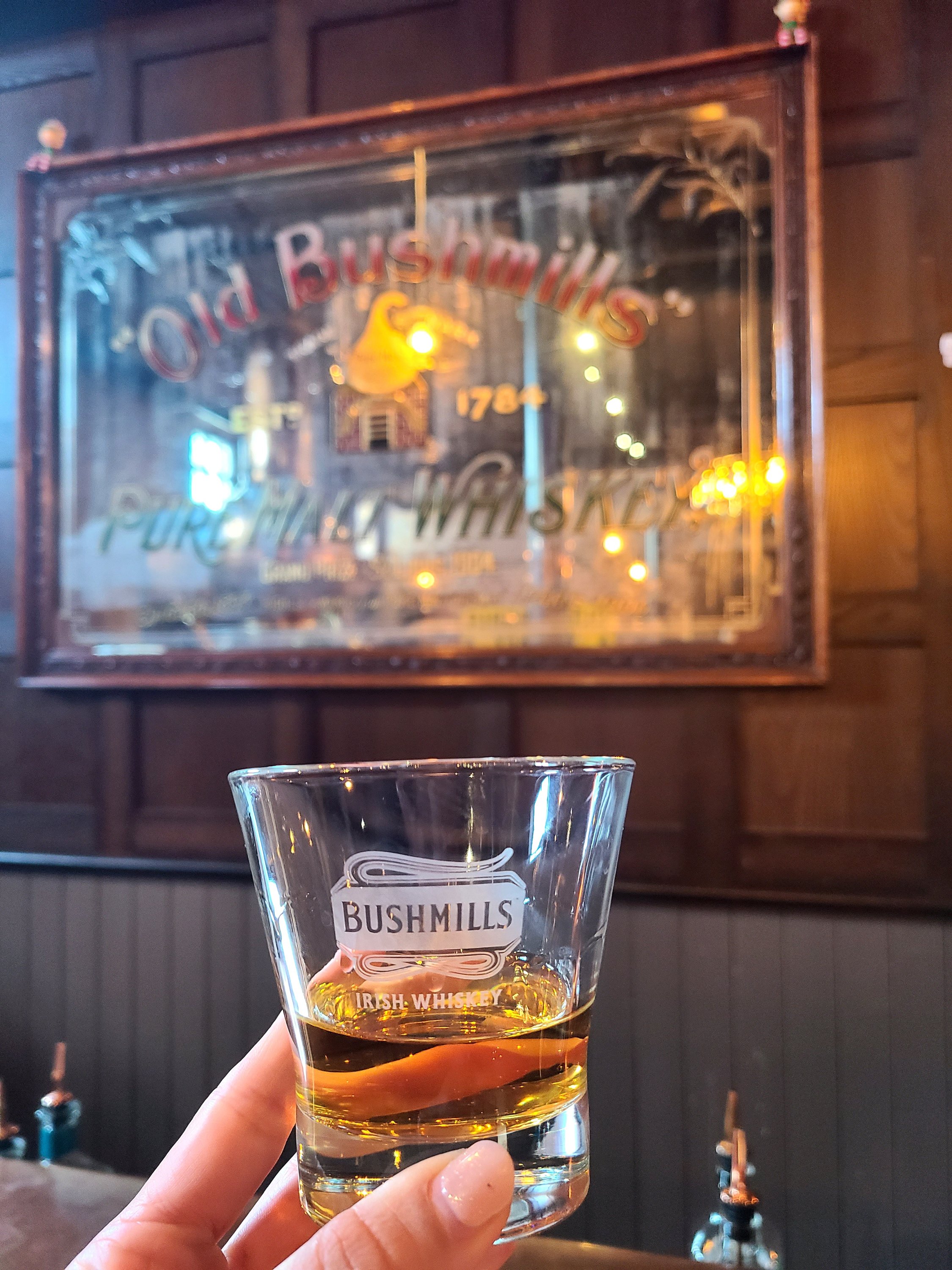
Old Bushmills Distillery – The world’s oldest licensed whiskey distillery. It has been around since 1608. Book a tour or a tasting or just stop by the gift shop or bar.

Dunluce Castle – This beautiful medieval castle, built on the side of a cliff, dates back to the early 1500s. Legend has it that the kitchen broke off and fell into the sea below (along with some of the kitchen staff!). The castle is mainly ruins now with some historical and archaeological exhibits open to the public. This picturesque Irish castle is also a popular spot for wedding photos.

(Open 9 a.m. – 5 p.m., last admission 4:30pm. £6.)

Carrick-a-rede – This rope bridge was built by fishermen in 1755 to assist with their salmon fishing. It hangs 30m above sea level and is now owned by the National Trust. Along with the rope bridge there is a 2km coastal walk and a 400-year-old Fisherman’s Cottage.

If you want to cross the rope bridge, you need to prebook a time. (Note: coaches are no longer allowed to enter the site.)

Carrickfergus Castle – Located in the town of Carrickfergus. This Norman Castle is one of the best-preserved medieval structures in Ireland.

 (Open 9:30 a.m. – 4:30 p.m., £6.)

Northern Ireland is also home to many filming locations from the hit HBO series Game of Thrones. There are whole tours based around the locations.

Two of the most popular are:

The Dark Hedges – This beautiful avenue of beech trees along Bregagh Road has become one of the most photographed spots in Northern Ireland. In Game of Thrones, it represents the Kingsroad. It has become a very popular tourist spot. It is free to walk along the avenue, but remember that vehicles are not allowed. Parking is available nearby at the Dark Hedges Estate, where you will also find a cafe. The Dark Hedges are a short walk from there.

Cushendun Caves – These caves have been formed over 400 million years. The numerous rock cavities have all been naturally carved out by water and time. There’s a little stone beach leading to the caves. It’s a quick stop, but impressive to see. In Game of Thrones, this is where Melisandre gives birth to the terrible shadow killer. Access to the cave is free and open all year round. Parking is found nearby. Just keep in mind that people live in the flats beside the caves, so follow the trail and avoid the locals’ property.

If you are driving around Northern Ireland, all these stops can easily be seen in a day or two, depending on how long you wish to spend at each stop and how many other stops you want to make along the Causeway Coast Route. If, like me, you are without a car and have a limited amount of time, McComb’s Tours does a great day trip, stopping at all these places and more throughout the day. Book the tour here.

So get out and enjoy the beauty of Northern Ireland!

Categories: Blog, Europe, Photo, Where in the World | Tags: , , , , , , , , , , | Leave a comment

North Wales

There are so many beautiful sights to see in North Wales that I had trouble deciding where to go. I decided to make my home base in the beautiful old seaside town of Llandudno.

When travelling, I usually like to make my own way around an area so I can spend as much time as I want at each stop. If you are doing a road trip around North Wales, you can easily drive from town to town, but as I was without a car on this short Welsh adventure, I opted to book a day trip to allow me to see as much as possible. In Llandudno, I booked a full day trip to see Portmeirion, Snowdonia & Castles with Adventure Tour Snowdonia.

Leaving from Llandudno, we made our way up and around the Great Orme, with breathtaking views of the Irish Sea and the neighbouring towns, before stopping at the nearby town of Conwy. Voted one of the best places to live in Wales, this town is definitely worth a visit.

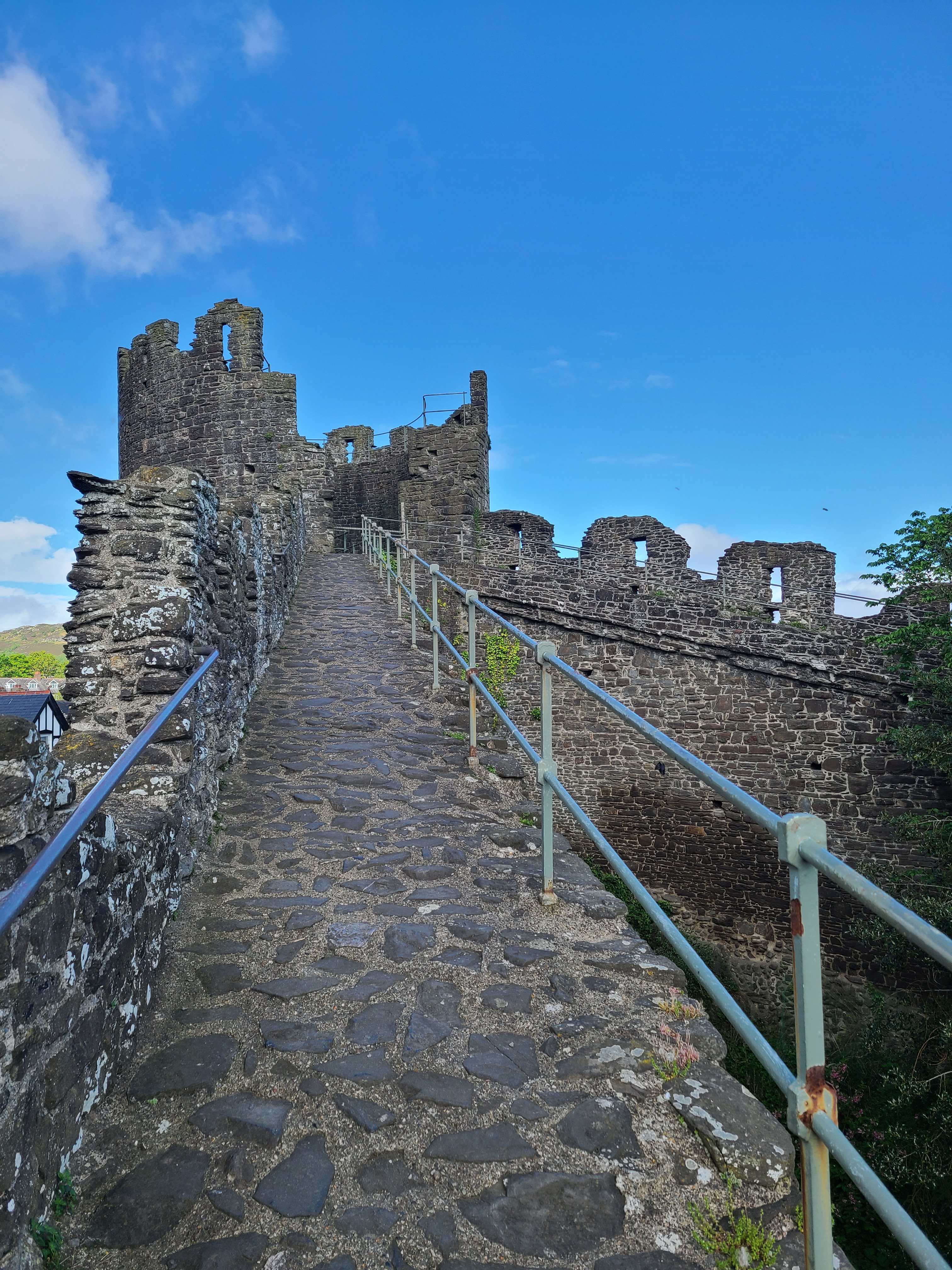
The medieval walls here are part of the UNESCO World Heritage Site that includes Conwy Castle as well as Beaumaris and Harlech Castles. They are some of the finest and most complete walls remaining in Europe, running almost uninterrupted for three quarters of a mile around Conwy’s heart, with 21 towers and three original gateways.

The best part is you can walk almost all the way around the top of the walls, giving you a great view of the town, Conwy Castle, and the countryside.

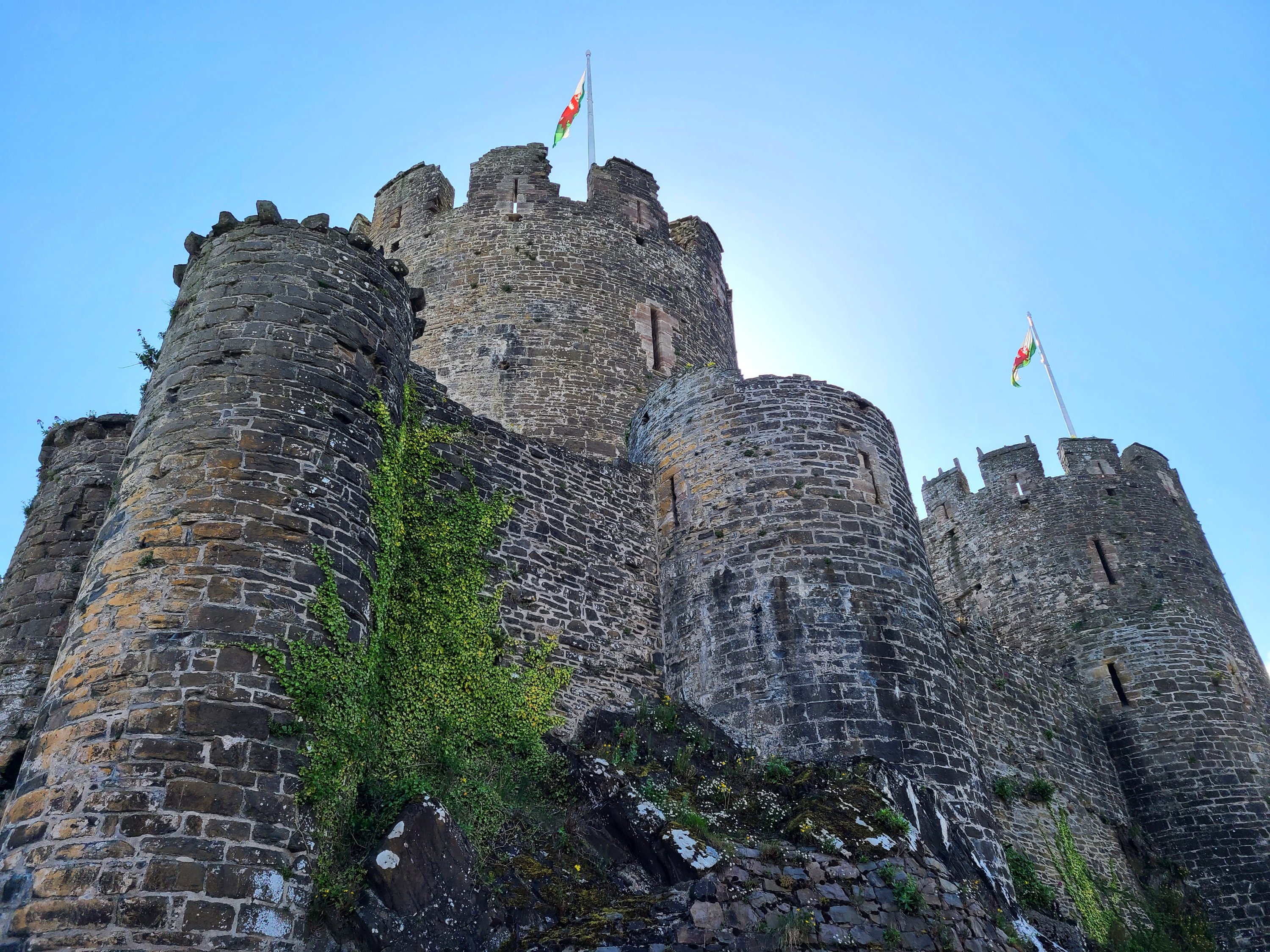
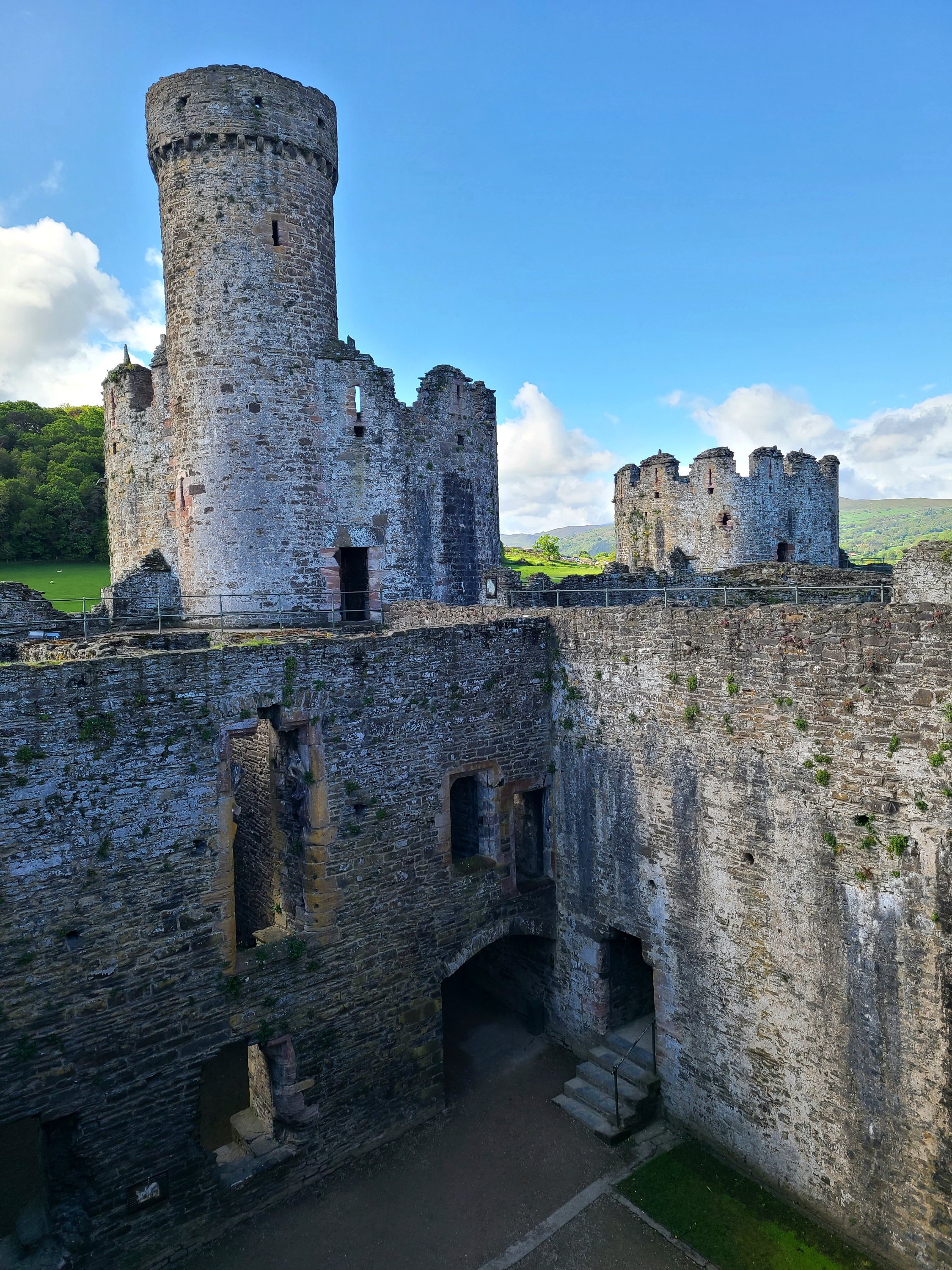
Conwy Castle towers at the entrance of the town 700 years later.

King Edward I had it built in 4 years from 1283-1287. Monks had been living here before he ordered them to leave or be killed and he then moved the castle to its current location.

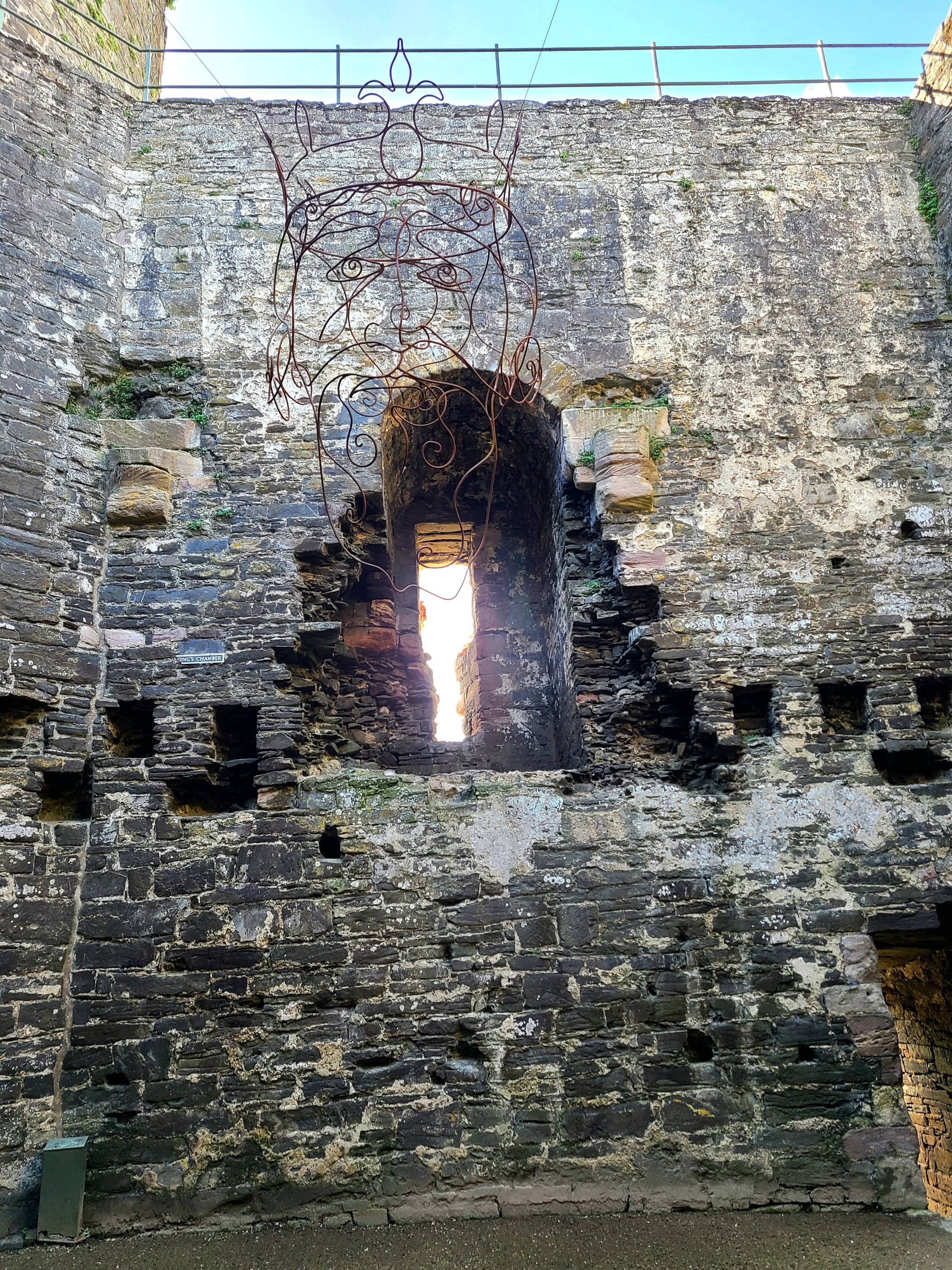
The outer walls of this medieval fortress and the spiral stairs have been restored over the years so you can still climb the levels of the eight towers throughout and imagine what it would have looked like. Apart from the absence of roofs, the interior is largely intact, especially the grand 40m/130ft Great Hall and King’s Apartments. Peer into the prison tower, check out the view from the King’s Tower, and admire the beautiful stained glass in King Edward’s private chapel tower.

(Open daily, entry £11.70.)

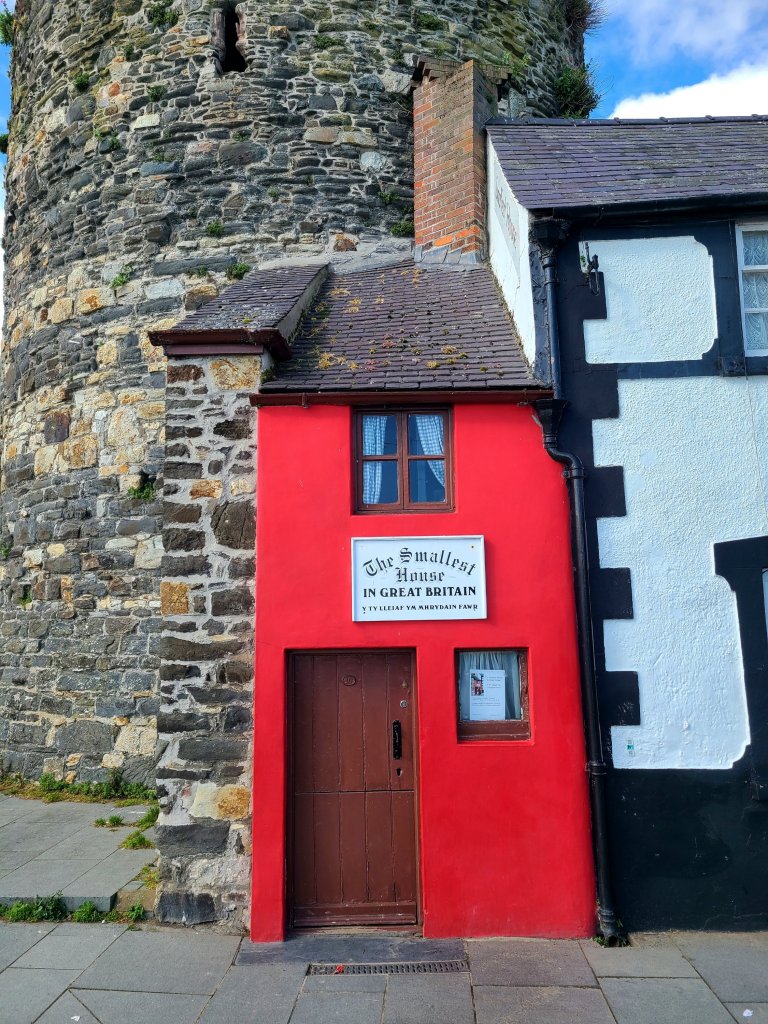
Down along Conwy Quay, you’ll find the Smallest House in Britain. This small red house measures 10ft x 6ft and was last lived in by Robert Jones, who was 6ft 3″ tall, until 1900. Since then, it has become a tourist attraction. In the early 1920s, The Guinness Book of Records confirmed its status as the smallest house in Great Britain.

Since then, it has become a tourist attraction. In the early 1920s, The Guinness Book of Records confirmed its status as the smallest house in Great Britain

(Open daily, entry £1.50.)

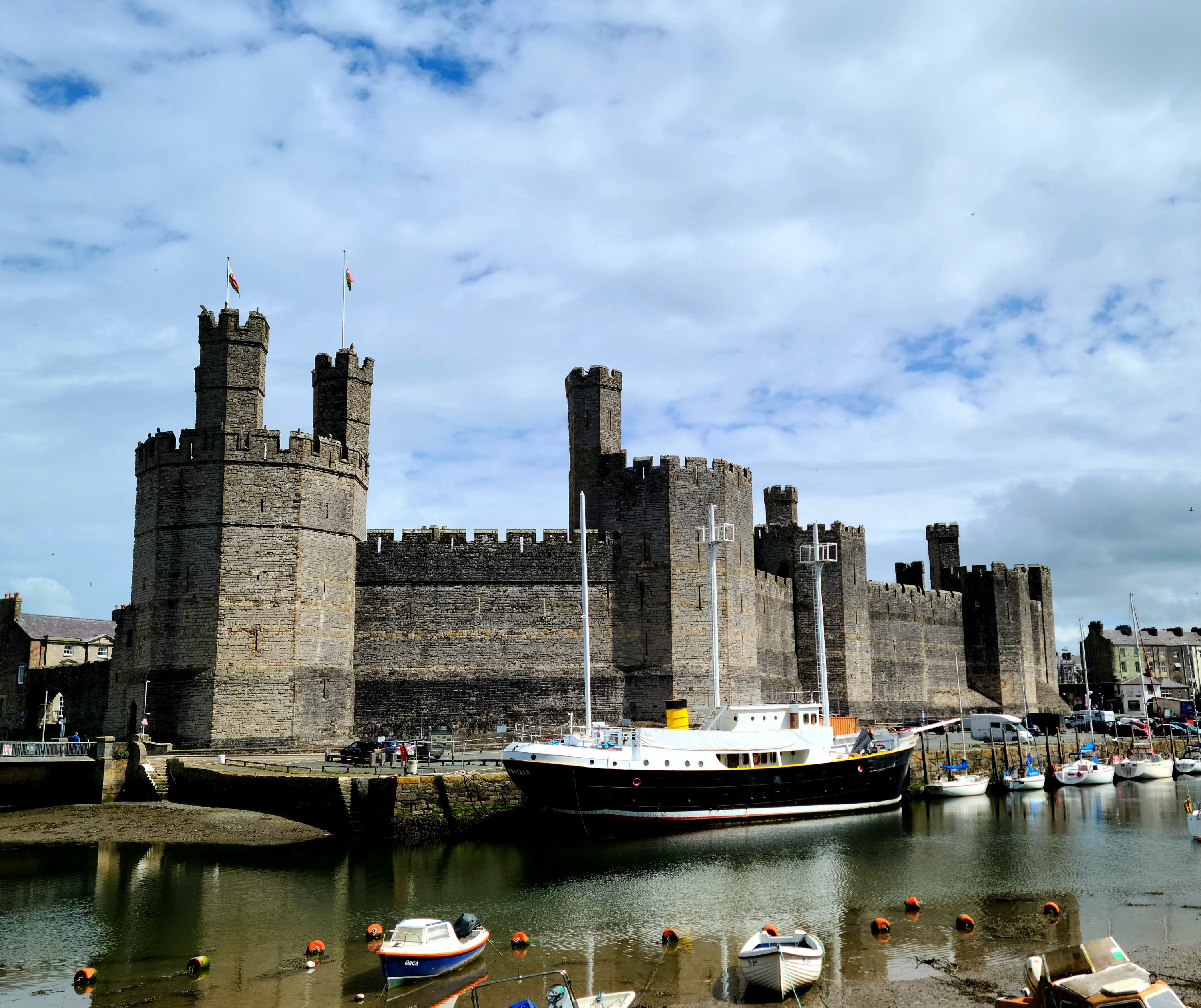
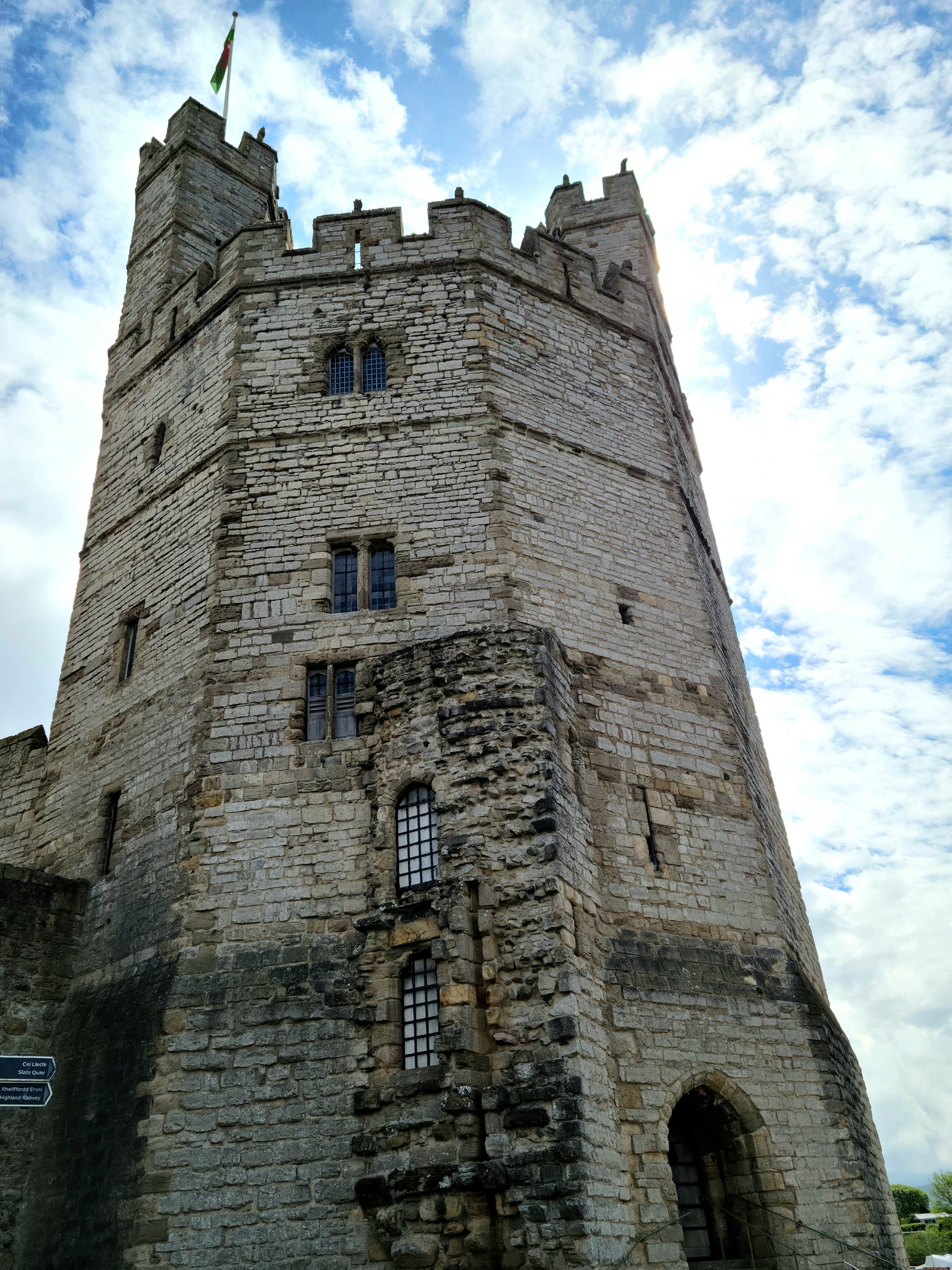
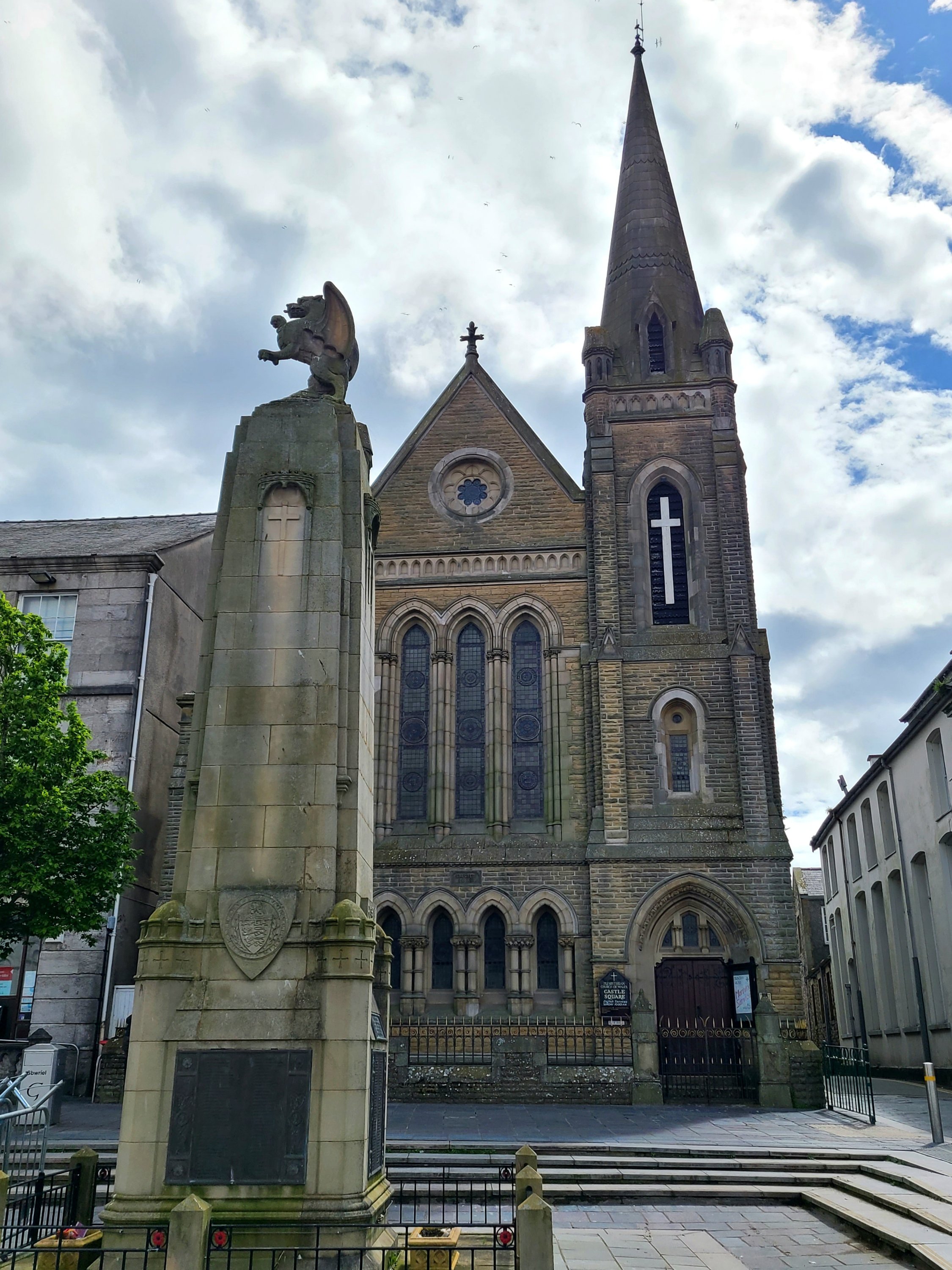
Also nearby is the town of Caernarfon, home to another one of King Edward I’s medieval castles.

For the best views of this one, head over the bridge to get a great view of the castle with the boats in the harbour. Caernarfon Castle is recognized as one of the greatest buildings of the Middle Ages. The castle was born out of conflicts with Welsh Princes and, along with the town walls and quay, it took 47 years to build. A section still remains of Caernarfon’s walls, but not nearly as intact as Conwy’s.

(Caernarfon Castle – Open daily, entry £12.50.)

Another must-see in North Wales is Portmeirion Village—the Welsh Riviera! Designed by Welsh architect Sir Clough Williams-Ellis between 1925-1975, the village is said to be modelled on the famous Italian town of Portofino. He acquired the land in 1925 and continued developing the grounds for the next fifty years.

Wandering through the village with its pastel-coloured buildings and ornate architecture make it worth the price of admission (£18). There are two hotels and a number of self-catering cottages for those wishing to stay the night, as well as shops and cafes to enjoy.

(More about my time in Portmeirion here.)

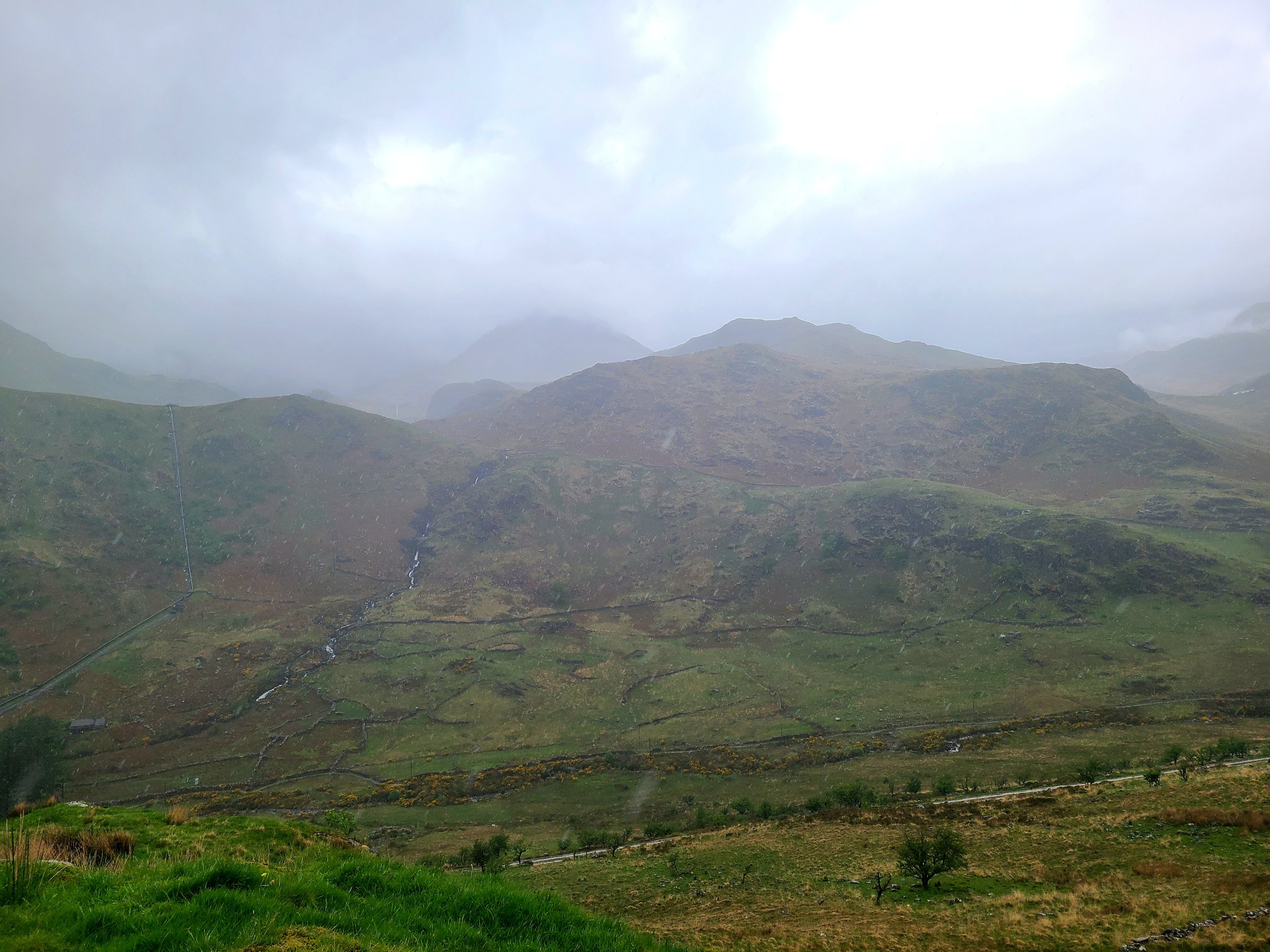
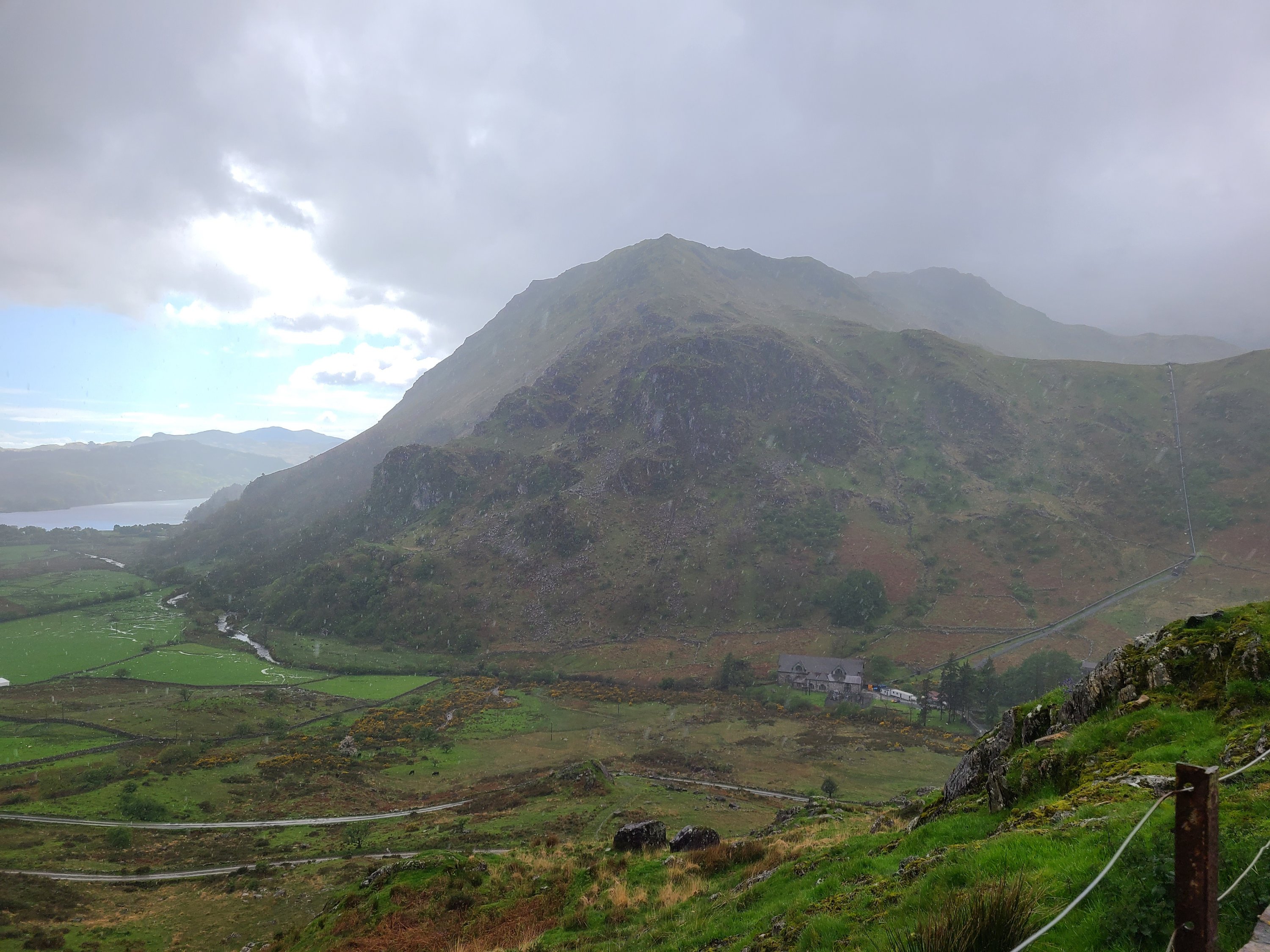
The most famous site in the area is Snowdonia National Park, the largest National Park in Wales, covering 823 square miles of beautiful landscape along the West Coast. In Welsh, it is known as ‘Eryri,’ which translates as “the place of the eagles.” Snowdonia is the oldest national park in Wales, having been founded in 1951, and is home to the tallest mountain in Wales and England, Mount Snowdon, at 3,560ft. Each year, Mount Snowdon is climbed by thousands of people by one of the many paths leading to its summit or via the popular Snowdon Mountain Railway.

The weather can be very unpredictable here and it began to pour just as we arrived, making for low visibility. If you plan to hike, be sure to check the forecast and be prepared for sudden changes in the weather.

A few other quick stops along the way:

The Ugly House, which isn’t ugly at all, is a tearoom and garden with a mysterious history, as nobody knows who built it or when.

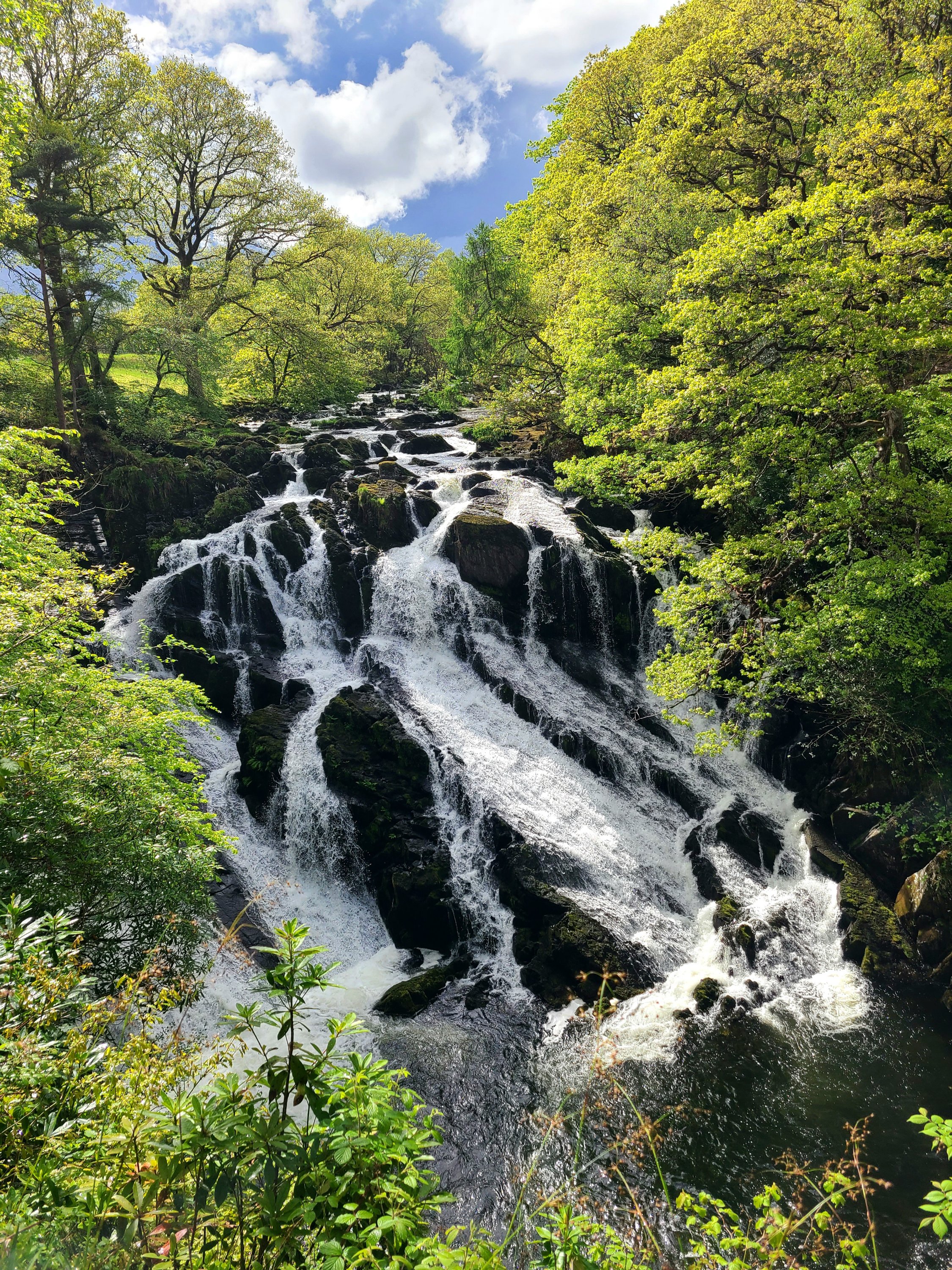
Swallow Falls—a cascading, multi-level waterfall found where the river Llugwy flows through a narrow chasm in the woods. A spectacular sight! (Entry £2.)

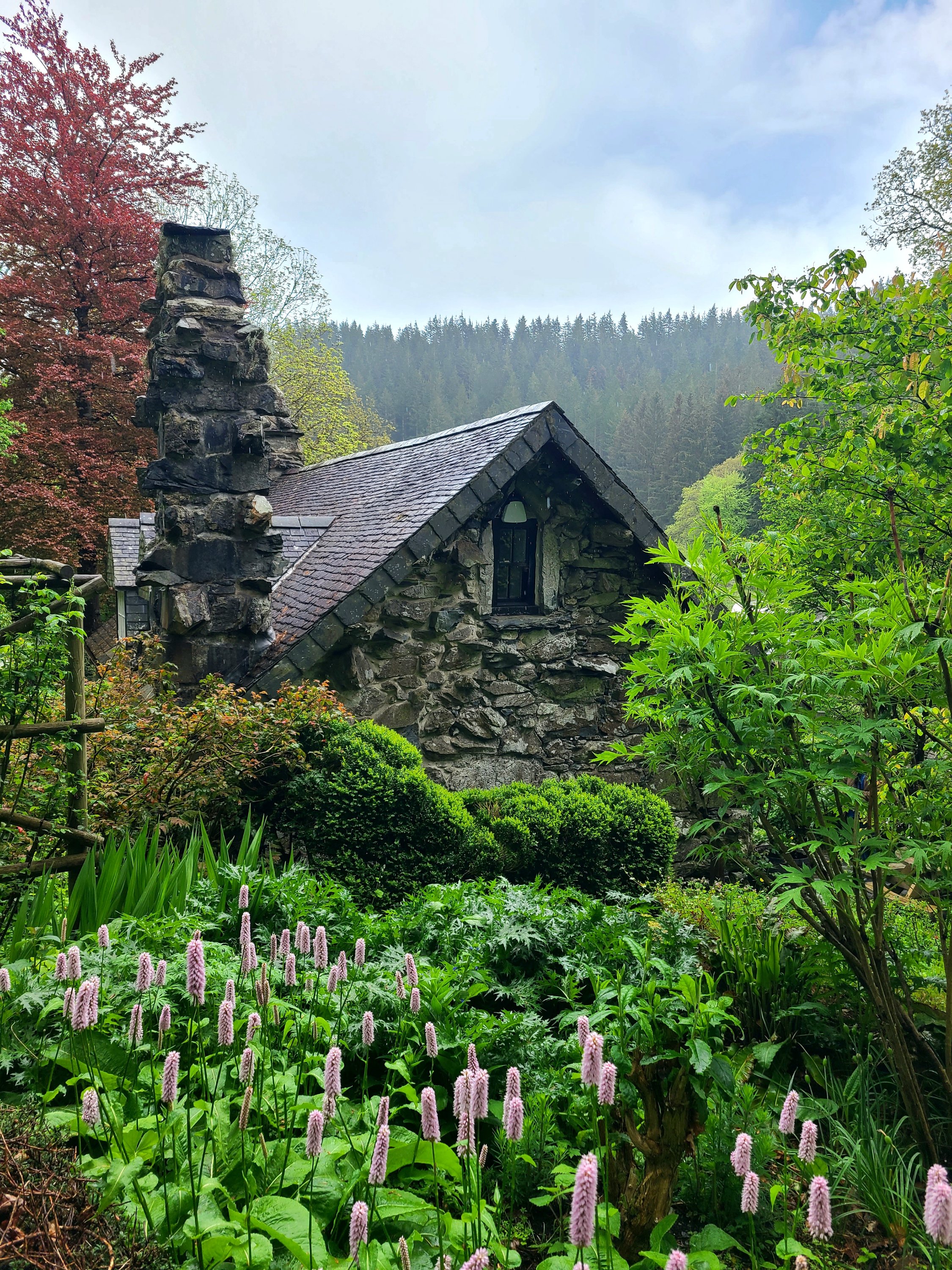
Tu Hwnt i’r Bont is a historic grade II listed 15th century tearoom located in the small town of Llanrwstwast. It was built as a residential dwelling in 1480 and from there became the Courthouse for the surrounding area. This fairytale-like dwelling is one of the most photographed sites in Wales. It was beautiful when I was there in the spring, but for the real magic, go in the fall when the leaves have all turned a majestic red. Looking at photos, I will definitely need to get back to see it in its full splendor!

With so many things to see and do in beautiful North Wales, if you haven’t already added it to your travel list, now’s the time to do it!

Categories: Blog, Europe, Photo, Where in the World | Tags: , , , , , , , , , , , , | Leave a comment

Portmeirion- The Welsh Riviera

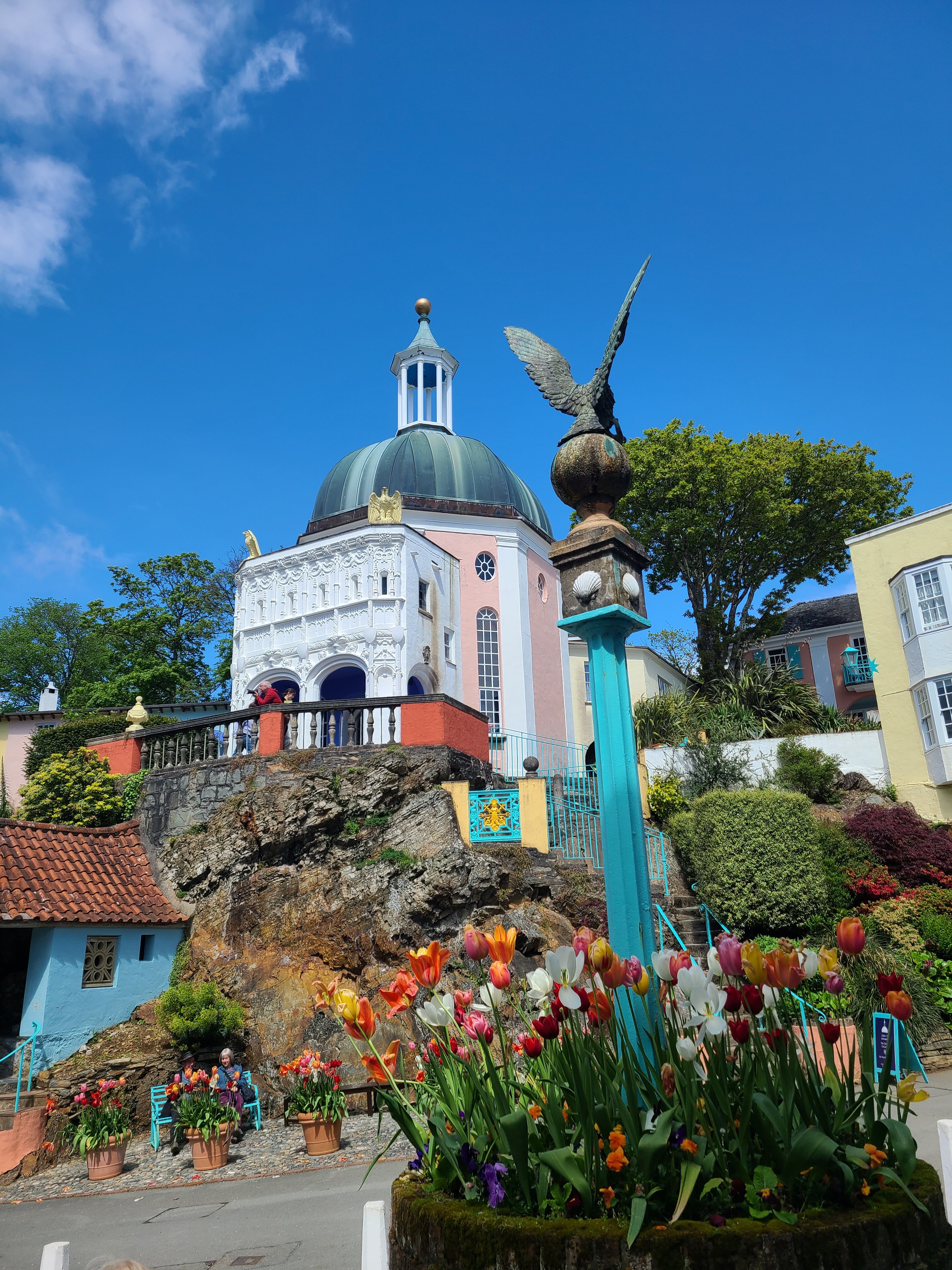
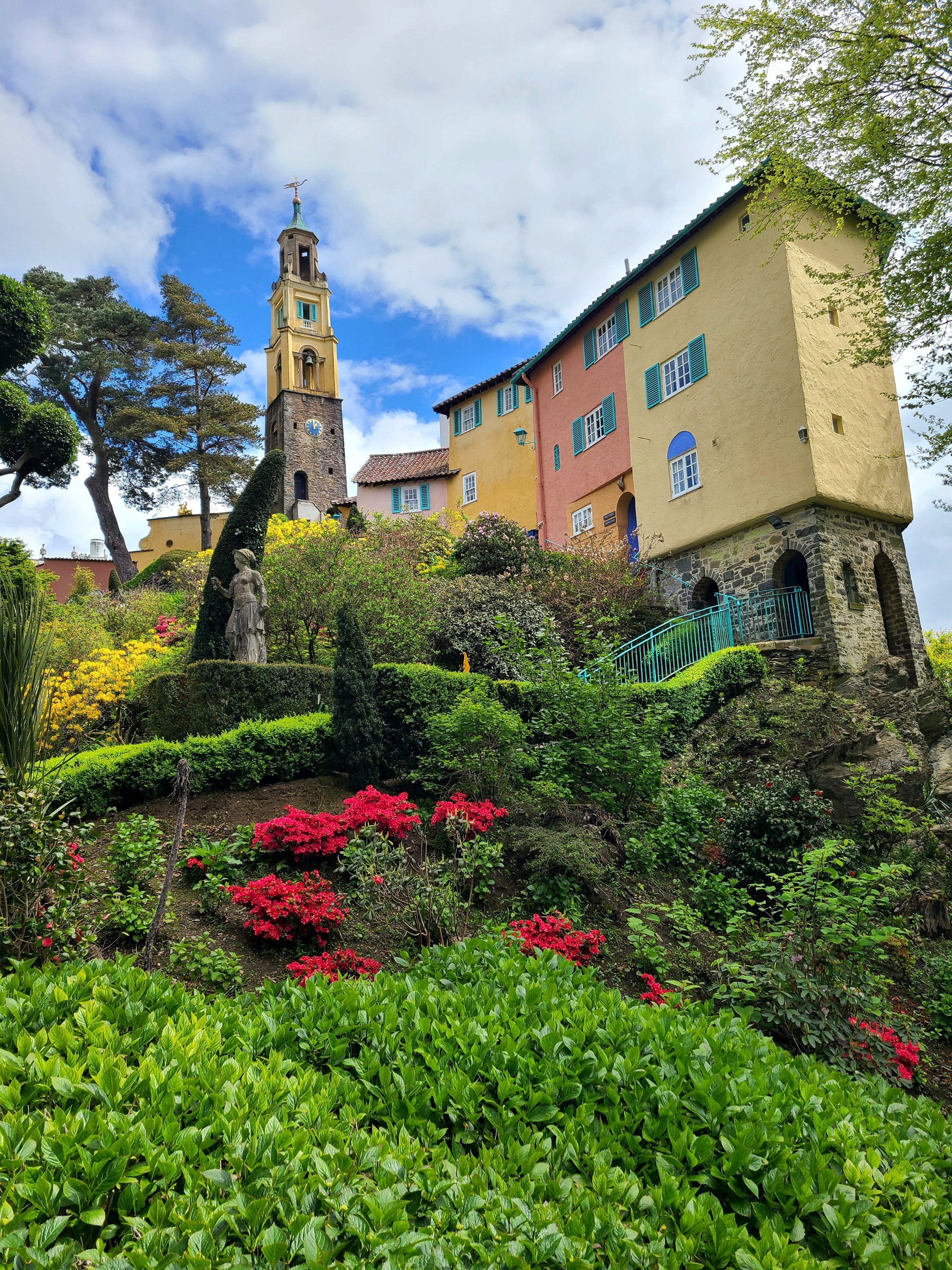
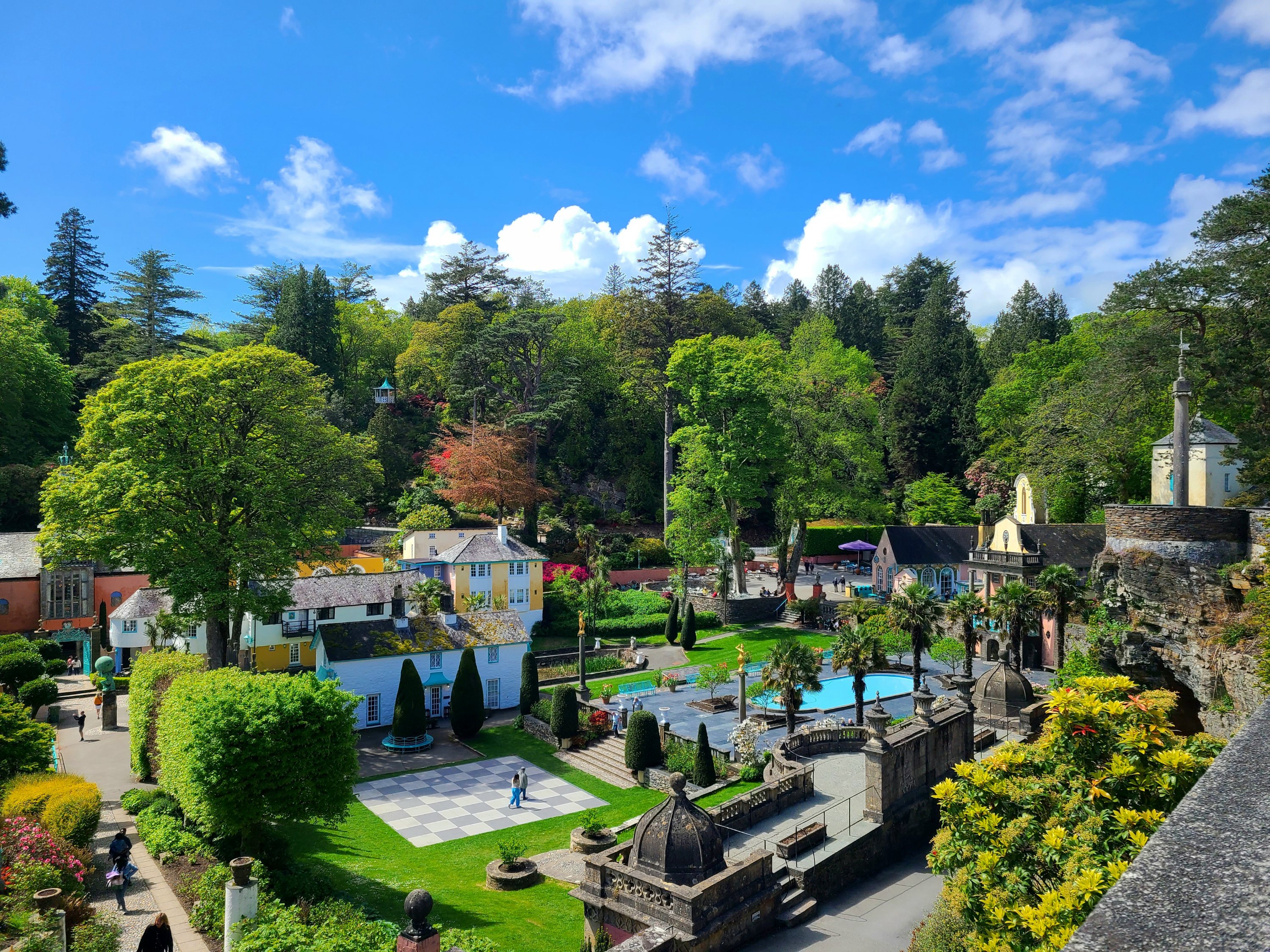
Stepping into the pastel-coloured village of Portmeirion, filled with ornate statues and brightly coloured flowers felt like I was stepping into an Italian inspired village at Disney World. Portmeirion Village was designed by Welsh architect Sir Clough Williams-Ellis between 1925-1975 and is said to be modelled on the famous Italian town of Portofino. He acquired the land in 1925, opened the Hotel Portmeirion in 1926, and then continued developing the grounds for the next fifty years.

One of the most popular tourist spots in North Wales, Portmeirion is also a great spot for weddings and other special celebrations.

Unlike most villages that you can freely wander into, Portmeirion is now owned by a charitable trust and you need a ticket to enter (Adult £18.00), but it’s worth it to wander around a charming Italian village while in the UK.

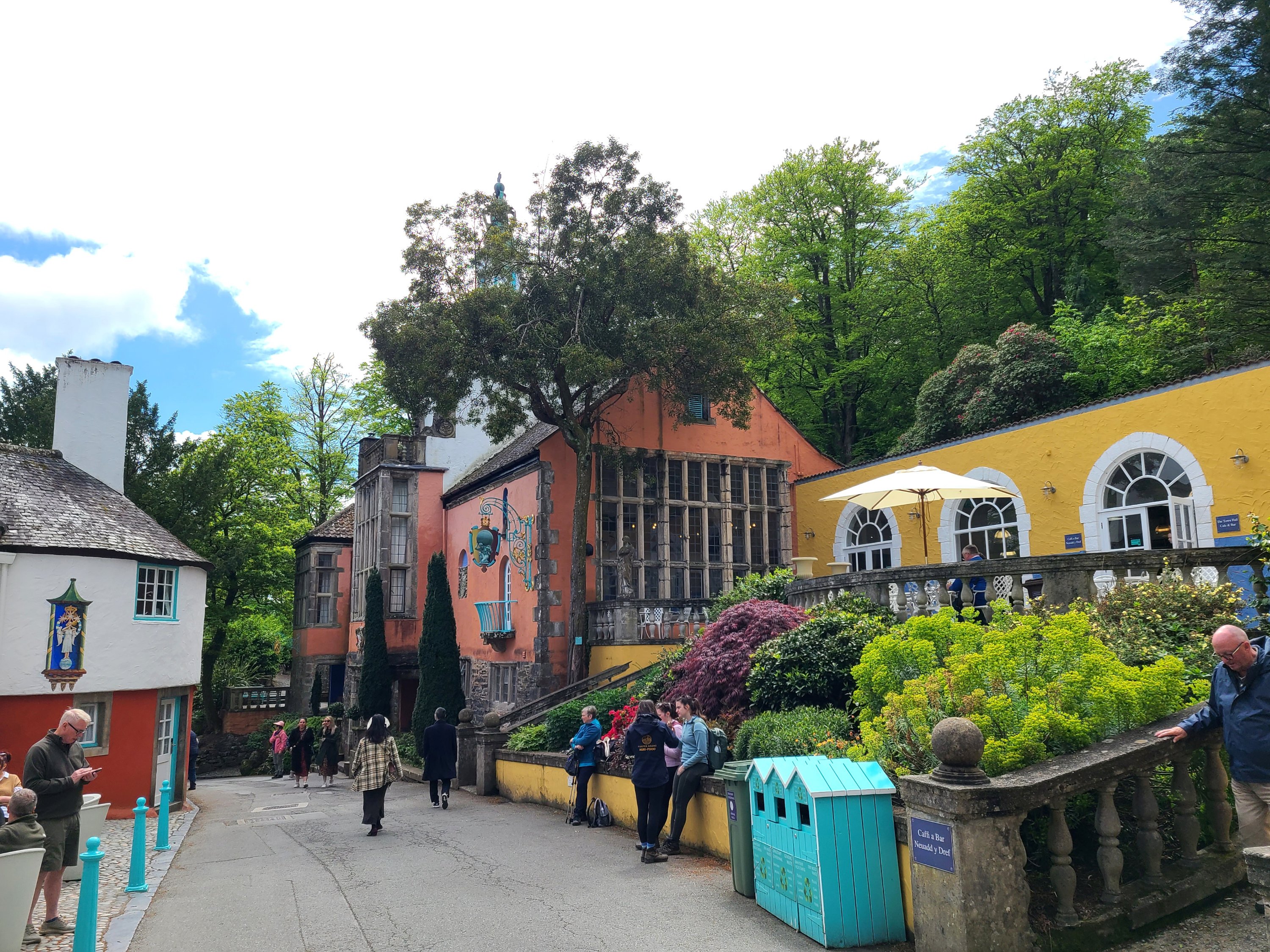
Once inside, simply exploring this unique village is one of the best things to do at Portmeirion. The pastel pink, orange, and yellow buildings and bright turquoise doors, and the ornate stonework and architecture and colourful gardens all are part of what make visiting Portmeirion so unique.

The village makes for a great day tour or overnight stay, depending on your time.

For guests wishing to stay, Portmeirion has two hotels, The Hotel Portmeirion and Castell Deudraeth, as well as a number of self-catering cottages. Both hotels also have dining options for all to enjoy.

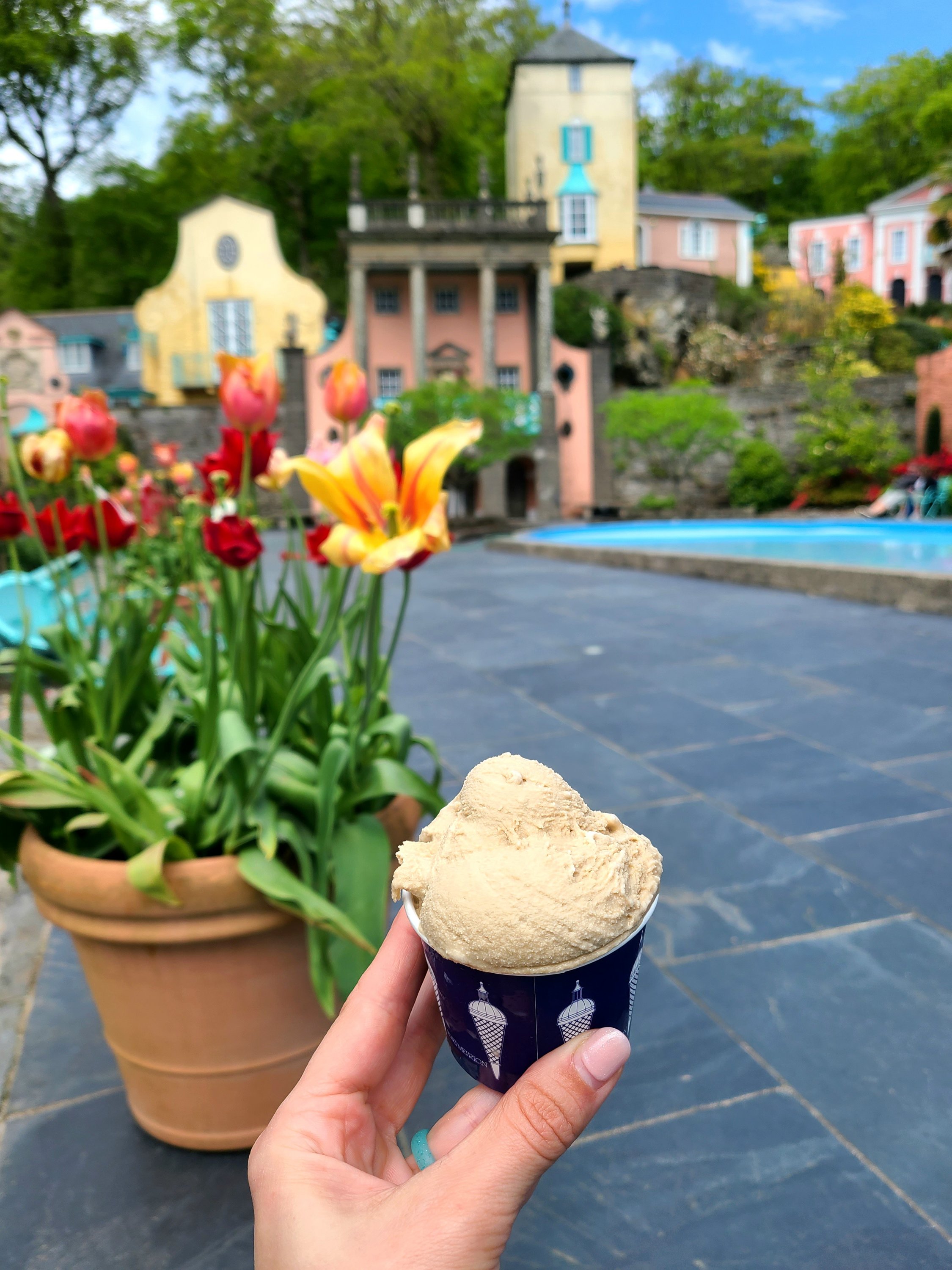
While exploring the village, you’ll come across a variety of shops and cafes where you can shop for some famous Portmeirion pottery, check out the art gallery, and then grab an authentic homemade gelato at ‘Angel Ices.

Enjoy your gelato by the fountain in the Central Piazza, surrounded by a rainbow of colour, or play a game of chess on the life-sized chess board found here.

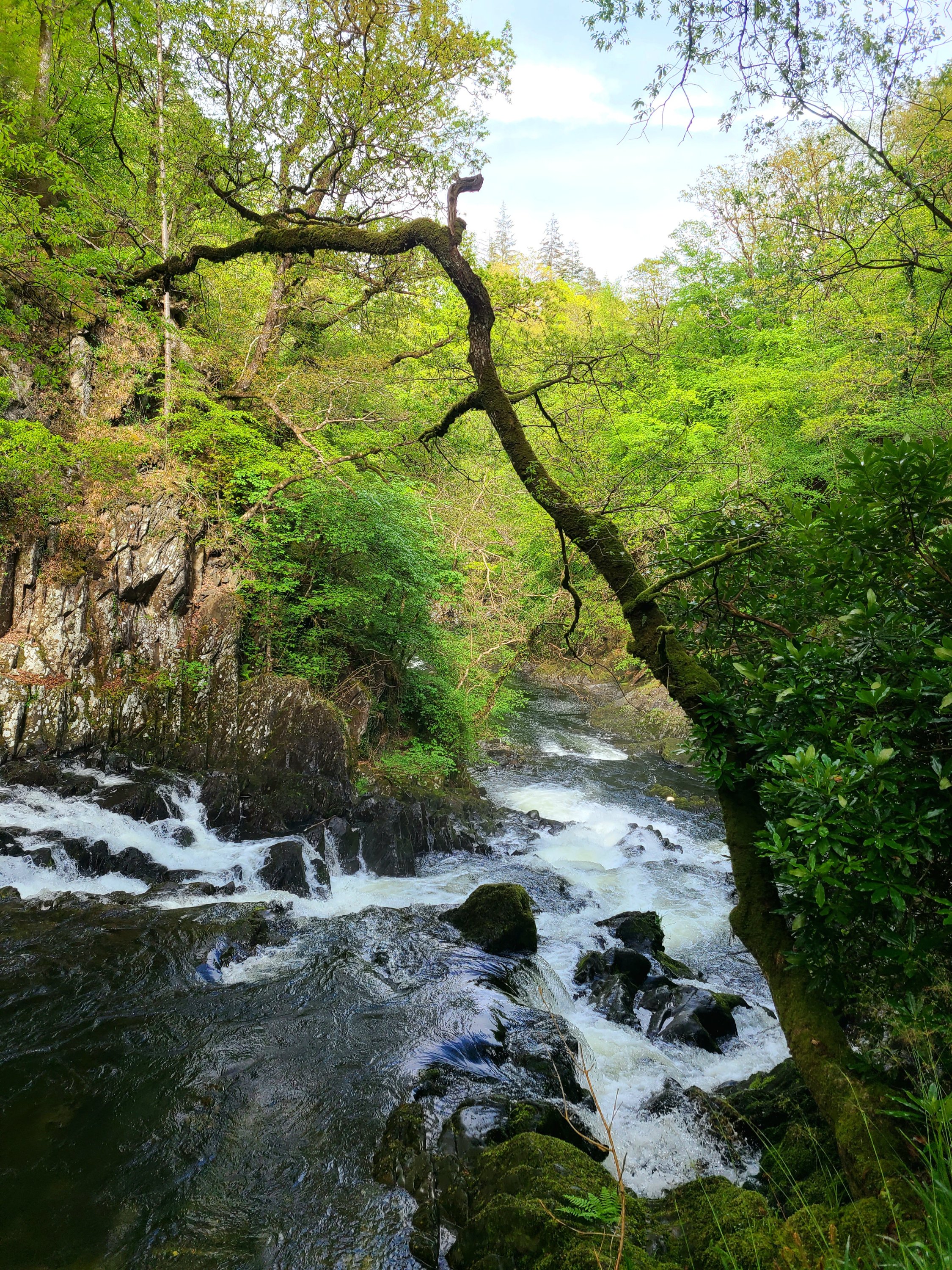
Once you’re done relaxing, Portmeirion Village is set amongst 70 acres of forest, with 19 miles of pathways & walking trails.

There is actually a subtropical forest here, known as The Gwyllt, which means ‘wildwood’ in Welsh. The Gwyllt features some of Britain’s largest trees, rare flowers, and secret gardens.

Hidden along the pathways are the Japanese Garden, with its pagoda and lily-covered lake, and secret sites like the Dog Cemetery, Ghost Garden, and Shelter Valley.

Along the waterfront, you’ll find the lighthouse and the old stone boat, which is an homage to the Amis Reunis, the original boat that Clough used as a houseboat when he first bought the property. You can also take a walk along the white sandy beaches of the Dwyryd Estuary.

If you have time, indulge in a spa treatment at the Mermaid Spa in the village.

Portmeirion is open year-round and is most easily reached by car.

It’s the perfect addition to a North Wales road trip, particularly if you’re already in the area to visit Snowdonia.

If you don’t have a car, another great way to visit Portmeirion is on a tour like I did. This tour from Llandudno included castles, Snowdonia National Park, and Portmeirion.

(The entry fee to the village is not included in the price.)

Whether you decide to spend a few hours or a few days, I definitely recommend adding a stop at the charming village of Portmeirion and indulging in the Welsh Riviera!

Categories: Blog, Europe, Photo, Where in the World | Tags: , , , , , , , , , , | 2 Comments

A seaside holiday in Llandudno, Wales

Looking for a seaside getaway in Northwest Wales? Llandudno should be at the top of your list!

Llandudno began as a small settlement of mainly copper mine workers, but it was the desire for seaside getaways during the Victorian era that led to Llandudno becoming a popular holiday destination.

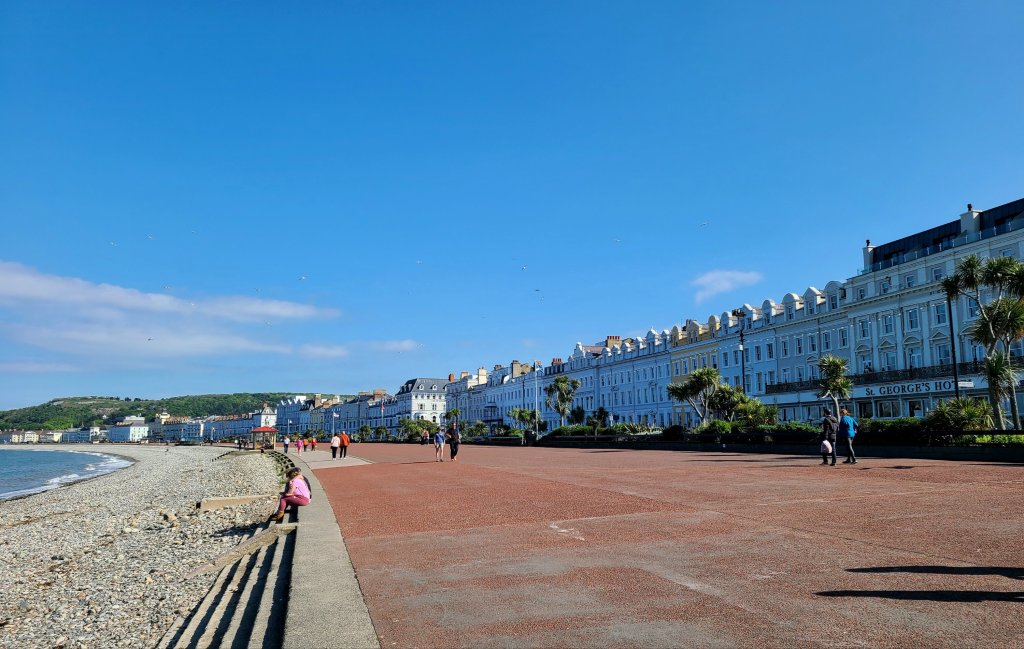
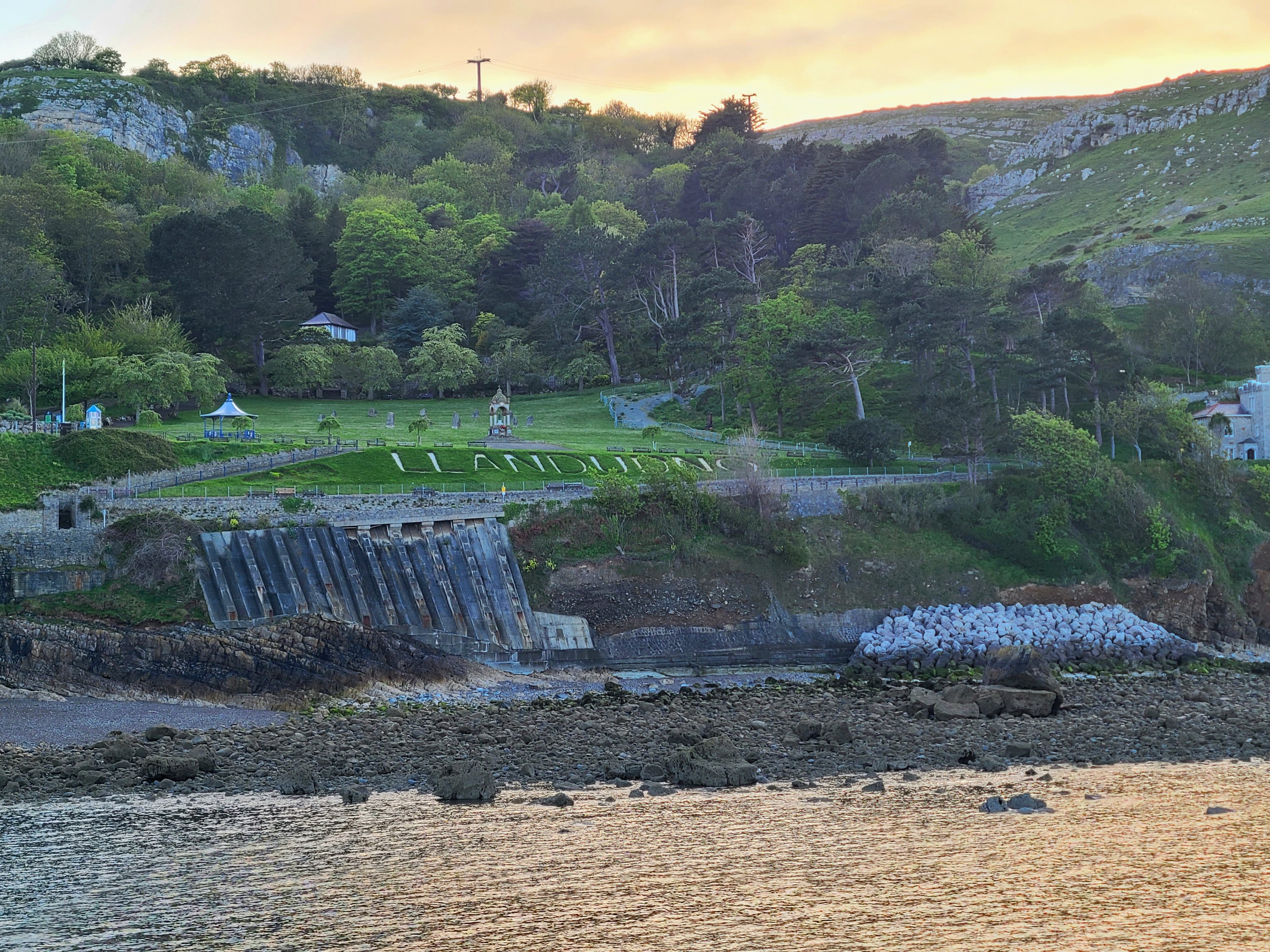
The Llandudno Promenade, stretching almost two miles long, is quite an impressive sight. With large Victorian hotels lining one side and the beach on the other, it’s the perfect spot for an evening stroll.

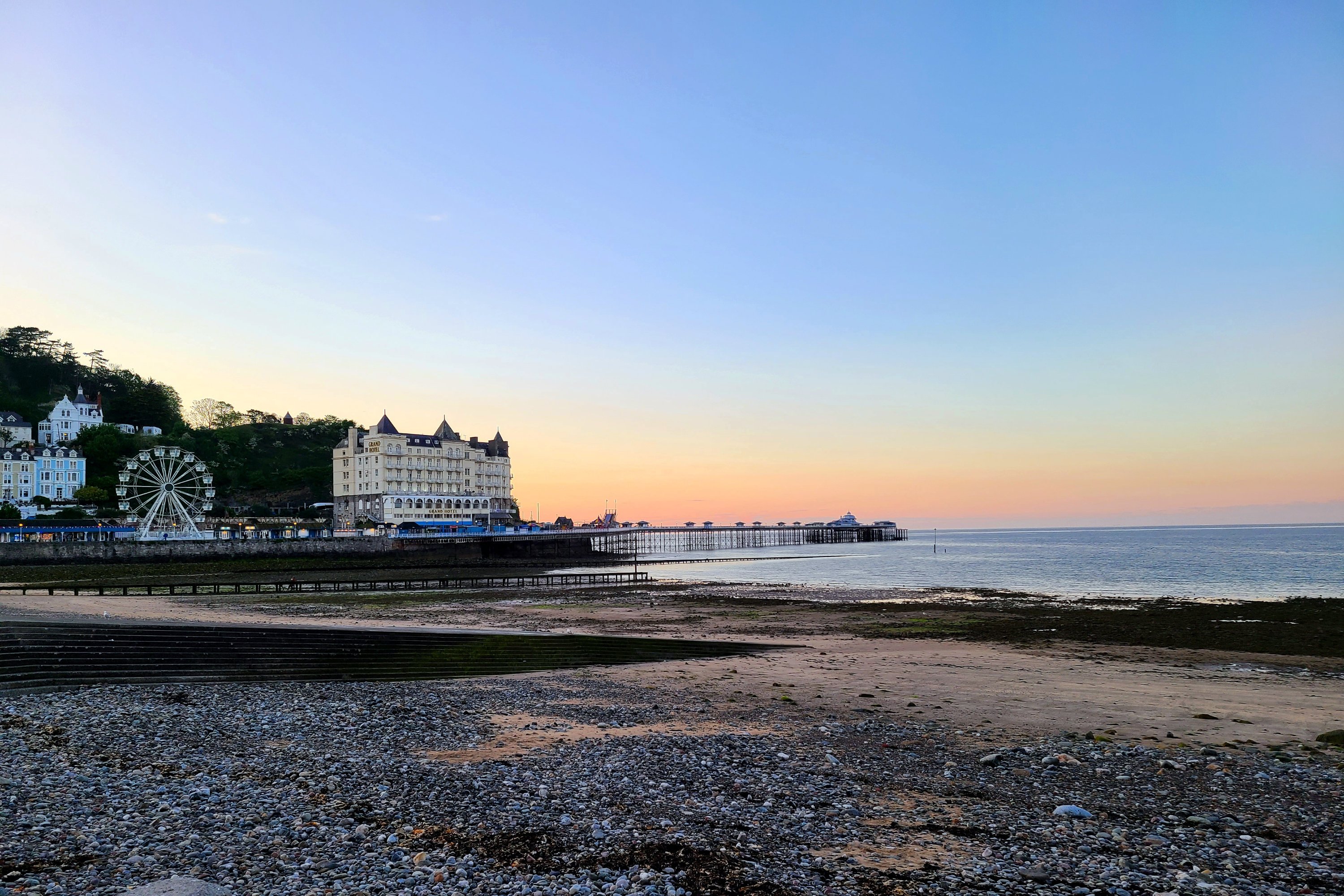
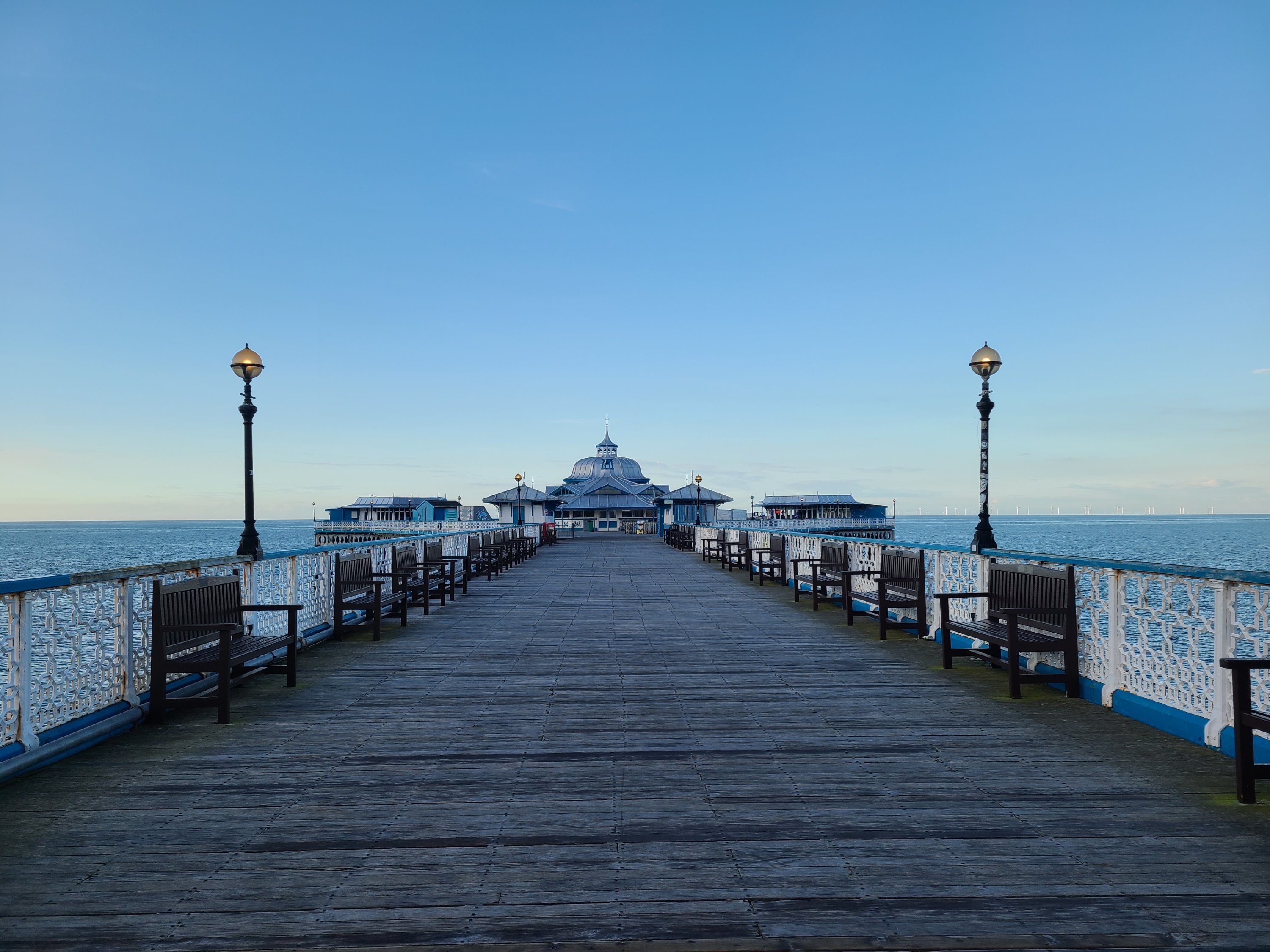
One of the most popular sights in Llandudno is Llandudno Pier, located at the west end of the promenade. This Victorian pier has been around since 1878. Jutting out into the Irish Sea, the pier is 2,295 feet in length, making it the longest pier in Wales. Along the pier, you’ll find a wide range of attractions, concessions, food stalls, and an arcade. 

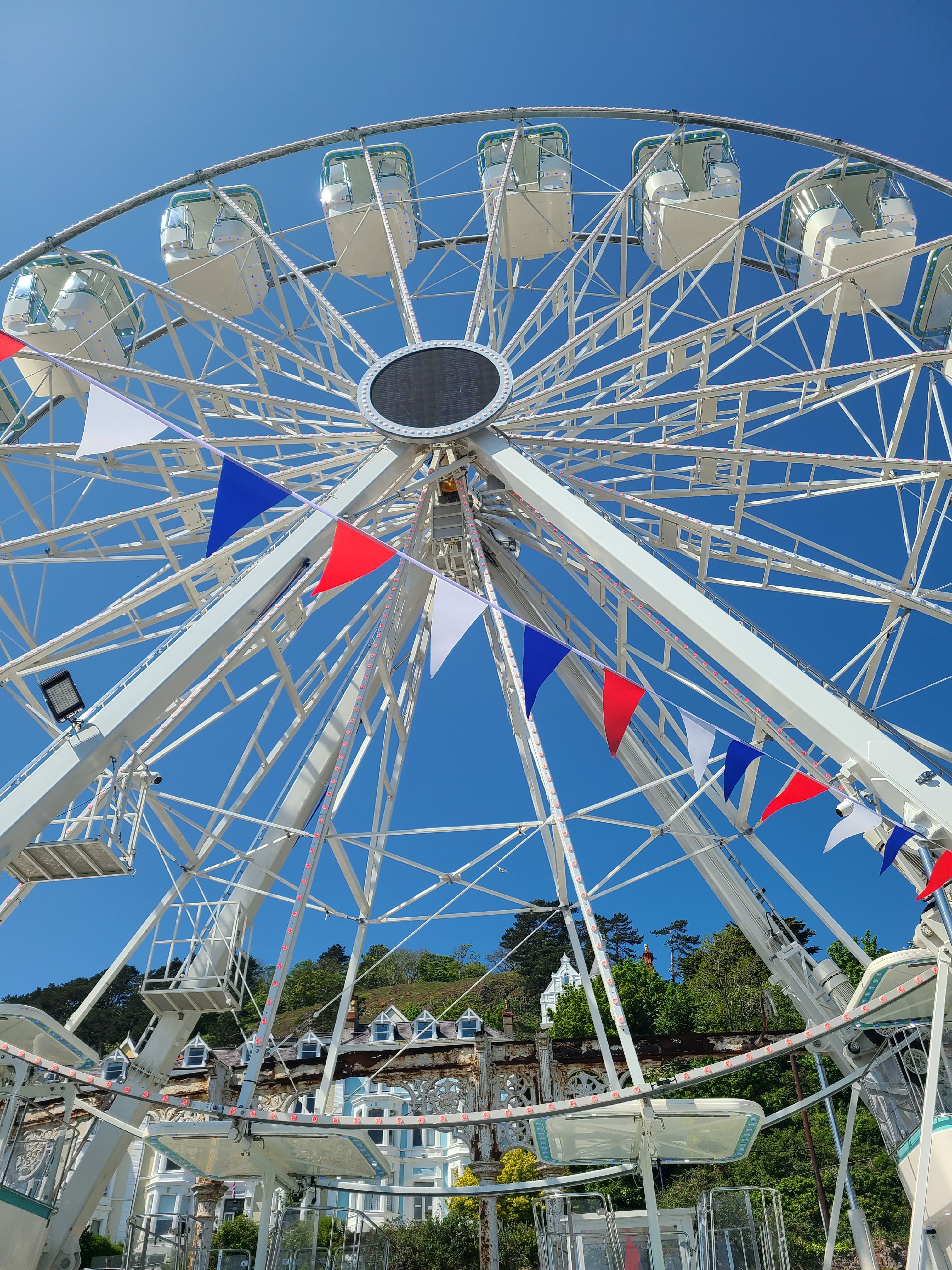
One of the most famous attractions is the Pier View Ferris Wheel, which stands 70 feet tall and has 18 gondolas providing riders with a stunning view of the promenade as well as the Great Orme as they enjoy the ride. Even more spectacular is seeing it lit up with 10,000 lights in the evening!

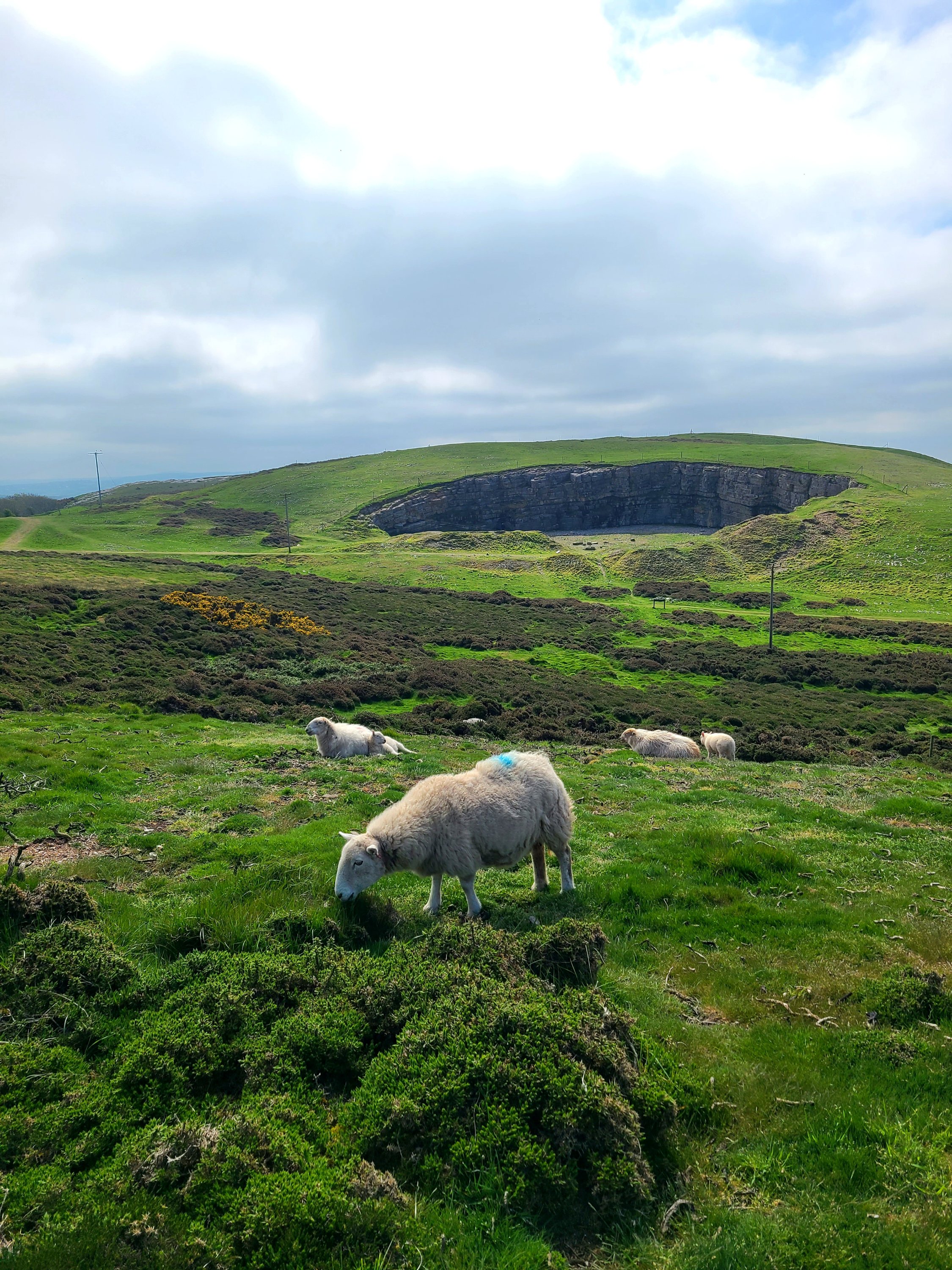
Rising above Llandudno stands the Great Orme, one of the most spectacular parks in Wales, with scenic views and diverse wildlife. It’s a limestone headland that has been mined for over 4,000 years.

This area became a popular spot during the Bronze Age when miners began prospecting the area for copper. Today, there are numerous trails to hike in the Great Orme, or you can take a drive around the Marine Drive Toll Road, taking in the views and trying to find the famous Kashmir goats. A pair of goats from the Windsor Royal Herd were given to Major General Sir Savage Mostyn around 1880. The herd was released on the Great Orme 20 years later and the goats have been roaming wild ever since! Easier to spot are the herds of sheep found grazing all over.

(You can walk or bike the Marine Drive Toll Road for free. Cars cost £4.50 for the 5-mile scenic drive.)

There are two other ways to get to the summit: Cable Cars or the Tramway.

The Llandudno Cable Cars leave from Happy Valley Park and travel 679 feet up to the summit of the Great Orme. You can enjoy the panoramic views on this 9-minute journey.

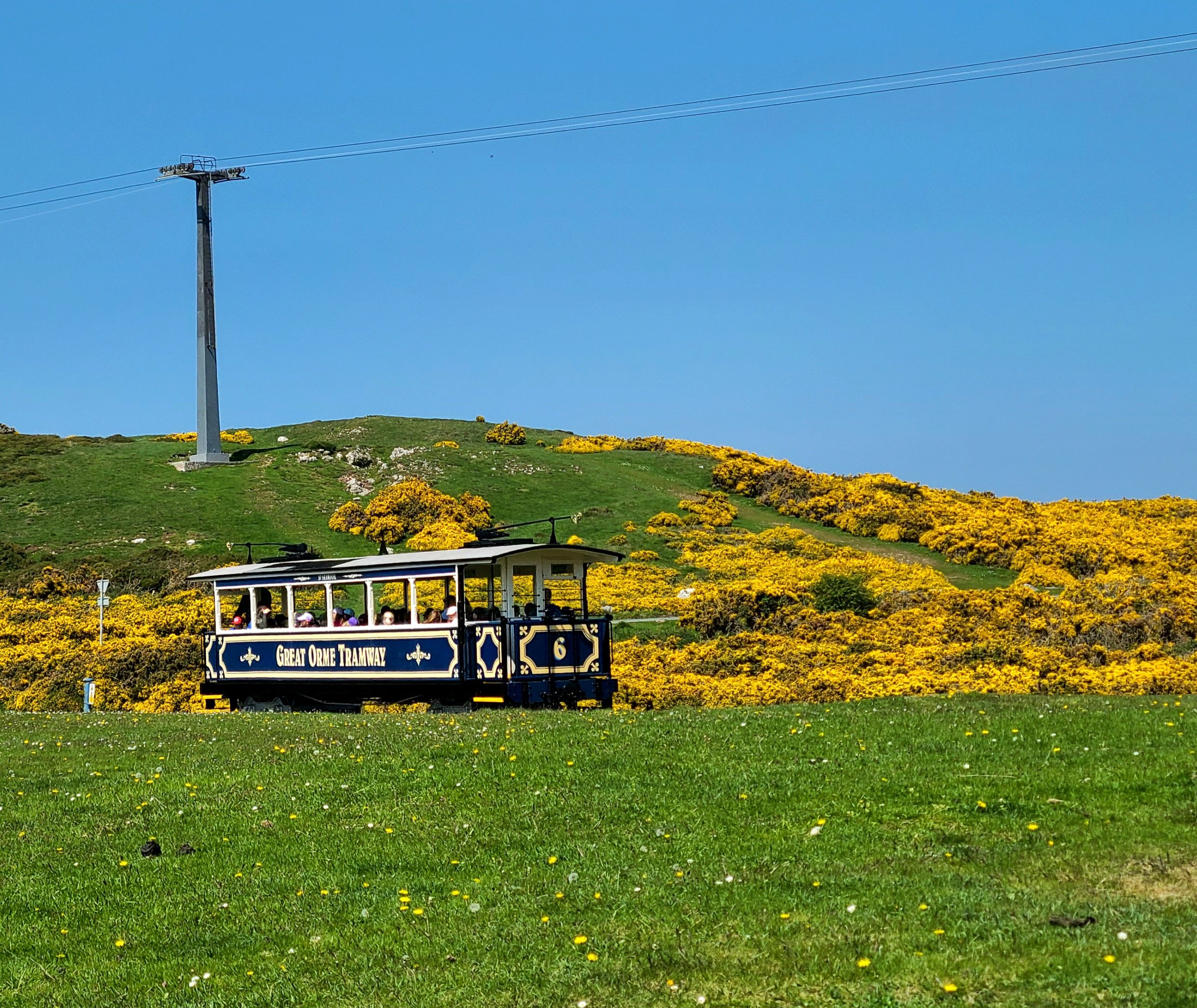
The Great Orme Tramway is another option to summit the Great Orme. The tram opened in 1902 and is Britain’s only funicular, or cable-hauled, tramway. The journey begins at Victoria Station and climbs up through the Great Orme Country Park and Nature Reserve to the summit, stopping to switch trams at the Halfway Station. Here, you can learn more about how the tramway works and watch the giant cables turn to move the tram along the tracks. At the summit, there is a cafe, gift shop, and some more info on the area to peruse once you are done taking in the beautiful views!

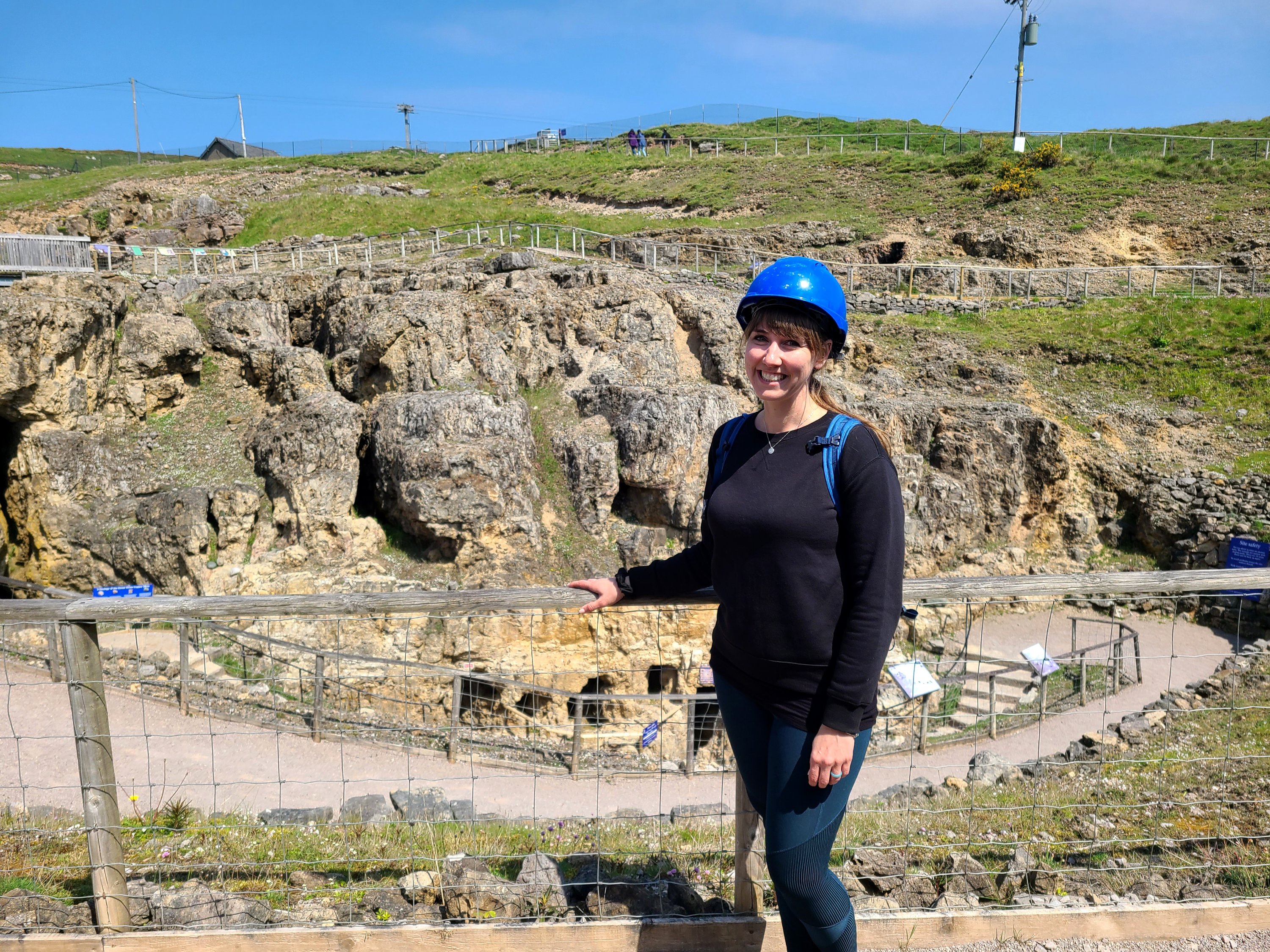
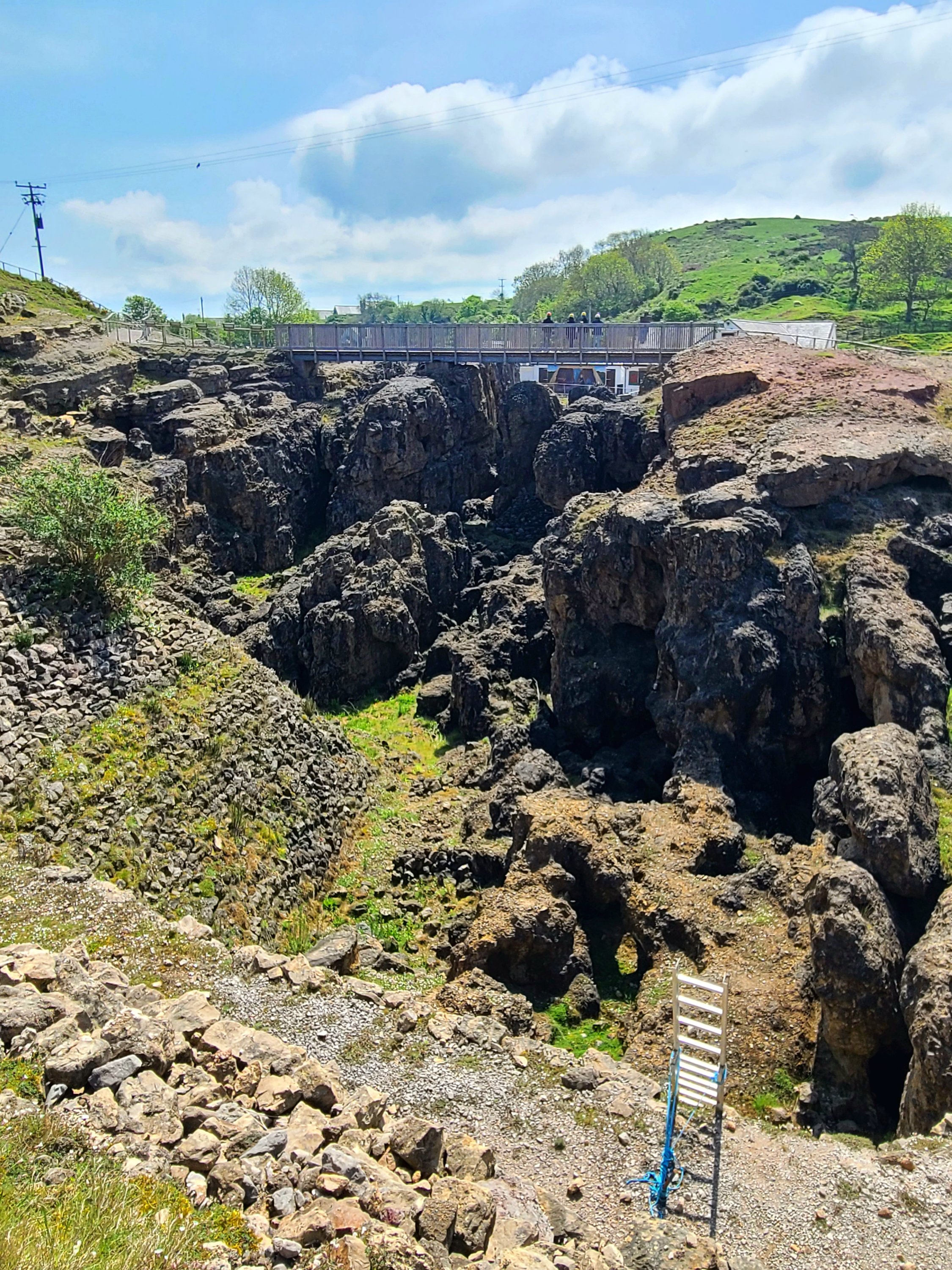
Great Orme Bronze Age Mine is located near the halfway stop on the tramway. The copper mine was uncovered in 1987 during plans to landscape that area of the Great Orme. Since then, mining engineers, cavers, and archaeologists have continued to discover more tunnels and large areas of the surface landscape. It is considered to be the largest prehistoric mine discovered so far.

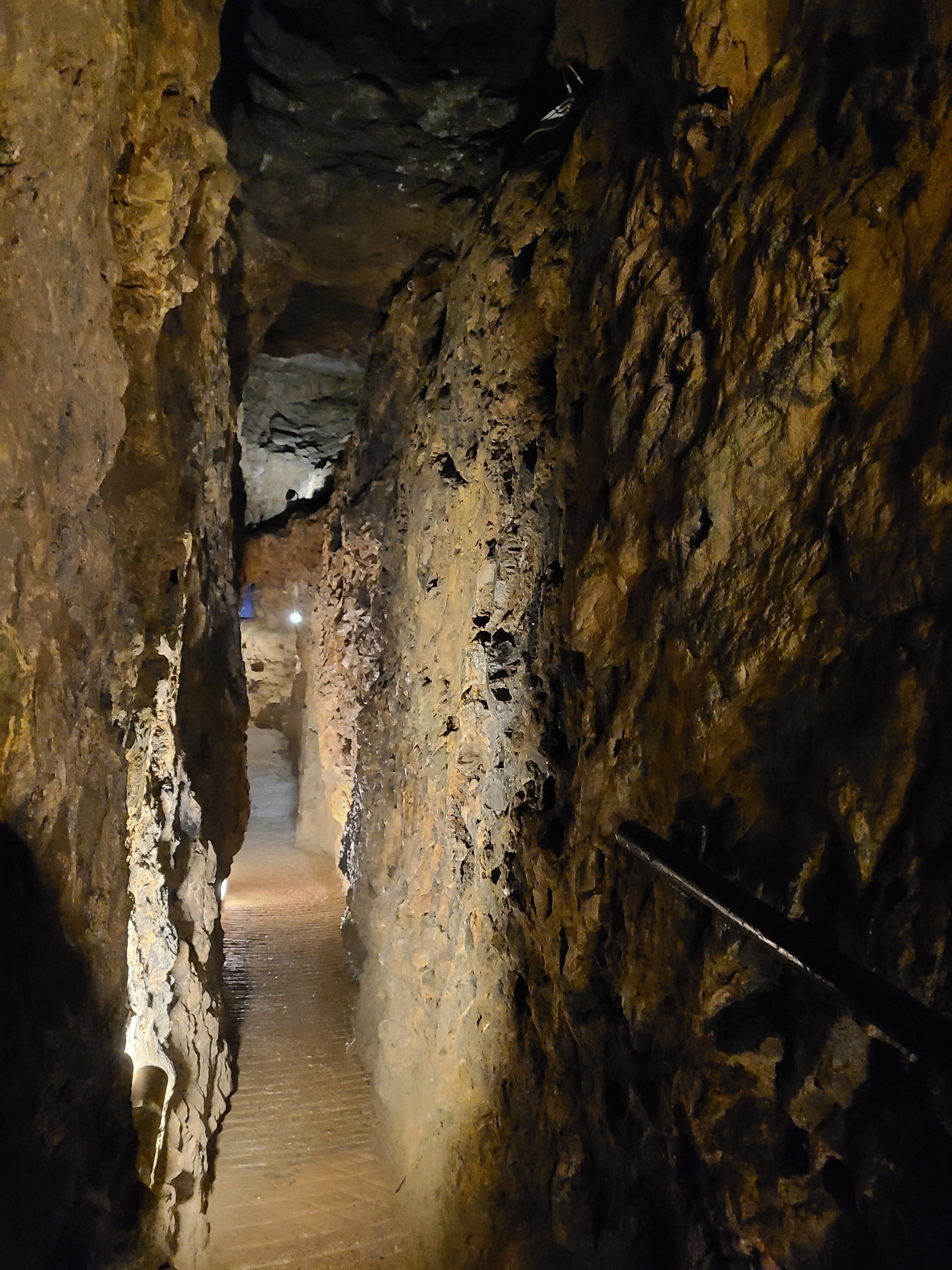
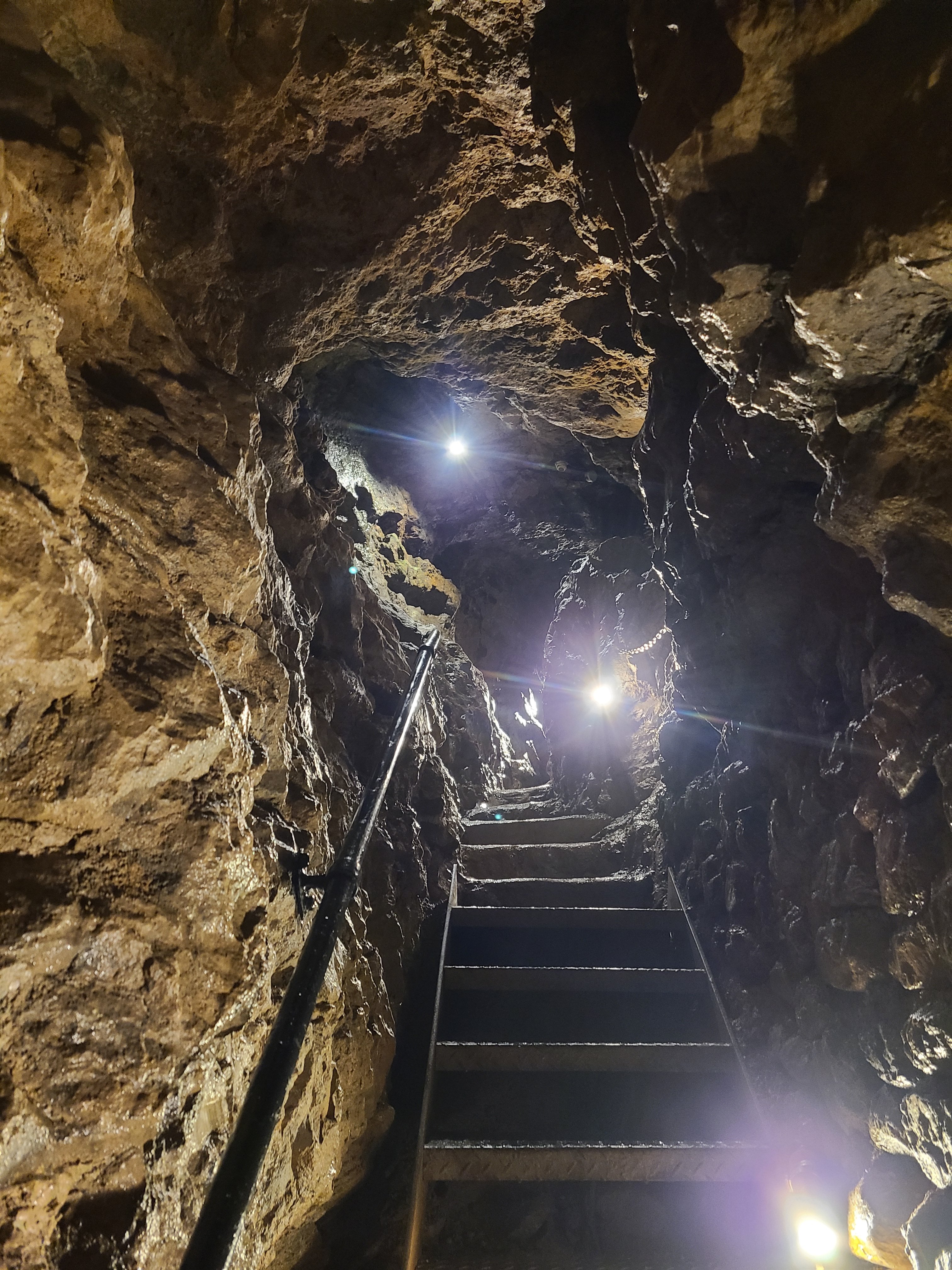
After a quick introduction video, you put on your hard hat and head down into the mine on a self-guided tour, exploring tunnels mined over 3,500 years ago. There are nine levels of Bronze Age tunnels found here. On the tour, you are able to explore levels 1 and 2, down 18m of the 46m total. The tunnels are very narrow and the ground is uneven in spots as you make your way down and then back up to the surface.

Once you’re back outside the mine, you can see down into the pit and learn about the steps involved in copper/bronze mining. It’s an interesting spot to explore with a lot of local history.

(Open daily at 9:30am. Last entry 4:30pm. Entry £10.50.)

Happy Valley Park, located on the slope of the Great Orme, was donated to the town of Llandudno by Lord Mostyn in 1887 as a celebration of Queen Victoria’s golden jubilee. What was once a quarry has now been turned into a beautiful park that features a statue of Queen Victoria as well as gardens, a cafe, a putting green, a ski slope, and the cable car base station while offering great views of Llandudno Pier.

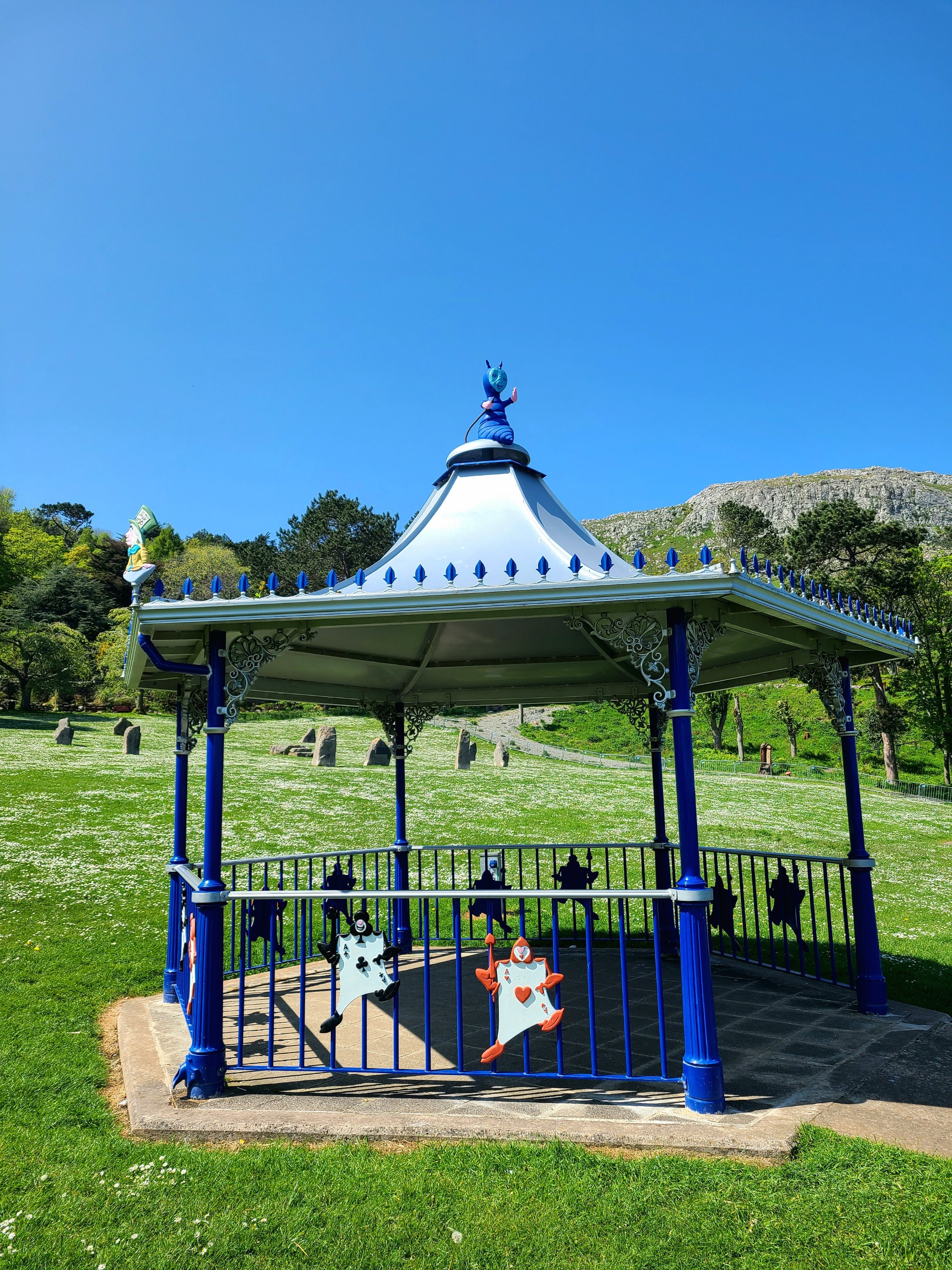
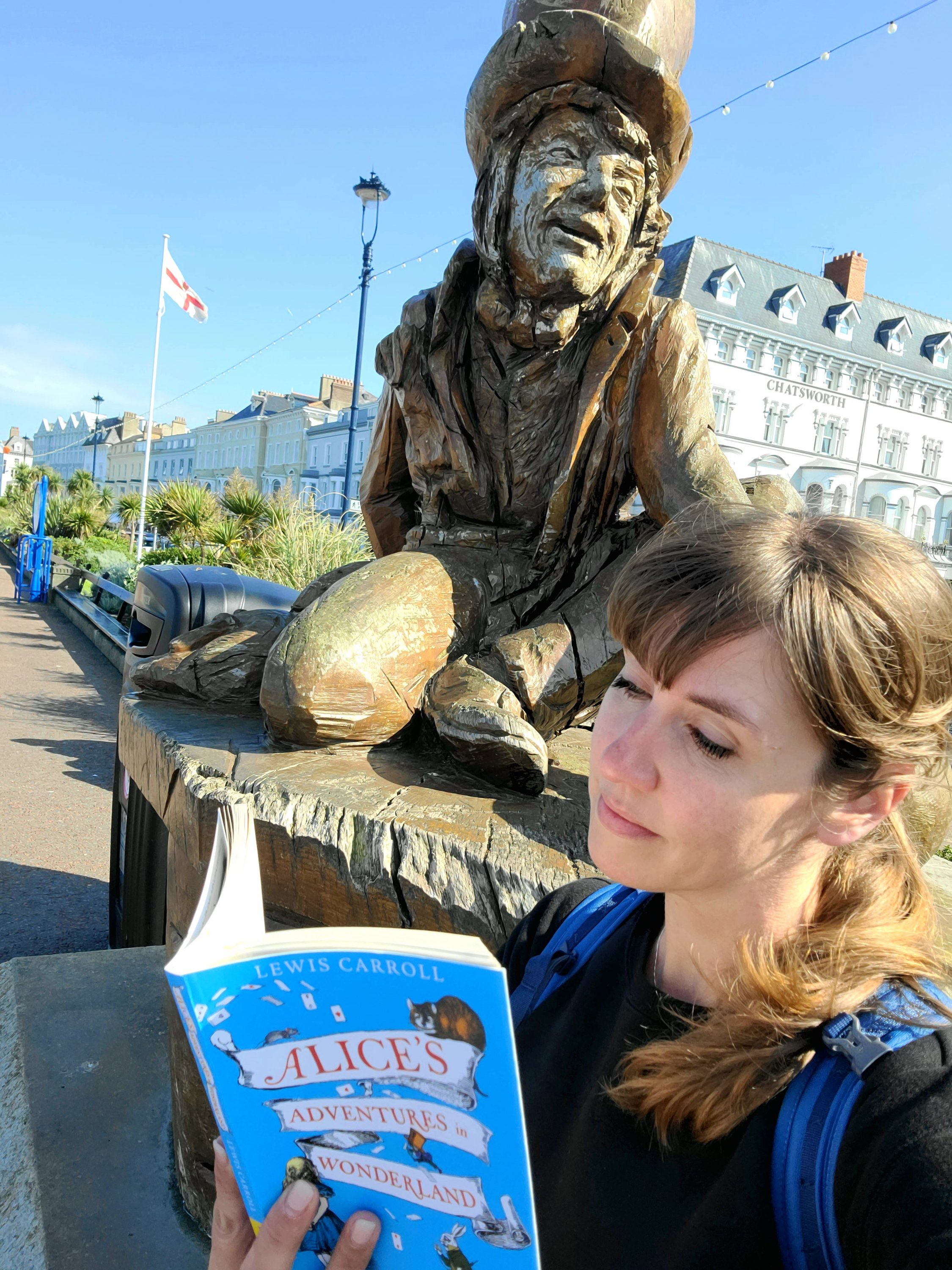
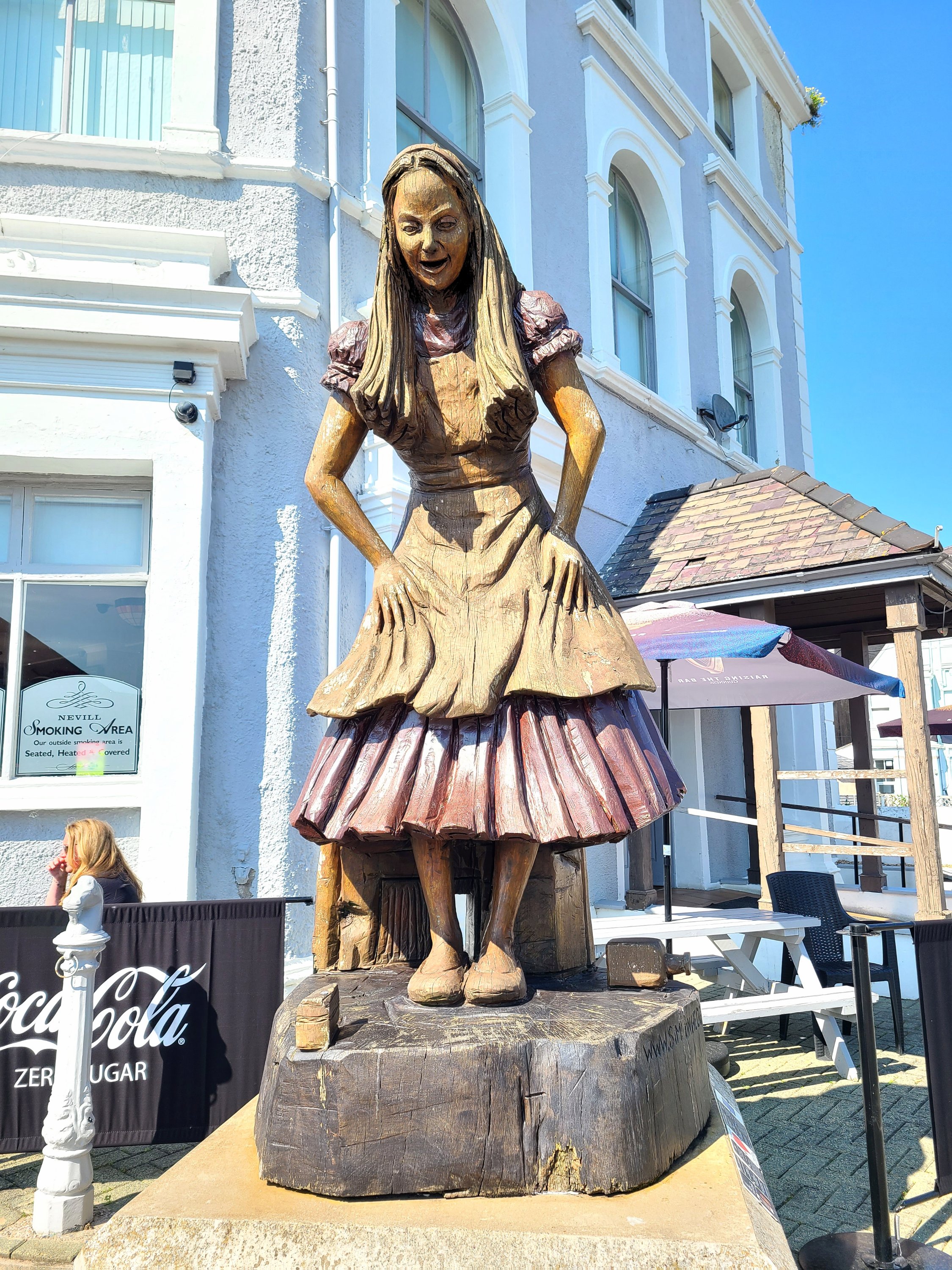
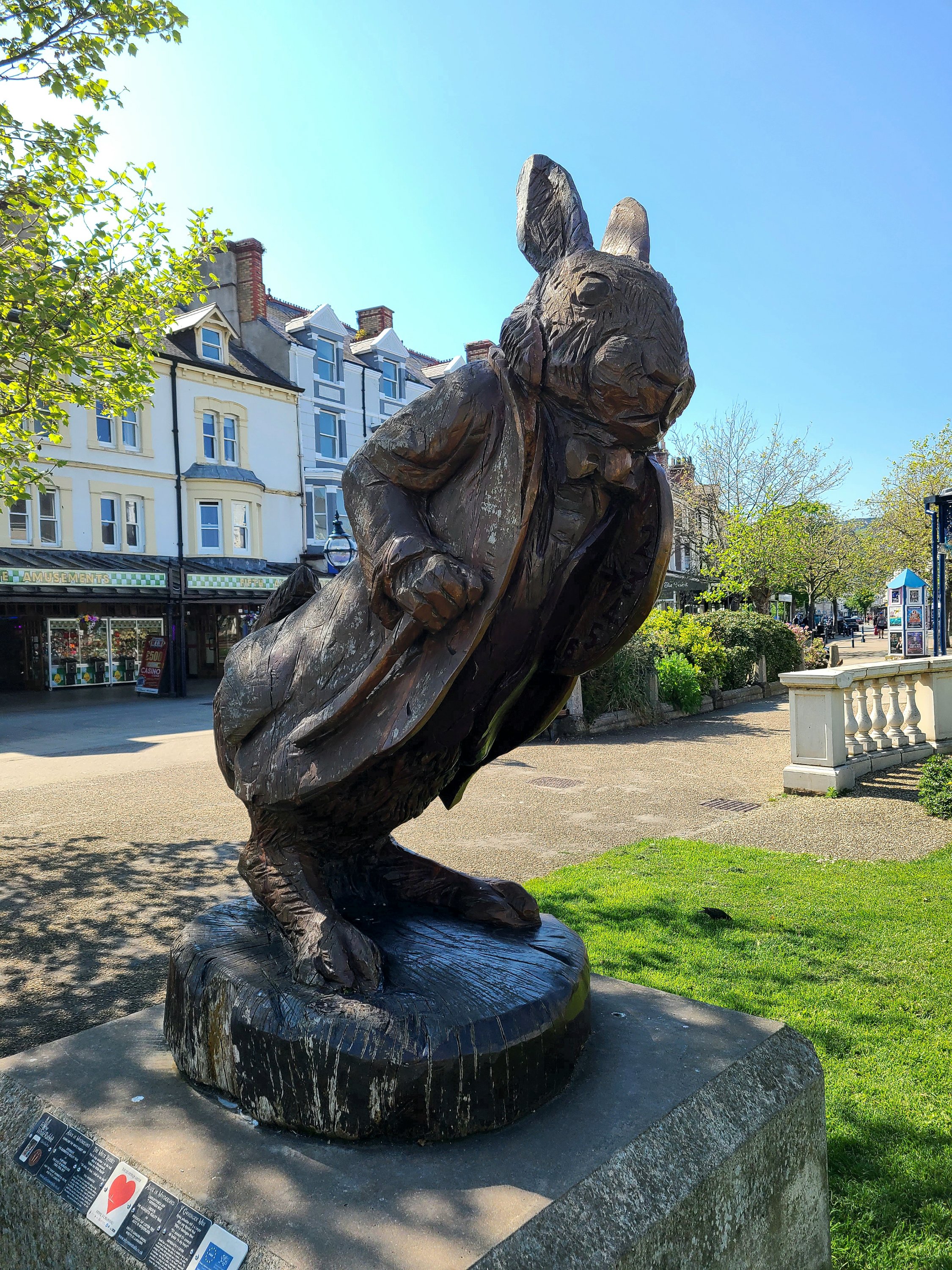
As you wander the streets of Llandudno, you will come across statues from Alice in Wonderland. It is said that the real ‘Alice’ spent the first of many summer holidays here in 1861 and inspired Charles Dodgson, who we know best by his pen name, Lewis Carroll, to write his famous novel Alice’s Adventures in Wonderland.

The town has embraced this story, unveiling an iconic White Rabbit statue in 1933. Since then, Llandudno has made the most of its Alice connection and you’ll find statues of characters like Alice, the Mad Hatter, the Queen of Hearts, and the White Rabbit scattered all around the town. Want to find them all? You can purchase an Alice in Wonderland Town Trail Map, “Follow the White Rabbit,” at the Tourist Information Centre and follow the 55 bronze cast footprints in the pavement starting outside the Llandudno Library.

Once you’ve finished your journey down the rabbit hole, head over to “The Looking Glass,” an Alice-themed dessert cafe, on Mostyn St. As you step inside the colourful dessert wonderland, the smell is amazing. The wholevenue is adorned with Alice in Wonderland-themed quotes and items.

From the bar you can order your ice cream with waffles or pancakes, as a banana split and more, and then choose what assortment of toppings and sauces you want to add to your creation. If you have a sweet tooth, you’d be ‘mad’ to miss enjoying a treat at this curious cafe!

Ready for some real food?

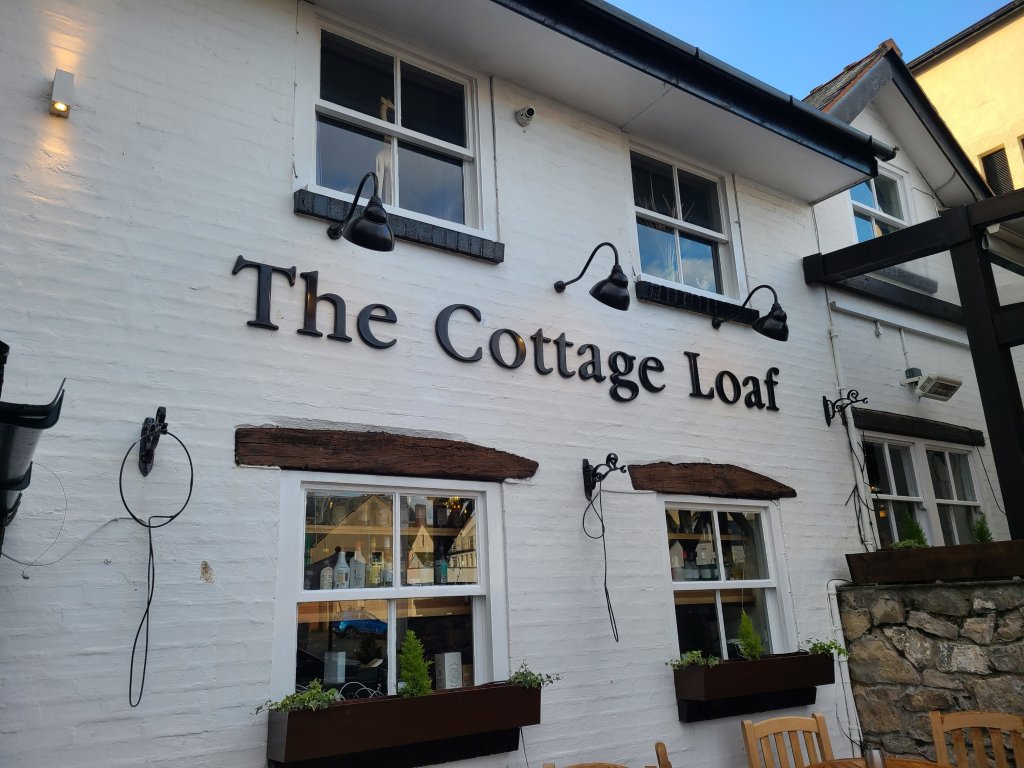
Head to The Cottage Loaf, a traditional Welsh country pub. It’s got a homey feel with wooden beams, fireplaces, old heavy furniture, and a great bar with a large variety of beer, including some local craft ones.

This charming town has something for everyone to enjoy on your Victorian-style seaside holiday!
Categories: Blog, Europe, Photo, Where in the World | Tags: , , , , , , , , , , , | 1 Comment

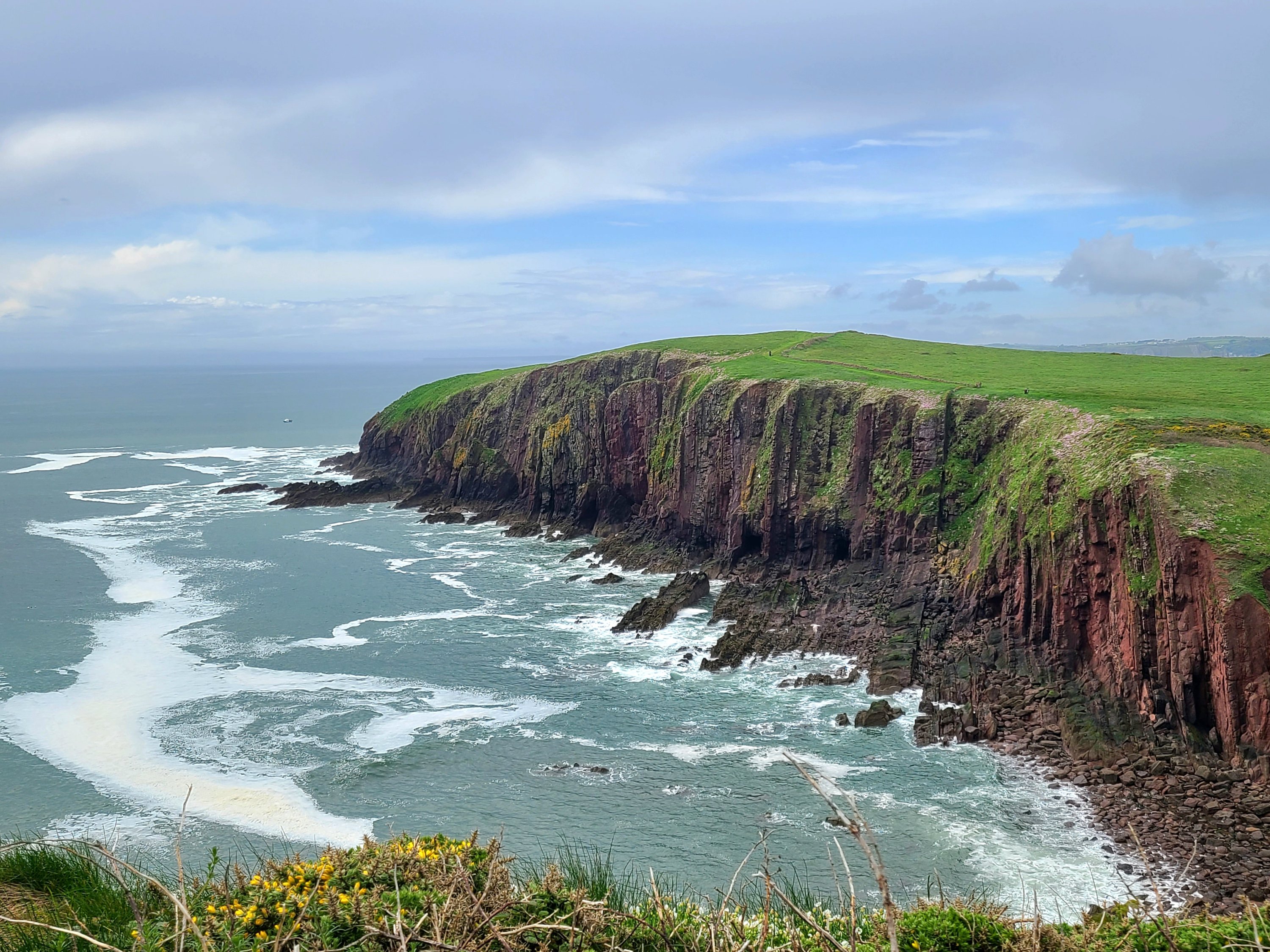
Colourful Tenby: Wale’s ‘Little Fortress of the Fish’

While researching seaside towns to visit in Wales, I quickly found that Tenby checked all the boxes:

Sandy beaches ✔️

Castle ruins ✔️

Colourful houses ✔️

Local brewery ✔️

and a nearby island inhabited by monks to explore✔️

So, I took the train from Cardiff and headed off to enjoy a few days by the seaside.

The historic fishing village of Tenby is located in the beautiful Pembrokeshire area of Southwest Wales.

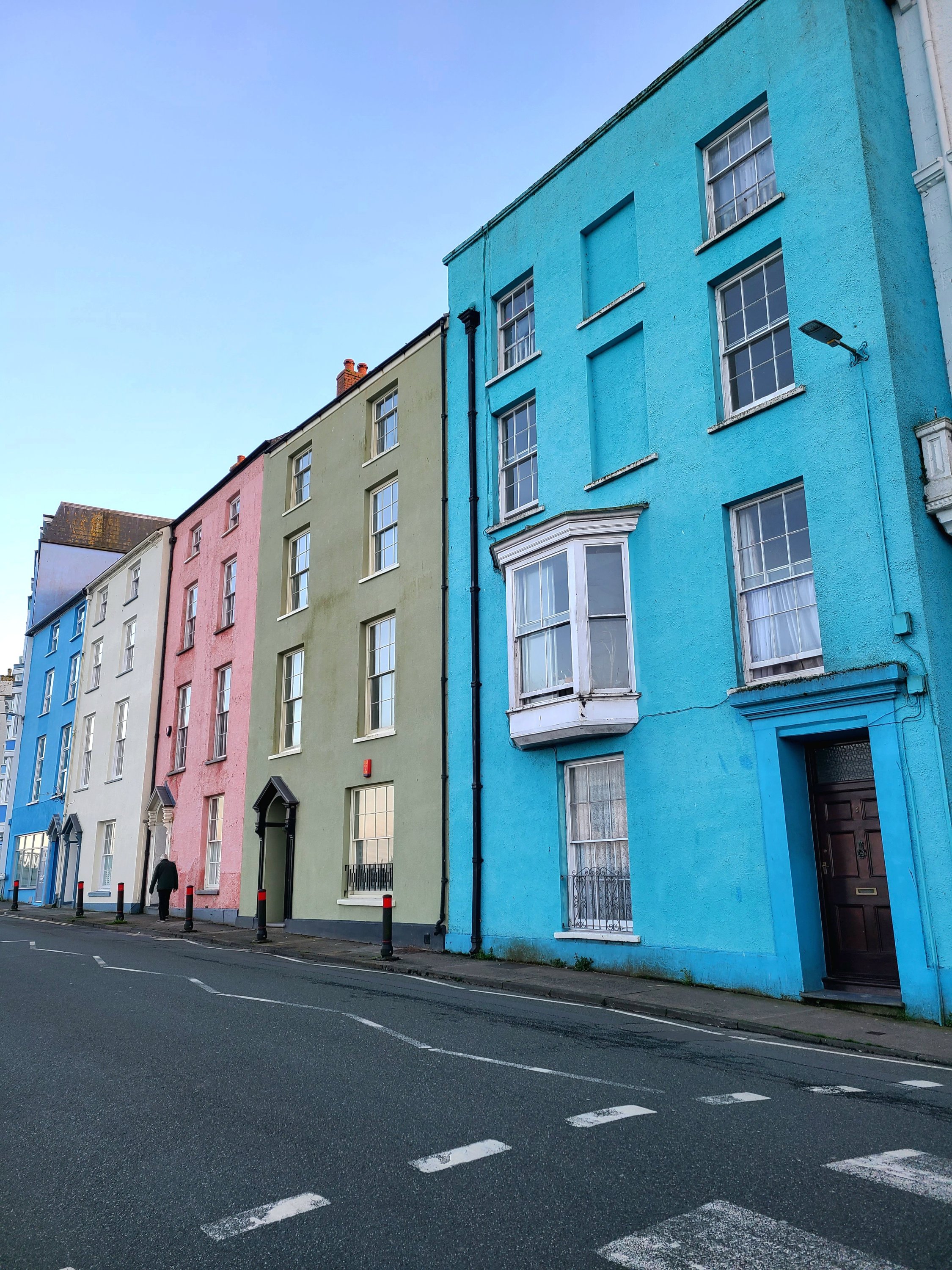
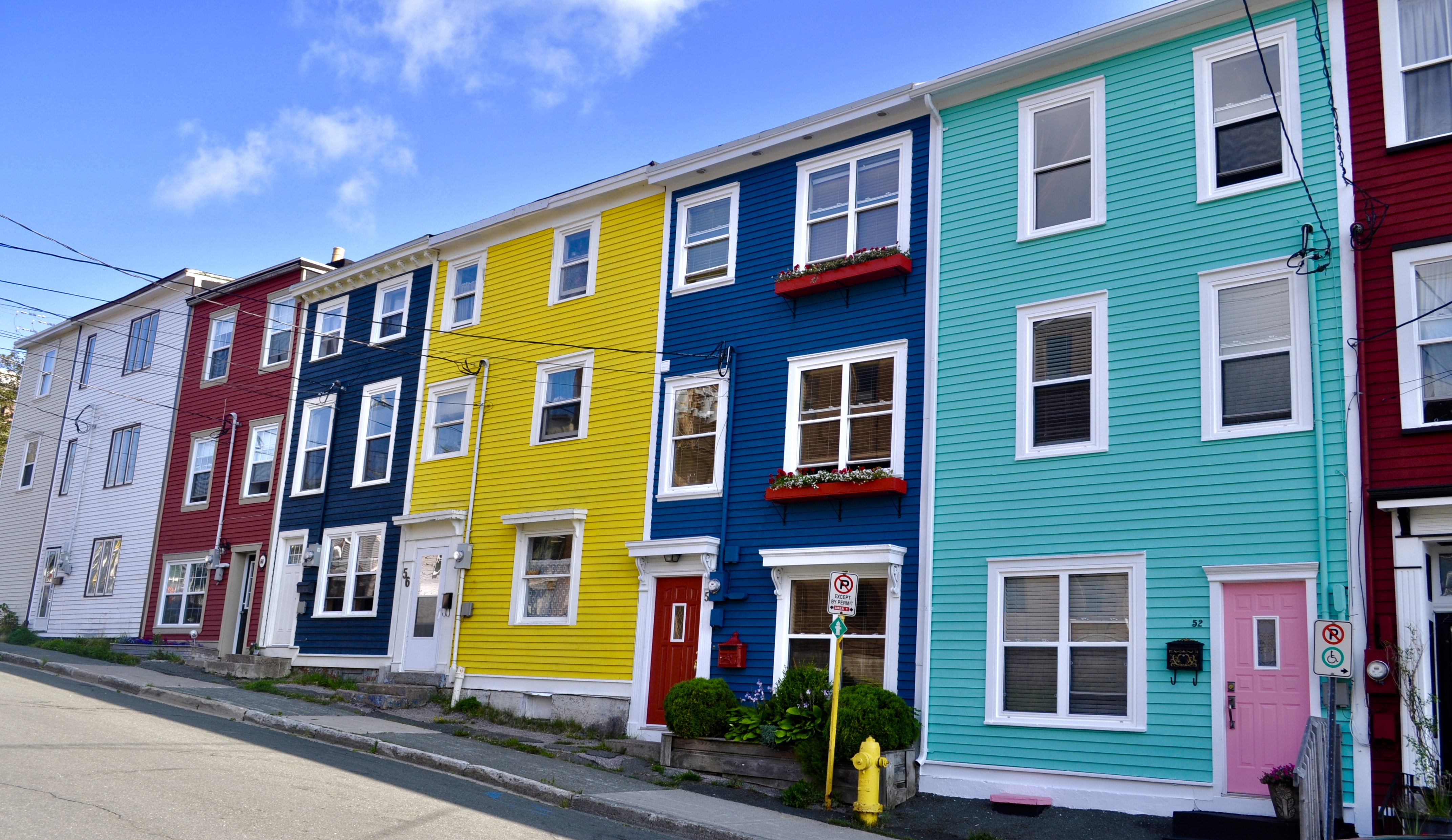
As a Canadian, it instantly reminded me of St. John’s, Newfoundland, with its colourful rows of houses, fishing boats, harbour, and plenty of fresh local seafood.

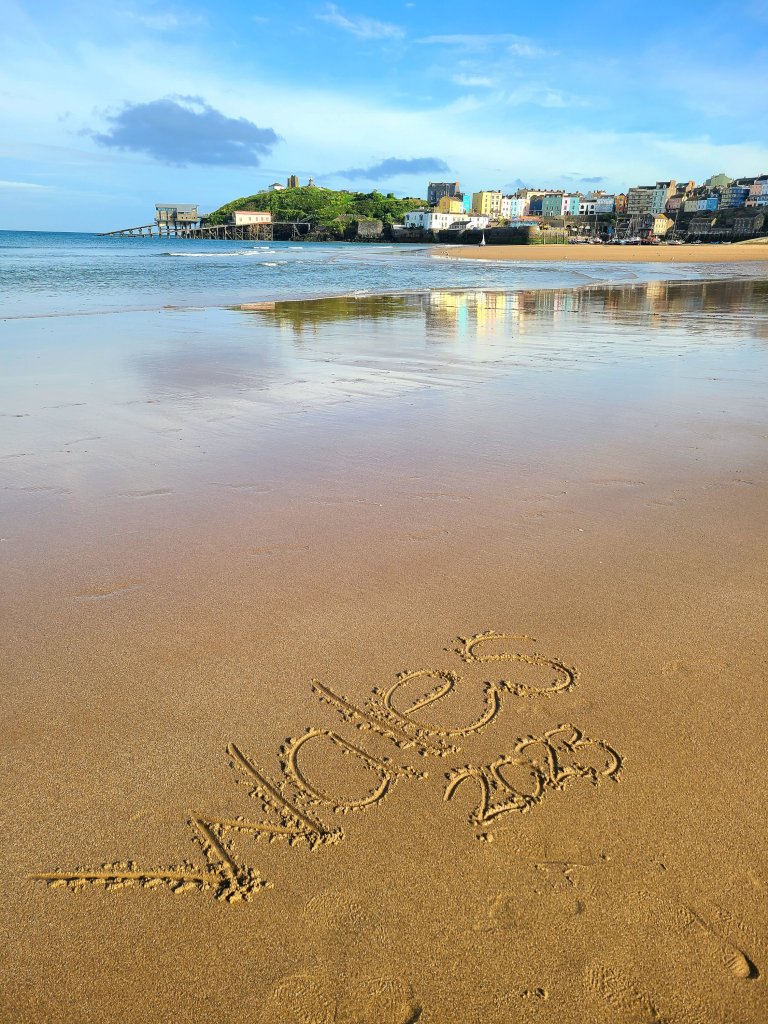
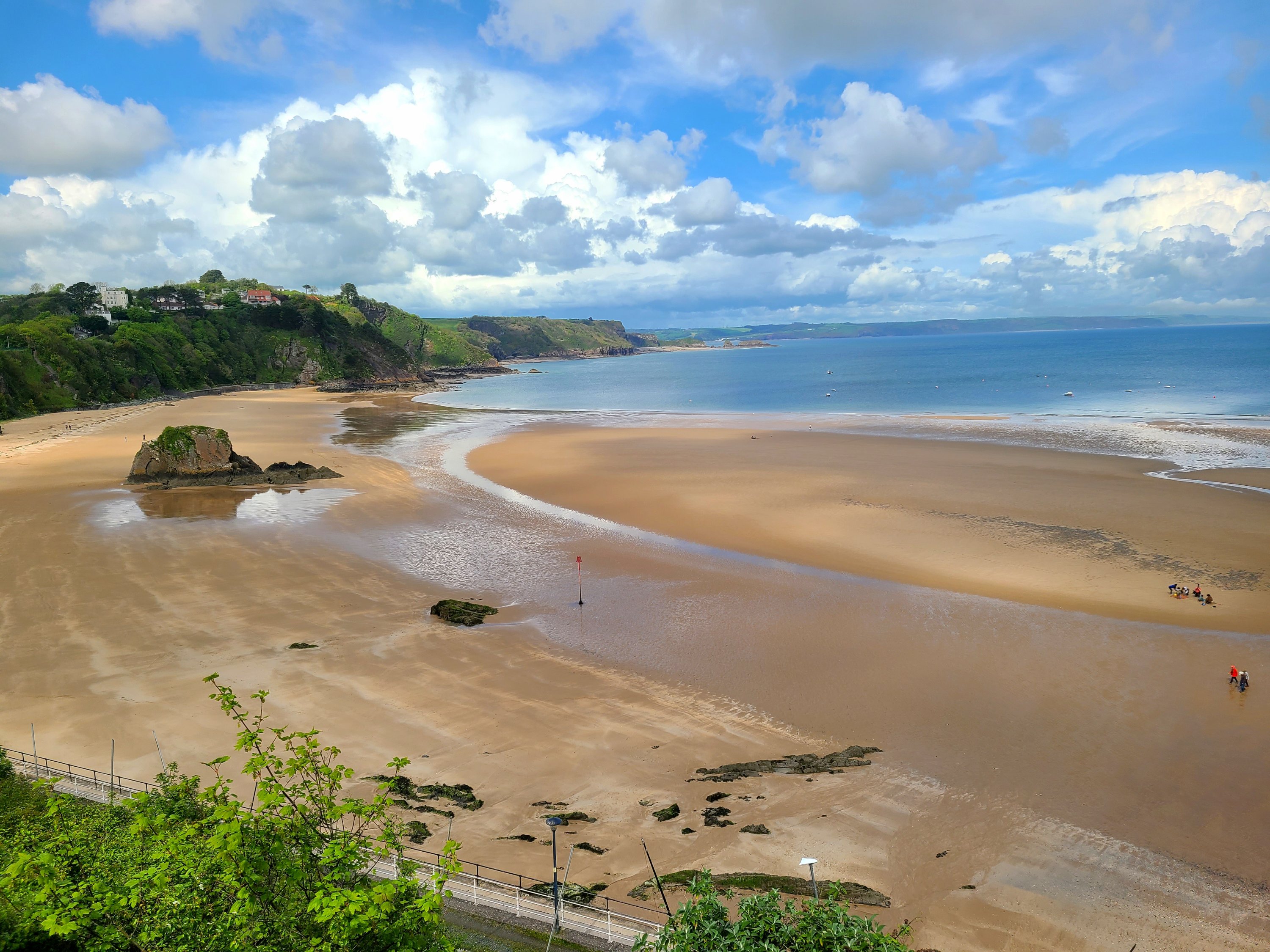
In Tenby, you are never far from a sandy beach. North, South and Castle beaches are all an easy walk from anywhere in town and with lots of space, especially when the tide is out, there’s plenty of room for everyone.

Tenby’s Welsh name, Dinbych-y-Pysgod, means ‘Little Fortress of the Fish’ and fishing is very popular here. Explore the harbour and find locals fishing off the pier or book a mackerel fishing excursion from one of the boat operators. You can also book tickets for a seal safari, island cruise, sunset cruise, and more.

Early in the morning, you will find the harbour full of boats floating in the calm water, but as the tide goes out, soon the boats are sitting in the sand. It’s quite the sight!

The harbour has its own small beach to enjoy as well as the old stone St Julian’s Fisherman’s Church.

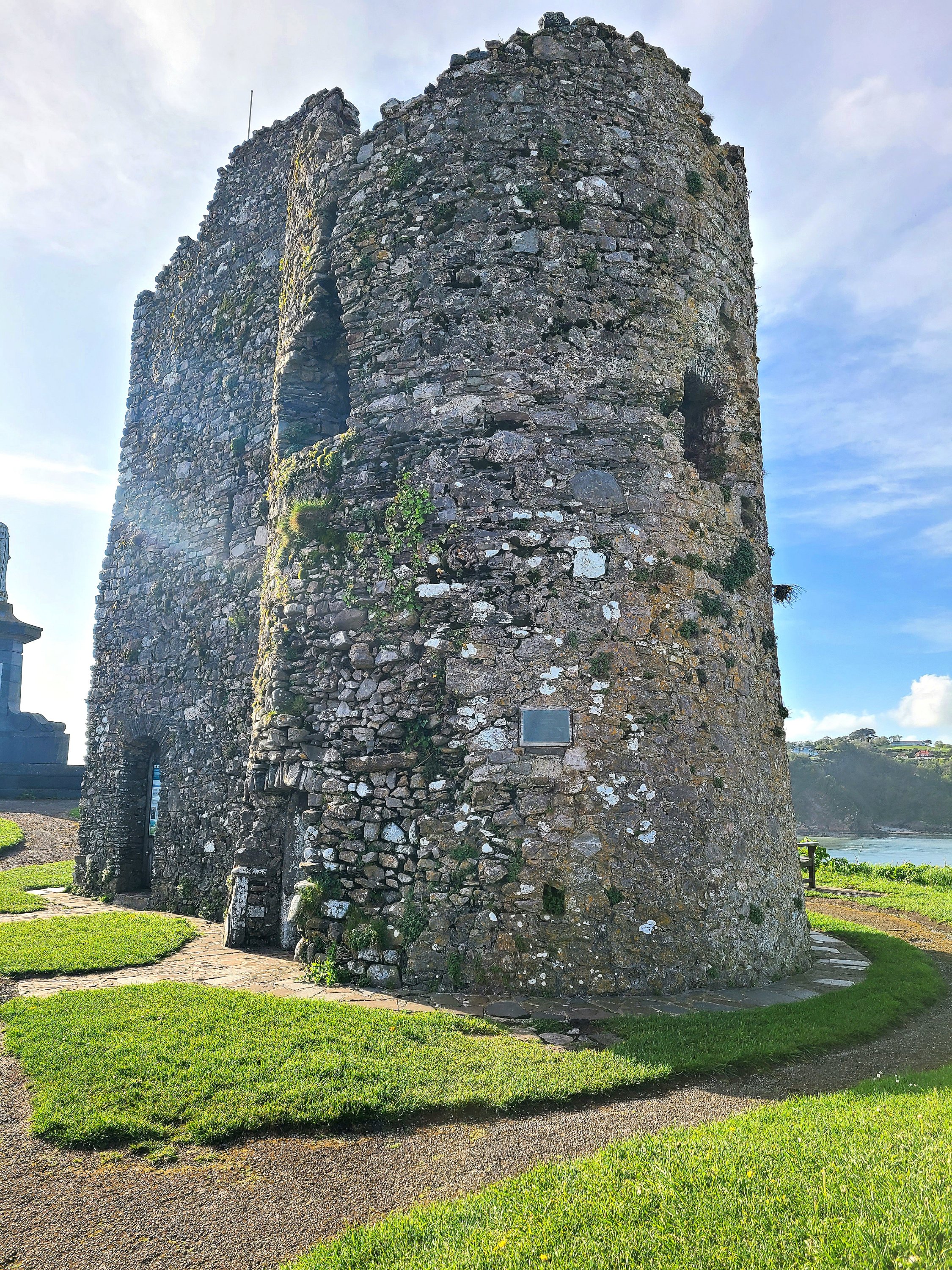
Tenby Castle was built by the Normans in the 12th century. Today, all that’s left of Tenby Castle is a small tower perched on top of Castle Hill, overlooking Castle Beach and surrounded by the sea.

While most of the castle is gone, the old town walls remain fairly intact, especially on the east side. The main entrance here is ‘Five Arches’ gate, leading to a maze of narrow streets that make up the picturesque old town of Tenby.

St Catherine’s Island & Fort has a very interesting history including a 13th century chapel, Victorian fort, palatial home, wartime garrison, zoo, movie location, and is now a visitor attraction.

Located just off Castle Beach, at low tide, St Catherine’s becomes a tidal island that’s easy to stroll across the beach to. (The entrance fee is £5. Open daily during the summer. Times depend on the tides.) 

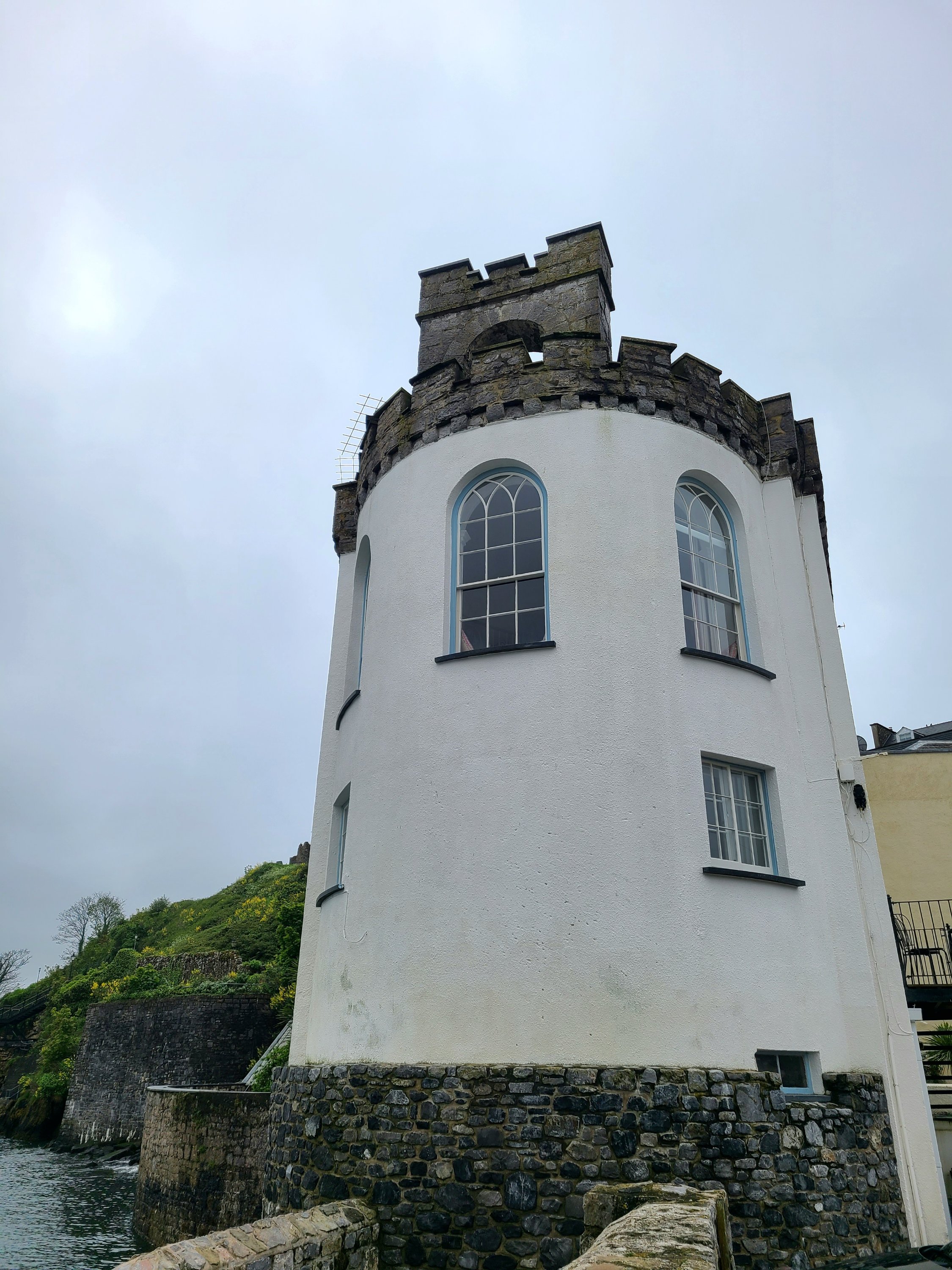
I loved walking along the waterfront, past all the colourful houses and up and down the hilly old streets, making my way around town.

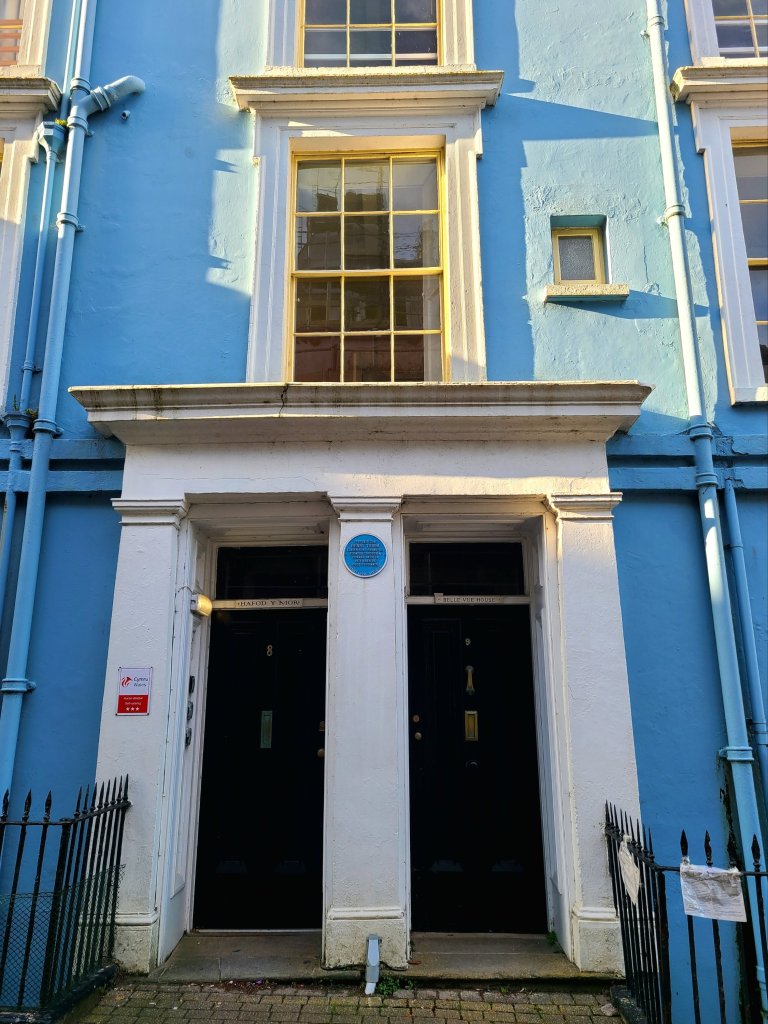
As I wandered around, I found a number of old buildings with plaques on them stating what famous person had lived or vacationed there, including authors Mary Ann Evans (aka George Eliot) and Roald Dahl. (I would have loved to stay in this cabin by the water!)

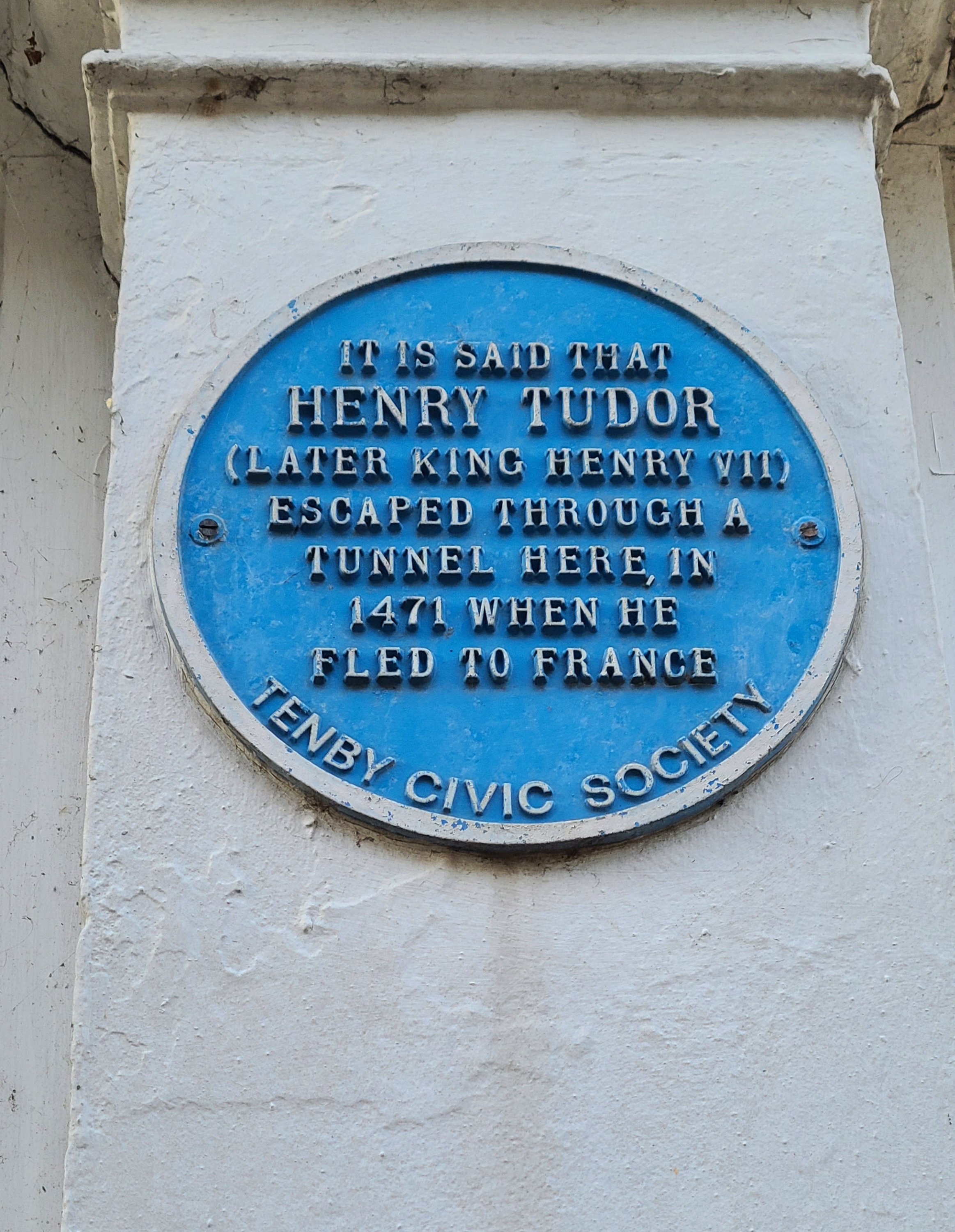
And this house, where it’s said that Henry Tudor (later King Henry VII) escaped through a tunnel and fled to France in 1471!

St. Mary’s Church stands in Tudor Square. During the Middle Ages, it was the largest Medieval Church in Wales and reflected the town’s prosperity as a bustling port town.

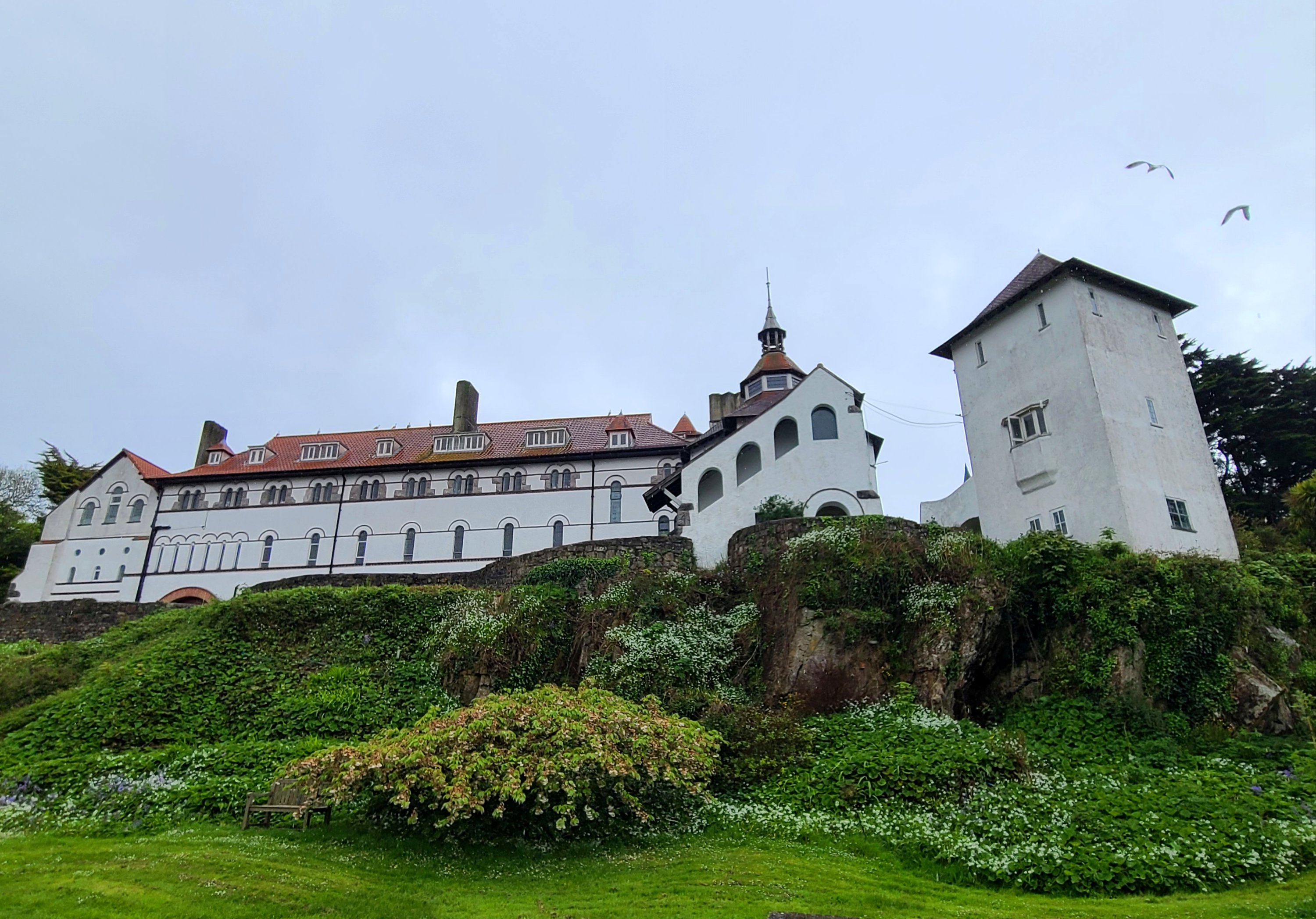
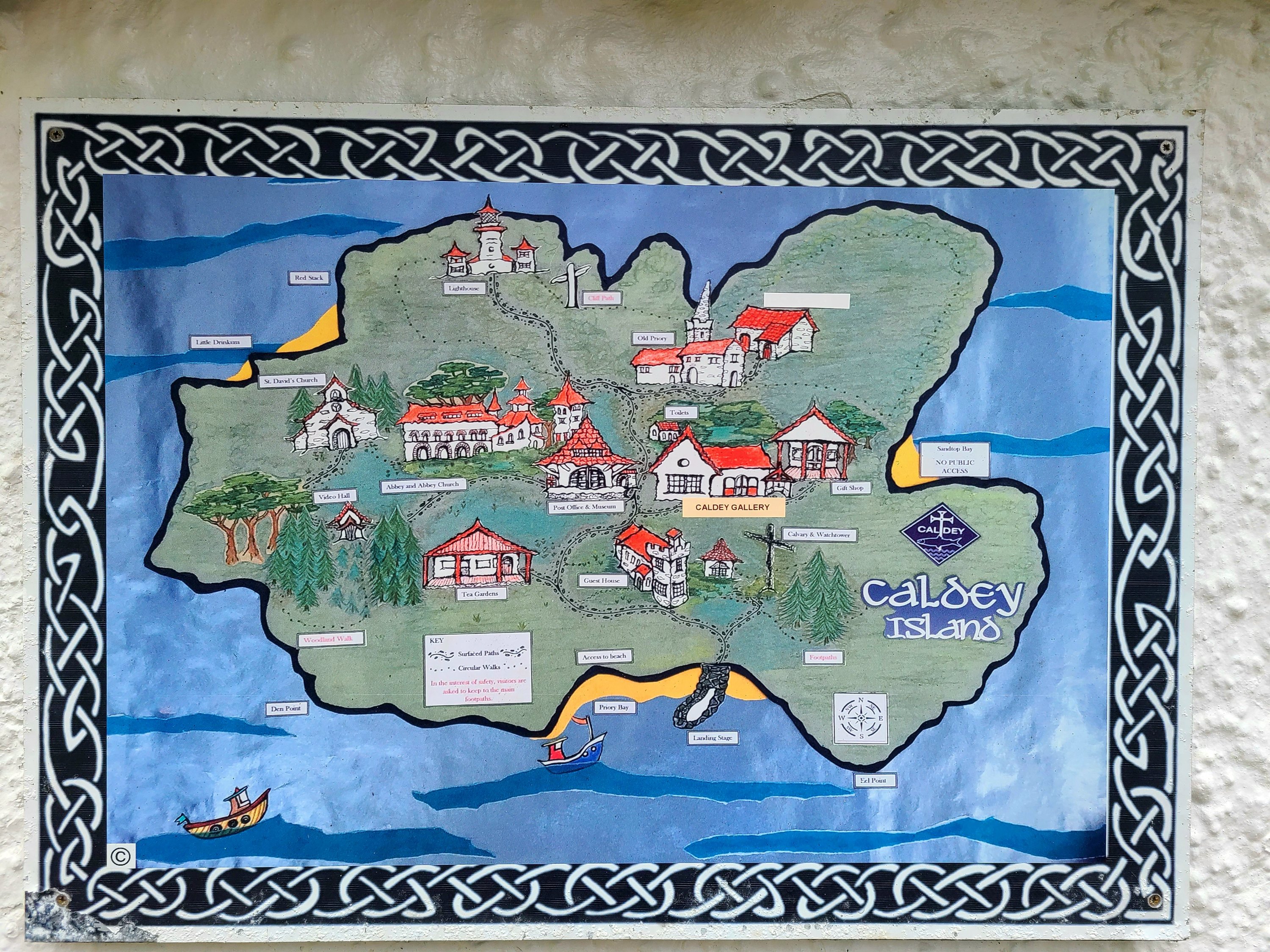
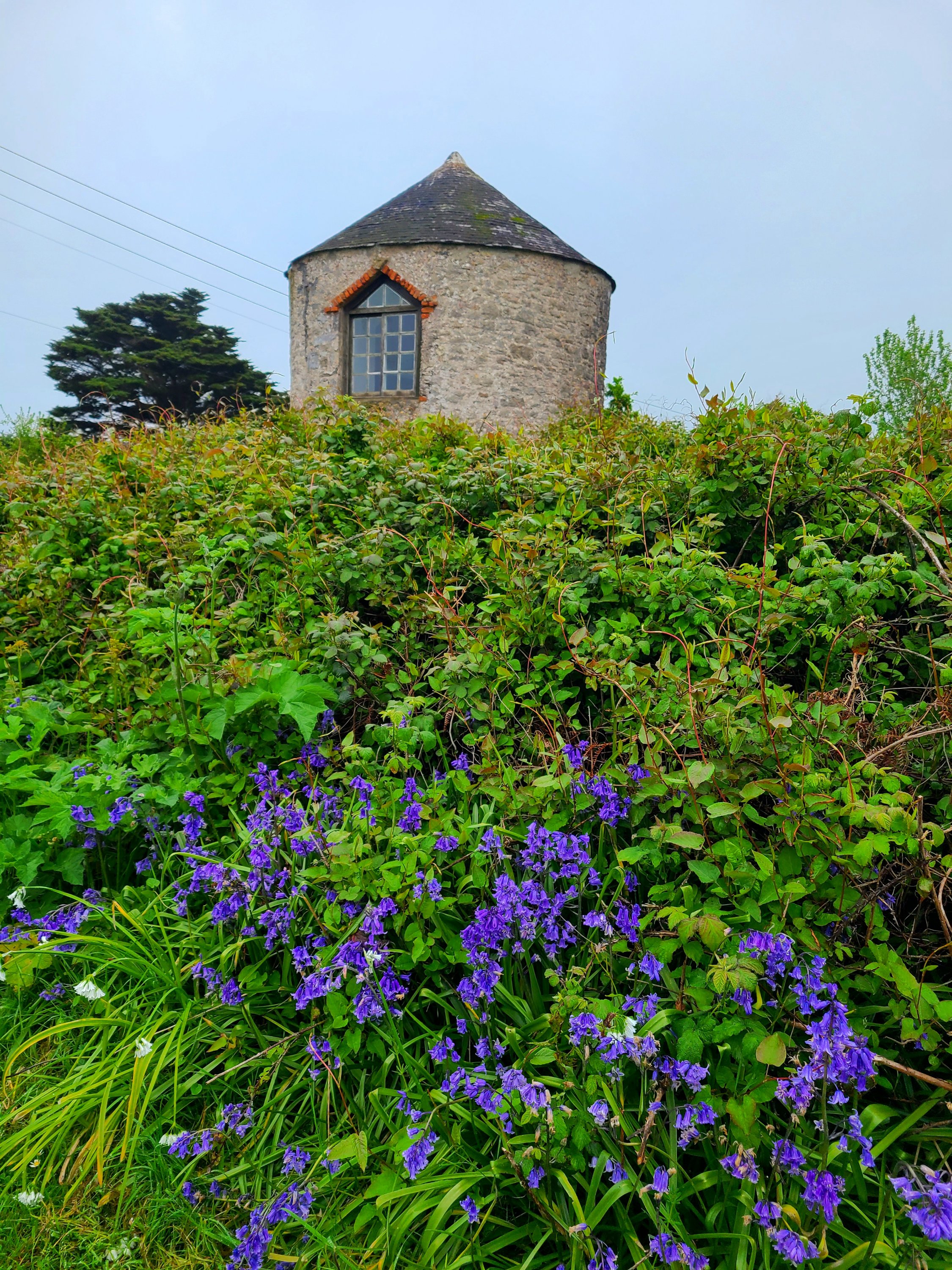
Caldey Island is a small island, 2.4km long & 1.6km wide, located about a 20-minute boat ride from Tenby. (£15 return, buy from a kiosk down by the harbour.)

The island has been inhabited by monks since the 6th century. Currently, Caldey Island is home to Cistercian monks, who built the abbey here in 1906. The island is also home to one of the area’s most beautiful beaches and gorgeous cliff views along the island’s trails. The small village hosts a tea garden, gift shop, gallery, and post office. The monks make and sell chocolate and perfume on the island and I definitely recommend the chocolate!

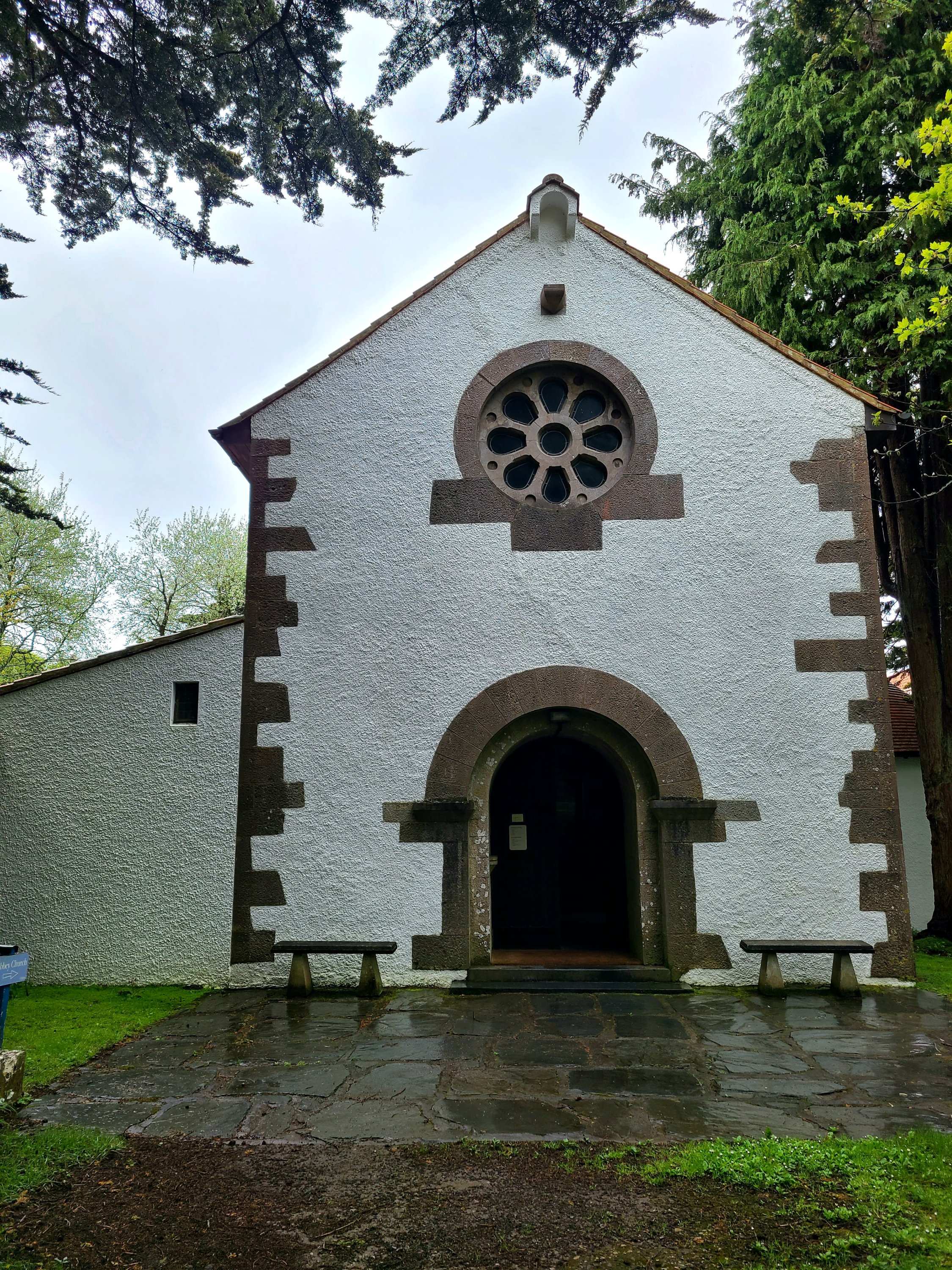
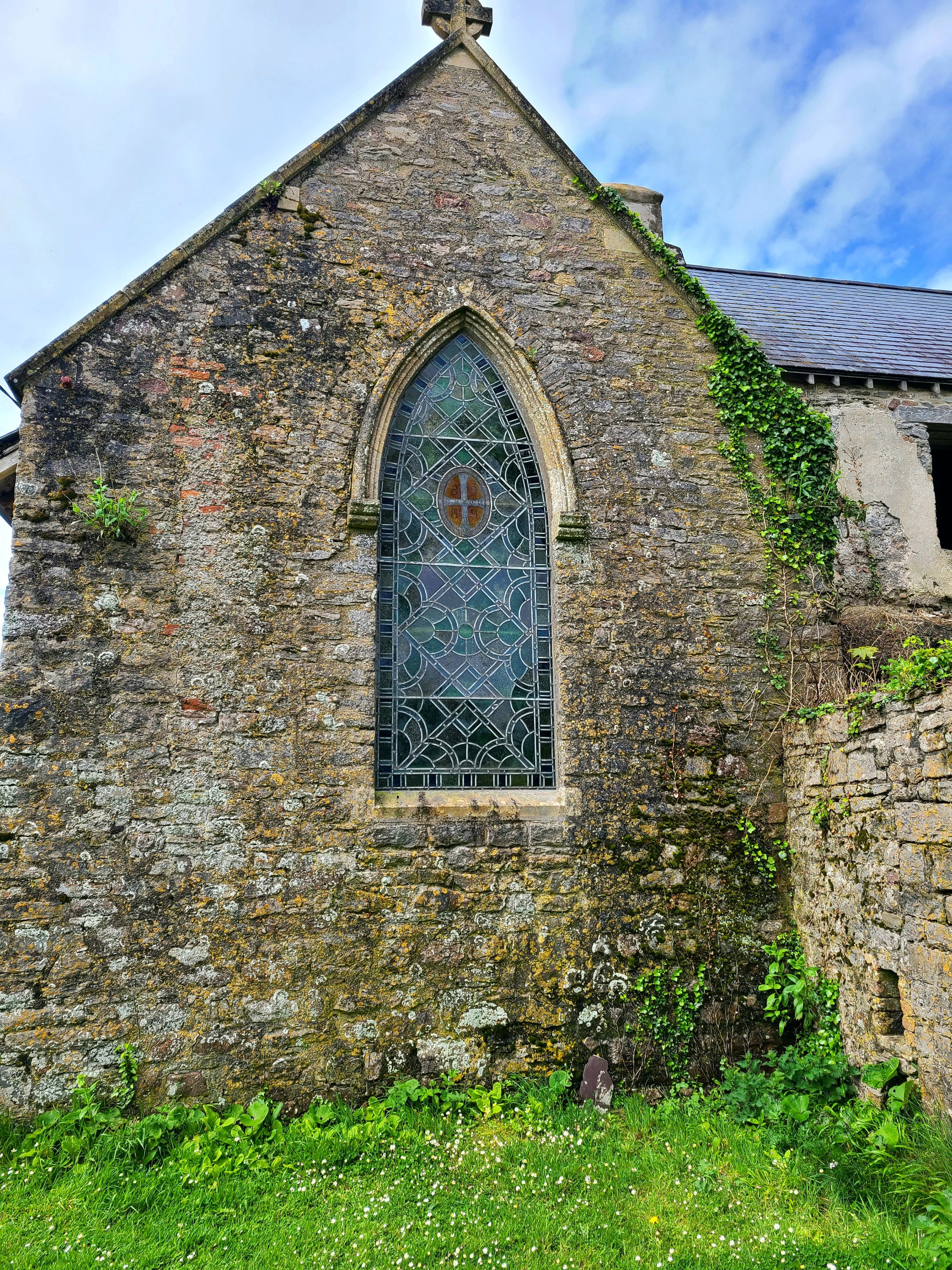
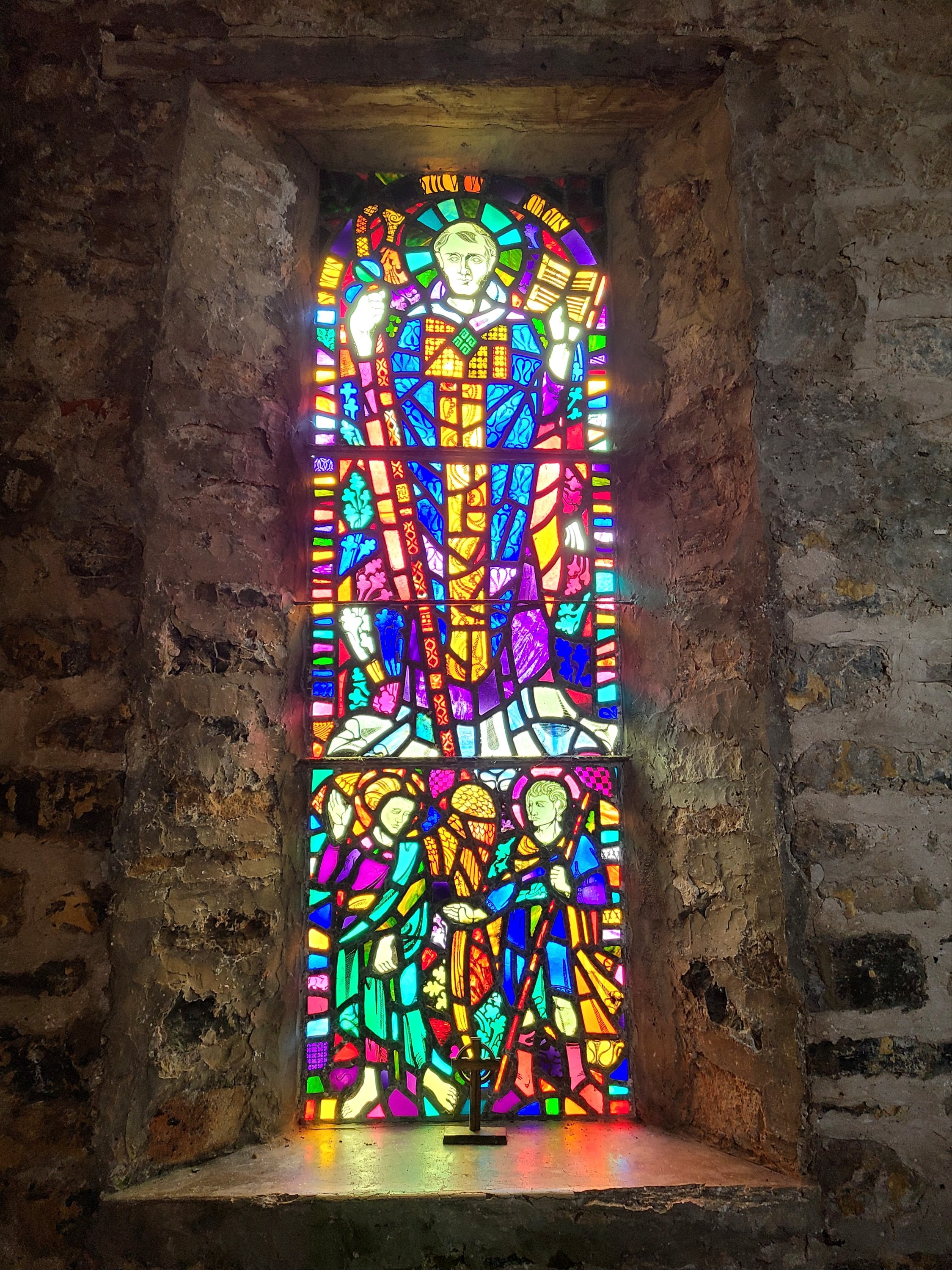
Here, you will also find St. David’s Church, with some beautiful stained glass and the Italianate Abbey, home to the Cistercian monks. Guests may enter the Abbey Church, but the rest of the Abbey is private.

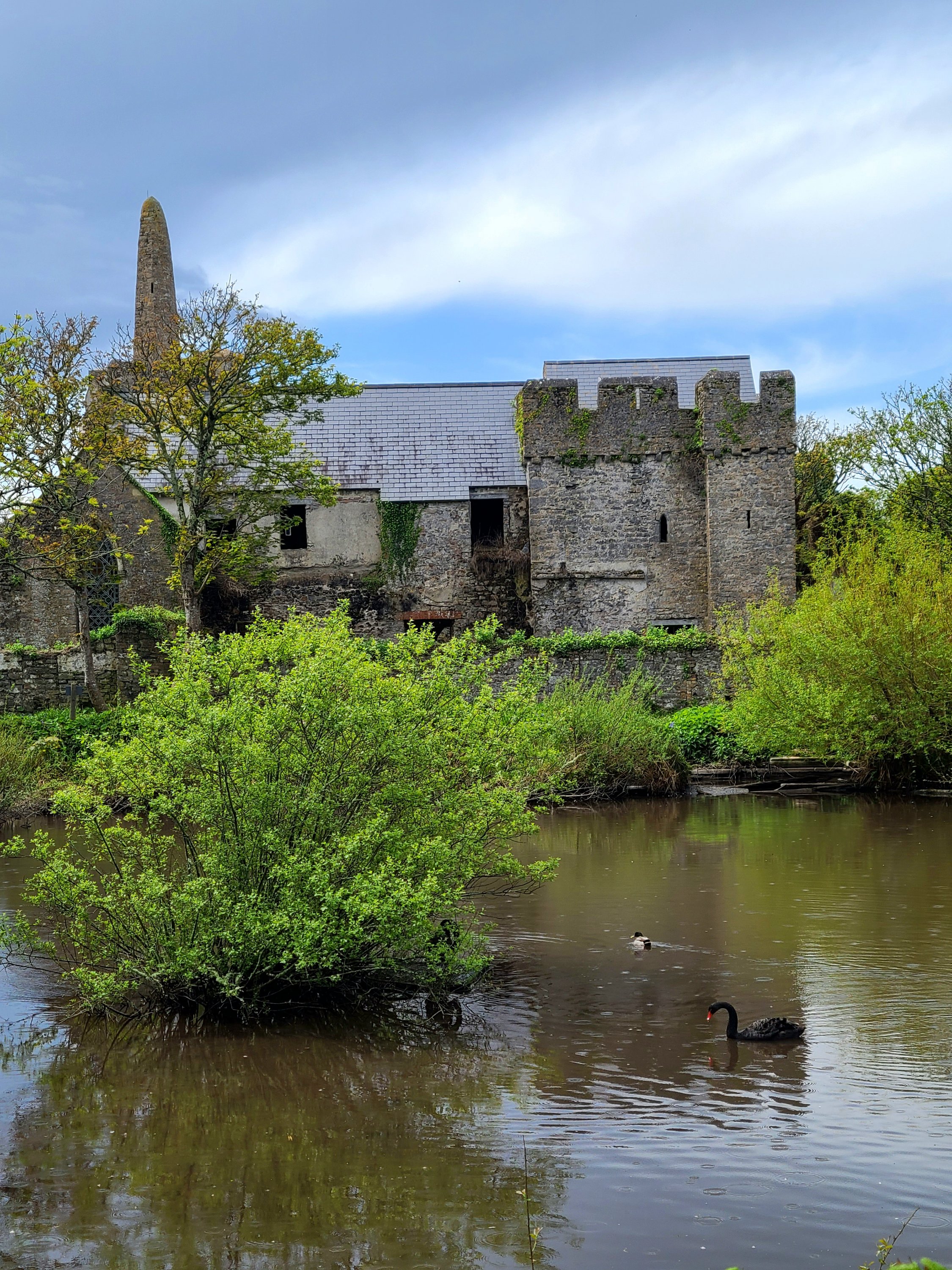
St Illtyd’s Church and Old Priory is the oldest building on the island. While some of it is now in ruins, most of the church remains and the stained glass inside is beautiful. The pond out front is also host to the island’s black swans.

Caldey island has several walks to explore, allowing guests to enjoy the views and the island’s wildlife.

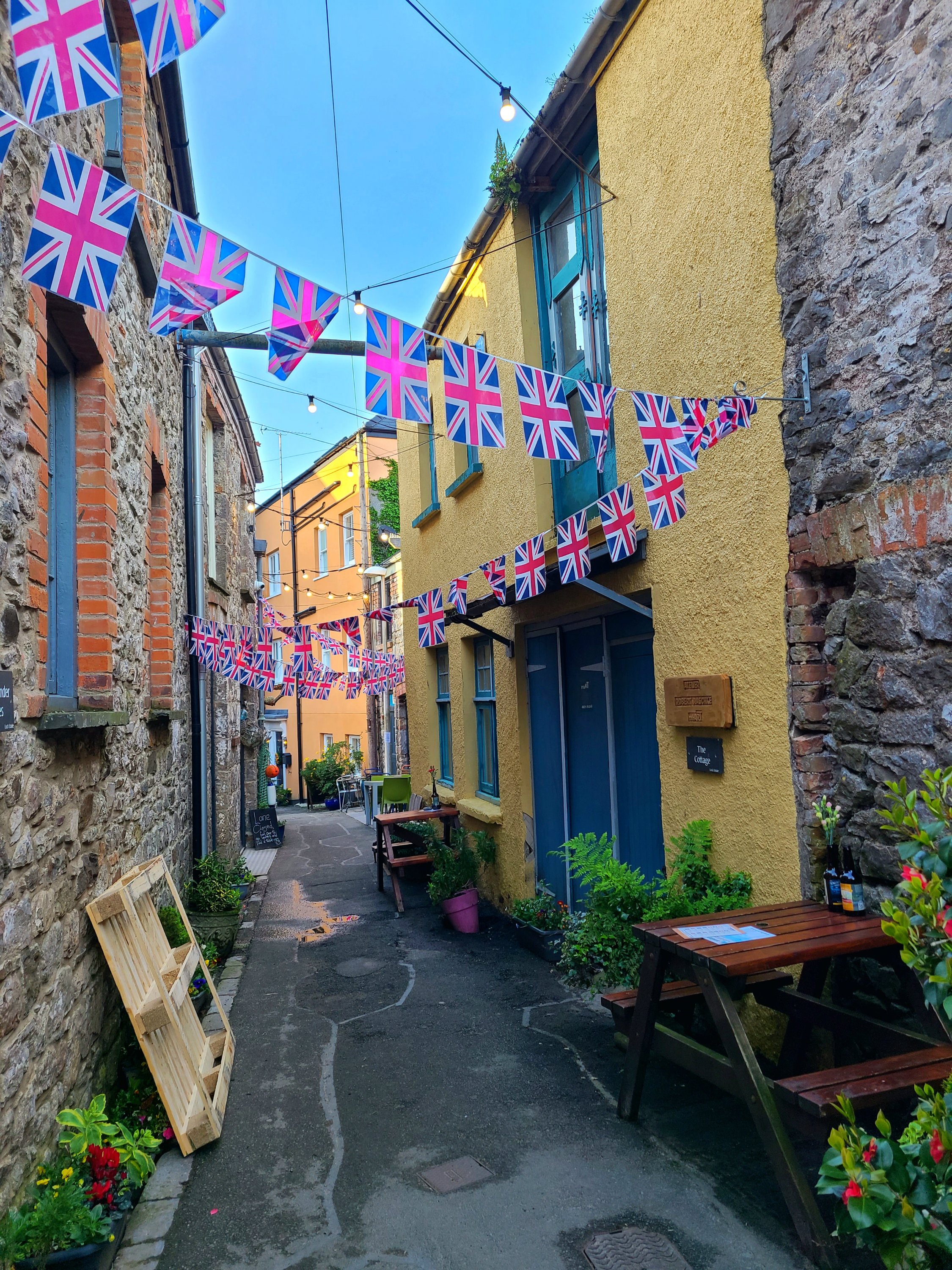
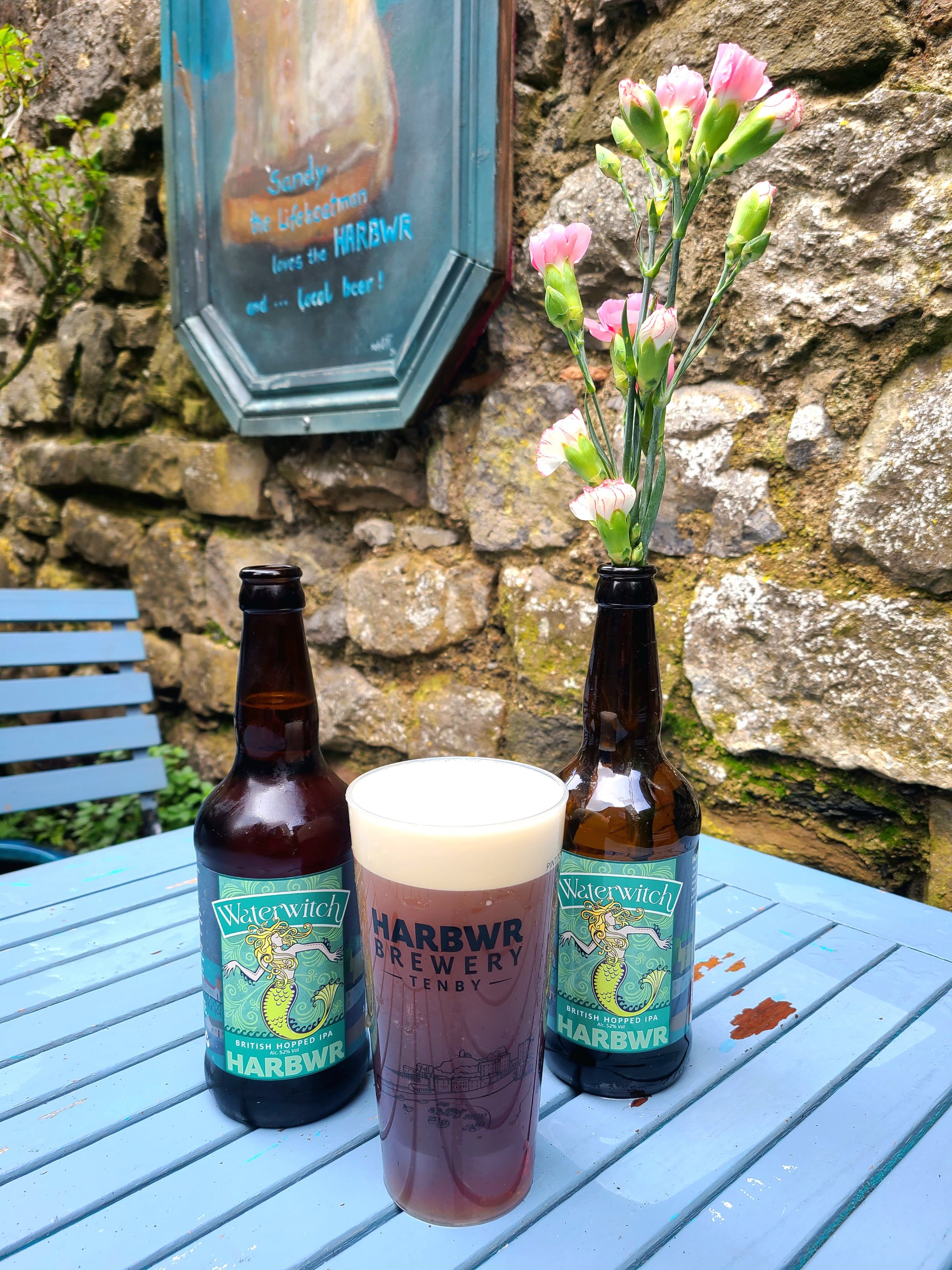
If, like me, you are a fan of beer, and craft beer in particular, then Tenby Harbwr Brewery is a must. Filling up most of an alleyway, this brewery has a beer garden, retail store, taproom, and outdoor alley sitting, as well as a restaurant. Grab a pint (or two) and enjoy!
As you stroll along the historic streets of Tenby, you’ll come across a number of quaint shops, restaurants, and snack shops. (Be sure to stop for a local Welsh cake!) After spending my day by the water, I went looking for fish & chips. I chose Tenby’s Traditional Fish & Chips for takeout and enjoyed my meal back down by the water, watching the sun set over this colourful seaside wonder.

Categories: Blog, Europe, Photo, Where in the World | Tags: , , , , , , , , , , | 3 Comments

The Legend of Sleepy Hollow

A few years ago, I made a list of all the Halloween inspired places I wanted to visit. Salem was first up and we had a great time exploring the town and learning about the history of the Salem witch trials.

This spooky season, we drove to Sleepy Hollow, NY to explore the setting of Washington Irving’s “The Legend of Sleepy Hollow.” Irving’s short story is a favourite read of mine this time of year, so I was eager to see what the town had to offer. 

Halloween decor was everywhere, with houses and businesses here really getting into the spirit of the season. 

‘The Legend of Sleepy Hollow’ Must Sees

If, like me, you are mainly visiting Sleepy Hollow in October near Halloween because you love The Legend of Sleepy Hollow (book, movie adaptations and/or shows), then here are the sights you’ll want to see!

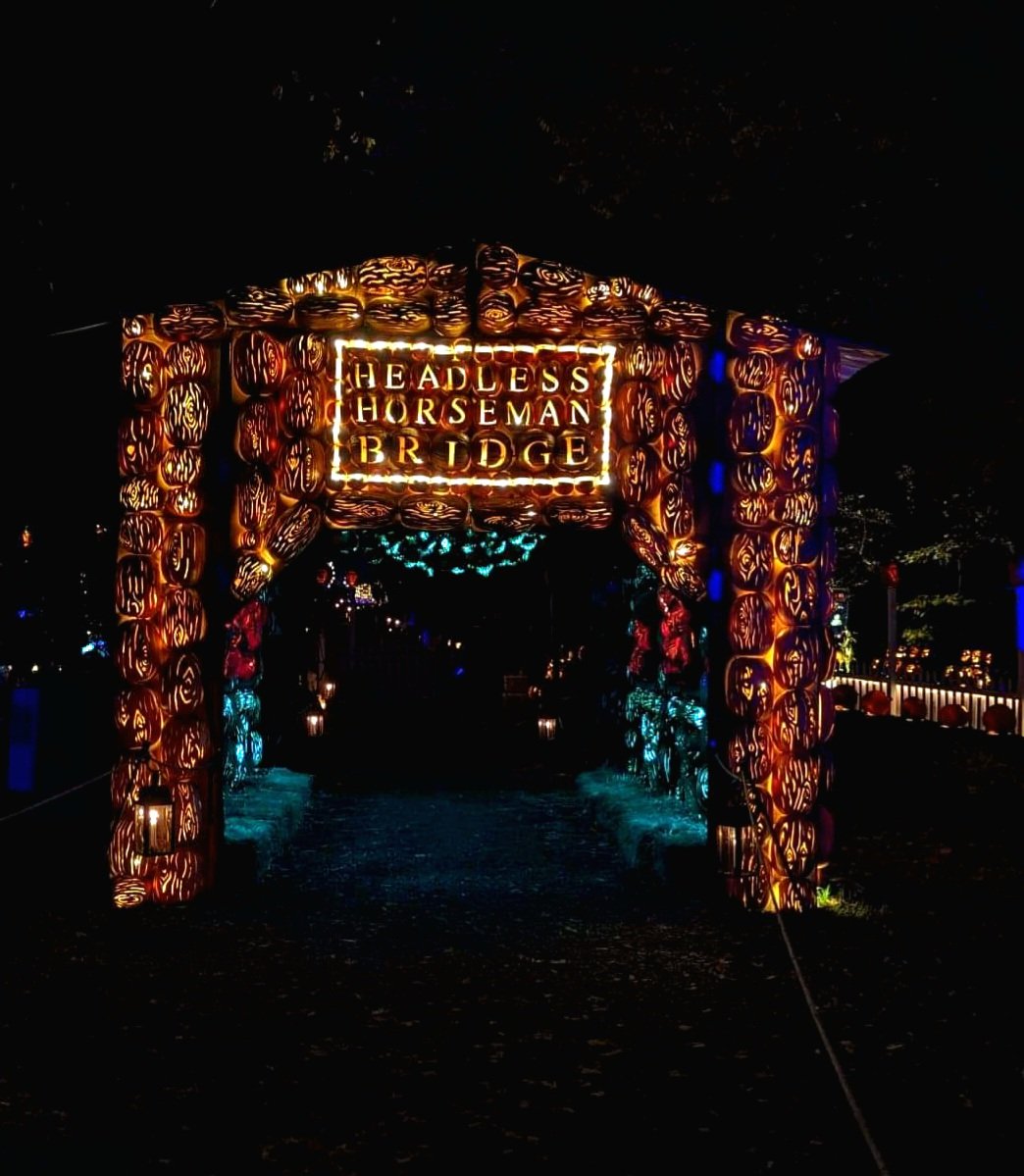
Headless Horseman Bridge

“If I can but reach that bridge,” thought Ichabod, “I am safe.” ~The Legend of Sleepy Hollow

The famous bridge where Ichabod Crane was unseated by a pumpkin is the most popular destination in Sleepy Hollow that doesn’t exist … at least not in the same location it’s found in “The Legend of Sleepy Hollow.”

That simple wooden bridge that spanned the river in the late 1700s has long since rotted away.

This Headless Horseman Bridge is located in Sleepy Hollow Cemetery.

*Fun Fact: As vehicles cross the bridge at just the right speed, you can hear the hoofbeats of the Headless Horseman’s horse!

The Old Dutch Church & Burying Ground

“Indeed, certain of the most authentic historians of those parts, who have been careful in collecting and collating the floating facts concerning this spectre, allege that the body of the trooper, having been buried in the church-yard, the ghost rides forth to the scene of battle in nightly quest of his head; and that the rushing speed with which he sometimes passes along the Hollow, like a midnight blast, is owing to his being belated, and in a hurry to get back to the church-yard before daybreak.”   

~The Legend of Sleepy Hollow

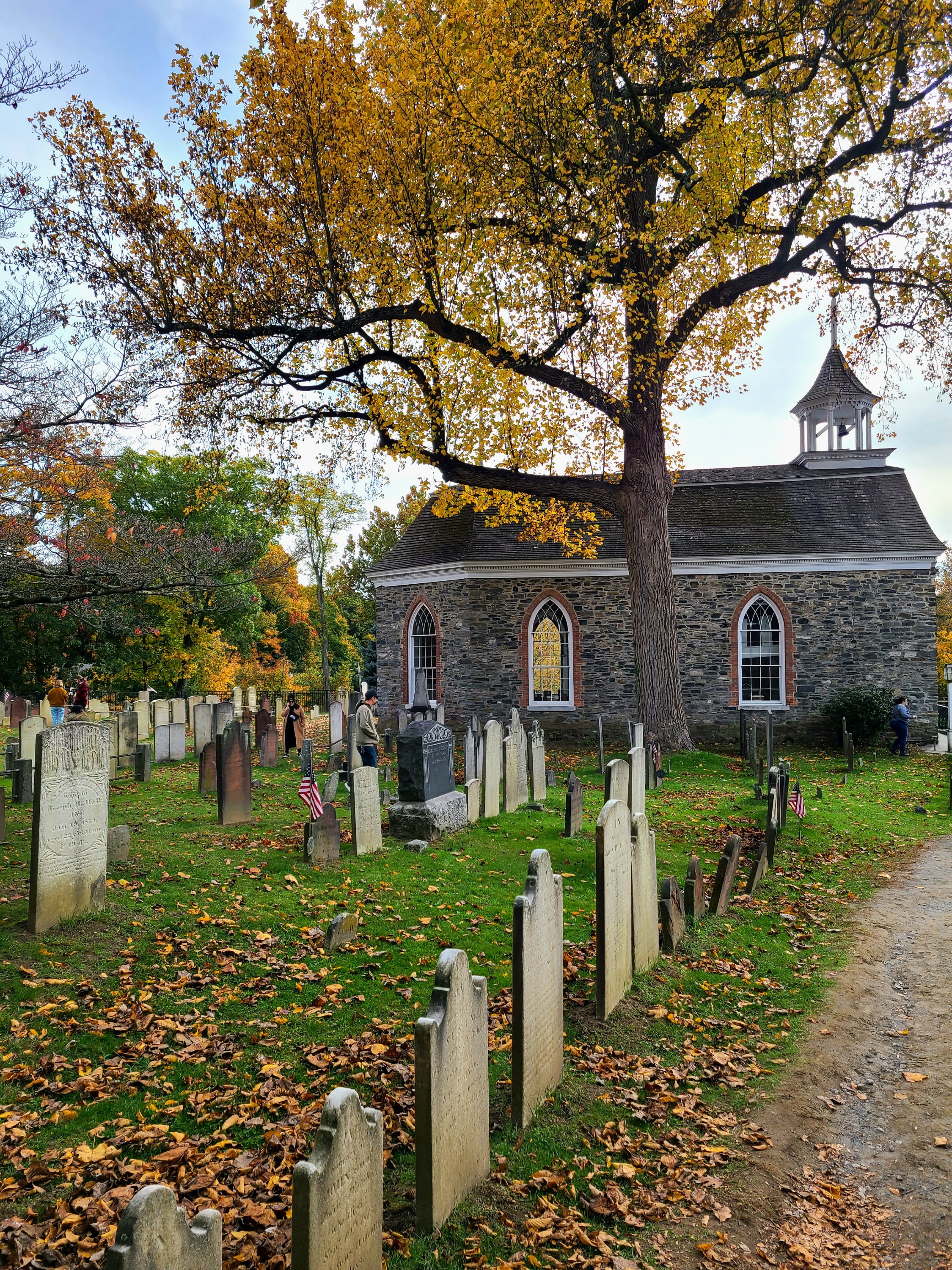
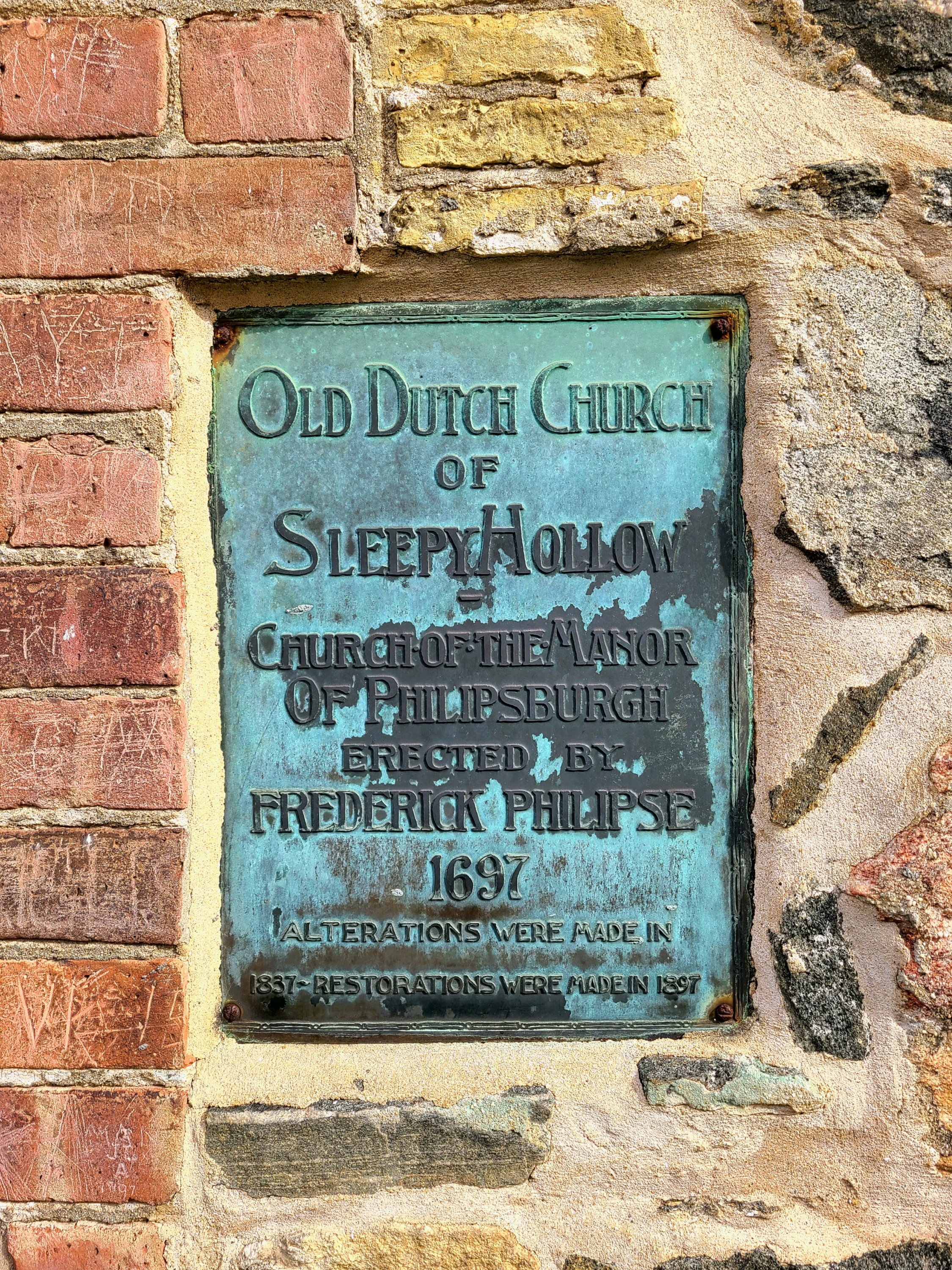
The Old Dutch Church & Burying Ground was founded around 1685.

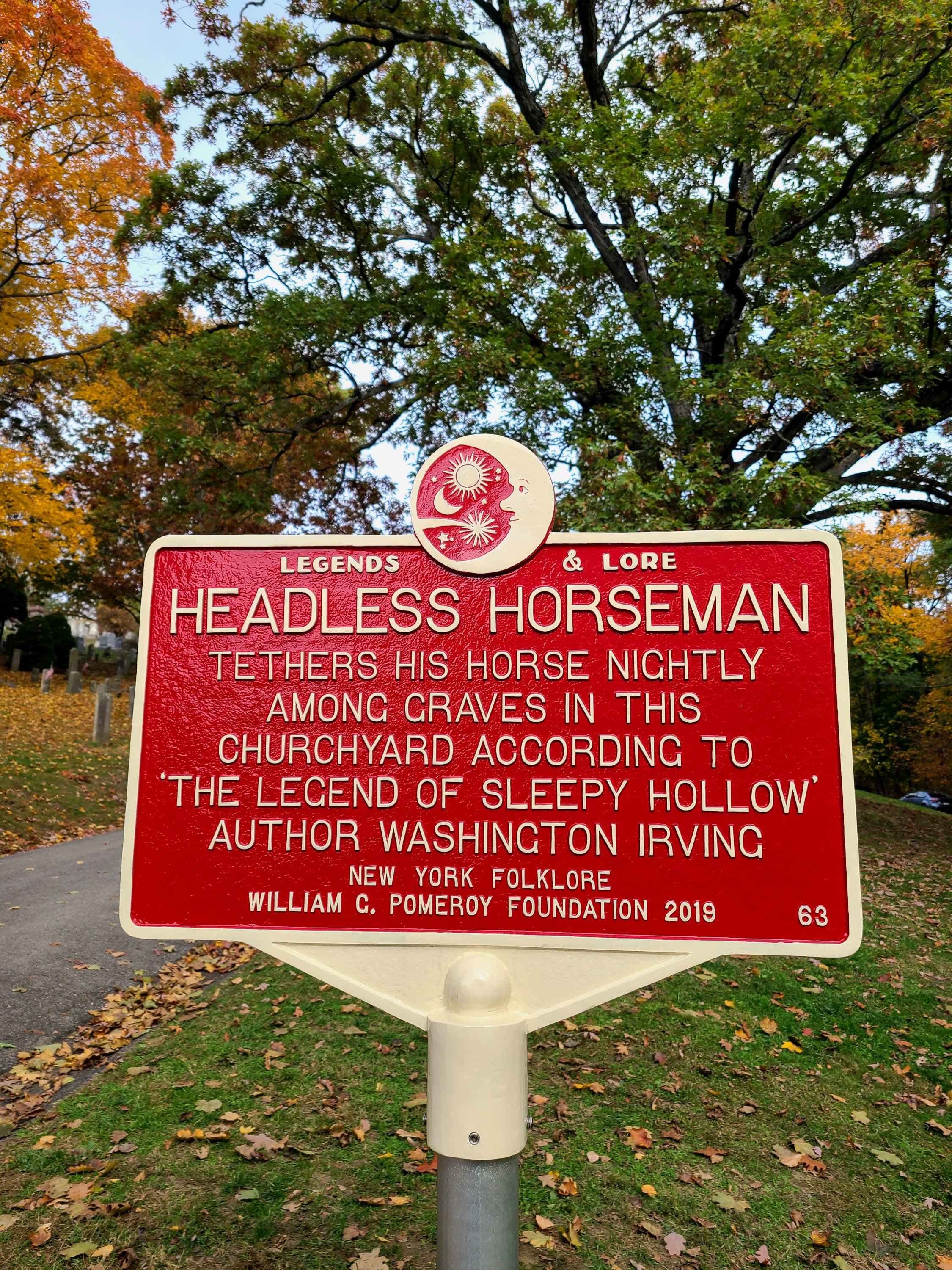
The church’s 2.5-acre burying ground is said to be the haunt of the Headless Horseman in “The Legend of Sleepy Hollow.” It’s also the resting place of local citizens who are said to have inspired Irving’s characters of Katrina Van Tassel, Brom Bones, and others.

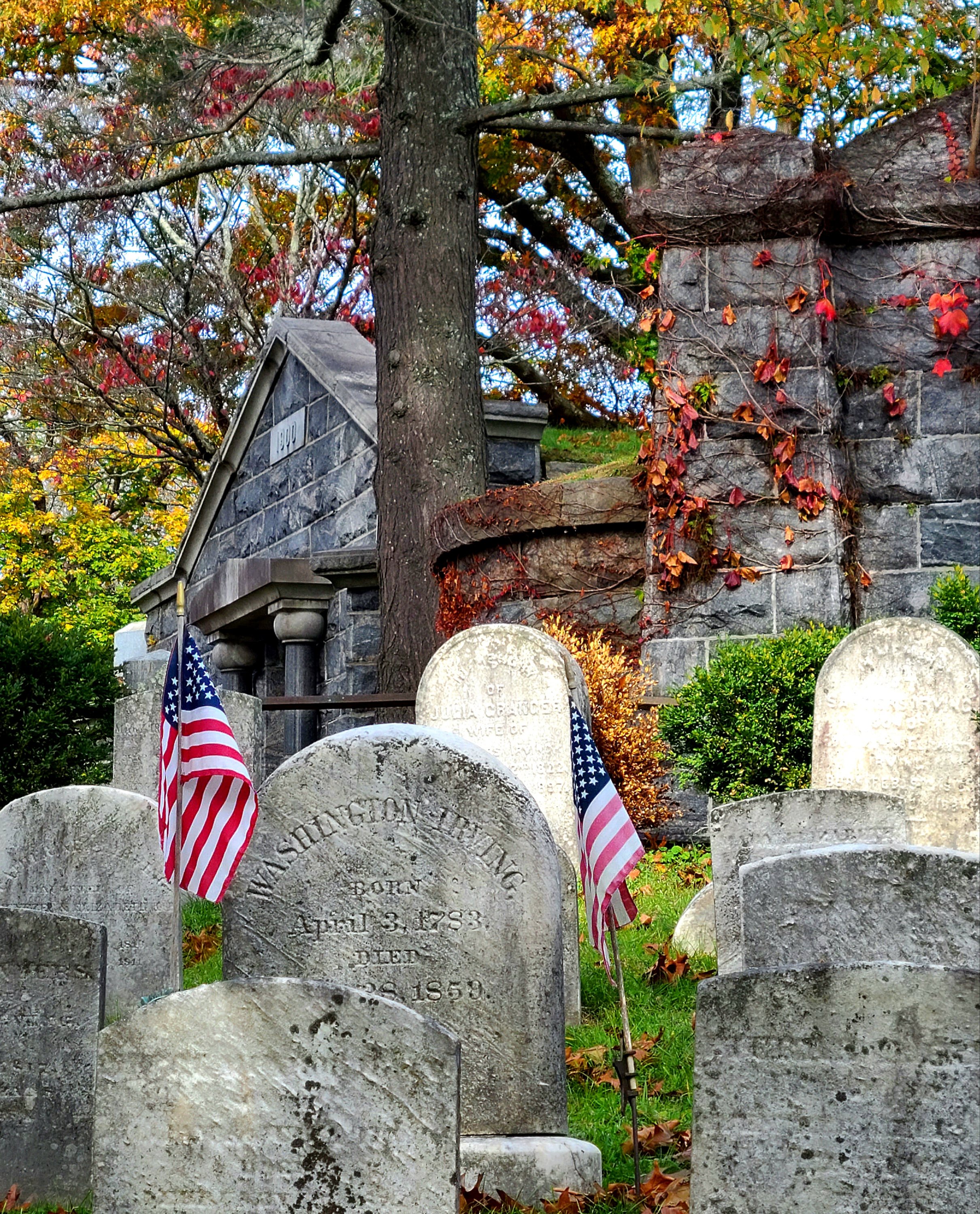
This small cemetery is found adjacent but separate to Sleepy Hollow Cemetery, where Washington Irving’s grave can be found.

Sleepy Hollow Cemetery

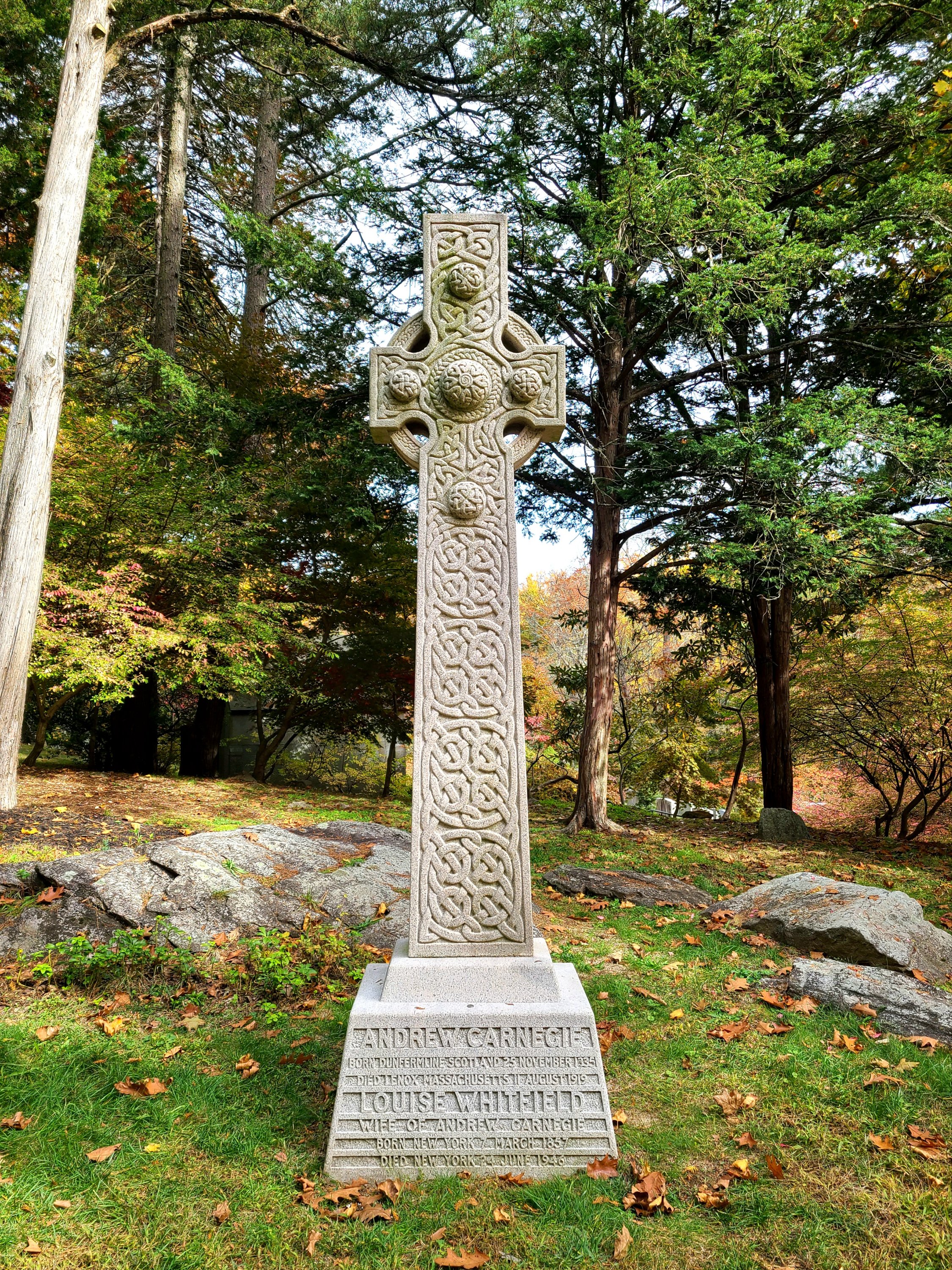
The 90-acre cemetery has seen over 45,000 interments, including some famous ones like Washington Irving, Andrew Carnegie, Walter Chrysler, Elizabeth Arden, and William Rockefeller. 

You can walk or drive the grounds on your own or book one of the various tours offered both during the day and in the evening. 

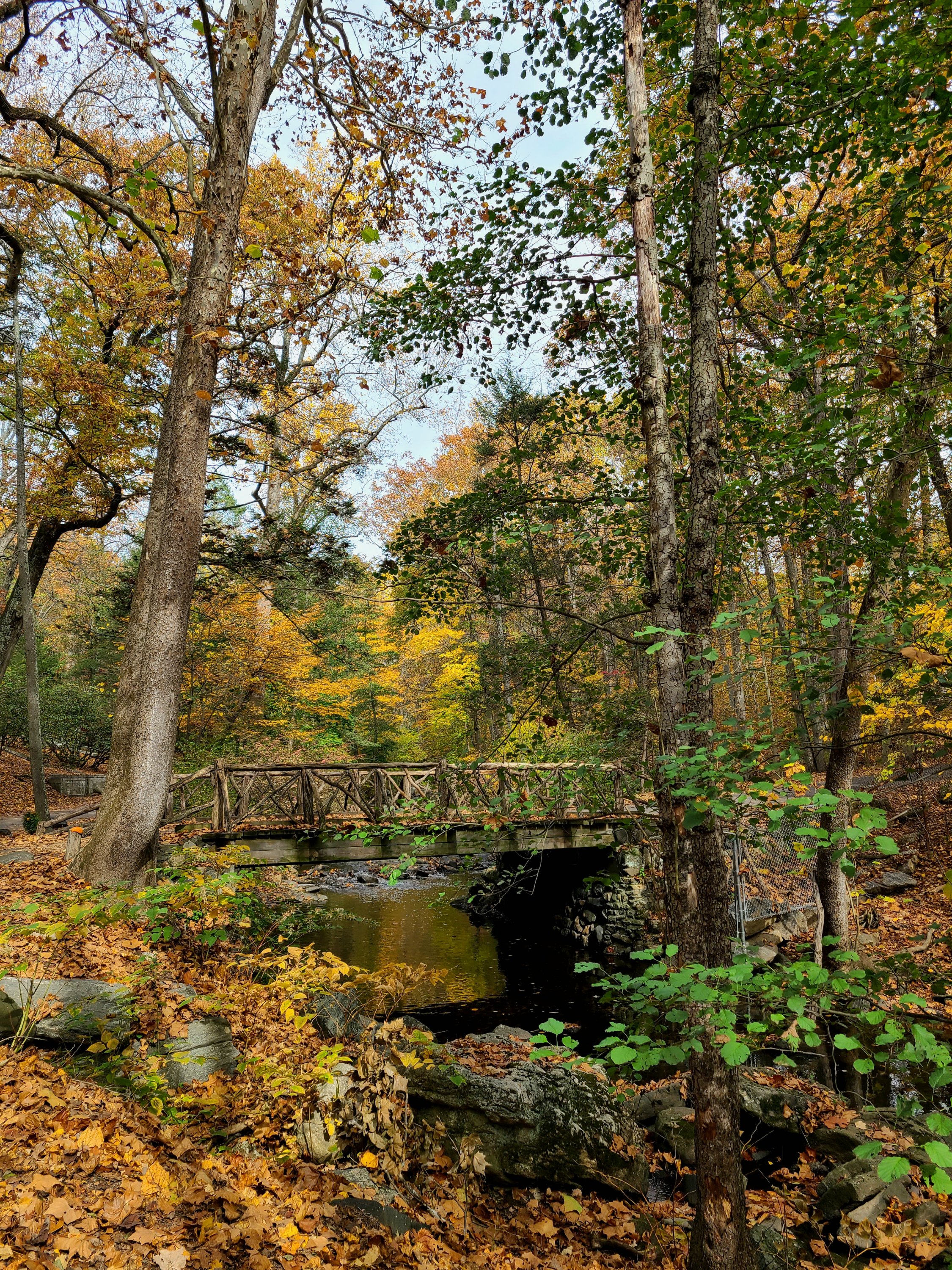
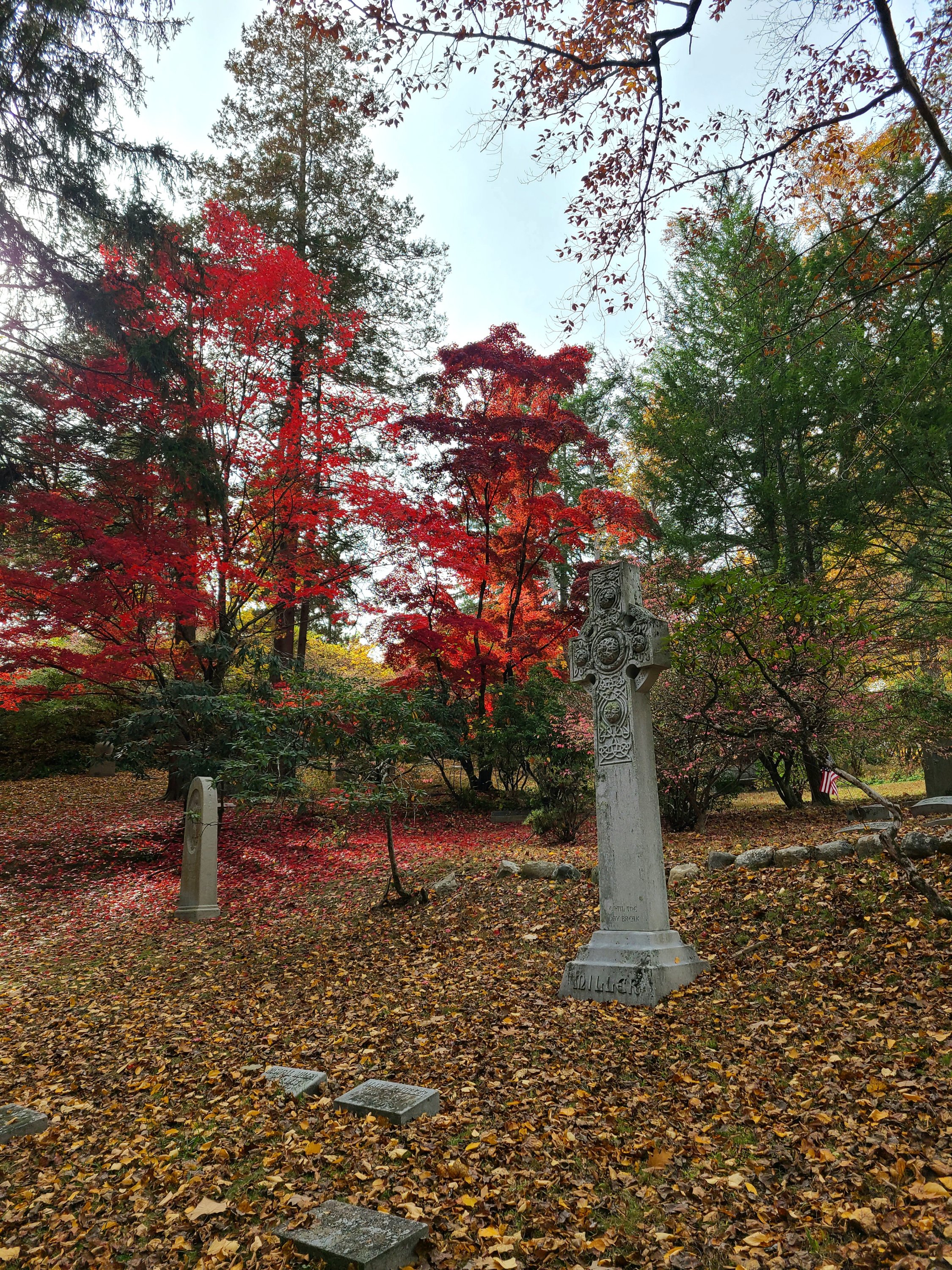
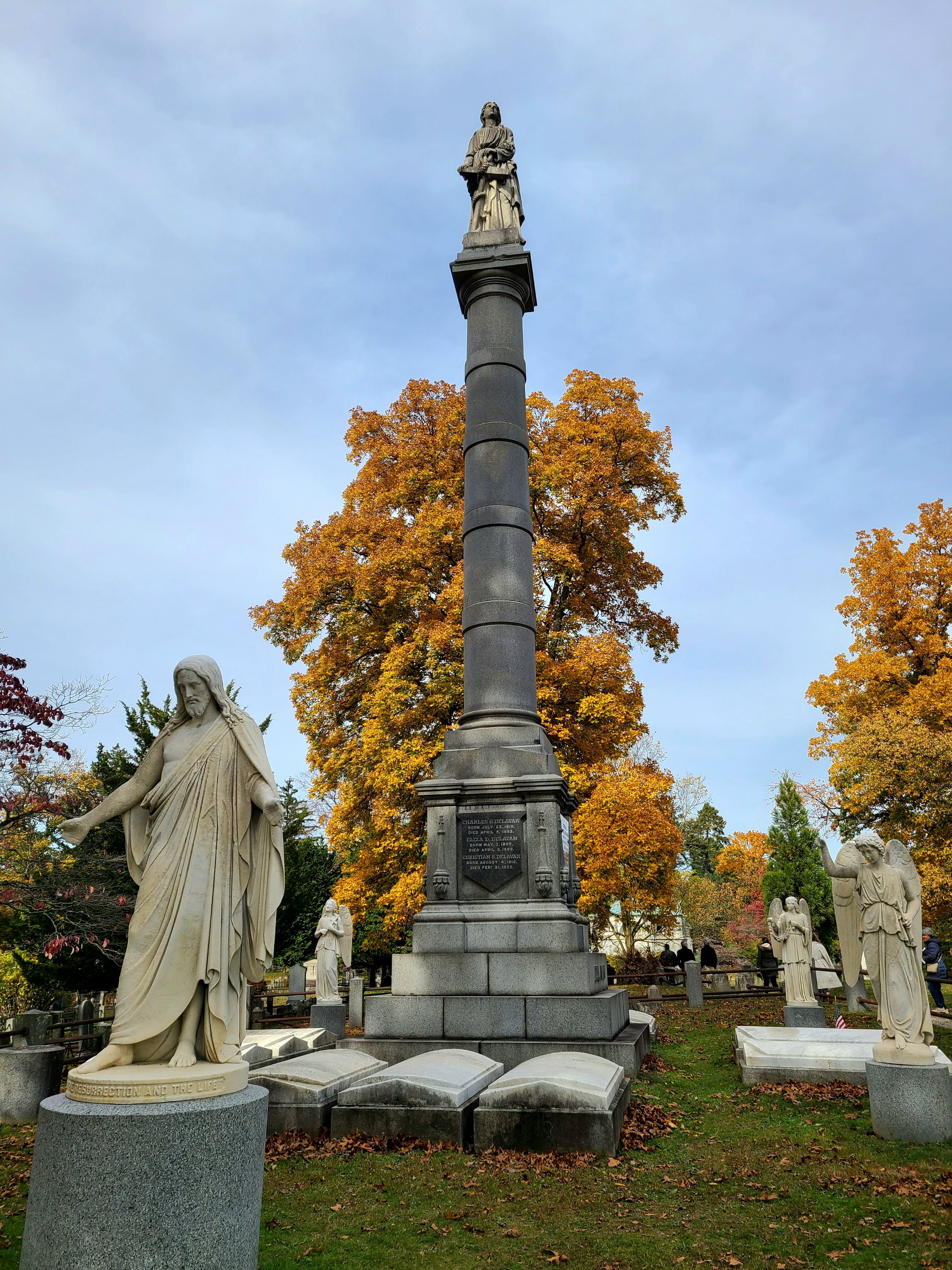
It’s a beautiful spot to wander around and enjoy the beautiful October colour. Just be respectful, and if driving, be sure you aren’t blocking driveways or parking on graves as you make your way around. 

The grounds close at 4:30 p.m.

Location: 540 North Broadway, Sleepy Hollow, NY 10591

Headless Horseman Statue

“Ichabod was horror-struck on perceiving that he was headless! – but his horror was still more increased on observing that the head, which should have rested on his shoulders, was carried before him on the pommel of his saddle!”

~The Legend of Sleepy Hollow


This 18-foot statue of Ichabod Crane being chased by the Headless Horseman was unveiled on Halloween 2006.

It’s located a few feet from where the Horseman would have hurled his pumpkin head at Ichabod.  

It’s a popular photo op and the perfect place for catching up on Irving’s famous legend!

362 North Broadway, Sleepy Hollow, NY 10591

The Legend of Sleepy Hollow Sculpture

Located across the street from the statue by the entrance to Philipsburg Manor, you’ll find The Legend of Sleepy Hollow Sculpture, which depicts Ichabod Crane fleeing for his life from the Headless Horseman. 


The sculpture was presented in 1974 to the village of North Tarrytown.

The village changed its name to Sleepy Hollow in 1997.

Location: Philipsburg Manor, 381 North Broadway, Sleepy Hollow, NY 10591

EVENTS

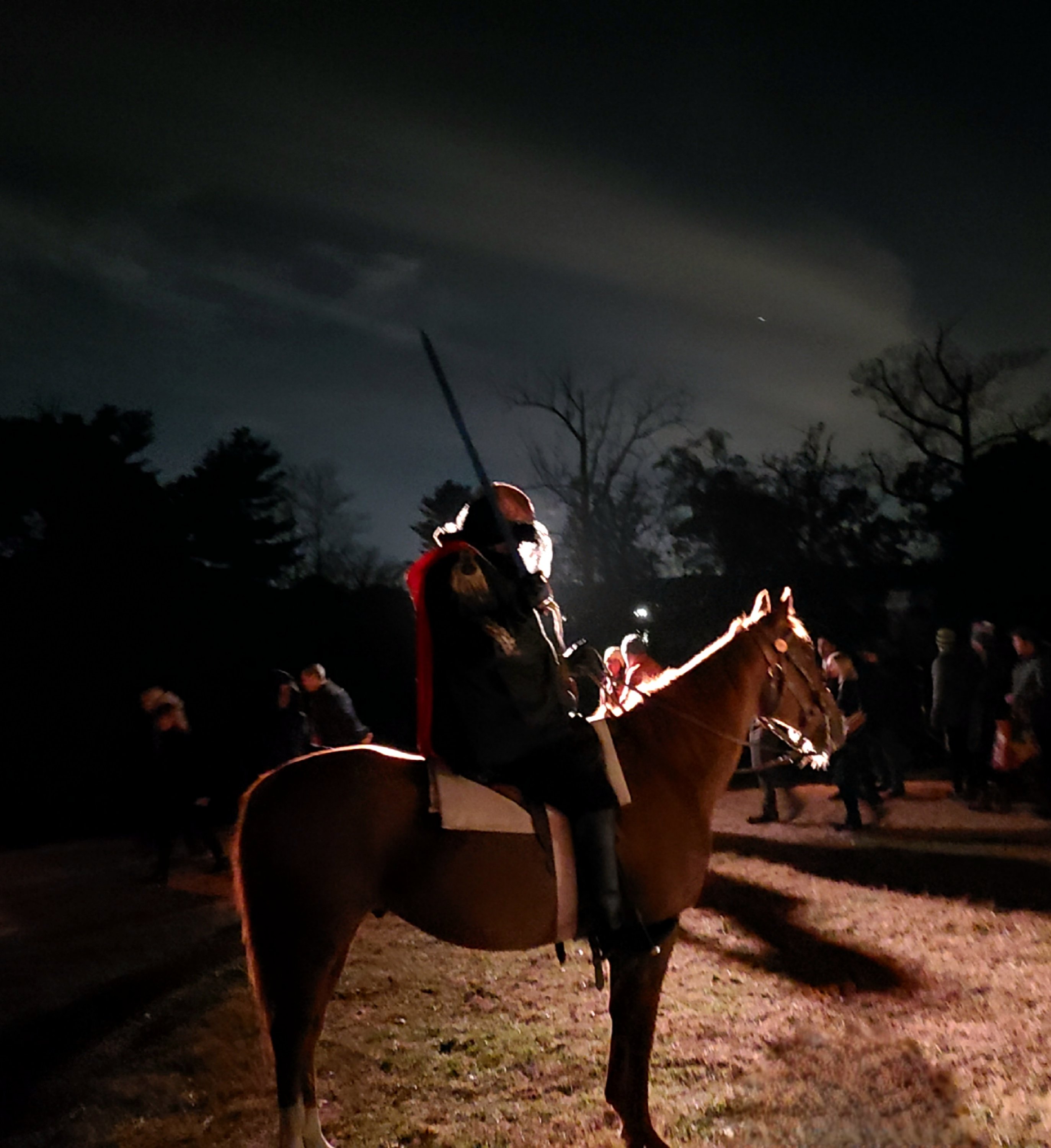
October in Sleepy Hollow offers something for everyone, from ghost tours to blazing pumpkins, storytelling, gothic mansions, a Halloween parade and, if you’re lucky, a sighting of the Headless Horseman himself! 

Irving’s Legend

Head to Irving’s Sunnyside, the author’s picturesque estate nestled along the Hudson River, where a candlelit path takes you down to see master storyteller Jonathan Kruk perform his rendition of Irving’s Legend, a dramatic performance of the classic tale. Live music and an appearance from the Headless Horseman himself make this a spooky, spectacular experience for all!

The performance lasts about an hour and takes place outdoors, so be sure to dress for the weather. 

More info and tickets can be found here

Home of the ‘Legend’

During the day, you can also take a spooky tour here on the grounds of Washington Irving’s estate. A special exhibit highlights how the Legend has lived on in popular culture through the centuries since its publication.

Location: 3 W Sunnyside Lane, Irvington, NY 10533

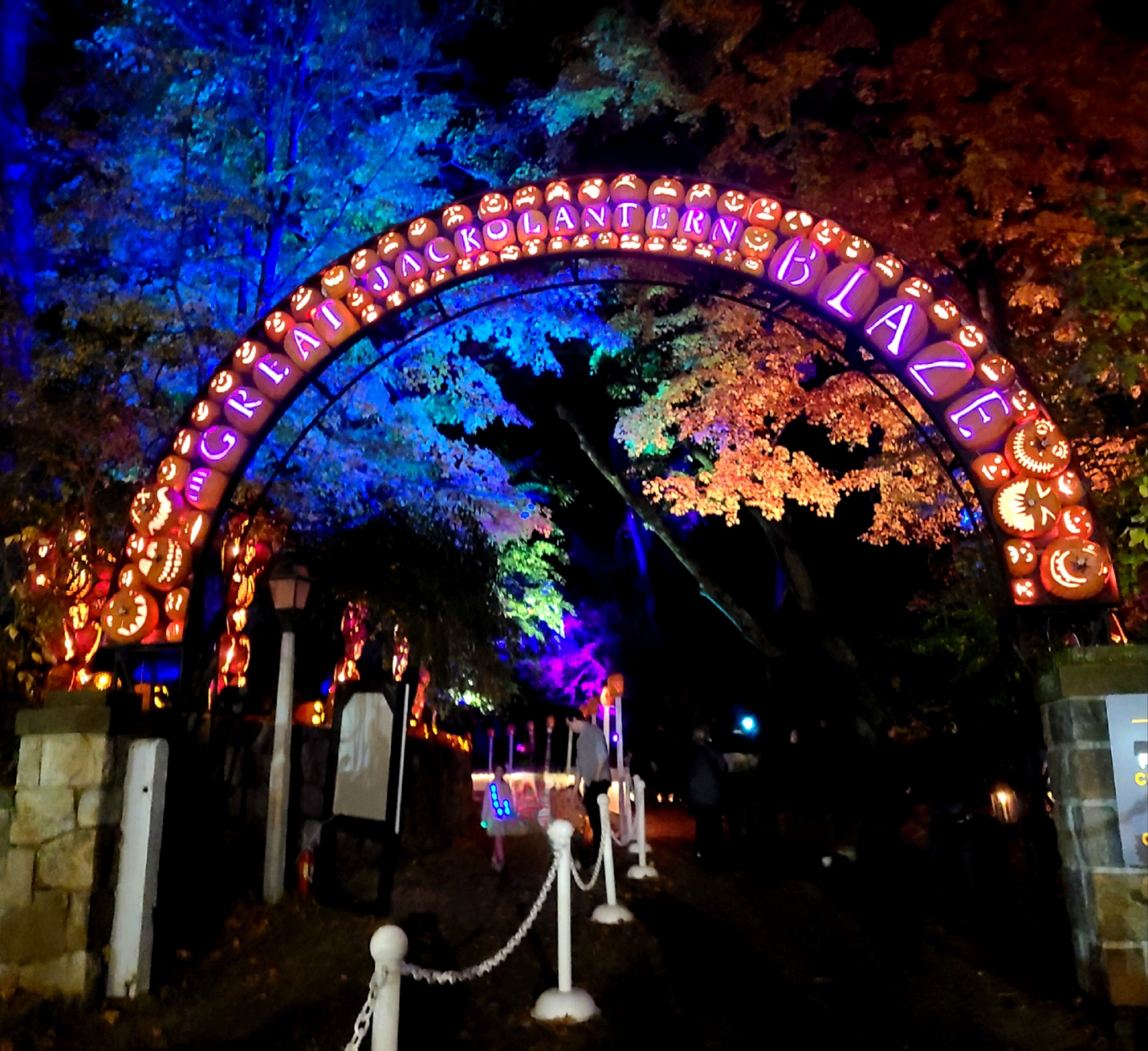
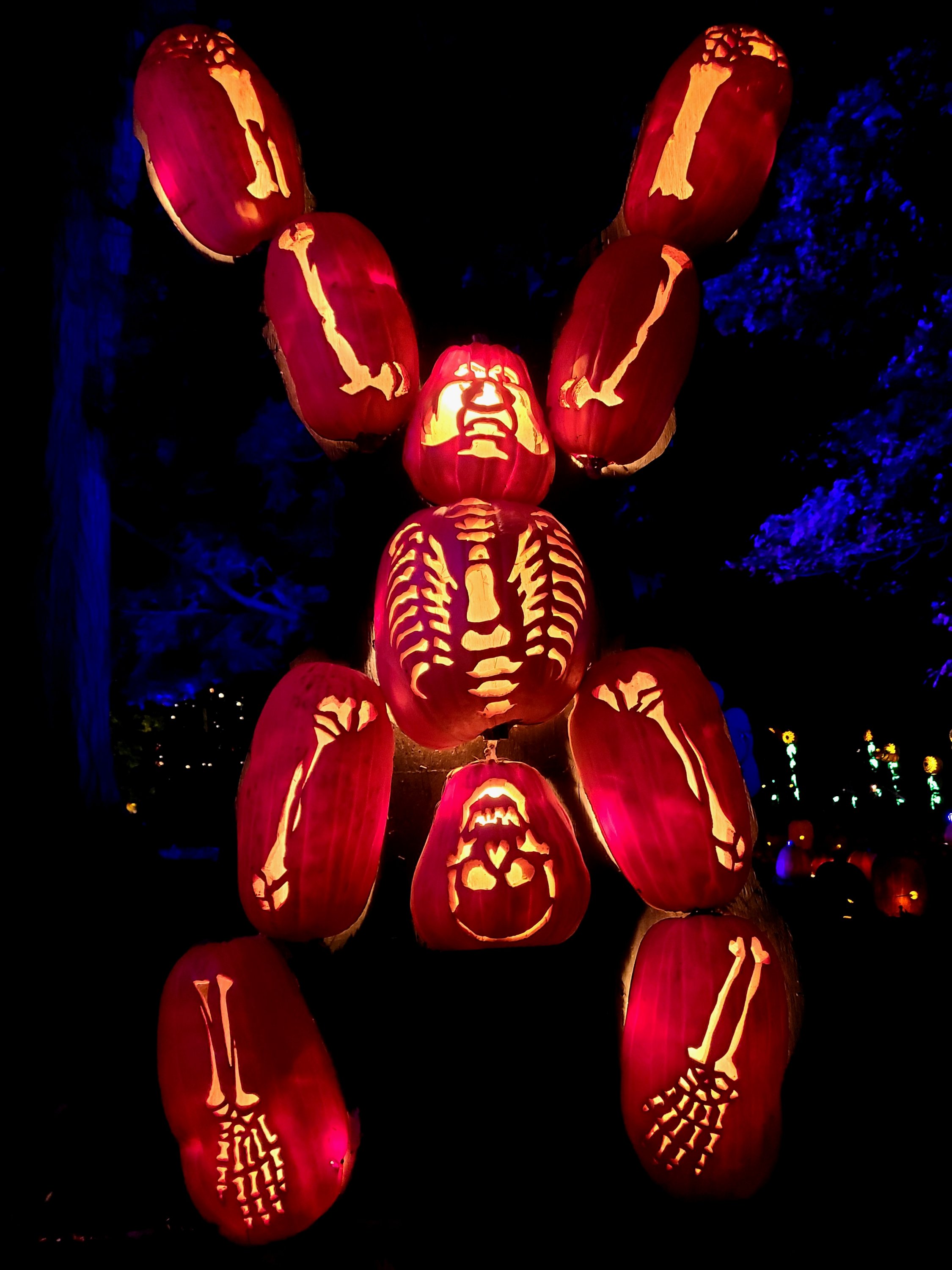
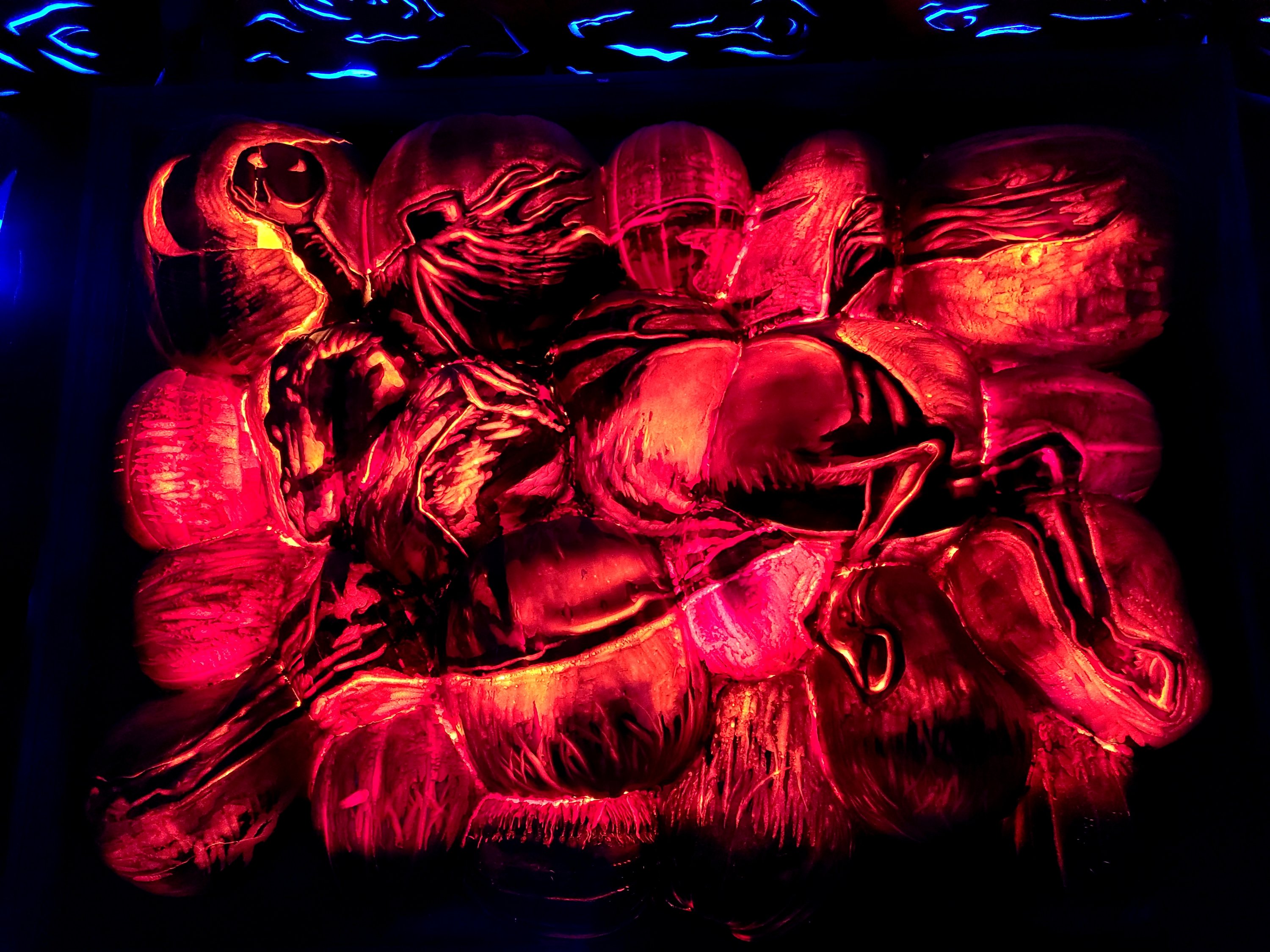
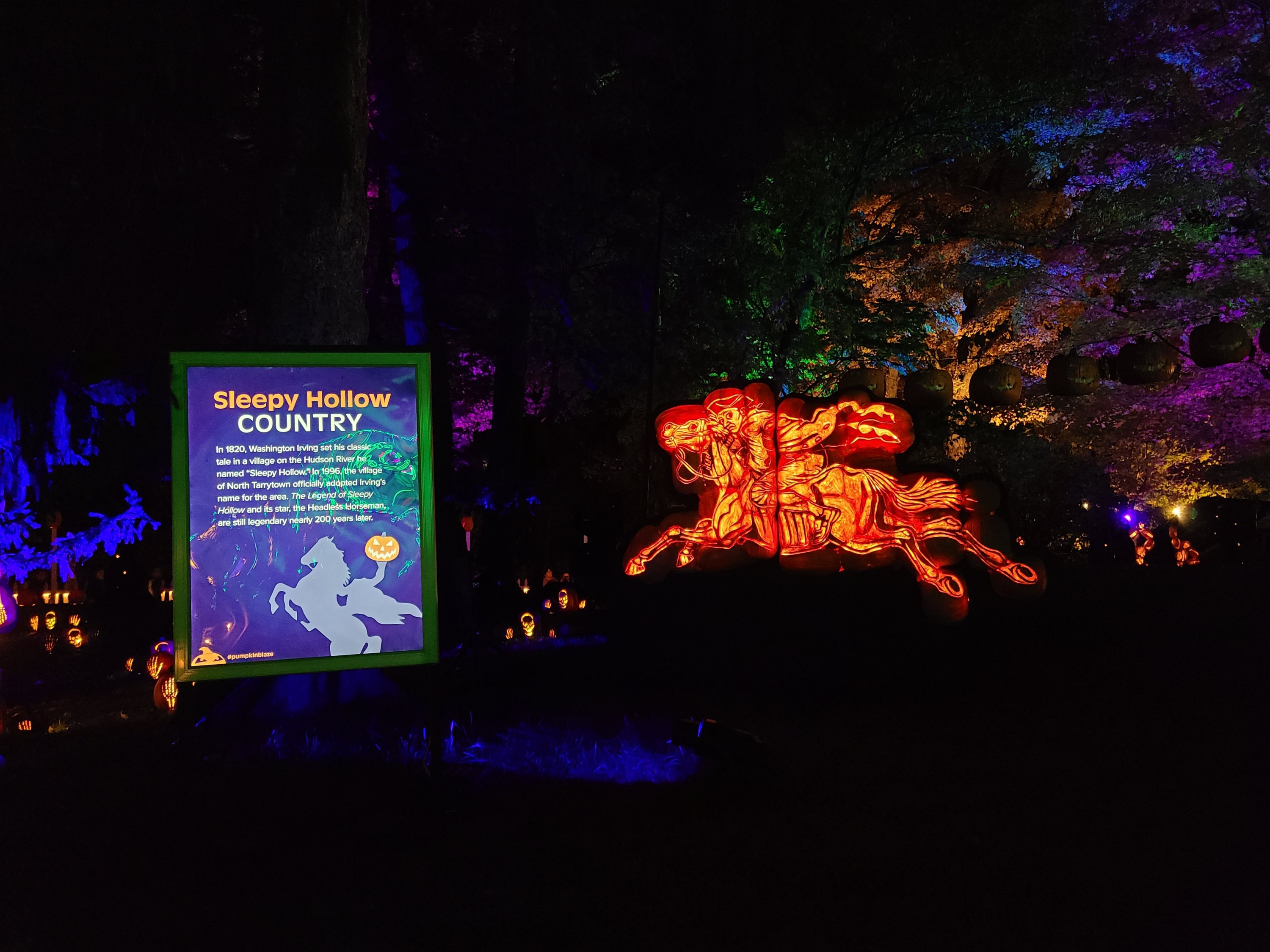
The Great Jack O’Lantern Blaze

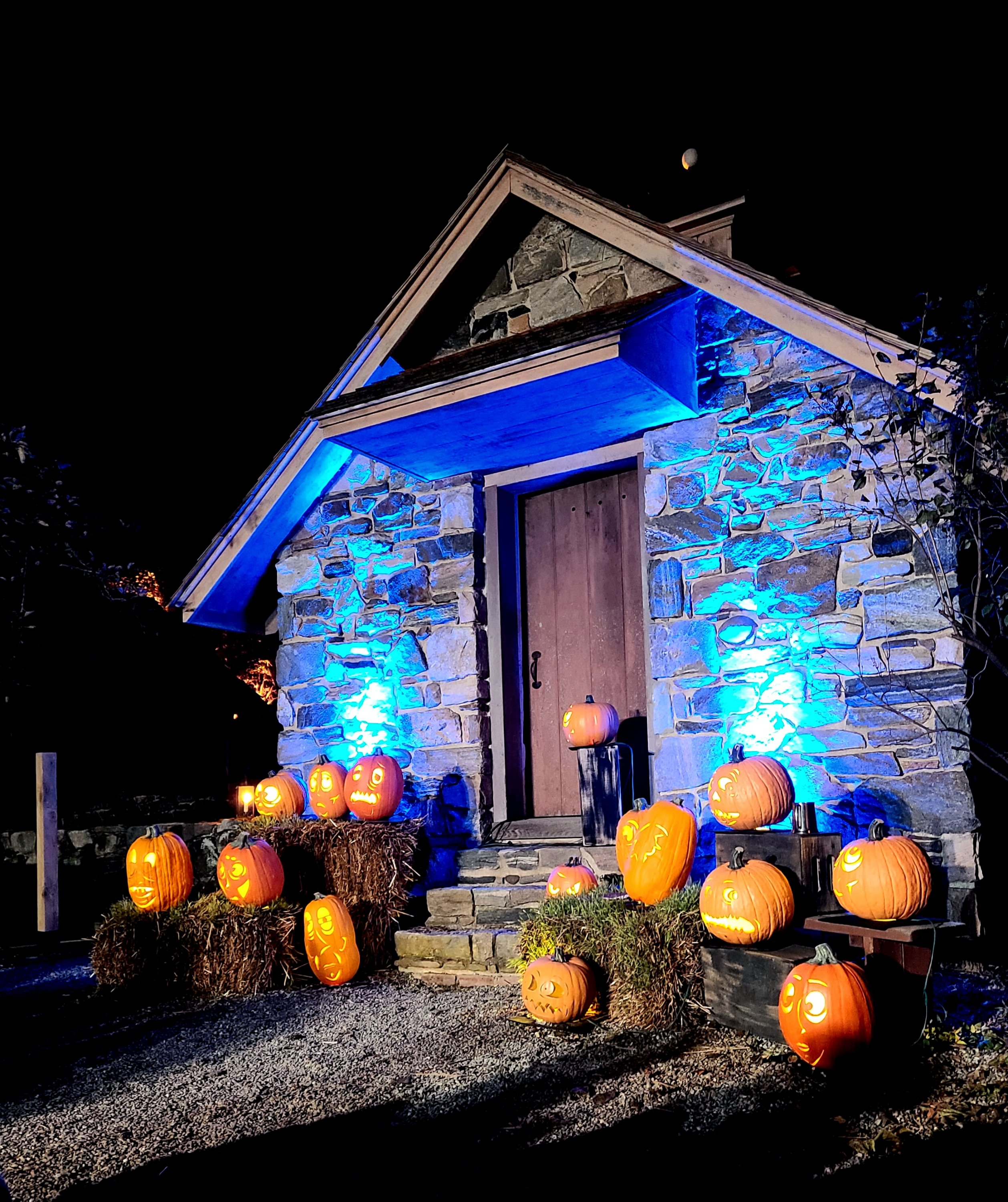
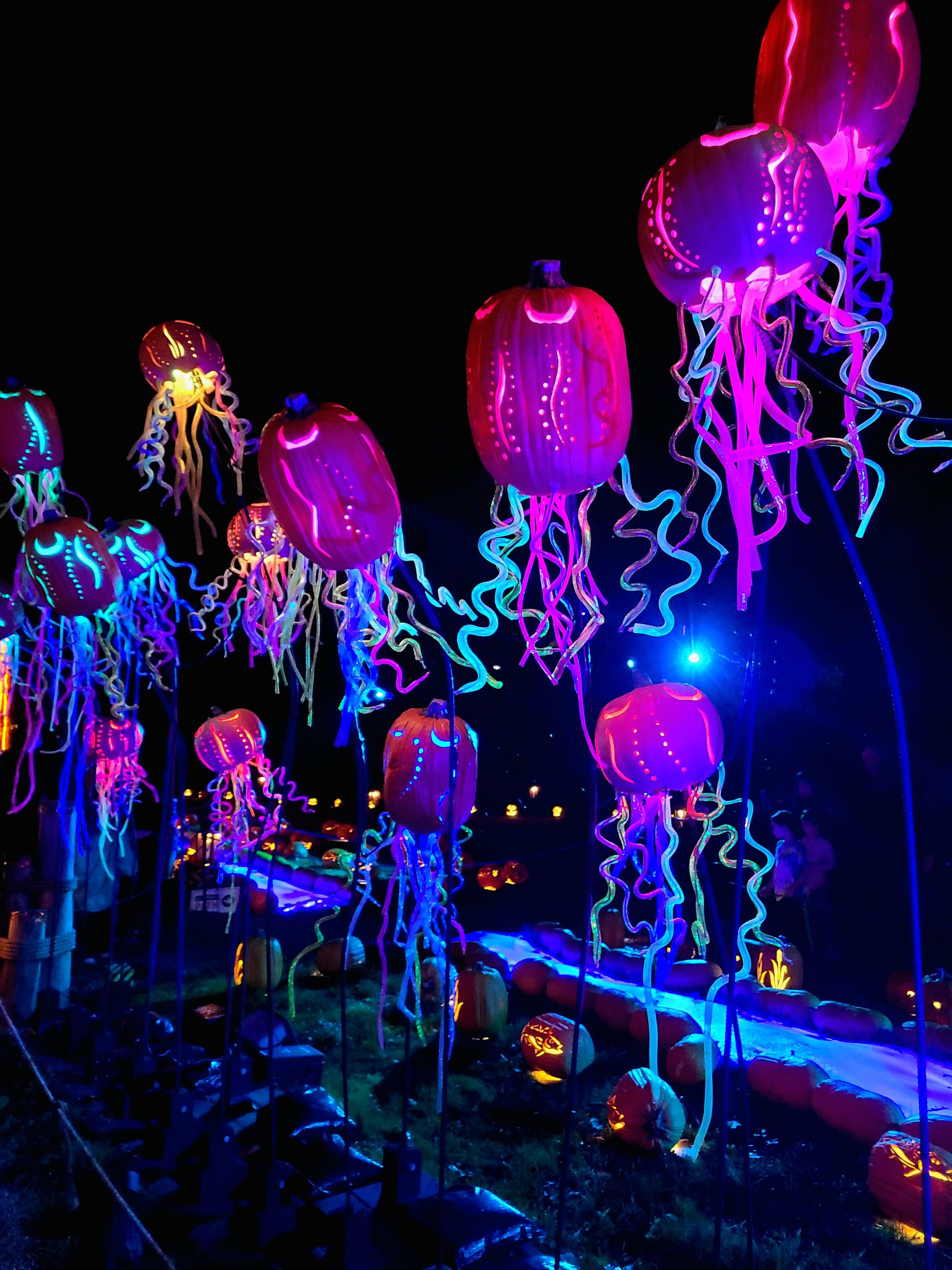
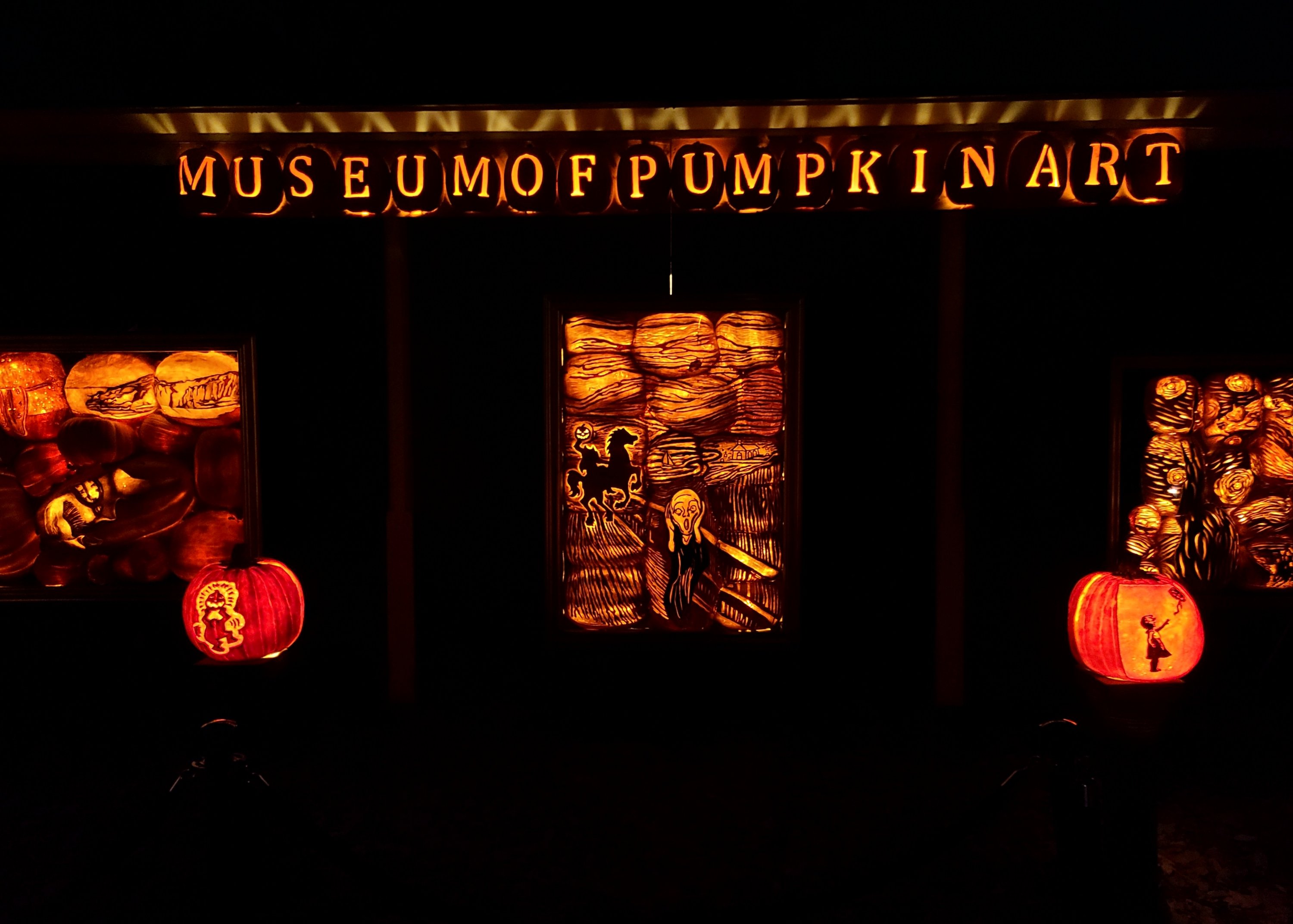
The area’s biggest Halloween event features over 7,000 hand-carved pumpkins illuminated against the mysterious backdrop of Van Cortlandt Manor’s 18th-century buildings. 

Grab a beer or a hot cider and spend an hour or so making your way through the trail of beautifully carved pumpkins.

Tickets need to be purchased in advance. More info can be found here.

Location: Van Cortlandt Manor, 525 South Riverside Avenue, Croton-on-Hudson, NY 10520

There are lots more tours and events happening throughout the month of October, including the Sleepy Hollow Halloween Parade on the Saturday before Halloween.

For a full list of events click here.

Eating & Drinking

Bridge View Tavern 

A charming tavern with a good selection of beers on tap and some unique food options like the North American Elk Burger, the Chipotle Bison Burger, the Wild Boar Chorizo Burger, and the Disco is Dead Fries (wild boar fries).
They also have a beer garden. Menu can be found here.

Location: 226 Beekman Ave, Sleepy Hollow, New York 10591

Captain Lawrence Brewing Company

The Hudson Valley’s largest craft brewery hosts a large brew facility, indoor beer hall, and outdoor beer garden. They offer a variety of beers on tap or you can opt for one of the two tasting flights. They also have food, including numerous pizzas to choose from. I recommend the Honeybear Pie!


They now have two locations. More info can be found here.

Tips

The best time to go is in October. The closer to Halloween, the better!

You’ll also find the best fall colours during the month of October.

Most events have parking included with your ticket.

While exploring the town, there are municipal lots with parking for $1 per hour.

The town is very walkable, so find a spot to park and set off!

Beware of the Headless Horseman and enjoy your time in Sleepy Hollow!

Categories: Blog, North America, Photo, Where in the World | Tags: , , , , , , , , , , , | Leave a comment

Hawaiian Luau

In traditional Hawaiian culture, the feast and festivities of a Luau were used to celebrate special occasions. So, while in Hawaii to celebrate my aunt’s 70th birthday, a Luau was high on our to-do list.

We chose the Smith Family Garden Luau at Smith’s Tropical Paradise on the island of Kauai. While sorting out my grandma’s slides from her trip to Hawaii in 1991, I found that this is the luau she attended while on the island, so since we were back in Hawaii with her two daughters and two of her granddaughters, it felt like the perfect place to celebrate!

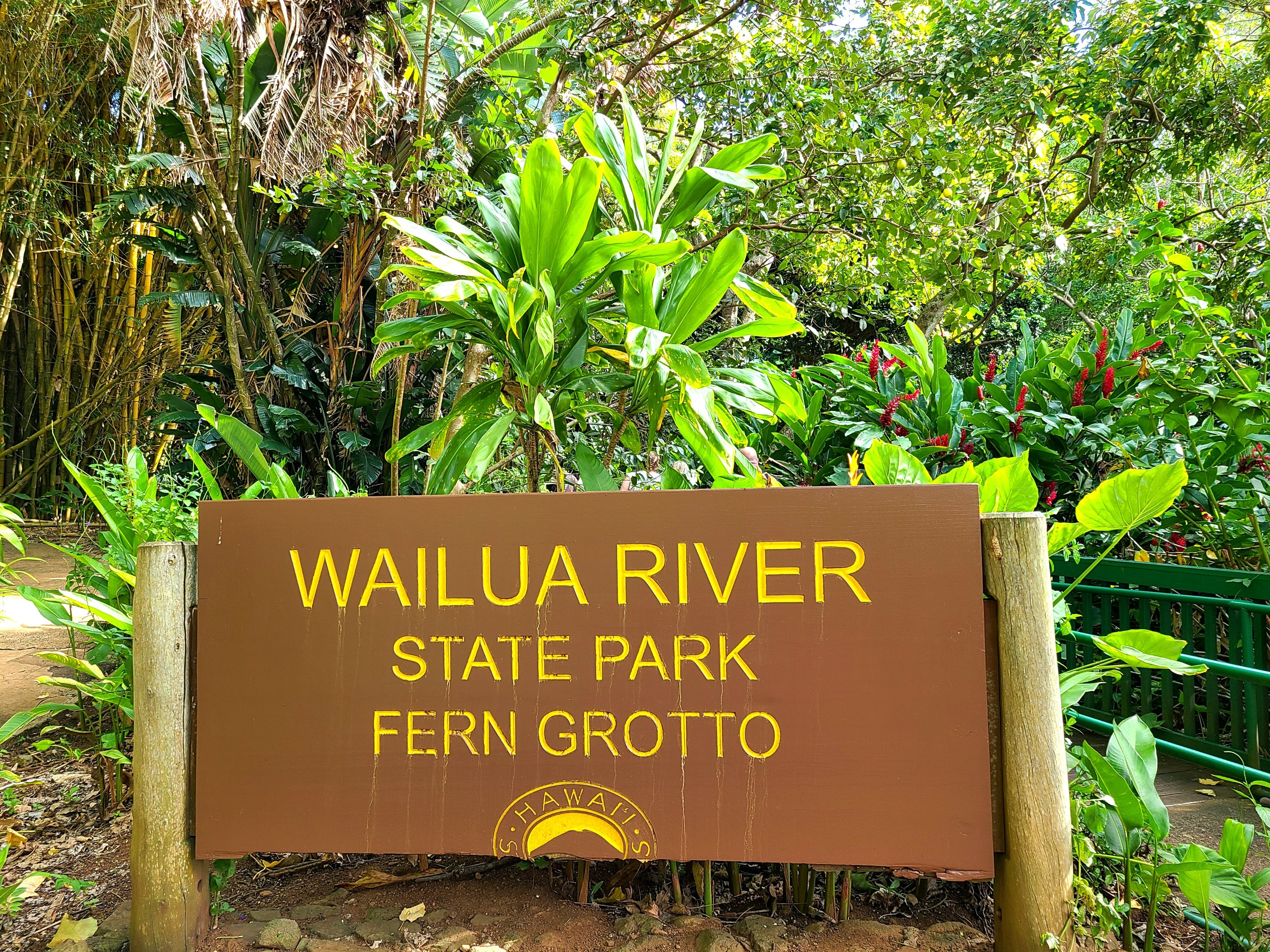
Smith’s Tropical Paradise was created over sixty years ago by Walter Smith Sr. and his wife Emily along the Wailua River. Today, four generations later, the company has grown as the Smith family continues to welcome guests to explore their beautiful gardens, take a boat ride to the Fern Grotto, and enjoy a feast and show at the Garden Luau.

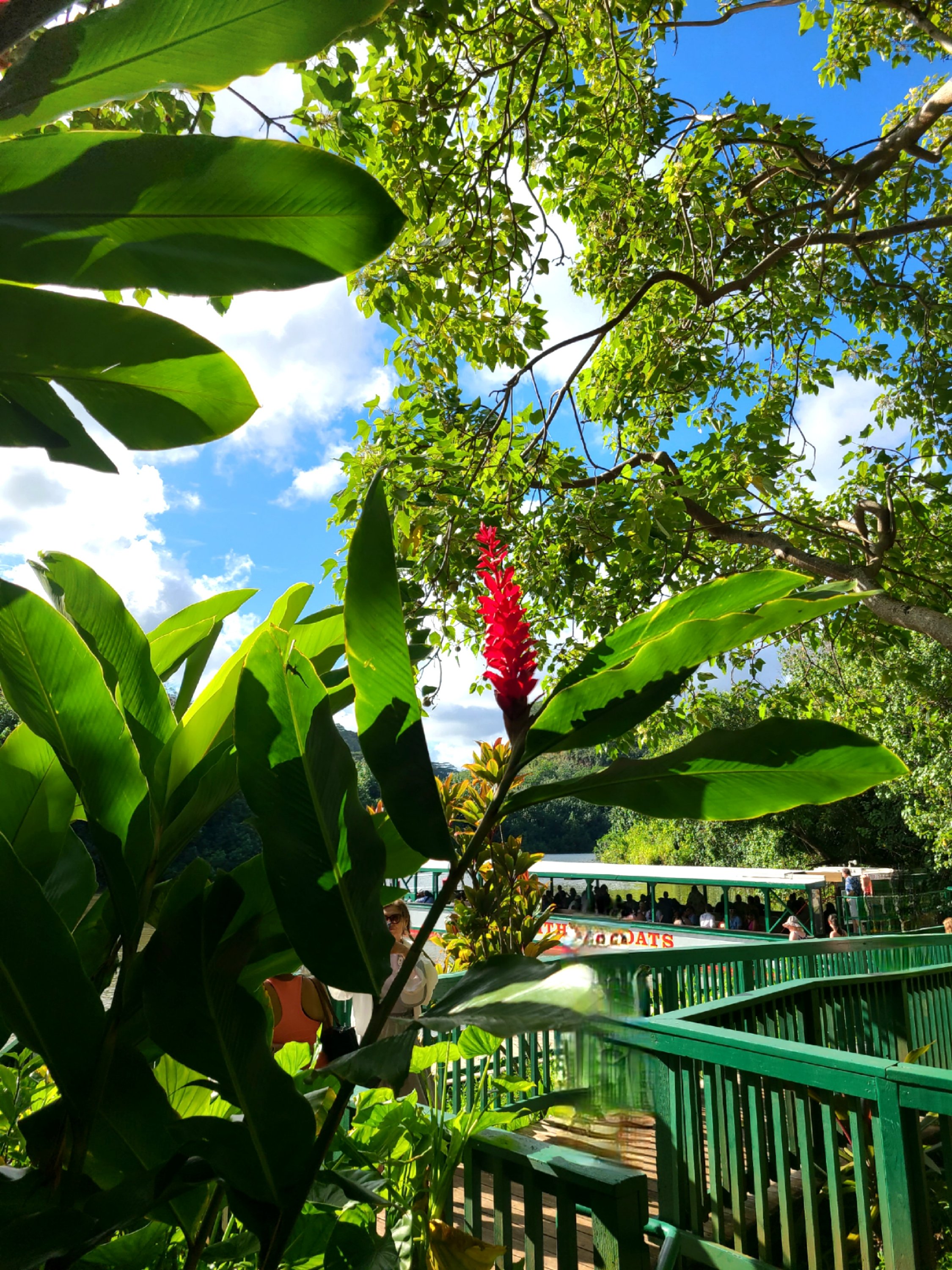
We started with a two-mile boat ride along the Wailua River with Captain Walter Jr. III sharing stories about the island and his family’s company on our way to visit the Fern Grotto.

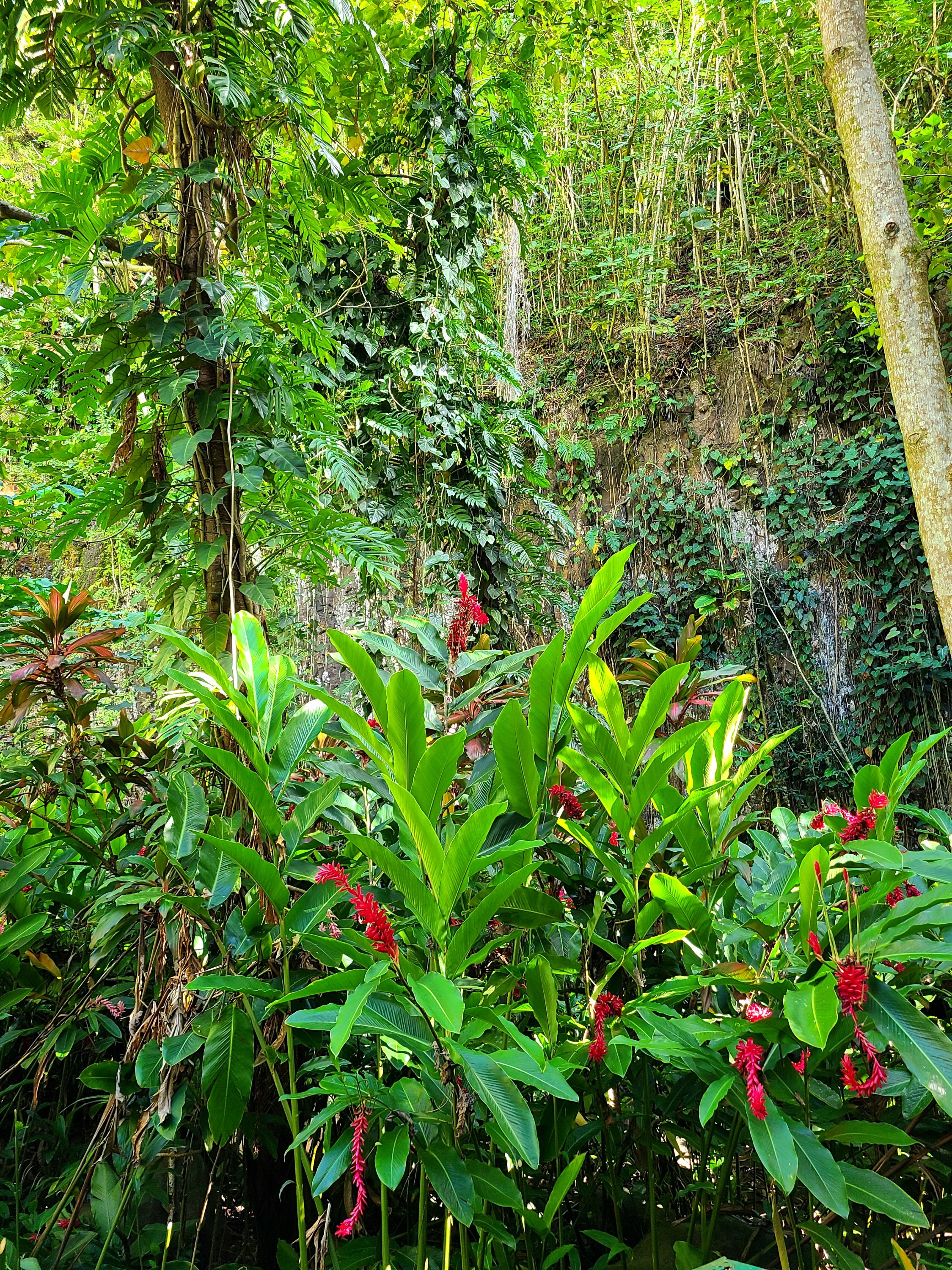
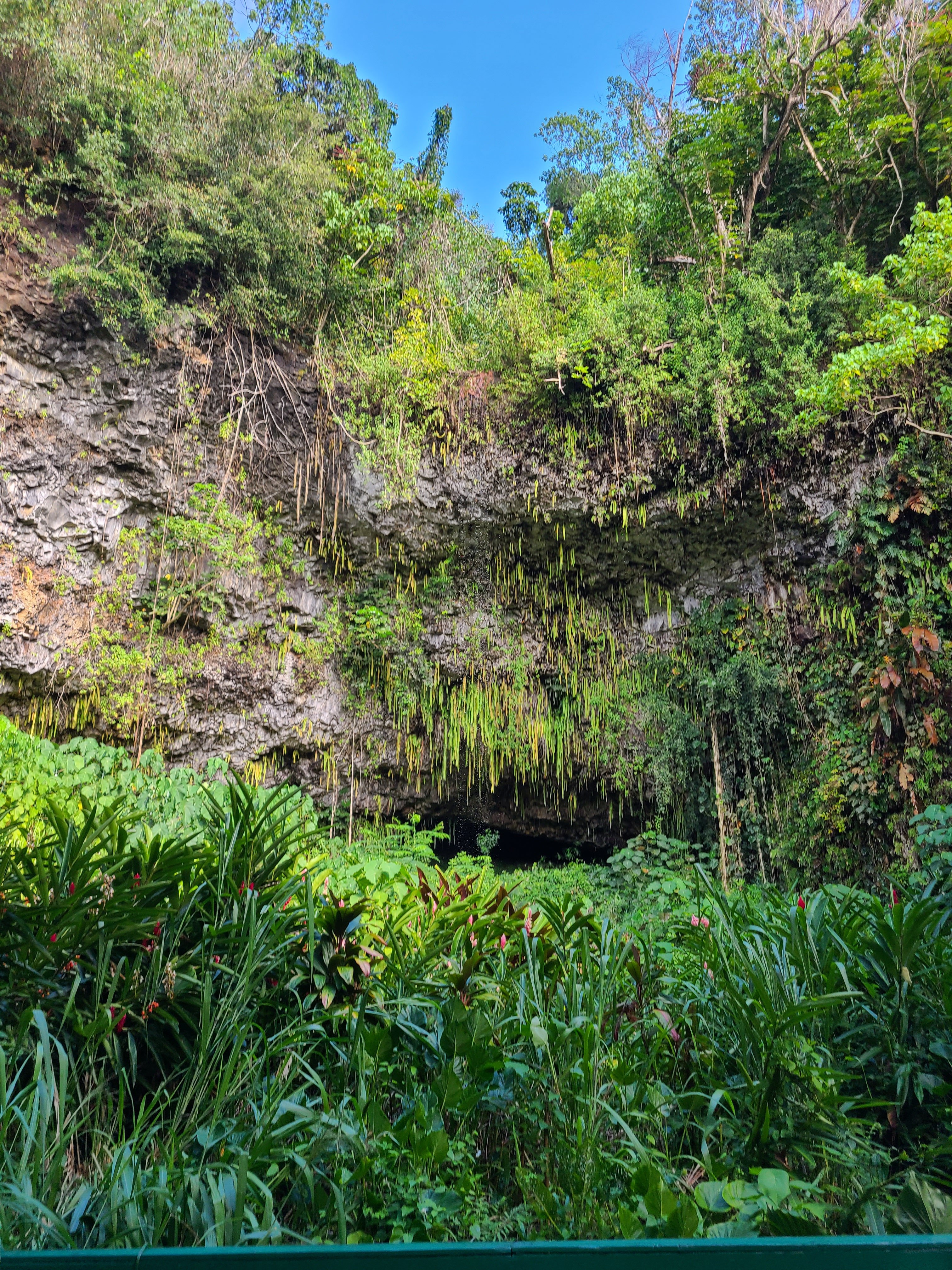
Once docked, there’s a short walk through the lush rainforest to the Fern Grotto—a geological wonder of Kauai. Here, the ferns grow upside down from the roof of the grotto, which was formed millions of years ago.

When my grandma visited thirty-one years ago, guests were able to walk right into the grotto and be surrounded by the ferns. Unfortunately, this is no longer an option as rocks have begun to fall from the ceiling and the grotto was deemed unsafe for entry.

So, in order to continue tours here, they built a large platform out front. While here, we were treated to several Hawaiian songs performed by one of the crew on ukulele while another showed us some traditional hula dances. More of these were performed on the boat ride back.

From here, we headed over to explore the gardens at Smith’s Tropical Paradise, where we were greeted with a shell lei before boarding a tram for a tour around the thirty-acre botanical garden.

Since I began sorting through Grandma’s travel slides, I’ve enjoyed seeking out places she’s been on my travels and trying to get a similar photo to the ones she took.

The, entrance may have changed a bit in the past 31 years, but I’d say it still looks pretty similar!

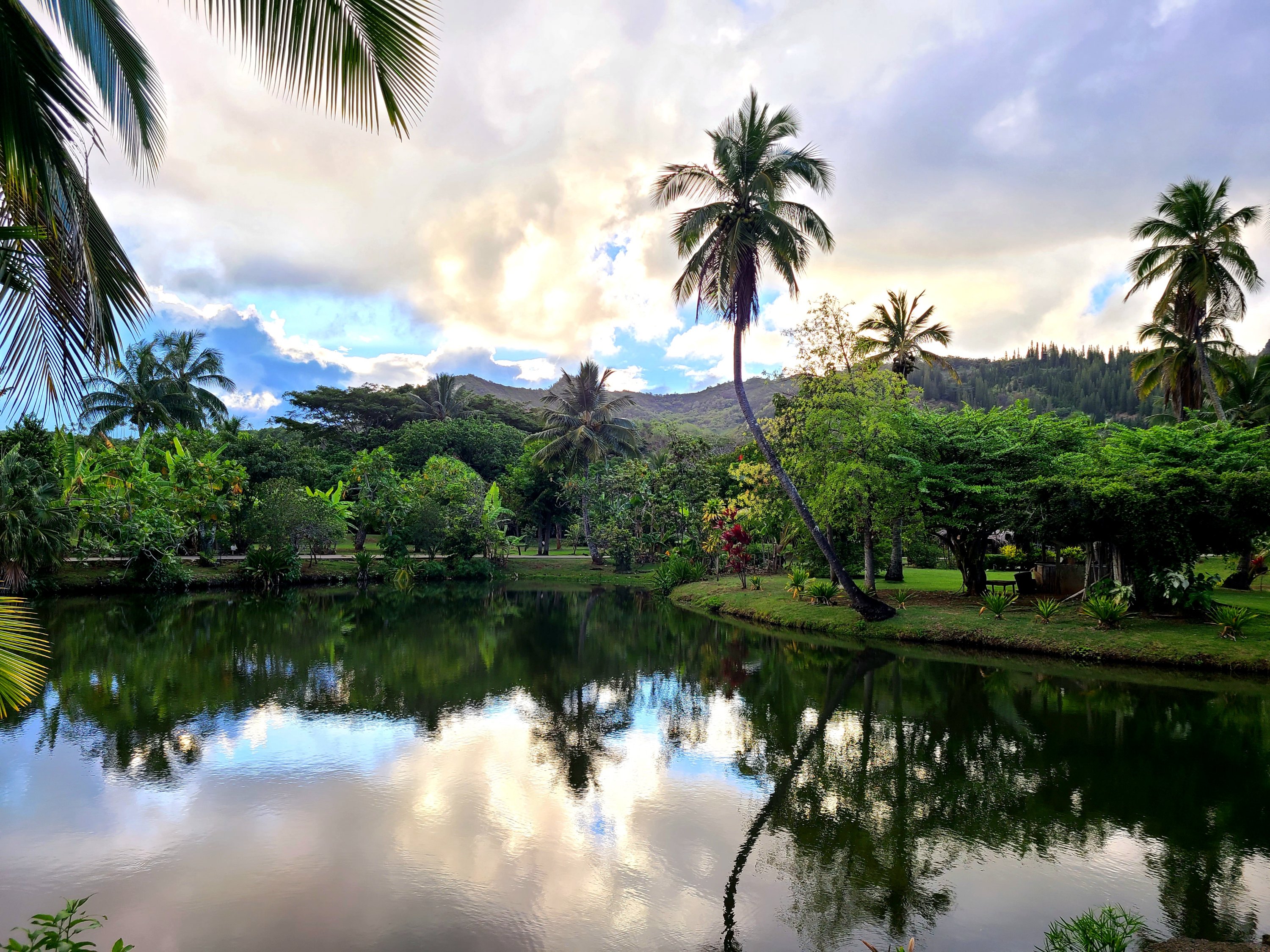
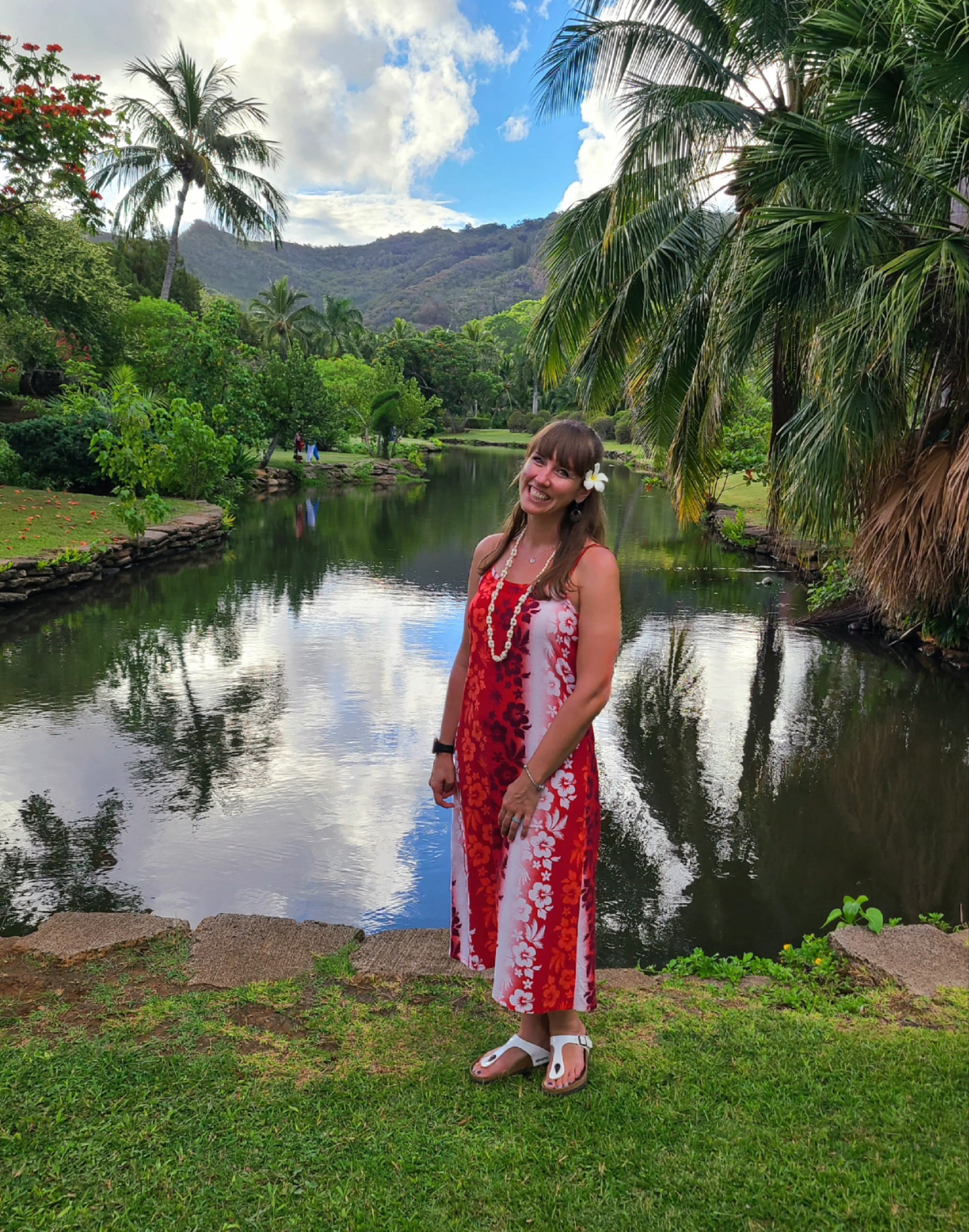
Then you were free to wander around the beautiful, lush grounds including a Hibiscus garden, Japanese Garden, Bamboo Rainforest, multiple ponds, and more. The grounds were gorgeous with all the lush green foliage and brightly coloured flowers, with the mountains creating a lovely backdrop!

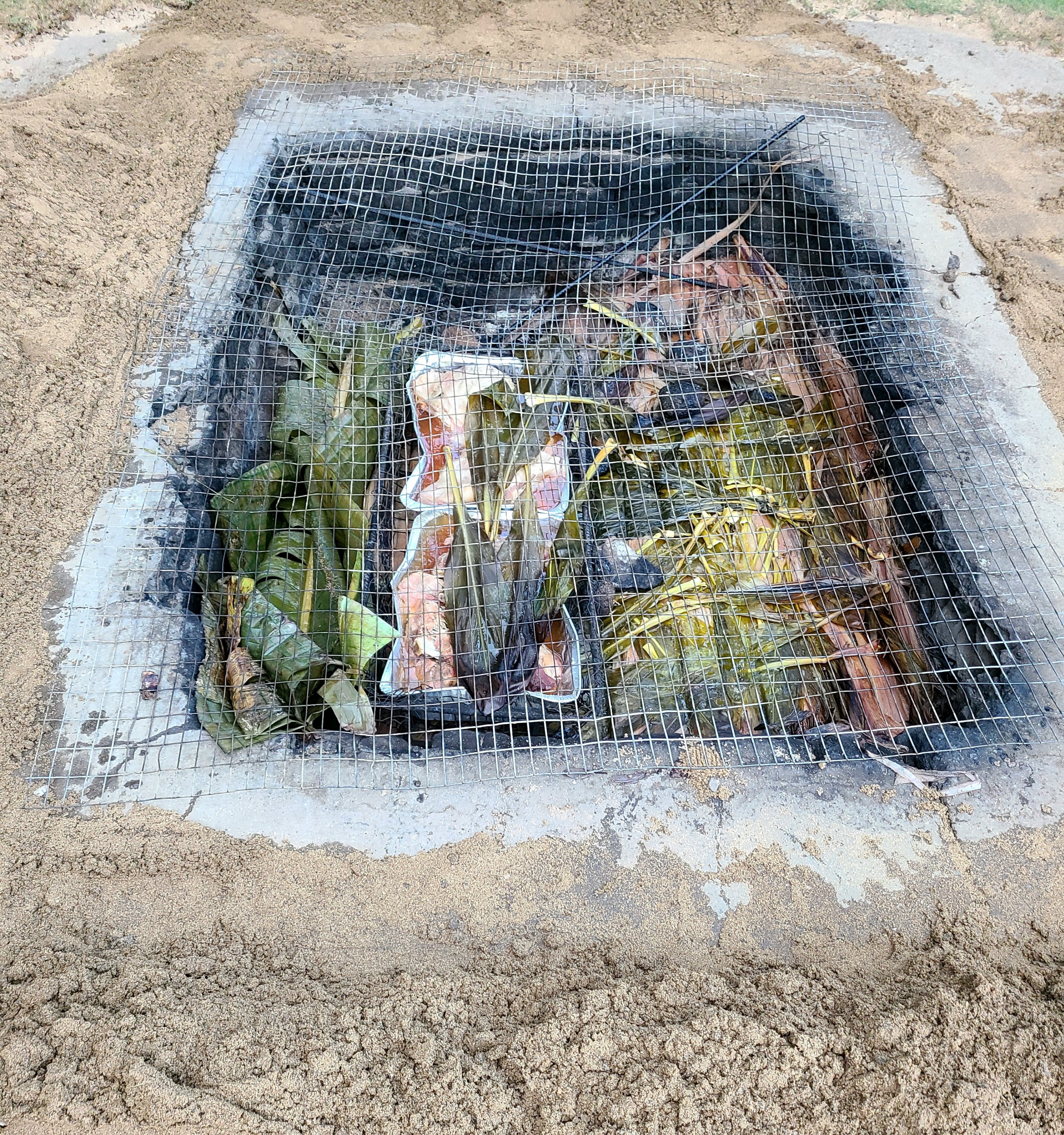
At 6 p.m., the Imu ceremony begins where they dig the Kalua pig out of the earthen imu oven.

The host explains about the Hawaiian cooking method called Kalua and what food to expect during dinner before sounding the conch shell and giving the food a blessing.

The Smith family entertains during cocktails and dinner with Hawaiian songs, stories, and hula. So we grabbed a Mai Tai and a Blue Hawaiian and enjoyed the music.

The dinner was delicious and included many traditional Hawaiian dishes like Kalua pig, beef teriyaki, sweet ‘n’ sour mahi mahi, lomi salmon, fresh poi, Hawaiian sweet potato, various salads, and dessert including tropical fruit, coconut cake, and rice pudding.

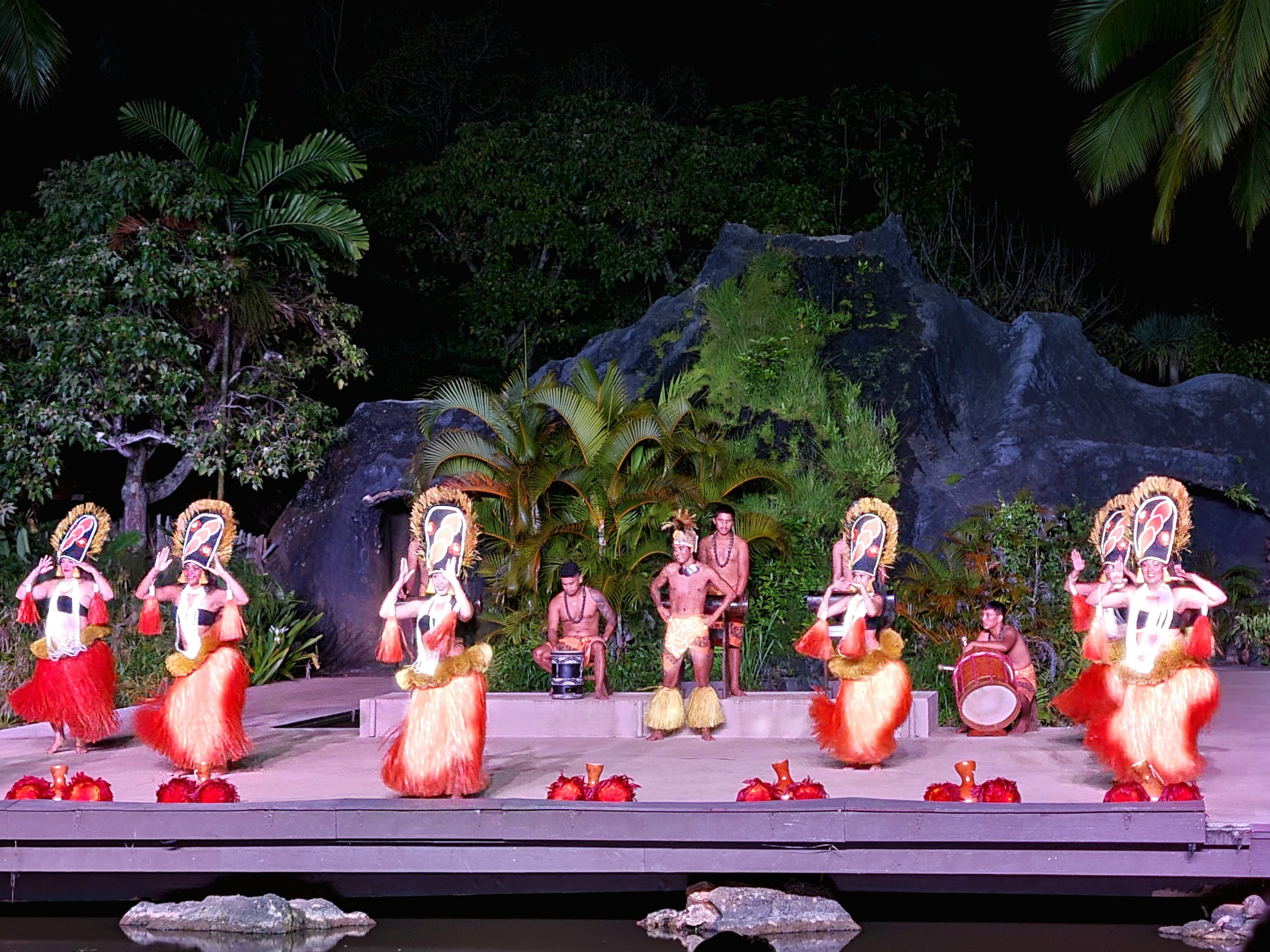
The Rhythm of Aloha show began at 8 p.m. in the outdoor Lagoon Theatre, complete with an erupting volcano!

The show was great—full of music and dance with some history of the island woven in. There were traditional hula dances from Hawaii and Tahiti, Samoan fire dances, and traditional dances from New Zealand, Japan, and the Philippines.

It was a fun show and made me want to learn to hula! (Pre-Covid, guests were invited up to participate, so hopefully that will open again soon!)

It was a wonderful way to experience some Hawaiian culture with my Ohana, made even more special as we shared the same experience as my grandma!

More info

The entire Fern Grotto tour takes about one hour and twenty minutes. Tickets are best purchased online ahead of time. Tickets are $30 for adults and $15 for children. Tours currently run Monday, Wednesday, Thursday, and Friday.

*If you are going to the luau after the boat tour, select the 3:30 p.m. time.

The Smith’s Family Garden Luau dates vary based on time of year. Check the website for more details. Adult $125.00, Jr. (7-13) $35.00 & Child (3-6) $25.00. The luau includes entrance to the gardens, dinner, drinks, and the show.

If you just want to tour Smith’s Tropical Paradise gardens, you can Monday, Wednesday, and Friday between 8:30–4 p.m. Tickets are $10 and can be bought at the entrance.

Categories: Blog, North America, Photo, Where in the World | Tags: , , , , , , , , , , , , , , | 3 Comments

Santorini

Santorini has been at the top of my travel wish list for years and the main reason I’ve always wanted to visit Greece. Flipping through travel magazines and seeing those white churches with the bright blue domes sitting high up on the Caldera made me want to book a plane ticket there immediately, and yet, somehow it’s taken me years to finally do it. Thankfully, when I first saw Oia, it was everything I imagined and more!

Walking along the cobblestone streets was like stepping into the photos of the travel magazines that made me dream of coming here. The contrast between the white cliff of Cycladic houses perched 300+ metres up at the top of the Caldera and the beautiful deep turquoise Aegean Sea shining below was breathtaking. I was immediately in love with all the blue doors and shutters and colourful flowers, such a striking contrast against all the white.

The island of Santorini surrounds the vast crater left by one of history’s largest volcanic eruptions, with smaller islands found around the western edge. The sunsets hitting the snow-white buildings give the whole place an orange-red glow and are definitely not to be missed!

We spent five days in Santorini, the first three at an Airbnb just outside Oia, in Finikia, and the last two in Fira.

Oia, located on the northern tip of the island, is a must-see when visiting Santorini. Restoration work after the earthquake in 1956 has turned this spot into one of the most stunning places in the Cyclades. Built at the top of the steep Caldera, bright white buildings are nestled into the dark volcanic rock and the contrast is stunning. Today, the often-narrow streets are lined with shops and restaurants. Boutique hotels and Airbnbs can be found built into the sides of the Caldera. Spend your time exploring the labyrinth of streets here, finding the iconic blue domes and numerous churches.

While not much remains of Oia Castle after the earthquake, the ruins of the Venetian Castle of Agios Nikolaos is worth a visit for the views alone. This is also one of the most popular places to watch the sunset.

Over 250 steps below Oia, you’ll find Ammoudi Bay. The walk down is full of beautiful views of the dark-red Caldera with its snow-white peaks looming above.

Several fish tavernas are found down here, making it a perfect spot to enjoy fresh fish for lunch or dinner. To get back to the top, you can take a taxi or ride a donkey … or just hike it like we did and get your steps in!

Another must-do in Oia is a sunset cruise. There are many tour options ranging in size, price, and number of participants. We went with Barbarossa Sailing, and are so glad we did. We sailed out from Ammoudi Bay and went snorkelling in the Caldera and spotted the tiny church built in the rocks at sea level and saw the boats hidden in caves for protection, sailed around Santorini, checking out the various rock formations and the old port of Fira.

We stopped for another swim in the hot springs by the newest island (still over 500 years old) before having a delicious dinner made by the crew onboard and then sailing back out into the water to watch the sunset, which was amazing over the water. (Have I mentioned that the sunsets here are not to be missed??) The cruise ended back in Ammoudi Bay, which all lit up at night is also a must see!

From Oia, we moved to Fira, Santorini’s largest town. Views from here are amazing as you’re in the middle of the island and able to see both edges of the island’s moon shape.

Much like in Oia, the Caldera’s edge is filled with layers of hotels, restaurants, and cave apartments. The narrow cobblestone streets twist and turn as you make your way up and downhill.

The old port of Santorini is 587 steps down from Fira. Here, along with walking or taking a donkey, you can also ride the cable car and enjoy the view.

Following the Caldera’s edge, you can walk to the neighbouring town of Firostefani, filled with more beautiful views and great restaurants to catch the sunset from. Anywhere along the edge here offers beautiful views of the island, the sea sparkling below and, of course, the sunset!

Also be sure to stop by The Church of the Three Bells of Fira, one of the most photographed Greek Catholic churches on the island, also known as the Church of the Ascension of the Blessed Virgin Mary. While it can be a bit tricky to figure out how to get up, the view from the top is a must-see.

As one of Greece’s most important producers of wine, no trip to Santorini is complete without touring one of its wineries. Here, they are known for fresh dry white wine made mainly from the assyrtiko grapes of the region, and I couldn’t wait to try some.

We headed to Santo Wines for a tasting with a view. They have several different tasting options available. I opted for the 7 Premium wines and was quite happy with my decision! Our server gave us a brief history of the winery and some info about each of the wines we would be tasting, but if you are looking for something more in depth, tours are also available.

And of course, the food here is amazing. If you want a sunset view along with your dinner, be sure to arrive early or make a reservation. A few of our favourites were Piatsa Souvlaki Grill House, a cheap, delicious spot near the Oia bus stop with gyros, souvlaki, tzatziki and pita and more; Terpsi N Oia, a fancier spot where we enjoyed a great breakfast with a gorgeous view over the Caldera and the 3 blue domes in Oia; and in Firostefani, we had an amazing meal with a sunset view at Vanilia Mediterranean Cuisine.

Tips and Info

Santorini is a popular cruise ship stop, especially in Oia and Fira. To help avoid the huge crush of cruise ship passengers that flock here starting mid-morning, head out early in the day and then back out in the evenings. This is also a great way to beat the heat, as shade is almost non-existent here. Plus, if you’re looking to get great photos before both the crowds and the sun hit, 7 a.m. is a great time to be out exploring!

A cheap and easy way to travel both around the island and to and from the airport is by bus. Most rides cost less than €2 and buses run on a fairly regular schedule during the high and shoulder seasons. Buses all have luggage areas too, making it a much cheaper alternative to taxis. More info can be found here.

Ditch the heels as the cobblestone is very uneven and you are constantly walking up and down stairs and hills.

If possible, avoid high season, when crowds and prices are both at their peak.

Oia is a must, but accommodation prices here are definitely at the higher end, especially during the high season. So, while I would have LOVED to have a place right on the side of the Caldera facing the gorgeous sunset, based on booking last minute and the $500 a night and up price tag, we opted to stay just outside of Oia in Finikia, in our own Cycladic-style house. Then we’d walk about 20 minutes into Oia each day. This is a great option if you are unable to book well in advance or are looking for cheaper accommodations.

Categories: Blog, Europe, Photo, Where in the World | Tags: , , , , , , , , , , , | Leave a comment

Blog at WordPress.com.