Central America

Granada, Nicaragua

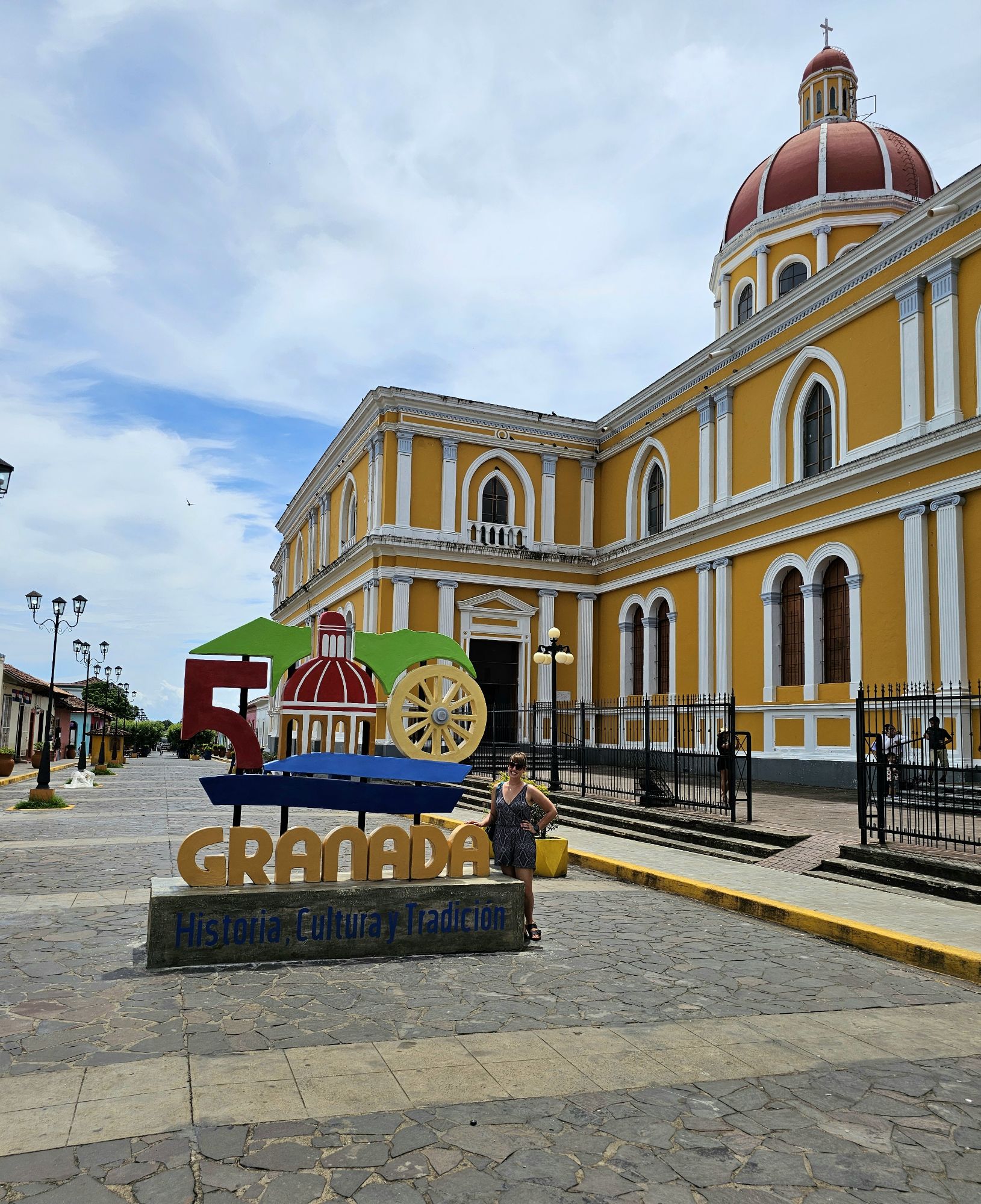
A trip to Nicaragua isn’t complete without visiting the colourful Spanish colonial city of Granada. Located on the shores of Lake Nicaragua, the country’s oldest city turned 500 years old in 2024.
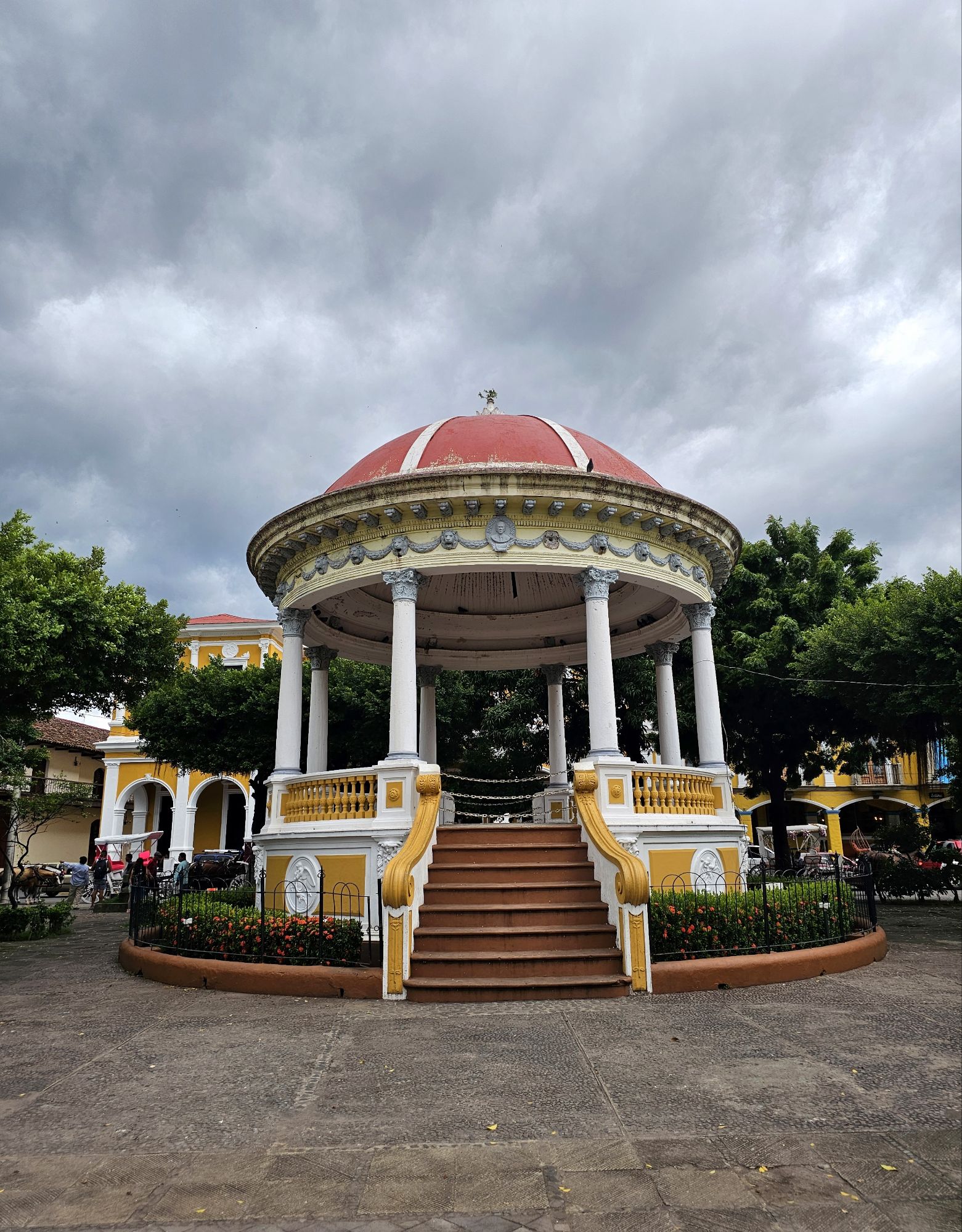
We started our day in Parque Central de Granada, the city’s main square, with hotels and restaurants lining one end and the beautiful Granada Cathedral at the other. The park itself is fairly small with some flowers and trees and a large gazebo in the centre. Horse drawn carriages can be found to take you on a tour of the city (although I wouldn’t recommend doing this) as well as a small souvenir market just outside of the park.

Our Lady of the Assumption Cathedral, also known as Granada Cathedral, is a sight to see. A striking, yellow building with white trim and pillars out front and large terracotta domes on the roof. Inside, there are beautiful murals covering parts of the ceiling depicting bible stories, like Noah’s Ark, Adam and Eve and more. The cathedral was built between 1905-1915.

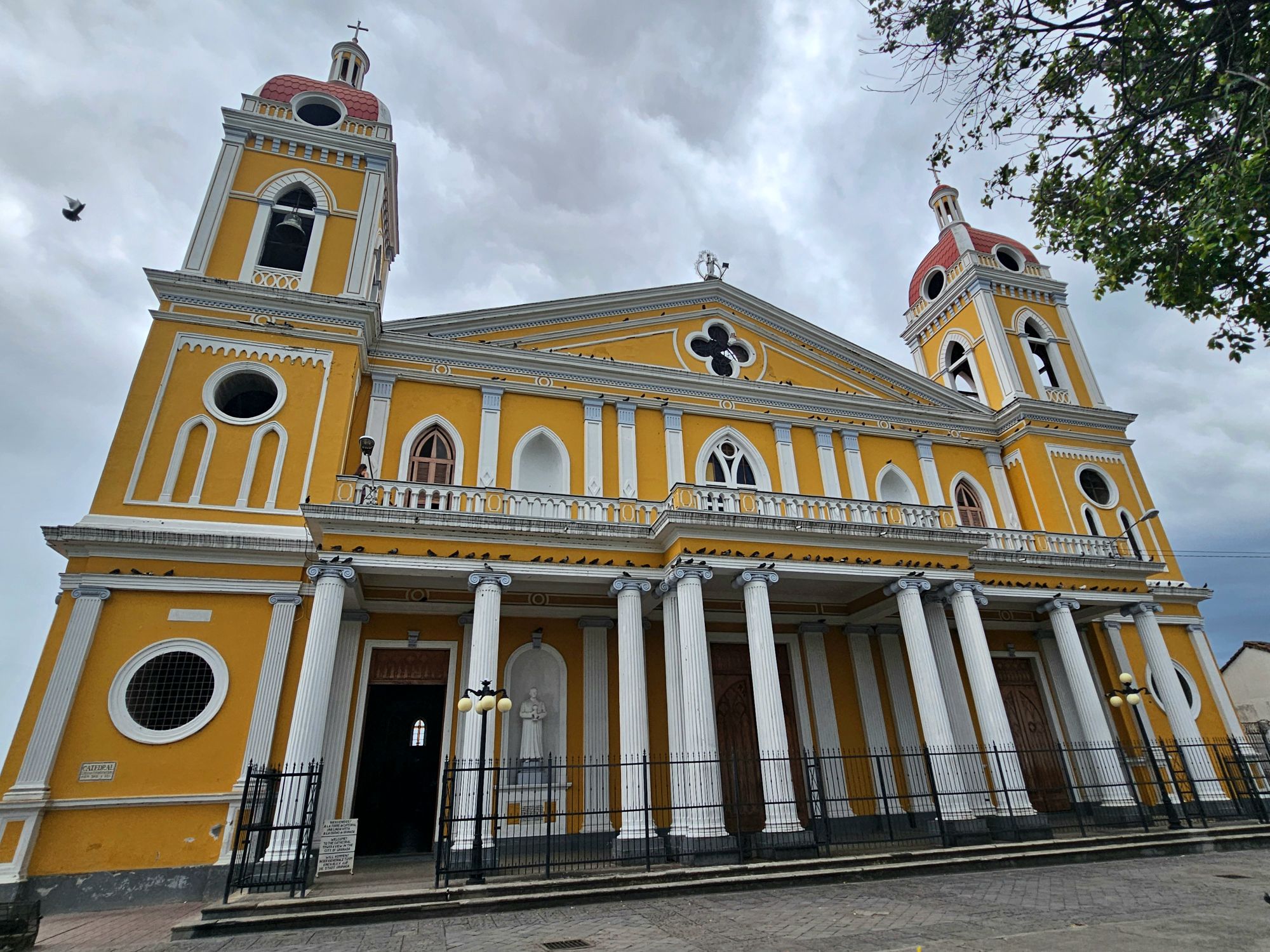
We met a local tour guide named Miguel just outside the cathedral, who took us on a 2 hour walking tour of the city. I always love finding a free walking tour or a local guide when I travel as it is such a great way to learn more about the history and local way of life as you explore a new place.

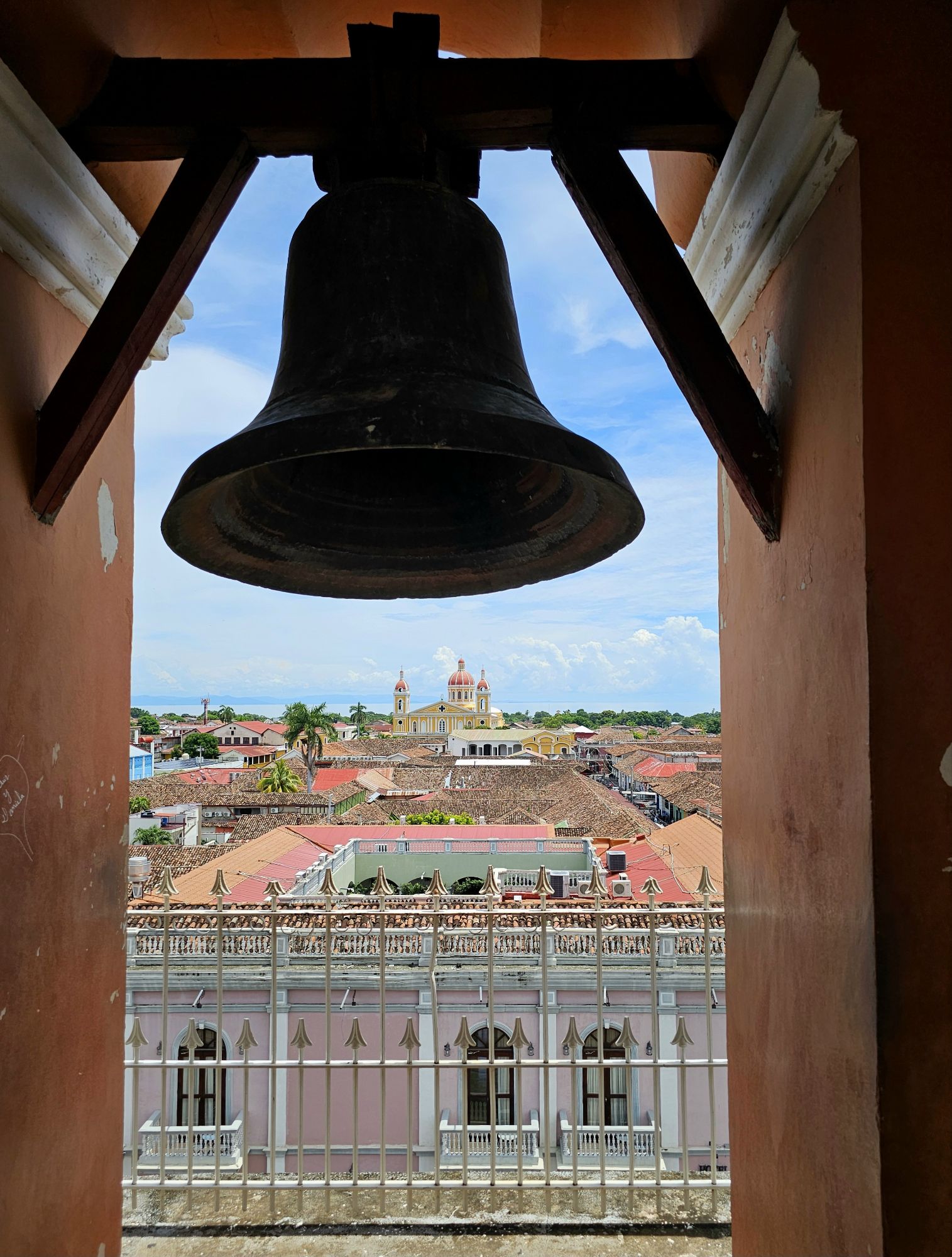
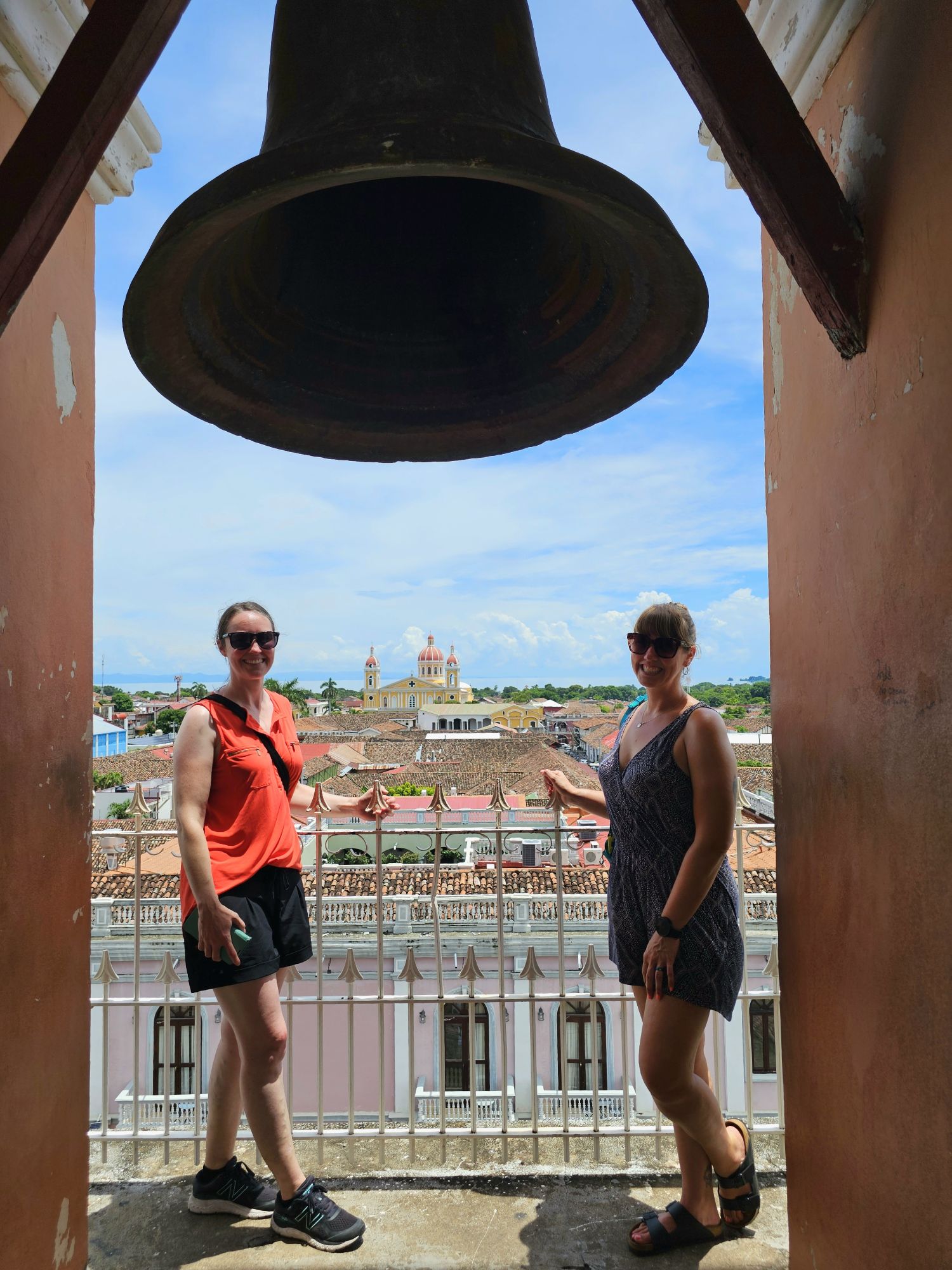
Granada is home to numerous churches including Iglesia la Merced, which offers the best views of the city from the bell tower.

Construction was finished in 1539, but was razed by pirates in 1655 and rebuilt with its current baroque facade between 1781-1783, before being damaged again by William Walker’s forces in 1854. The front has been left with its burned appearance, while the interior was redone in 1862.
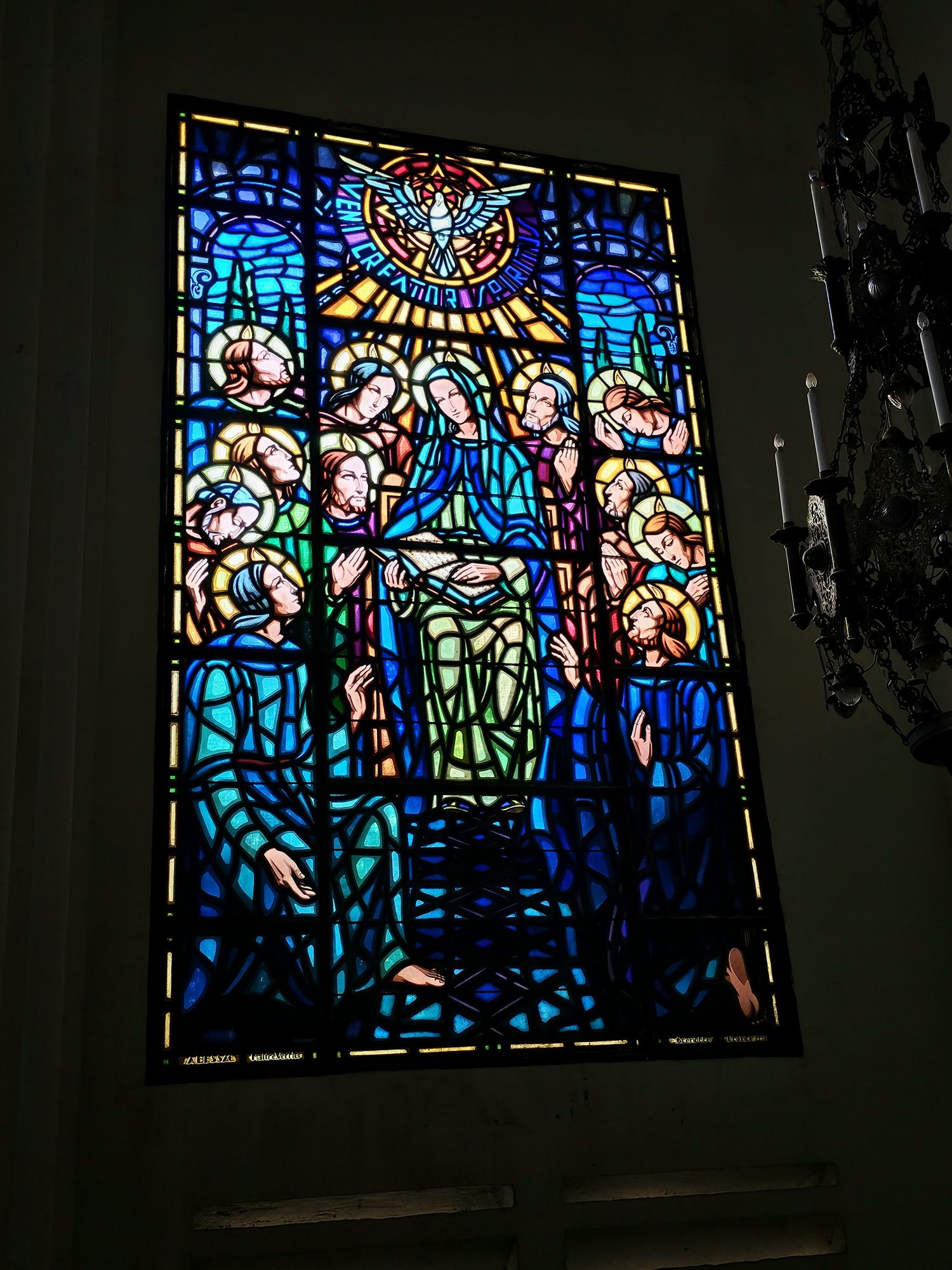
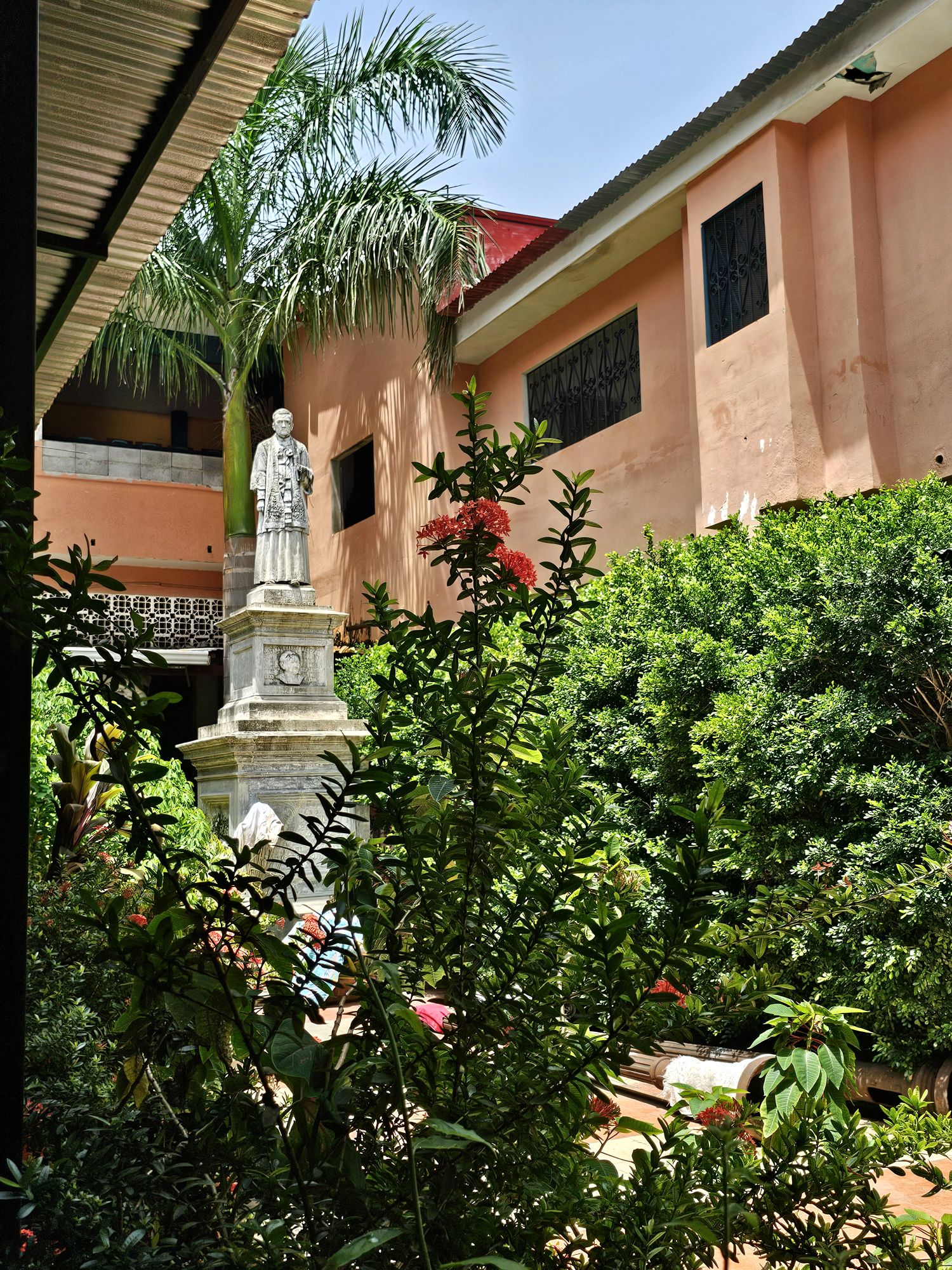
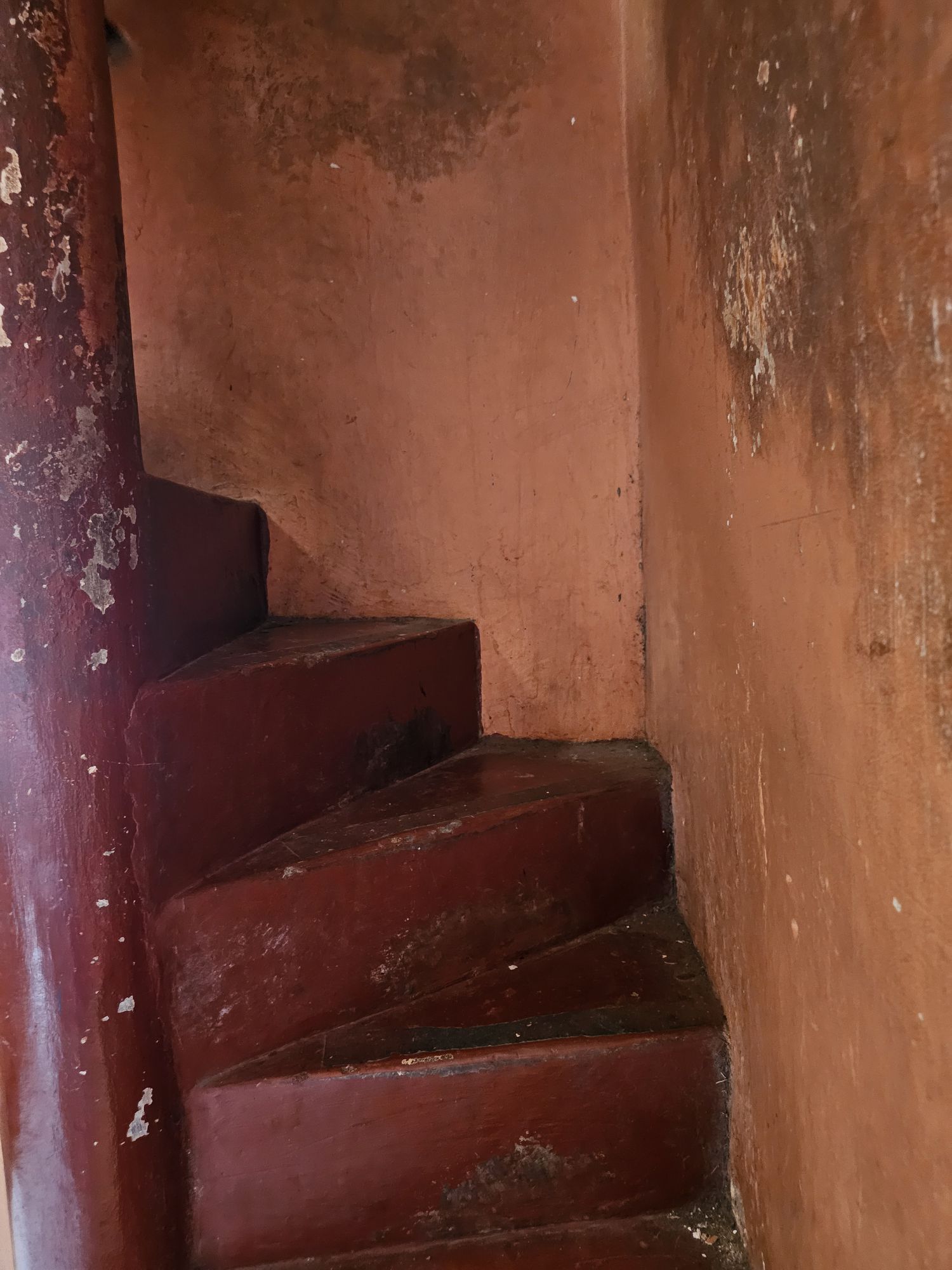
The elaborate stained glass is beautiful and it has a nice little garden courtyard to visit. It cost $1 USD to climb up the narrowest, winding staircase I’ve ever seen to the bell tower, but the view is definitely worth it. You can see for miles in every direction!
Pretty salmon hued Iglesia Xaltera, was built during the colonial era and due to its location it was used as a military fortress.

It destroyed during the National War and then later destroyed again by an earthquake. Final restoration work was completed in 1921 and the frescoes and carved alter are definitely worth seeing.

Across from it is Parque de Xaltera. Both were named for the Indigenous tribe who originally lived here before the Spanish arrived.
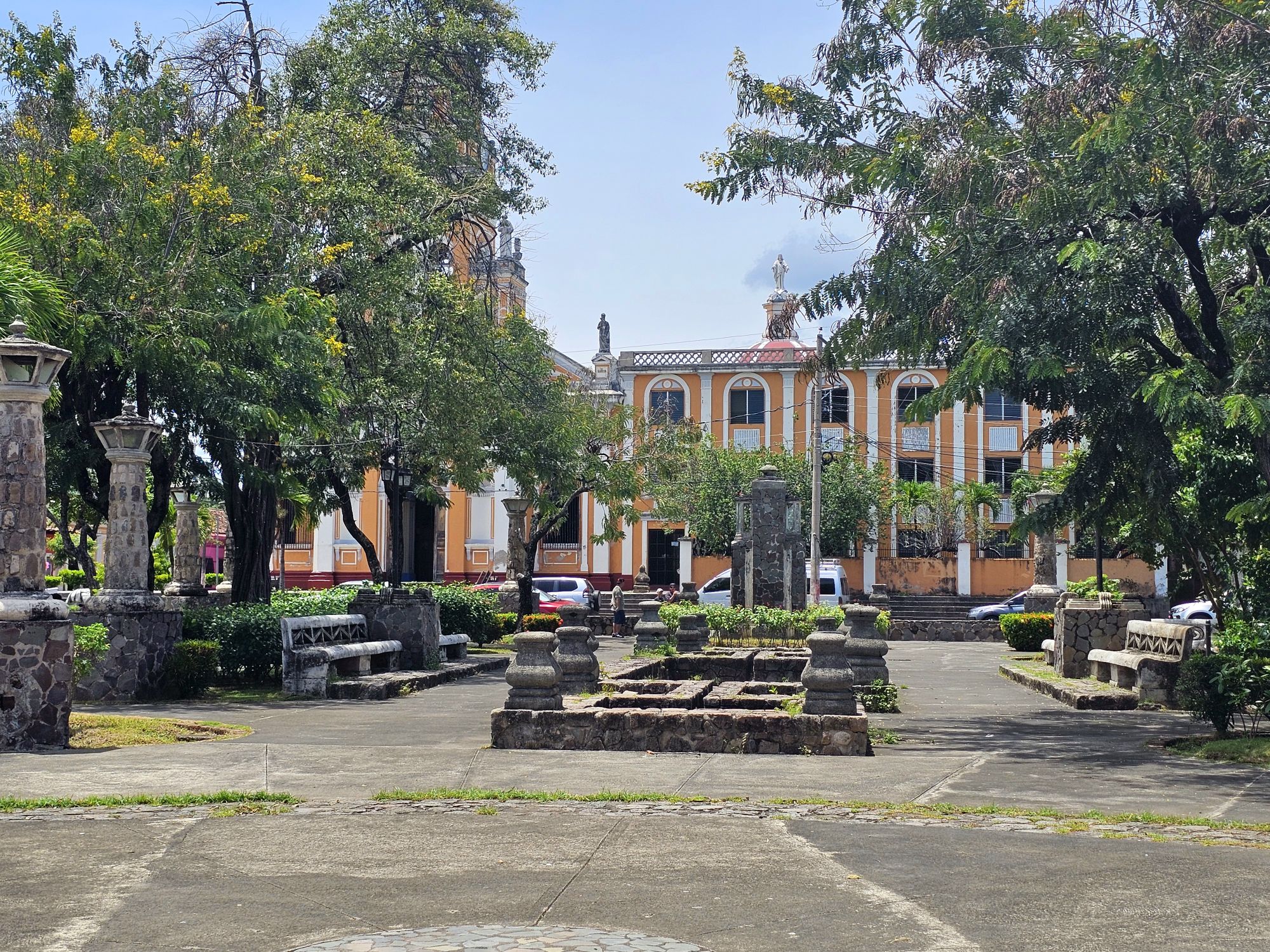
Fortaleza la Polvora, the turreted Spanish fortress was constructed in 1748.

Today, many of the walls still stand and a small museum about the revolution is found inside with info about the Sandinistas (all in spanish)

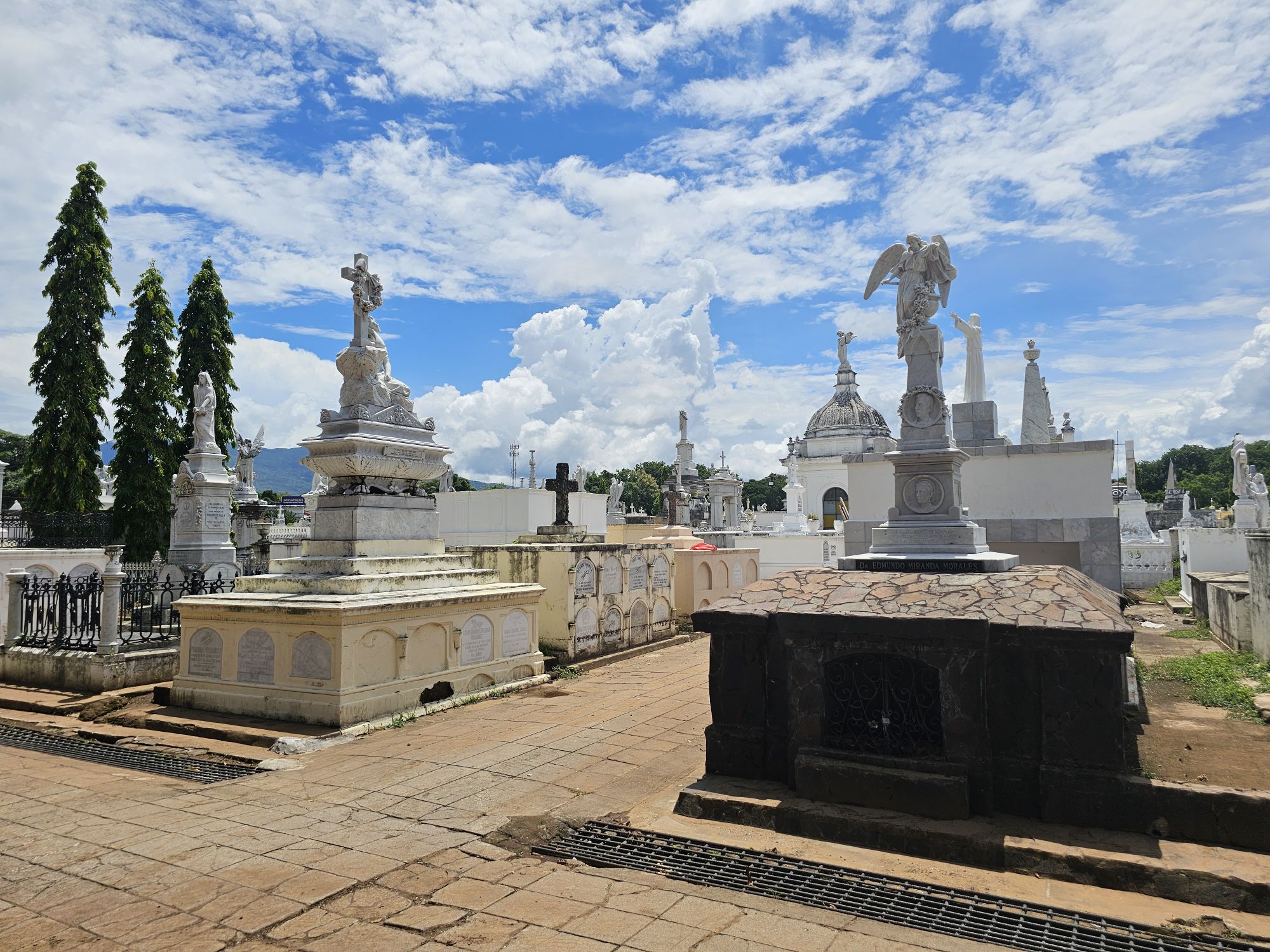
Cementerio de Granada is a large cemetery with some huge, ornate mausoleums and tombs including the first president of Nicaragua Fruto Chamorro as well as the ‘Chapel of Souls’, which Miguel said was mainly for funerals.

Mercado Municipal, Granada’s large market has been around since 1892 and is a maze of stalls with food, clothes, shoes, household goods, electronics and more.

It’s crowded and busy, but definitely worth exploring.

Located just outside the market is Tosto Metro a little hole in the wall restaurant the serves the banana burger I had read about (and Miguel recommended) You choose what kind of burger you want- beef, pork, chicken or veggie and they cook everything fresh.

The meal comes with carrots and two homemade dipping sauces, fresh made juice with ginger and tamarind and your burger topped with grilled peppers, zucchini, mini corncobs, carrots and avocado sauce between two huge tostones (fried, smashed plantains)

It was amazing! So fresh and tasty! To end the meal, they brought out a little dessert pastry with a spoonful of honey. Great meal for about $10 each.

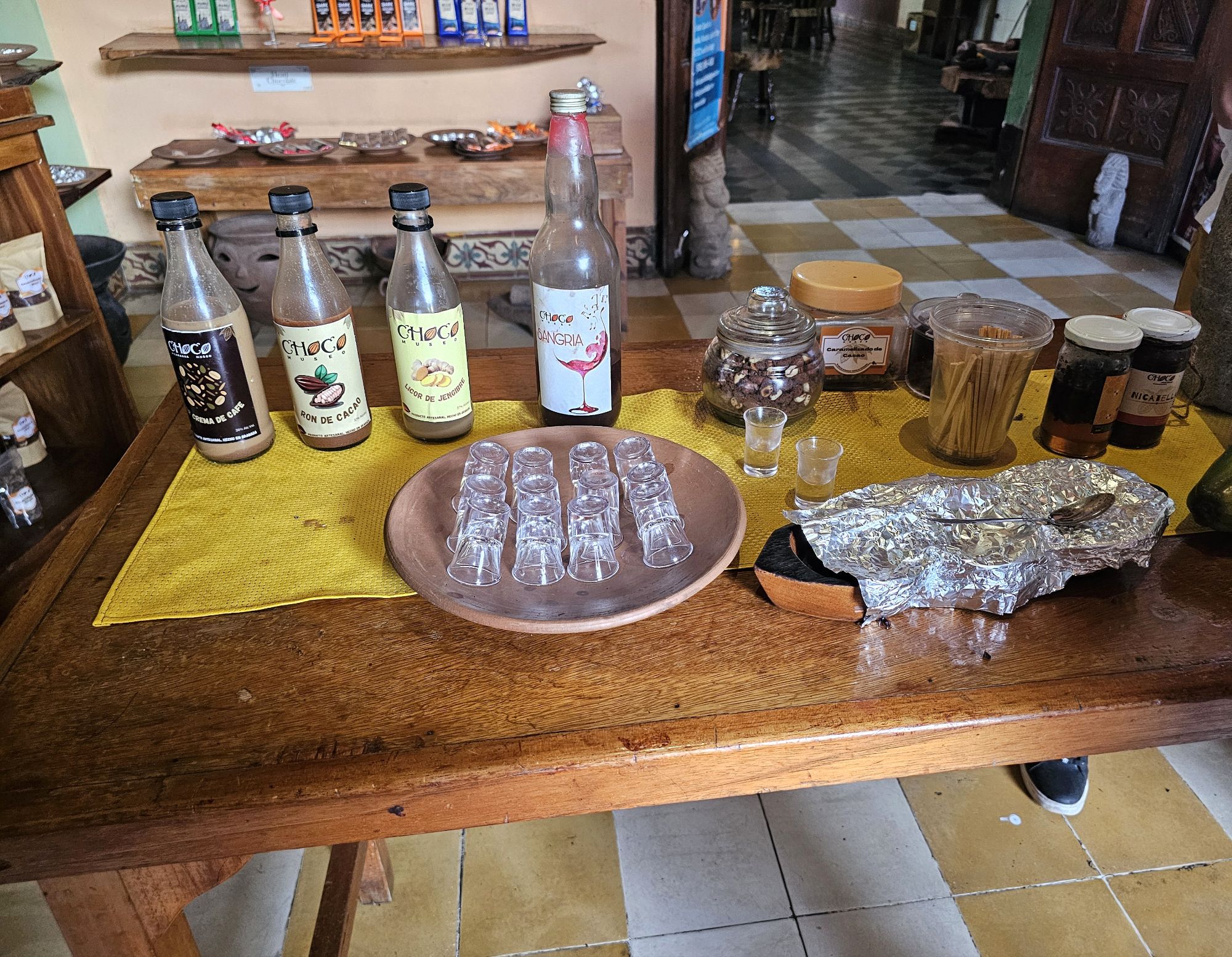
Granada is also home to two chocolate museums/factories. Bate Bate Chocolate where we wandered through and read all about the chocolate made here. The sign said they do tours and tastings, but nothing seemed to be happening during the time we were there, so we continued on to the Choco Museo & Cafe where we were greeted and immediately offered a tasting.

We got to sample several kinds of their chocolate, both caramel coffee and chocolate covered nuts, brownies, Nicatella (their version of Nutella) chocolate honey, and then some shots- crema de cafe, Ron de Cacao (chocolate rum) a chocolate & ginger tequila and then chocolate sangria! The tasting ended with a chocolate tea that tasted like Christmas to me with all the spices. It was all very good. Definitely a great stop! We toured around the museum and art gallery as well which explained the chocolate making process, the history of cacao beans and their value in the ancient world and featured local art work. They also offer chocolate workshops if you are looking for more chocolate fun!

Ready for a break from the sun and humidity, we made our way to The Garden Cafe for a cold drink. This beautiful cafe right near the cathedral is the perfect spot to relax in the tranquil inner garden courtyard. They have a good selection of food and drinks on the menu and I opted for both an iced latte and a frozen blueberry lemonade. Both excellent choices on a hot, humid day!
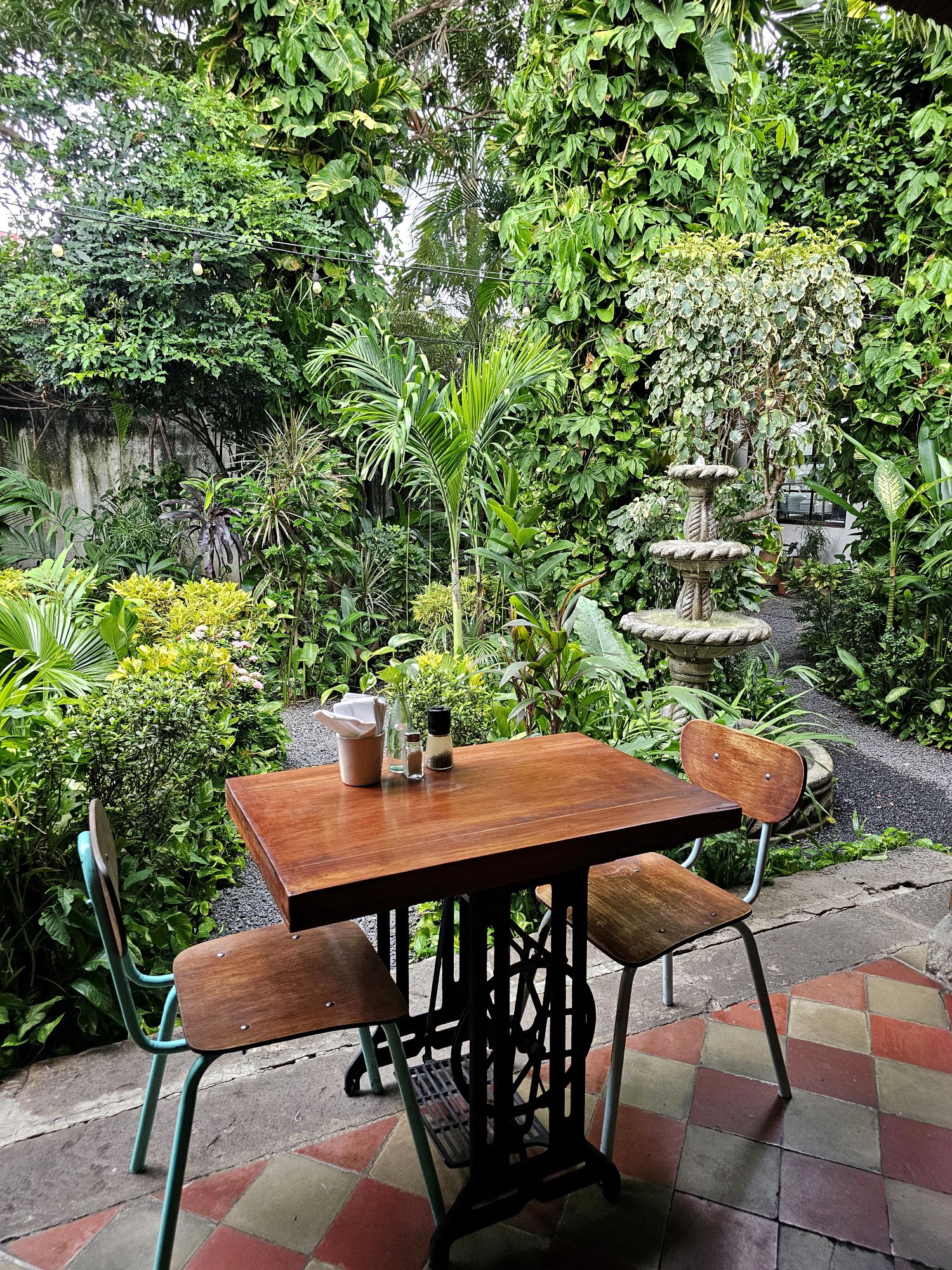
Besides the cafe, there is a small artisan shop and a ‘take a book, leave a book’ library found inside. This would definitely be my hang out spot if I lived here!

Located about 30 minutes from Granada is another must-see spot- Laguna de Apoyo. This small lake is a nature reserve located between Masaya and Granada. It is one of the oldest lagoons in Nicaragua formed hundreds of thousands of years ago after the eruption of a volcano. Over the years, the open cone gradually filled with fresh water so clear and deep blue in colour and due to the volcano, the water stays naturally heated around 80F. It’s considered one of the cleanest natural lakes in Nicaragua and possibly all of Central America.

We checked into the San Simian Lodge right on Laguna de Apoyo and took the kayaks out to explore the laguna a bit before jumping in for a swim. The lodge is built on a hill, with a beautiful view of the laguna and cute little bungalows. With hammocks to relax in and good local meals available at the restaurant, it was a great place to relax for a couple of days.

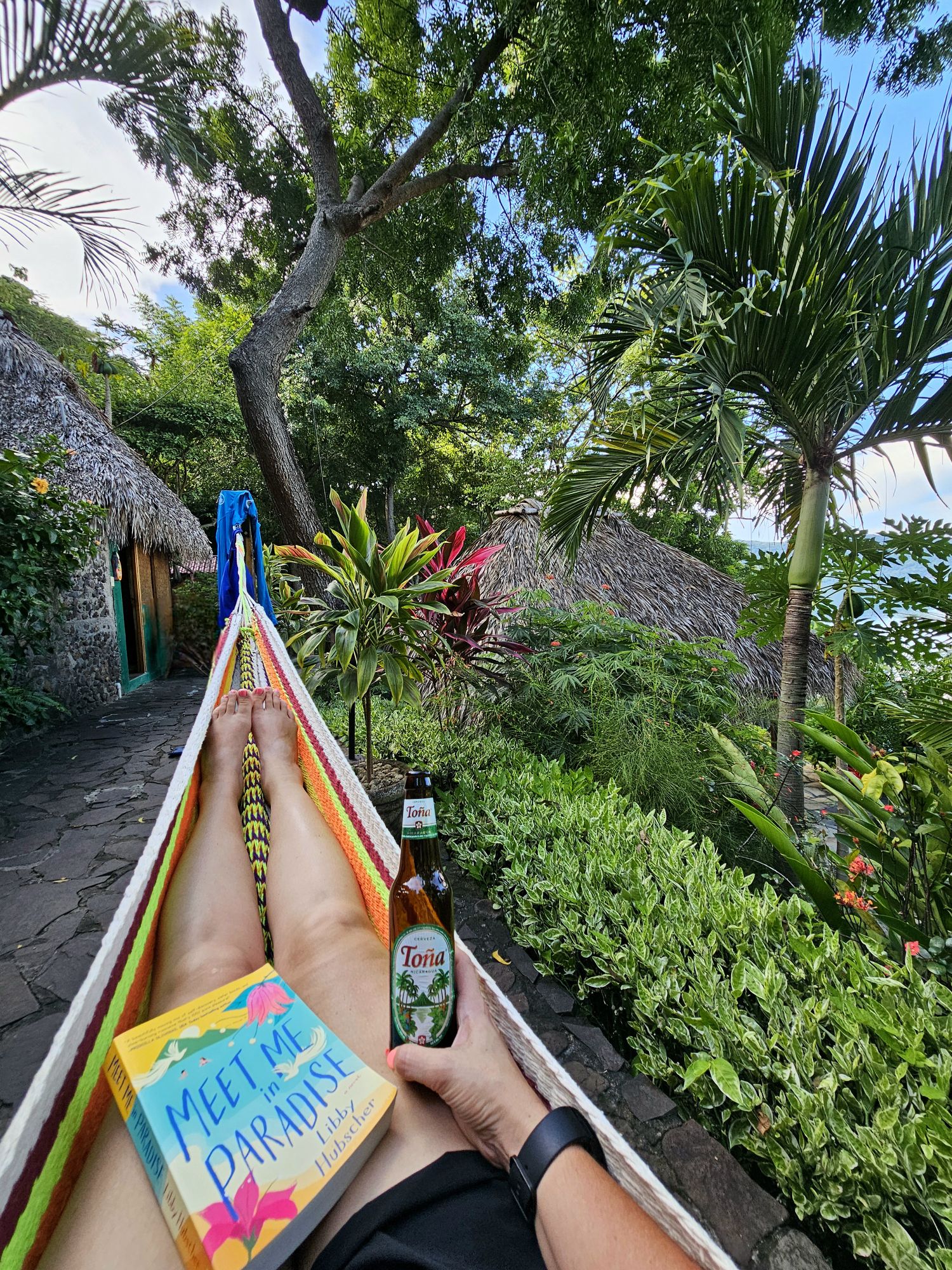
Whether you choose to stay in Granada or relax on the shores of Laguna de Apoyo, be sure to add both stops to your Nicaraguan adventure!

Categories: Blog, Central America, Photo, Where in the World | Tags: , , , , , , , , , , , , | Leave a comment

Surfing in San Juan del Sur

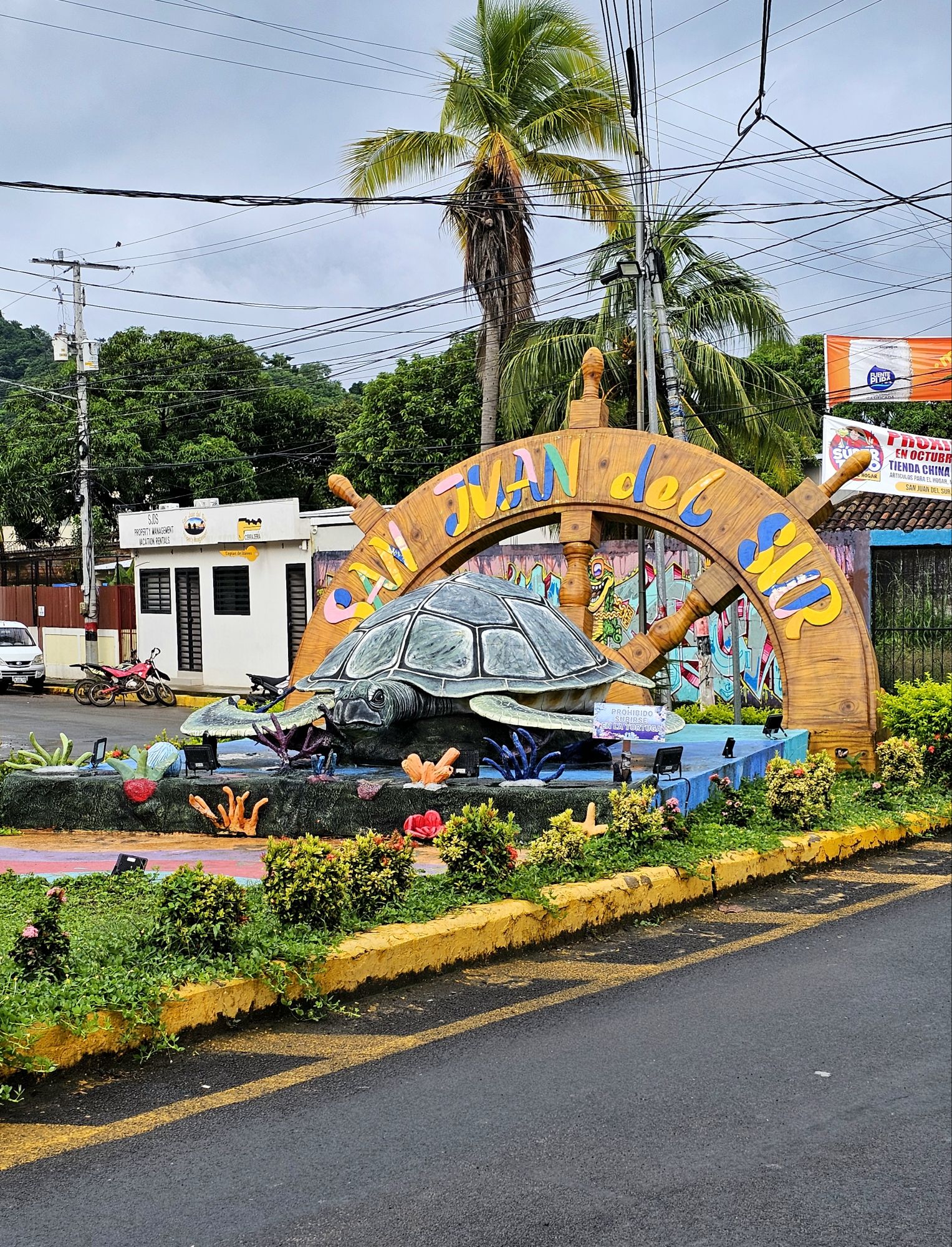
Not too far from the border with Costa Rica, along the Pacific Coast of Nicaragua, lies San Juan del Sur, a once quiet fishing village that became a hub for those looking to explore or surf the awesome beaches both to the north and south of town.

The town is small and easily explored on foot. While San Juan del Sur itself doesn’t have a great beach, it does have a lot of great restaurants and bars along the waterfront. It also has a party scene, especially on weekends during the dry season and has only clubs in the area.

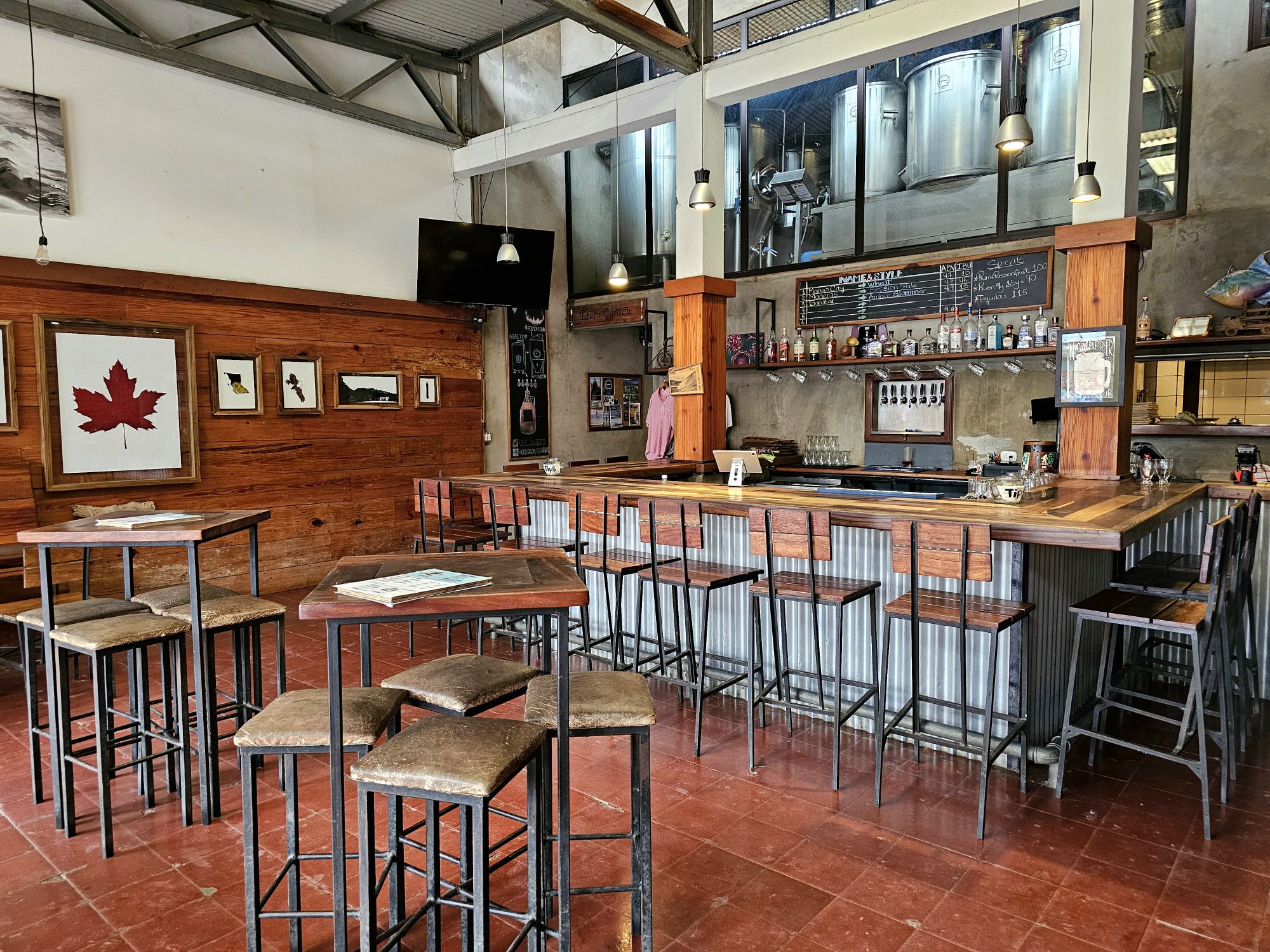
As I left my clubbing days behind me years ago, I opted to check out the local brewery, Nicaragua Craft Beer Co – Cervecería San Juan del Sur, the first craft brewery in Nicaragua.

They have a few beers on tap, a beer garden out back and Open Mic night every Wednesday. They also have amazing ‘Drunken Nachos’ with pair perfectly with a flight of their beers!

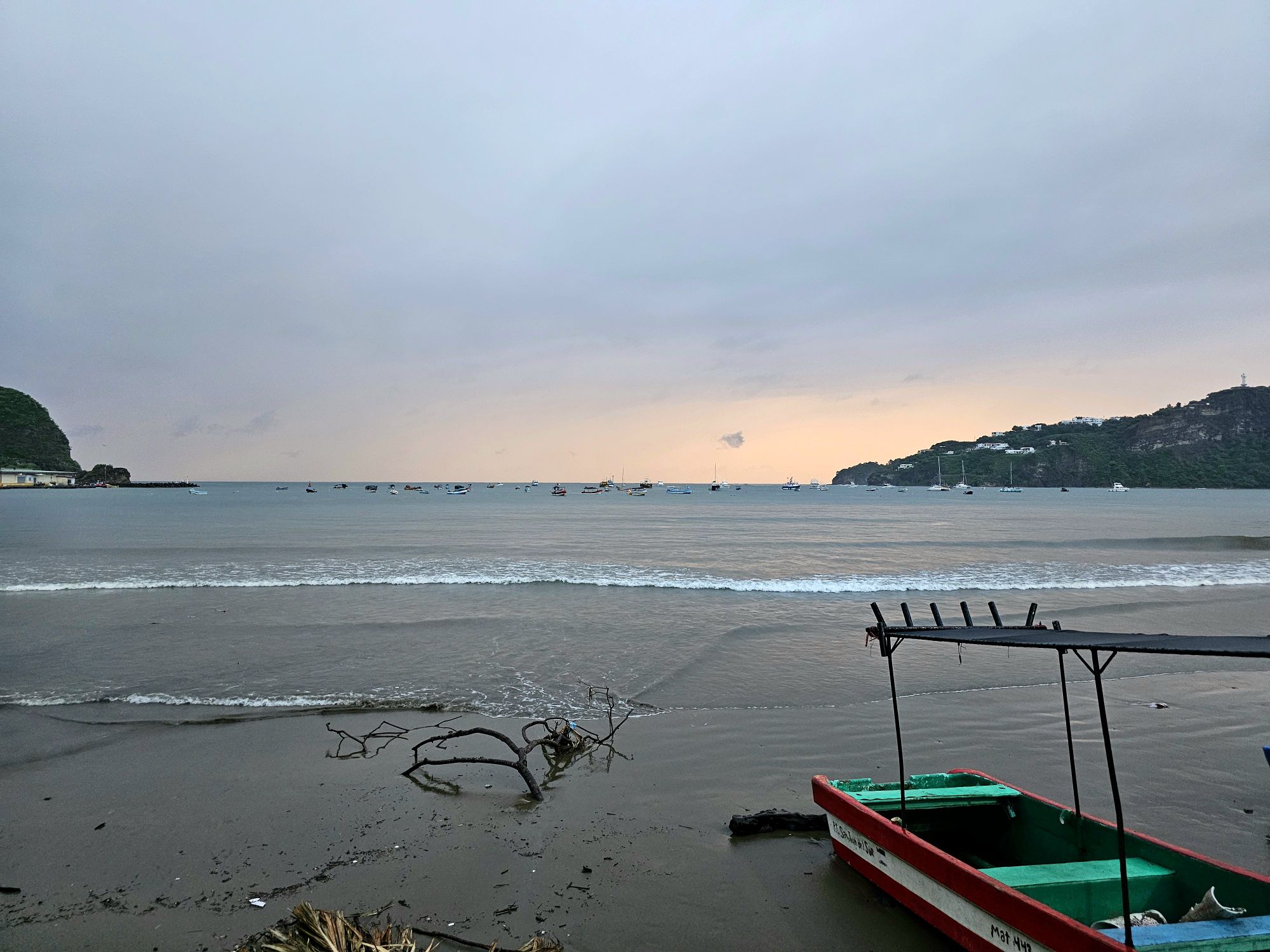
As we were here in rainy season, we spent most of our day in San Juan del Sur finding places to duck into each time it started to rain!

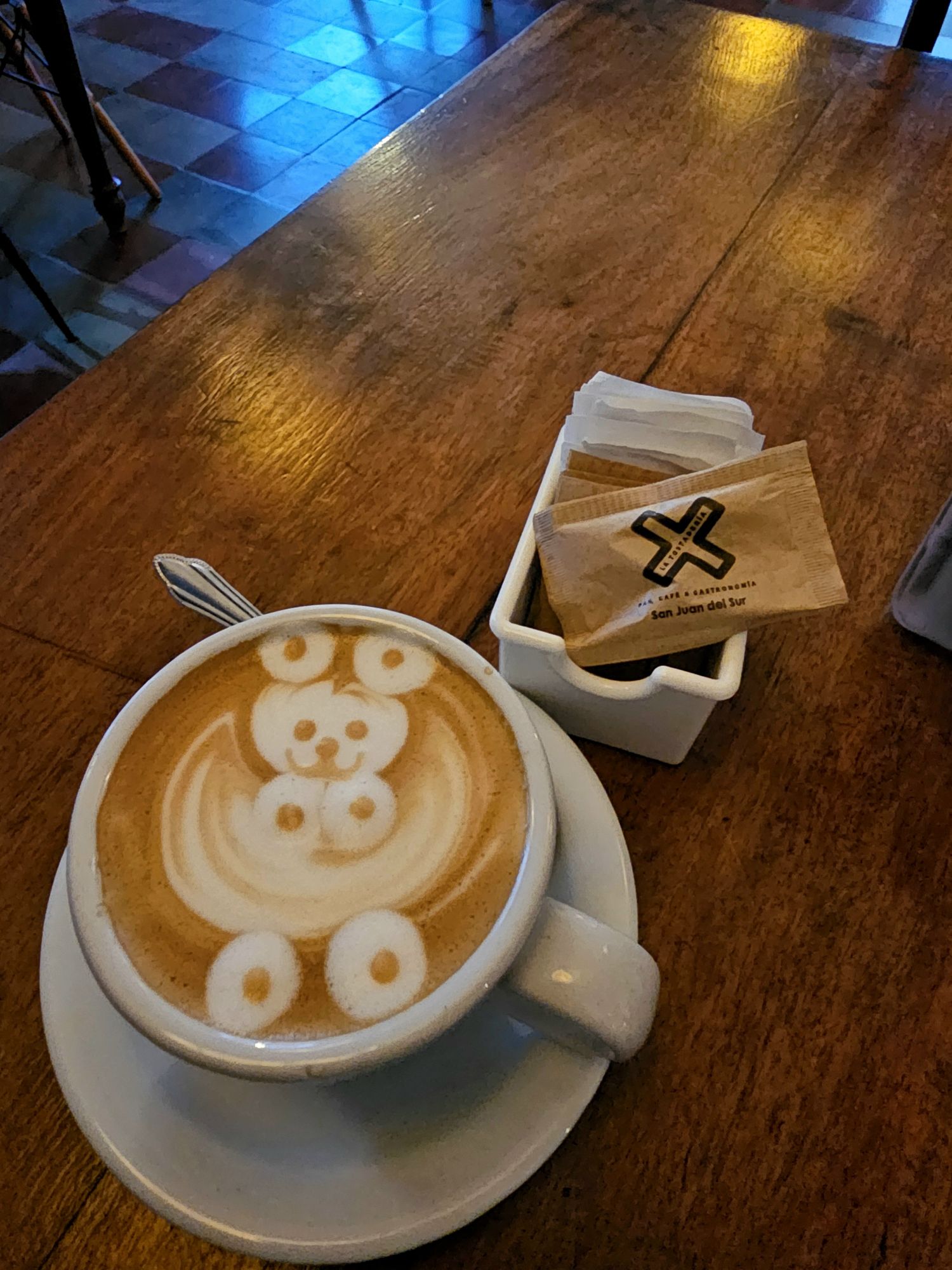
La Tostaderia, was the perfect place to stay dry while enjoying a latte (with the cutest little latte art!) and watch the waves crash in across the street.

And no trip to San Juan del Sur would be complete without surfing! There are numerous places in town offering surf lessons and board rentals as well as rides out to the other beaches.

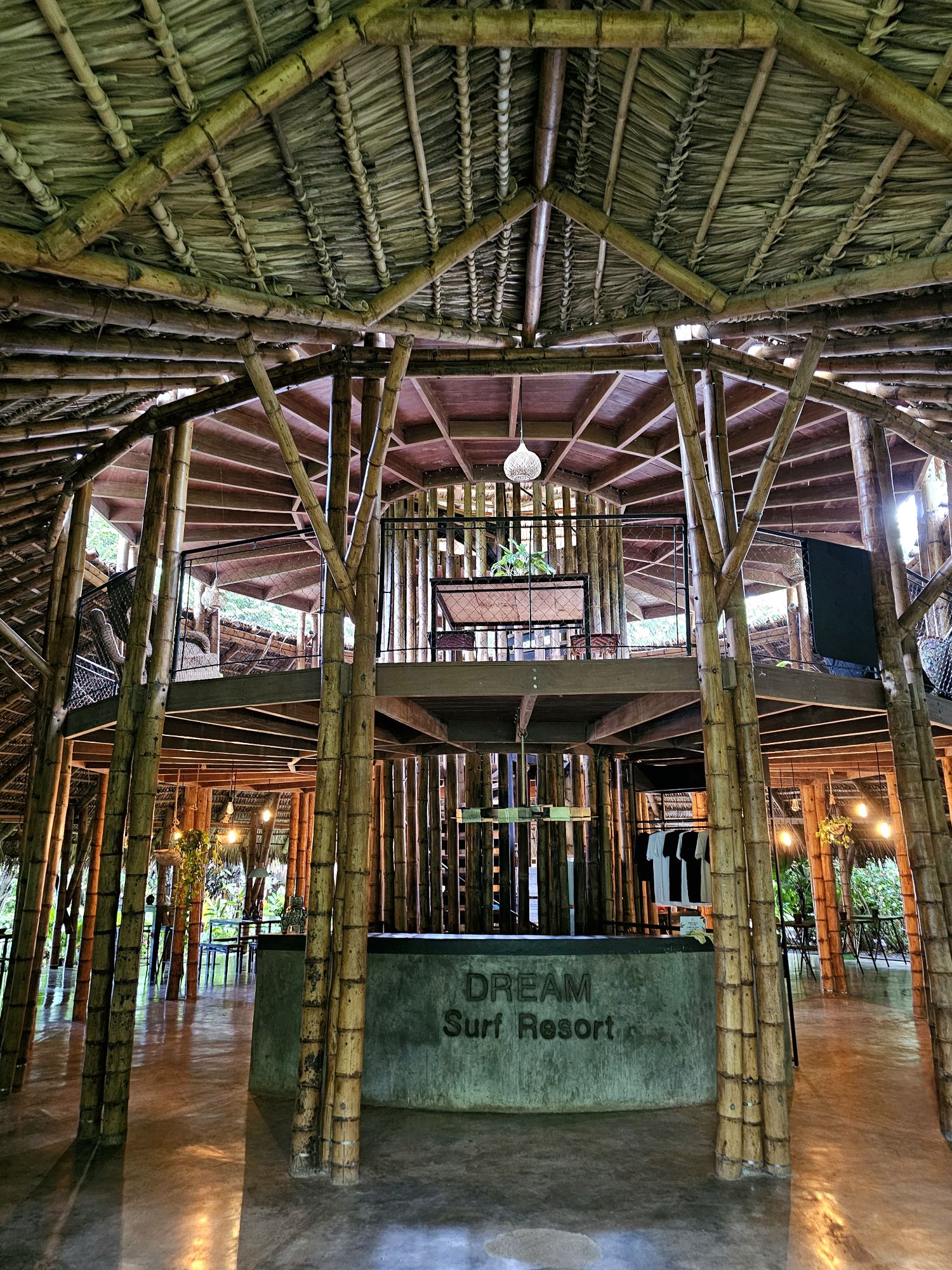
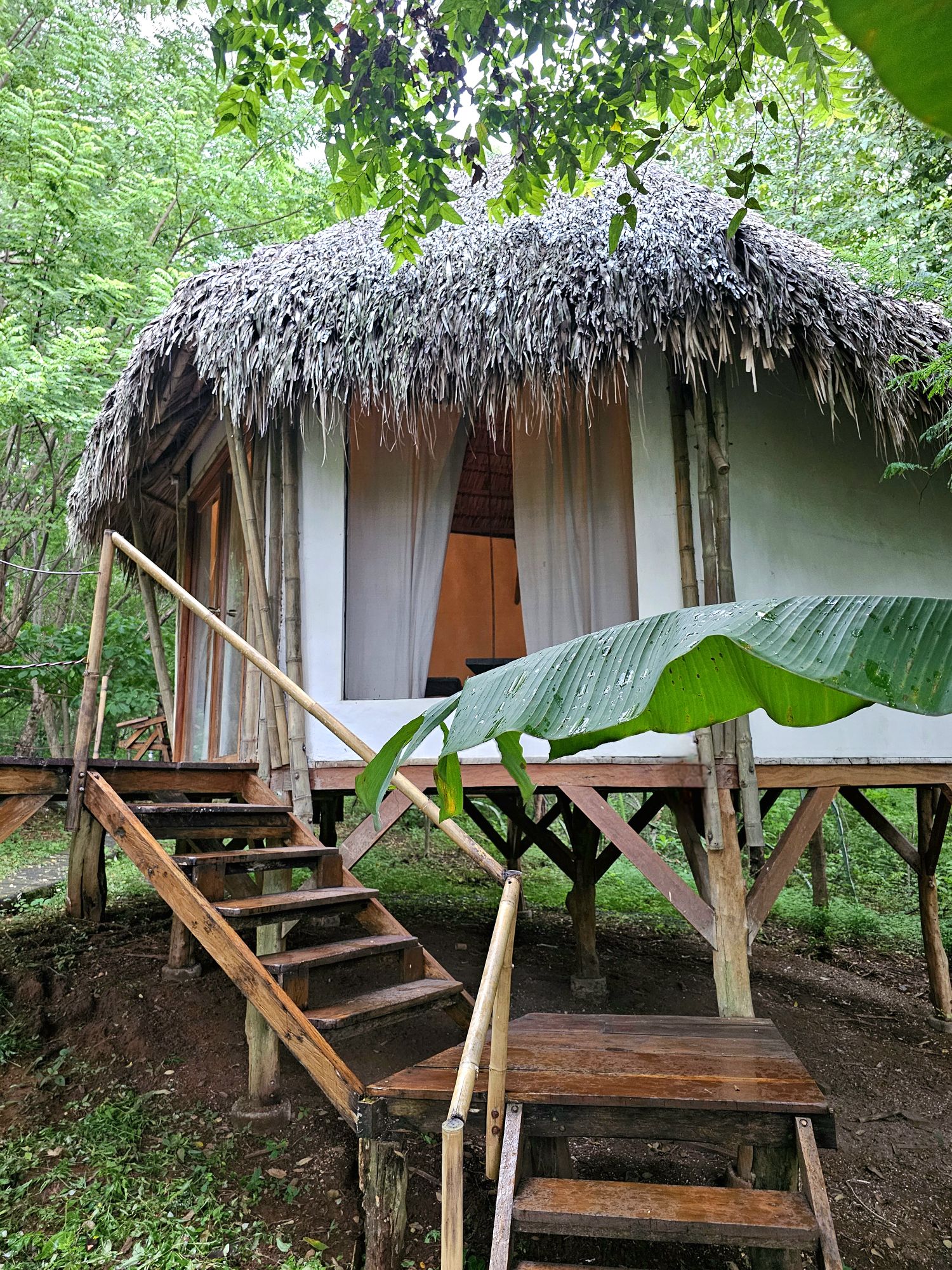
My sister joined me on this trip and we opted to stay only one night in San Juan del Sur and the other two nights outside of town at the Dreamsea Nicaragua– a sustainable eco-lodge located in a tropical paradise!

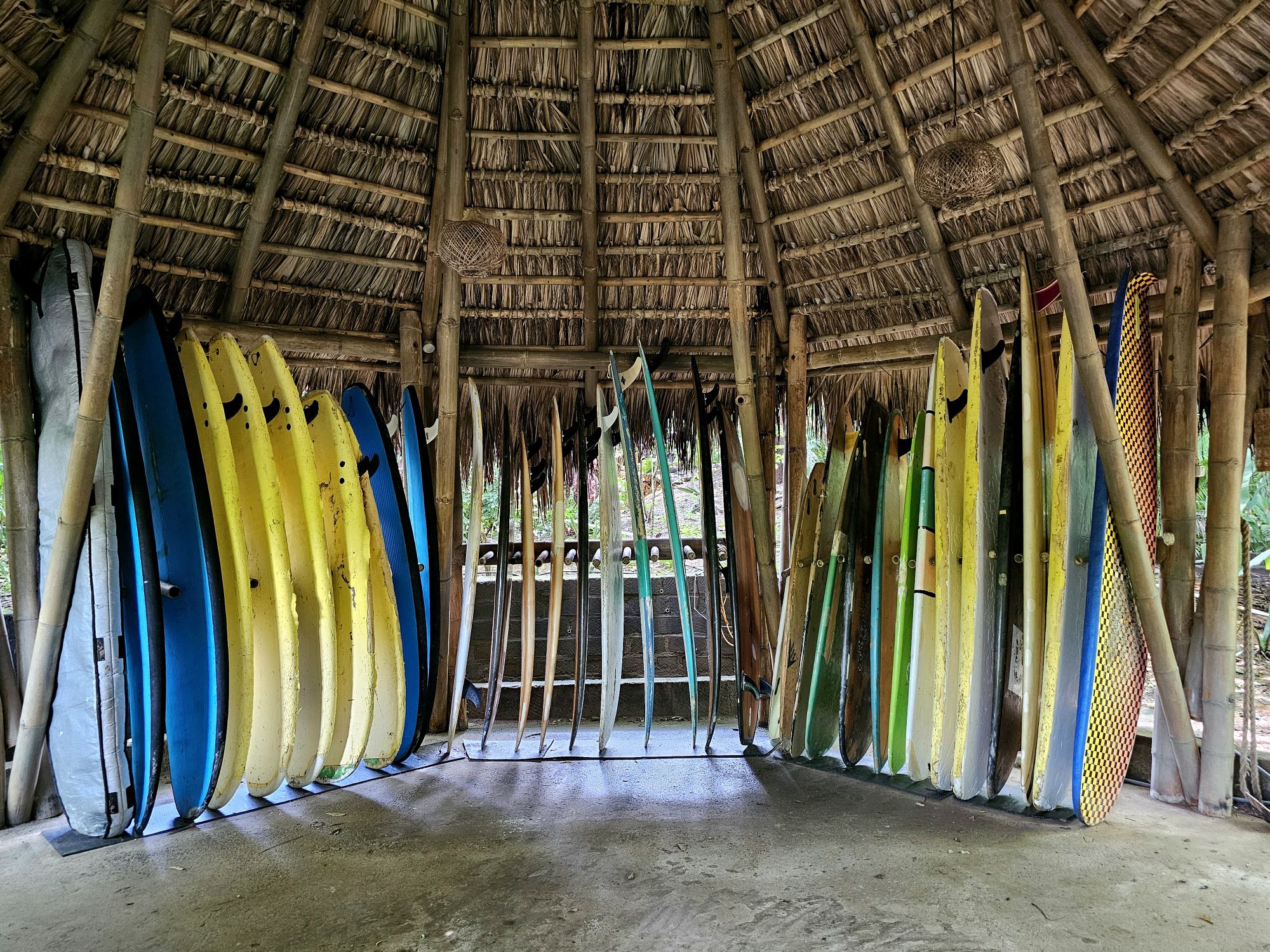
You can sign up for the week long surf camp or if you aren’t staying that long you can just take surf lessons or rent a board.

The resort was gorgeous, with delicious meals and morning yoga with a beautiful view!

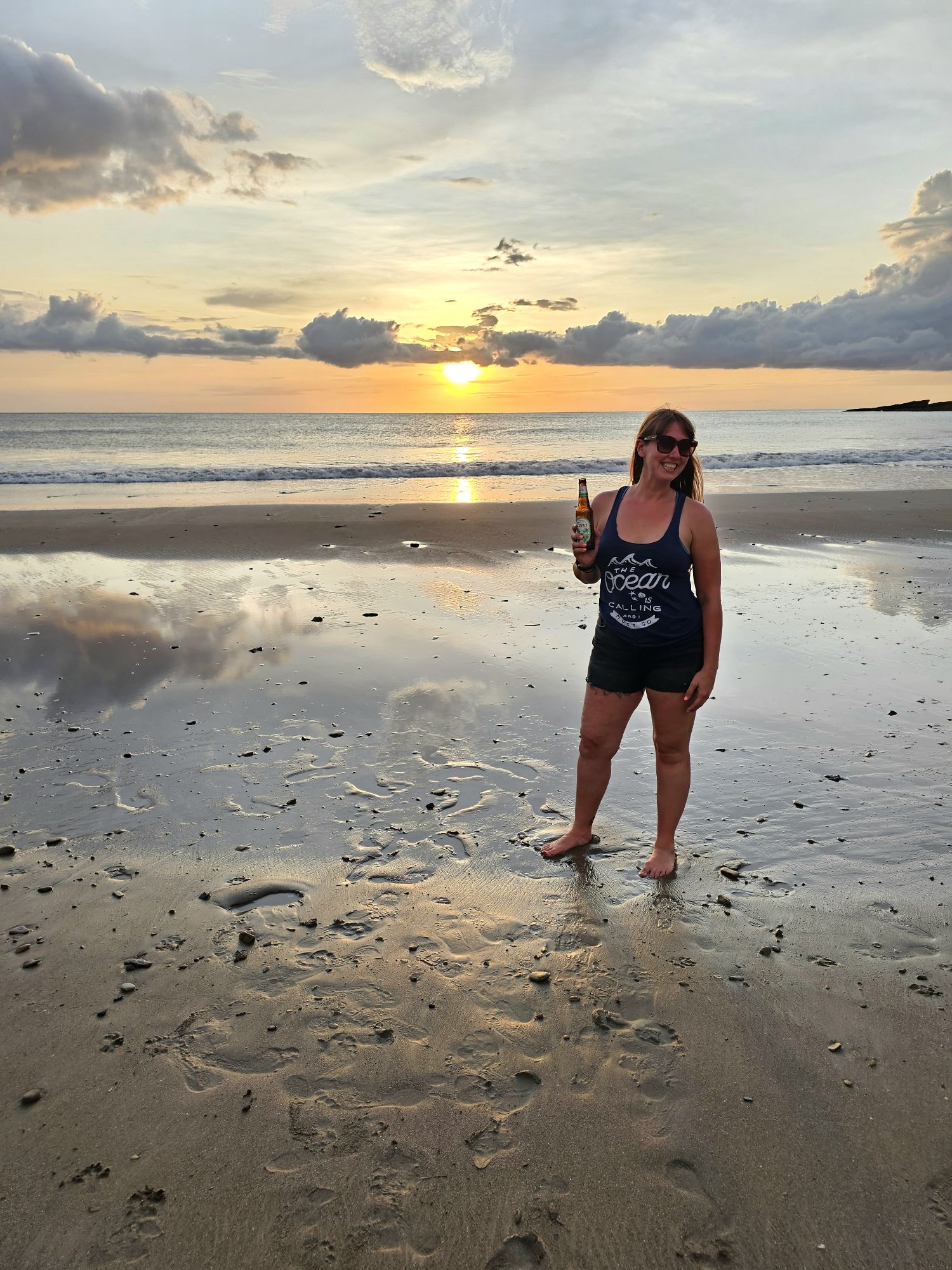
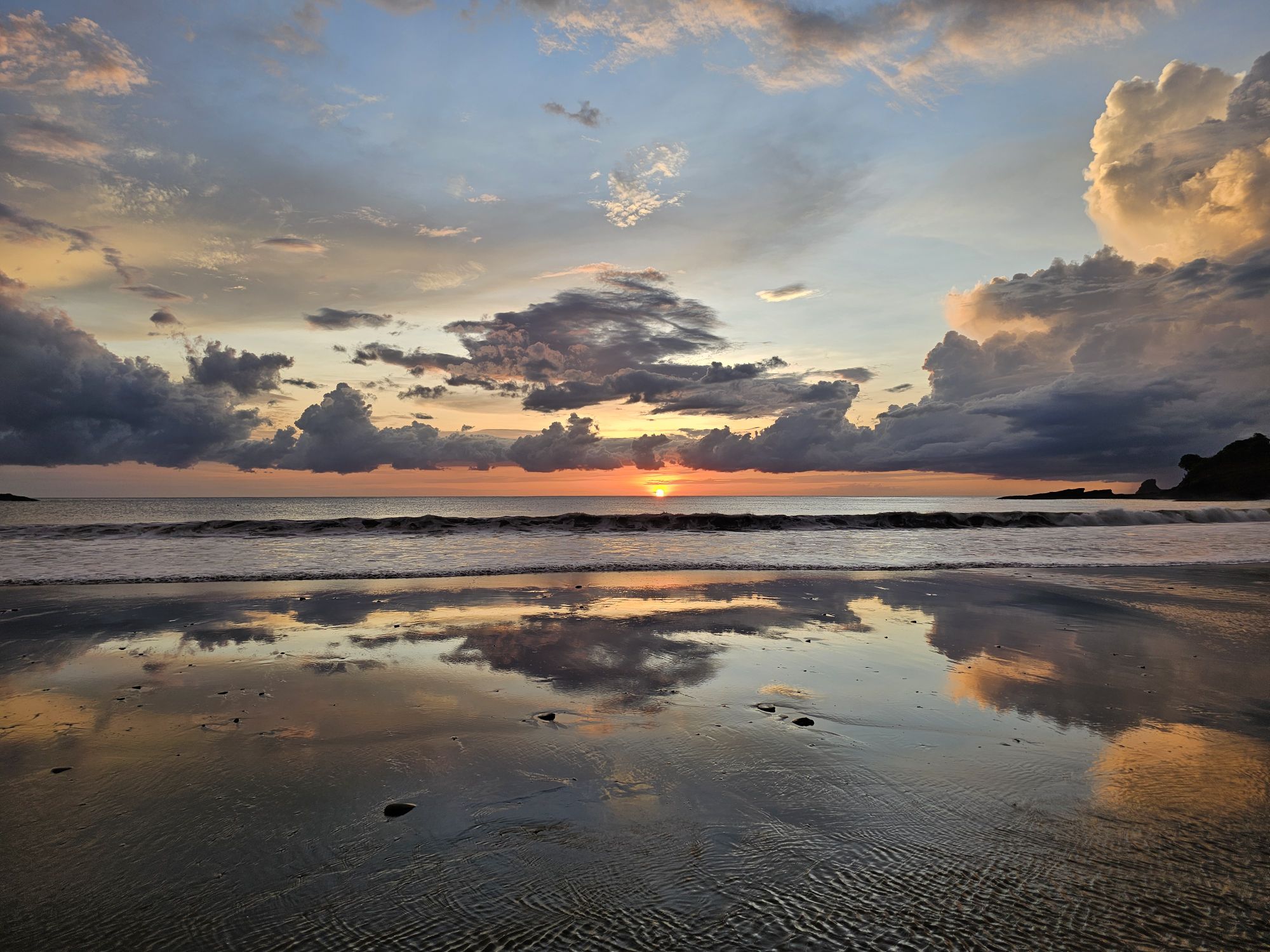
There are also lots of group activities, including a sunset beach picnic at Playa Marsella, a good swimming beach with gorgeous sunsets!

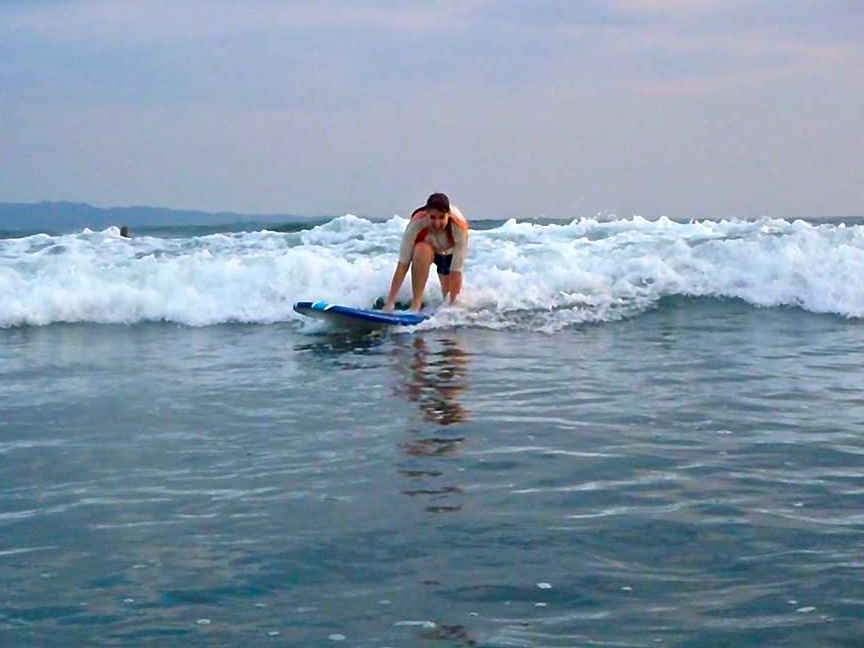
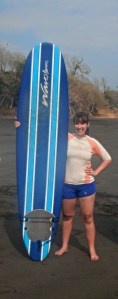
We signed up for a surf lesson, which included one hour of surf theory, that day it was in the pool, followed by 1.5 hours in the water and all equipment. We headed to Playa Remanso, a nice little bay which has a smaller beach break, making it ideal for beginners.

It had been about a decade since I last tried surfing, so my goal was to get up and ride a wave….and I was able to do that on the first try!

Our instructor, Luis, was great and helped the 3 of us find our waves. What an incredible feeling it is to ride a wave into shore. Feels like you’re flying on water!

After our lesson, we walked along the beach and watched as those with a lot more skill caught some waves. I will definitely need more practice before I can surf like these guys!

The whole atmosphere in this area is very relaxed. The perfect spot for those looking to learn how to surf or just relax at the beach, while still being able to enjoy a great meal. If you’re heading to Nicaragua, be sure to add San Juan del Sur to your list!

Categories: Blog, Central America, Photo, Where in the World | Tags: , , , , , , , , , , , , , , | Leave a comment

Coffee Tasting in Boquete, Panama

While in Boquete, Panama, I stopped by one of the local coffee farms to learn about how some of the world’s most delicious coffee is made…and tried a few samples.  It was perfection!

Categories: Central America, Video, Where in the World | Tags: , , | Leave a comment

Living on One Dollar a Day

What would you do if you only had one dollar a day to live on?  If you didn’t know where your next paycheque was coming from?  If you had to choose between sending your children to school or feeding them?

For many of us, this seems like an impossible notion, but for 1.1 billion people around the world, living on ONE dollar is a daily reality.

I just watched the documentary Living on One Dollar, where four American friends head to a rural village in Guatemala for two months to experience what it’s like to live on one dollar a day.  Each morning, they would draw a number from 0-9 out of a hat. This number represented how much money they had to spend that day. Somedays, it was 0, other days they were lucky and could buy bananas along with their rice and beans.  They took out a loan for $125, which had to be paid back bi-weekly in increments of $6.50 or so. With this, they rented a one room house where they slept on the concrete floor. They also planted radishes so they’d have some income once their crop grew.  During this time, they interviewed some of the 300 locals living in Pena Blanca, Guatemala. Their stories are both inspiring and heartbreaking, but regardless of how little they have, they are all willing to open up their homes and lives to their neighbours and these four Americans.

I’ve traveled to places very similar to Pena Blanca where extreme poverty surrounds you and I’ve always been incredibly touched by the generosity I’ve been shown by complete strangers, who have invited me in for a meal, even though they really couldn’t afford it.

Over the years, I’ve often found myself broke and struggling to pay rent and buy groceries, but I always know I have another paycheque coming or I have family, friends and options available to me when I get really stuck.  Those times are stressful enough and I only have to take care of myself. I can’t even begin to imagine what it would be like to have a family to support, be making a dollar a day and not even knowing when my next day of work will be.

Listening to these guys talk about their experience and watching the interviews they did with the locals really puts things back in perspective.

As one of them said,

“It’s not due to laziness that someone is poor. It’s not due to a lack of ambition or lack of intelligence, it’s because they lack things that we take advantage of everyday.”

We don’t realize the daily things we take for granted – education, clean water, food in our belly and a roof over our head. These are things we just expect to have. But watching this documentary reminded me it could just as easily have been me in that situation and still could be.

To learn more about the film, the project and to get involved visit  http://livingonone.org/livingonone/film/ or watch the documentary on Netflix

Categories: Blog, Central America, Video, Where in the World | Tags: , , | Leave a comment

Horseback Riding in the Hills of Boquete

Horseback Riding in the hills of beautiful Boquete, Panama. We spent a day exploring the area on horseback with ‘Franklin’s Horseback Riding‘ and also hiked to a peaceful hot spring.  This ‘Horses & Hot Springs’ tour was the perfect way to spend a day in Boquete!

Categories: Blog, Central America, Video, Where in the World | Tags: , , , , | Leave a comment

Horseback riding in the hills of Boquete

With so many tour options available in Boquete, Panama, the hardest part is choosing what you want to do in this beautiful hillside town.

DSC_0012

After looking at a number of tour options, we decided to go with Horses and Hot Springs and booked an afternoon with Franklin’s Horseback Riding Tours.

Continue reading

Categories: Blog, Central America | Tags: , , , , | Leave a comment

Panama City

Categories: Blog, Central America, Photo | Tags: , | Leave a comment

Catching a wave in Panama

1966903_621543941260067_1034293774_n-1

‘Watch for your wave, paddle, get in position, chicken wing the arms and pop up on the board.’

Sounds easy, but my first attempt at riding a wave in Santa Catalina, Panama did not go quite so smoothly.

I had always wanted to learn how to surf and since Santa Catalina is known to be one of the best surf spots in Central America, I figured it was time to cross another item off my travel bucket list.

Surfers have always intrigued me with the whole beach bum, free-spirited, laid back attitude of spending your days outside, riding waves in the warm sun. While this may just be a stereotype, it sure sounds like the perfect life to me.

After checking into Sherlley Cabins, our Santa Catalina home, my travel companions and I headed out to the beach to check out the waves and cool off after a long day on the bus. Here, we came across a few people learning to surf who introduced us to their instructor, Chris Johnson. We made arrangements to meet him the following day at three to turn our surfer dreams into reality.

Santa Catalina is a small fishing village on the Pacific coast. With a population of only 300 people and 50 expats, this surf paradise has a very laid back vibe with small hand-thatched restaurants and cabins – just don’t expect to party all night, as all the local bars have a curfew of 10 p.m.


DSCF3367

We rented a surfboard at the Santa Catalina Surf Point for $7, paid $20 for our lesson, and headed down to the beach. Chris told us he’s originally from Florida, has been surfing since he was nine and now owns the Montezuma Surf School in Costa Rica. So we were definitely in good hands for our intro to surfing!

DSCF3365

He started out by drawing us pictures in the sand of what the waves look like and how we were going to catch them. After showing us the proper position and how to “pop up” onto the board, we each got our own hand drawn ‘sandboard’ to practice our pop-ups on. On land, I could pop up no problem and started thinking maybe this wouldn’t be as hard as I imagined. Then we left the sand behind and picked up our boards, attached our ankle strap, and headed out into the waist-deep water to try and catch our first wave.

Chris showed us how to pick a wave and what to look for as it was coming in. Then, one at a time, he helped us as we got into position to wait for our wave to reach us. Then he’d guide the board and yell ‘NOW!’ at which time we were supposed to pop up and ride the wave!

Well, it turns out it’s definitely not as easy in the water as it was on my ‘sandboard.’ My first attempt was pretty dismal. My second was a little better – I at least got to my knees as Chris told me to let go of the board and stop over thinking it.

By my third attempt, I was up on the board, crouched very low and still holding onto the side of it – but at least I was on my feet!

1010002_621543991260062_206113994_n

For the next couple hours, we continued to pick our waves, gradually starting to paddle on our own and then do the whole process alone, with Chris just offering tips after each ride. He definitely knows what he is talking about and was an awesome instructor for our first time surfing.

I won’t say by the time the sun was setting three hours later that I was heading for the pros, but I can say that I at least had a few good rides, standing up for several seconds each time before losing my balance and sliding off my board.

DSCF3391

The day ended with a dinner of fresh fish at Mama Ines, watching the sunset and chatting with Chris and some other surfers about riding the waves.

DSCF3381

It was a perfect day out in the Santa Catalina waves. I can’t wait to get back out on a surfboard and try again!

Categories: Blog, Central America | Leave a comment

Surfing in Santa Catalina

I’ve always wanted to try surfing, so on a recent trip to Panama I decided to try and catch some waves in Santa Catalina, one of Central America’s best surf spots.  While I may not be joining the pro league anytime soon, by the end of my lesson with Chris from Montezuma Surf School, I did manage to catch a few waves!!

Categories: Blog, Central America, Video | Tags: , , | 1 Comment

The Panama Canal turns 100!


2014 marks the 100th year anniversary of the Panama Canal. Known as one of the world’s greatest engineering feats, the Panama Canal is 80 km long stretching through the country from the Atlantic to the Pacific Ocean. It took more than 75,000 workers over ten years to complete. Finally, on August 15th, 1914, the SS Ancon officially inaugurated the Panama Canal.

Currently around 14,000 vessels pass through the canal each year and since it opened over 1 million ships have made the journey through the canal.

Ships passing through pay according to their weight. The average fee is around US$30,000. The most expensive ship to pass through was the Norwegian Pearl cruise ship, which paid US$ 376,000 in 2010. This fee has since been surpassed. The cheapest fare was US$0.36 paid by Rich Halliburton in 1928 when he swam through the canal!

Panama took over full operation, administration and maintenance of the canal on December 31st 1999 and they are currently working on a US$5.25 billion expansion project.

You can visit the Miraflores Locks visitor’s centre (admission $15) which has a four-story museum, viewing platforms and a movie theatre showing a 3-D movie about the locks.

Categories: Blog, Central America, Photo | Tags: , , | Leave a comment

Blog at WordPress.com.