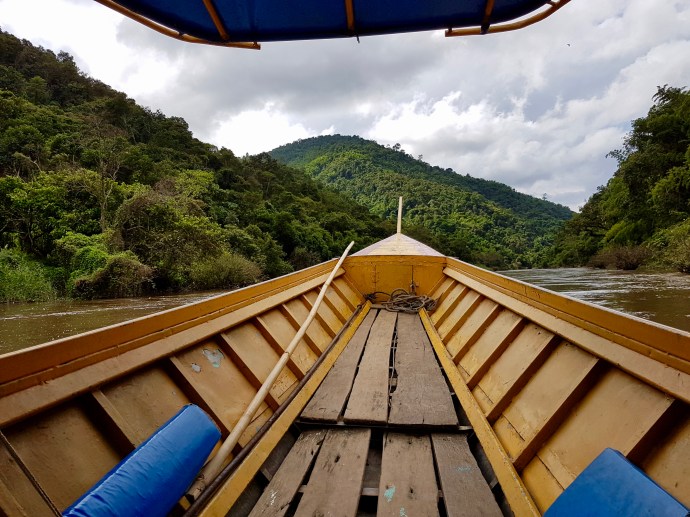
While in Northern Thailand, what better way to travel from one place to another than by traditional long boat?
After flying into Chiang Rai, we spent the night at The Legend Boutique River Resort & Spa in Chiang Rai, a gorgeous, peaceful spot a short tuk tuk ride from Chiang Rai’s bustling night bazaar.
The Legend Chiang Rai
View from our patio
Old fashioned Tuk Tuk
Our Room
The Legend lit up at night
Beautiful elephant lights
After a delicious breakfast in the morning, we made our way down to the dock, where a long boat was waiting to take us along the Mae Kok River to our next spot.
Breakfast at The Legend
Morning on the Mae Kok River
It was a long 6 hour journey, but it was peaceful out on the river with hardly anyone else in sight most of the journey and the landscape we stunning.
Long boats along the river bank
Cow on the river bank
Everything was so green
The long boat crew along with our very skilled captain!
One of the Buddha statues along the river
Our long boat captain knew the river like the back of his hand, easily maneuvering through the sometimes very shallow, sometimes very rough water, knowing exactly where any dangers like rocks or sandbars were hiding.
Along the way, we stopped at the Ruammit Elephant Camp in Karen Village. While you could ride them here, we decided against that and instead spent our time feeding and petting these incredible animals, before heading across the street for a delicious Thai lunch.
Feeding an elephant
Such a beautiful animal
Elephant along the Mae Kok River
Continuing along, we made it to our final destination, the Maekok River Village Resort, another incredible resort on the banks of the Mae Kok.
The Maekok River Village Resort
Our bungalow
Such beautiful grounds at the Maekok River Village Resort
The grounds here were lush and filled with flowers and you could wake up and have breakfast each morning with a view looking out over the Mae Kok River.
Beautiful flowers found all over the resort
Huge moths found at the resort. The wing tips almost look like snake heads!
Morning view over the Mae Kok River
Evening at the pool
While it may take longer, if you are travelling around Northern Thailand, consider taking a long boat. You won’t regret it!
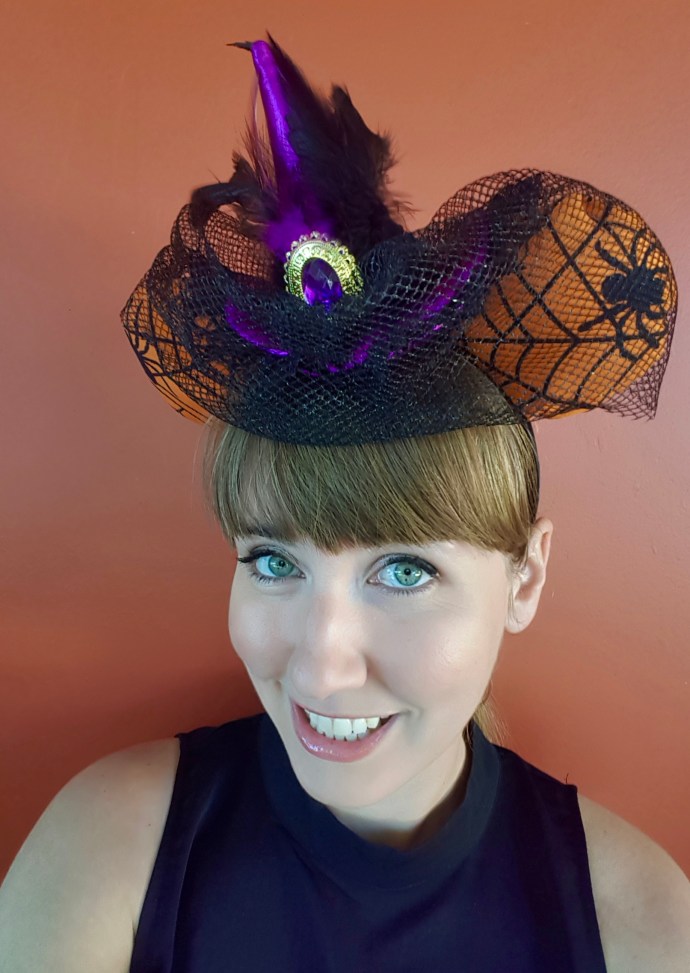
Halloween is my favourite holiday. I love the decorations, Hocus Pocus, carving pumpkins, and most of all – dressing up. It’s a magical holiday, so what better place to celebrate than at one of the most magical places on earth! Disney World is one of my favourite places to visit and I’ve always wanted to celebrate the most wonderful time of the year with the magic of the park. So this year, I headed to Magic Kingdom for Mickey’s Not-So-Scary Halloween Party to celebrate Halloween with Mickey and the gang.
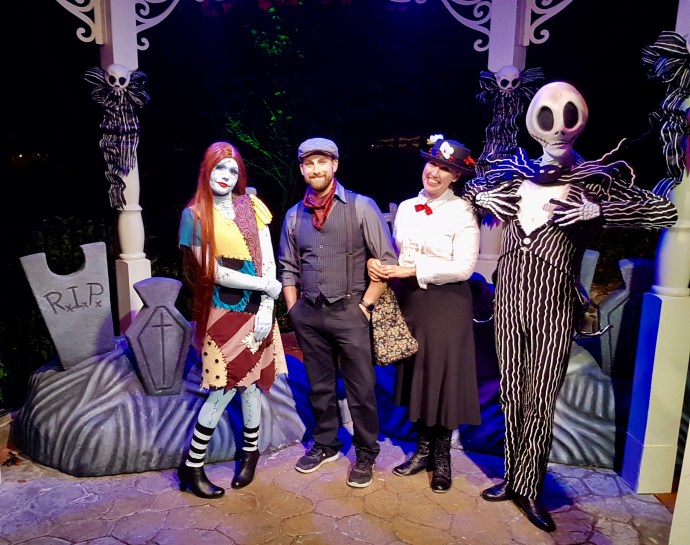
The event is a separate ticketed event that runs certain evenings from the end of August until November 1st. Once you get your wristband, you are given a bag to go trick or treating!here were Treat locations set all over the park where you could go to get candy. There were also lots of characters out for photos and autographs, including those who aren’t normally out like Jack and Sally from The Nightmare Before Christmas
Mickey’s Not-So Scary Halloween Party!
Trick or Treating around Magic Kingdom!
There were Treat locations set all over the park where you could go to get candy. There are also lot’s of characters out for photos and autographs, including those who aren’t normally out like Jack and Sally from The Nightmare Before Christmas.
In Tomorrowland, you can join Mike Wazowski, Sulley and Boo for a Monstrous Scream-O-Ween Ball – a fun dance party with all your favourite songs.
Boo dancing at the Monstrous Scream-O-Ween Ball
Mike Wazowski dancing at the Monstrous Scream-O-Ween Ball
Not all of the rides are open, but there’s still a good selection for those wishing to enjoy them (including The Haunted Mansion, the perfect ride for this time of year!)
Graves at the Haunted Mansion
Singing Ghouls in the Haunted Mansion
Haunted Mansion
Mickey’s “Boo-To-You” Halloween Parade makes its way through the park at 9:15 and 11:15, filled with Mickey and friends as well as a number of villains.
One of the main reasons I wanted to go was to see The Sanderson Sisters in the Hocus Pocus Villain Spelltacular! The sisters were back for the night to brew a potion to create the most Villainous Halloween Party the Kingdom has ever seen. They were joined by a variety of Disney’s greatest villains and ended with their iconic song.
As always, there was a great fireworks show over Cinderella Castle. This one had a Halloween theme. “Happy Hallowishes” invites you to join the 999 happy haunts for an evening of fun!
It was a great night at the park with all of Magic Kingdom decorated for Halloween, but one of my very favourite parts was getting to dress up in costume and seeing everyone else dressed up, wandering around this magical place!
Mary Poppins at Magic Kingdom
Bert and Mary
Mary Poppins at Mickey’s Not-So-Scary Halloween Party
Happy Halloween!
I loved dressing up at the park
Mickey Wreaths
Pumpkin Scarecrow
The Nightmare Before Christmas photo area
Mary Poppins meets Ariel
The Headless Horseman
Pumpkins at Town Hall
Main Street U.S.A. all decorated for Halloween
Walt and Mickey
Jafar was out with the other villains for Halloween
Entrance to Magic Kingdom
Magic Kingdom at Halloween
Mickey’s Not-So Scary Halloween Party!
Disney Springs was also decorated for Halloween
Halloween at Disney Springs
Poison Apple cake pop
Shopped ’til I dropped
Info
Mickey’s Not-So-Scary Halloween Party runs from 7pm-12am on certain dates during the Halloween season, but you can typically start entering the park as of 4pm. Just be sure to get your wristband as only party guests are allowed in the park after 7pm.
Be sure to check out the costume guidelines on the website before planning what character you want to be.
Treat bags are fairly small, so if you want to hit all the locations, you might want to bring a bigger bag or buy one at the park.
The character lines are LONG, especially Jack and Sally. They are out before the party officially starts, so you can get in line early or try later at night.
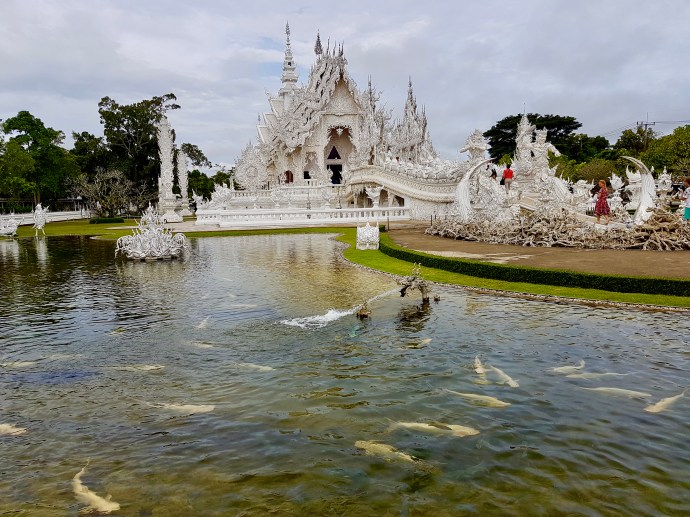
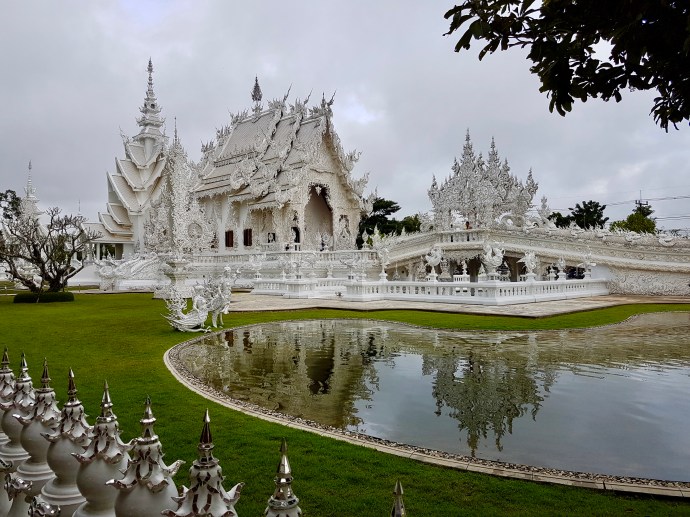
Wat Rong Khun, better known as the “White Temple,” is one of the most recognizable temples in Thailand. This unique temple, located just outside the city of Chiang Rai, is one of the most visited attractions in the area. It’s not hard to see why.
The temple looks like something out of a fairy tale. The entire structure is a brilliant white colour with pieces of glass in the plaster, sparkling in the sun. It almost doesn’t look real. It’s more like a mirage you’ve stumbled upon – a beautiful mirage with a glistening pool of water below, filled with Koi swimming around.
Last year, we made our way to Wat Rong Khun just before Halloween. With all the demons and villains that met us as we entered, coming out of the ground and hanging from trees, it was the perfect time of year to visit.
Character heads
A variety of character heads
Predator lurking at the entrance
Villains and Superheros
Wat Rong Khun was designed by Chalermchai Kositpipat, a famous Thai visual artist. He chose white to signify the purity of the Buddha. The pieces of glass throughout it symbolizes the Buddha’s wisdom and Buddhist teachings. The temple is filled with Buddhist symbolism.
To enter the main chapel (ubosot), you cross a narrow bridge over a pool of hands and faces reaching up, trying to claw their way back to the surface, representing suffering souls in Hell.
Hands clawing their way to the surface at Wat Rong Khun
Skulls and hands reaching up from Hell
Reaching up from Hell
The pathway symbolizes the way to happiness by overcoming worldly things like temptation, greed and desire.
Guarding the path to the temple and casting those not worthy to Hell.
“Gate to Heaven” guarded by representations of Death and Rahu, who decide over men’s fate
After crossing the bridge you arrive at the “Gate of Heaven,” guarded by two creatures representing Death and Rahu, who decide over men’s fate. At the end of the bridge, you reach the ubosot where there are several Buddha images in meditation.
Heading the main chapel or ubosot
Beautiful statue at the entrance to the ubosot
Side view of the main temple, the ubosot
Once you make your way out of the main temple and leave the fenced in grounds, you come to an ornately decorated golden building. This one represents the body while the ubosot represents the mind. The building was created in a gold colour to symbolize the focus on worldly desires and money.
Around the temple grounds are several concrete “trees.” Hanging from each of them are thousands of ornaments or ‘Lucky Leaves.’ For 30 Baht, you can add one with your name and a message written on it for luck.
Tree filled with lucky leaves
Thousands of lucky leaves
You can purchase a leaf for 30 baht and add it to the collection on the trees
Hanging my lucky leaf on the tree
You can also make a wish by throwing a few coins into the wishing well.
Ornately decorated gazebo covering the wishing well.
Make a wish at the temple’s wishing well
Most of Thailand’s Buddhist temples have centuries of history. By comparison, Wat Rong Khun is very young as construction on it only began in 1997.
Then, on May 5, 2014, a strong earthquake hit Chiang Rai and Wat Rong Khun was damaged. The designer, Chalermchai Kositpipat, decided to restore and further expand the temple.
At this point, the temple is not finished. It’s stated that eventually there will be nine buildings on site.
If you find yourself in Northern Thailand, Wat Rong Khun is a must-see. Just get there early to avoid the crowds.
Unique White Temple
Golden statue
Monsters lurking below
Cow being dragged below
Demon peering up from Hell
Skeleton head pylon
Info
The temple is located about 13km south of Chiang Rai
The temple opens daily from 8 am until 6 pm.
The temple gets very busy with both tourists and locals, so plan to arrive early.
Admission is 50 Thai Baht per person.
Dress respectfully. No revealing clothes. Shoes must be removed before entering a temple building.
Taking photos is not allowed in the main building.
Souvenirs, coffee and snacks are available on the grounds.
For many, Paris, the ‘city of love,’ conjures images of romance, architecture and art. But once you’ve had your fill of the Mona Lisa and sipping champagne beneath the Eiffel Tower, a different side of Paris awaits. For this, you need to head down – about 20 metres below the city streets, where the catacombs wait.
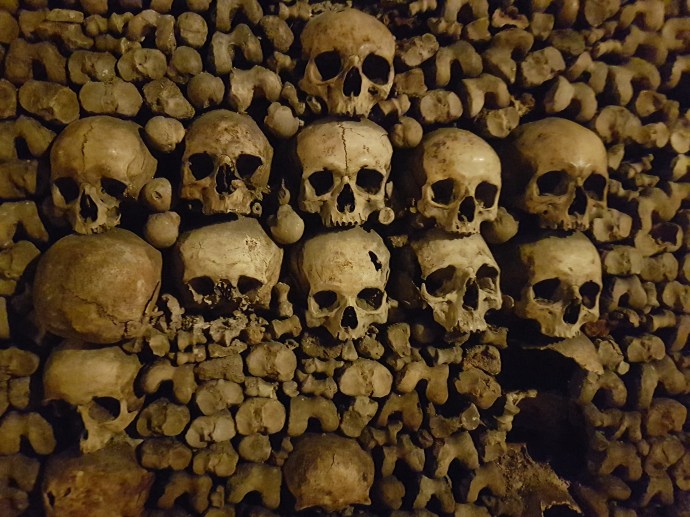
Located across the street from the Denfert-Rochereau station, is the entrance to the Catacombs of Paris. Here in the underground ossuaries lie the remains of more than six million people. The bones are laid in a small part of a tunnel network built to consolidate Paris’ ancient stone mines.
During the late 1700’s, many of the city’s cemeteries had reached capacity. Some, including the Saints-Innocents (Cemetery of the Innocents) had gone beyond capacity. Here, people were buried in mass graves, piled one on top of the other until it became a source of infection for those nearby. In late 1785, the Council of the State closed the cemetery and decided to remove its contents.
This transfer began in 1786 after the blessing and consecration of the site and continued until 1788. The moving of remains took place at nightfall, where a procession of priests sang the service for the dead along the route taken by the carts loaded with bones and covered by a black veil.
Until 1814, this site received the remains from all the cemeteries of Paris.
Since their creation, the Catacombs of Paris became a curiosity for more privileged Parisians. Public visits began after its renovation into a proper ossuary and the 1814 – 1815 war.
In the beginning, visits were only granted a few times a year with the permission of an authorized mine inspector. This turned into permission from any mine overseer, but as the number of visitors grew, it returned to its “permission only” rule in 1830. Then, in 1833, they were closed completely as the Church opposed the public being exposed to human remains on display. By 1850, the Catacombs were once again open, but only for four visits a year. Public demand led to the government allowing monthly visits as of 1867. This turned into bi-weekly visits on the first and third Saturday of each month in 1874 and then weekly visits during the 1878, 1889 and 1900 World’s Fair Expositions.
Tunnel leading into the Catacombs
Catacombs of Paris
Today, they are open for daily visits, so head over and spend an hour wandering through the 2kms of bone-filled tunnels below the streets of Paris!
Some of the bones were made into shapes, like this heart of skulls
Millions of bones found in the underground ossuary of Paris
Walking through the Catacombs of Paris
The underground tunnels, leading in and out of the Catacombs
A wide pillar of bones in the Catacombs
A wall of femurs and skulls
Skull patterns made with the bones in the Catacombs of Paris
One of over a million skulls found in the Catacombs of Paris
Shocked by how tall the walls of bones are down here.
The Catacombs were built in old mines under the streets of Paris.
Skulls in the Paris Catacombs
Plan your tour
The Catacombs are open daily from 10am-8:30pm (except Mondays and holidays)
Admission is granted in time slots, with the last admission at 7:30pm
Located across the street from Denfert-Rochereau Station
Métro et RER B : Denfert-Rochereau
Bus : 38, 68
Parking : Boulevard Saint-Jacques
Visitor numbers are restricted to 200 at any time. Admission may be delayed for a short time during busy periods. Be prepared to wait. (We did for almost 2 hours).
Distance covered: 1.5 km
Duration of the tour: 45 minutes
No toilet or cloakroom facilities available
Newfoundland was the only province I hadn’t been to, so for Canada’s 150th, I figured it was time to visit the last province to join Canada.
With only a couple of days, I spent my time in St. John’s trying to see as much of the city as I could! After getting screeched-in, exploring Quidi Vidi, visiting the two local craft breweries and wandering around enjoying the colourful “Jelly Bean” houses, I had checked a lot of ‘must-do’s’ off my list.
Two remaining were visiting Signal Hill and taking a boat ride out into the Atlantic Ocean in search of whales.
Enter a caption
Signal Hill is one of the most famous landmarks in St. John’s. It’s part of the capital’s historic past, offering a beautiful view of St. John’s and the Atlantic Ocean, as well as great hiking trails along the coastline.
Heading up Signal Hill
Hiking trails around Signal Hill
View of St. John’s Harbour from Signal Hill
Signal Hill is significant as it was the site of St. John’s harbour defences from the 17th century to the Second World War as well as being the birthplace of modern communications. It was here that Guglielmo Marconi received the world’s first transatlantic wireless signal in 1901. It’s a good hike up the hill, so be sure to have proper footwear. Part way up is a visitor’s centre, which this year hosted a huge Canada 150 sign to pose with.
C for Crystal
Canada 150, with Cabot Tower in the background.
There was also a statue of the mascots- a Newfoundland and a Labrador dog!
The view from the top was great. On one side, you could look back over St. John’s harbour and from the other, straight out for miles into the Atlantic Ocean.
View of St. John’s Harbour from Signal Hill
Panorama from Signal Hill
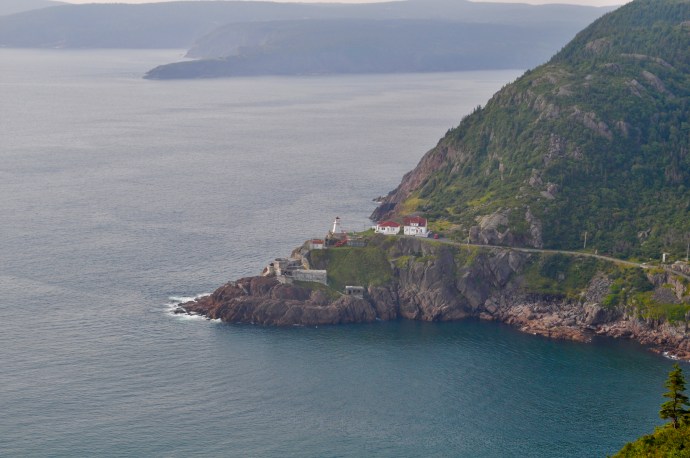
You could also see where it narrows into the harbour, with Fort Amherst Lighthouse standing guard at the entrance.
At the top, you could climb up Cabot Tower, which was built as a monument to John Cabot’s 1497 voyage to North America and Queen Victoria’s Diamond Jubilee. Throughout the tower, as you made your way to each level up steep, winding stairs, you could read all about the history of the tower, the history of communications, and the historic first transatlantic signal that happened right here. The view from the top of the tower was even more incredible.
View of the harbour from the top of Cabot Tower
View out the window from the top of Cabot Tower
I made my way back down and continued to wander around Signal Hill. As I was at the top, looking out over the Atlantic Ocean, a thick fog started to roll in until you could barely see 10 feet in front of you.
Fog rolling in
Fog moving into the harbour
Cannons on Signal Hill
I decided not to head out on all the hiking trails since the beautiful view had vanished. Instead, I made my way down to the harbour to catch a boat ride out into the Atlantic.
It was the wrong time of year for icebergs, but I took an ocean cruise with Iceberg Quest, hoping to find some whales. We set out of St. John’s harbour in the thick fog, which didn’t seem to want to let up. Our guide told us all about what we would have been seeing if the fog wasn’t blocking our view, and we made our way out of the harbour into the Atlantic Ocean.
Sailing by the sea caves
Sea caves near St.John’s, Newfoundland.
Fog at the mouth of the harbour
We couldn’t see much, but had an enjoyable cruise listening to Great Big Sea. Just as we were heading past the sea caves on our way to Cape Spear, the fog began to lift!
We passed by the famous lighthouse on Cape Spear, the most easterly point of North America.
The lighthouse on Cape Spear
Cape Spear
Sailing by Cape Spear, the most easterly point of North America
(Another spot I missed visiting on this trip, but seeing it was still cool!)
We saw tons of puffins flying and swimming around, but sadly no whales on this trip.
By the time we were on our way back, the fog had lifted and you could see the mouth of the harbour, Fort Amherst from the water and all the colourful houses greeted you as you entered St. John’s harbour.
The mouth of St. John’s Harbour
Fort Amherst lighthouse
Sailing past Fort Amherst
Colourful houses in St John’s Harbour
Boats in St. John’s Harbour
While I may have checked out most of my ‘must-do’s’ in St. John’s on this short trip, I quickly added many more and realized I’d just have to come back to this beautiful province for more exploring soon!
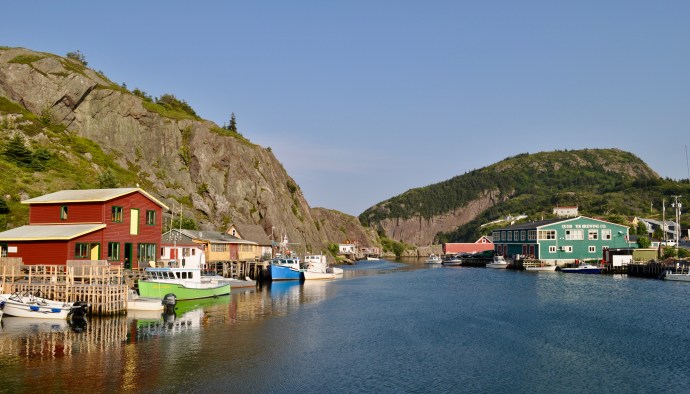
Not far from downtown St. John’s is the picturesque village of Quidi Vidi. A historic fishing village located in Quidi Vidi Harbour, also known as the Gut, it’s just off Quidi Vidi Lake, where the annual St. John’s Regatta takes place.
Pronunciation seems to vary, even amongst those who have lived there all their lives, but the most common is “Kiddy Viddy.”
Quidi Vidi Harbour
Boats docked in the harbour
Fishing shacks in ‘The Gut’
The Quidi Vidi Village Plantation
Enjoying my wander around Quidi Vidi
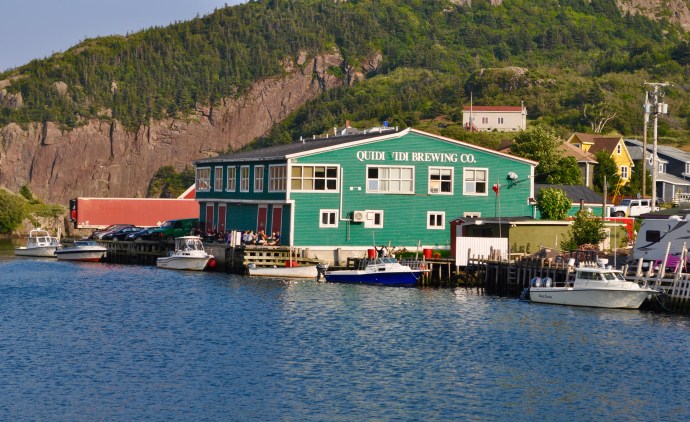
The village of Quidi Vidi was used after World War II for the construction of the United States’ Air Force Base. Today, it’s a great spot to go for a hike around the lake, check out artisans at the Quidi Vidi Village Plantation and walk around the harbour to Quidi Vidi Brewery. After a tour, you can sit out back by the water and catch a glimpse of the Atlantic Ocean from inside the Gut.
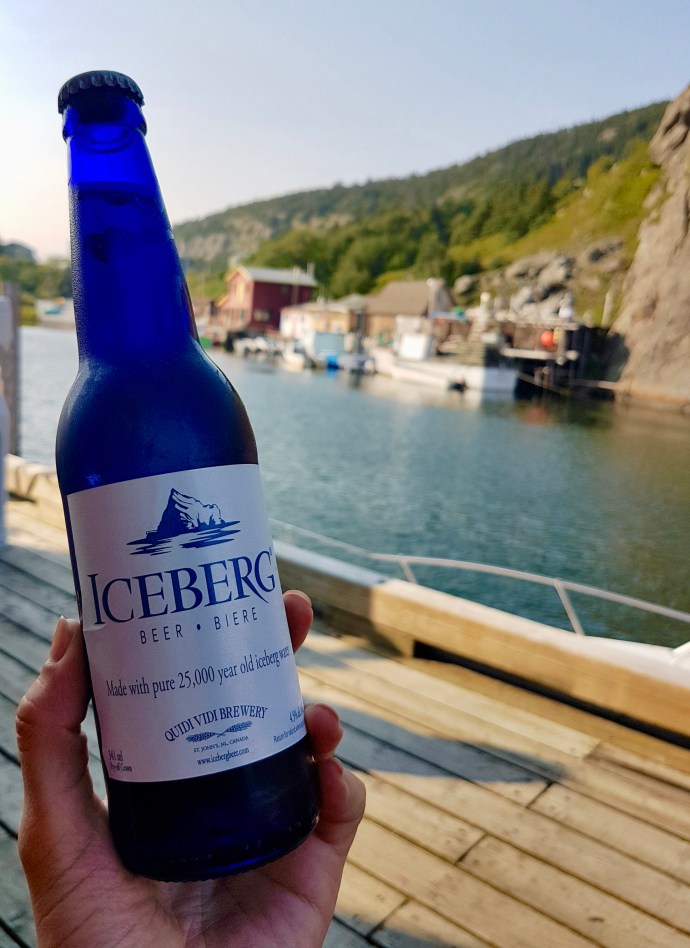
Quidi Vidi Brewery offers tours and tastings. For $10, you can learn the history of the brewery and the beers and taste five of them, including their popular Iceberg beer. It’s made from the water of 20,000-year-old icebergs and bottled in a shiny blue bottle. You can then take a tour of the facility they are quickly outgrowing!
Taking a tour of the Quidi Vidi Brewery
Enjoying the tasting part of the tour
Sampling the Quidi Vidi Light
Local drama professor posing for an ad campaign!
So head to Quidi Vidi, grab an Iceberg beer and enjoy a peaceful afternoon at the harbour.
*For those looking to try craft breweries in the city, after stopping at Quidi Vidi, head to Yellow Belly Brewing downtown St. John’s. (The seafood chowder is delicious!)
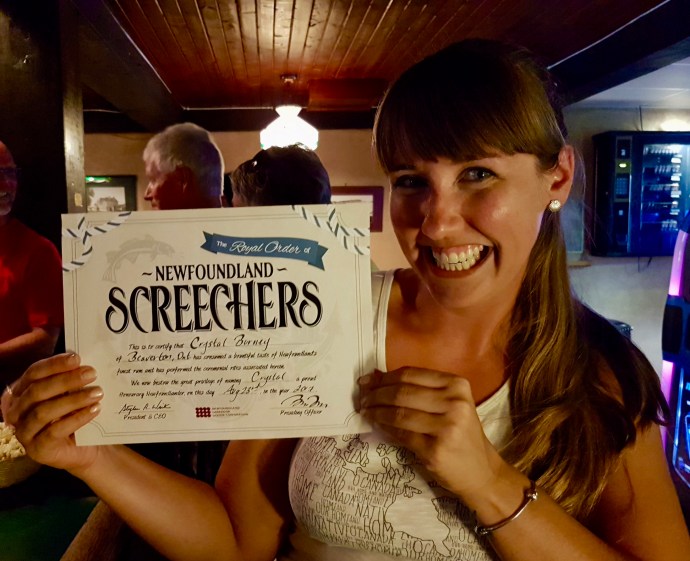
You can’t go to Newfoundland without getting screeched in. (Well you can, but why would you give up the opportunity of becoming an honourary Newfoundlander?)
This was a chance I wasn’t going to miss and was told by a native of St. John’s (thanks Phill!) that the best place to go was Christian’s. So I signed up and sat at the bar with my Quidi Vidi 1892 beer, waiting for the ceremony to begin.
A Screech-In Ceremony has to be conducted by a native Newfoundlander. Ours entered with his paddle, wearing his Sou’wester. He did a little speech about Newfoundland and being a Newfoundlander and asked us all if we were ready to become honourary Newfoundlanders, to which we all responded with a firm “YES B’Y!”
He then asked us all our names and where we came from before handing us a piece of “Newfie Steak” (fried bologna) and continuing on with the ceremony, where we had a shot of screech (Jamaican Rum) and kissed a codfish.
Before we were handed our certificates stating that we were now officially honourary Newfoundlanders, though, we had to recite an oath. When it was my turn, he asked, “Are ye a screecher?” I proudly replied, “Deed I is me ol’ cock, and long may yer big jib draw!”
The brightly coloured houses known as “Jelly Bean Row” have become one of the most popular photos used in St. John’s, Newfoundland tourism, but if you come looking for a specific “row” of houses, you’ll be surprised to learn that these brightly coloured homes can be found all over the city.
Ranging from vibrant to pastel shades, a rainbow of colour hits you as you wander up and down St. John’s hilly streets. Many homes and shops are enhanced with “gingerbread” trims, in an equally bright, contrasting colour.
These houses were constructed as temporary accommodation after the Great Fire of 1892, but many remained as permanent residences.
So where did this colourful tradition come from?
Some say it started with the fishermen who painted their homes bright so they could find their way home in the fog (or after having a few too many drinks at the pub). It was also cheaper to buy large amounts of one colour of paint, so they’d paint their boats and their homes the same striking colour.
As fun as those stories are, the majority of the Jelly Bean houses appeared in the late 1970s as a way to inject new life into a rundown-looking city.
And they have certainly done their job. Walk along any street in St. John’s and you’ll come across a brightly coloured home (or a row of them!) Many even have Jelly Bean Row mailboxes posted out front, adding just one more splash of light to these already sunny homes!
I still remember the shocked feeling I had 16 years ago today when my English teacher wheeled in a television for my class to watch as the second plane crashed into the World Trade Centre. The feelings of confusion as to why someone would deliberately harm so many innocent people mixed with the sadness for all those who were killed.
Fast forward 16 years and I still sit here with those same feelings, but one now stands out above the rest – the feeling of what those flight crew members must have been thinking in those final minutes before their plane crashed. Becoming a flight attendant added another level to my feeling of loss surrounding September 11th.
Over the past year, I have been completely obsessed with the musical “Come From Away,” and especially with the character of Beverley Bass, the first female American Airlines captain in history. She was one of the pilots who found themselves landing in Gander, Newfoundland after the American airspace was closed following the attacks on September 11th, 2001. She sings about her love of aviation, working her way up as a female in a male-dominated profession, and how she felt that day learning that someone took the thing she loved most and turned it into a weapon:
“When suddenly someone on air to air traffic says
At 8:46 there’s been a terrorist action”
And the one thing I loved more than anything was used as the bomb
Suddenly I’m in a hotel
Suddenly something has died
Suddenly there’s something in between me and the sky”
Me and the Sky- Jen Colella, Come From Away (short version)
That feeling of having something you love being used in such a horrific way brings me to tears every time I listen to this song.
The musical is based on true accounts of the days that followed September 11th, when 38 planes bound for the United States were grounded in Gander, Newfoundland.
There is also a book, “The Day the World Came to Town- 9/11 in Gander, Newfoundland”, that shares stories from passengers, crew and the townspeople who generously dropped everything and opened their doors to the “plane people” who arrived in their small town.
On a flight this summer, I found myself stopping in Gander. Looking out at the small airport, it was hard to imagine 38 planes and 6,595 passengers and crew members arriving here, in a town with around 10,000 living in it.
‘You are here at the start of a moment on the edge of the world where the river meets the sea. Here on the edge of the Atlantic on an island in between there and here’
In a time of terror around the world, these Newfoundlanders did everything they could to make their unexpected guests feel safe. Both the musical and the book share stories of love, compassion and the unselfish desire to help those in need.

 While in Northern Thailand, what better way to travel from one place to another than by traditional long boat?


 Halloween is my favourite holiday. I love the decorations, Hocus Pocus, carving pumpkins, and most of all – dressing up. It’s a magical holiday, so what better place to celebrate than at one of the most magical places on earth! Disney World is one of my favourite places to visit and I’ve always wanted to celebrate the most wonderful time of the year with the magic of the park. So this year, I headed to Magic Kingdom for Mickey’s Not-So-Scary Halloween Party to celebrate Halloween with Mickey and the gang.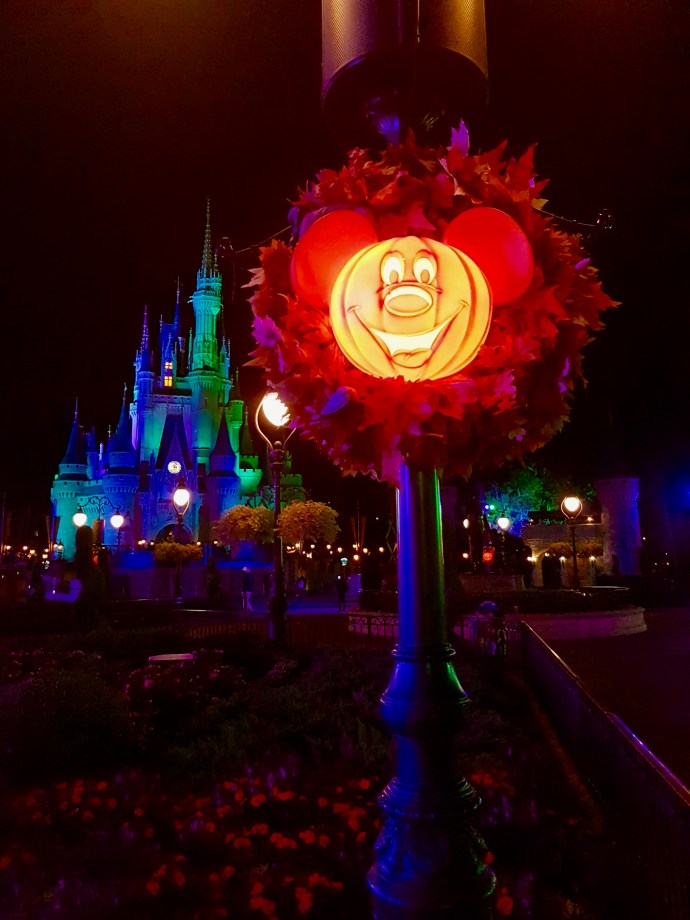




 It was a great night at the park with all of Magic Kingdom decorated for Halloween, but one of my very favourite parts was getting to dress up in costume and seeing everyone else dressed up, wandering around this magical place!


 Wat Rong Khun, better known as the “White Temple,” is one of the most recognizable temples in Thailand. This unique temple, located just outside the city of Chiang Rai, is one of the most visited attractions in the area. It’s not hard to see why.
 Last year, we made our way to Wat Rong Khun just before Halloween. With all the demons and villains that met us as we entered, coming out of the ground and hanging from trees, it was the perfect time of year to visit.


 To enter the main chapel (ubosot), you cross a narrow bridge over a pool of hands and faces reaching up, trying to claw their way back to the surface, representing suffering souls in Hell.


 If you find yourself in Northern Thailand, Wat Rong Khun is a must-see. Just get there early to avoid the crowds.




 Throughout the tower, as you made your way to each level up steep, winding stairs, you could read all about the history of the tower, the history of communications, and the historic first transatlantic signal that happened right here. The view from the top of the tower was even more incredible.


 It was the wrong time of year for icebergs, but I took an ocean cruise with Iceberg Quest, hoping to find some whales. We set out of St. John’s harbour in the thick fog, which didn’t seem to want to let up. Our guide told us all about what we would have been seeing if the fog wasn’t blocking our view, and we made our way out of the harbour into the Atlantic Ocean.


 We saw tons of puffins flying and swimming around, but sadly no whales on this trip.


 Pronunciation seems to vary, even amongst those who have lived there all their lives, but the most common is “Kiddy Viddy.”







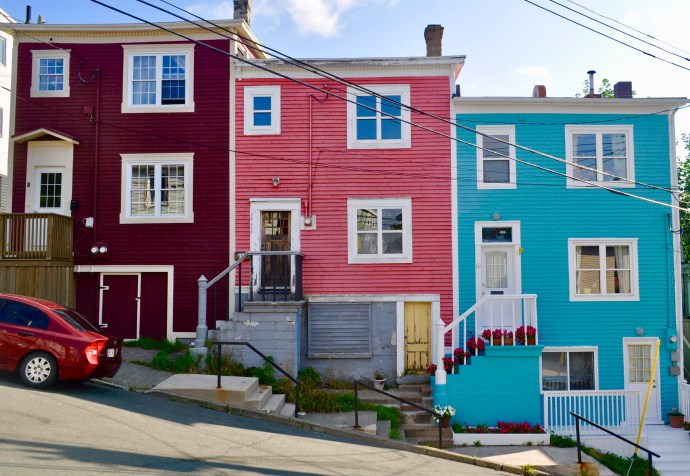 Ranging from vibrant to pastel shades, a rainbow of colour hits you as you wander up and down St. John’s hilly streets. Many homes and shops are enhanced with “gingerbread” trims, in an equally bright, contrasting colour.
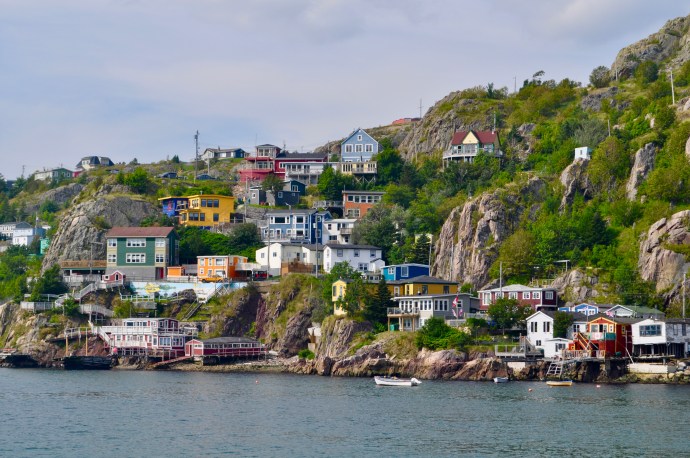
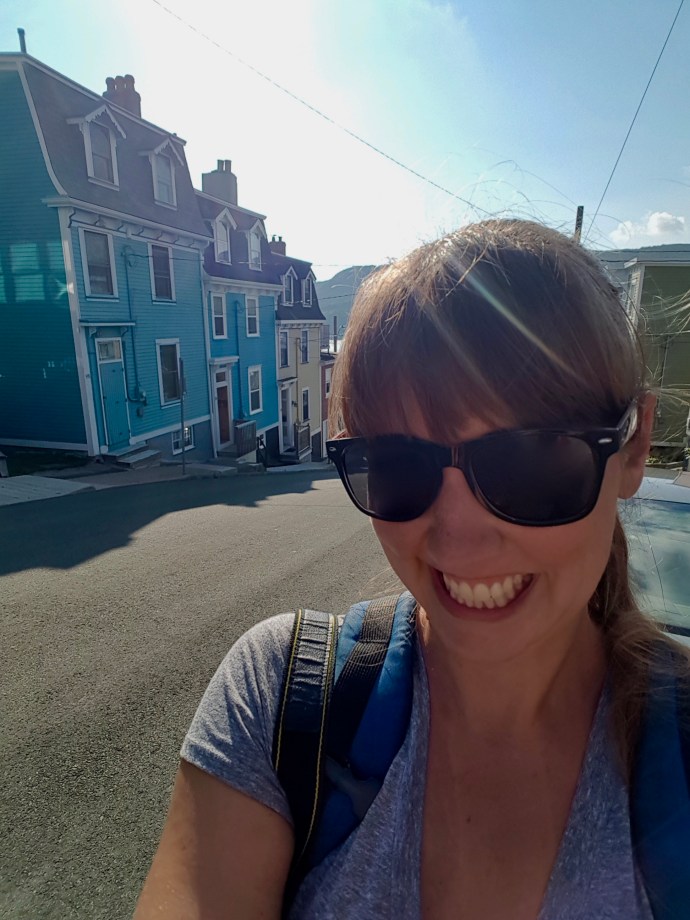 And they have certainly done their job. Walk along any street in St. John’s and you’ll come across a brightly coloured home (or a row of them!) Many even have Jelly Bean Row mailboxes posted out front, adding just one more splash of light to these already sunny homes!


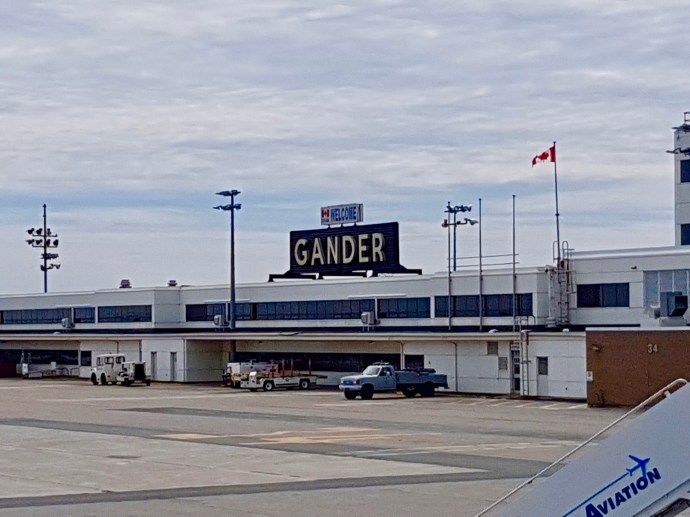 On a flight this summer, I found myself stopping in Gander. Looking out at the small airport, it was hard to imagine 38 planes and 6,595 passengers and crew members arriving here, in a town with around 10,000 living in it.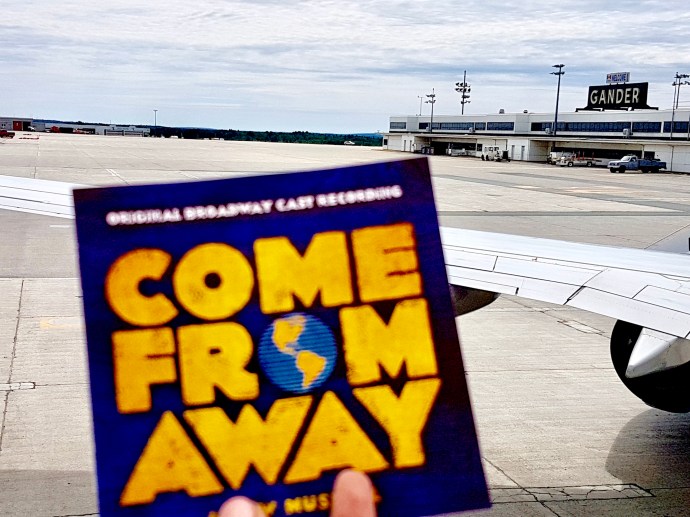

 Tales of a Travel Addict
Recent Comments