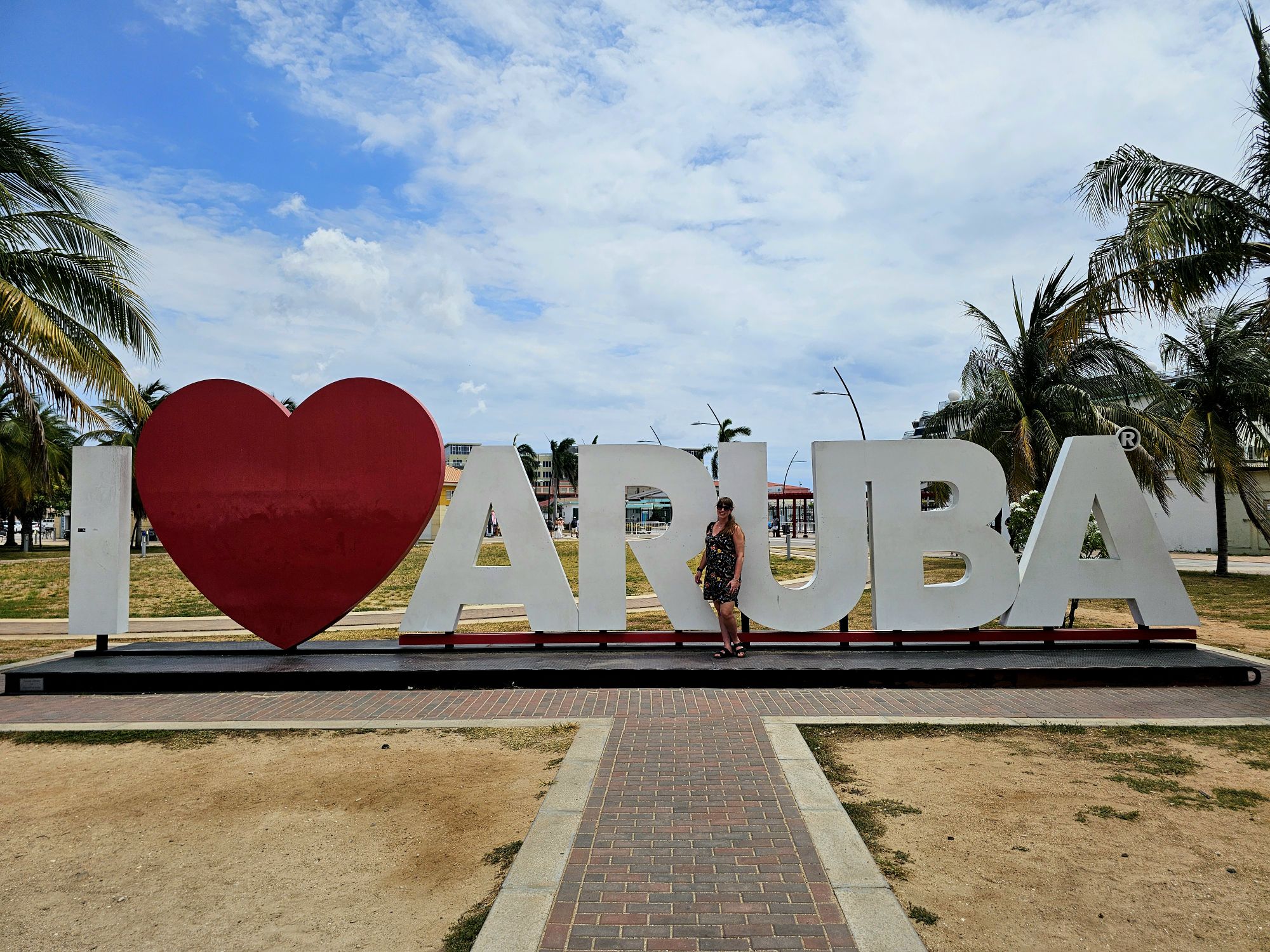
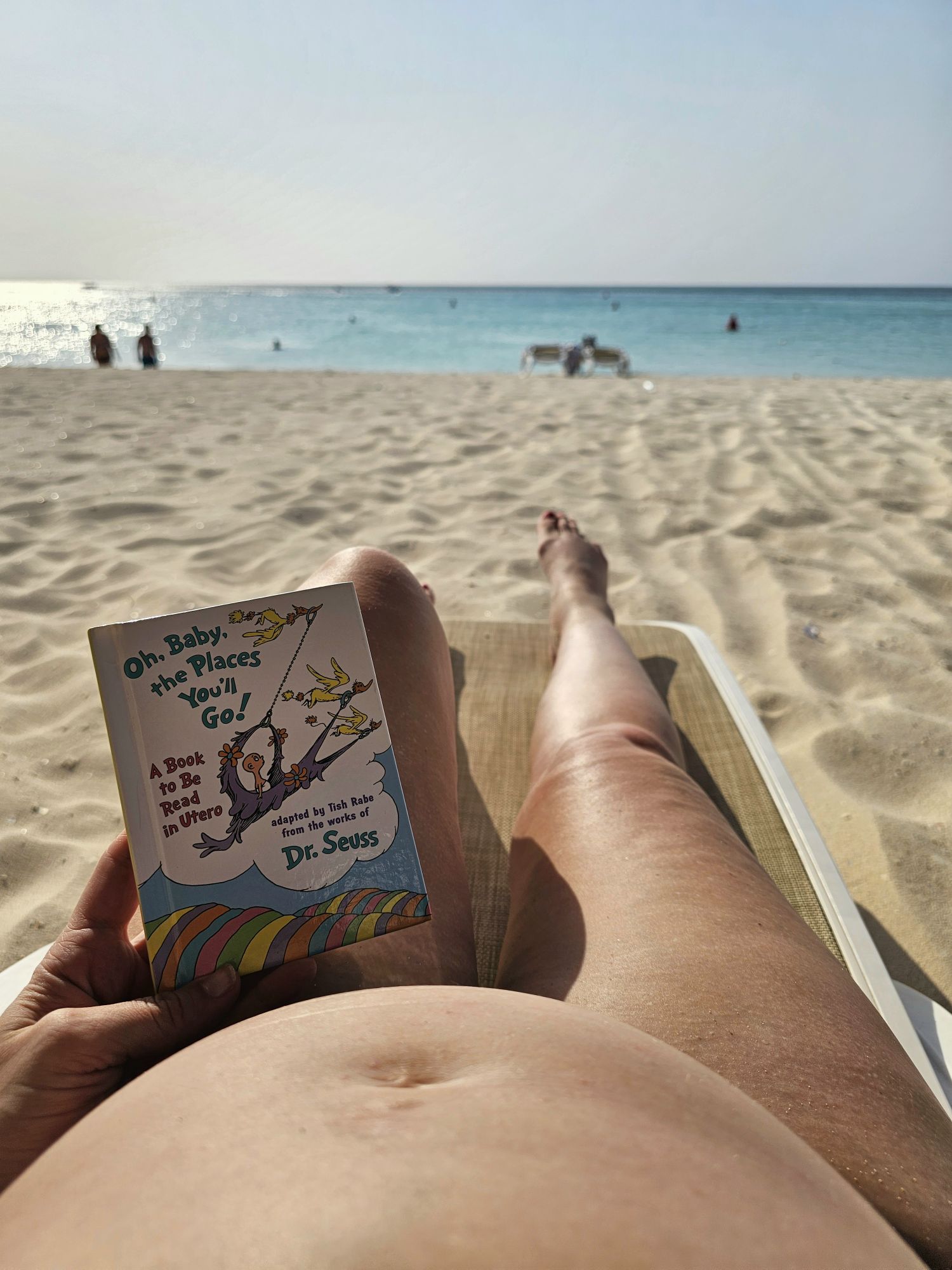
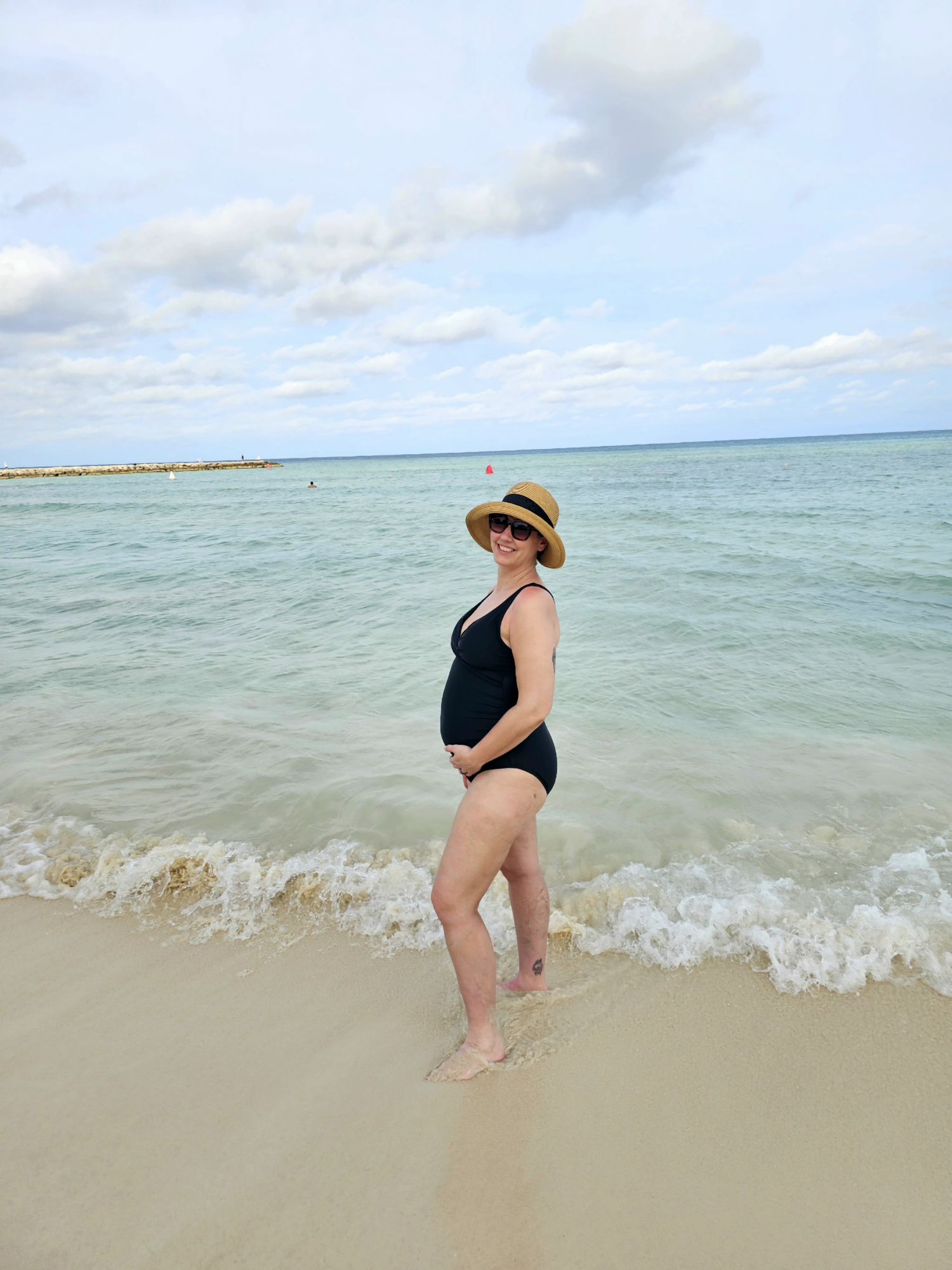
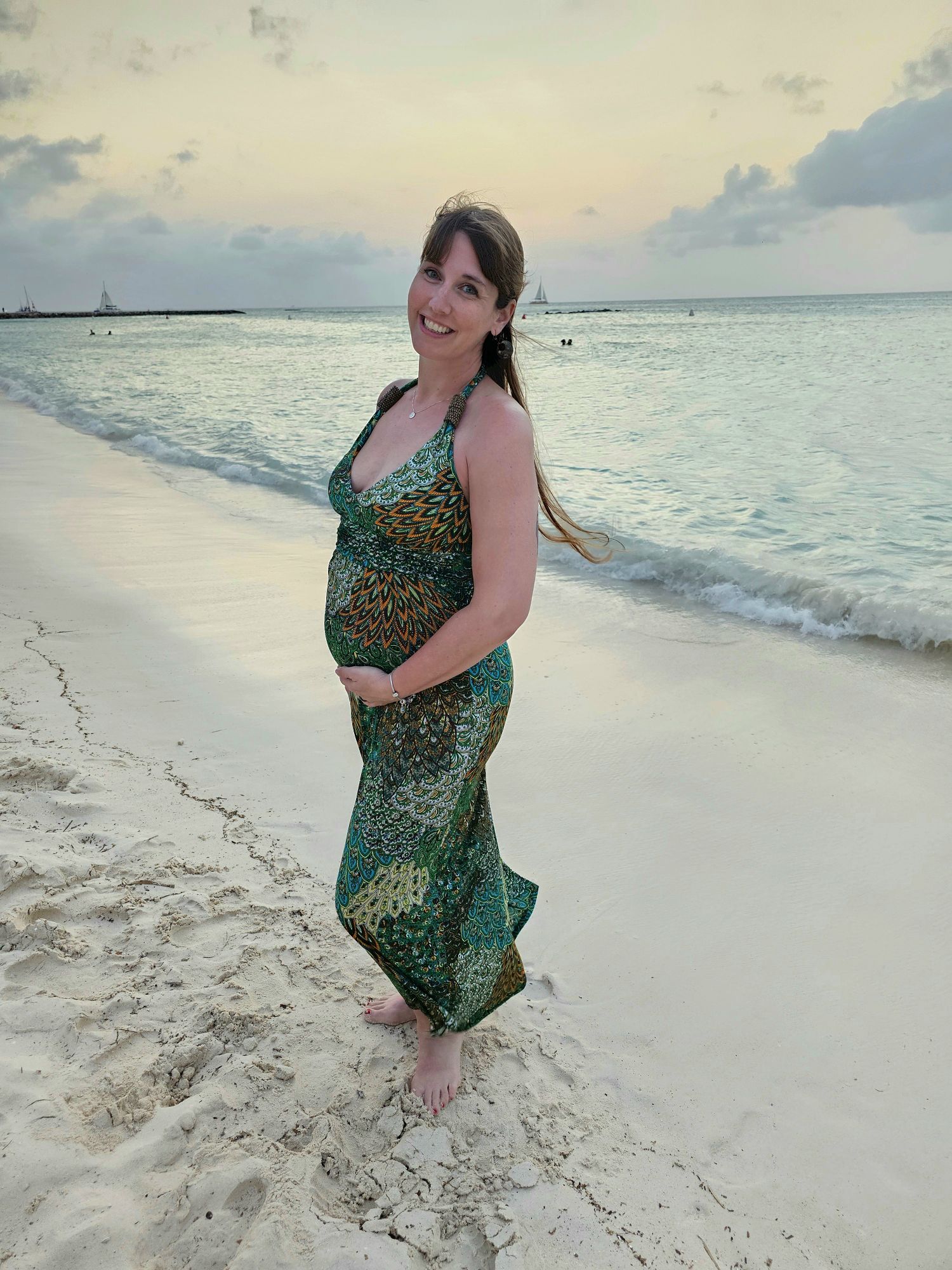
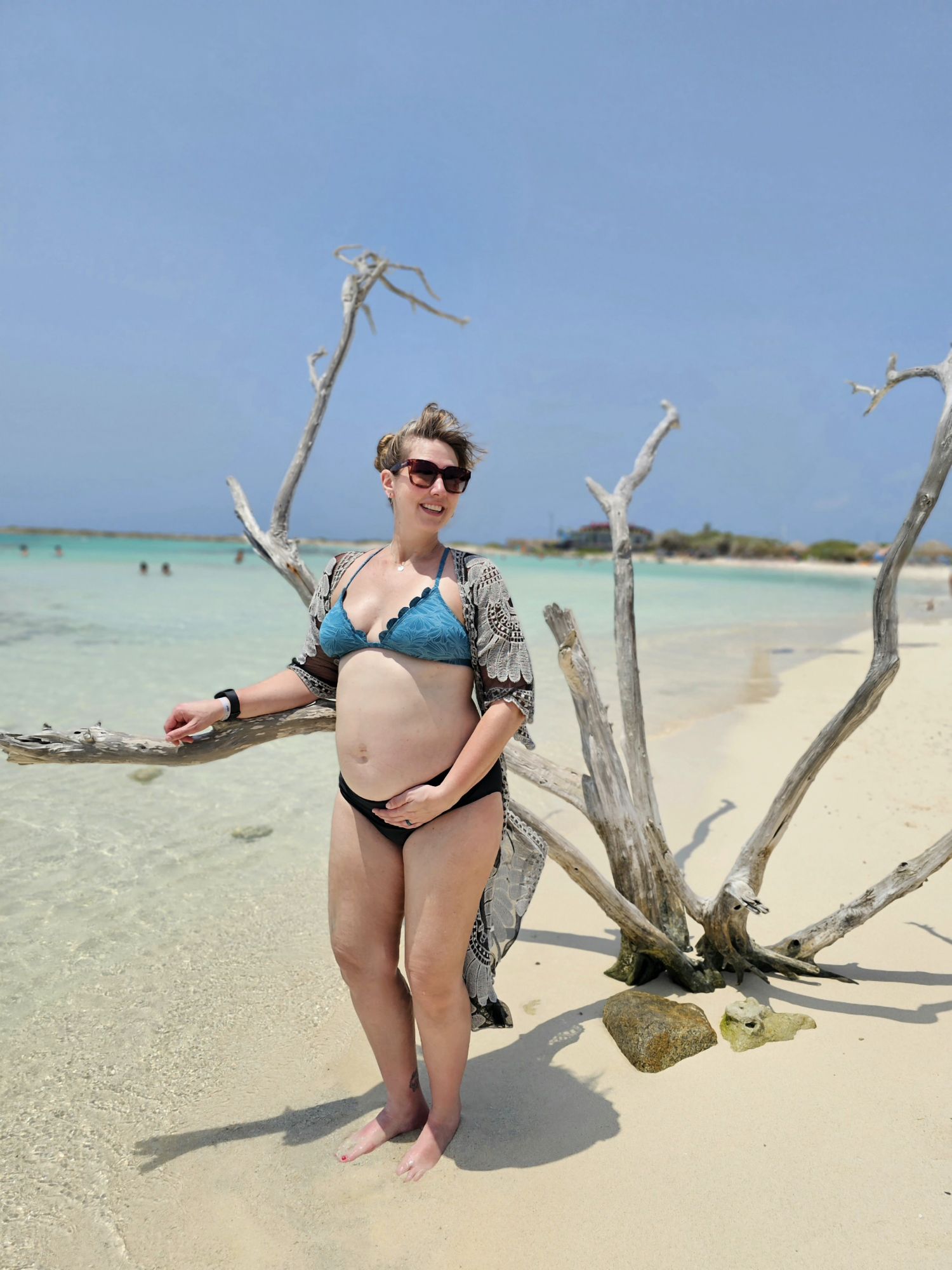
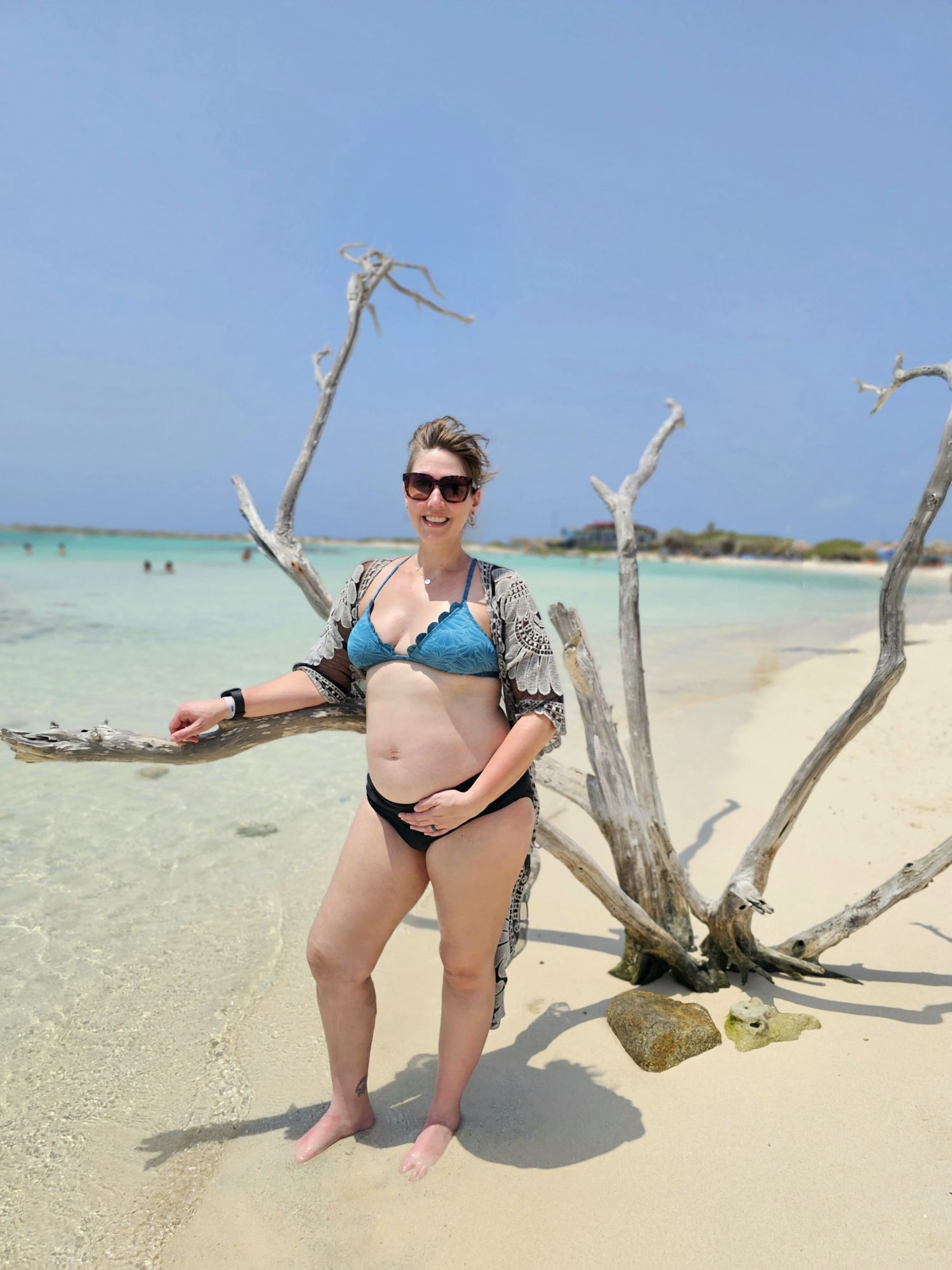
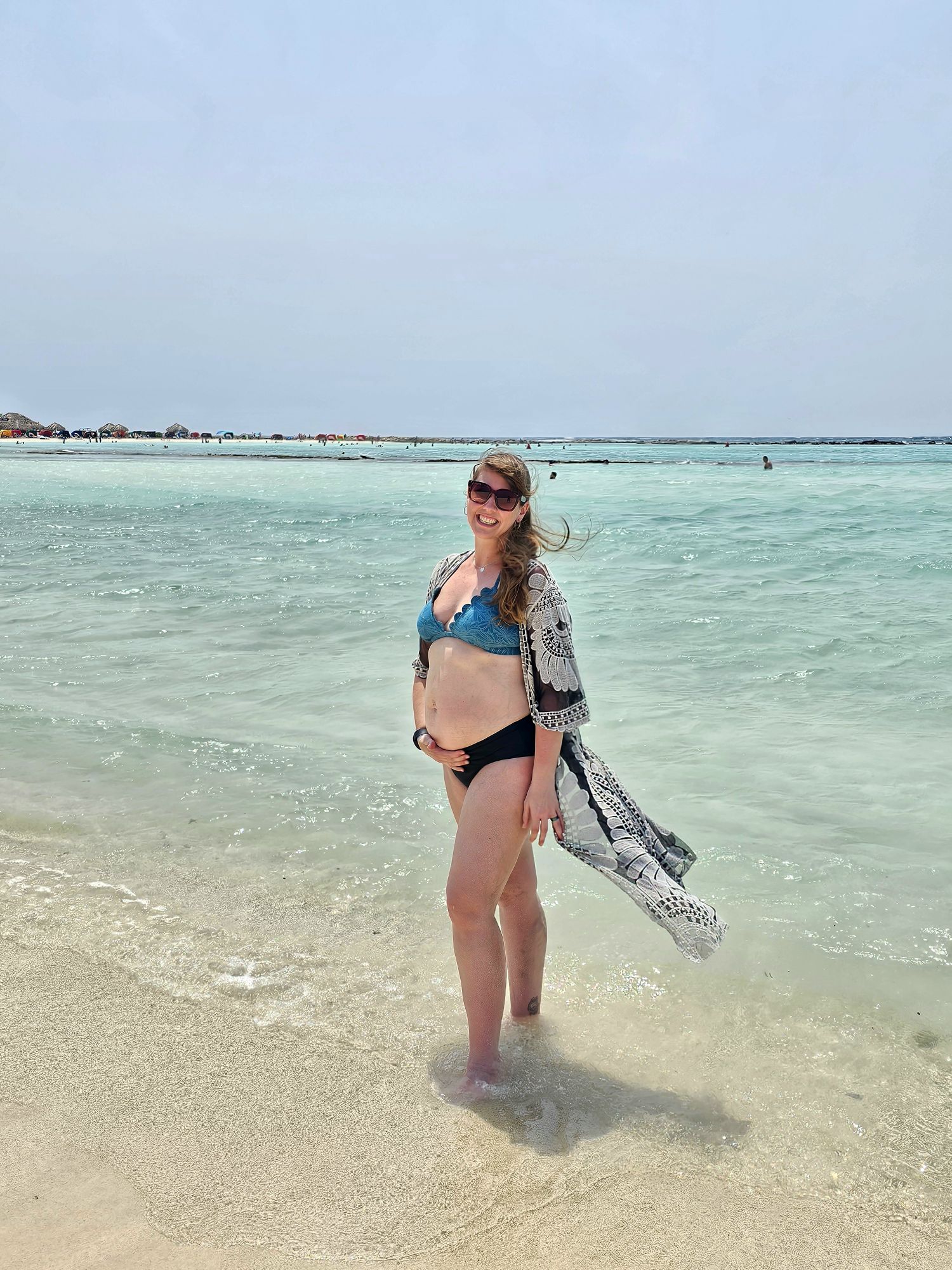
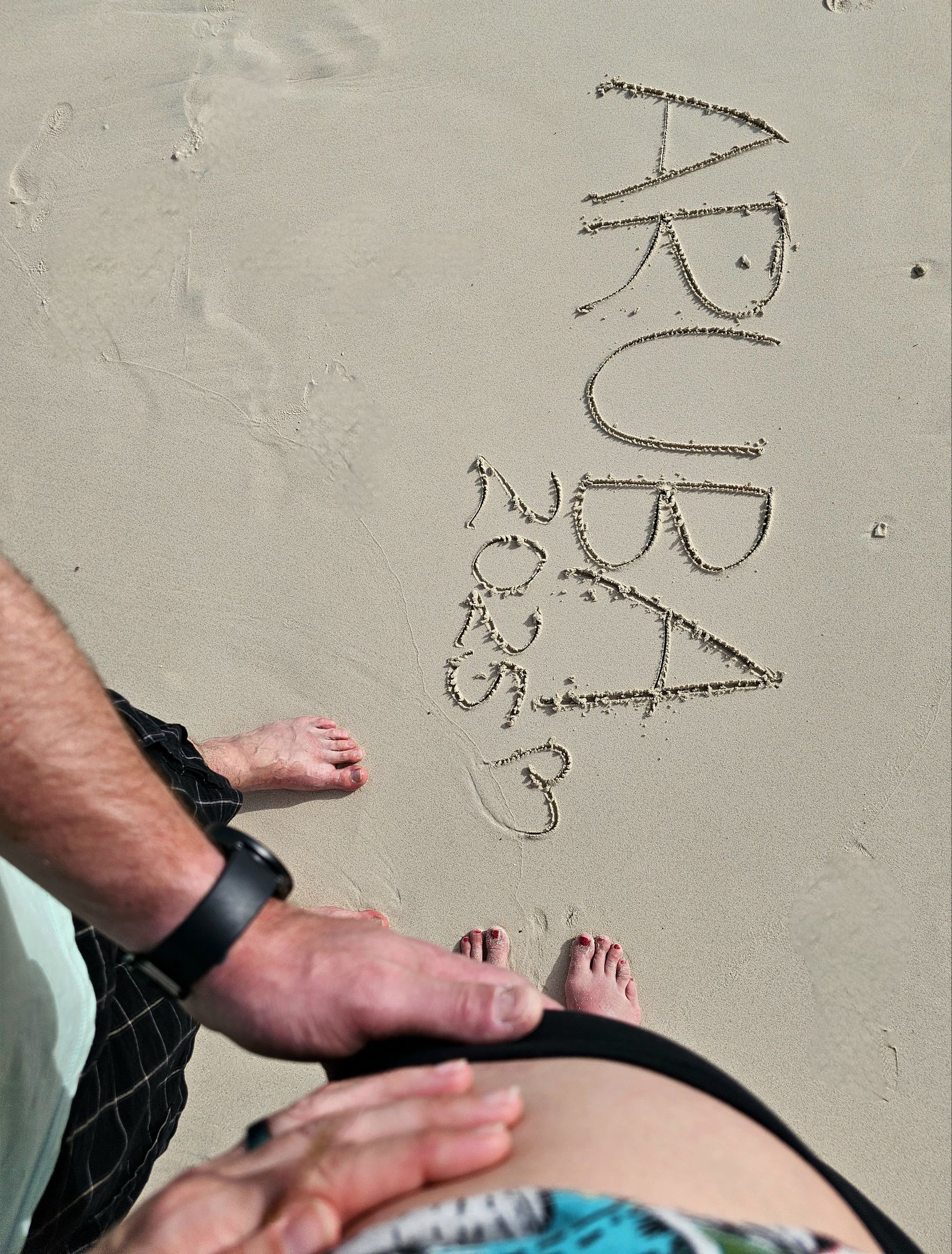
It’s crazy that it has already been a year since we had our ‘Babymoon’ in Aruba. We really wanted to have one last trip before our new adventure began and Aruba was the perfect place for it.
We had a wonderful week relaxing on the beach and exploring the island. More on that here
And of course, I couldn’t have a ‘Babymoon’ here without taking my baby bump to Baby Beach for some photos!
Are you expecting and looking for a great Caribbean destination for your Babymoon? If so, I highly recommend Aruba!
I spent sometime looking at healthcare and safety in different spots to find a place that would have what we needed if something went wrong and Aruba checked all the boxes. Of course, before travelling anywhere pregnant be sure you are cleared by your doctor, wear compression socks and drink lots of water on the plane, make sure you have travel insurance just incase…. and then go enjoy yourself!!
Nestled in the Southern Caribbean Sea, just off the shores of Venezuela, lies the beautiful island of Aruba. Part of the ABC Islands, along with Bonaire and Curacao, Aruba has something for everyone.
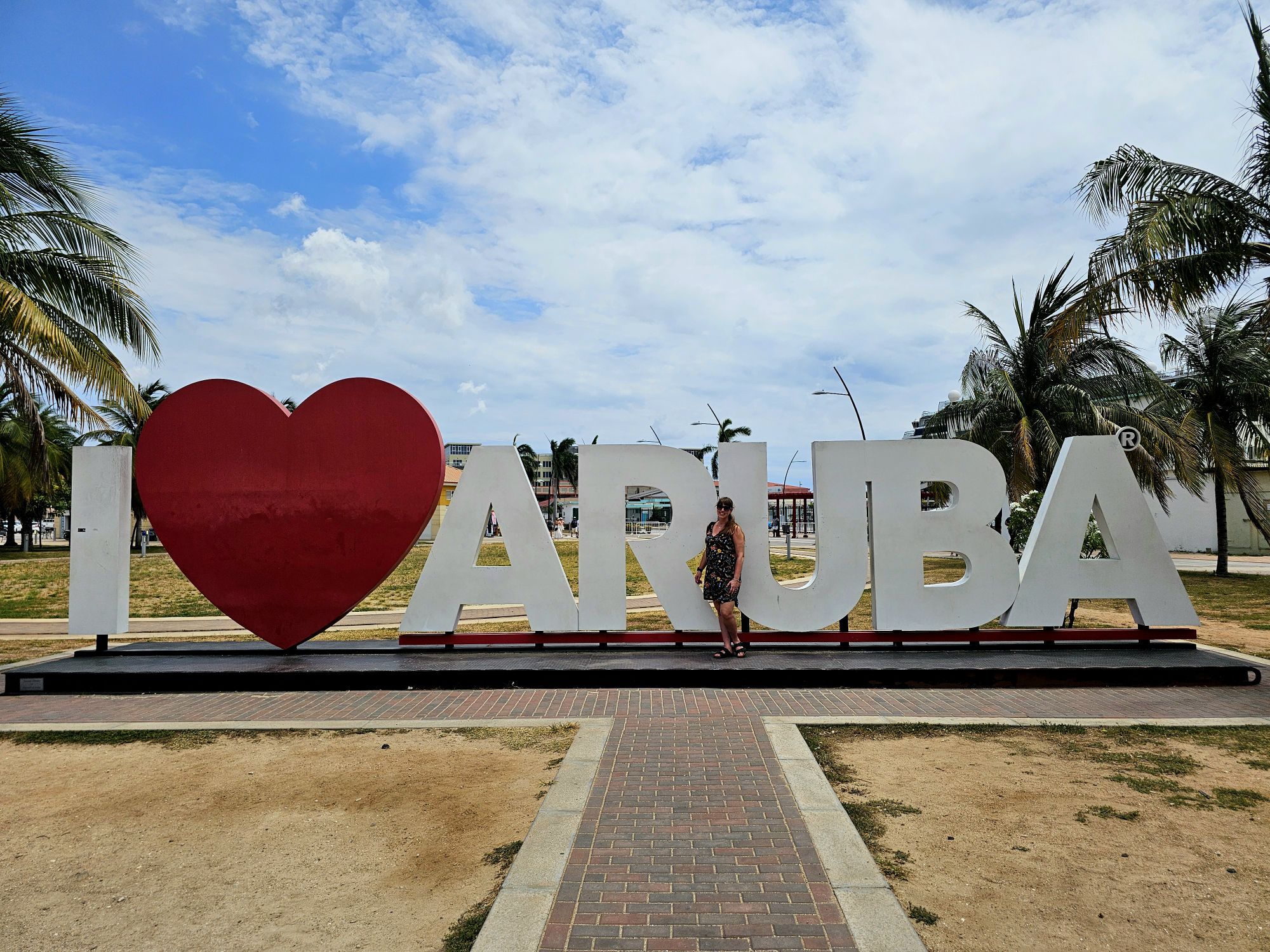
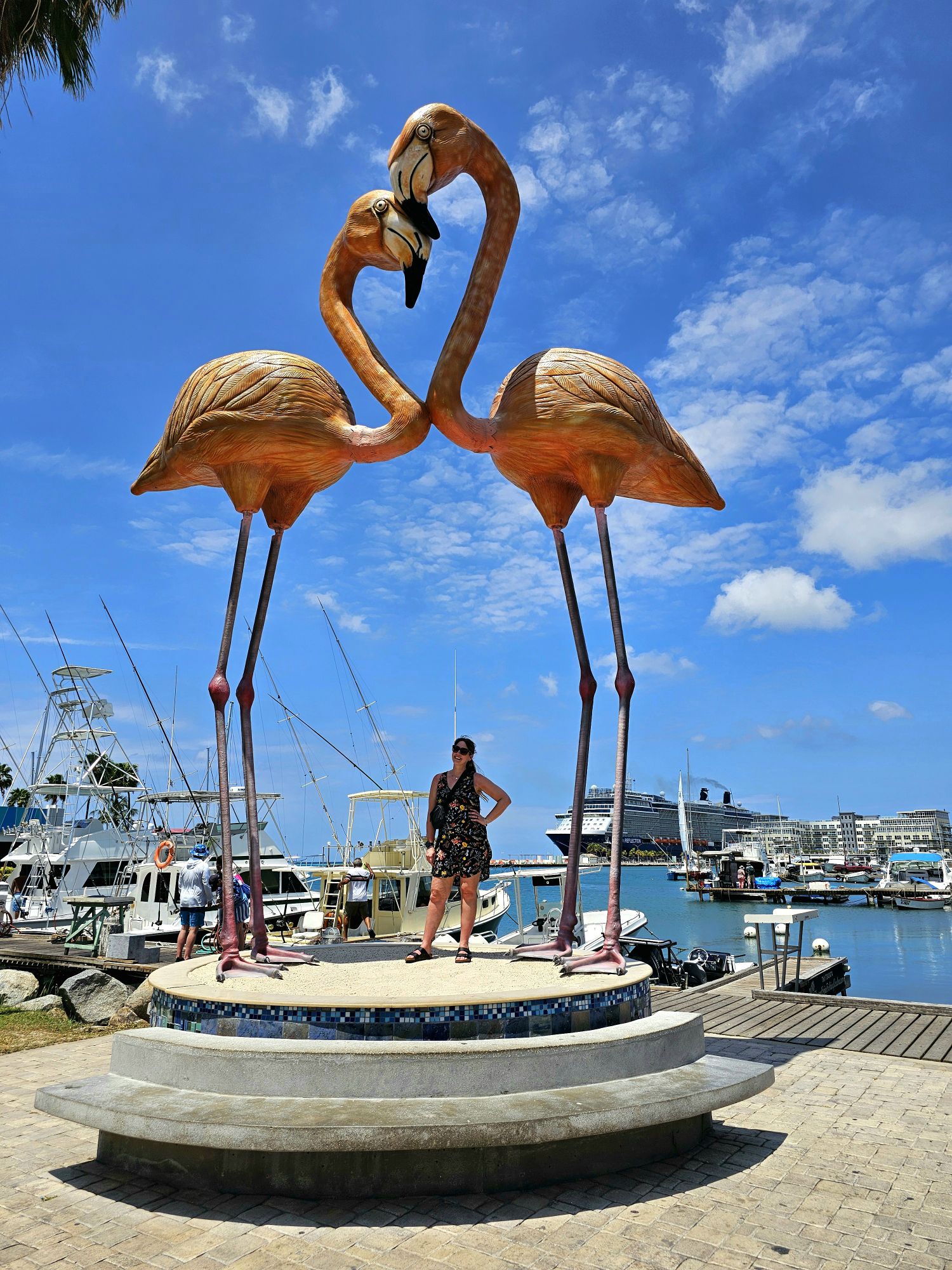
Oranjestad, the island’s capital, is easy to walk around and while there aren’t many tourist attractions, there are some great photo stops and the old colourful colonial buildings are a must see.
Here, you will also find lots of shopping, from high end to souvenir stands, as well as a variety of restaurants, bars and coffee shops.
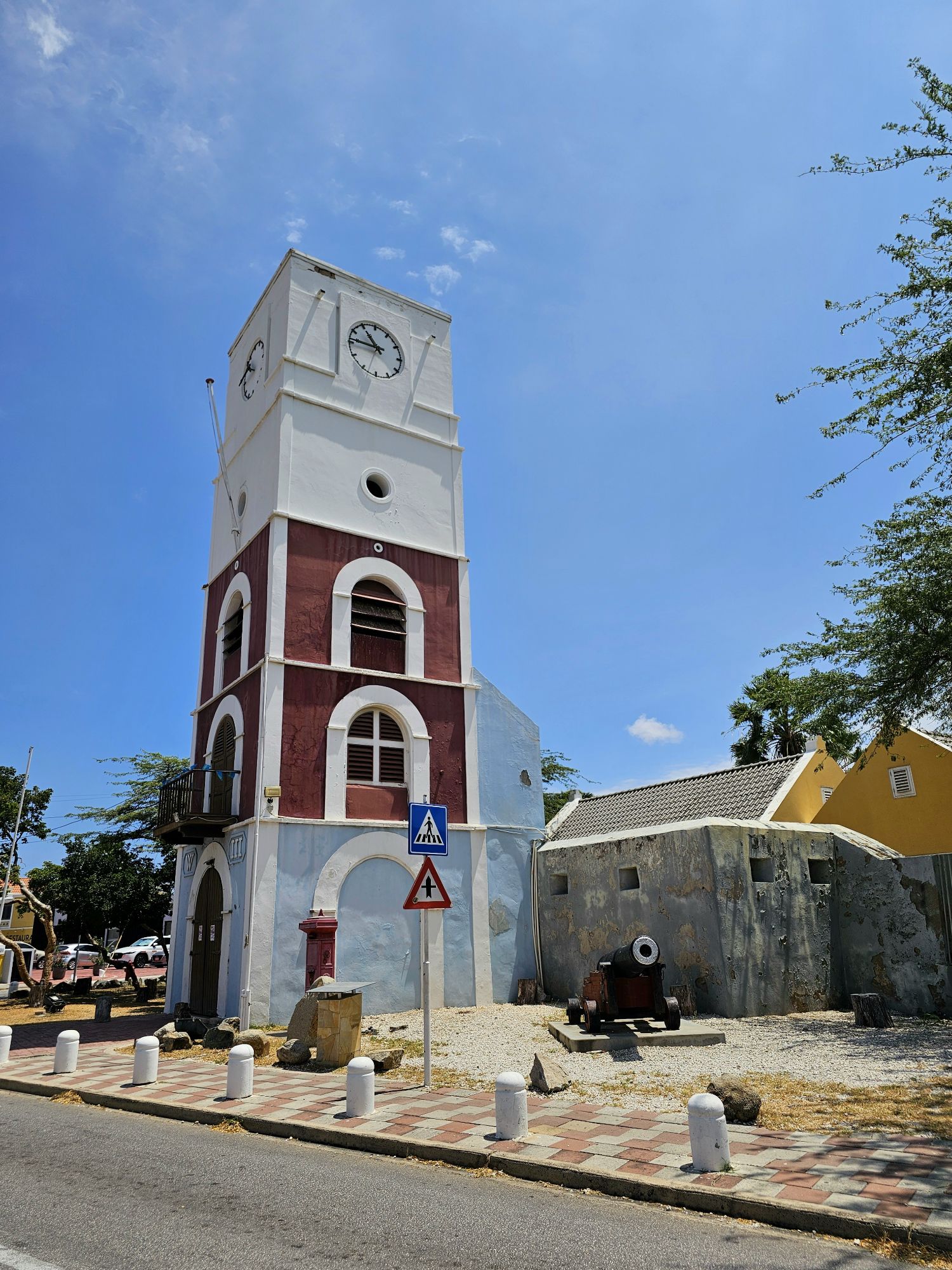
While there isn’t much still standing, Fort Zoutman dates back to the 18th century. The best preserved part is the Willem III tower, which was built to watch for approaching pirates.
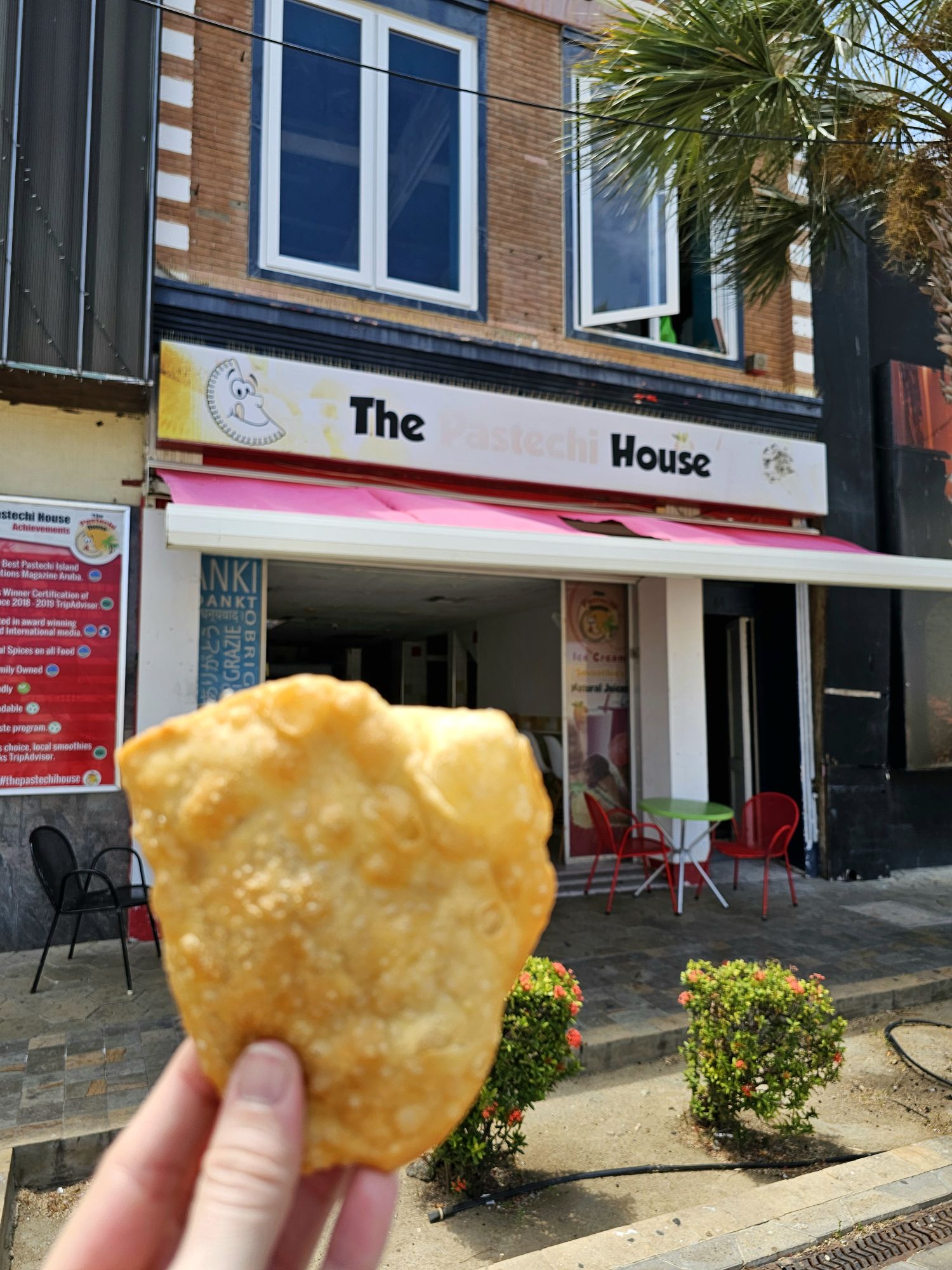
For a local treat, stop by The Pastechi House for a delicious pastechi. They are typically filled with cheese, meat, chicken, or vegetables, and can be enjoyed as a breakfast or snack.
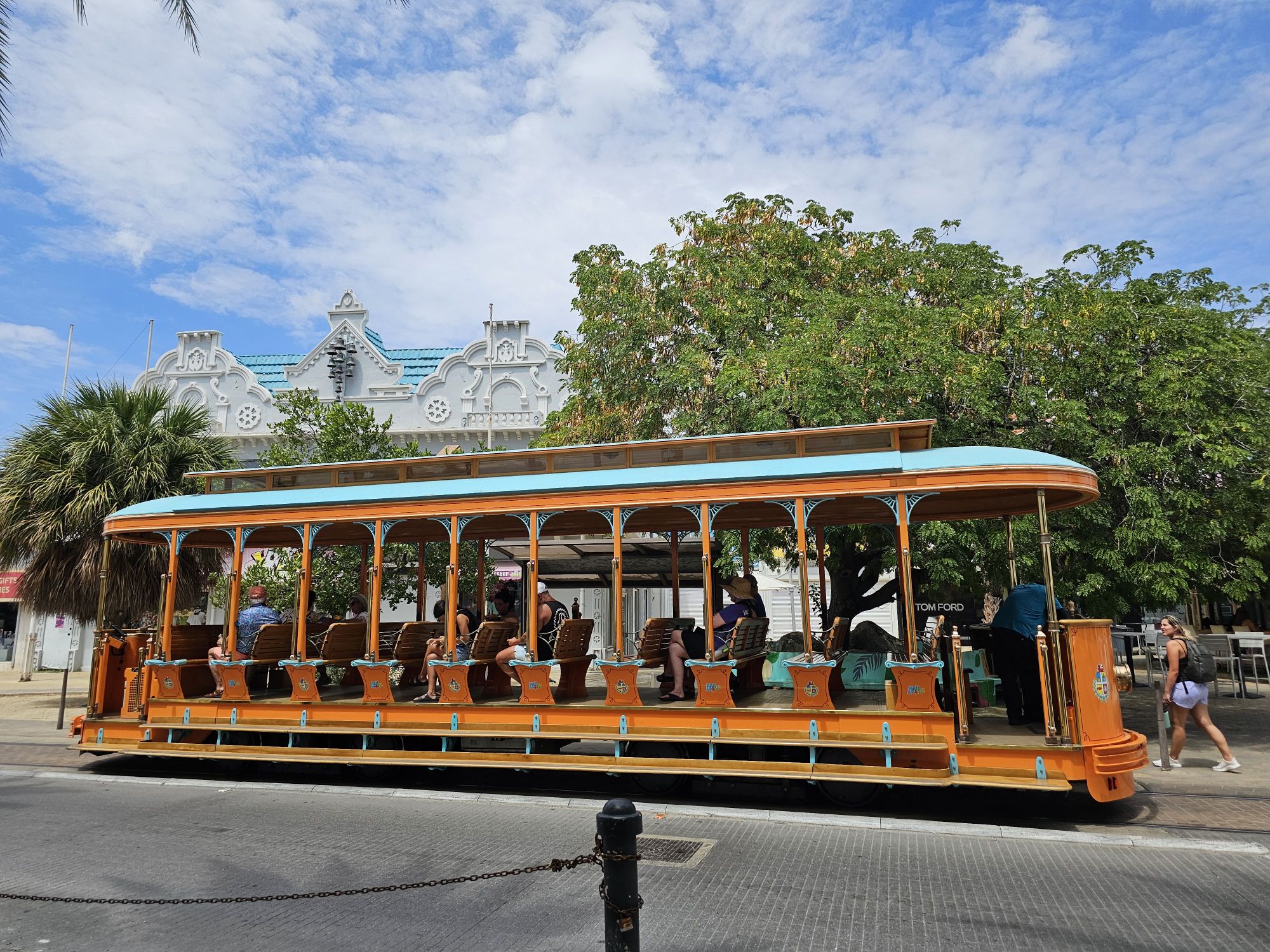
If your feet need a break, you can also explore part of Oranjestad by taking the Aruba Trolley.
The trolleys offer free transportation to and from the main downtown area in a loop with the cruise ship terminal. The streetcars can be boarded right outside the cruise port’s main gate. They run from 10 am-5 pm, Monday to Saturday.
Just be aware that the schedule seems to run on ‘island time’, and if there’s any construction or events going on, the trolley will not do the full loop as we found out the hard way!
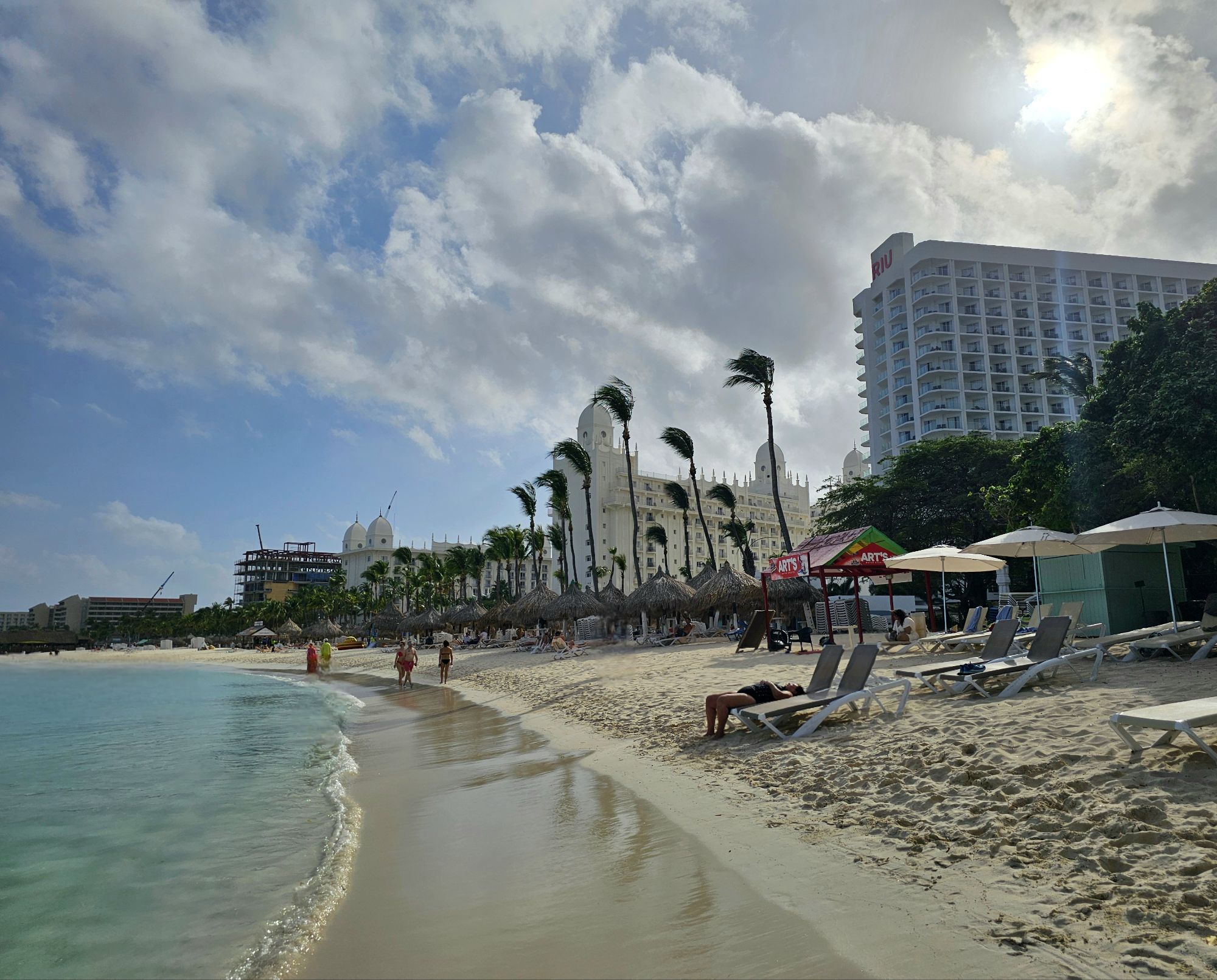
Just outside Oranjestad, you will find the resort area where most of the big hotels and resorts on the island are found along the beautiful white sand beaches here.
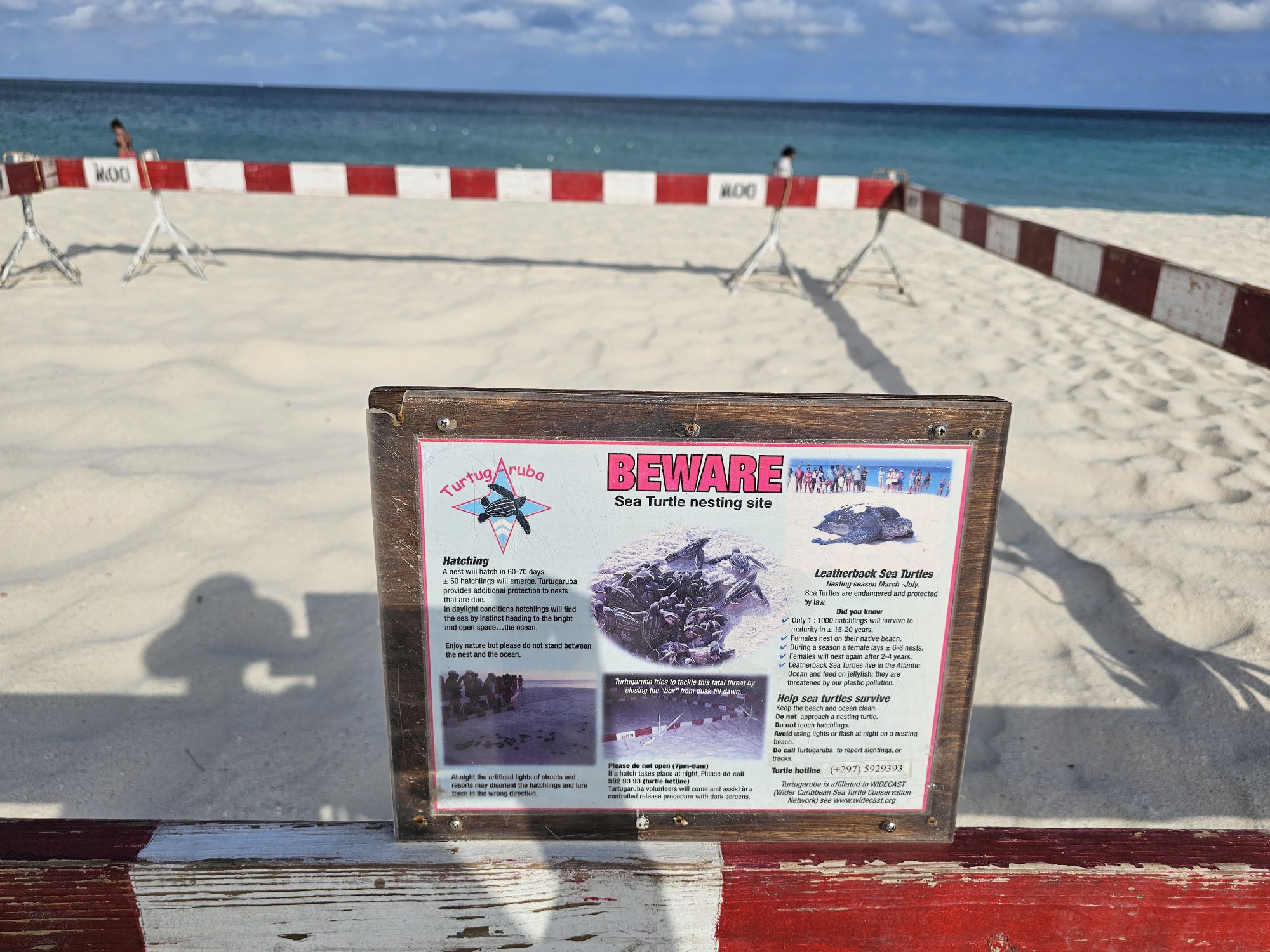
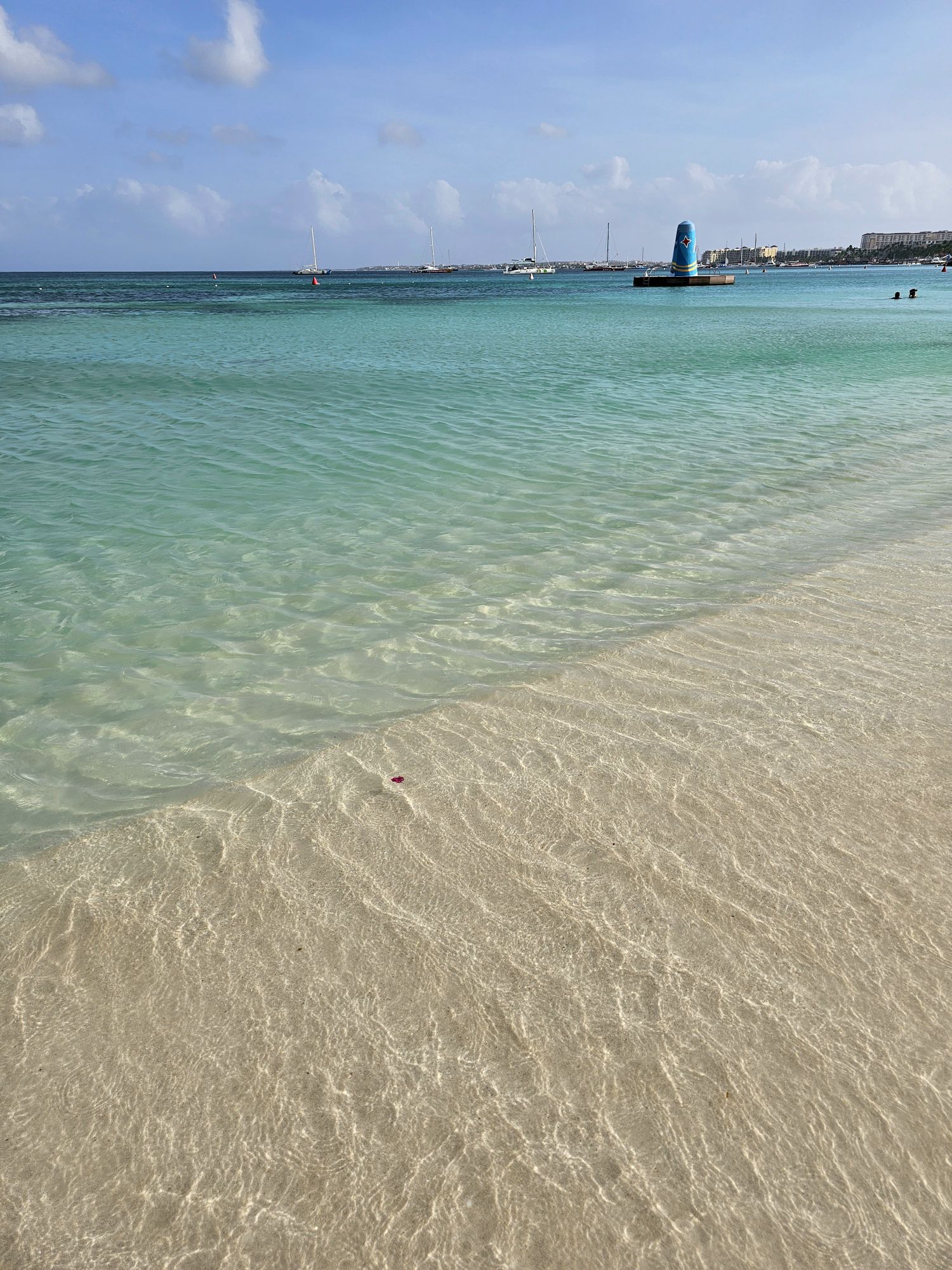
The long white sand stretch of Eagle Beach regularly makes the list of one of the world’s best beaches. The turquoise waters are great for swimming and depending on the time of year, you may find sea turtle nests in protected areas along the beach.
While there is little shade, there are areas to rent chairs and umbrellas.
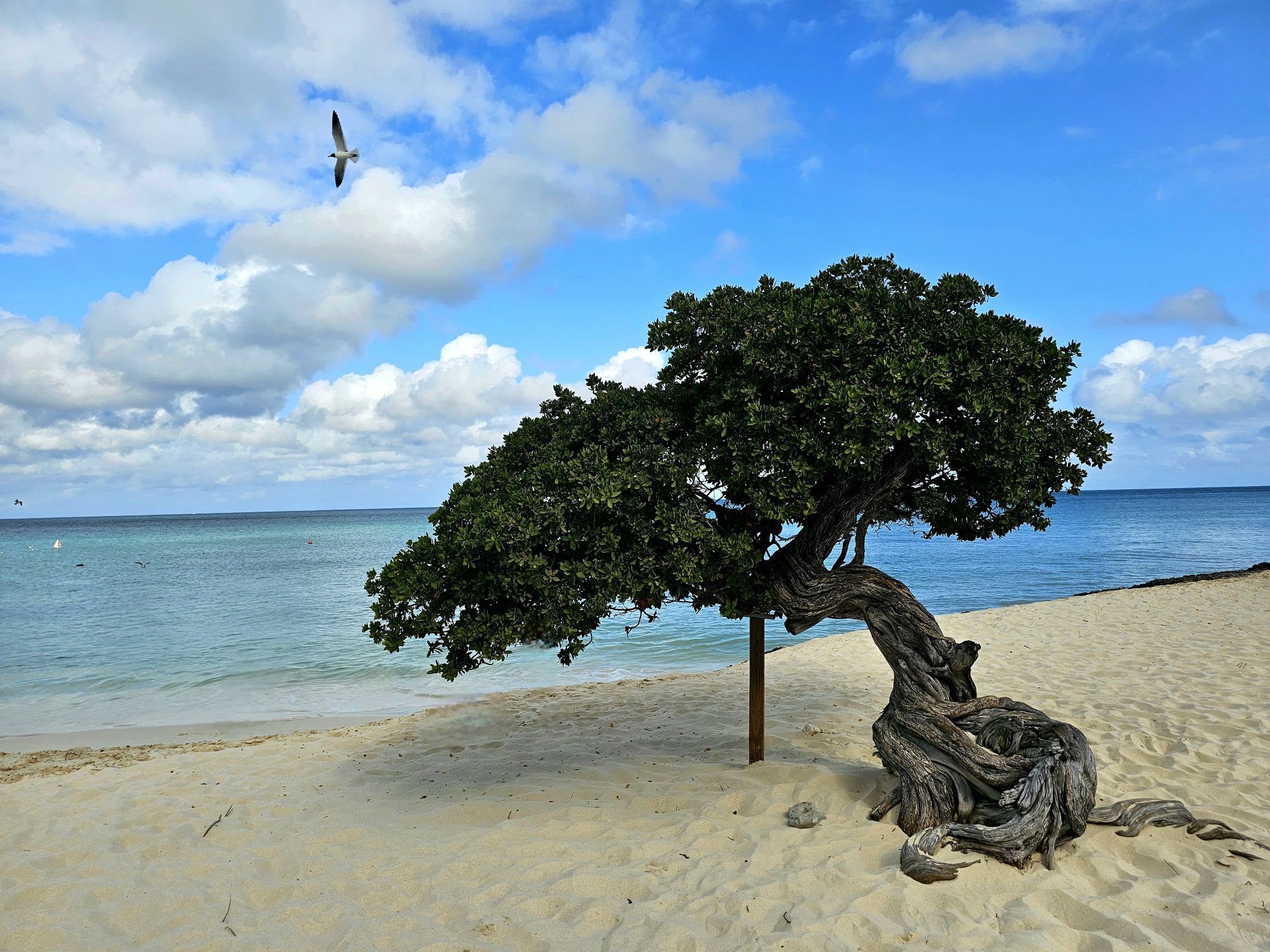
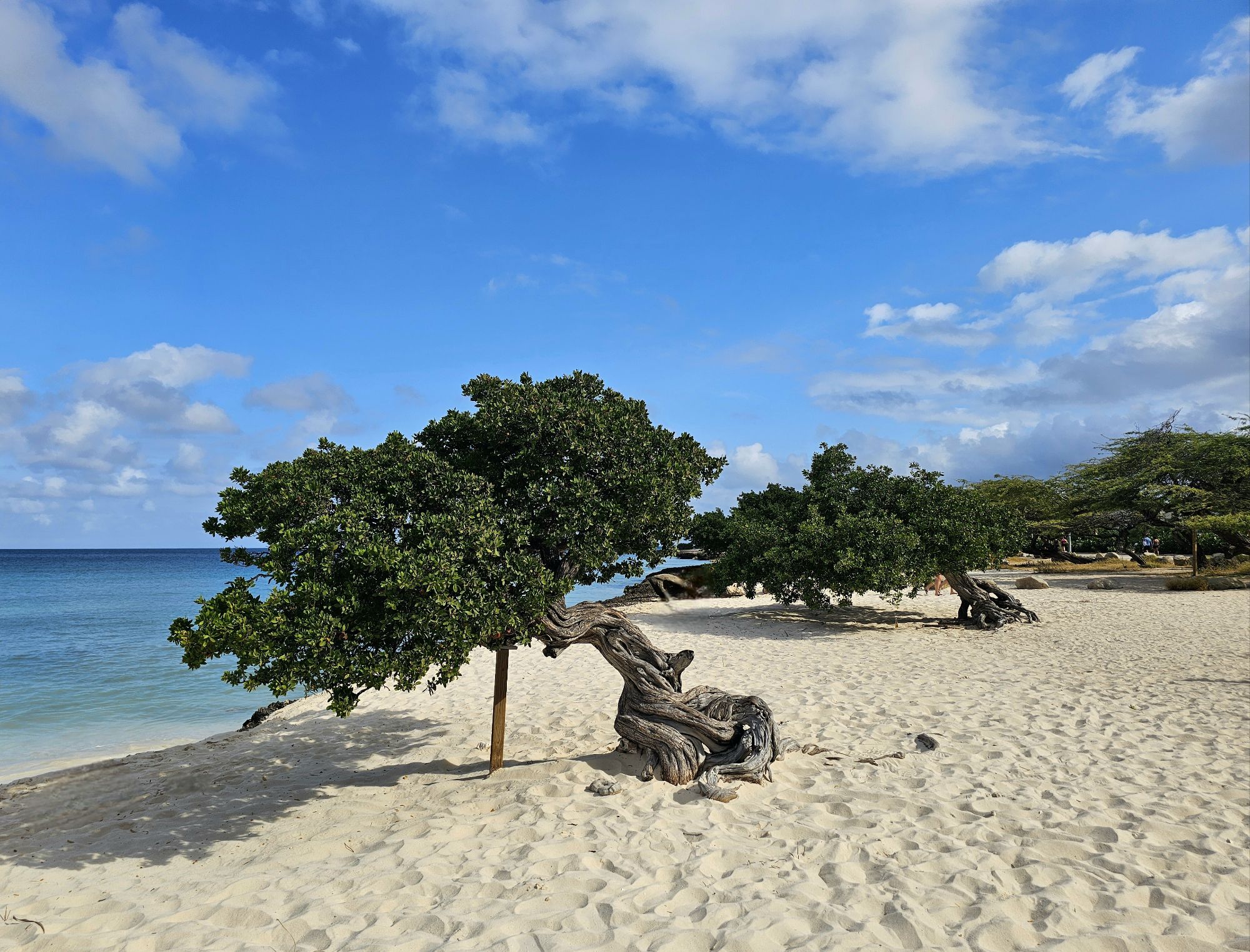
This beach is also home to the Fofoti trees, some of the most photographed trees on the island! These famous trees are a natural wonder sculpted by the island’s winds and always point towards the sea.
There is a great boardwalk that connects the beaches between the low-rise resorts and the high-rise resorts and gives you the perfect spot to get out for a morning stroll.
Aruba whiptail found along the boardwalk
As you continue along, you’ll come to Palm Beach. This one tends to get very busy as there are a number of resorts lining it.
Near the high-rise hotel area, there’s a great strip of restaurants, bars and shops that get very busy in the evenings. If you are looking to go for dinner, be sure to make a reservation.
We enjoyed a great Italian meal at Gianni’s. It’s a busy place, with live entertainment and delicious homemade pasta.
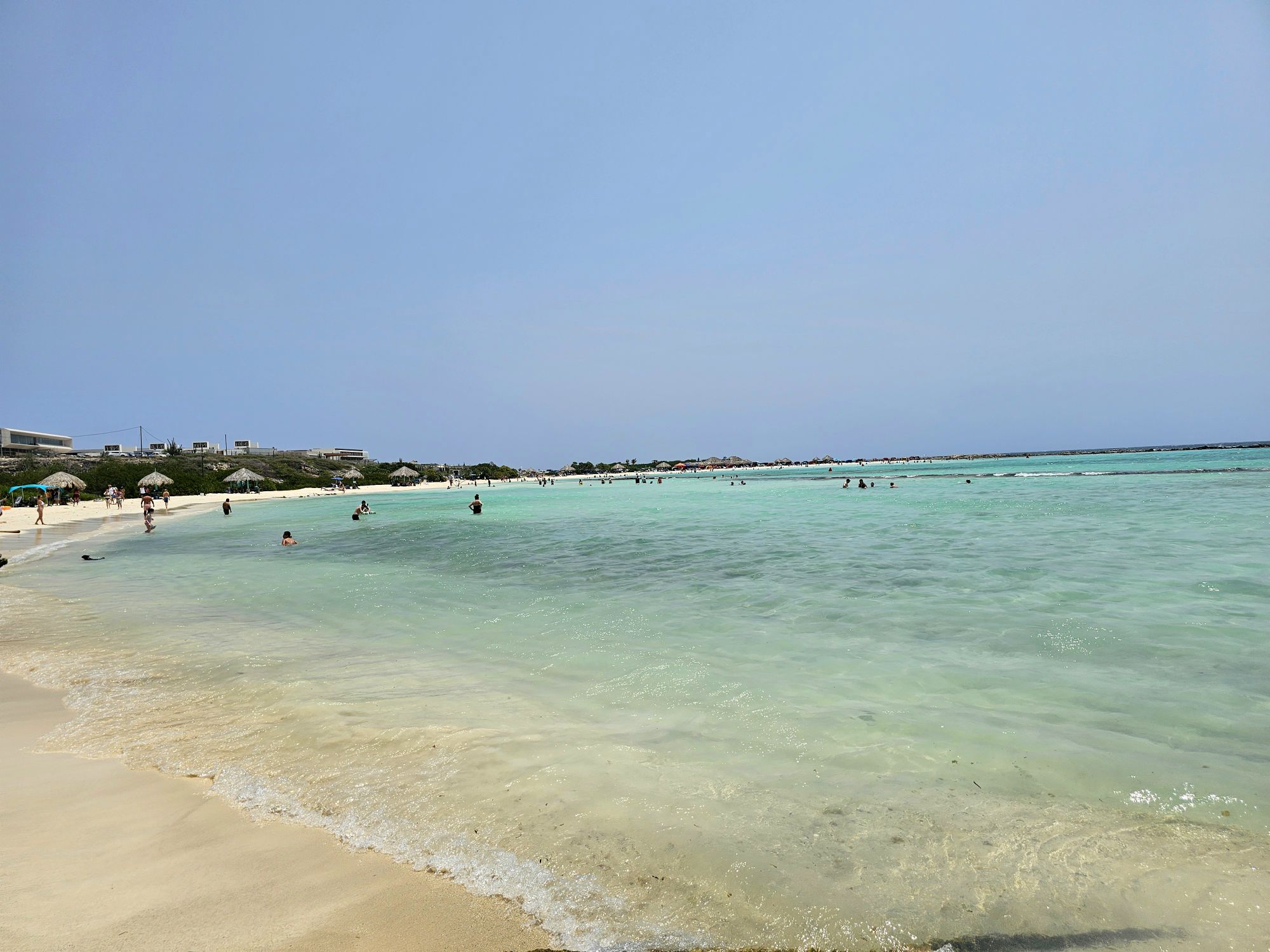
At the other end of the island, not too far from San Nicolas, (and past the eyesore that is the refinery) is Baby Beach, a curved beach with shallow, calm, crystal clear water, perfect for families.
There are some palapas that are free and on a first come, first serve basis. You can also rent umbrellas and chairs, although they are not cheap. You’ll find beach bars at both end- Big Mama Grill, which has a Flintstone theme at one end and Rum Reef at the other.
For those looking for excursions, there is no shortages of things to do on the island from ATV rentals and jeep tours, to scuba diving and snorkelling tours, to kayaking or parasailing or enjoying either a daytime or sunset catamaran cruise, there’s an activity for everyone.
You can also board the Atlantis submarine for an hour long journey 30m under the sea or go visit the flamingos at two private islands, Flamingo Beach on Renaissance Island and at De Palm Island. Guests at Renaissance Wind Creek Aruba Resort, have access to Renaissance Island, but otherwise you can purchase day passes to either place.
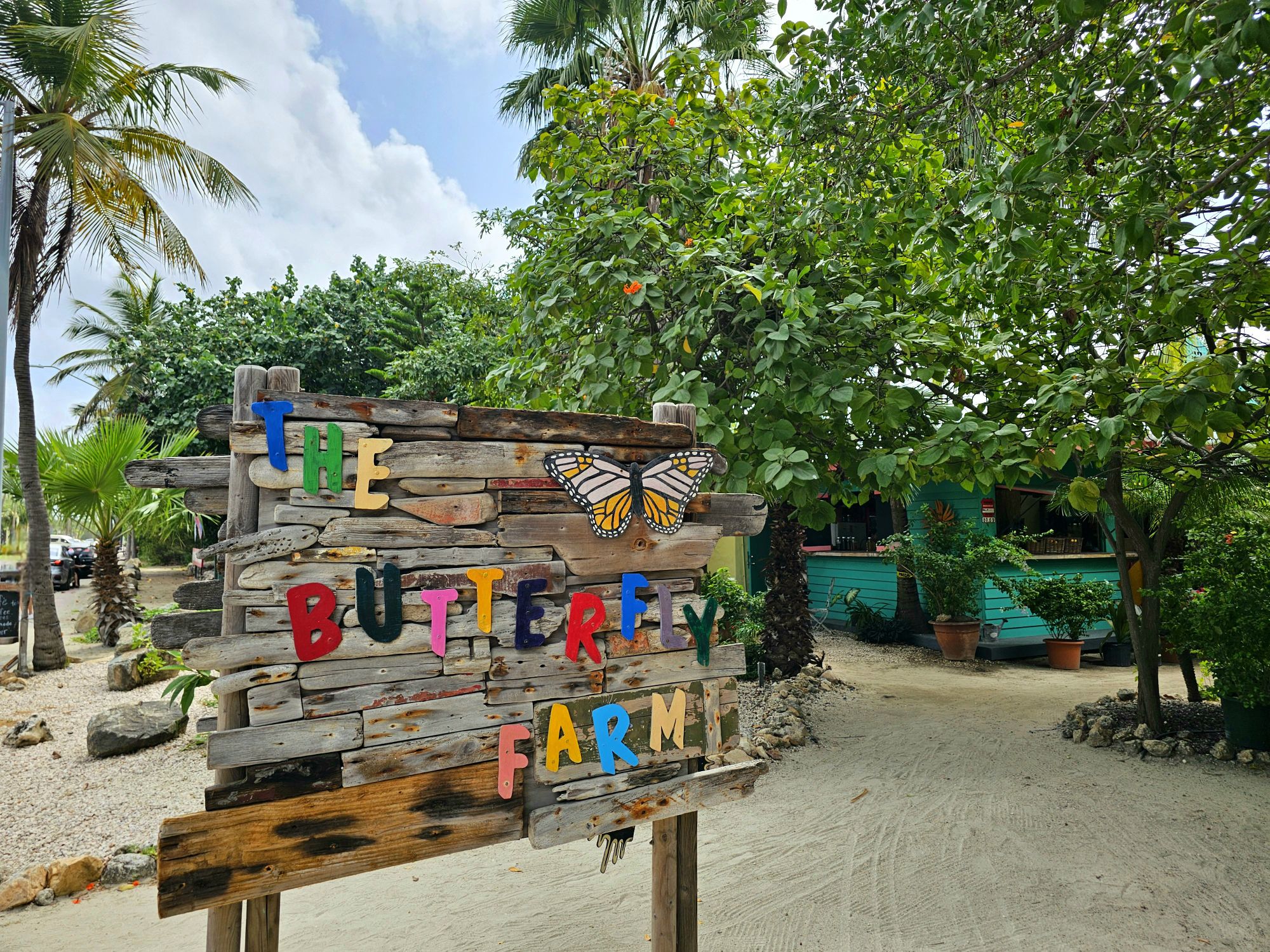
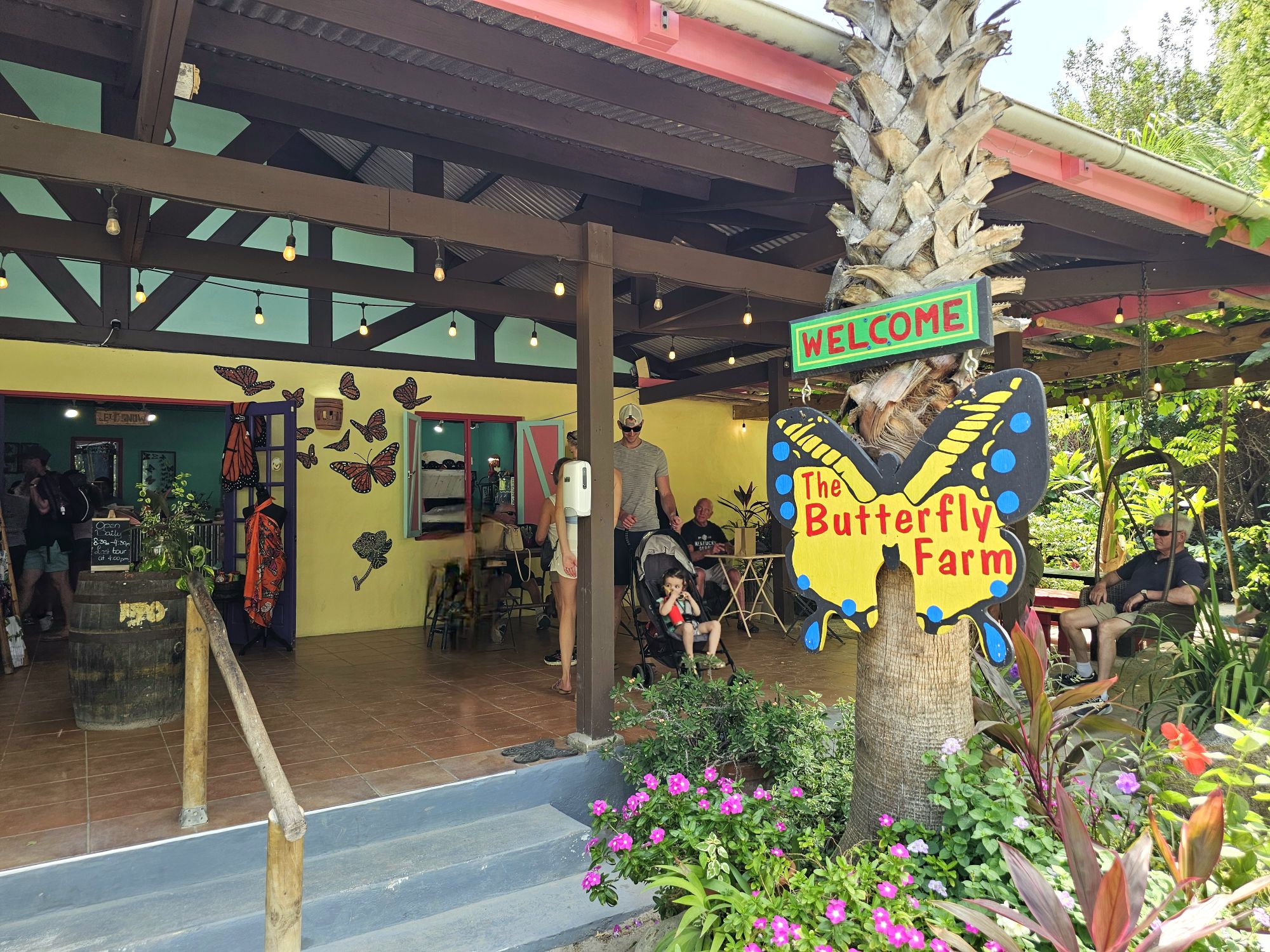
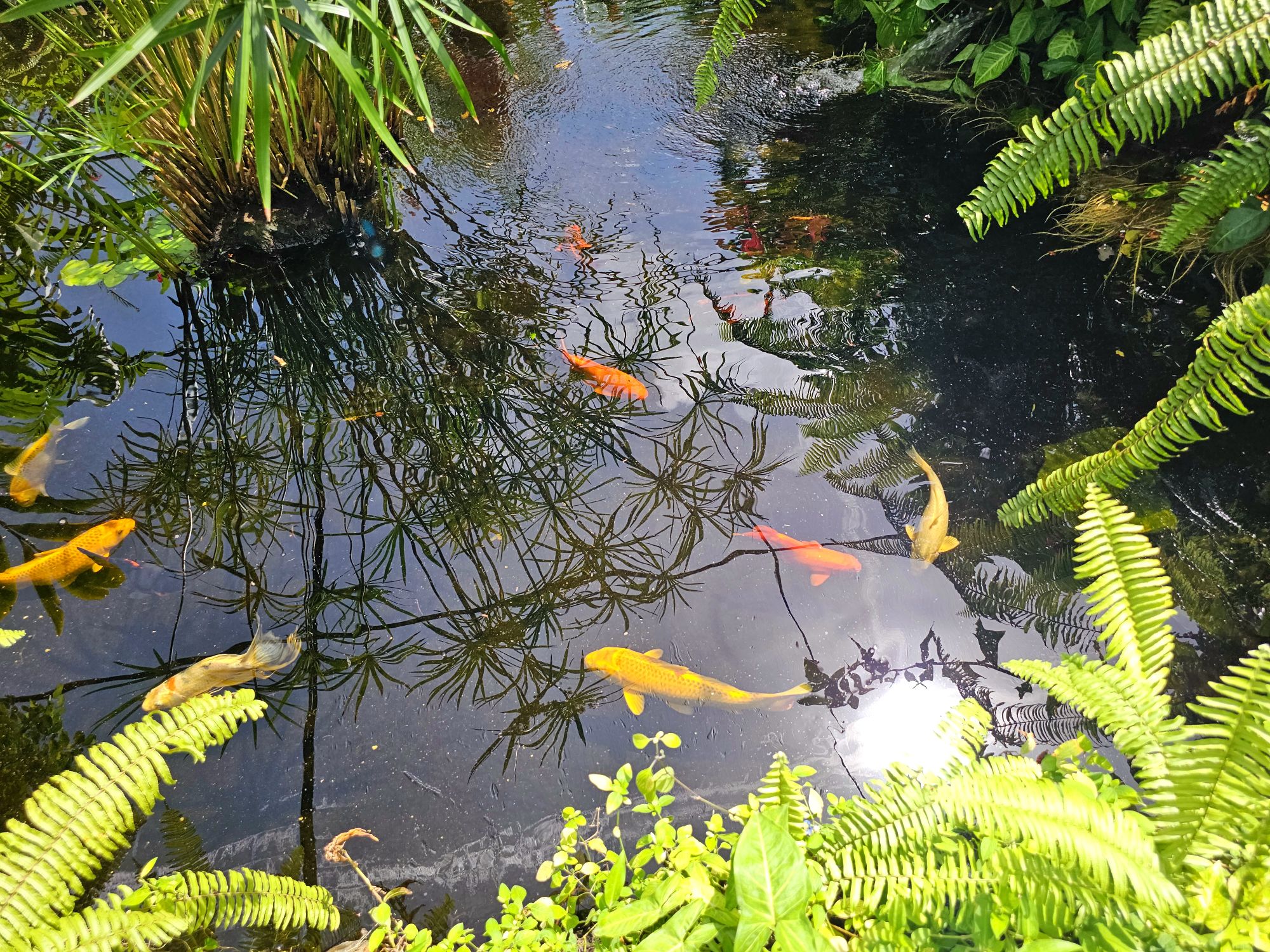
Another great spot is The Butterfly Farm, located in the high-rise hotel area. Inside the lush tropical foliage of this large meshed enclosure, you can see hundreds of exotic butterflies from around the world flying freely amongst the colourful flowers and trees. There are also a couple of ponds filled with fish and a trickling waterfall. Such a peaceful place to spend some time.
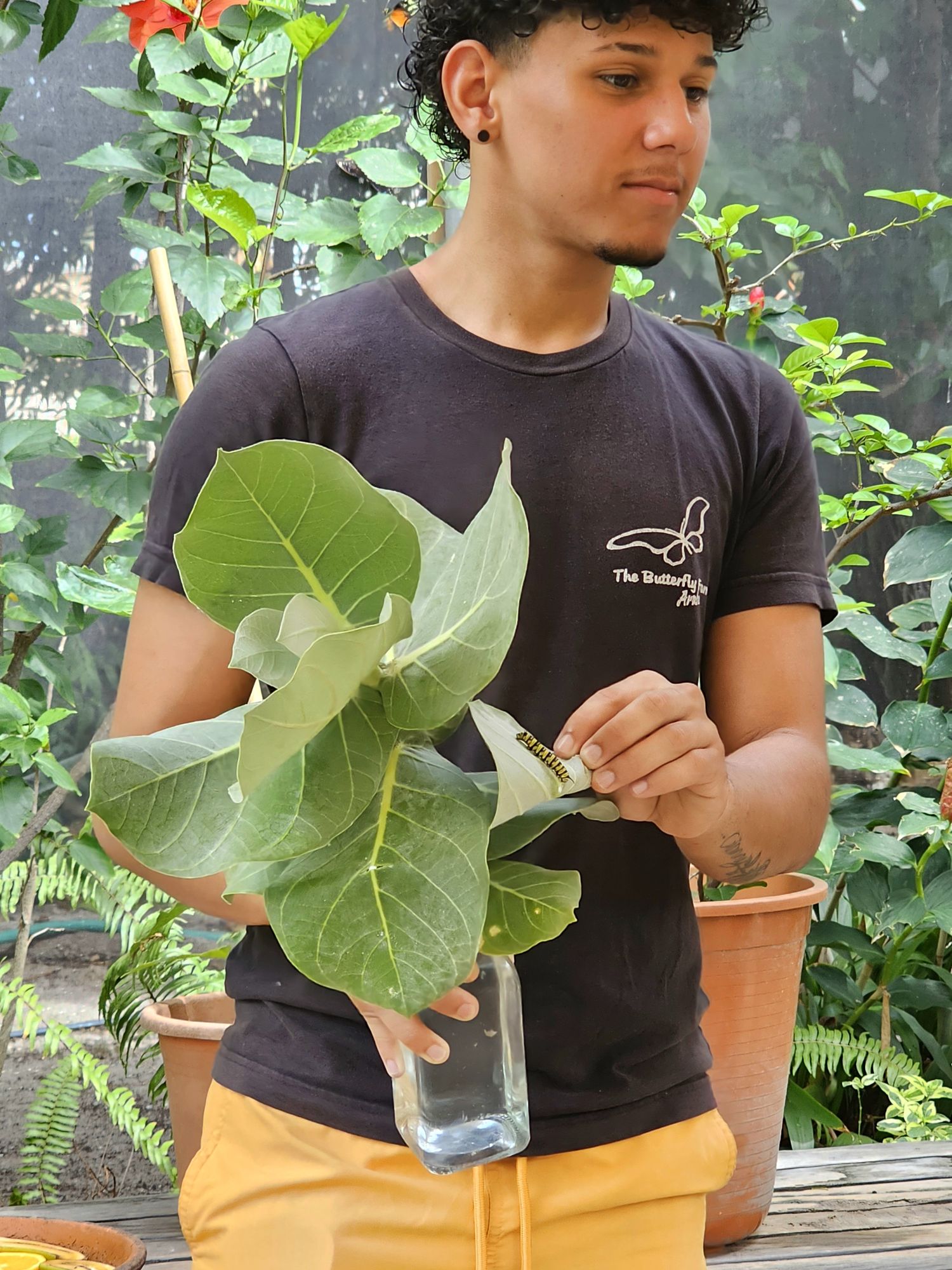
Included in your ticket is a guided tour which lasts about 20 minutes and gives you all kinds of information about the farm, the butterflies found there and their journey from caterpillers to chrysalis to butterflies often including a new butterfly’s first flight!
Our guide told us if a butterfly lands on you, it’s a sign of good luck!
There is also a gift shop with some unique items and a small cafe.
Admission- $19.00 Adults, $16.00 Seniors & Students (with ID)$10.00 Children 4-17 years old ( Free under 4) *prices in USD
Entrance includes a free return pass for the duration of your vacation, valid for one month maximum.
Open all year, daily 8.30am – 4.30pm. The last guided tour of the day starts at 4pm.
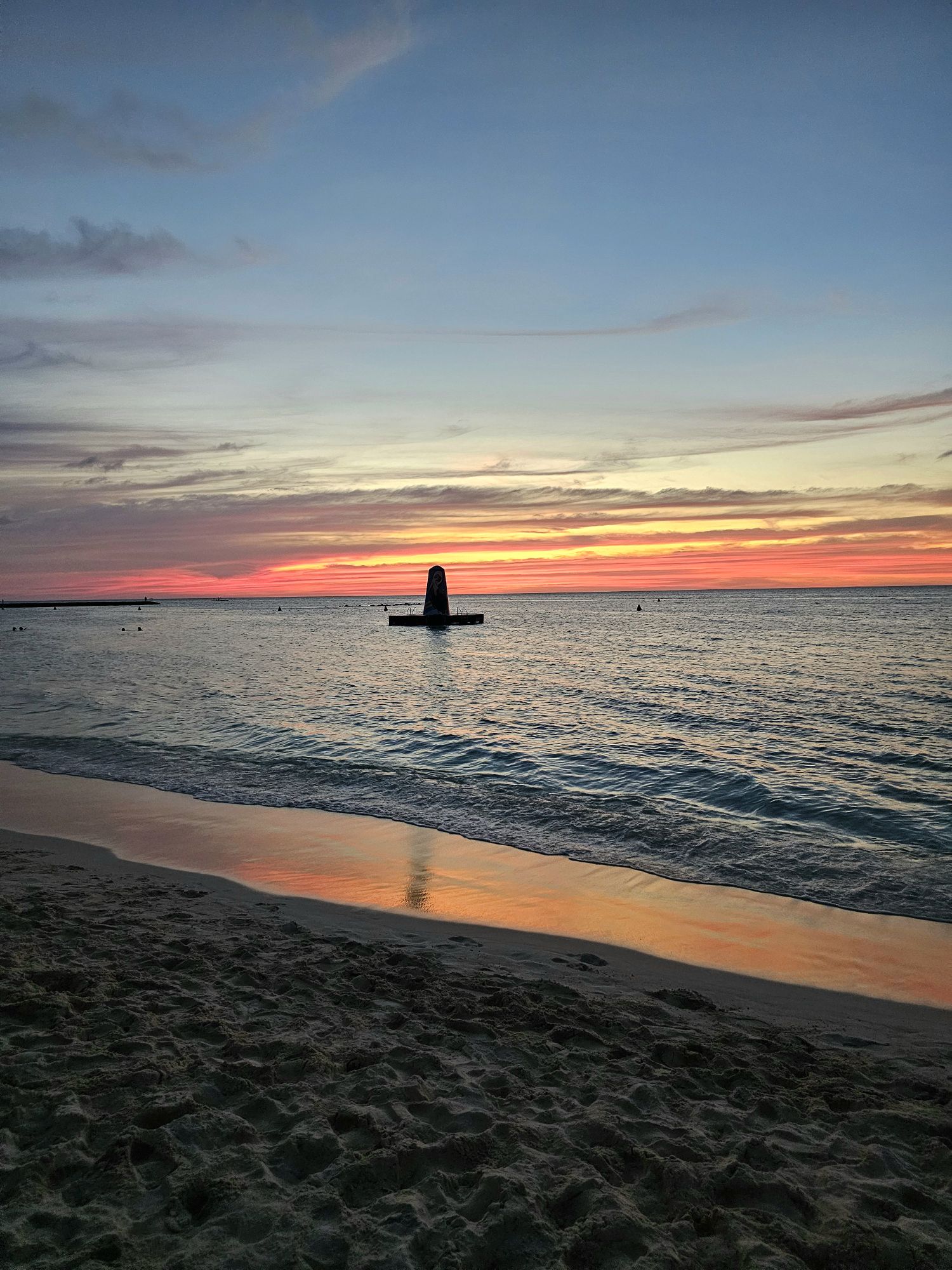
And of course, no trip would be complete without seeking out a colourful sunset or two!!
Whether you’re looking for a relaxing beach vacation or want to keep busy with excursions and shopping, Aruba has something for everyone!
Info and Tips:
When to go- Average temperature is 28 degrees C year round and is quite dry, averaging only 2.5cm of rain a month. December-April is considered high season and cruise ships are busiest from October- April.
*Worth checking to see how many cruise ships will be in port on a given day if you are looking to spend time in Oranjestad or do any tours as the more ships in port, the busier and more expensive things will be.
Getting around the island
Car rentals are available at the airport and many hotels, but during high season these tend to sell out.
You can also easily get around the island by bus. A single trip is $2.60 USD (4.50 AWG) or you can get a day pass which allows unlimited rides for 24hours for $15USD (26.25 AWG). If you are going to be making several stops, the day pass is definitely worth it!
Currency is the Aruban Florin, but USD is also accepted pretty much everywhere.
In Aruba they speak English, Spanish, Dutch and Papiamento.
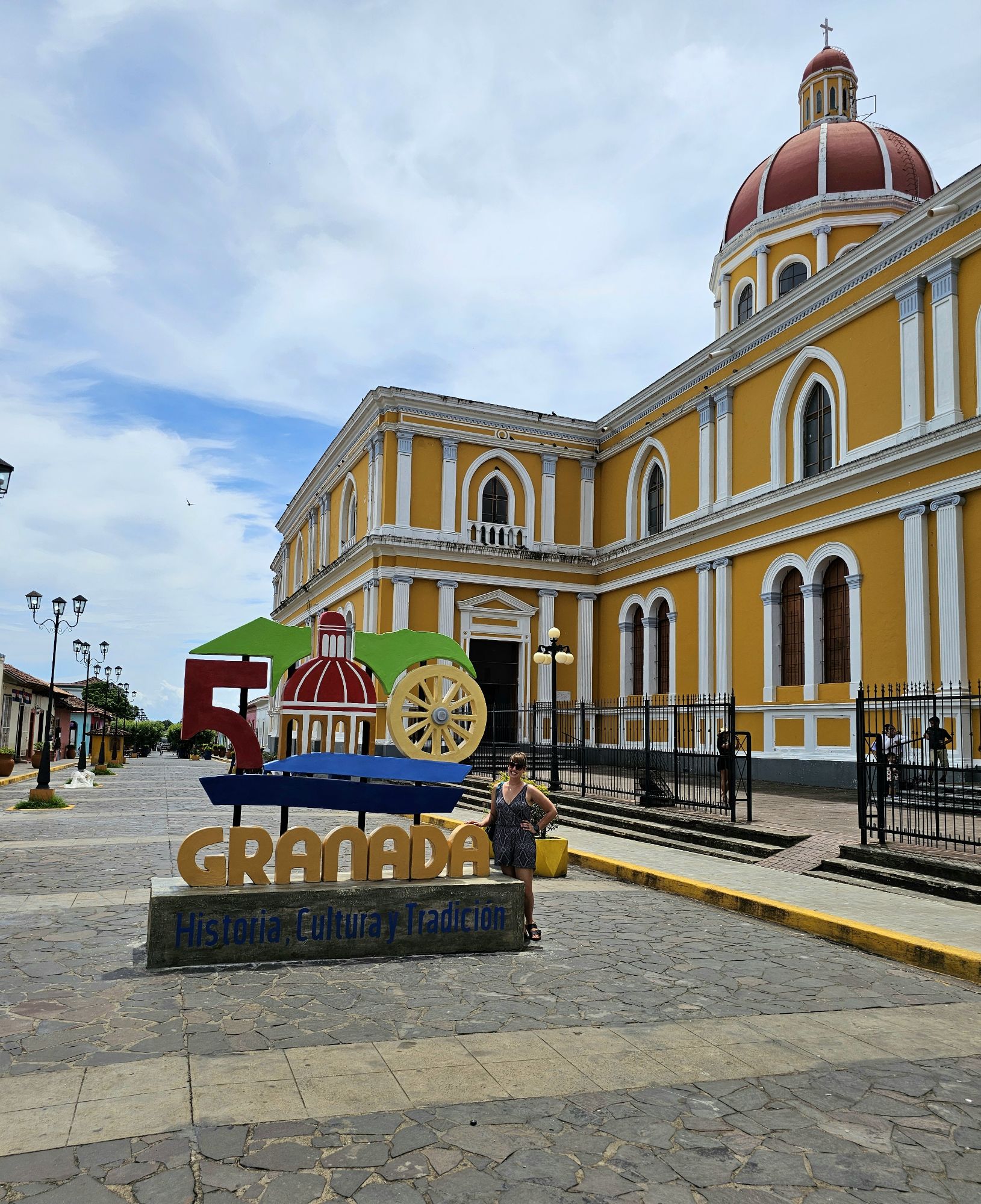
A trip to Nicaragua isn’t complete without visiting the colourful Spanish colonial city of Granada. Located on the shores of Lake Nicaragua, the country’s oldest city turned 500 years old in 2024.
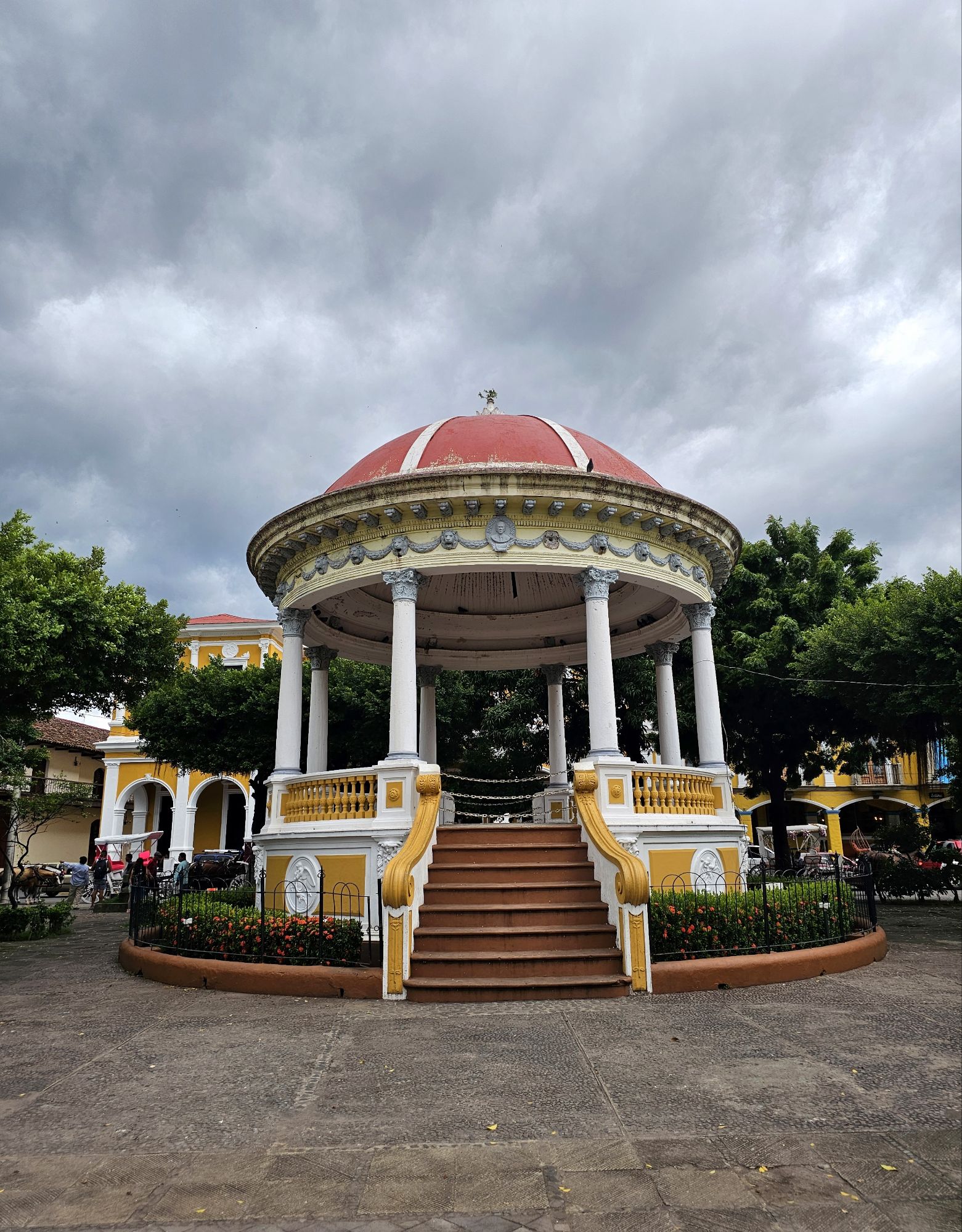
We started our day in Parque Central de Granada, the city’s main square, with hotels and restaurants lining one end and the beautiful Granada Cathedral at the other. The park itself is fairly small with some flowers and trees and a large gazebo in the centre. Horse drawn carriages can be found to take you on a tour of the city (although I wouldn’t recommend doing this) as well as a small souvenir market just outside of the park.
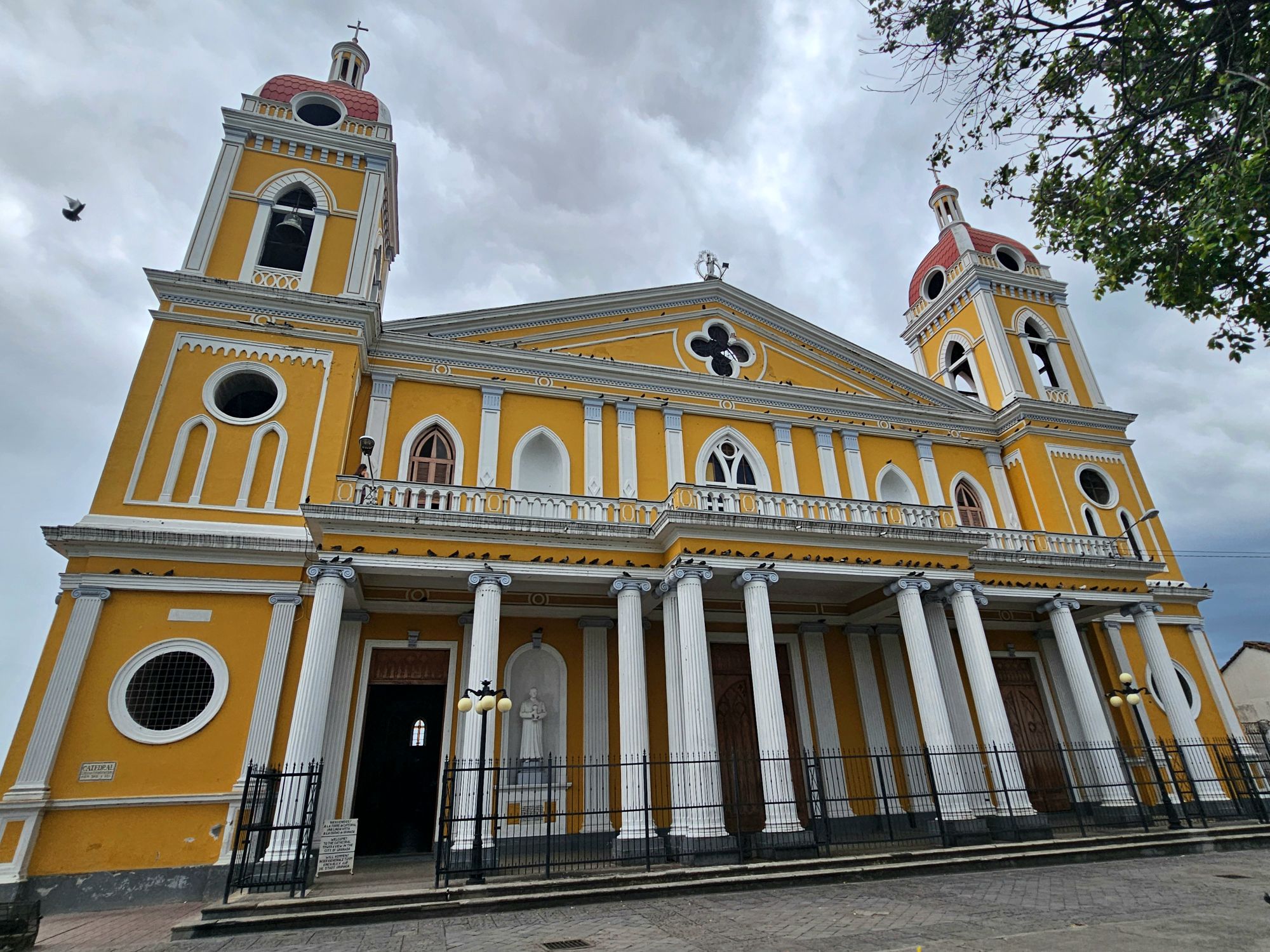
Our Lady of the Assumption Cathedral, also known as Granada Cathedral, is a sight to see. A striking, yellow building with white trim and pillars out front and large terracotta domes on the roof. Inside, there are beautiful murals covering parts of the ceiling depicting bible stories, like Noah’s Ark, Adam and Eve and more. The cathedral was built between 1905-1915.
We met a local tour guide named Miguel just outside the cathedral, who took us on a 2 hour walking tour of the city. I always love finding a free walking tour or a local guide when I travel as it is such a great way to learn more about the history and local way of life as you explore a new place.
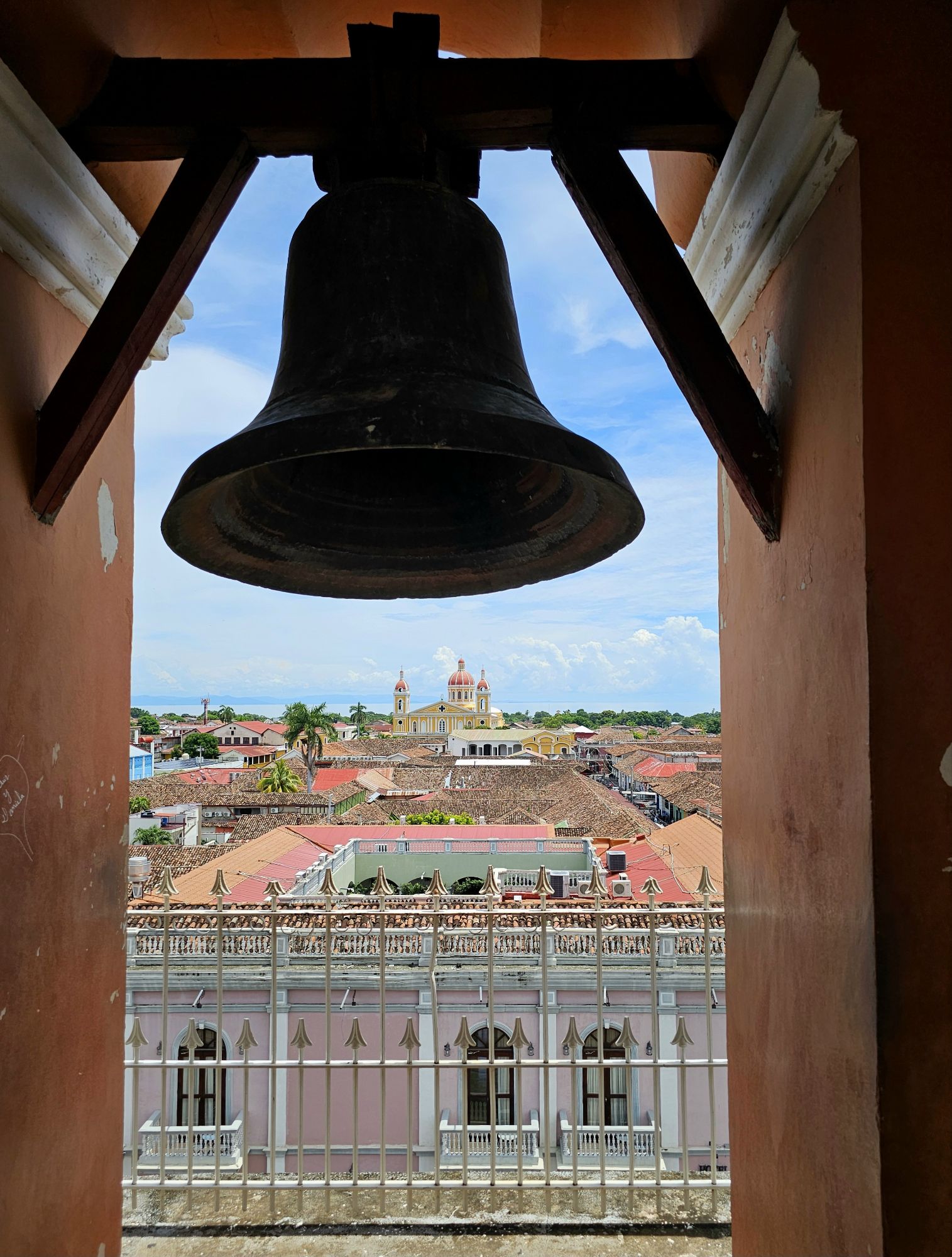
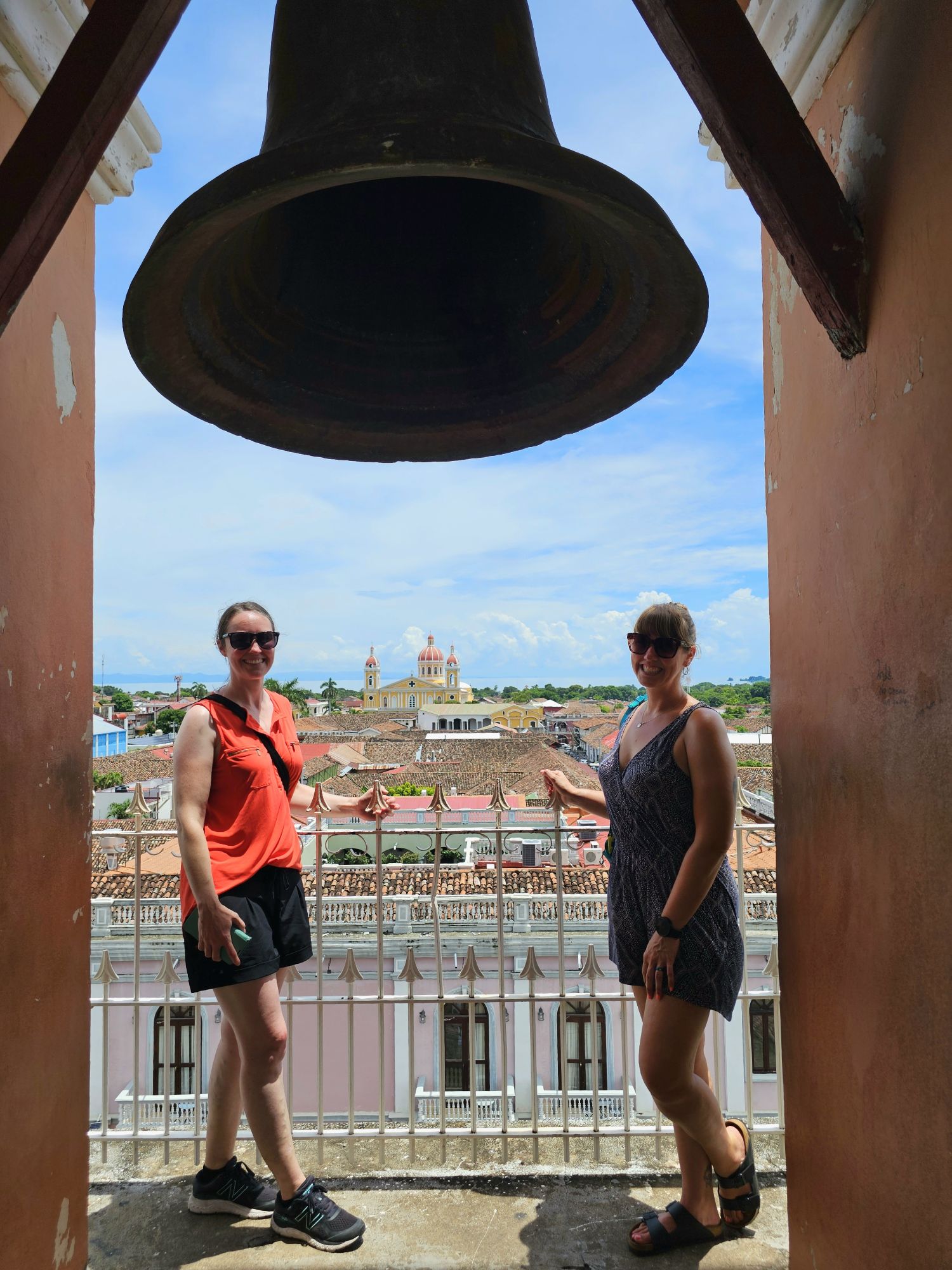
Granada is home to numerous churches including Iglesia la Merced, which offers the best views of the city from the bell tower.
Construction was finished in 1539, but was razed by pirates in 1655 and rebuilt with its current baroque facade between 1781-1783, before being damaged again by William Walker’s forces in 1854. The front has been left with its burned appearance, while the interior was redone in 1862.
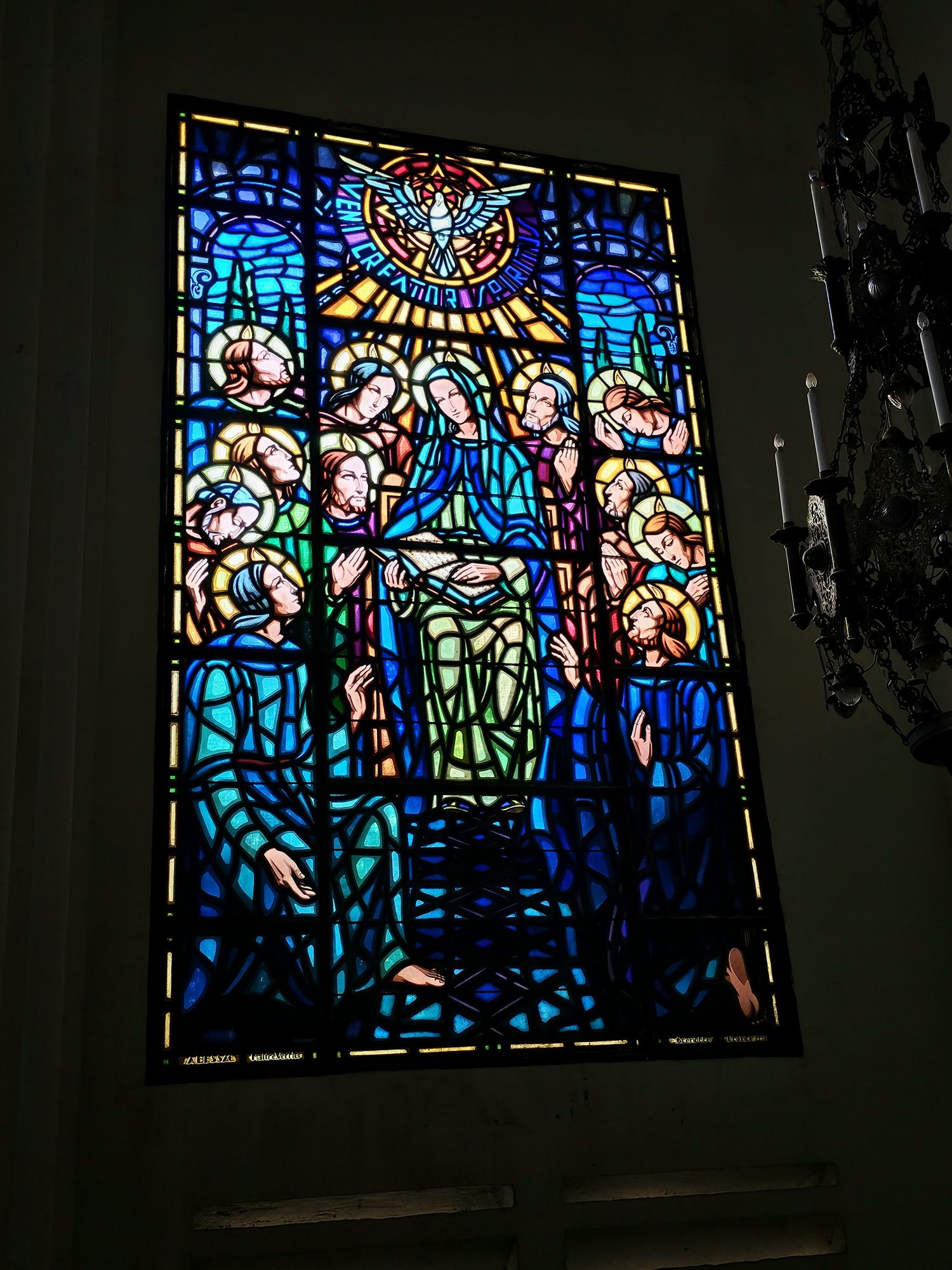
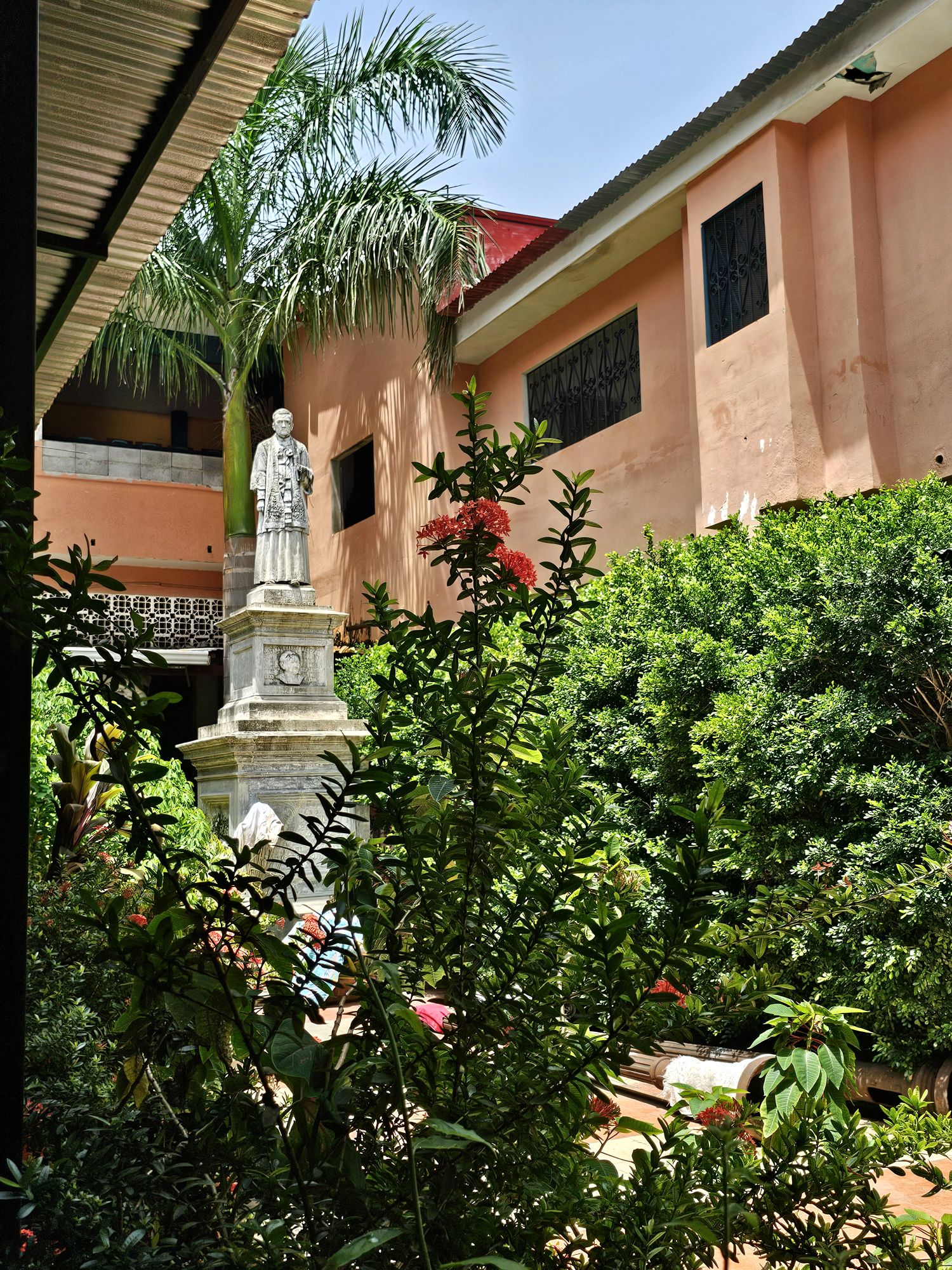
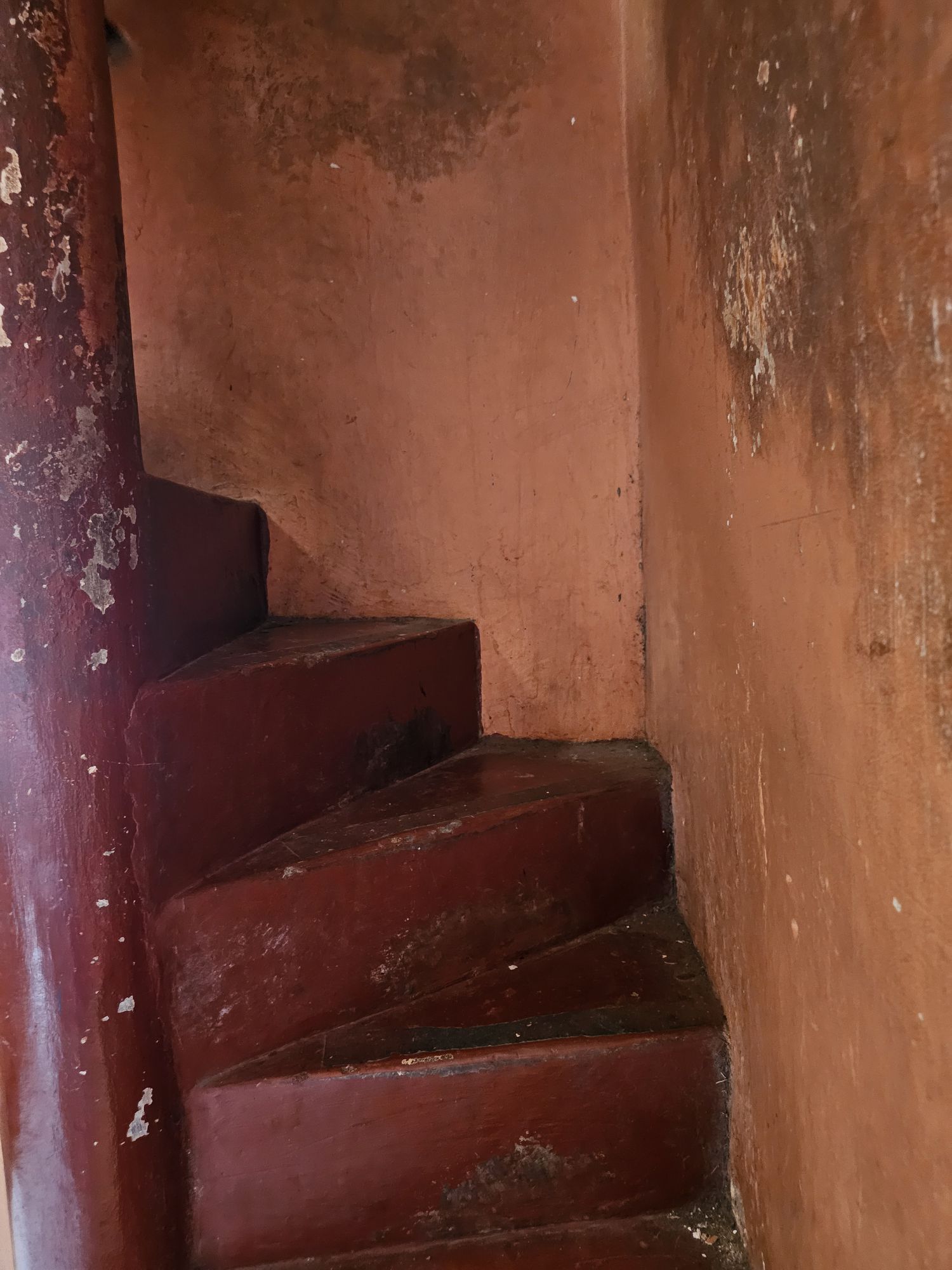
The elaborate stained glass is beautiful and it has a nice little garden courtyard to visit. It cost $1 USD to climb up the narrowest, winding staircase I’ve ever seen to the bell tower, but the view is definitely worth it. You can see for miles in every direction!
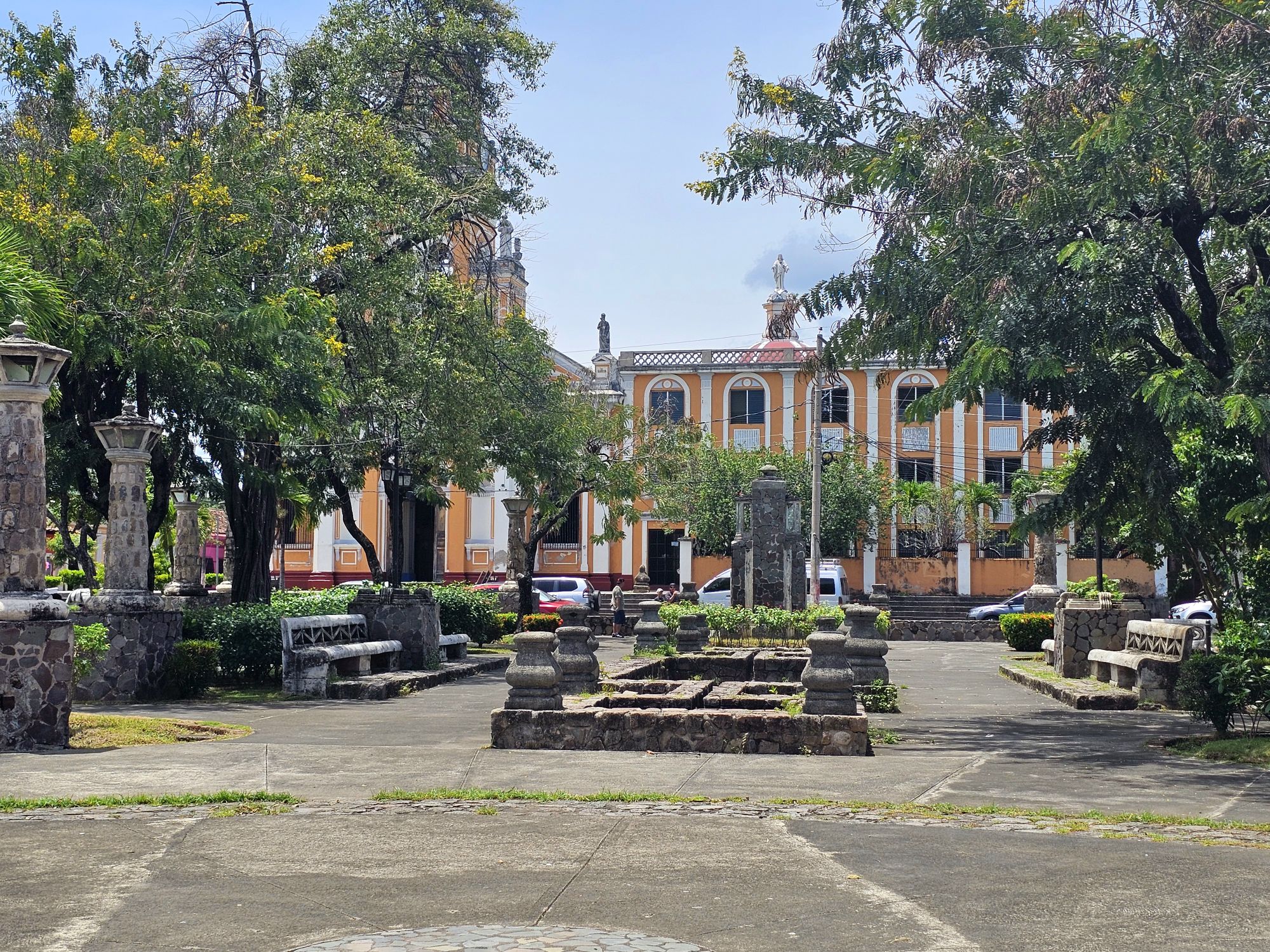
Pretty salmon hued Iglesia Xaltera, was built during the colonial era and due to its location it was used as a military fortress.
It destroyed during the National War and then later destroyed again by an earthquake. Final restoration work was completed in 1921 and the frescoes and carved alter are definitely worth seeing.
Across from it is Parque de Xaltera. Both were named for the Indigenous tribe who originally lived here before the Spanish arrived.
Fortaleza la Polvora, the turreted Spanish fortress was constructed in 1748.
Today, many of the walls still stand and a small museum about the revolution is found inside with info about the Sandinistas (all in spanish)
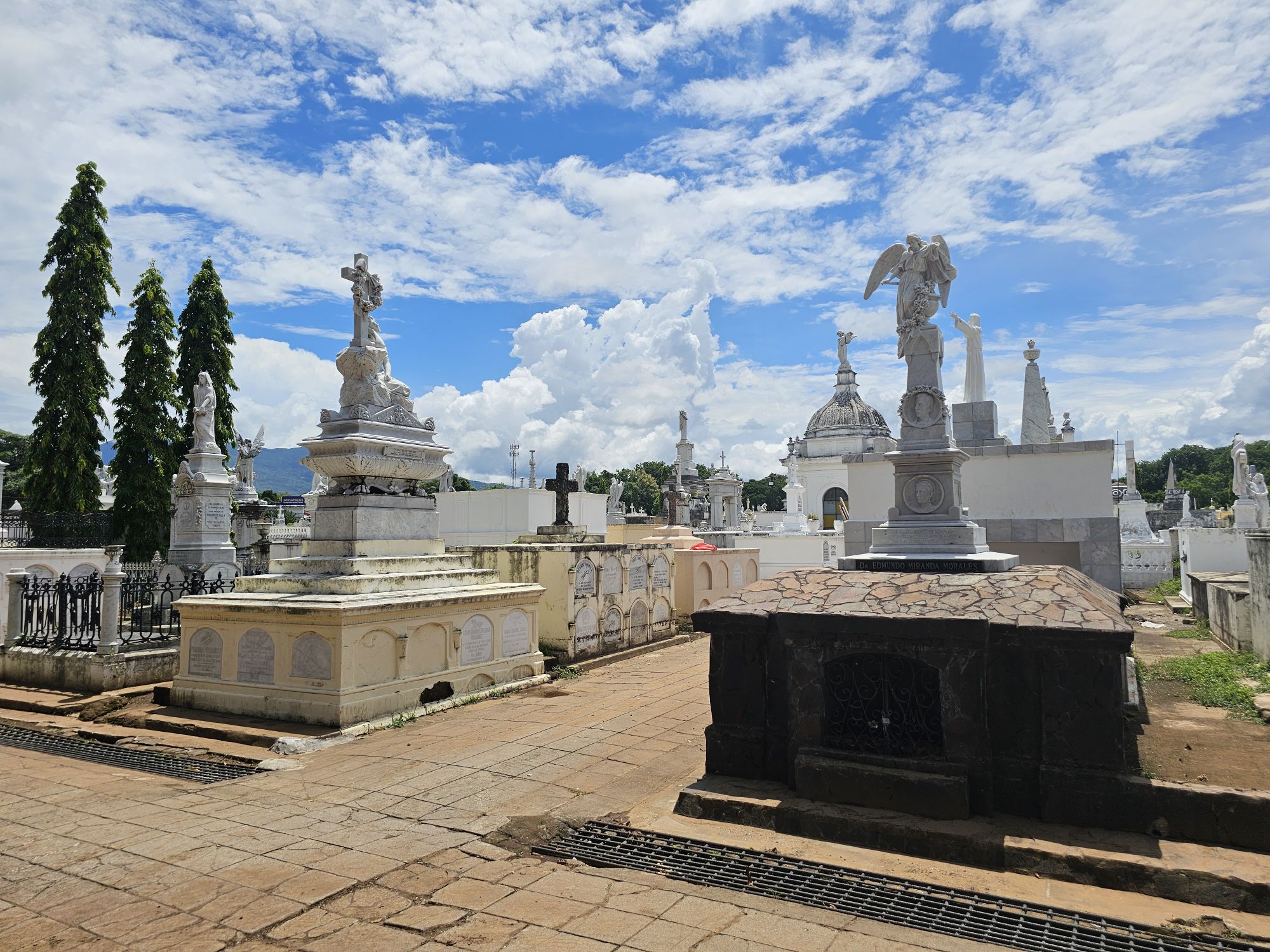
Cementerio de Granada is a large cemetery with some huge, ornate mausoleums and tombs including the first president of Nicaragua Fruto Chamorro as well as the ‘Chapel of Souls’, which Miguel said was mainly for funerals.
Mercado Municipal, Granada’s large market has been around since 1892 and is a maze of stalls with food, clothes, shoes, household goods, electronics and more.
It’s crowded and busy, but definitely worth exploring.
Located just outside the market is Tosto Metro a little hole in the wall restaurant the serves the banana burger I had read about (and Miguel recommended) You choose what kind of burger you want- beef, pork, chicken or veggie and they cook everything fresh.
The meal comes with carrots and two homemade dipping sauces, fresh made juice with ginger and tamarind and your burger topped with grilled peppers, zucchini, mini corncobs, carrots and avocado sauce between two huge tostones (fried, smashed plantains)
It was amazing! So fresh and tasty! To end the meal, they brought out a little dessert pastry with a spoonful of honey. Great meal for about $10 each.
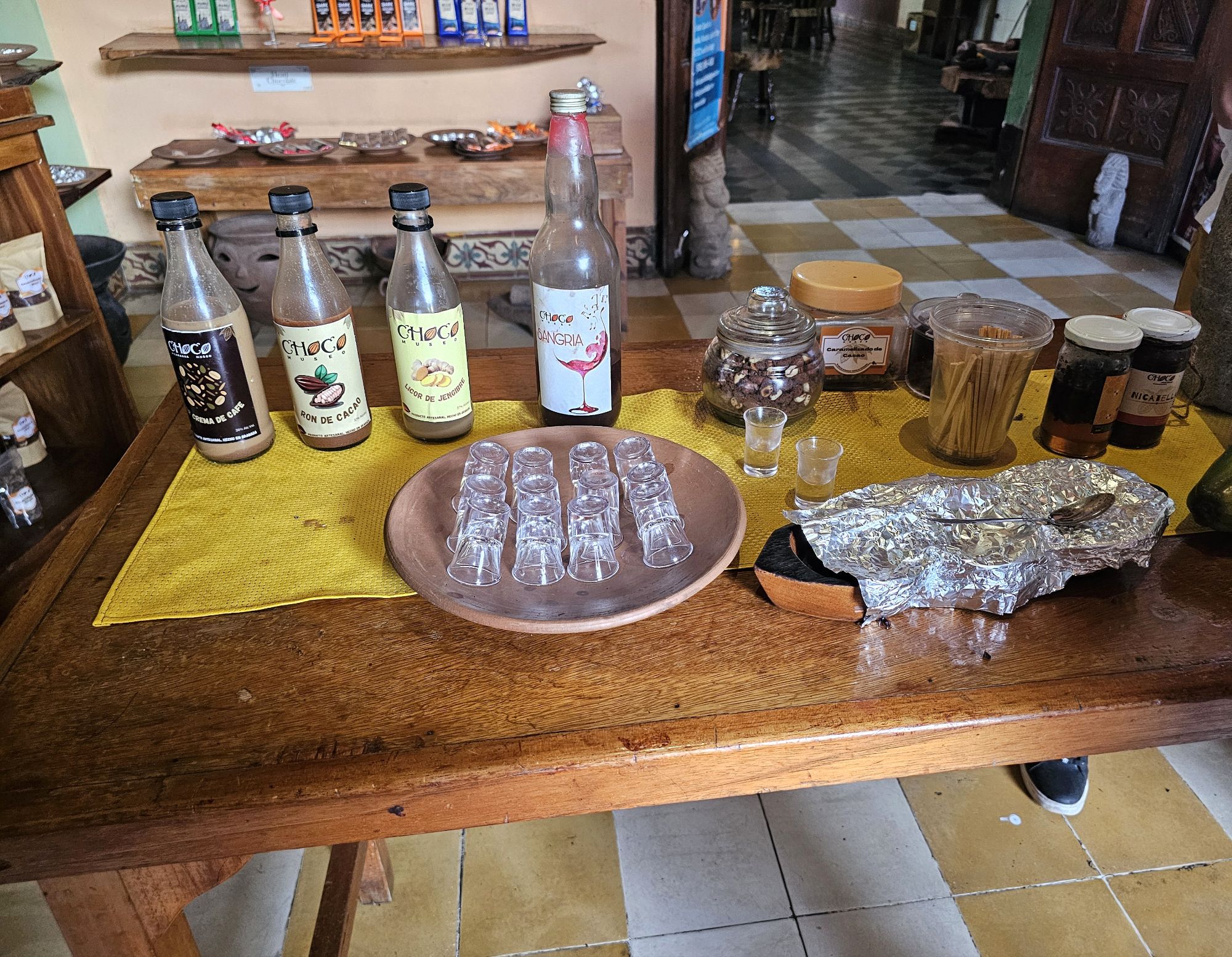
Granada is also home to two chocolate museums/factories. Bate Bate Chocolate where we wandered through and read all about the chocolate made here. The sign said they do tours and tastings, but nothing seemed to be happening during the time we were there, so we continued on to the Choco Museo & Cafe where we were greeted and immediately offered a tasting.
We got to sample several kinds of their chocolate, both caramel coffee and chocolate covered nuts, brownies, Nicatella (their version of Nutella) chocolate honey, and then some shots- crema de cafe, Ron de Cacao (chocolate rum) a chocolate & ginger tequila and then chocolate sangria! The tasting ended with a chocolate tea that tasted like Christmas to me with all the spices. It was all very good. Definitely a great stop! We toured around the museum and art gallery as well which explained the chocolate making process, the history of cacao beans and their value in the ancient world and featured local art work. They also offer chocolate workshops if you are looking for more chocolate fun!
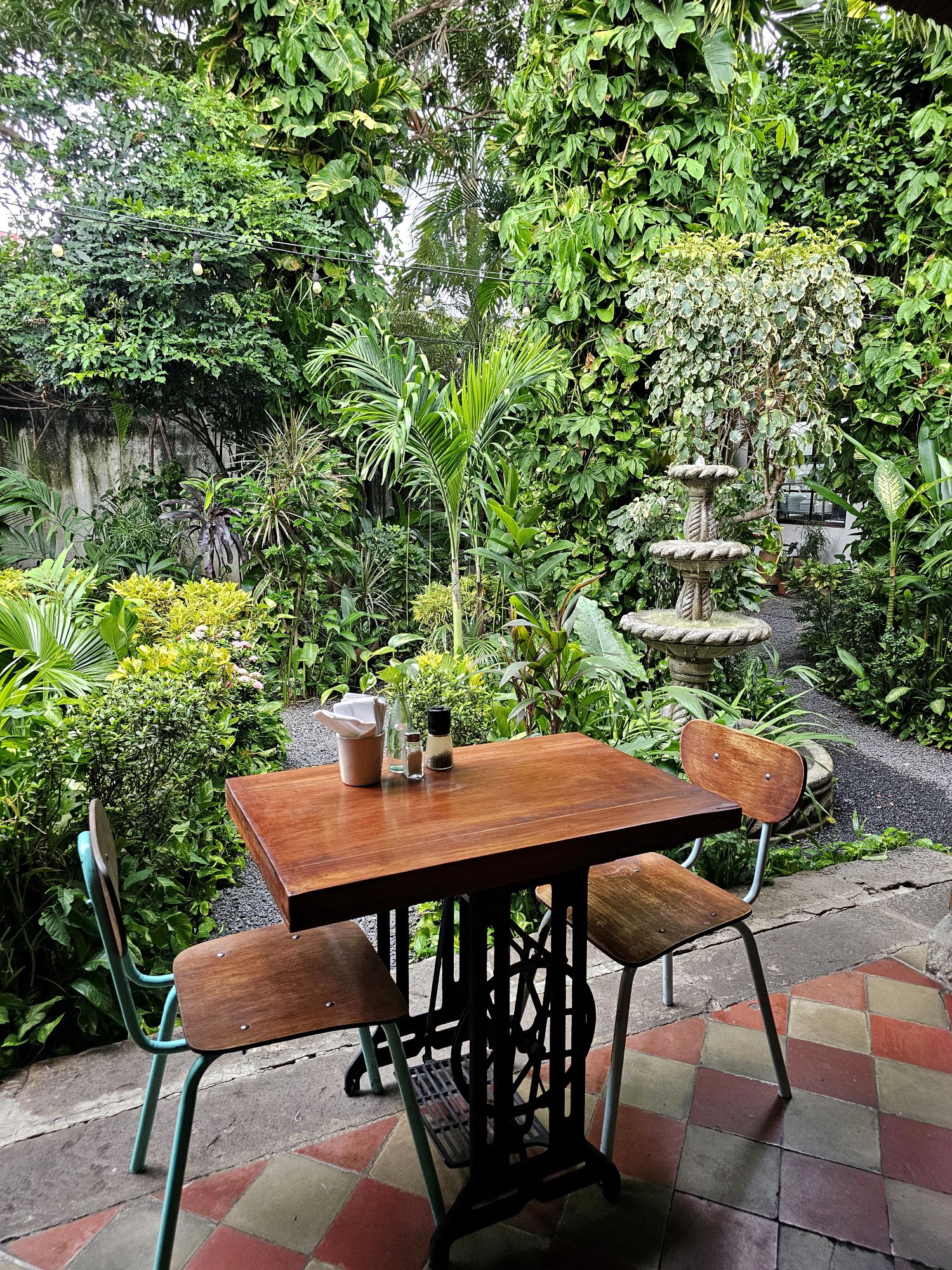
Ready for a break from the sun and humidity, we made our way to The Garden Cafe for a cold drink. This beautiful cafe right near the cathedral is the perfect spot to relax in the tranquil inner garden courtyard. They have a good selection of food and drinks on the menu and I opted for both an iced latte and a frozen blueberry lemonade. Both excellent choices on a hot, humid day!
Besides the cafe, there is a small artisan shop and a ‘take a book, leave a book’ library found inside. This would definitely be my hang out spot if I lived here!
Located about 30 minutes from Granada is another must-see spot- Laguna de Apoyo. This small lake is a nature reserve located between Masaya and Granada. It is one of the oldest lagoons in Nicaragua formed hundreds of thousands of years ago after the eruption of a volcano. Over the years, the open cone gradually filled with fresh water so clear and deep blue in colour and due to the volcano, the water stays naturally heated around 80F. It’s considered one of the cleanest natural lakes in Nicaragua and possibly all of Central America.
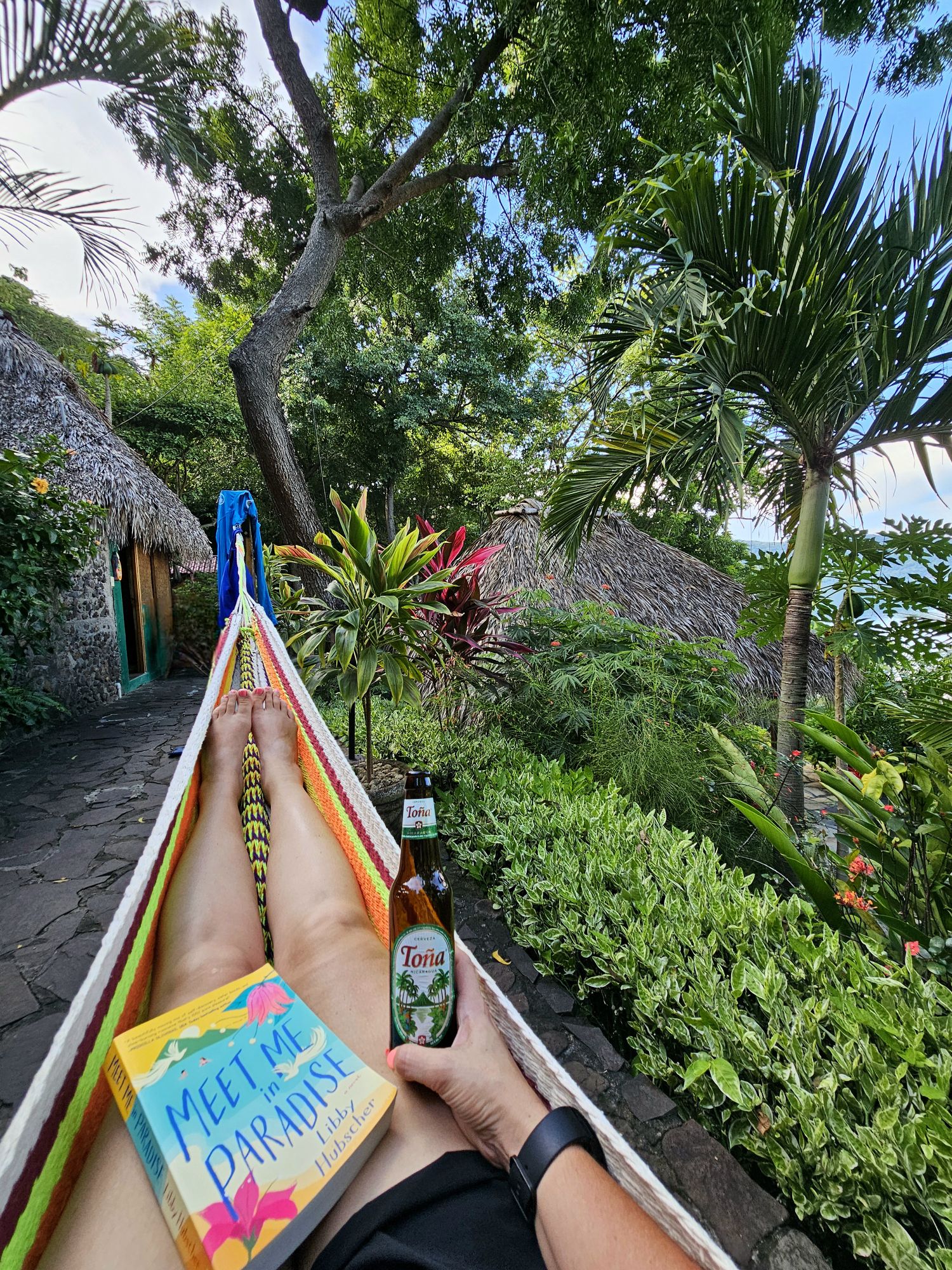
We checked into the San Simian Lodge right on Laguna de Apoyo and took the kayaks out to explore the laguna a bit before jumping in for a swim. The lodge is built on a hill, with a beautiful view of the laguna and cute little bungalows. With hammocks to relax in and good local meals available at the restaurant, it was a great place to relax for a couple of days.
Whether you choose to stay in Granada or relax on the shores of Laguna de Apoyo, be sure to add both stops to your Nicaraguan adventure!
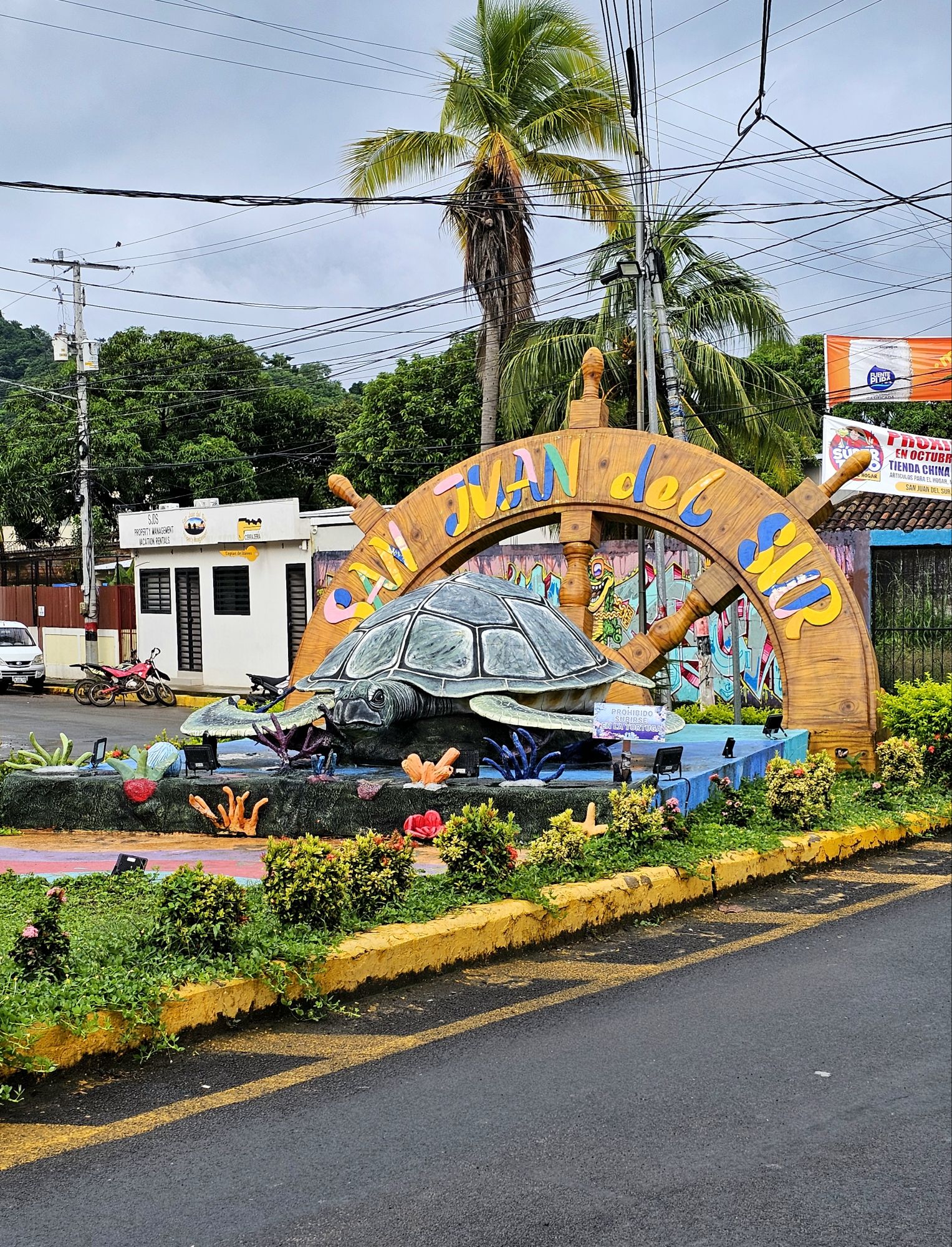
Not too far from the border with Costa Rica, along the Pacific Coast of Nicaragua, lies San Juan del Sur, a once quiet fishing village that became a hub for those looking to explore or surf the awesome beaches both to the north and south of town.
The town is small and easily explored on foot. While San Juan del Sur itself doesn’t have a great beach, it does have a lot of great restaurants and bars along the waterfront. It also has a party scene, especially on weekends during the dry season and has only clubs in the area.
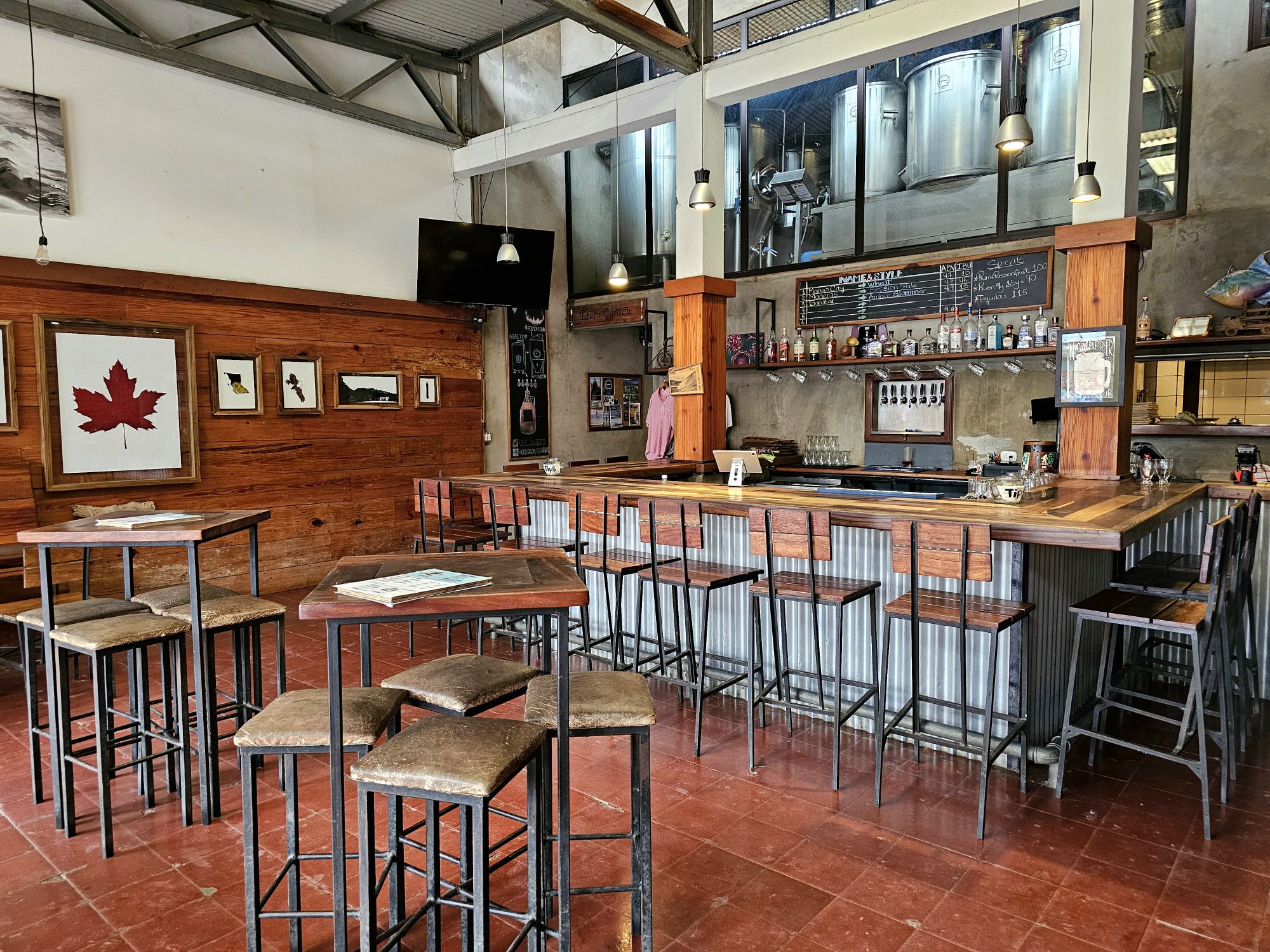
As I left my clubbing days behind me years ago, I opted to check out the local brewery, Nicaragua Craft Beer Co – Cervecería San Juan del Sur, the first craft brewery in Nicaragua.
They have a few beers on tap, a beer garden out back and Open Mic night every Wednesday. They also have amazing ‘Drunken Nachos’ with pair perfectly with a flight of their beers!
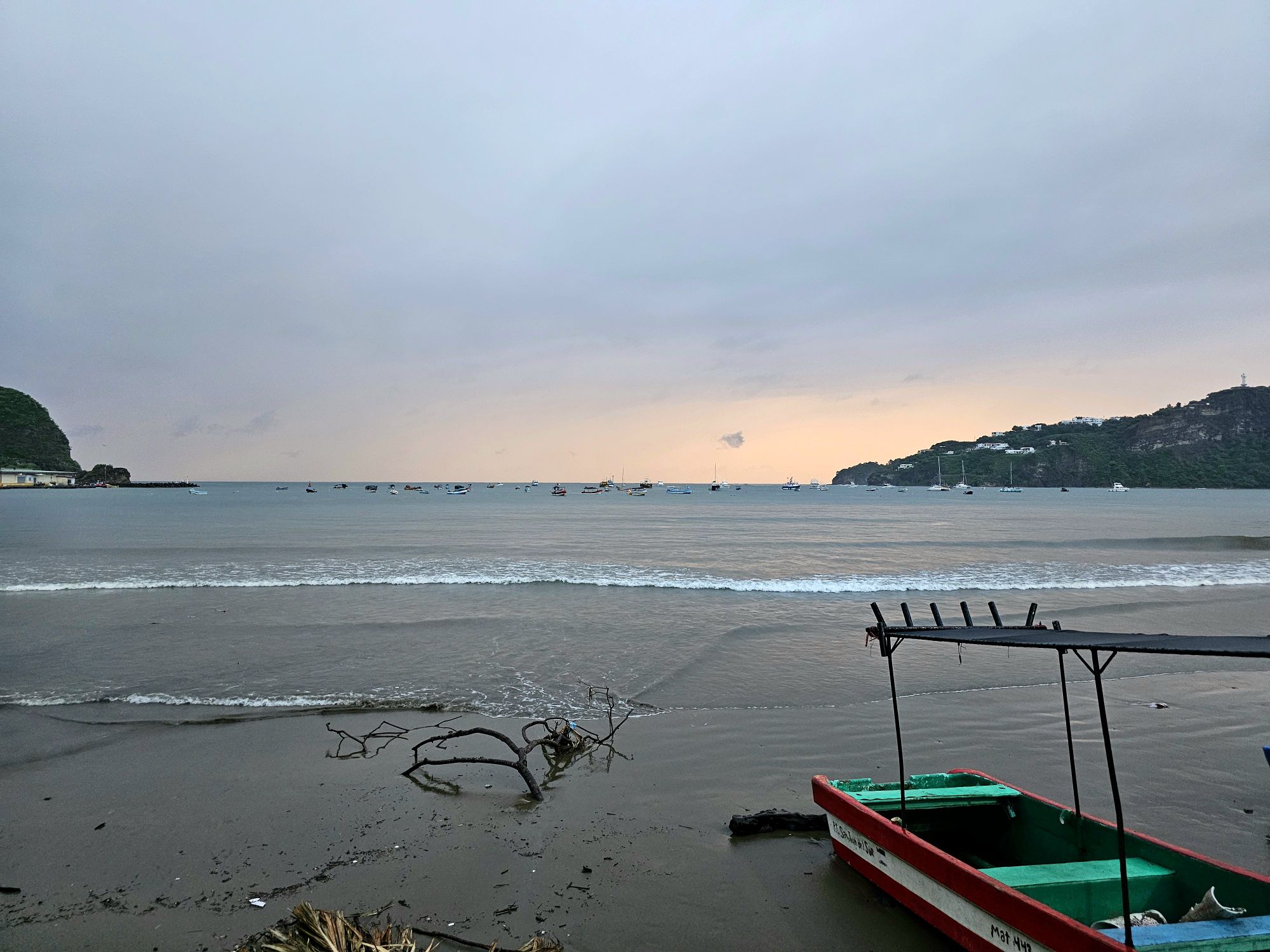
As we were here in rainy season, we spent most of our day in San Juan del Sur finding places to duck into each time it started to rain!
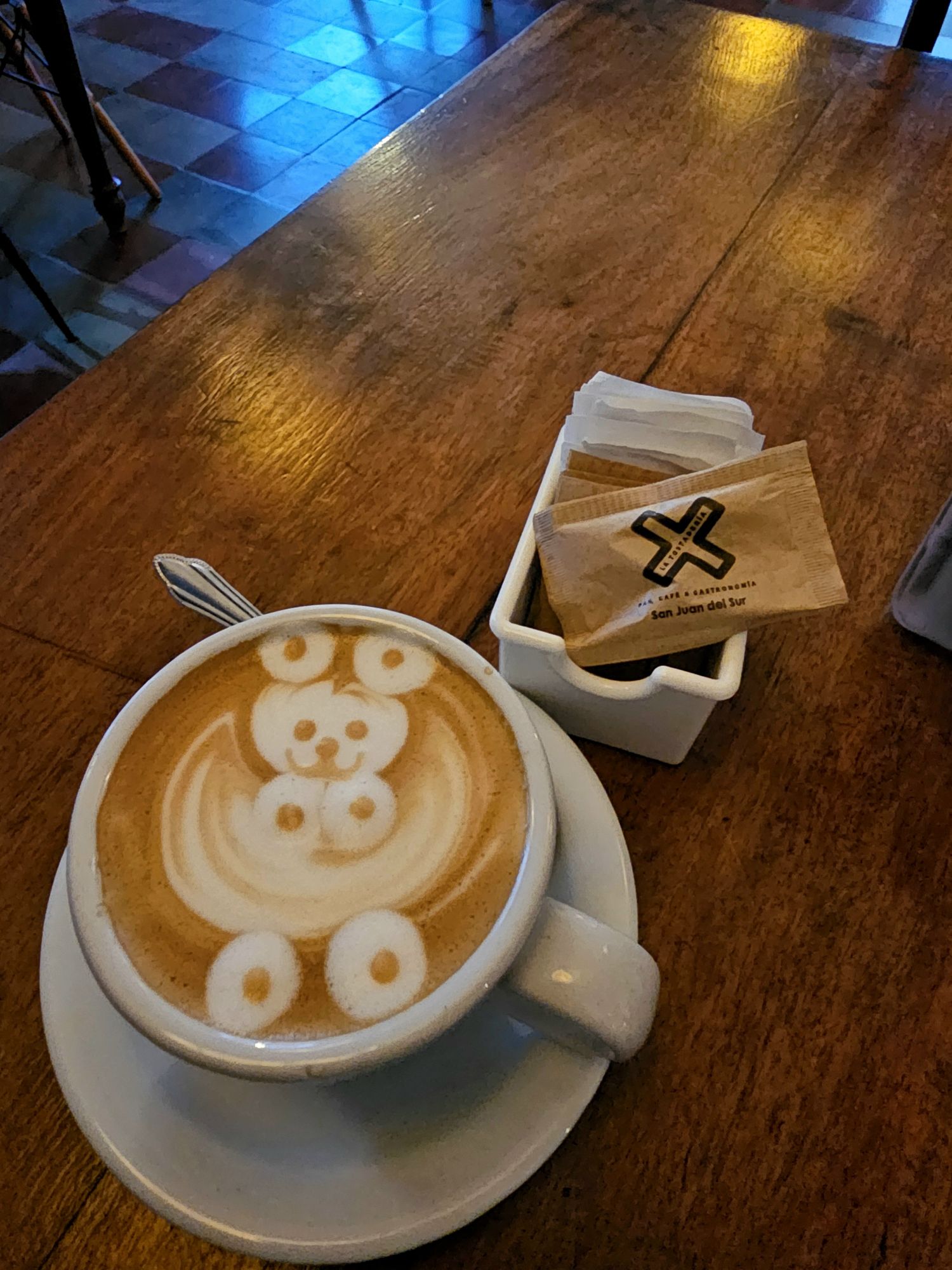
La Tostaderia, was the perfect place to stay dry while enjoying a latte (with the cutest little latte art!) and watch the waves crash in across the street.
And no trip to San Juan del Sur would be complete without surfing! There are numerous places in town offering surf lessons and board rentals as well as rides out to the other beaches.
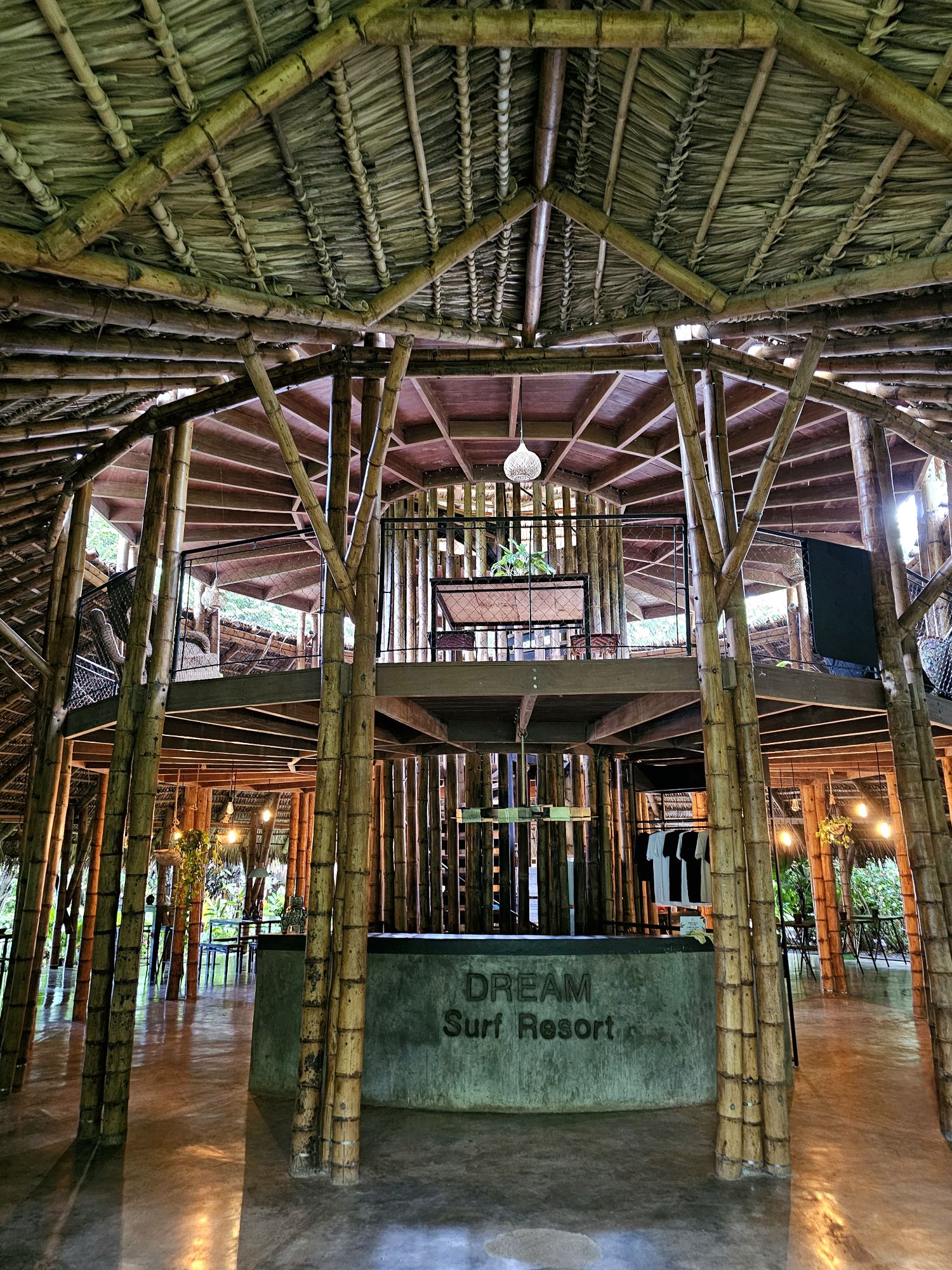
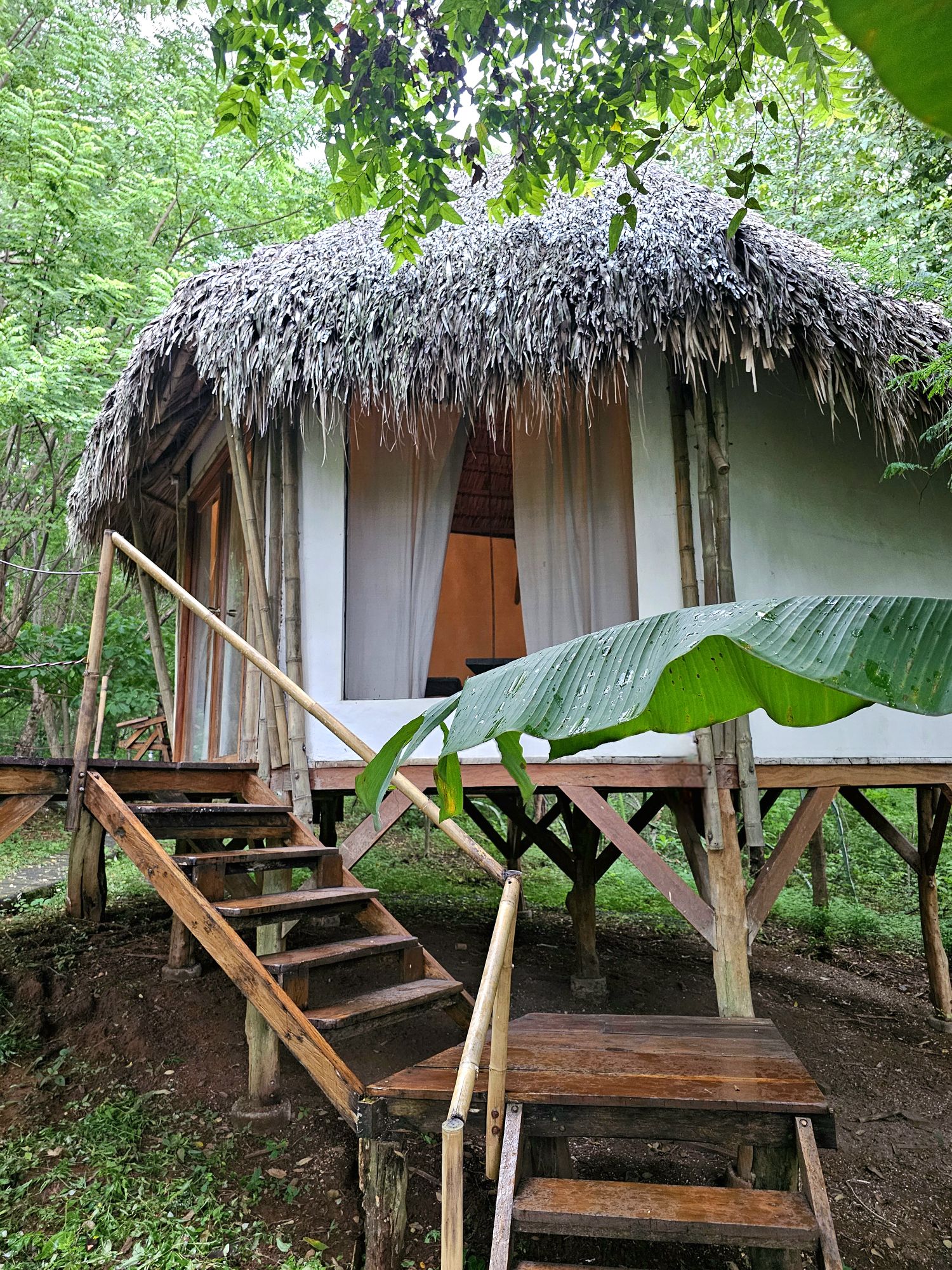
My sister joined me on this trip and we opted to stay only one night in San Juan del Sur and the other two nights outside of town at the Dreamsea Nicaragua– a sustainable eco-lodge located in a tropical paradise!
You can sign up for the week long surf camp or if you aren’t staying that long you can just take surf lessons or rent a board.
The resort was gorgeous, with delicious meals and morning yoga with a beautiful view!
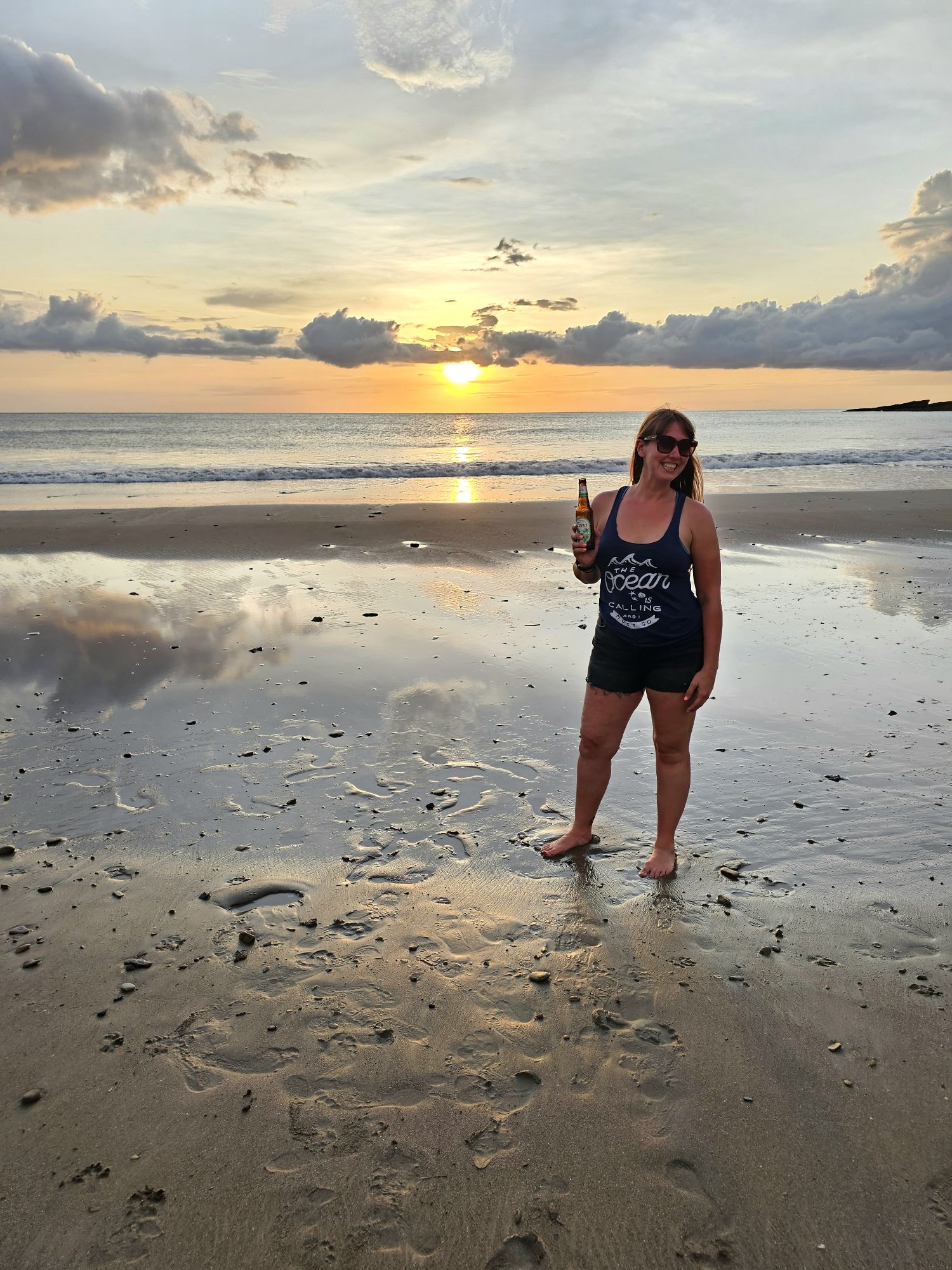
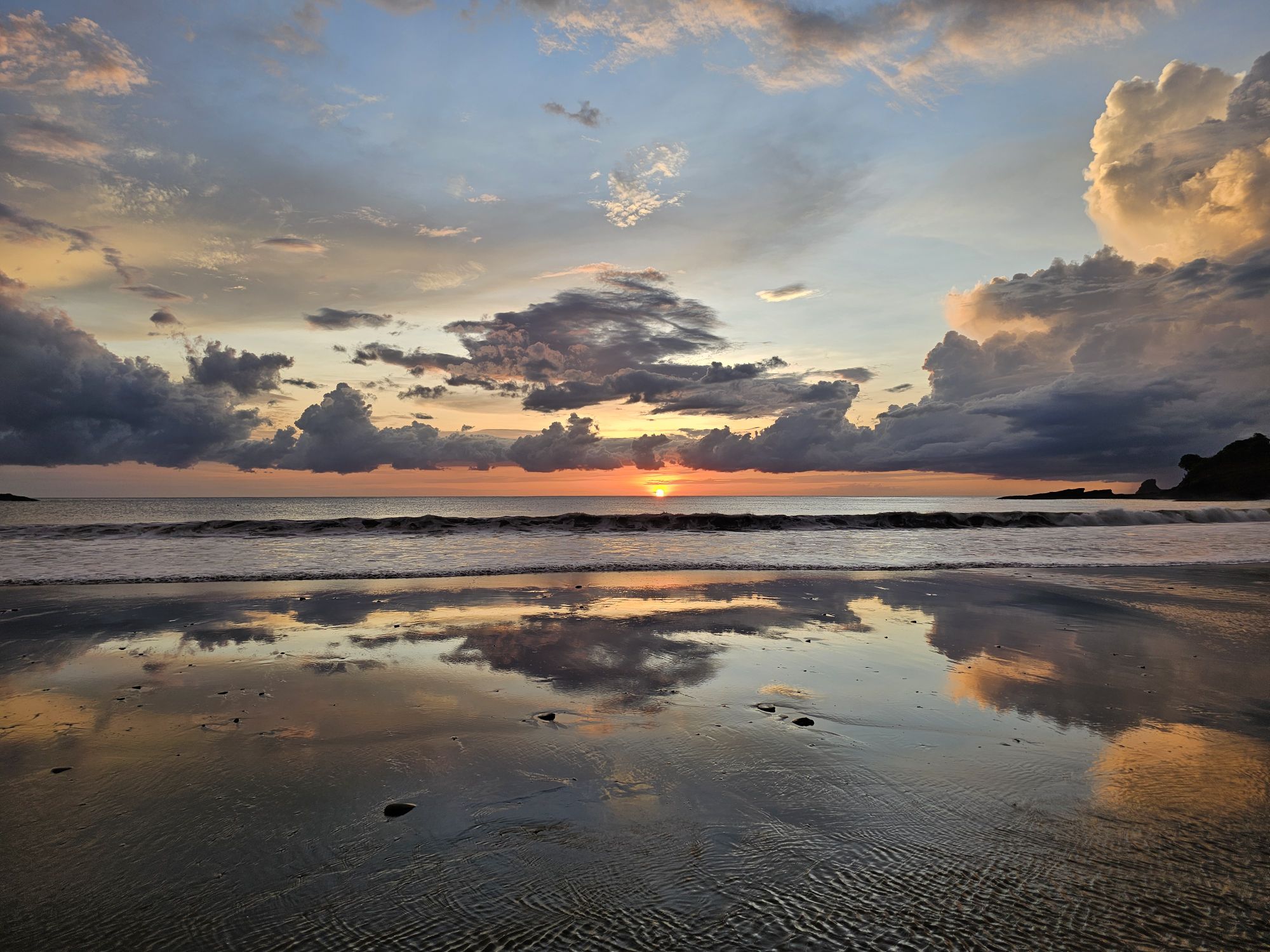
There are also lots of group activities, including a sunset beach picnic at Playa Marsella, a good swimming beach with gorgeous sunsets!
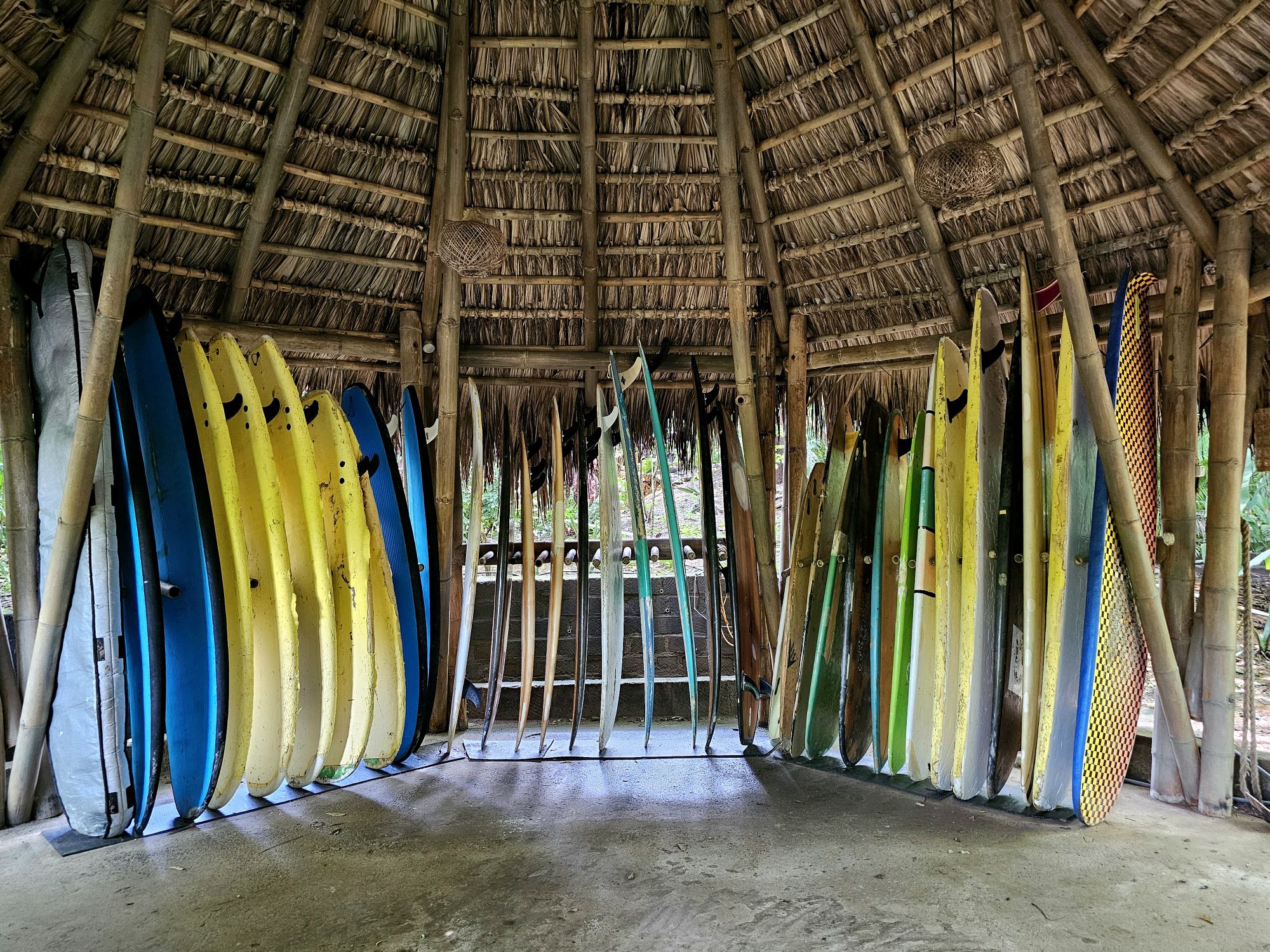
We signed up for a surf lesson, which included one hour of surf theory, that day it was in the pool, followed by 1.5 hours in the water and all equipment. We headed to Playa Remanso, a nice little bay which has a smaller beach break, making it ideal for beginners.
It had been about a decade since I last tried surfing, so my goal was to get up and ride a wave….and I was able to do that on the first try!
Our instructor, Luis, was great and helped the 3 of us find our waves. What an incredible feeling it is to ride a wave into shore. Feels like you’re flying on water!
After our lesson, we walked along the beach and watched as those with a lot more skill caught some waves. I will definitely need more practice before I can surf like these guys!
The whole atmosphere in this area is very relaxed. The perfect spot for those looking to learn how to surf or just relax at the beach, while still being able to enjoy a great meal. If you’re heading to Nicaragua, be sure to add San Juan del Sur to your list!
Nestled in the Balkans along the Adriatic coast with rugged mountains, medieval villages and beautiful beaches, Montenegro has something for everyone. It only became an independent country in 2006 and while they are not officially part of the European Union yet (scheduled for 2028 as long as the requirements are met) they do use the Euro as their currency.
You could easily spend a week or so exploring this beautiful country, but if you are short on time, you can get a good feel for Montenegro in a full day.
It is an easy day trip from Dubrovnik either by car or by bus.
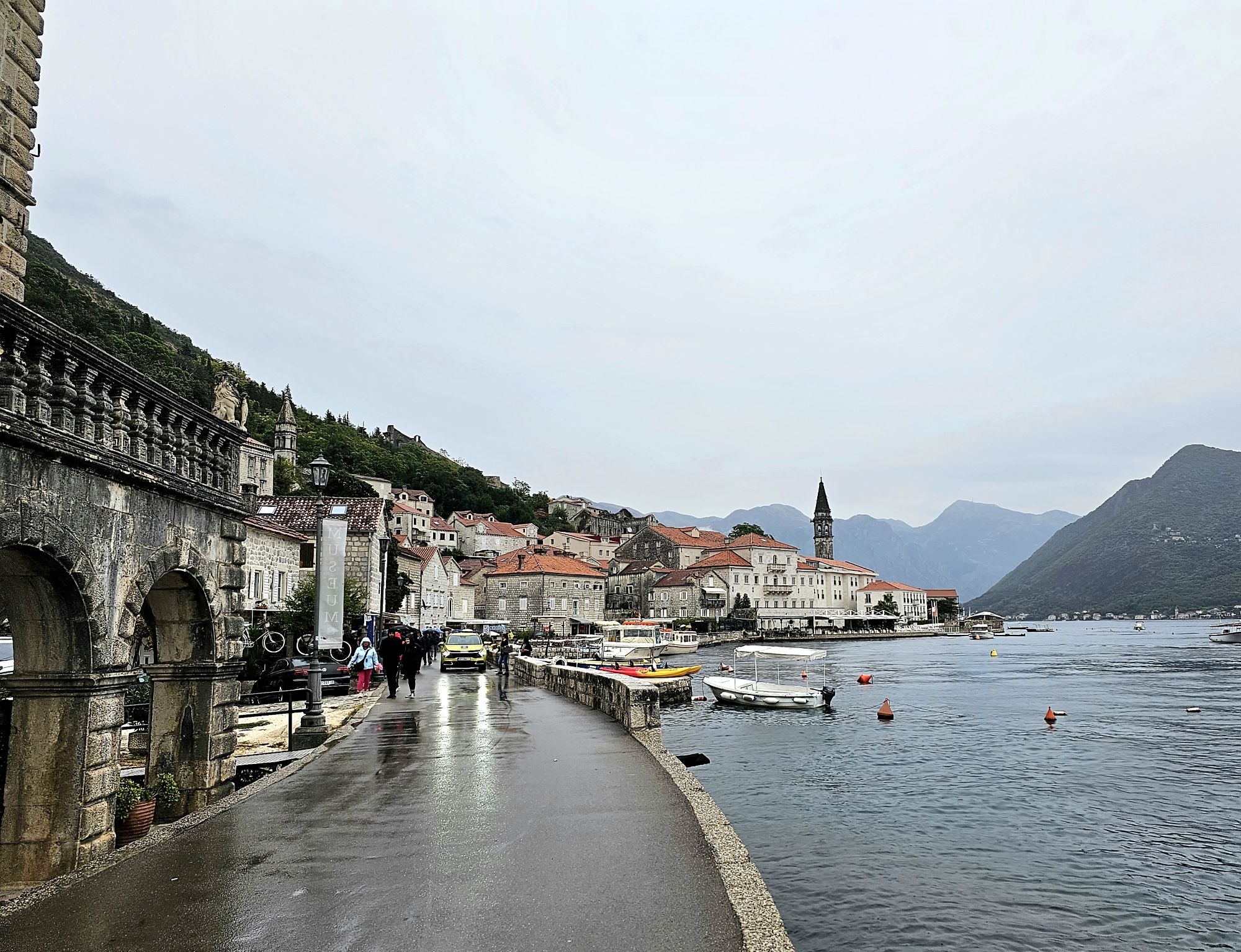
After crossing the border, we made our way to the small town of Perast, on the Bay of Kotor.
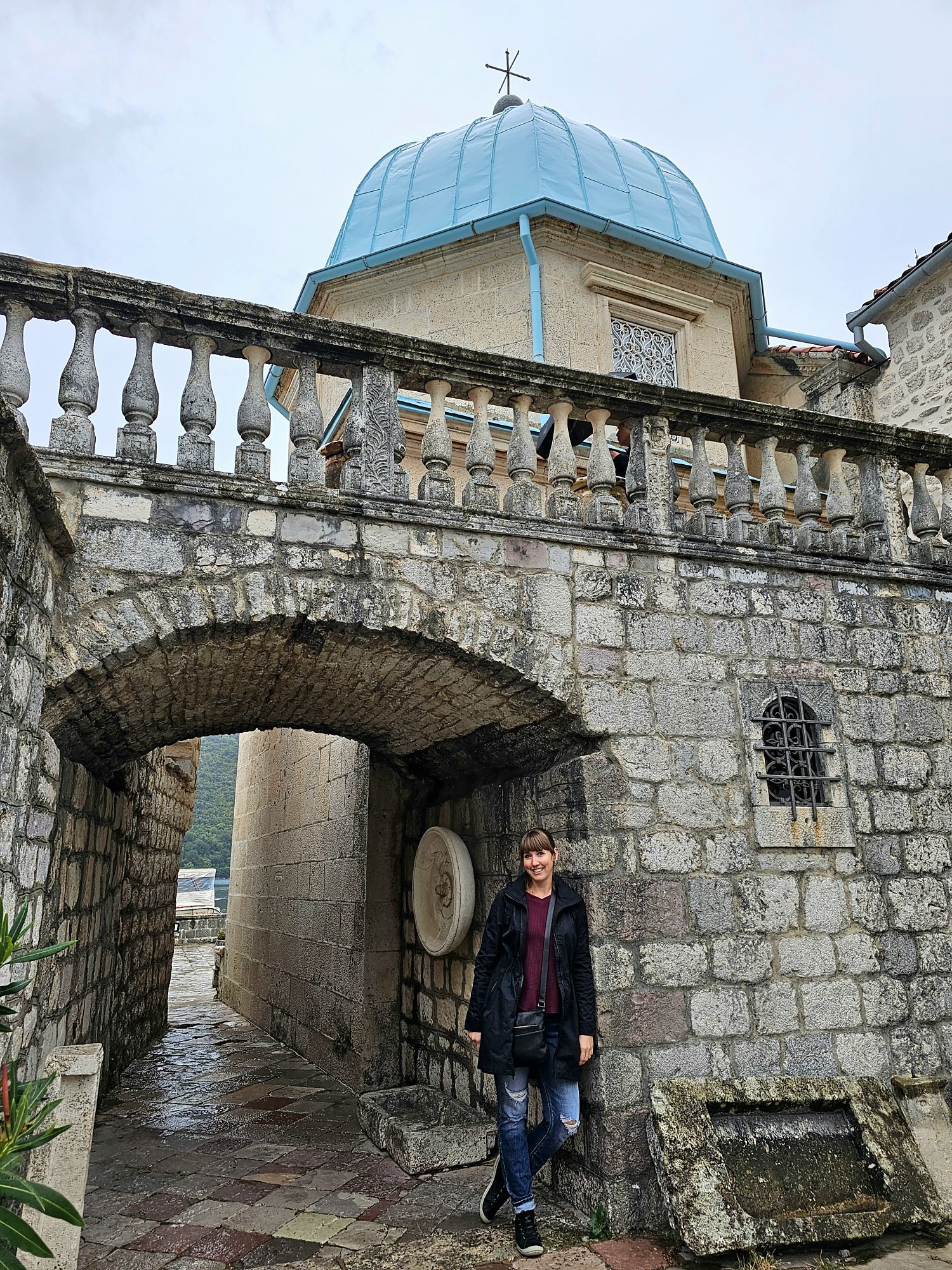
From here, you can board a boat and head out into the Bay of Kotor to visit Our Lady of the Rocks. (€10 RT).
This small islet was created by a bulwark of rocks and made bigger by sinking ships loaded with more rocks. The Roman Catholic Church of Our Lady of the Rocks is the only building found on the islet.
According to legend, the islet was built over the centuries by sailors after finding the icon of Madonna and Child on the rock in the sea on July 22, 1452. From then on, after each successful voyage, they laid a rock in this spot in the bay. Over time, the islet gradually emerged from the sea. This tradition continues today, when every year at sunset on July 22, local residents take their boats and throw rocks into the sea continuing to widen the surface of the island!
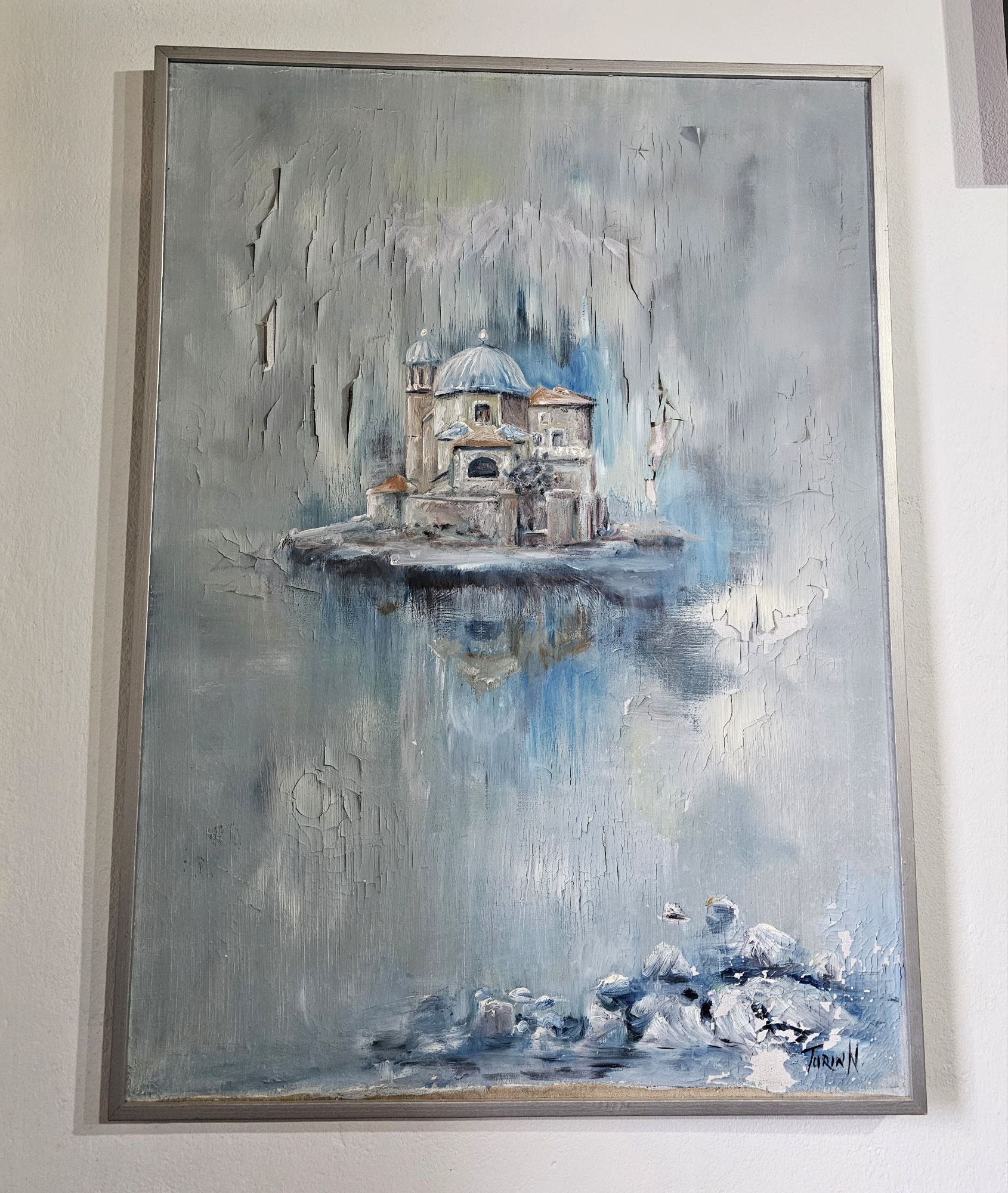
The first church was built in 1452. It was later taken over by the Catholics and in 1632 the present Church of Our Lady of the Rocks was built and then later renovated in 1722. It costs €2 to enter, but is well worth seeing the beautiful artwork inside. This includes 68 paintings by Tripo Kokolja, a local 17th-century baroque artist, silver votive tablets and the famous votive tapestry embroidered by another local, Jacinta Kunić-Mijović. It took her 25 years to complete her work and she went blind in the process. She used gold and silver fibres but what makes this tapestry so famous is the fact that she also embroidered her own hair into it.
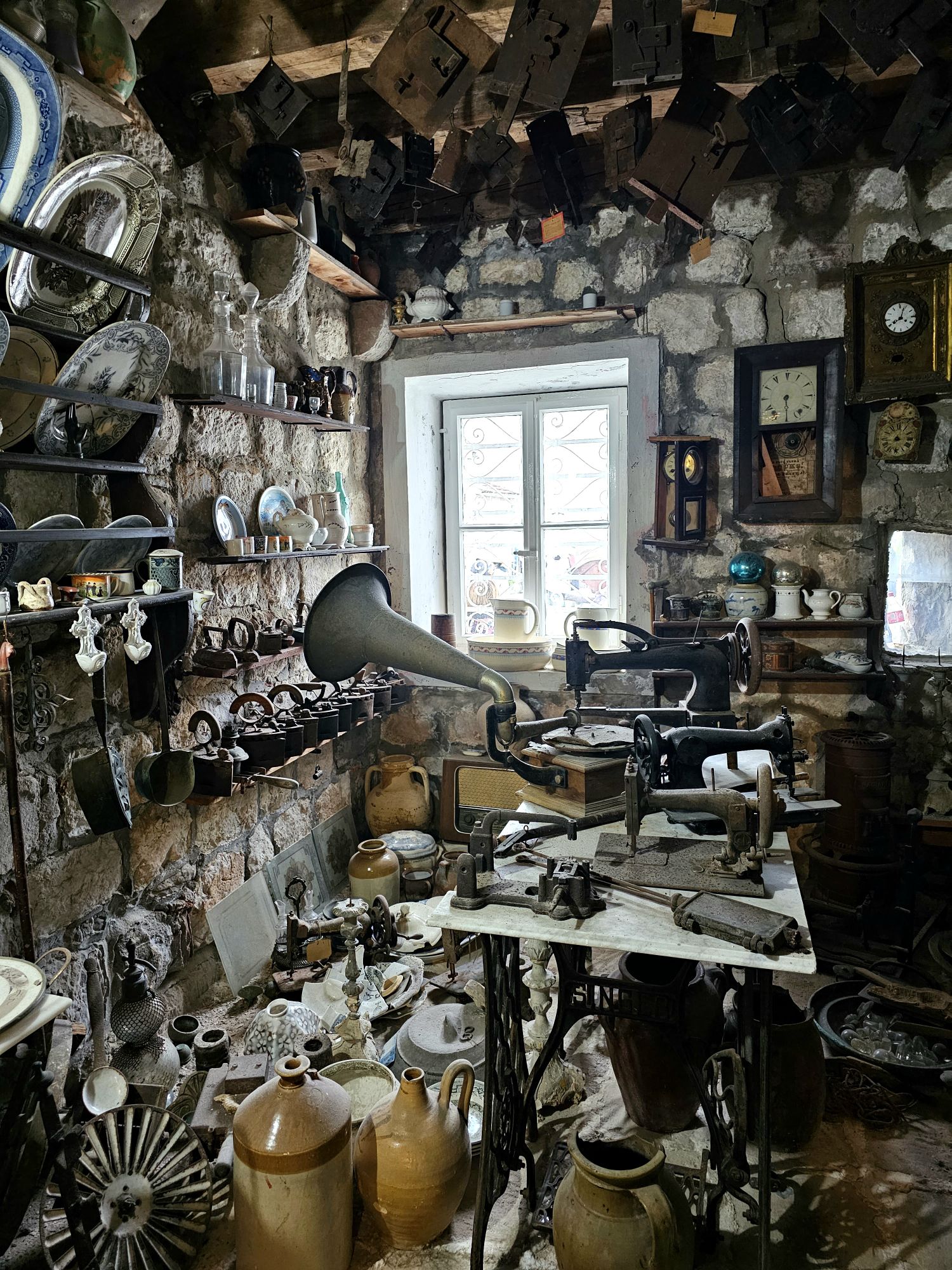
Today, the upstairs area has been turned into a museum filled with artifacts from life in Perast including beautiful paintings, tools, weapons and household items.
There is another islet nearby, Sveti Dorde or St George Islet, which has a small monastery from the 12th century and a cemetery for Perast nobility.
The town of Perast itself is small, but worth a wander around if you have a chance. The seafront promenade runs for 1.5km along the bay, making it the perfect place to go for a stroll.
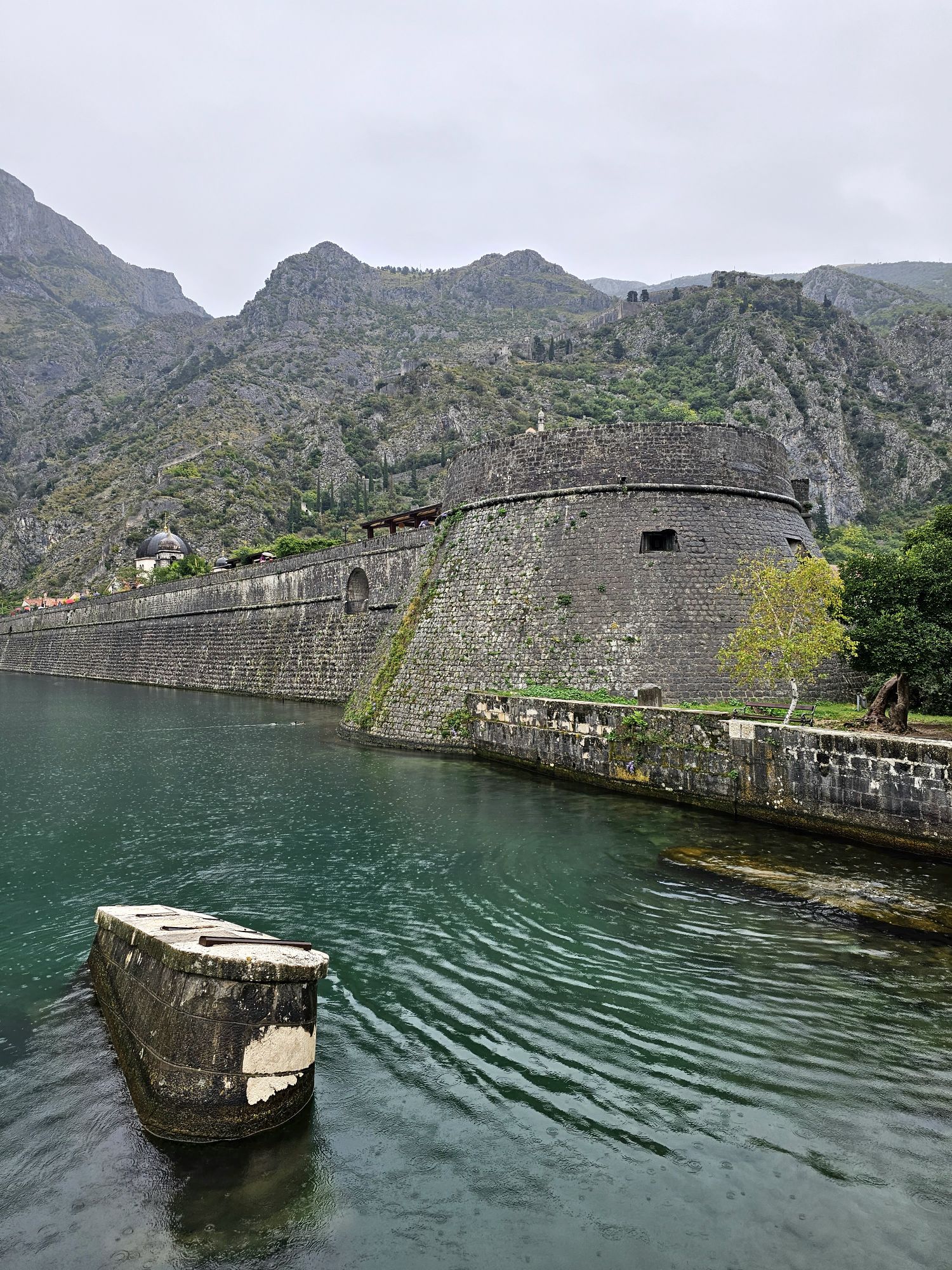
From here, we continued around the Bay to Kotor, making our way to Kotor’s famous Old Town.
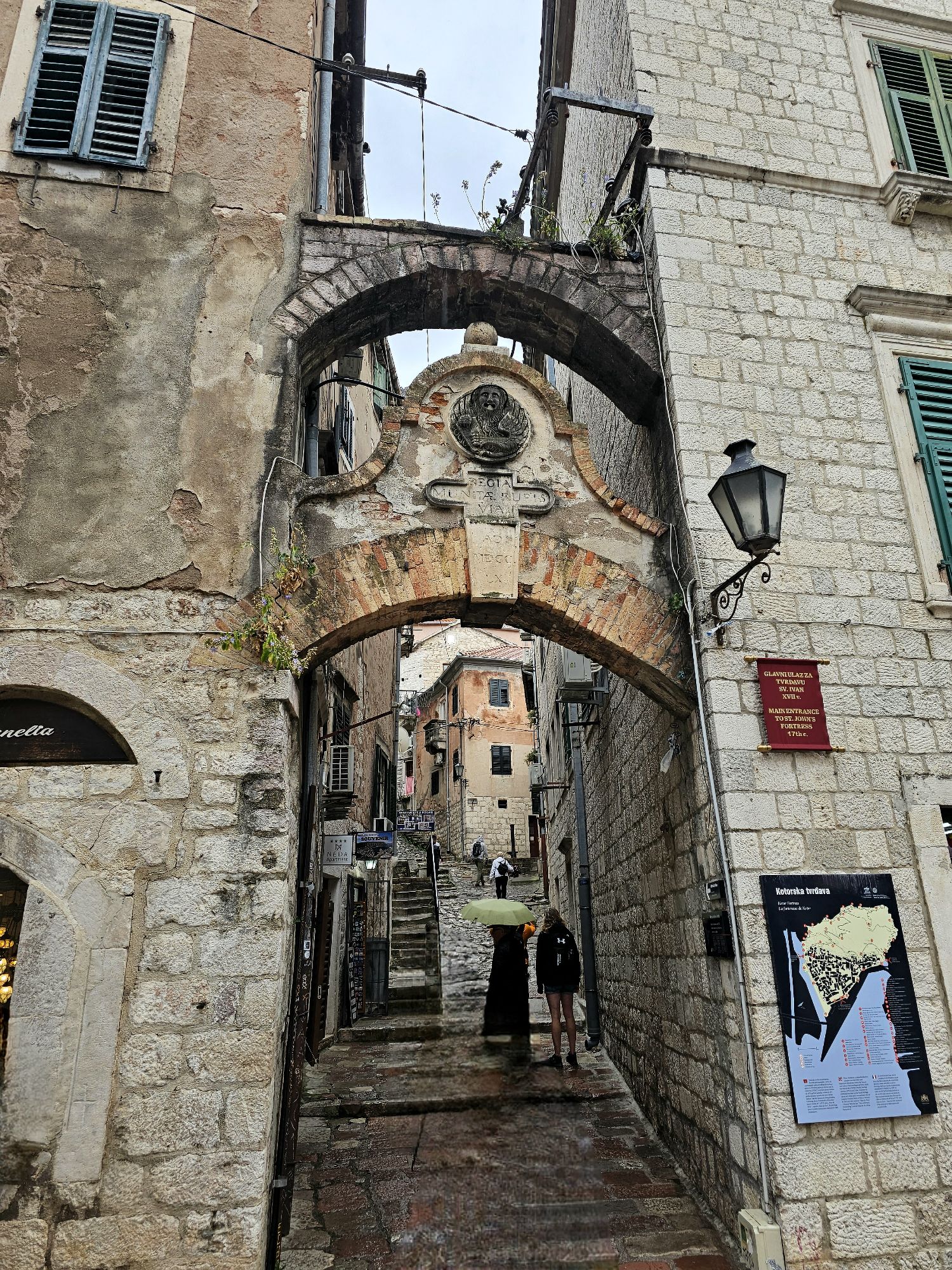
Old Town is completely walled in and it costs €1 to enter through the main gates, built in 1555.
You can walk a small section of the walls for free, but you need to pay if you want to head up into the hills. (Cost €8) The free section has great views of the hills, the water below and several of the churches inside the walls.
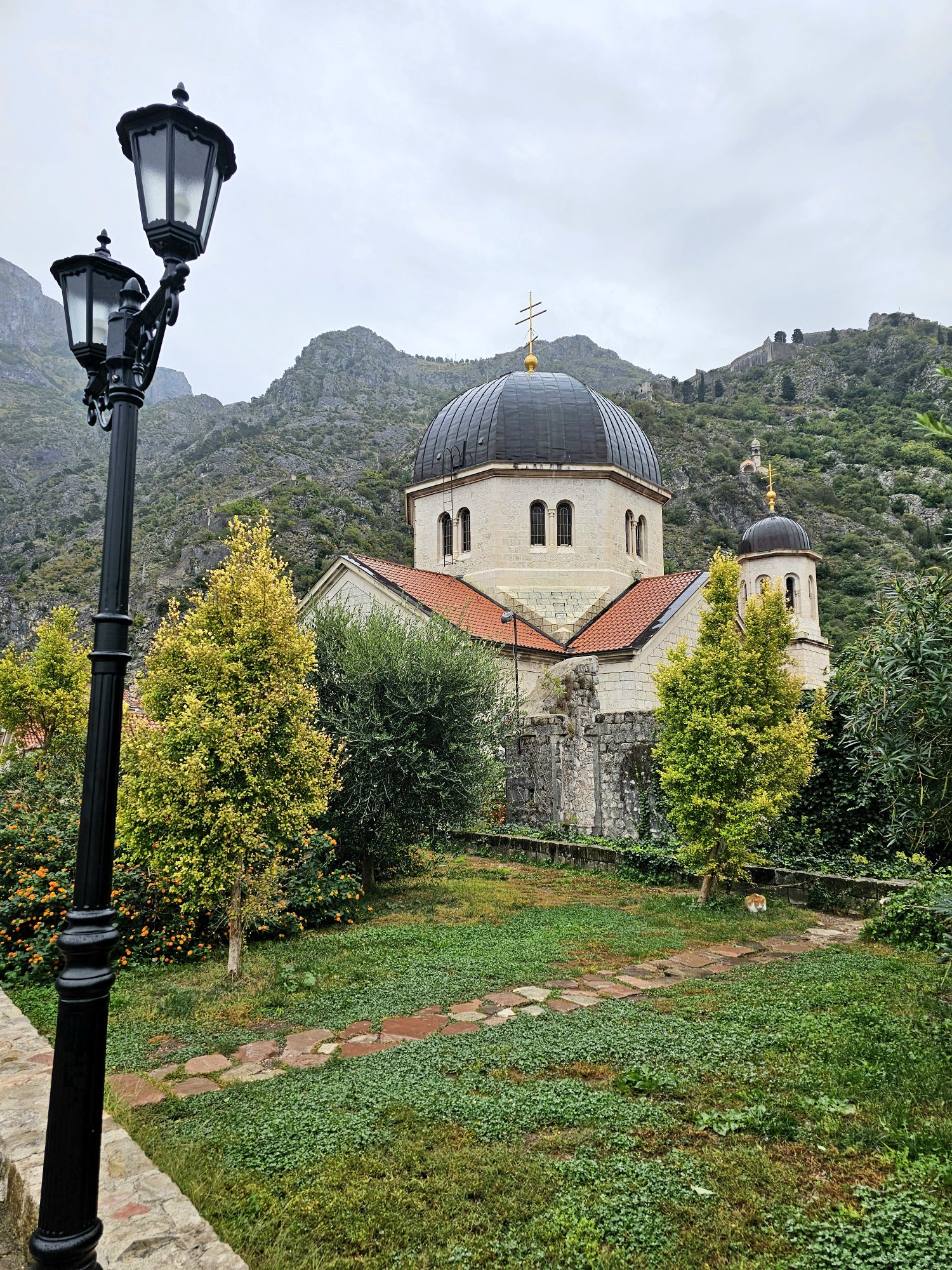
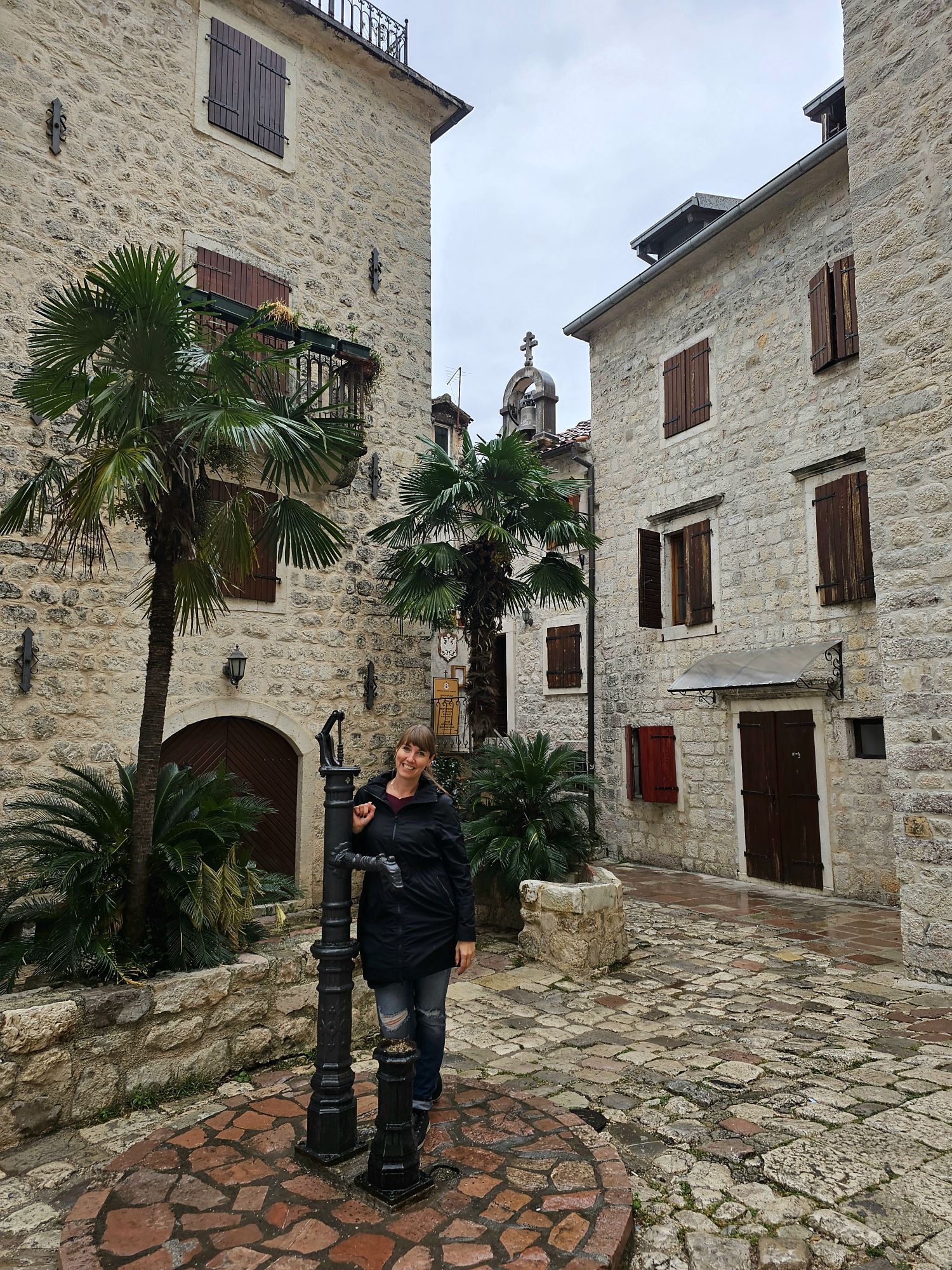
Old Town is listed as a UNESCO World cultural site and it is easy to see why. I loved wandering around the cobblestone streets with all the old sandy coloured medieval buildings with their dark green shutters and terracotta roofs. There are a number of old churches found here. The most famous one is St. Tryphon’s Cathedral.
Now a church and a museum, this is definitely one of the most impressive looking buildings. It was built in 1166 and then reconstructed after it was damaged by several earthquakes. The front was also destroyed in 1667 and during the renovation, baroque bell towers were added. However, the one of the left remains unfinished and is shorter than the one on the right.
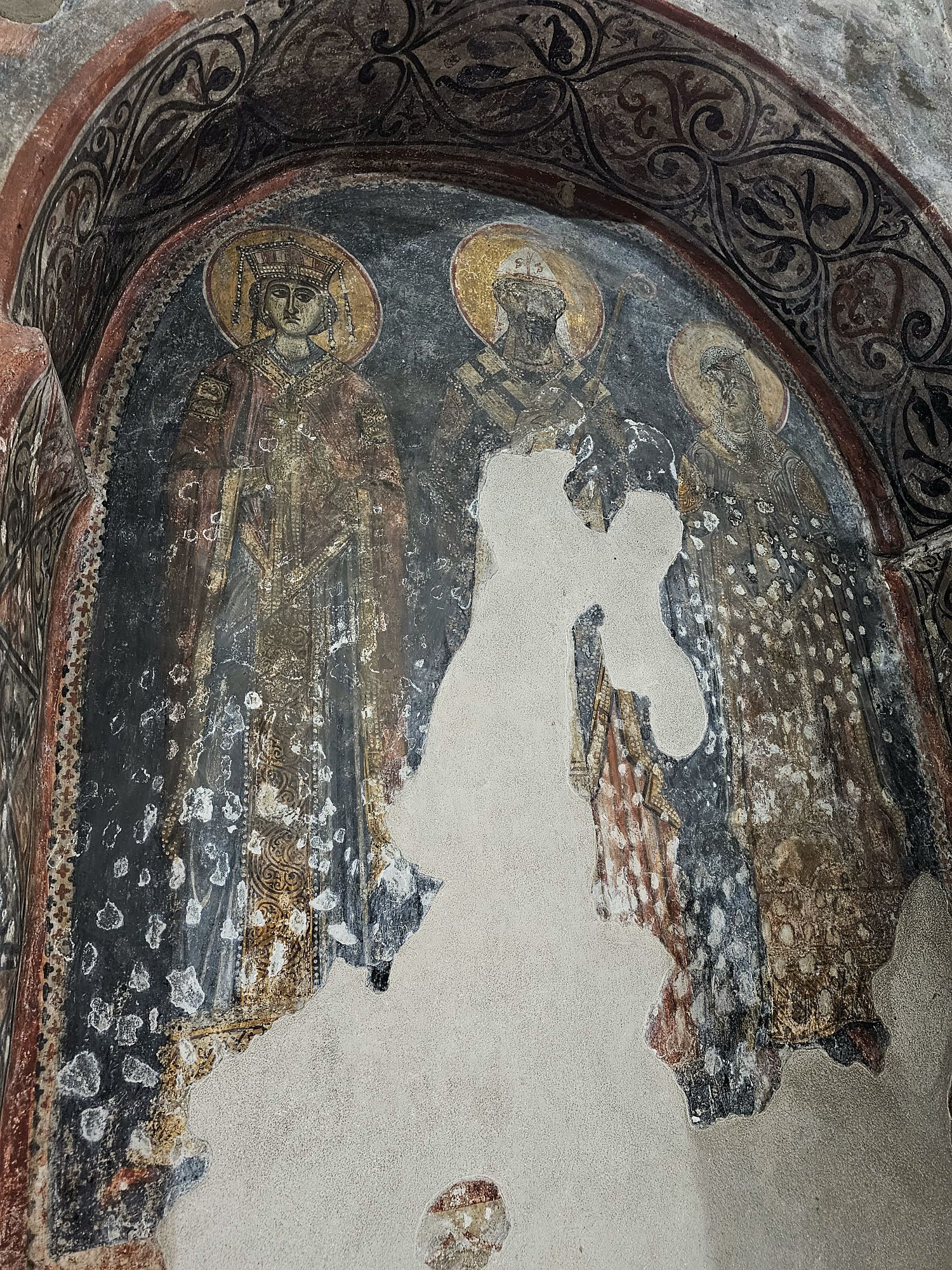
The Serbian Orthodox Church, Sveti Nikola is found in St. Lukes Sq with two large green domed towers and a Serbian Flag. It is beautiful inside with vaulted ceilings, paintings and ornate carvings. In the same square you will find Sveti Luka, a smaller church from 1195 containing some of the original fresco murals painted on the walls. There are a number of other churches located in Old Town, many of which you can enter.
There are also lots of shops, restaurants and cafes found in within the walls of Old Town Kotor.
We stopped for a slice of Moskva Snit cake, which was highly recommended as a local dessert. Made with pineapples, sour cherries, almond and butter cream, it was delicious!
If cats are your thing, there is also a Cat Museum located here. As my husband is allergic, we decided not to explore this one, but you will find cats everywhere. They are loved and considered sacred here. They are seen as good luck as they get rid of mice, rats and snakes and by doing so helped to protect the city from disease. You will find cat souvenirs in every store!
I loved just wandering around the cobblestone streets and through the narrow alleyways. Such a beautiful place to explore!
About a 30 minute drive along the Bay of Kotor, you’ll find Budva, a summer beach getaway on the Adriatic Sea.
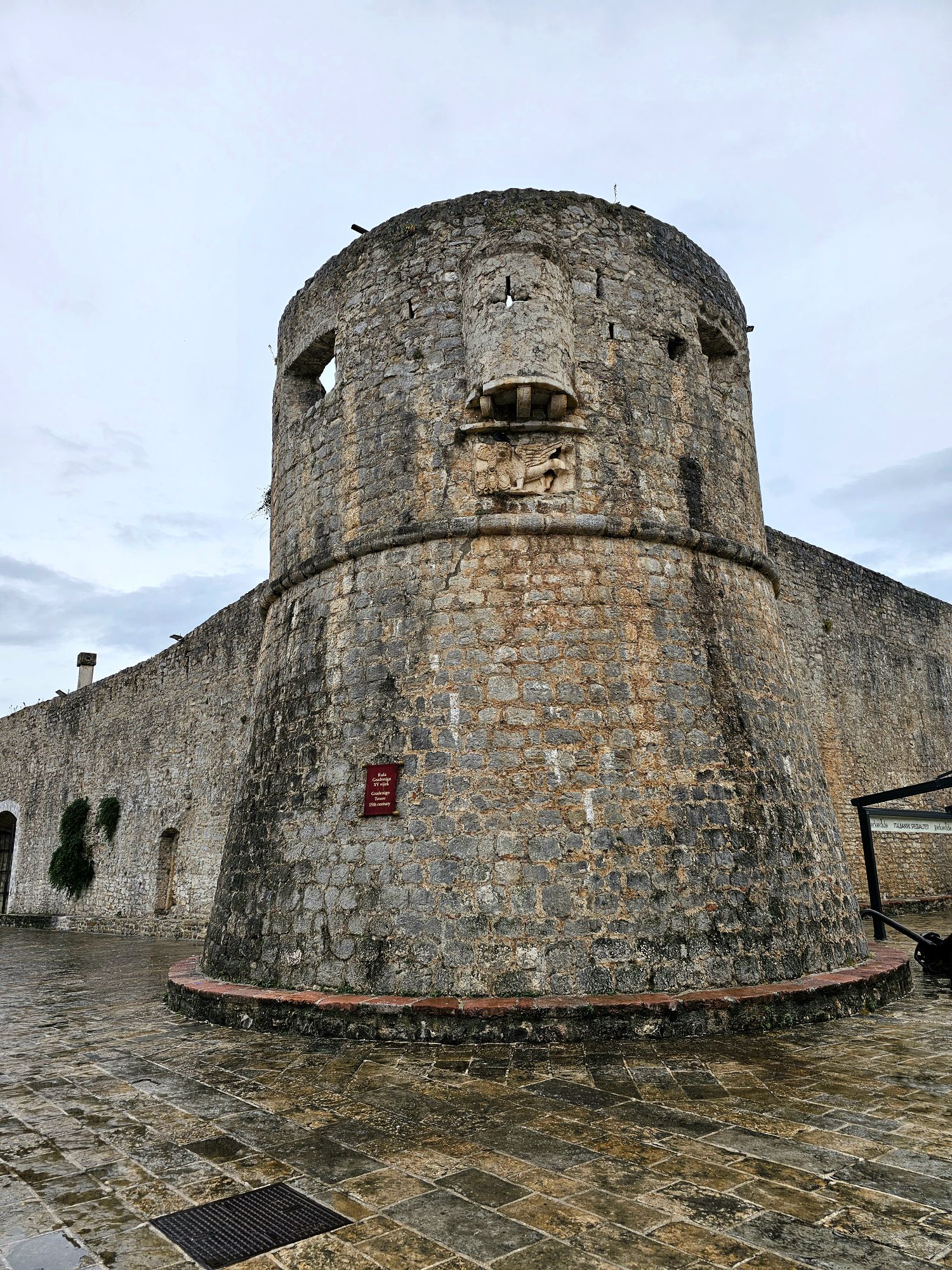
‘Budva Riviera’ is known for its sandy beaches and nightlife. This part of Montenegro is growing and there is construction everywhere. However, amongst all the new builds is the Venetian walled Old Town- Stari Grad. While it is much smaller than Kotor’s Old Town, it is definitely worth exploring.
Located right on the water, next to a marina filled with fancy yachts and fishing boats, you can enter into Old Town through one of the five gates. Budva dates back 2500 years, making it one of the oldest settlements on the Adriatic coast.
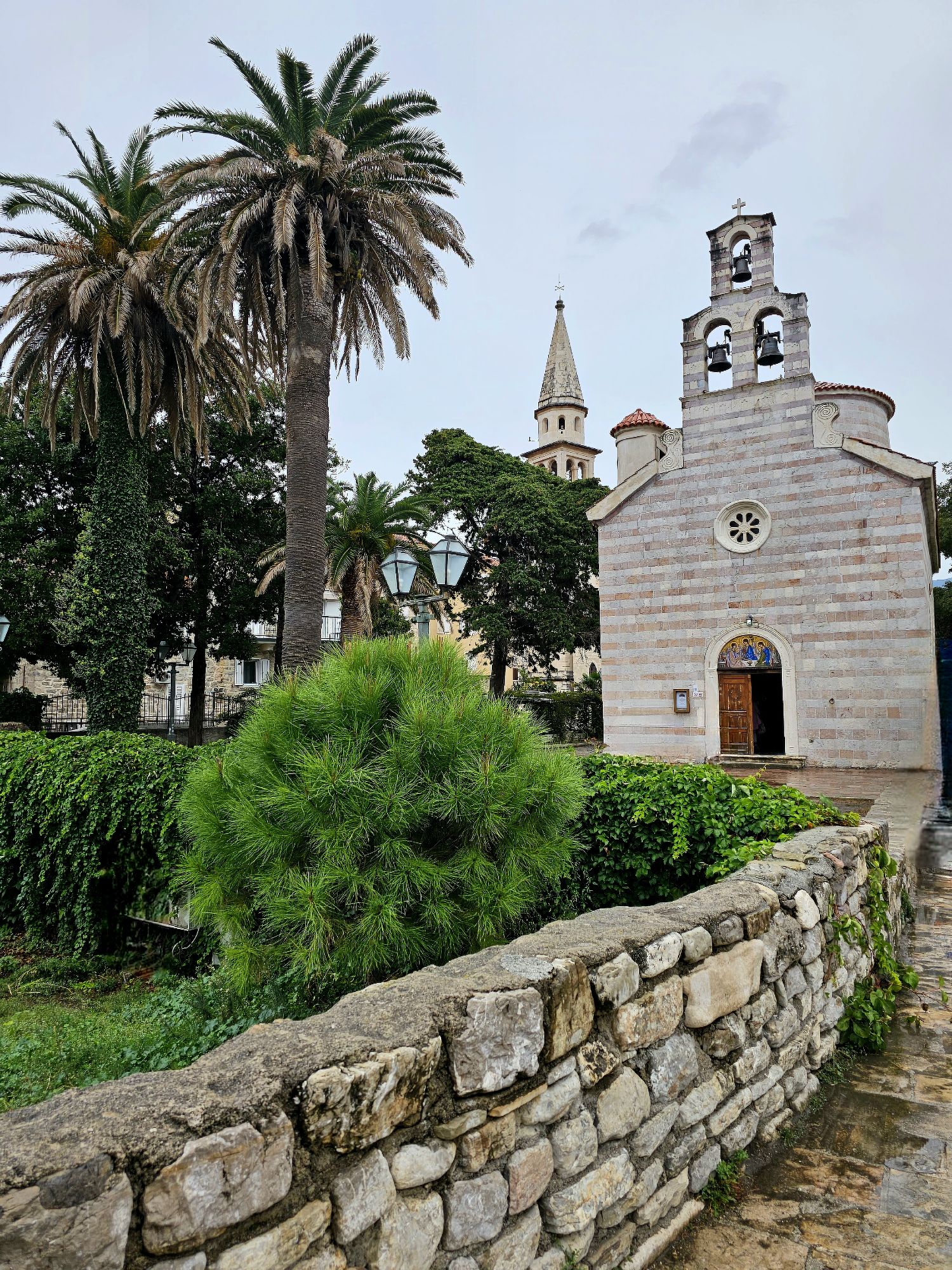
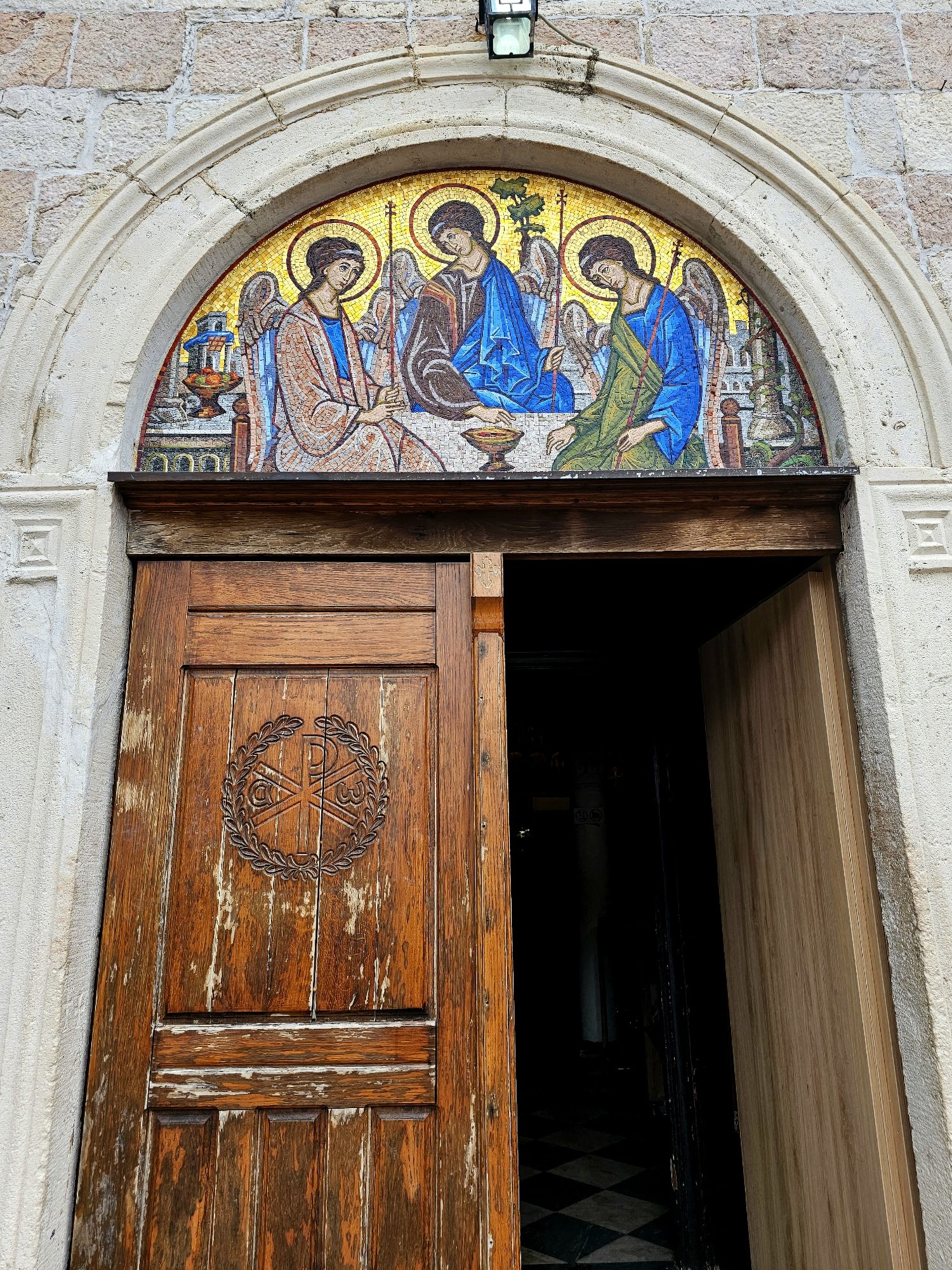
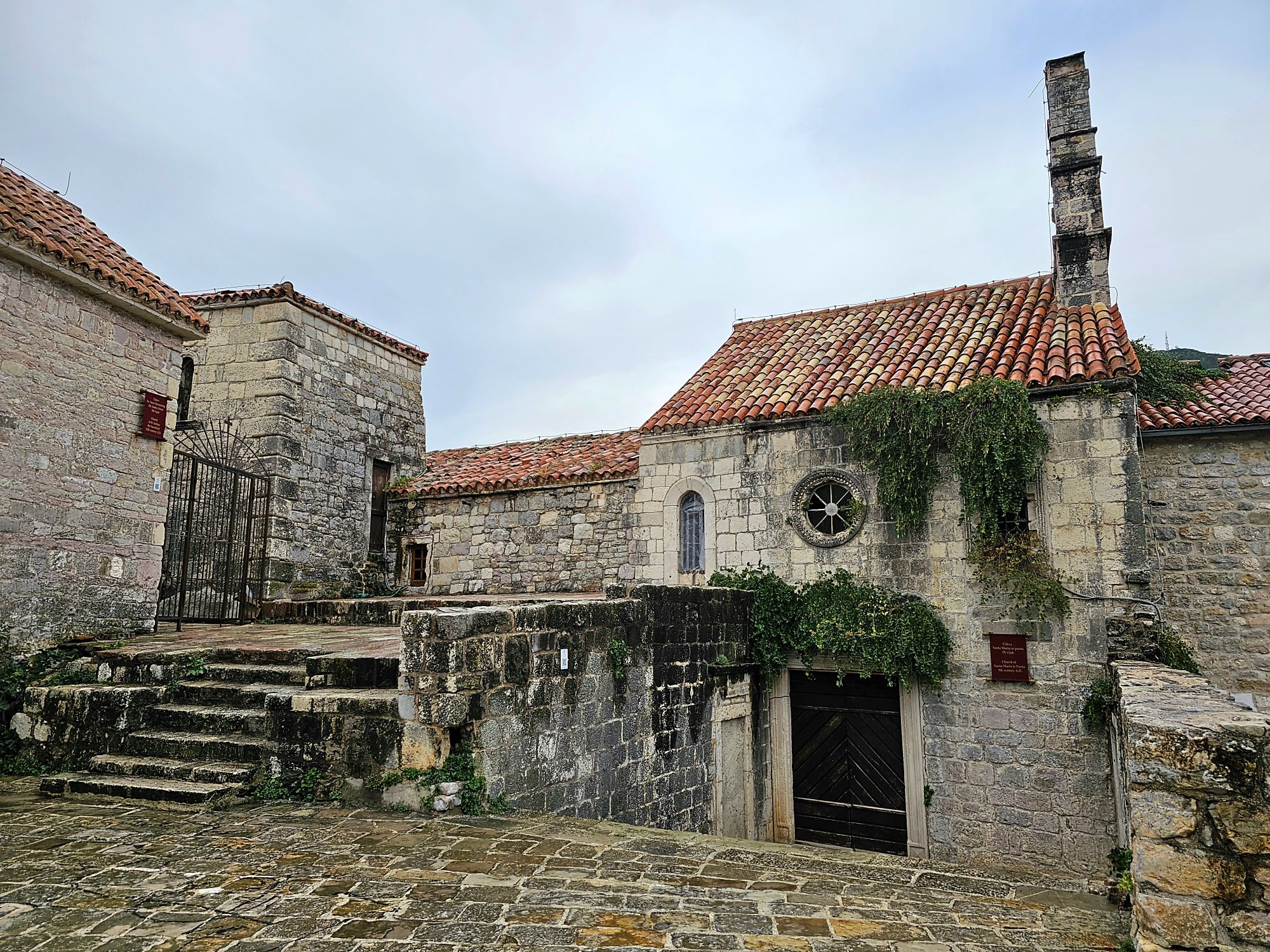
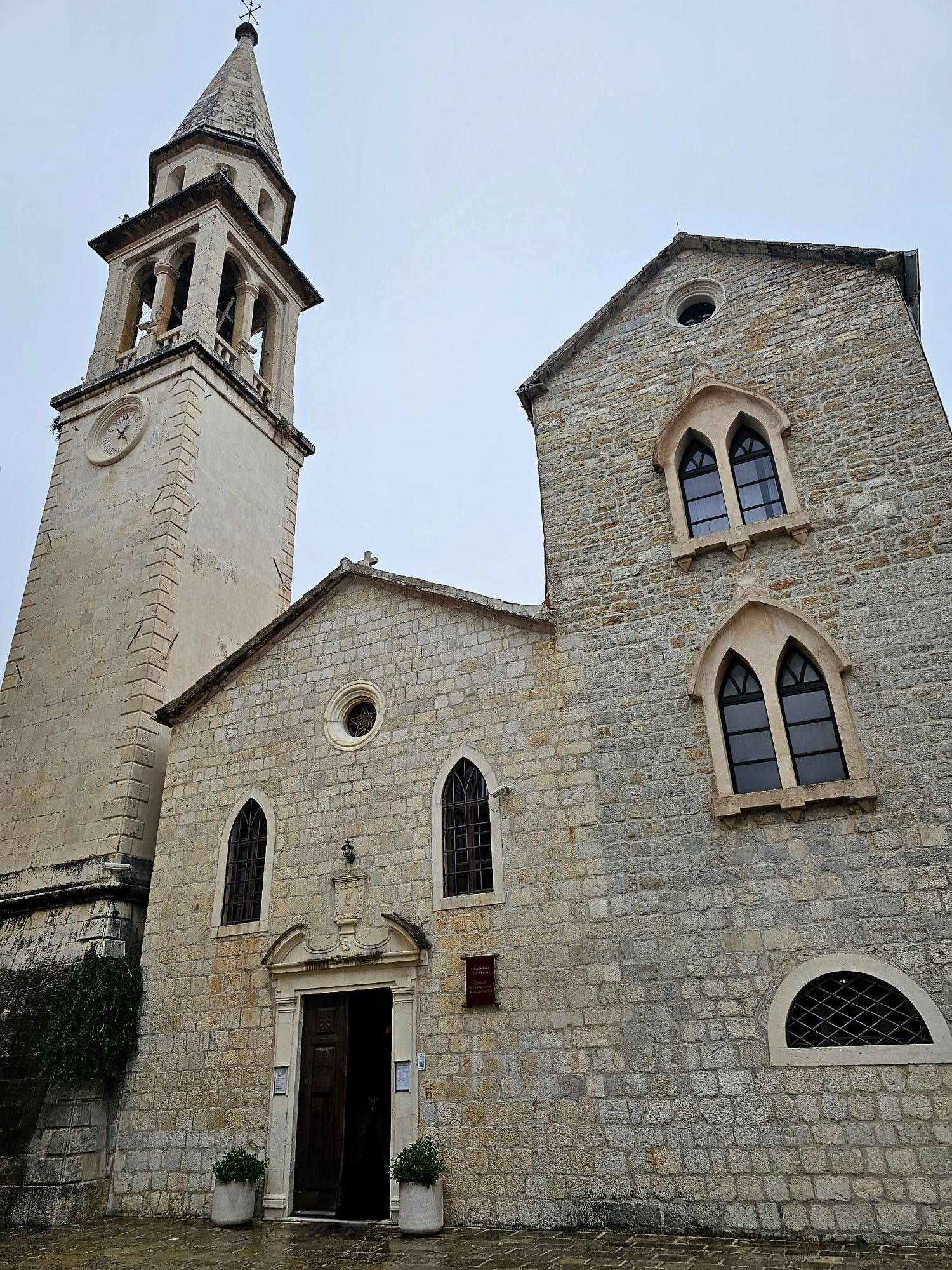
Just like in Kotor, there are many beautiful old churches found amongst the cobblestone streets. Including the Church of St John the Baptist, built in the 7th century AD, which is considered to be one of the oldest churches on the Adriatic Coast. Nearby is the Church of the Holy Trinity, a pretty pink and white stone building from the 19th century with beautiful mosaics above the door located in the Square of Salt. There are a few other churches along the seawall, including the Church of St Sabbas the Sanctified from the 12th century and the Church of Santa Maria in Punta, built in 840 AD, another one of the oldest buildings on record in Budva.
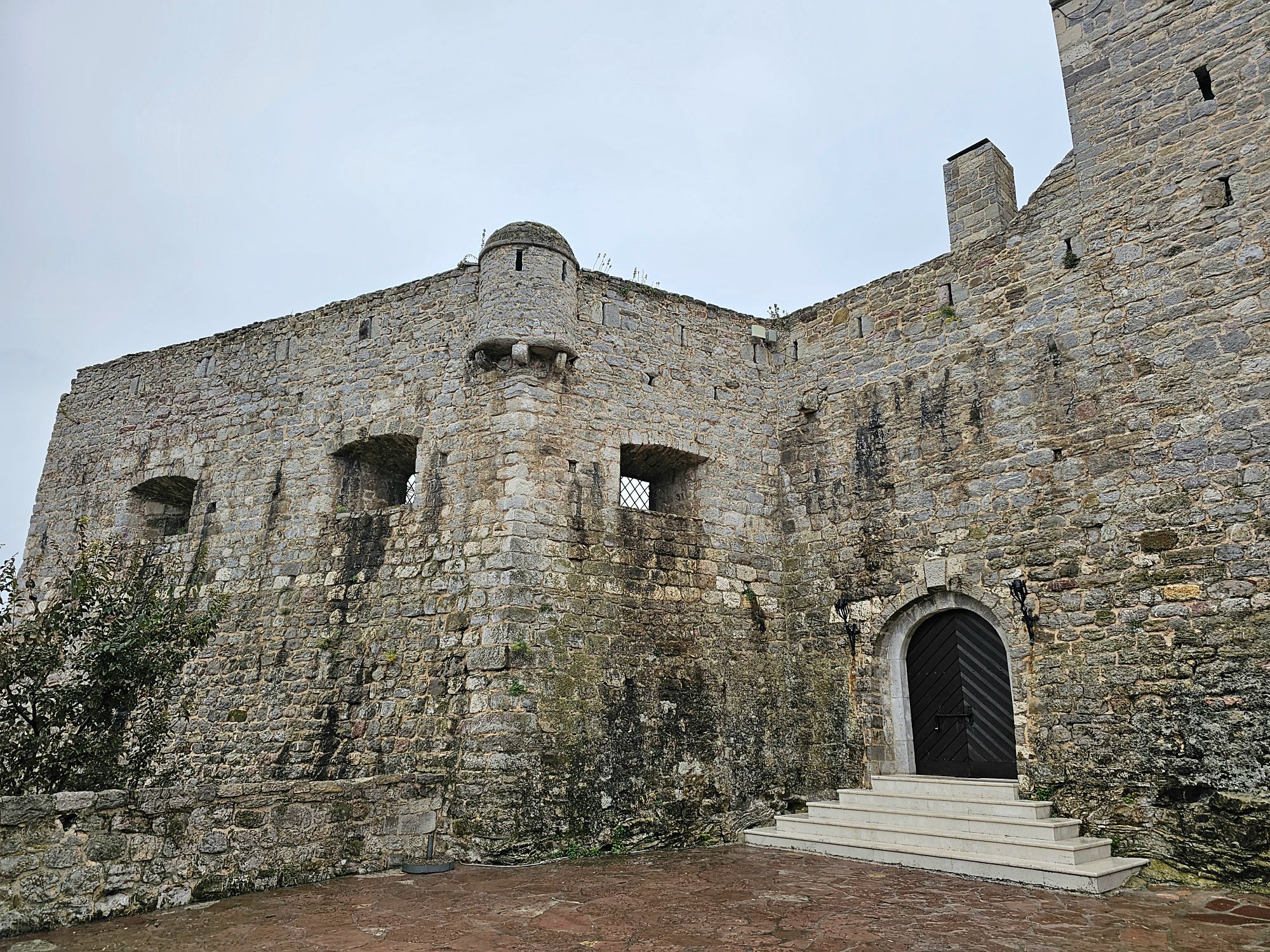
From Salt square, the walls lead to the Citadel, right along the sea. Part of it was built in 840 with the present version being built in the 19th century during the Austrian Occupation in WWII and just like in Kotor, you will find cats everywhere, including enjoying an afternoon at the beach!
After exploring Old Town, we enjoyed a delicious seafood lunch at Jadran’s by the water with a local Niksicko beer.
From there, we caught the ferry back across the Bay of Kotor, which I highly recommend as it saves time on the drive and the views are beautiful!
We booked our bus trip with Super Tours and they picked us up from our hotel in Dubrovnik and dropped us back off after a full day touring around Montenegro. As we only had one day, we opted to go this route and thoroughly enjoyed our tour, seeing some of the main highlights of Montenegro!
I fell in love with Croatia on my first visit, but on that trip, I didn’t have a chance to head south down the Adriatic coast to Dubrovnik, so this time, it was a must-see!
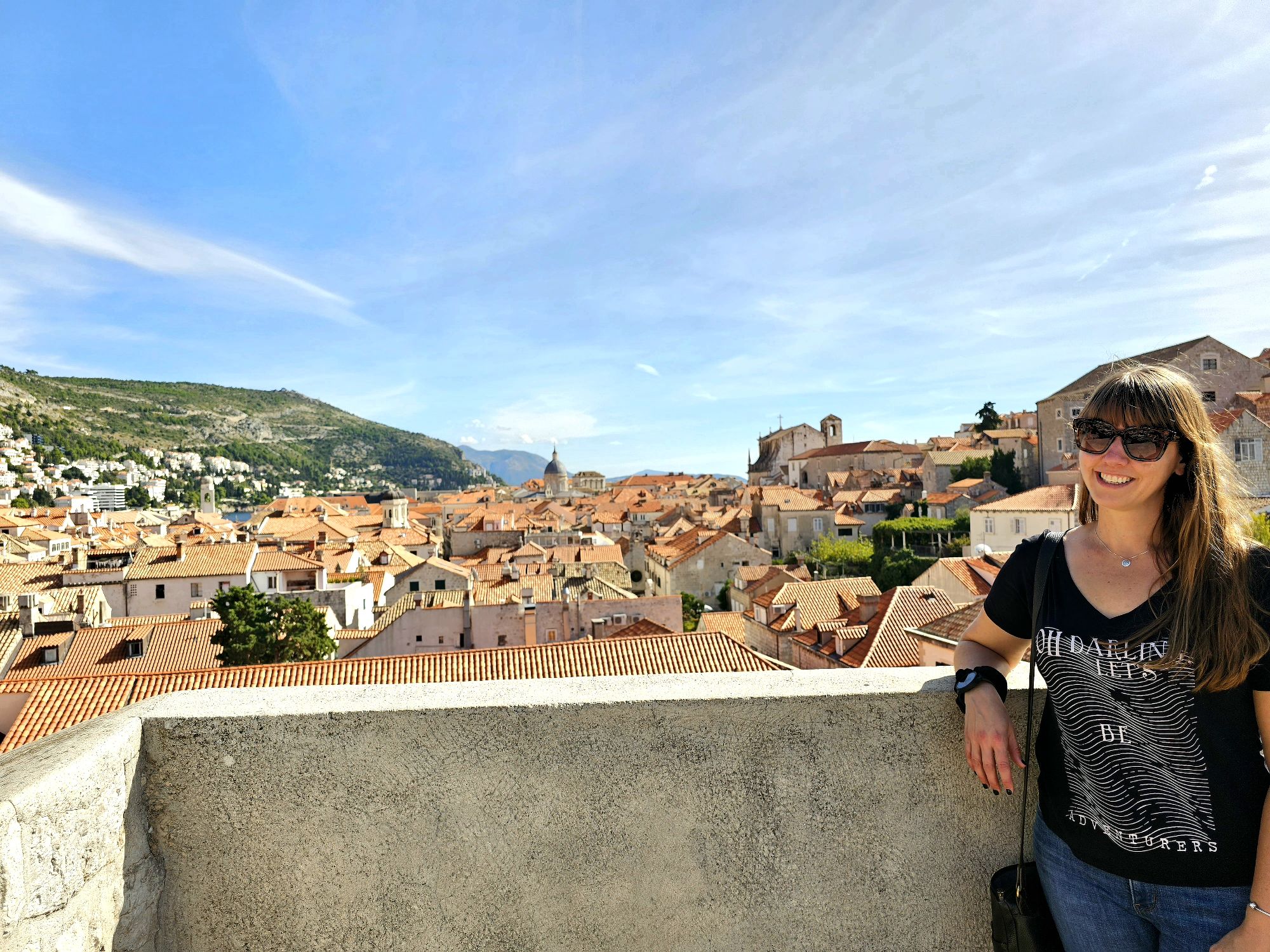
The most popular part of Dubrovnik is the historic Old Town. Located between Mt. Srd and the shimmering Adriatic Sea, Old Town Dubrovnik will leave you with a sense of awe at the beauty as you explore its medieval walls, cobblestone streets and baroque buildings.
Short on time? You can see the best of the city in one full day of exploring.
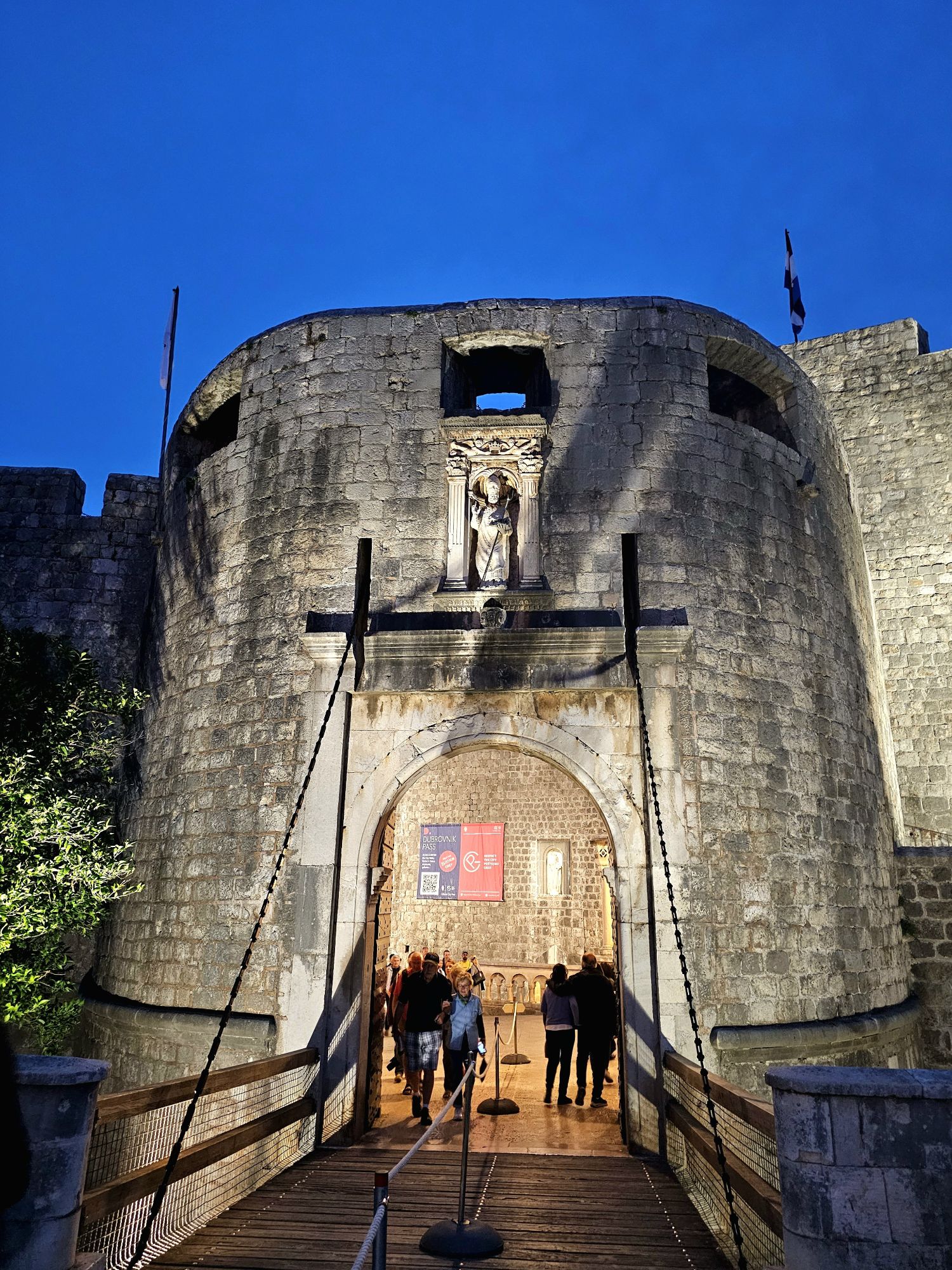
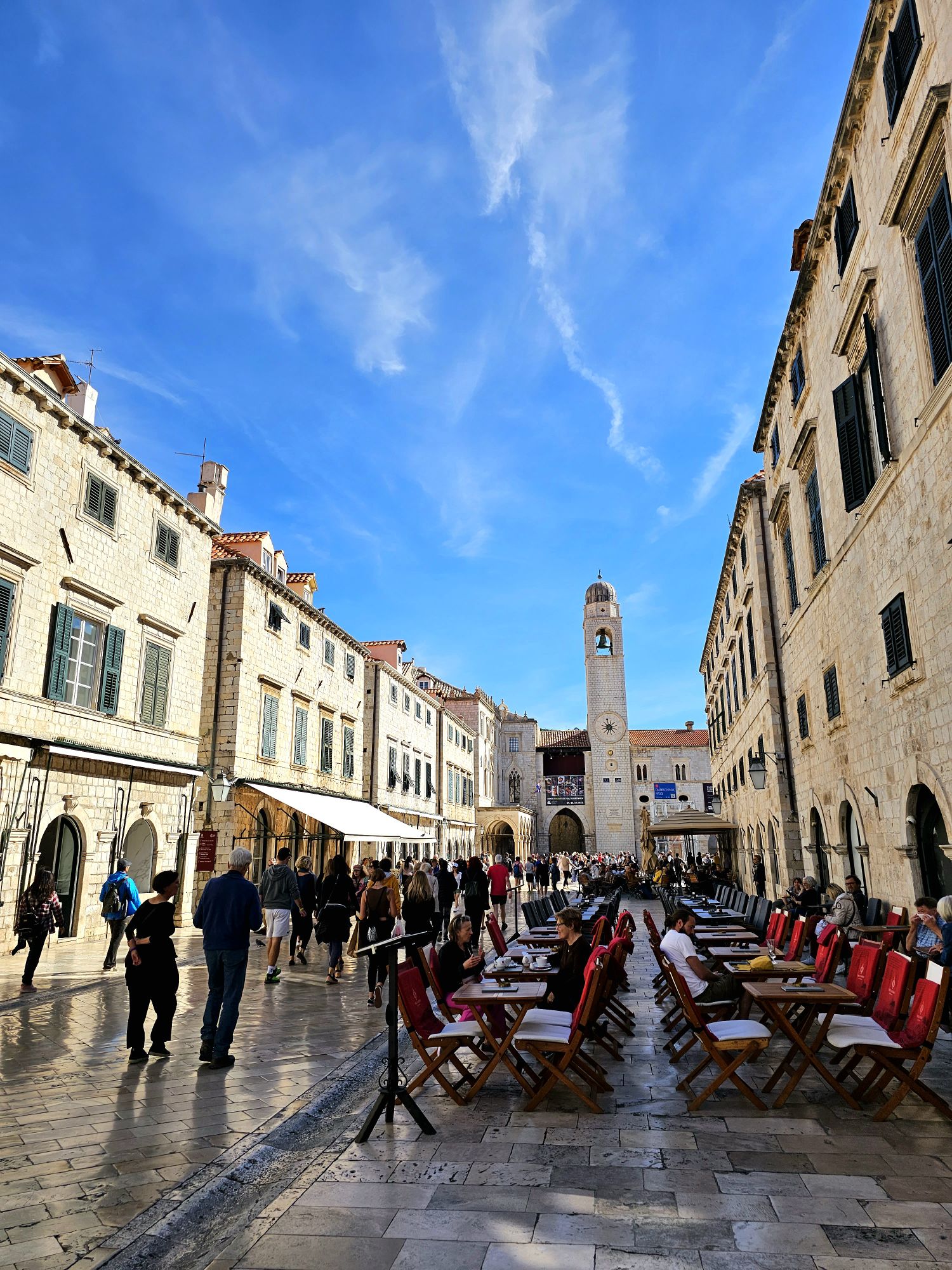
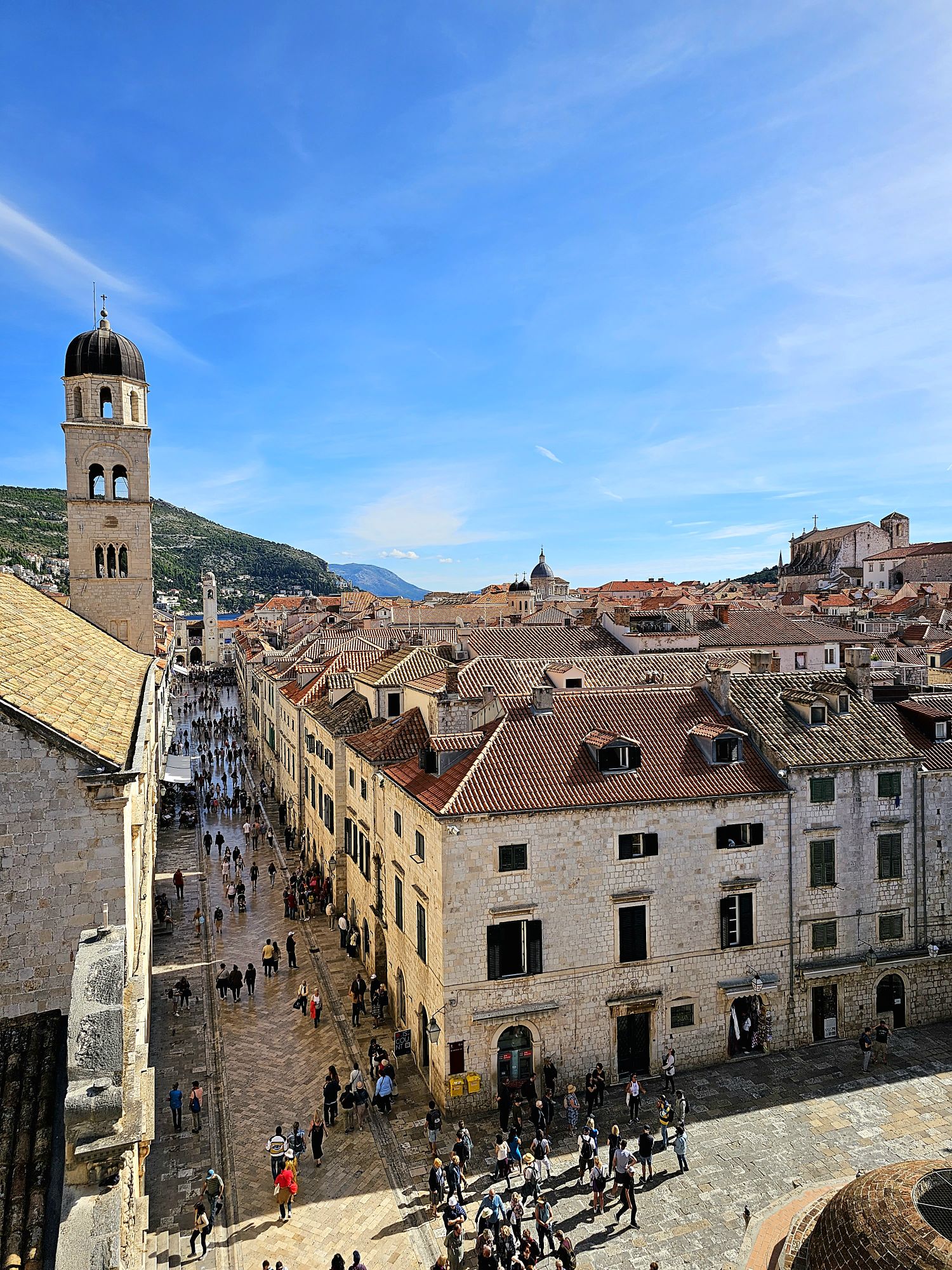
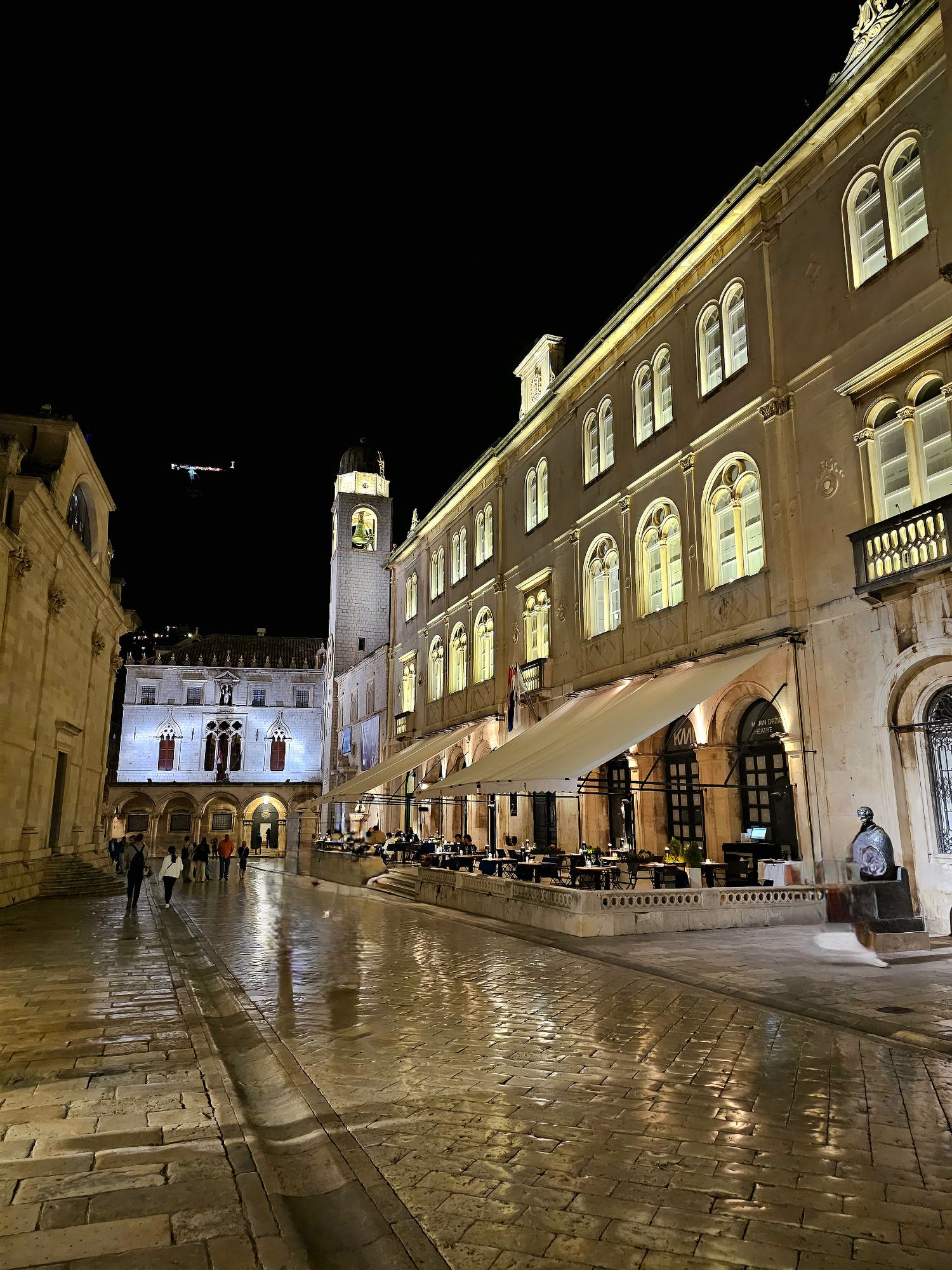
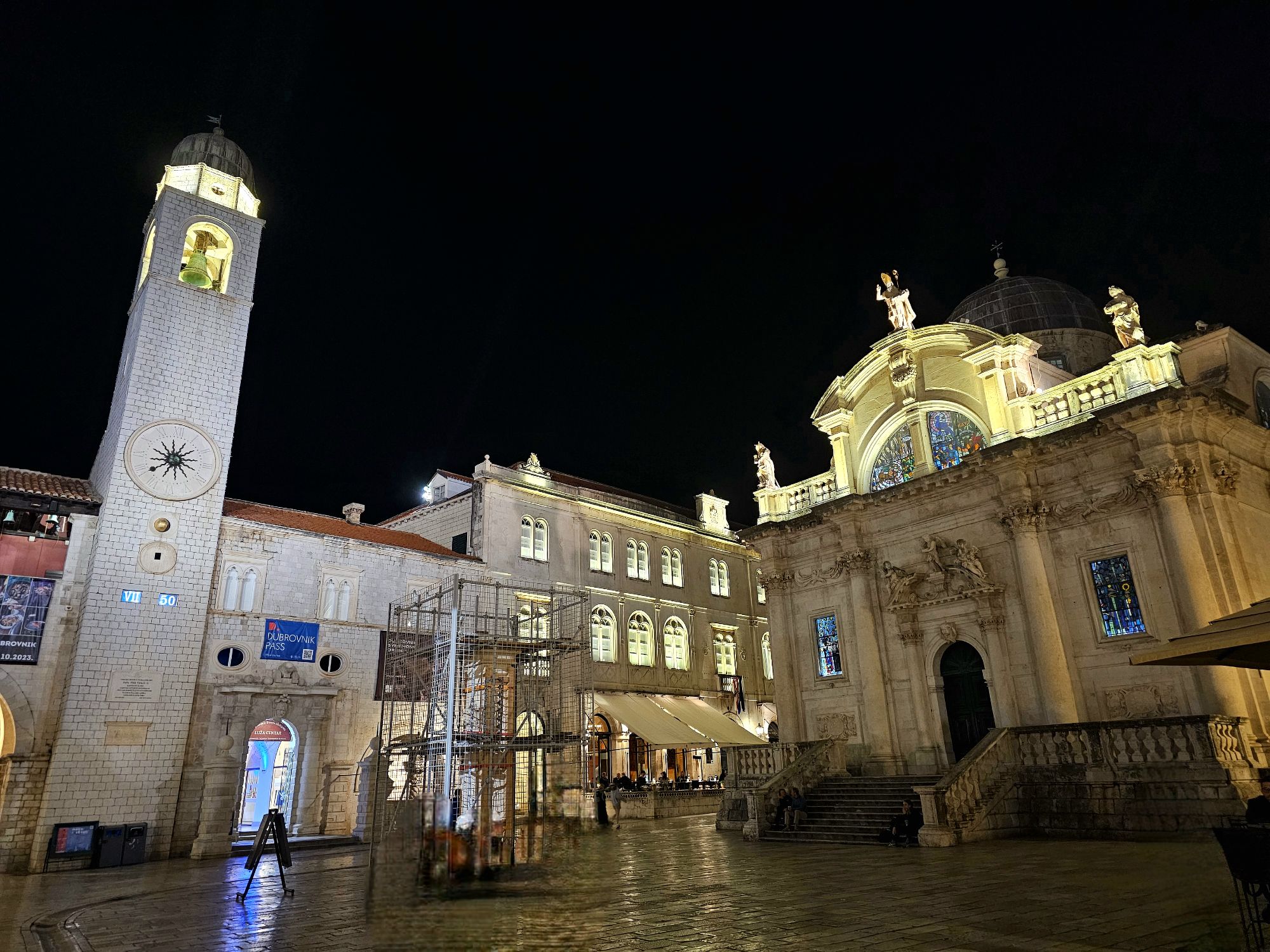
Stepping through Pile Gate, the main entrance into Old Town, you find yourself on Stradun, the main street. This limestone paved pedestrian street runs for 300 metres through Old Town.
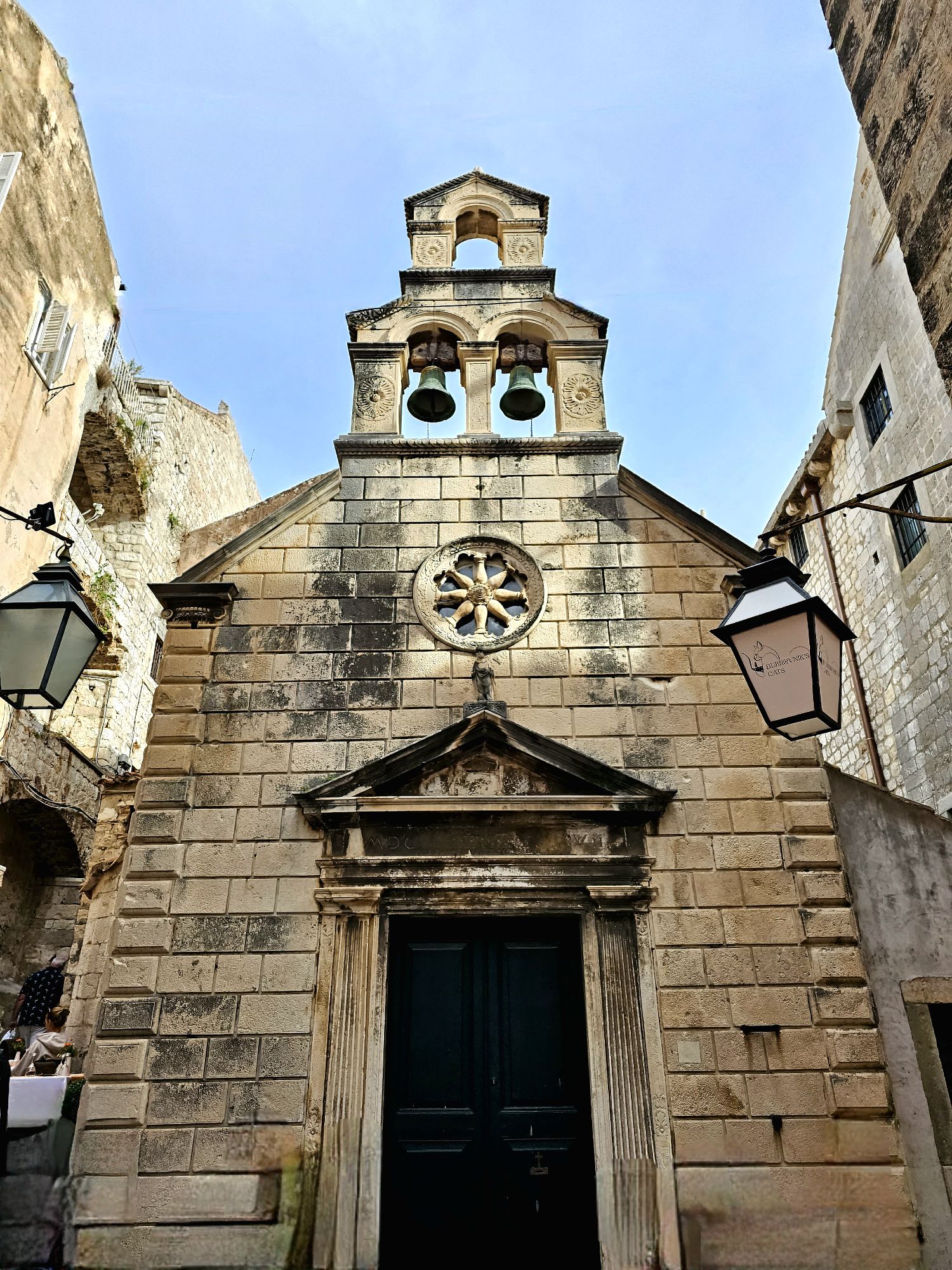
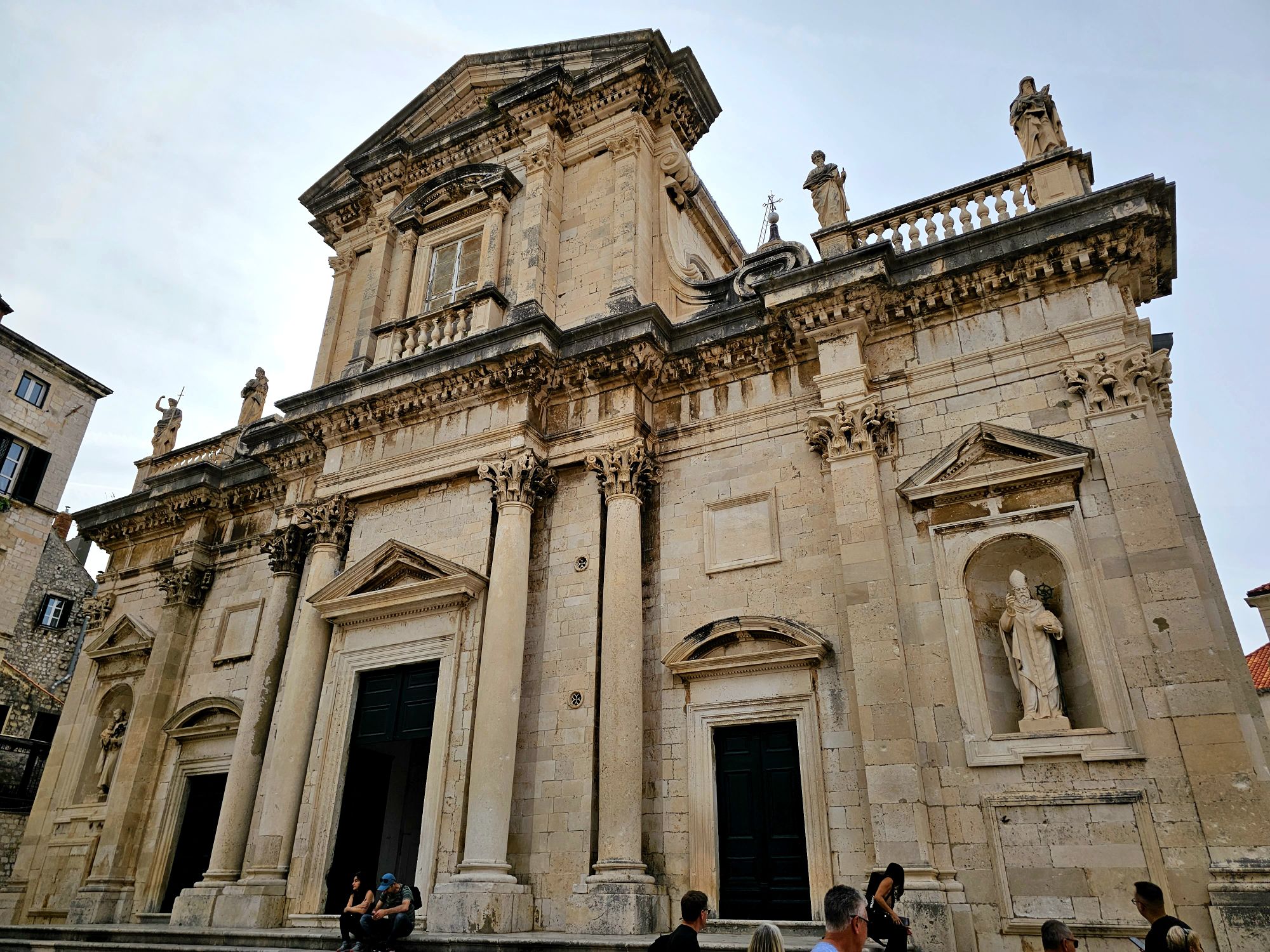
The wide boulevard is lined with shops, cafes and restaurants, with churches located at both ends. Near Pile Gate, is the Renaissance church, St. Saviour, the only church that didn’t fall during the earthquake in 1667. At the other end, you’ll find the Church of St Blaise, the patron saint of Dubrovnik.
Onofrio Fountain is also located near the entrance. This large fountain has been providing the city with fresh spring water since 1438. It’s also quite the work of art with 16 slides, all featuring a carved masked face.
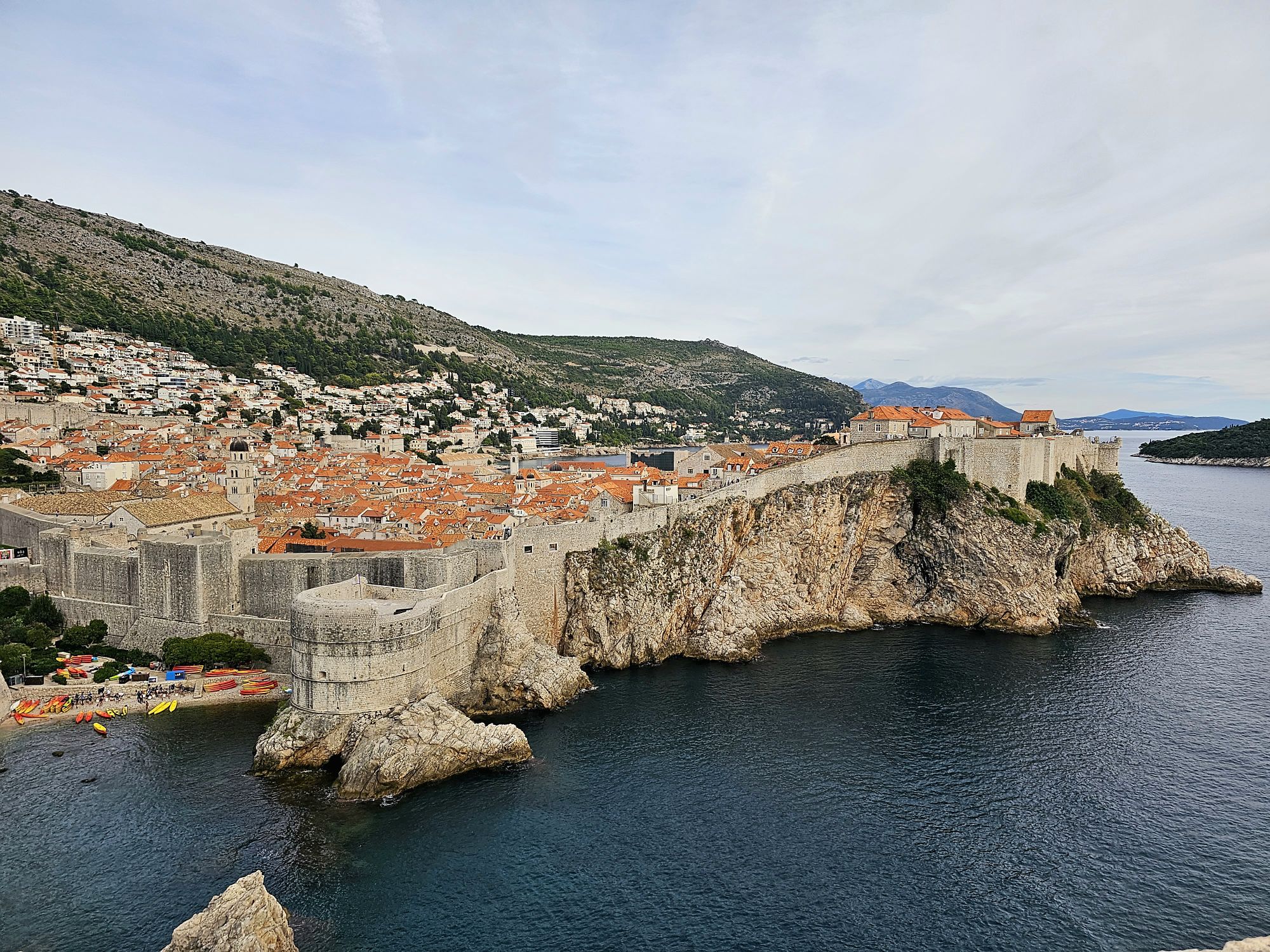
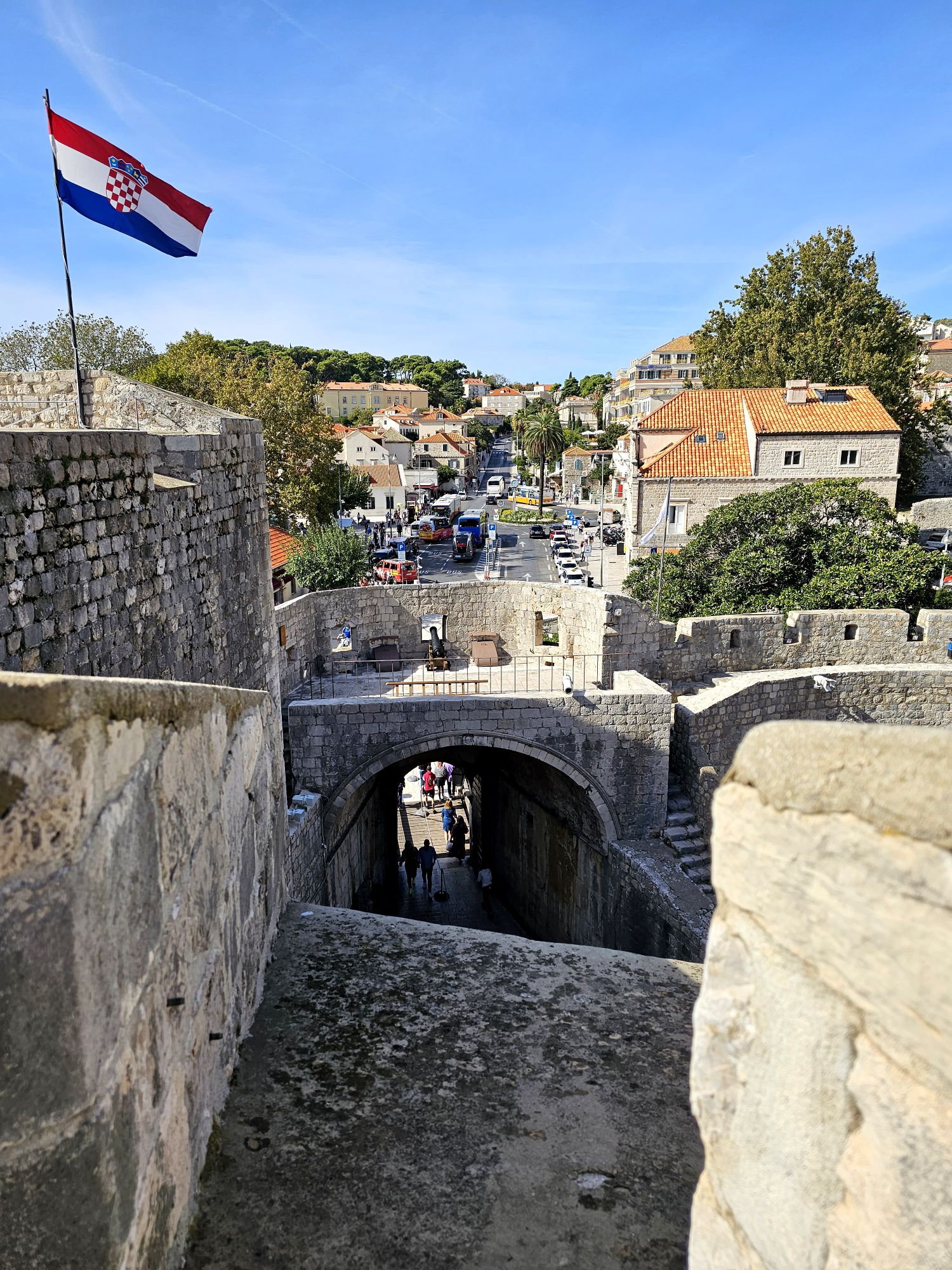
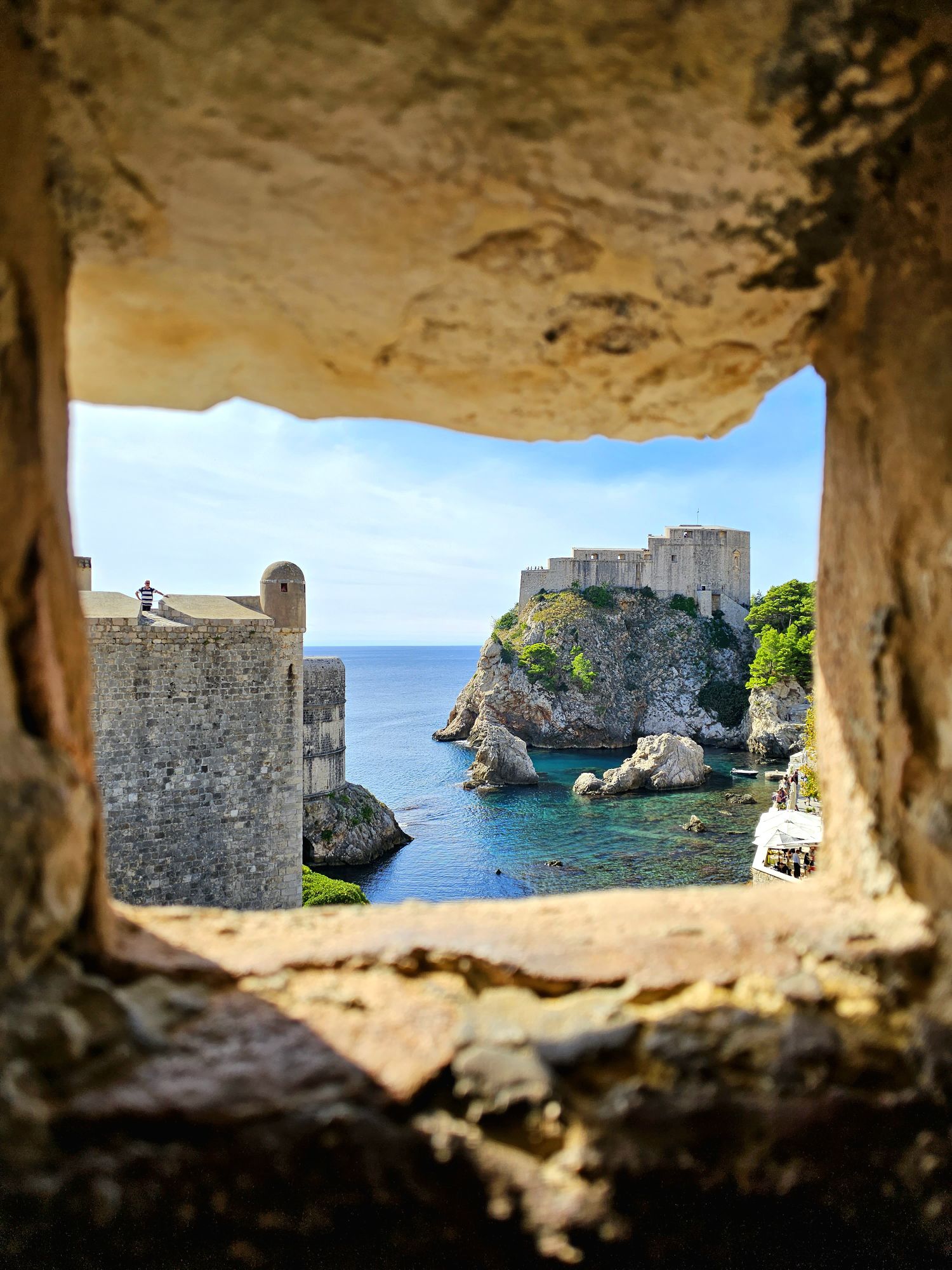
Perhaps the most famous sight in Dubrovnik are the medieval walls. For great views of Old Town and the Adriatic Sea below, walking the walls is a must. The walls date back to the Middle Ages and are one of the largest in Europe.
Beginning at Pile Gate, the walls run 1940m uninterrupted around Old Town. They are 25m in height at the highest with 16 towers, 3 forts, 6 bastions, 2 drawbridges and 3 main gates. The views are amazing as you make your way around the Old Town from above.
Some of the best views come from climbing up into Fort Minceta, a 14th century fort.
Plan to spend about two hours to walk around the walls, enjoying the views and stopping for great photo opportunities.
Tickets can be purchased just inside Pile Gate or online for both the walls and Fort Lovrijenac. Adults €35. Under 18 €15. Hours vary depending on time of year.
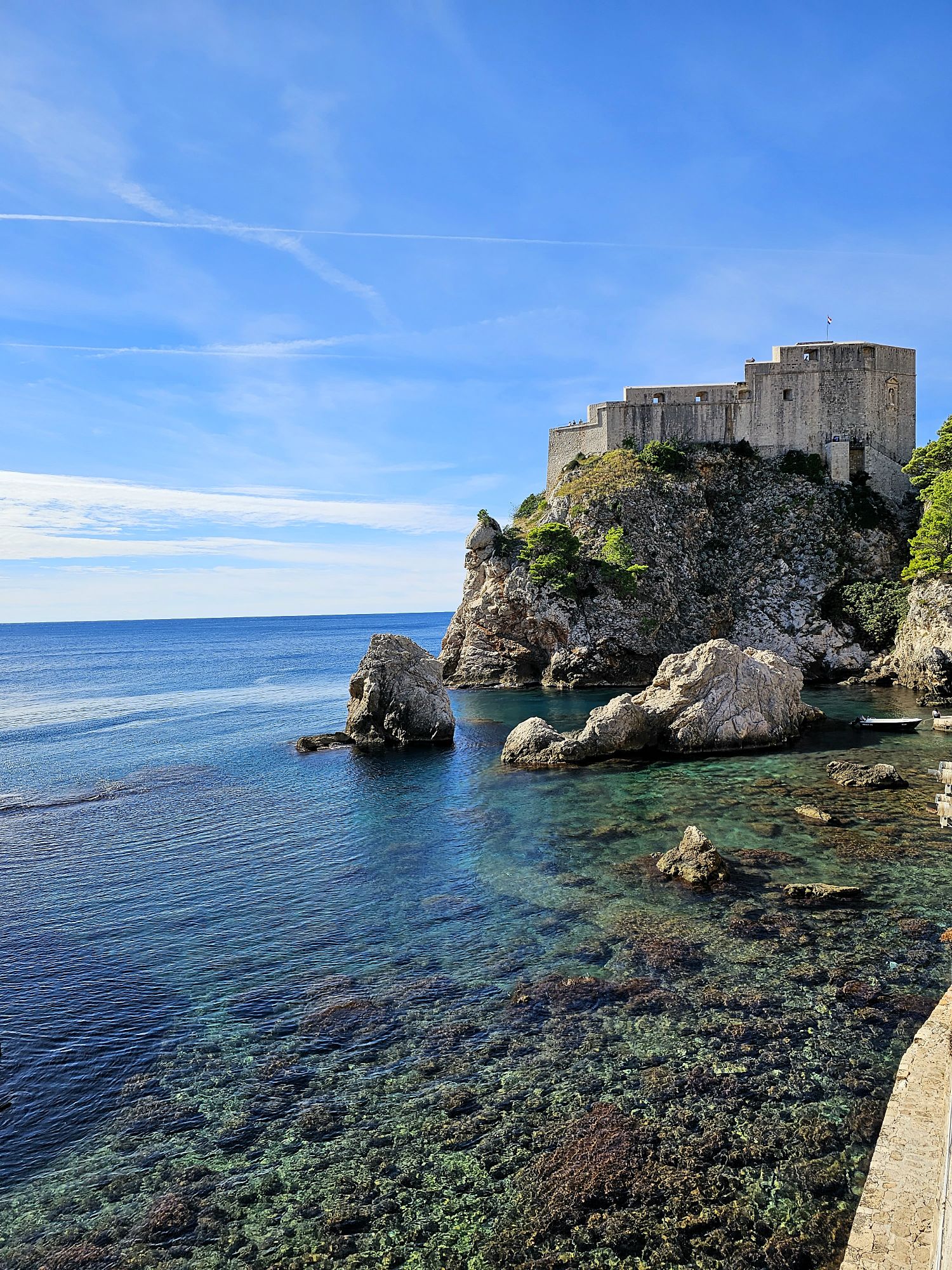
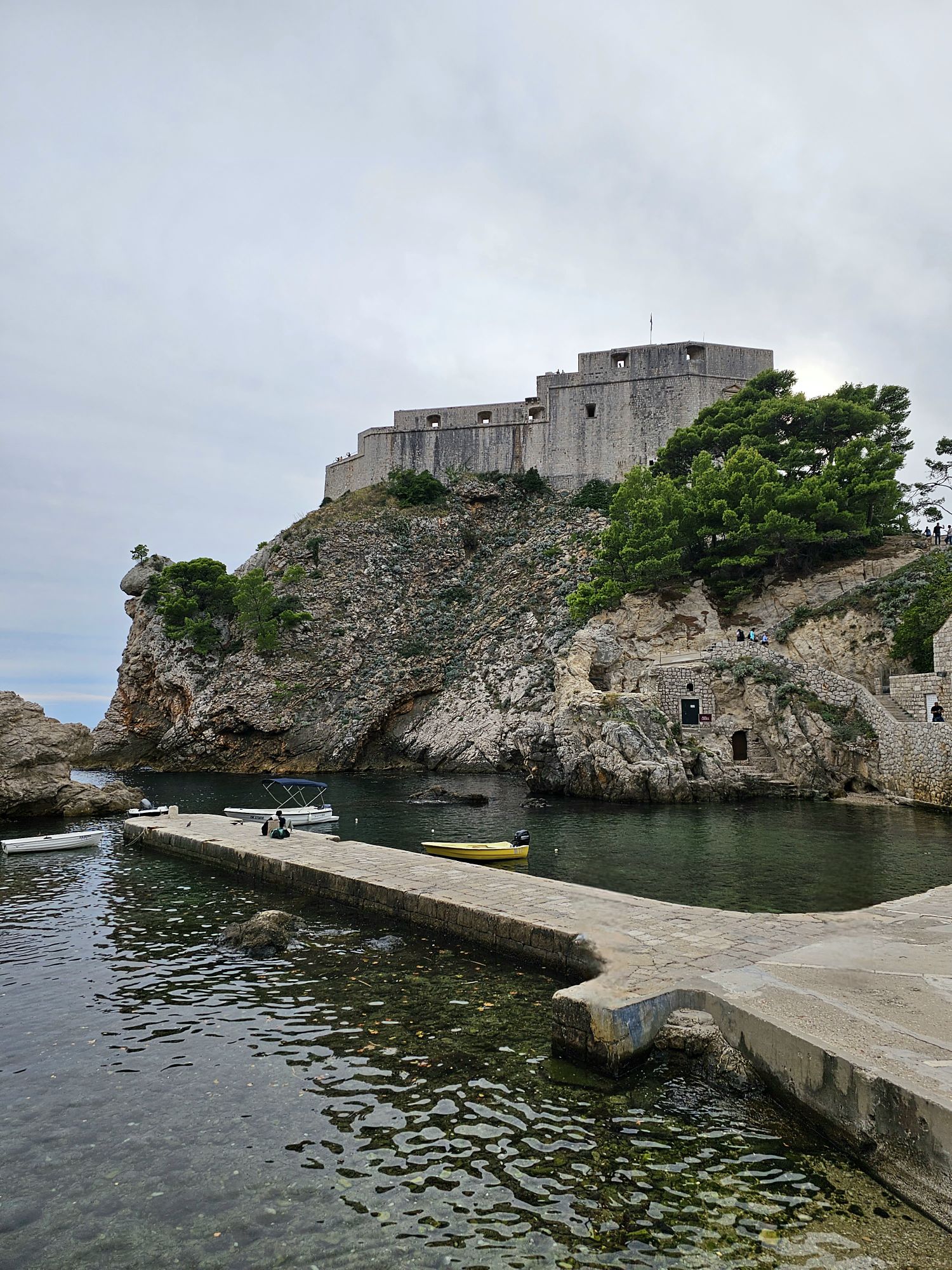
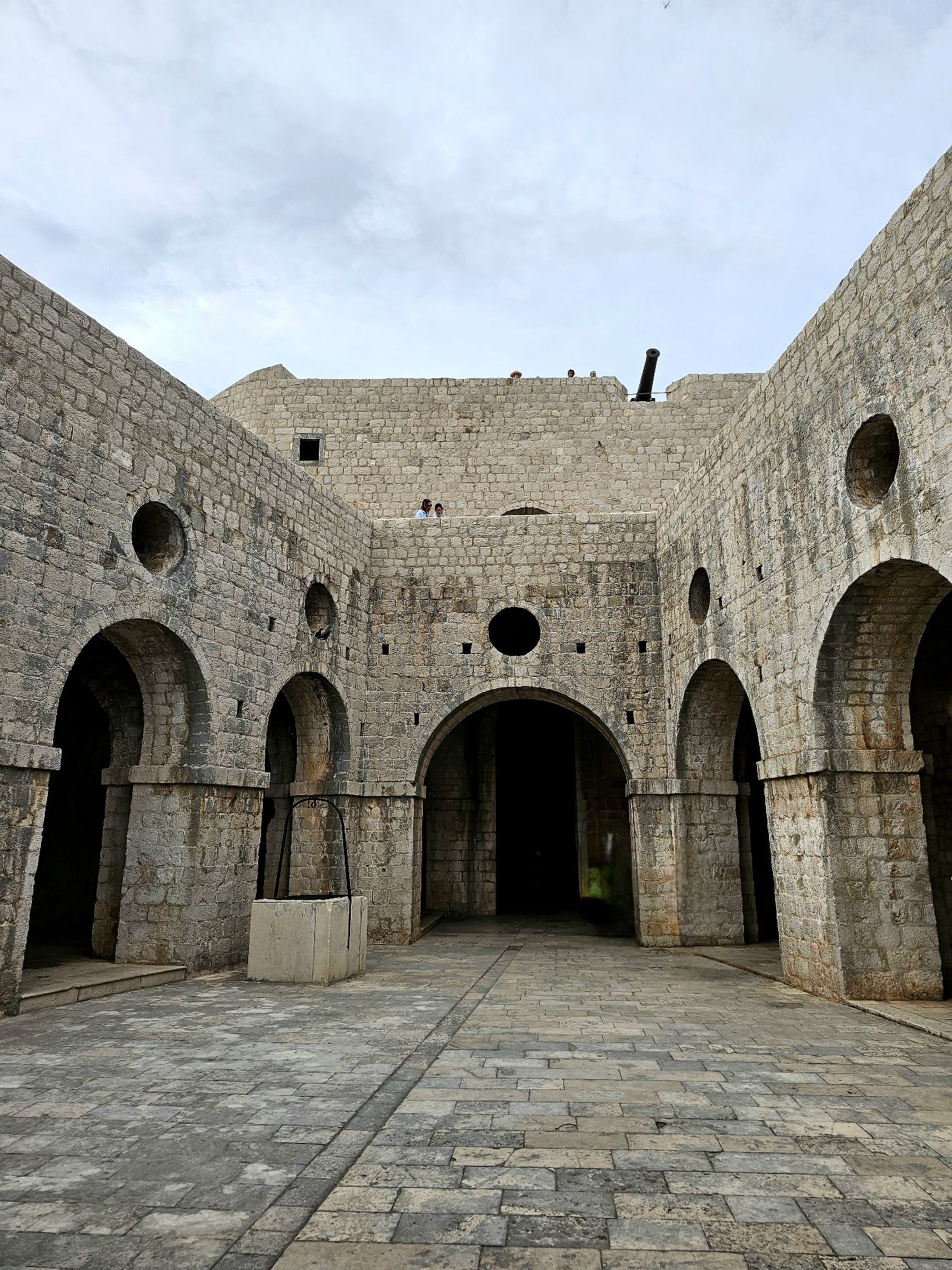
Across from the walls you’ll find stand alone Fort Lovrijenac 37m high up on the rocks, offering great views of Old Town and the Walls of Dubrovnik.
Admission is included with the Walls ticket or can be purchased on it’s own for €15
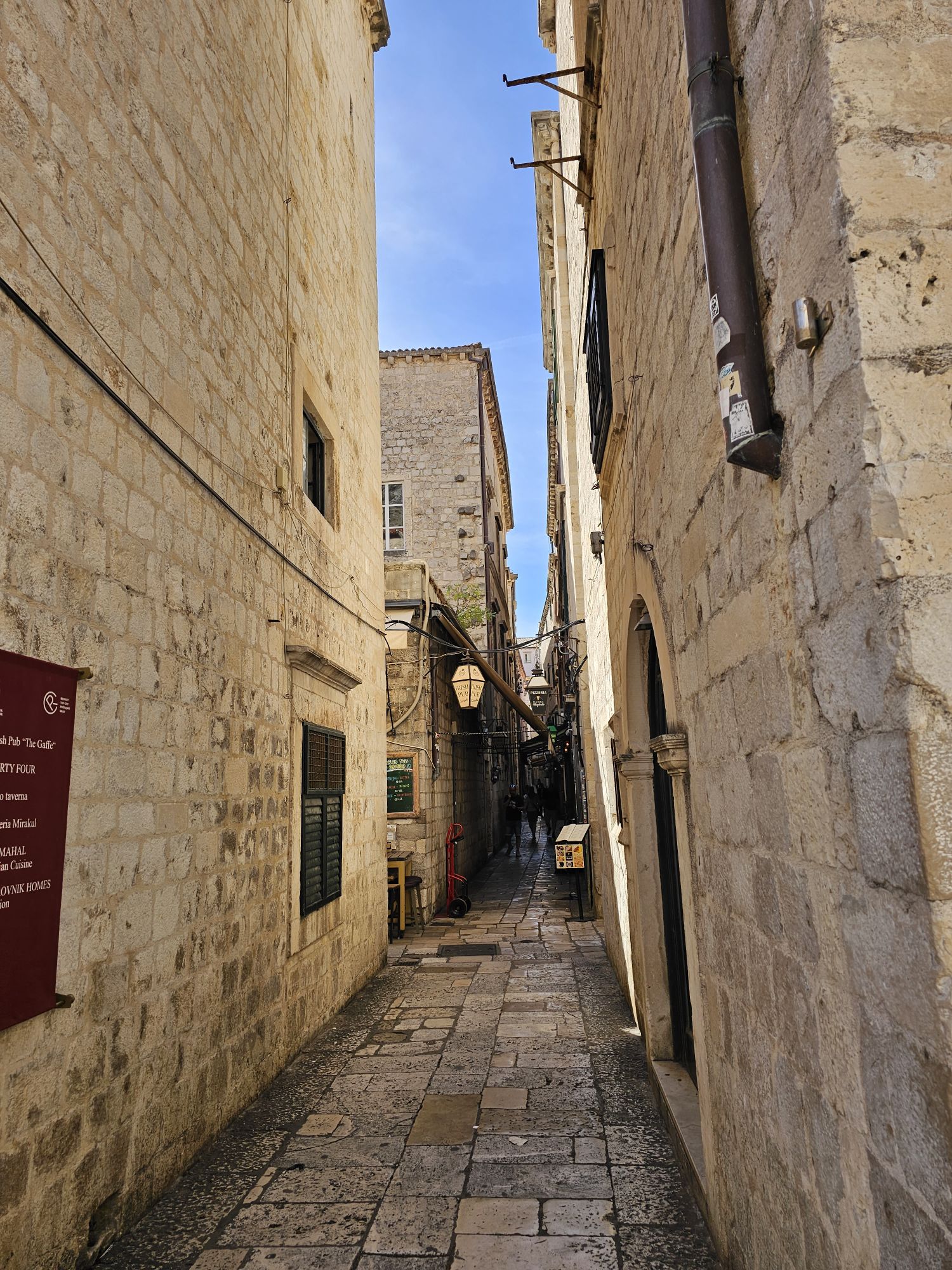
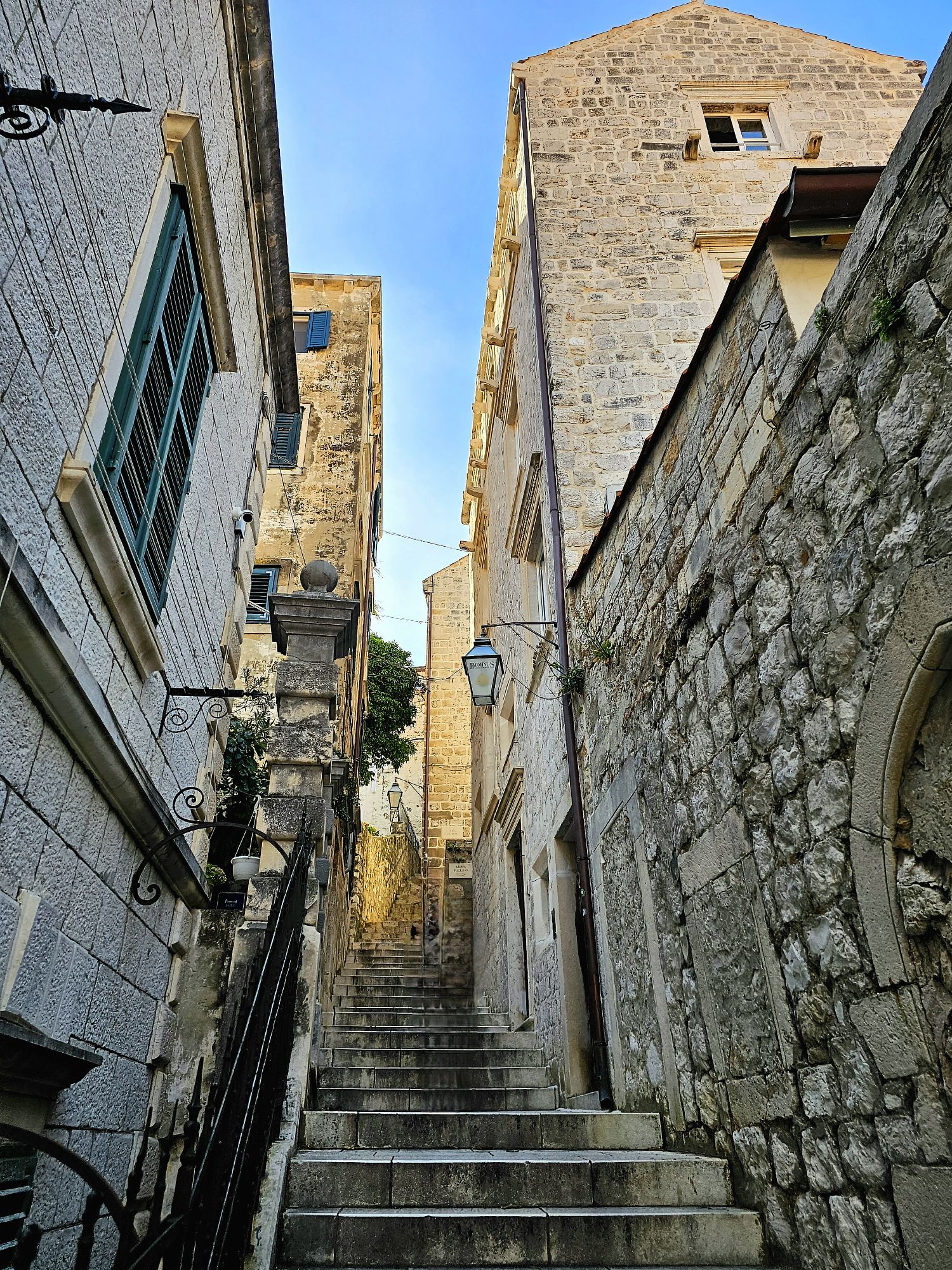
One of my favourite things to do, was wander around Old Town’s cobblestone streets.
There are steps everywhere as you explore Old Town, climbing up and down as you make your way through narrow alleys and tight corners which open into large squares with fountains and statues.
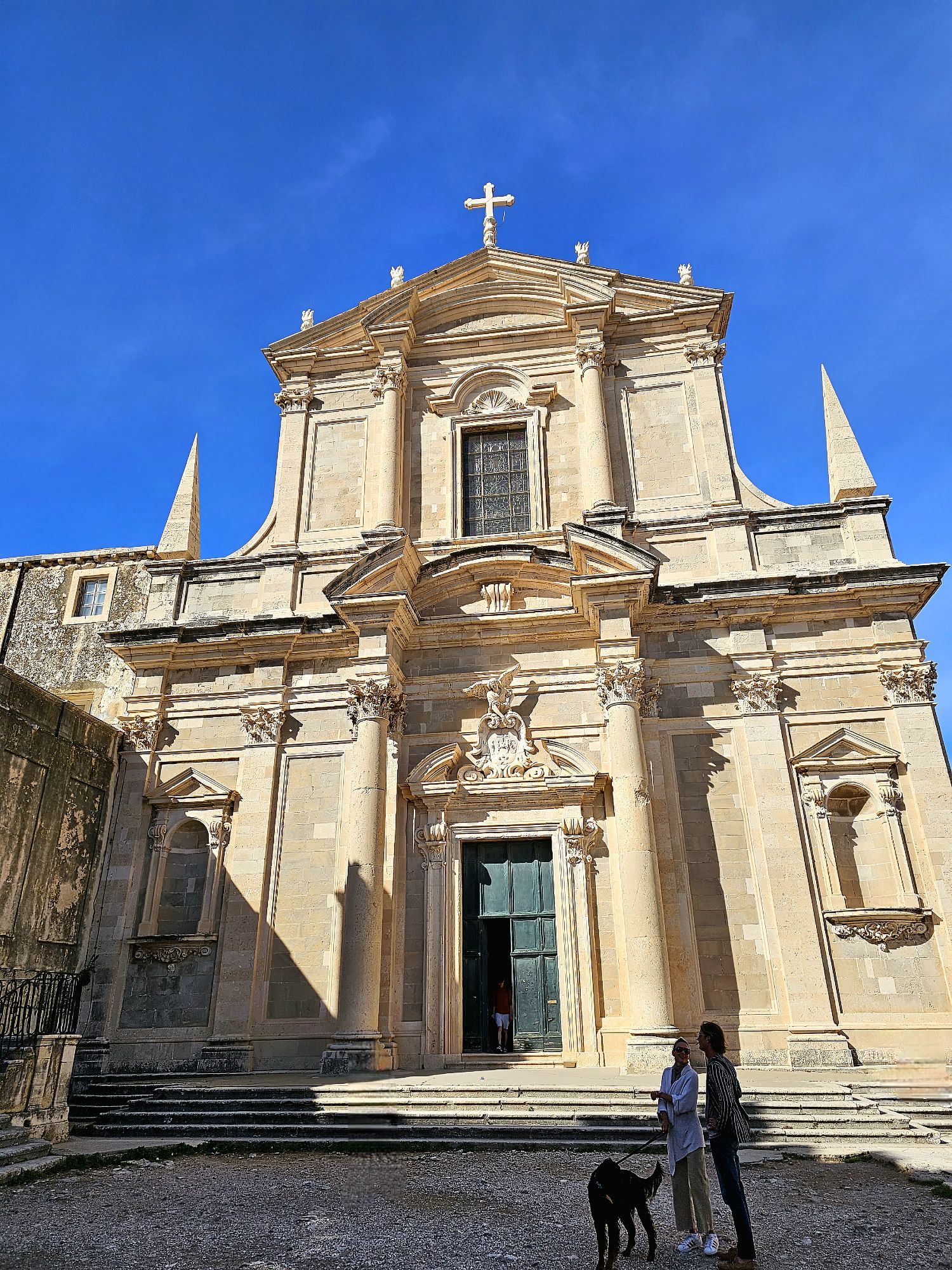
There are also many beautiful old churches. Apparently before the earthquake in 1667 there were 47 churches in total! Many are open to the public and the interiors are well worth a look.
Just outside the walls at one end, is the old Port of Dubrovnik, filled with fishing boats and the ferry that runs across to Lokum Island.
It is the perfect place to grab some gelato from one of the delicious gelato stands and enjoy a break by the water!
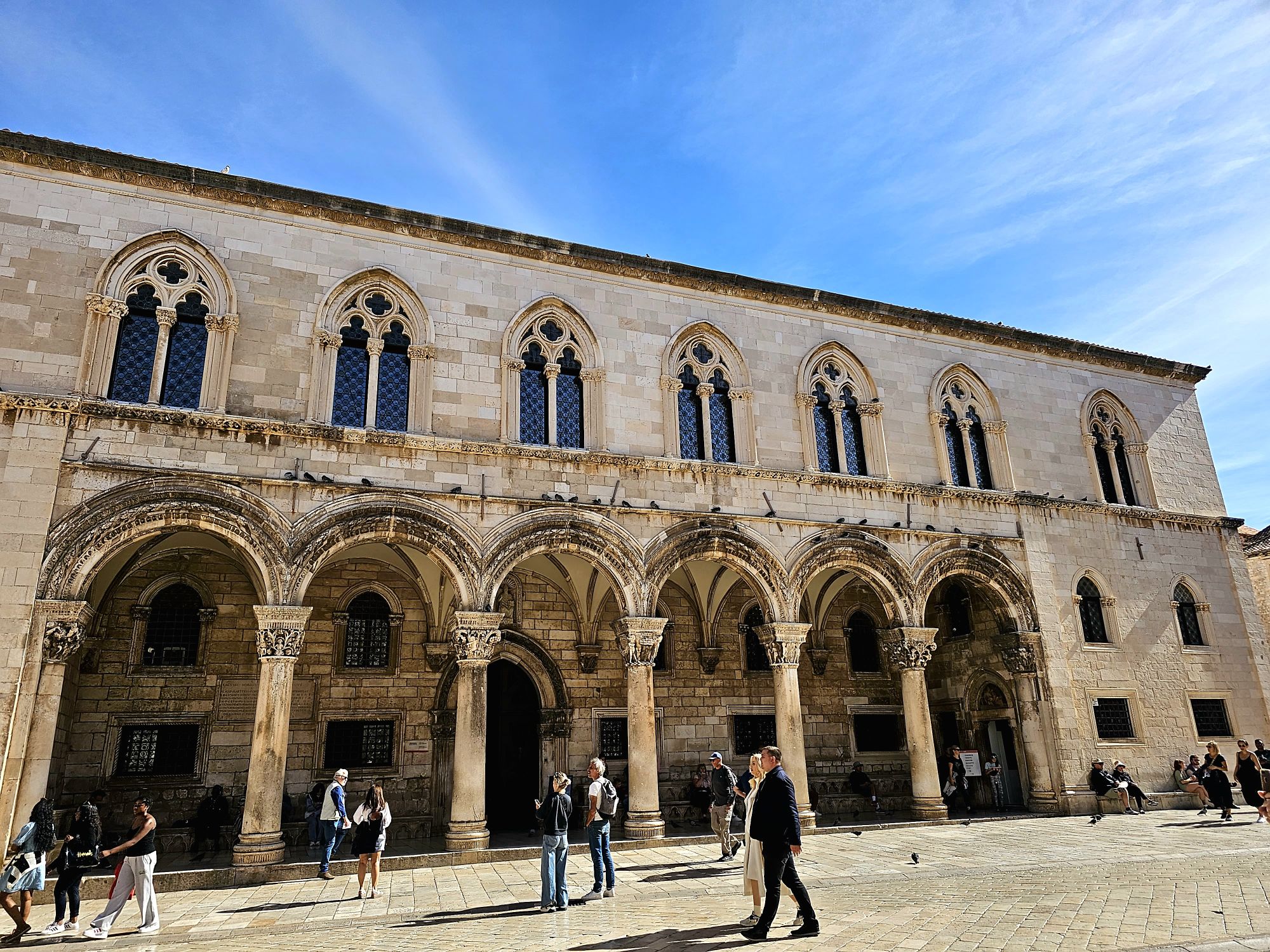
The Rector’s Palace is a gothic style building which used to be the seat of the Rector of the Republic who governed Dubrovnik between the 14th century and 1808. It was also the seat of the Minor Council and the state administration and housed an armoury, the powder magazine, watch house and a prison.
Today, inside the Palace is a museum filled with information and artifacts. It is also a music venue, where you can attend classical music concerts!
There are no shortages of restaurants in Dubrovnik, especially in Old Town. Enjoy a delicious meal of fresh caught seafood on one of the many street patios. We found a family owned mediterranean style place with some delicious seafood and local wine.
Dubrovnik also has a few options for craft beer. Located off Stradun, is Glam Beer Therapy, a hole in the wall craft beer bar, featuring local craft beers.
As you are wandering around, you might feel like you’ve stepped onto a movie set and with scenes from Game of Thrones, Star Wars, James Bond and more being filmed here, it actually is!
If Game of Thrones is your thing, there are tours you can take to see some of the filming locations.
After a day of exploring, head up to the top of Mt. Srd for a great view of the sunset over Old Town and the sea beyond. You can get there by taking the cable car (which is pricey at €27RT per person ), walking, although it is a good hike or taking an Uber like we did!
There’s a restaurant located at the top as well as some adventure tour options. Unfortunately, the night we were here, there was too much cloud cover for a good sunset, but it was still a great view.
Large lamps hang along the streets and outside the shops and restaurants with the names and logos on them. While Old Town is beautiful during the day, it’s definitely worth strolling around at night as well when the lamps are all lit, especially along Stradun to St Blaise Church.
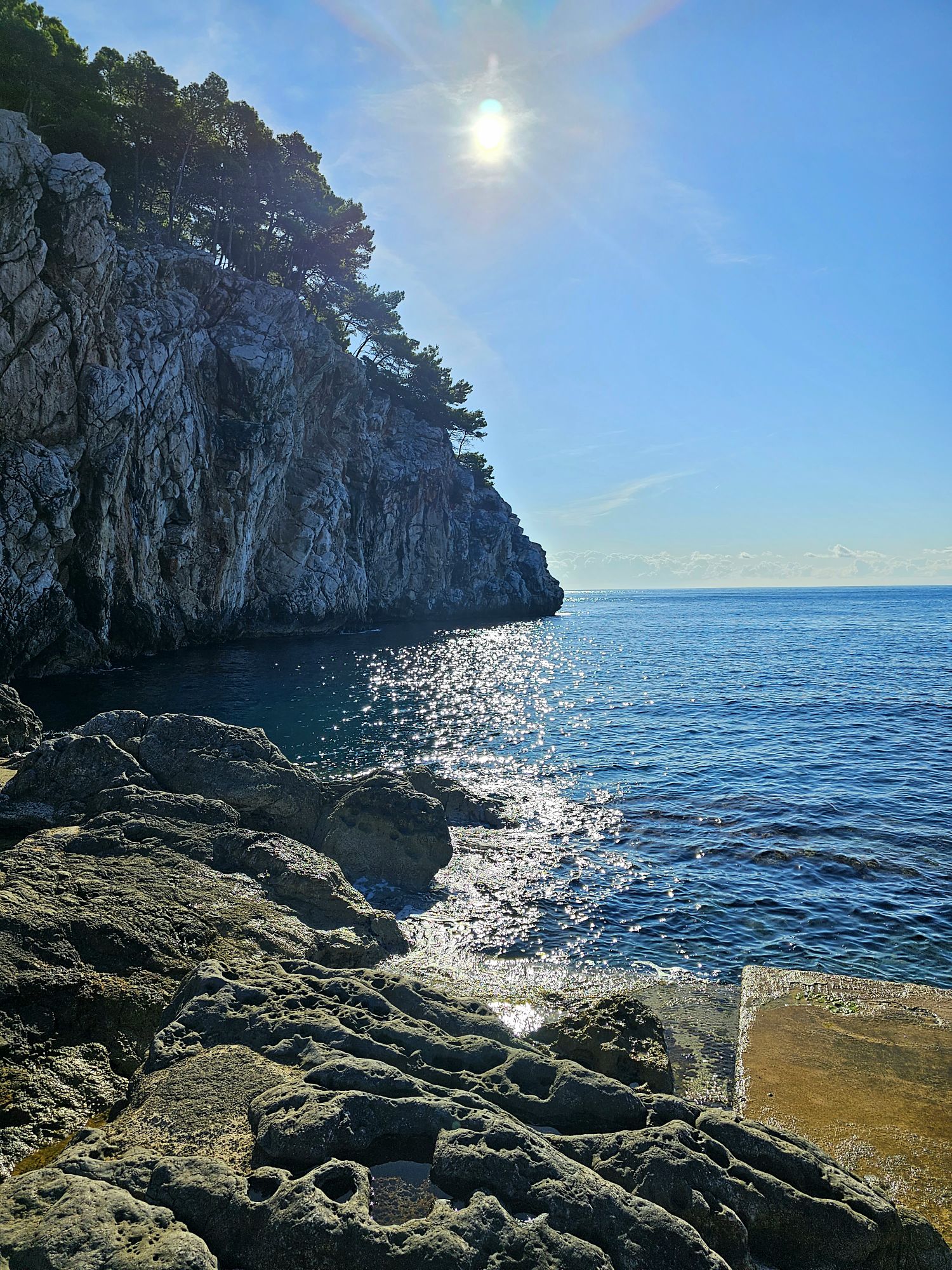
The lovely peninsula of Lapad, with beautiful beaches and plenty of cafes and restaurants to enjoy along the water, offers a break from busy Old Town.
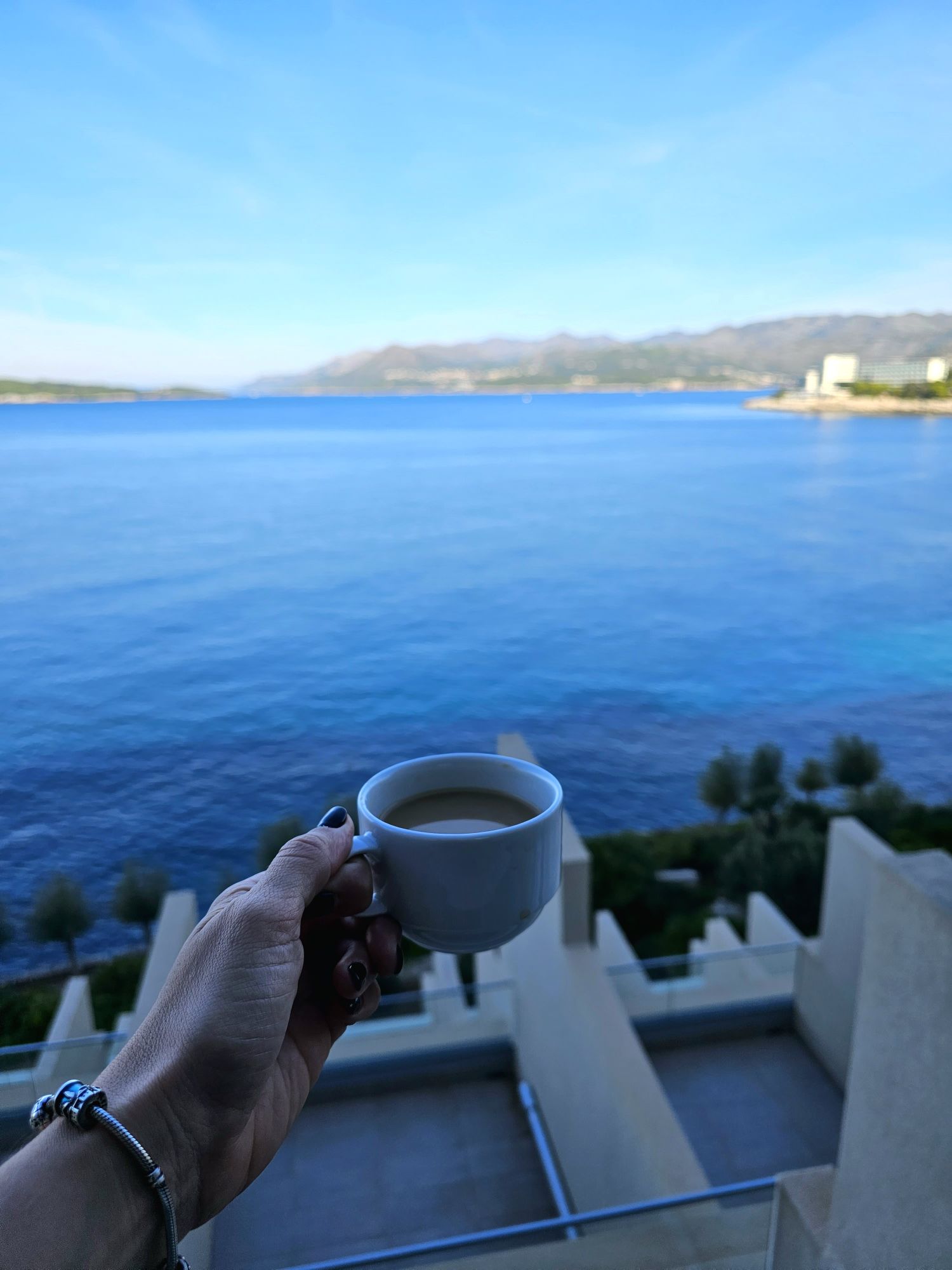
We chose to stay in this area at the Hotel Dubrovnik Palace, right on the Adriatic Sea. The perfect spot to enjoy your coffee with a beautiful view of the turquoise Adriatic in the morning and a gorgeous sunset at night. The hotel also offers a small beach area and several pools looking out to sea, nice rooms and a delicious buffet breakfast!
From here, it is easy to get to Old Town by car or bus. The bus stops right outside the hotel and drops you by Pile Gate in Old Town. Costs €2.
From Dubrovnik, it is also easy to take a day trip to Montenegro either by renting a car or taking a bus trip like we did.
If you’re heading to Croatia, be sure to add Dubrovnik to your must-see list! Živjeli!
Grenada is a hidden gem in the Caribbean. Compared to many other islands, Grenada has just a fraction of the visitors, yet the island has so much to offer. From white sand beaches, lush rainforest, waterfalls, crystal clear waters to snorkel as well as hiking and sailing.
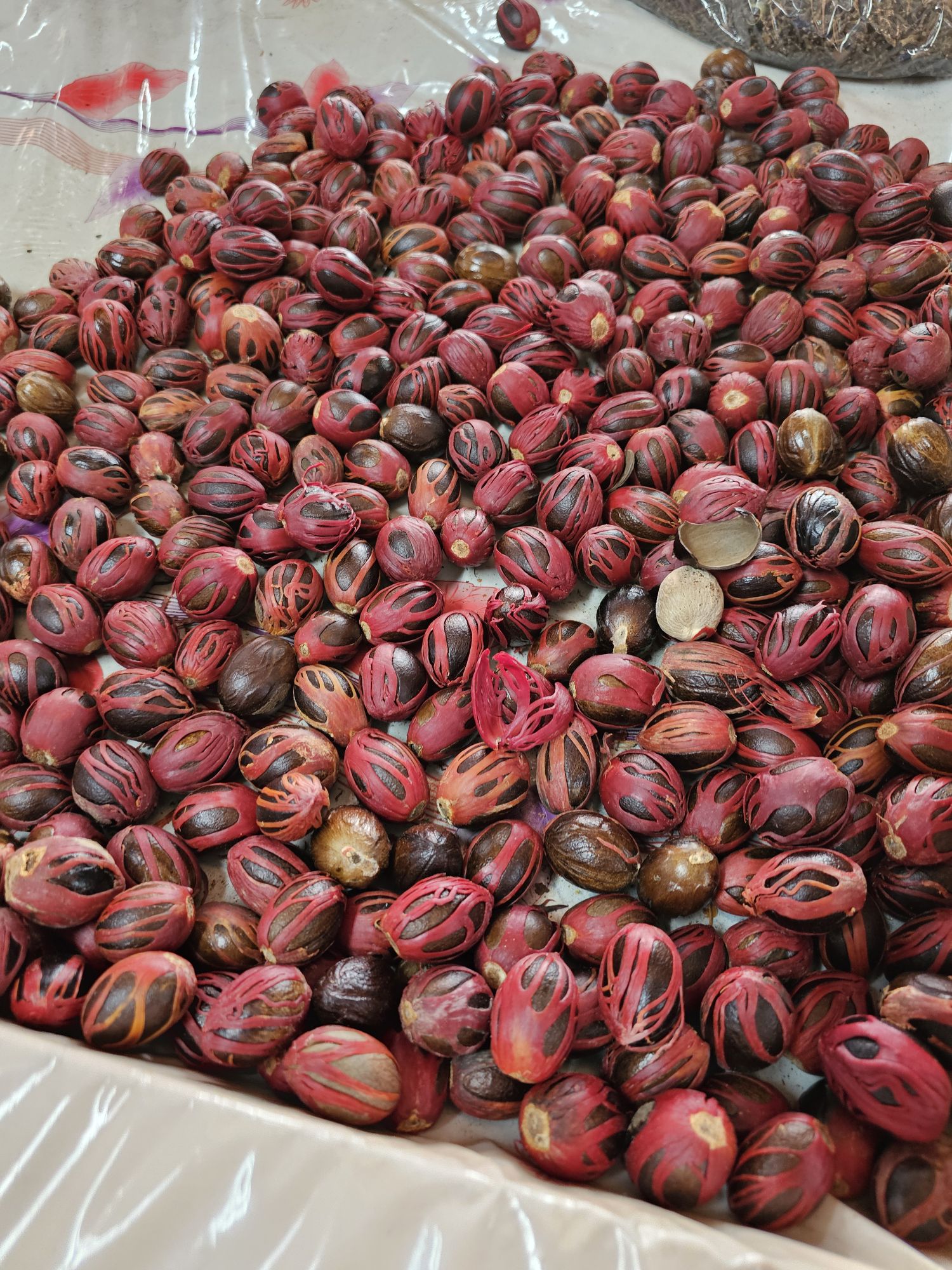
Grenada is found among the Caribbean islands located in the Lesser Antilles. Known as the “Spice Isle,” due to the abundance of spices it grows and exports, this green, hilly island is especially known for its nutmeg. The island itself is quite small, only 21 miles long (34km) and 12 miles wide (18km), but is home to 45 beaches, mountainous rainforest and coastal mangroves. It’s a perfect choice for those who love the beach, but also want to get out and explore.
Grenada is divided into 6 parishes plus the smaller islands of Carriacou and Petite Martinique
This year, Grenada is celebrating its 50th year of independence after it transitioned from UK rule in February 1974 and there are a number of activities scheduled throughout the year to celebrate.
Carnival in Grenada, better known as ‘Spicemas’ takes place every year in August and is a huge celebration
If, like us, you aren’t here during Carnival, there are still plenty of things to do on Spice Isle.
Some of our favourites include:
Grand Anse Beach
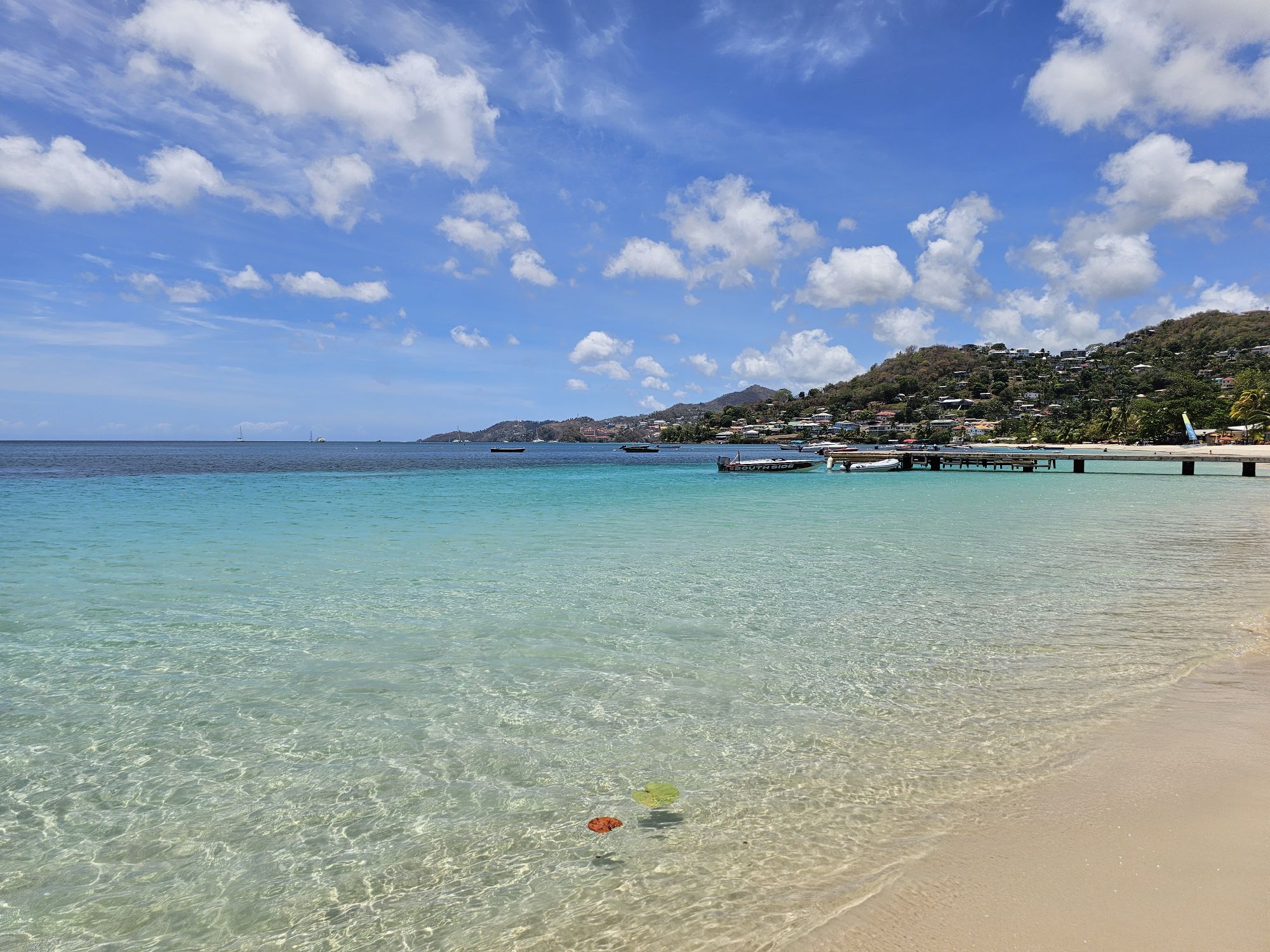
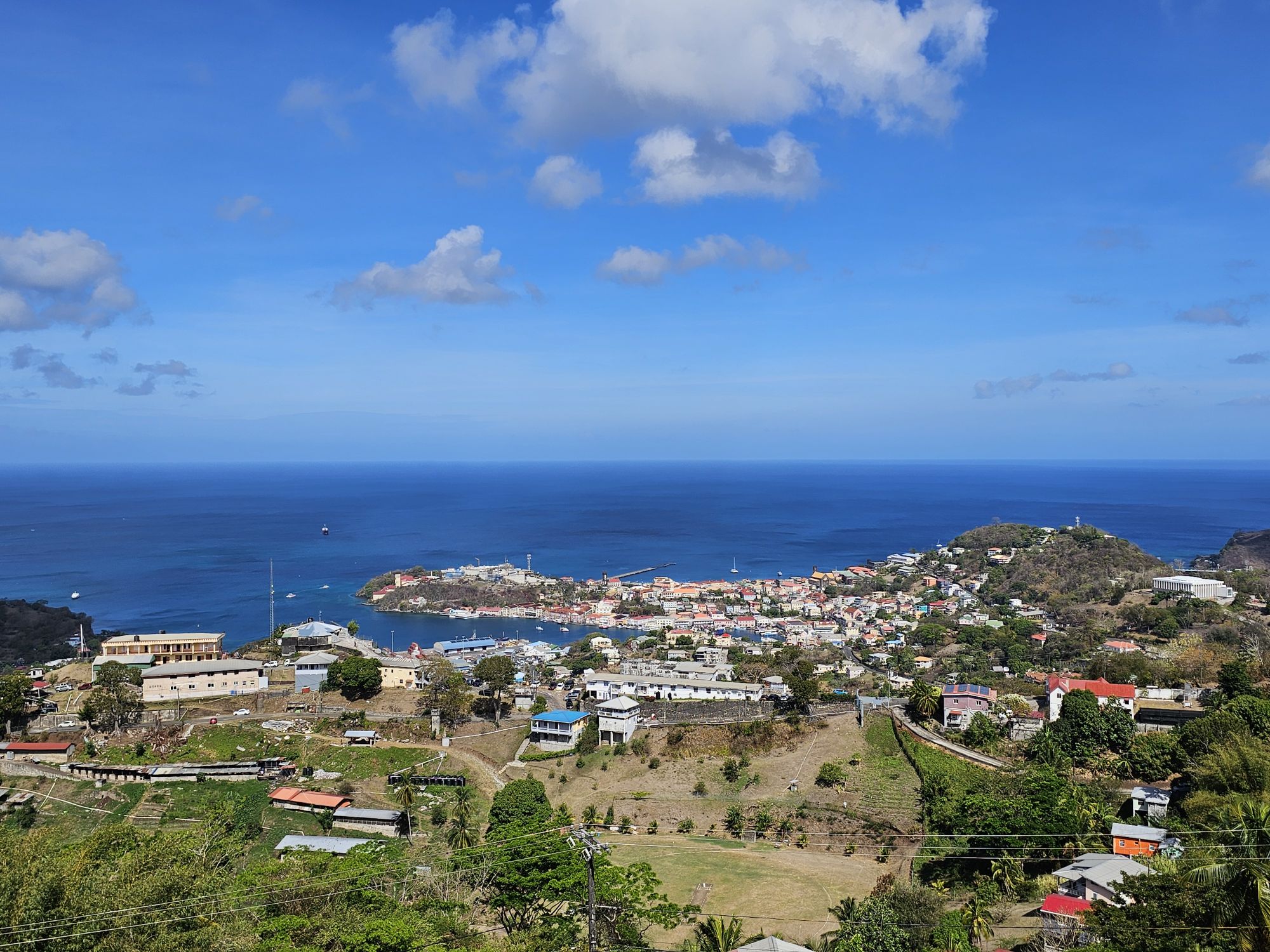
A must visit spot while in Grenada. In 2019, Grand Anse Beach was rated the best beach in the world by Condé Nast Traveller UK. Famous for its two-mile-long stretch, this sandy white beach offers panoramic views of the capital and lush hills in the background. The crystal clear turquoise waters are perfect for swimming and snorkelling.
There is also a Craft and Spice Market nestled in the middle and beach bars to grab a rum punch.
St George
The island’s capital is filled with colourful homes, Georgian buildings and a picturesque harbour, where you can find the ferry to Carriacou as well as the nightly booze cruise party boats.
Looking for more info about the history of the island? Be sure to check out the Grenada National Museum.
You can also find duty free and souvenir shopping by the ferry docks and no trip to Grenada would be complete without visiting St George’s Market, filled with colourful stands of produce, souvenirs and of course spices!
Grenada used to be the second largest supplier of nutmeg in the world behind Indonesia, but after being hit by several tropical storms in 2004/2005, which caused widespread damage, Grenada’s agricultural industries took a big hit. The island is currently the 9th largest supplier of nutmeg as they work to rebuild.
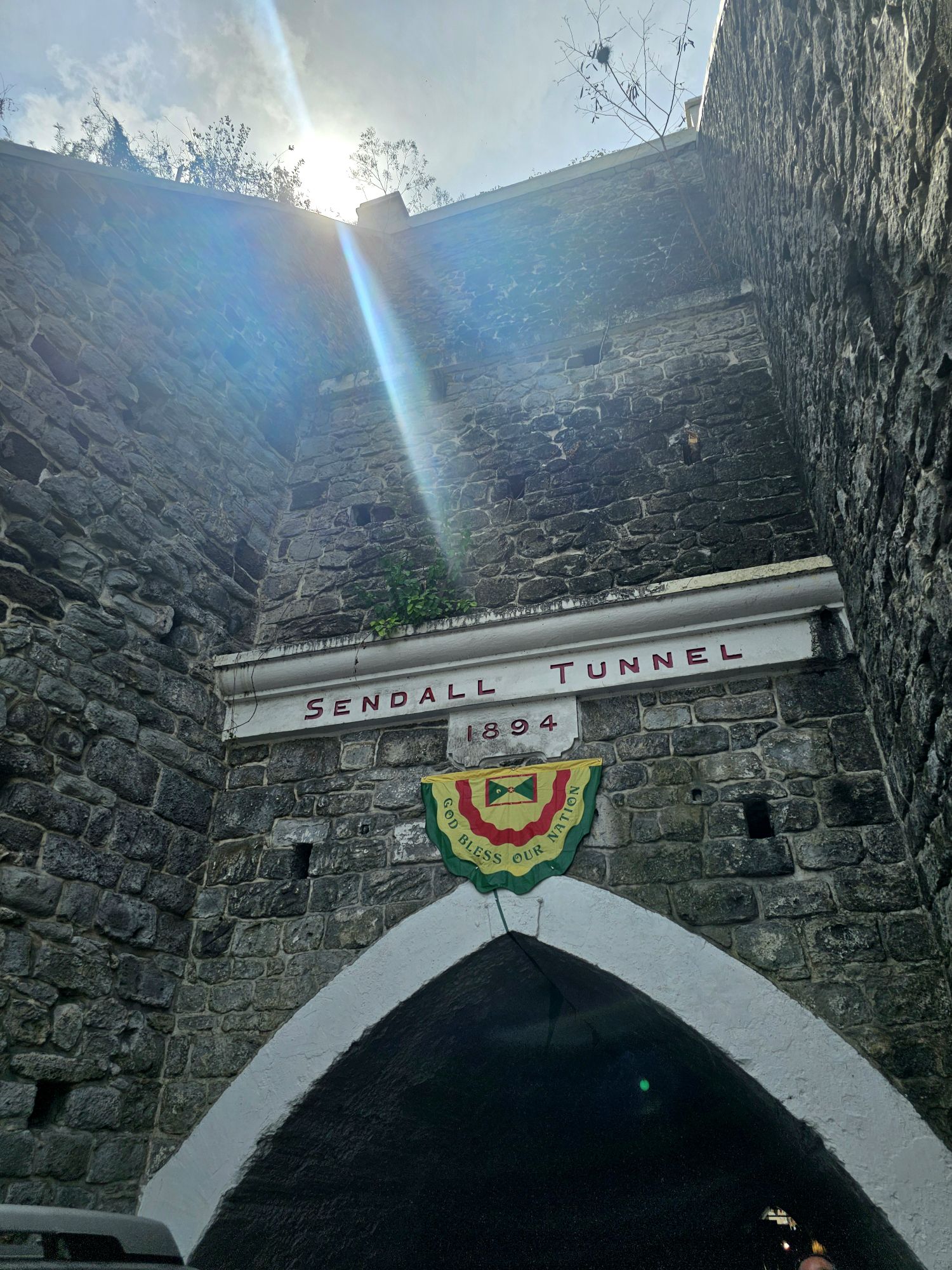
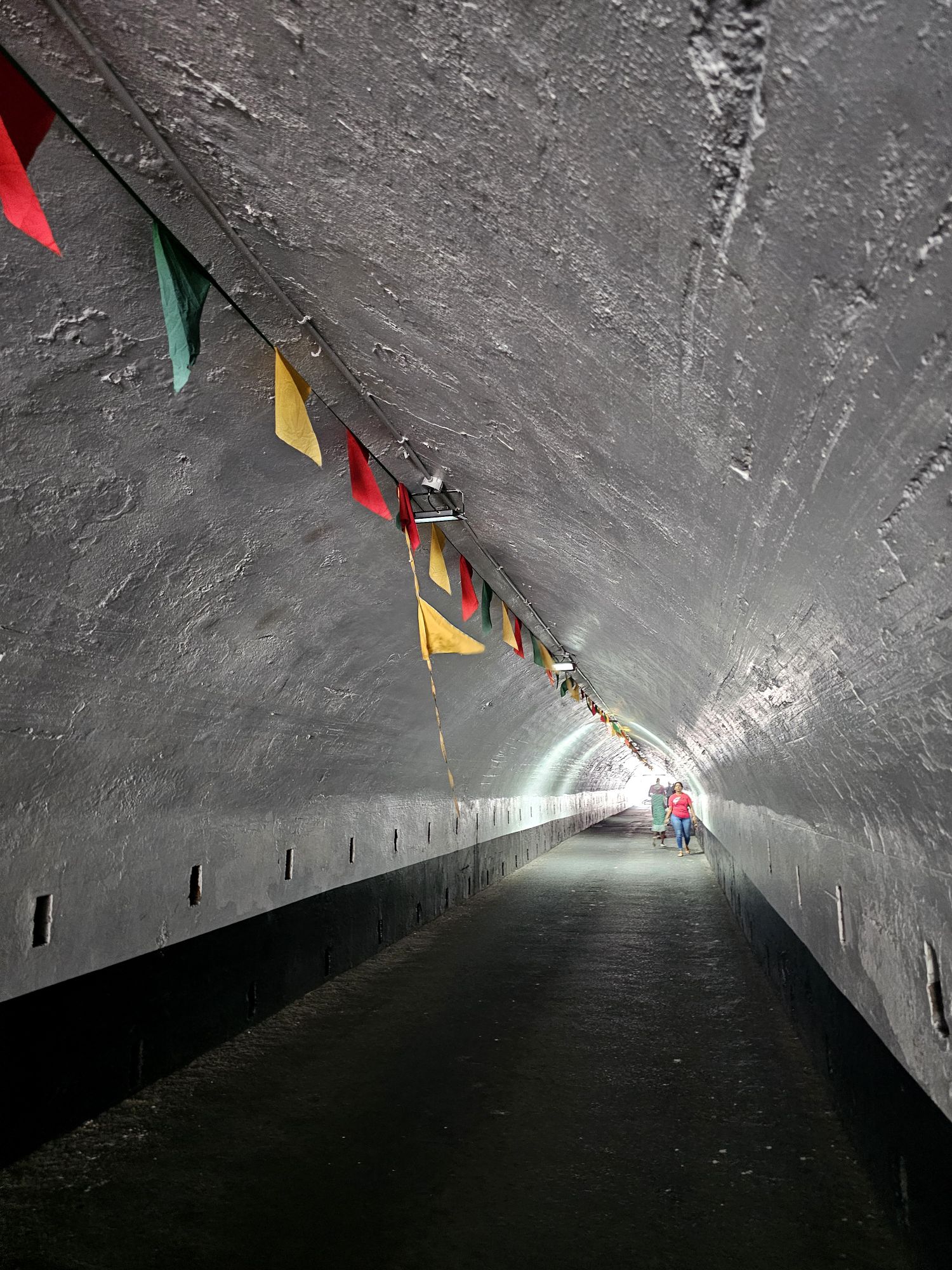
Near the cruise ship docks is the Sendall Tunnel, a unique historical site opened in 1894.
The tunnel is 350 feet long, 9 feet high and connects the east and west sides of town. It was deemed an engineering milestone on the island in the 19th century. There are no sidewalks and you walk through as the cars are whizzing by, but it is neat to see.
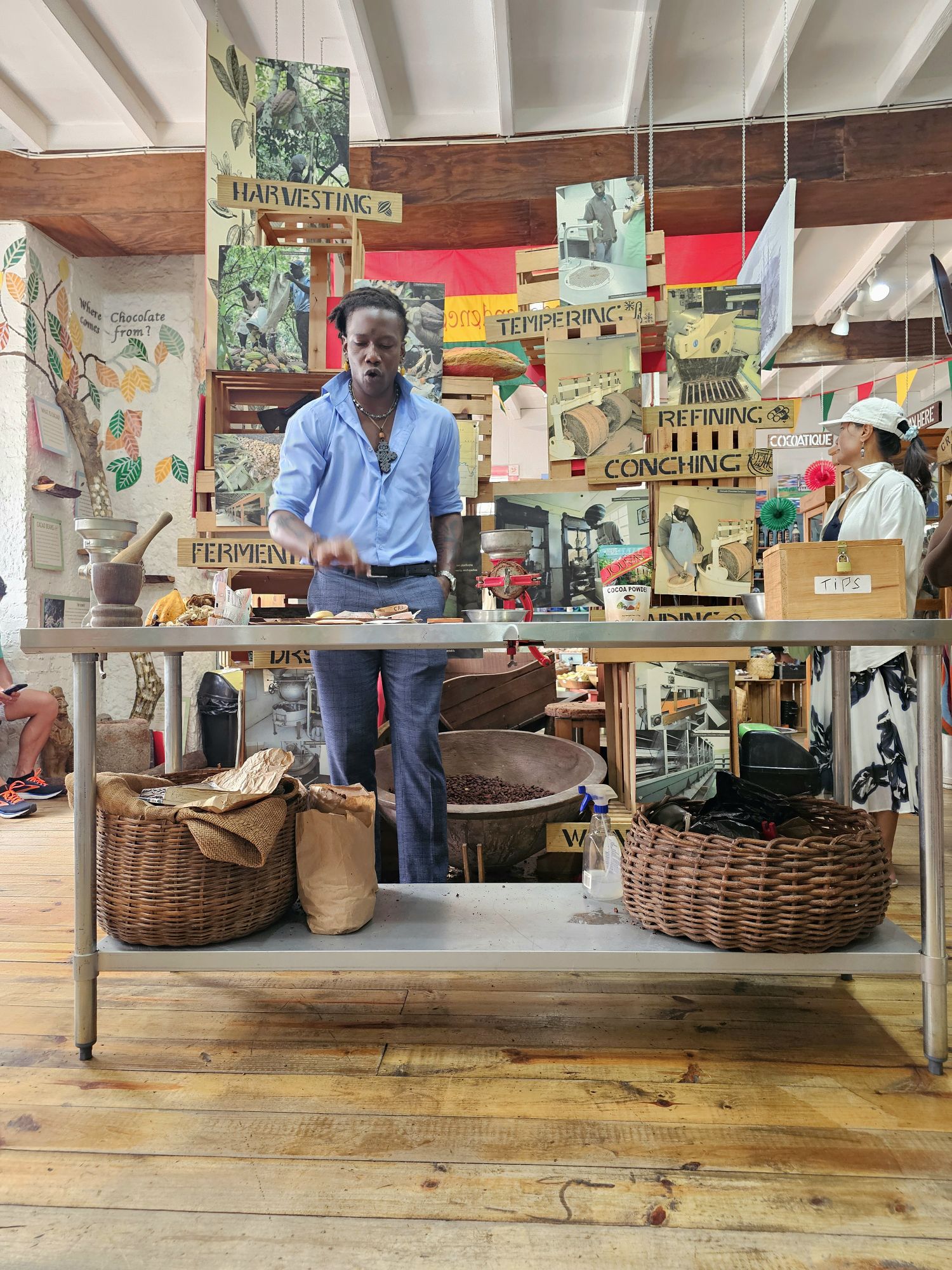
My favourite stop in St. George was House of Chocolate, a unique mini-museum portraying the history of chocolate in Grenada.
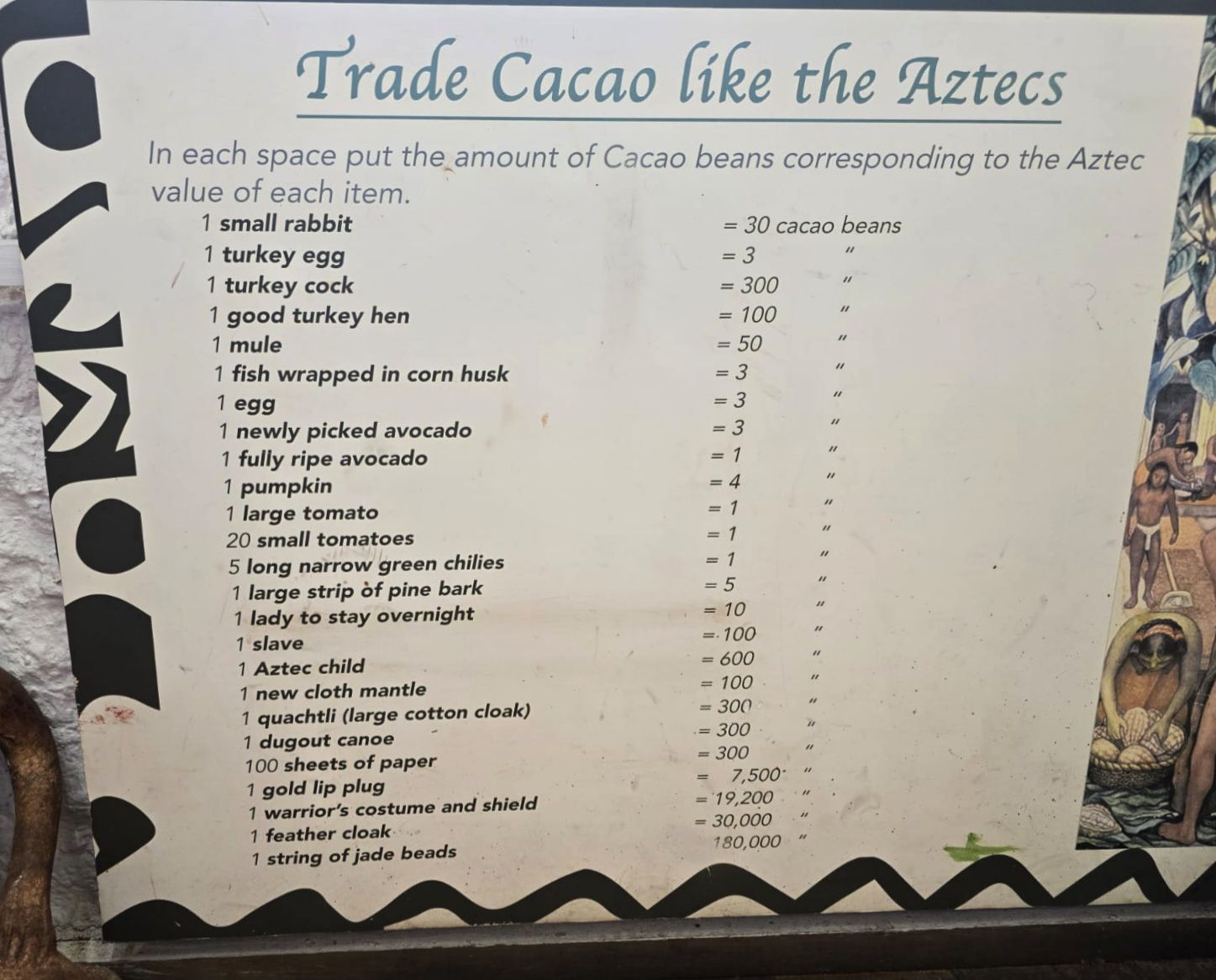
The island has one of the strongest, richest cocoas in the world partially due to the rich volcanic soil and the hot sun found here. This small island is home to five chocolate factories and is known for its delicious, organic chocolate. At House of Chocolate, we got a demonstration on how chocolate is made here and got to taste some of the local chocolate.
There is also a cafe and shop filled with various chocolate and cocoa products as well as drinks, baked goods and ice cream. The island is known for its nutmeg ice cream, so of course we had to try a scoop of it, along with a scoop of chocolate nibs straight from the House of Chocolate. Both flavours were delicious!
Tours are free and there is no entry fee.
If chocolate isn’t your thing, there are also several rum distilleries on the island, including Clarke’s Court Rum Distillery, the largest rum distillery in Grenada and River Antoine Estate Rum Distillery, the oldest rum distillery in Grenada, established in 1785. Rum is still manufactured and produced here using the oldest functioning waterwheel in the Caribbean exactly how it was made back then.
Grand Etang National Park
This 36 acre park is a popular stop on many of Grenada’s excursions and is a must visit for any nature lover. At the top, is Grand Etang Crater Lake, a freshwater lake set in the crater of an extinct volcano 530m above sea level.
This lake is home to a variety of fish that range from black to coppery gold. Most people make a short stop here and then continue out of the park, but you can easily spend at least half a day exploring all Grand Etang has to offer. There are numerous hiking trails that vary in length and difficulty. Seven Sisters Waterfall, one of Grenada’s most iconic falls, is also located within the park.
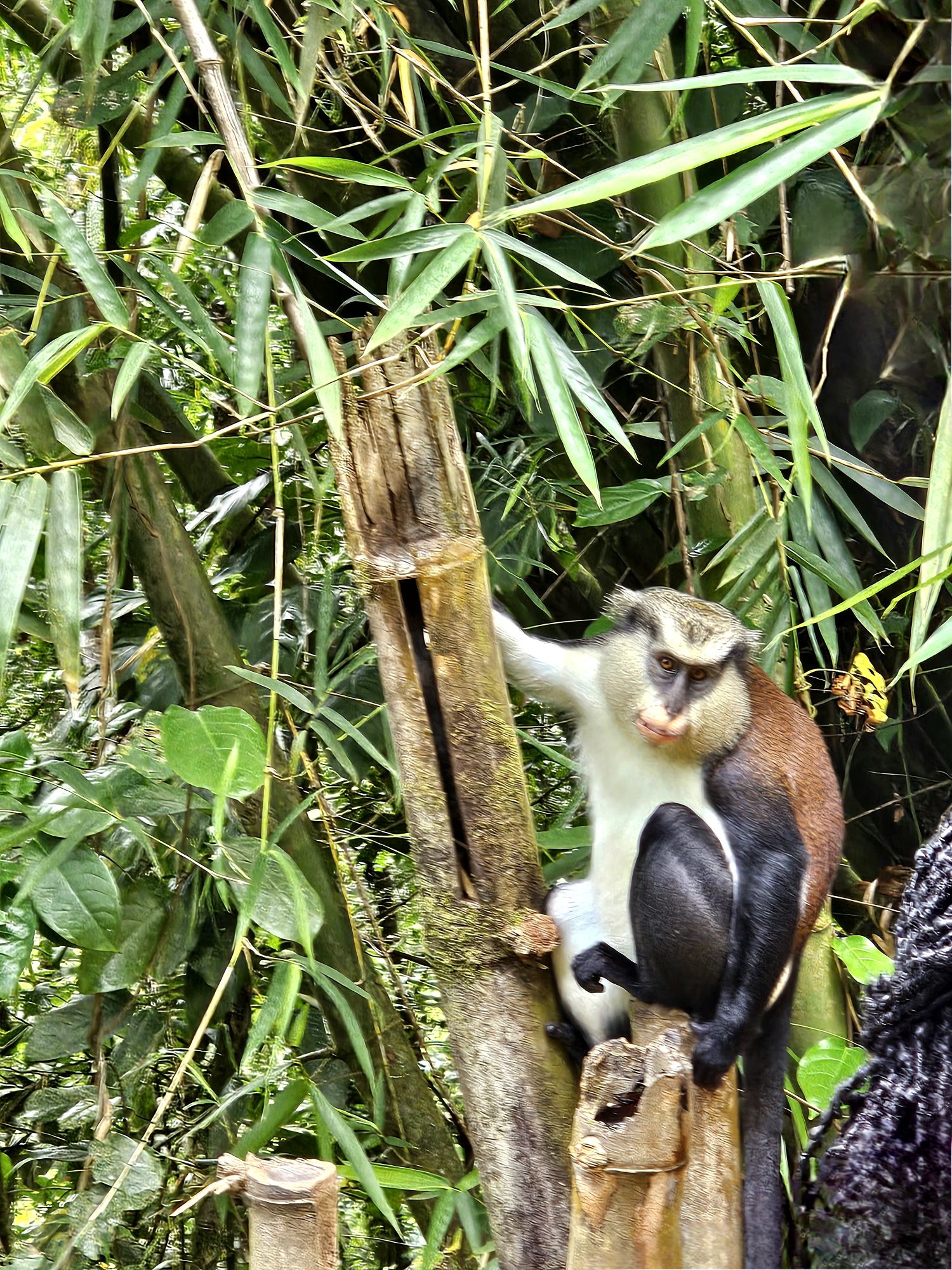
While checking out the local flora and fauna, be sure to keep your eyes peeled for the adorable white-faced Mona monkeys found within the park. Grenada is the only country outside of Western Africa where these monkeys can be found as they were transported to the island aboard slave ships in the 18th century.
Fort Frederick
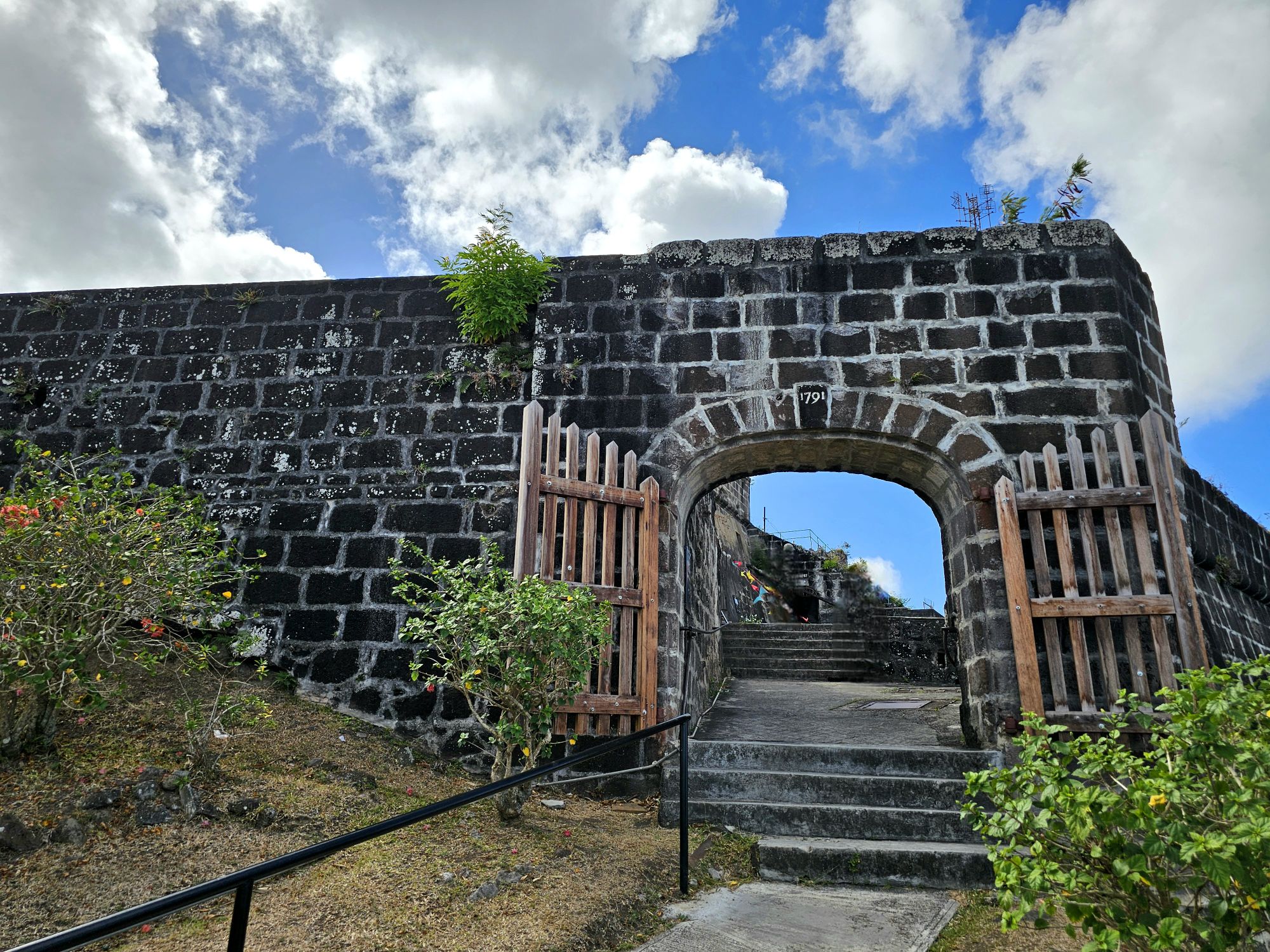
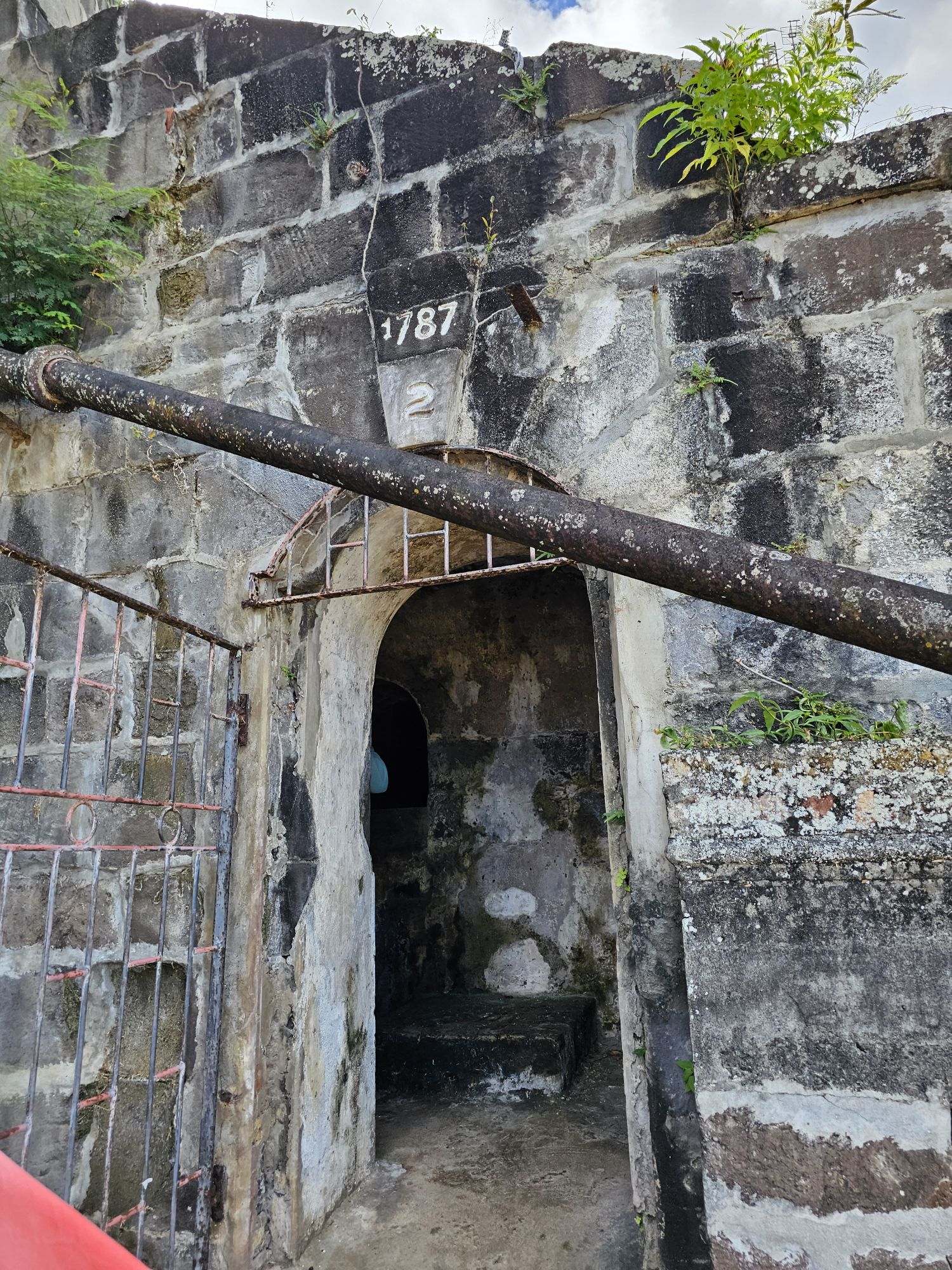
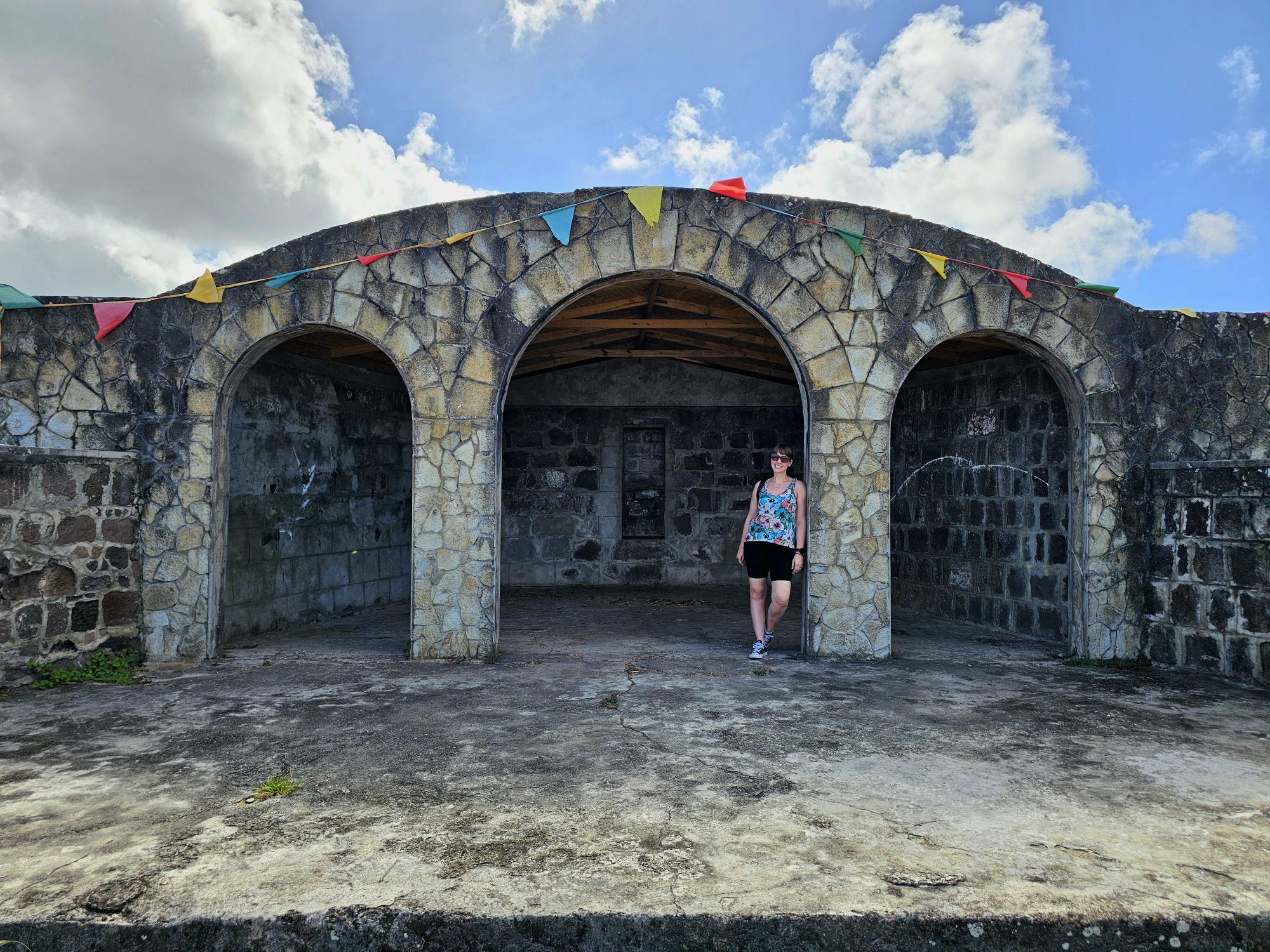
Located 244m above sea level overlooking St. George’s harbour is Fort Frederick, one of the best preserved bastions in the Caribbean. This fort was started by the French in 1779 and finished by the British in 1783 and was part of the struggle between the French and British for control of the island. It was built to protect the harbour’s eastern entrance, however, the fort never fired a single cannon in anger. Locally, Fort Frederick is referred to as a backward facing fort as the guns were positioned to face the inland hills, instead of out towards the sea.
Today, the Fort offers beautiful panoramic views of the island, making it the perfect stop to learn some of the island’s history and get some great photos!
There is a small fee to enter and there are guides on hand to give you more info. Visitors – XCD $5.34 or USD $2.00
Visit Annandale Falls
While there are numerous waterfalls in Grenada, Annandale Falls are the only ones easily accessible by road, as the others require a hike. Surrounded by lush foliage and colourful flowers, Annandale stands 30 feet high with water from the surrounding mountainous streams, plunging into the clear pool beneath.
A perfect spot to cool off and get some great photos. There is also a bar and restaurant nearby.
Go Snorkelling
The water here is crystal clear and fairly calm, making for excellent snorkelling around the island. As Grenada is the southernmost island in the Antilles archipelago, bordering the eastern Caribbean Sea and the western Atlantic Ocean, it features a diverse marine environment and in most snorkelling spots, in both Grenada and its sister island, Carriacou, snorkelers will enjoy observing colourful reef fish, eels, sting rays, octopus and more.
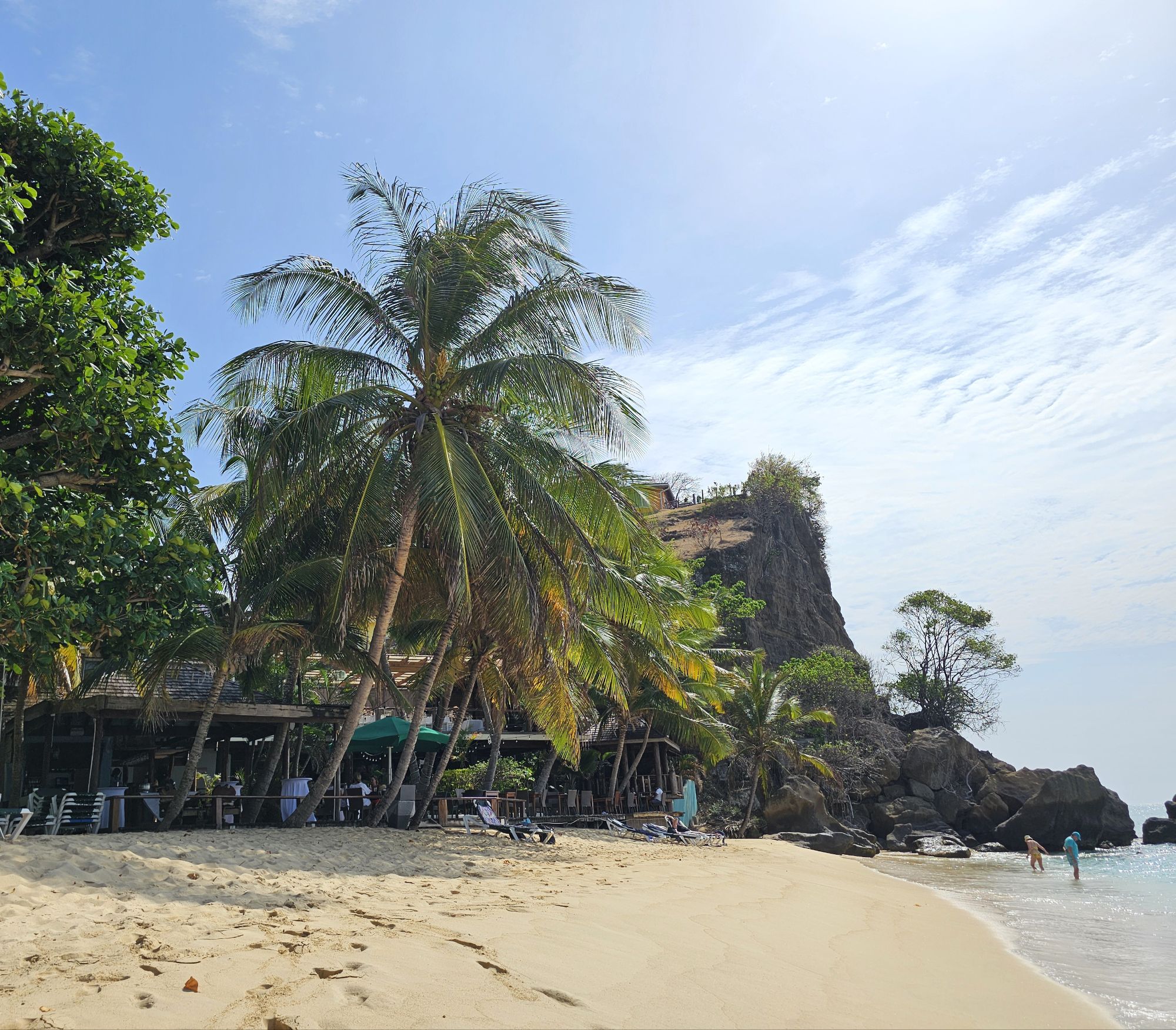
A great spot is Magazine Beach, found on the southwest coast, near the airport. Much of the beach is located in front of the Royalton Grenada Resort,(where we were staying) but access to the beach is open to all. It can be a bit tricky getting into the water in places due to the shallow water reef, but definitely worth checking out as we found lots of sea life here.
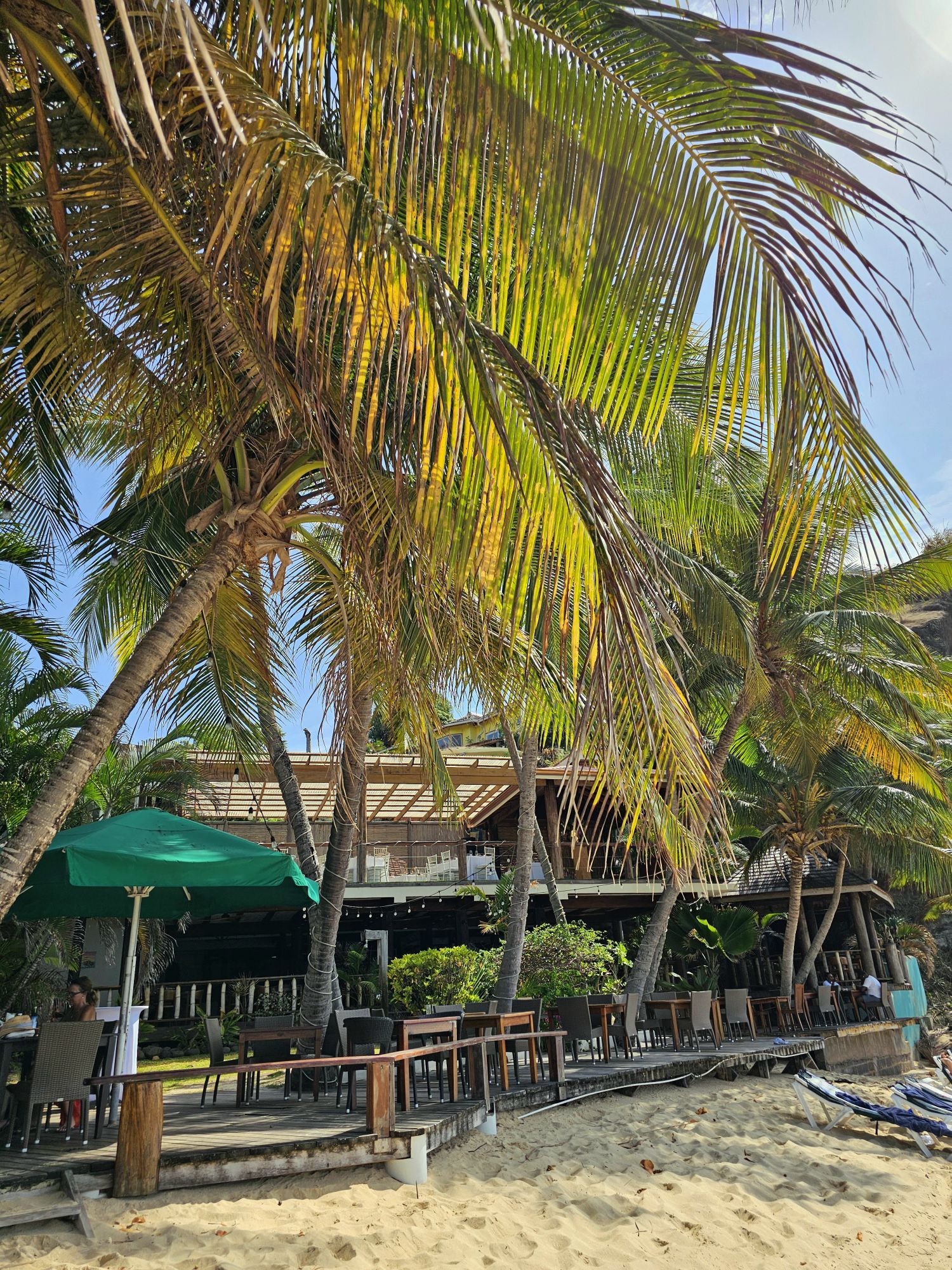
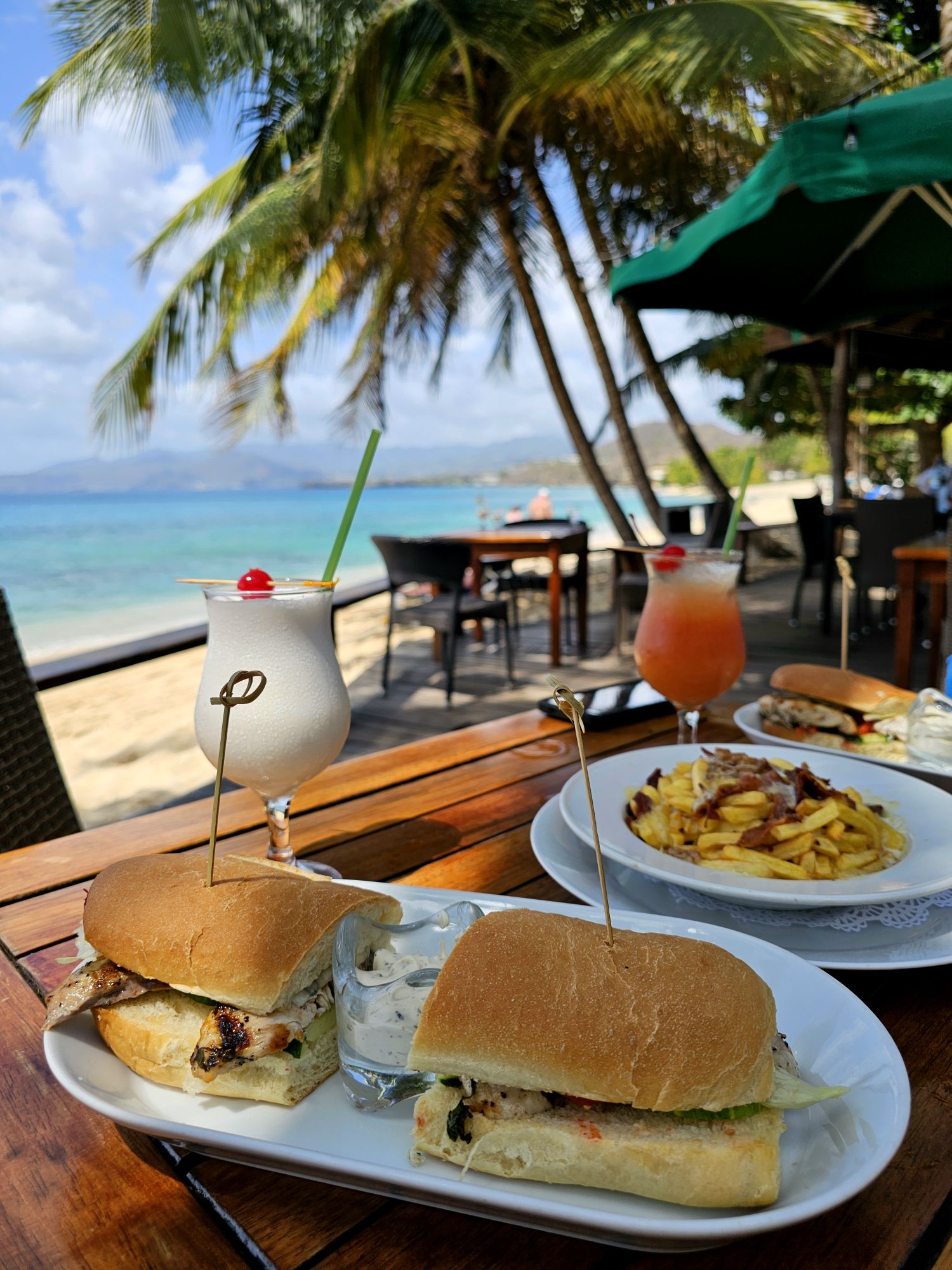
At one end of the beach, you’ll find The Aquarium, an open air restaurant right on the beach. Enjoy a fresh cooked meal or just grab a drink at La Sirena Beach Bar.
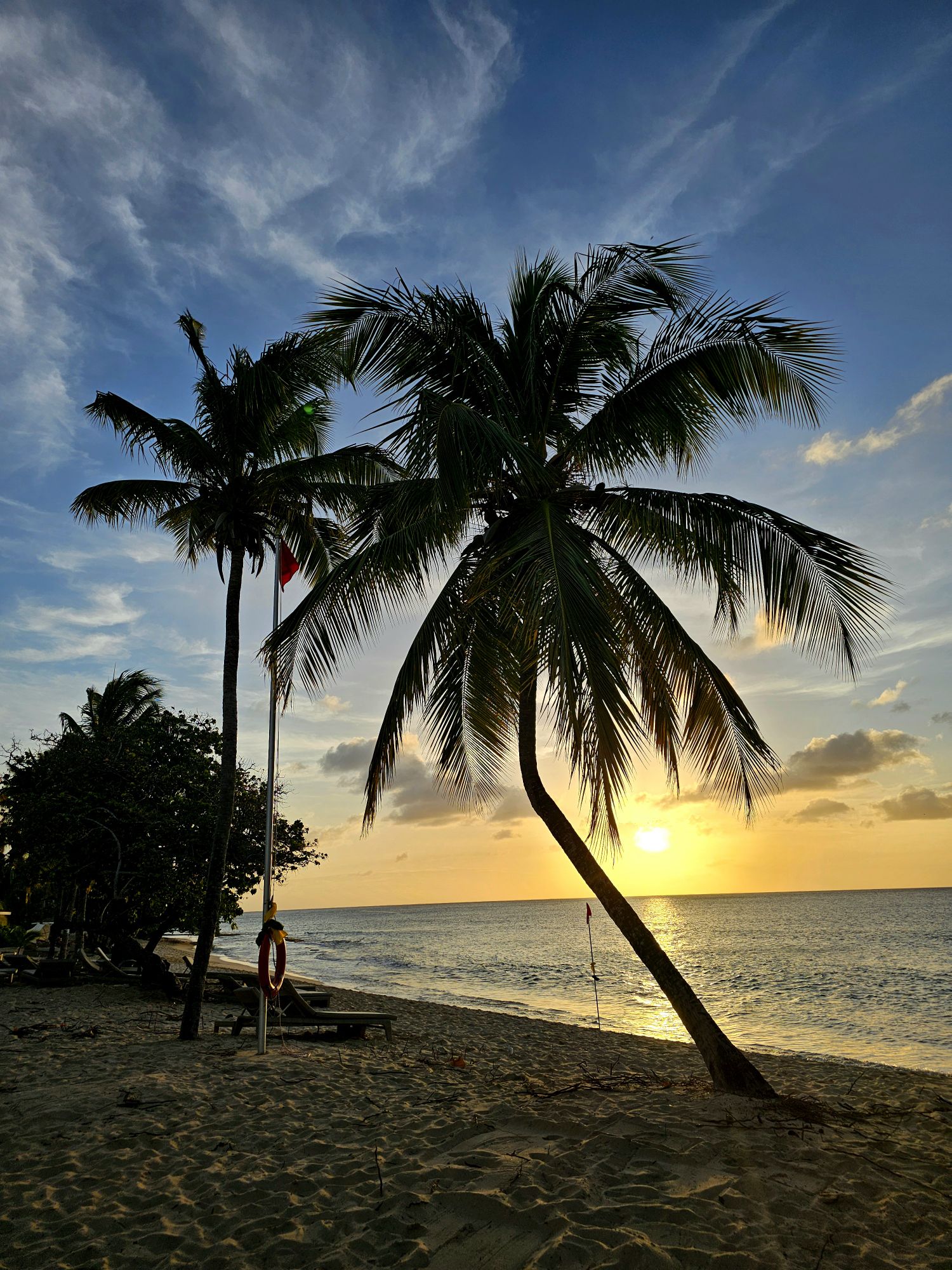
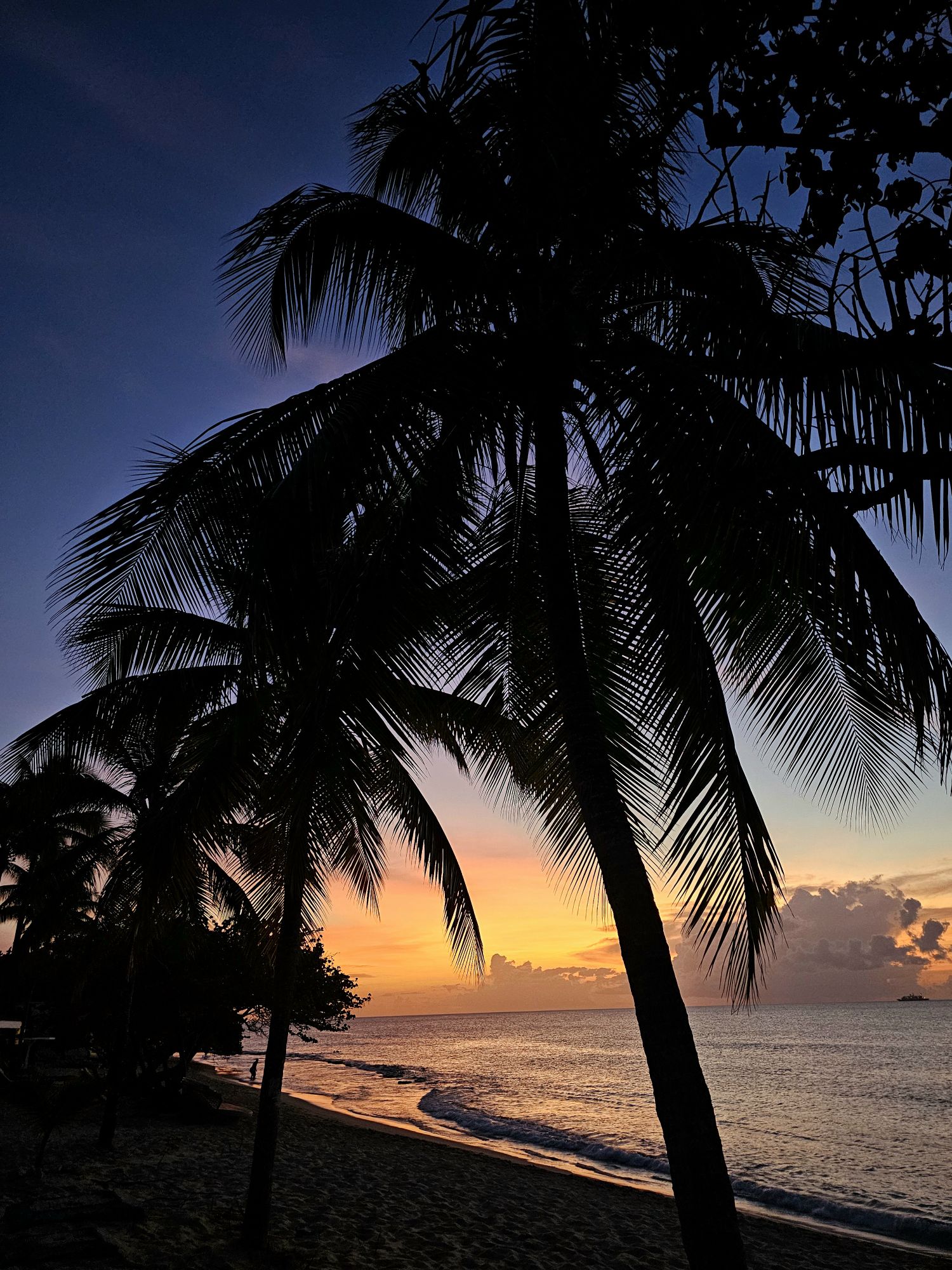
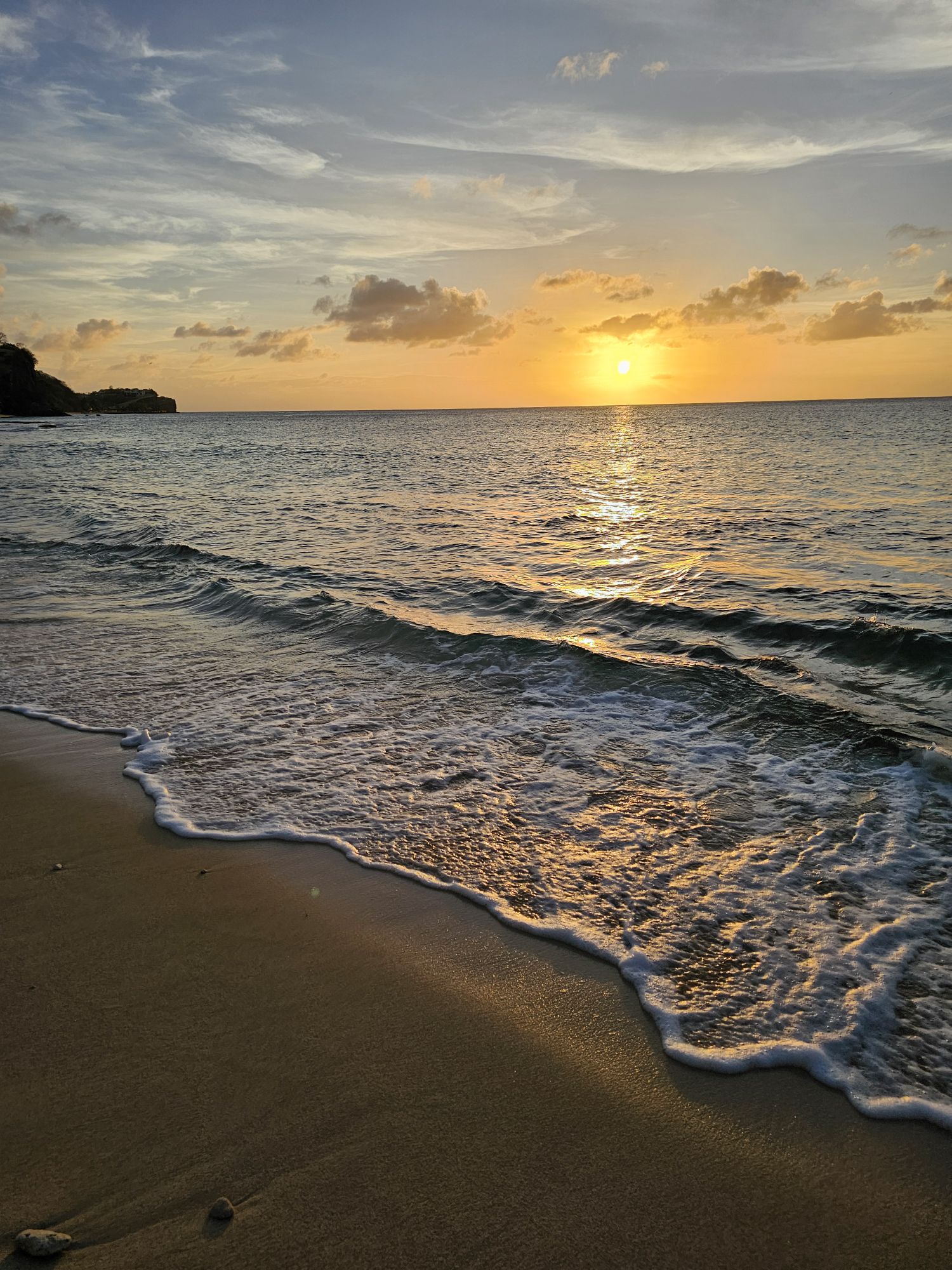
And if, like me, you can’t get enough of sunsets, Grenada doesn’t disappoint.
Be sure to enjoy the colourful sunsets over the turquoise waters after a day of exploring this beautiful island!
Official language in Grenada is English.
Local currency is the Eastern Caribbean Dollar. But USD is also accepted in most places
Right hand traffic. Just be aware that the roads are narrow and very hilly if you plan to drive yourself
Airport Maurice Bishop Airport, located in St. George Parish.
While in Romania, we spent most of a day exploring Bucharest, before taking the train on to the Transylvanian Region.
As I often do, especially on short stays in a new place, I joined a free walking tour to learn as much as I could in the short time I had. Our guide, Elena, took us through more than 500 years of history including Vlad the Impaler, the height of communism, the ’89 Revolution, and more as we made our way around part of the city.
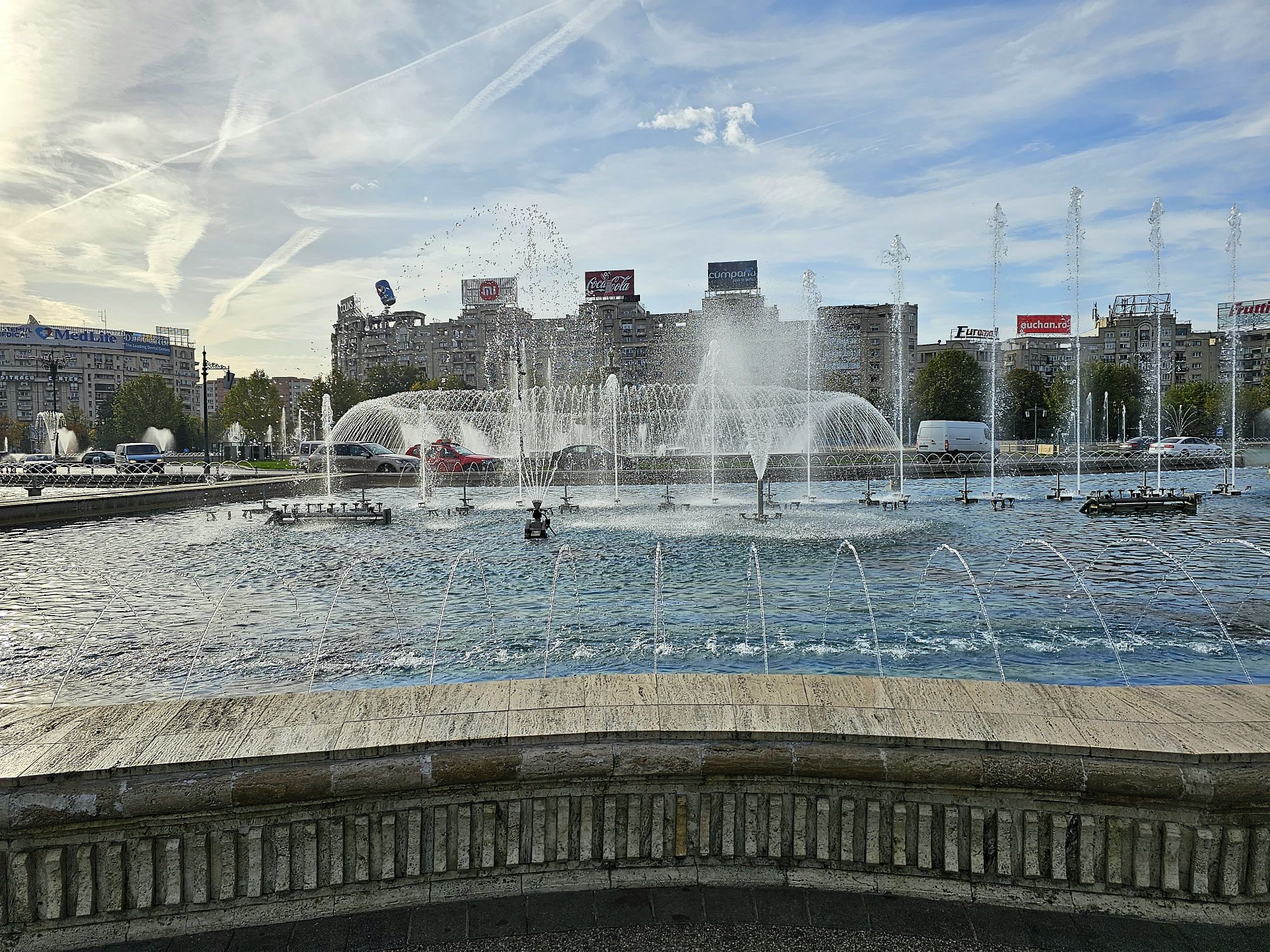
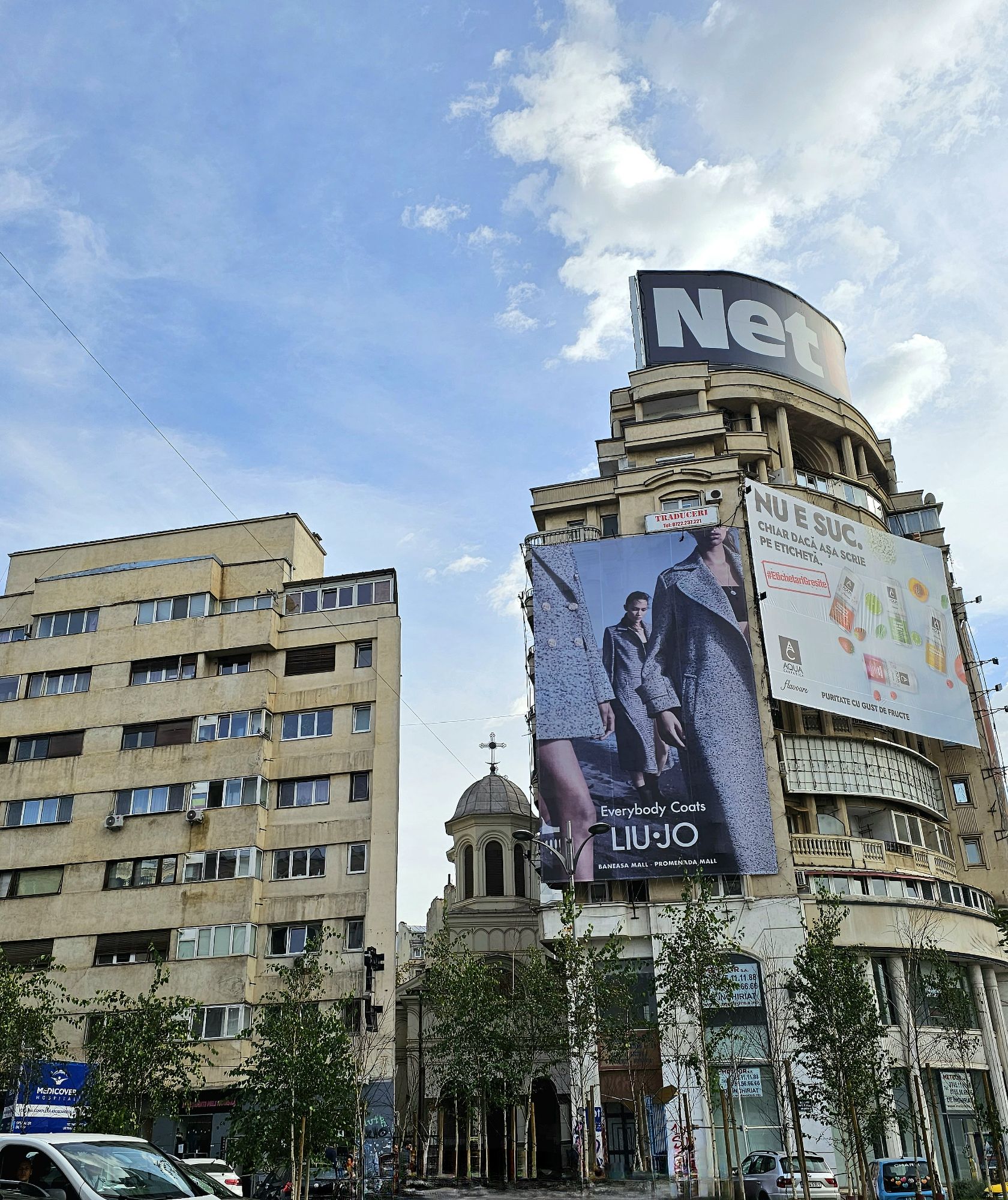
At first glance, Bucharest is not one of Europe’s beautiful old cities. However, as you begin to explore, you soon find that all the beautiful, old buildings are hidden behind the ‘Communist Curtain,’ as Elena put it.
During the communist regime of Nicolae Ceausescu, many of the buildings that were not destroyed were hidden away. When you stand in the centre square, you see a wall of concrete buildings, but as you make your way past them, you find the city’s hidden gems. Some buildings were even moved out of the way to save them from being destroyed.
With less than a day to explore, here are some of the highlights.
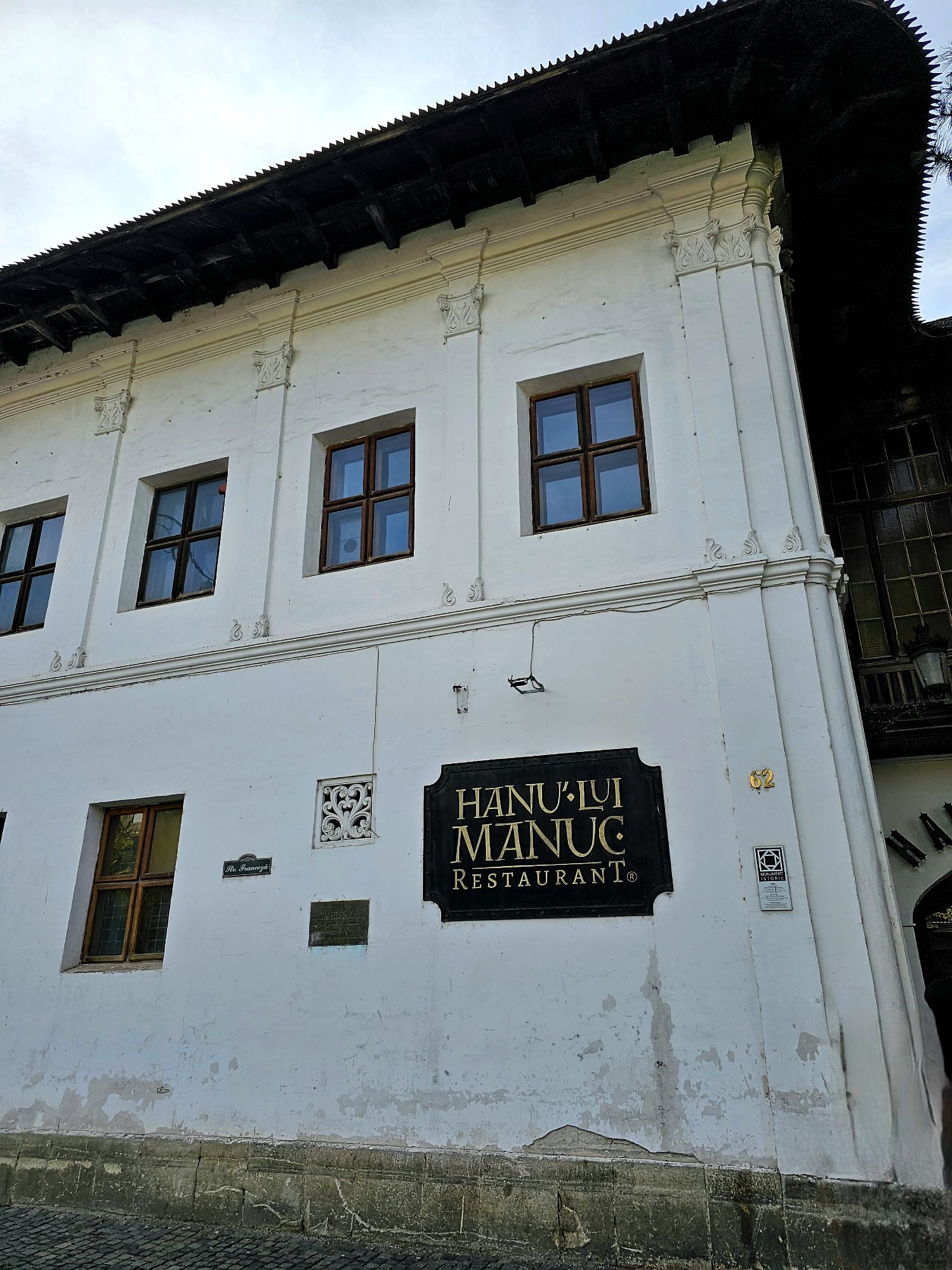
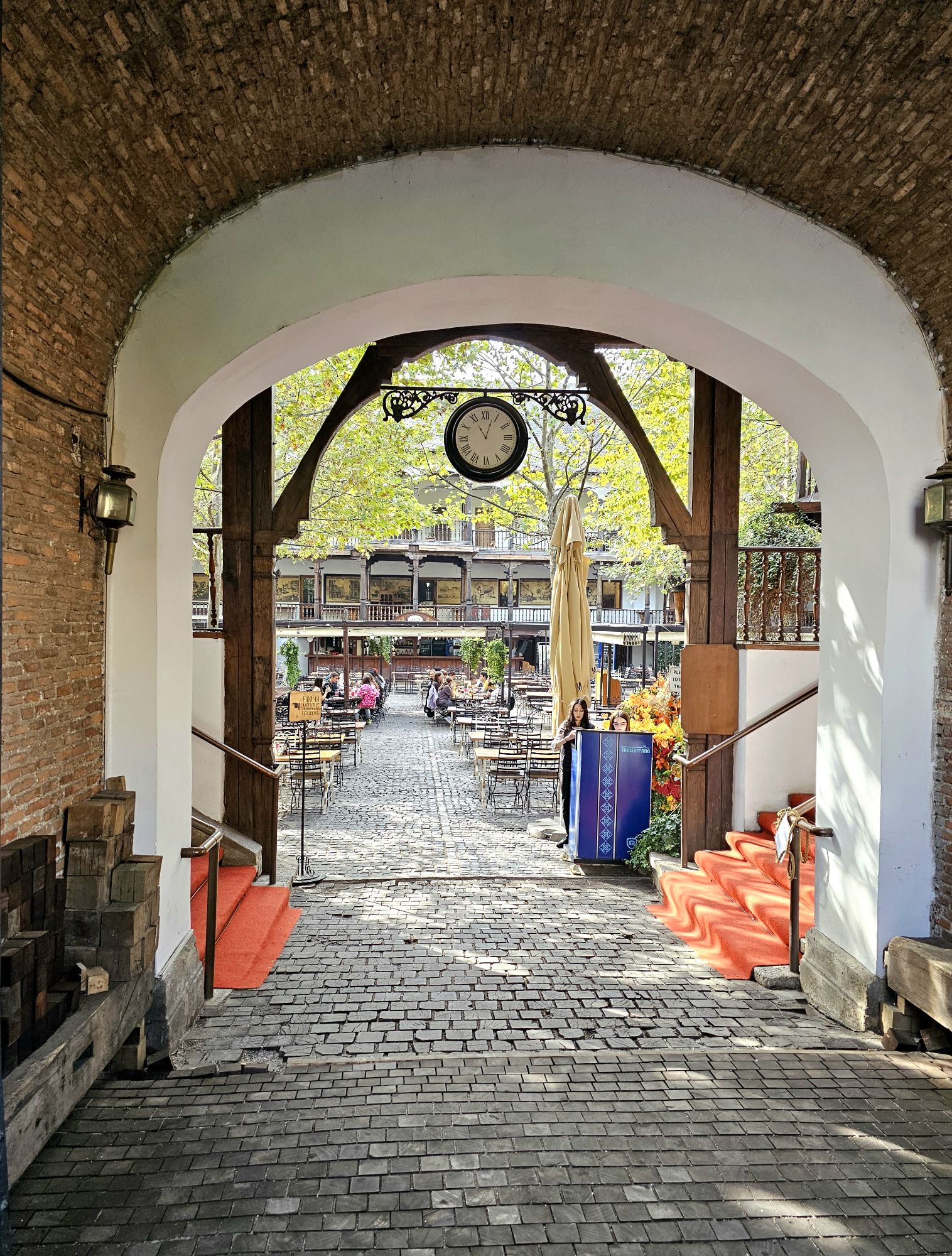
Hanul- Lui Manuc is the oldest operating hotel building in Bucharest. Inside the gates it houses a popular restaurant. This used to be a stop for travellers on their way from Vienna to Constantinople. It was built in 1808 and continues to serve traditional Romanian food.
There are still some wooden cobblestones near the entrance to the courtyard, showing what the streets used to look like. The inner courtyard used to house wagons and horses of the travellers and merchants who stayed here overnight.
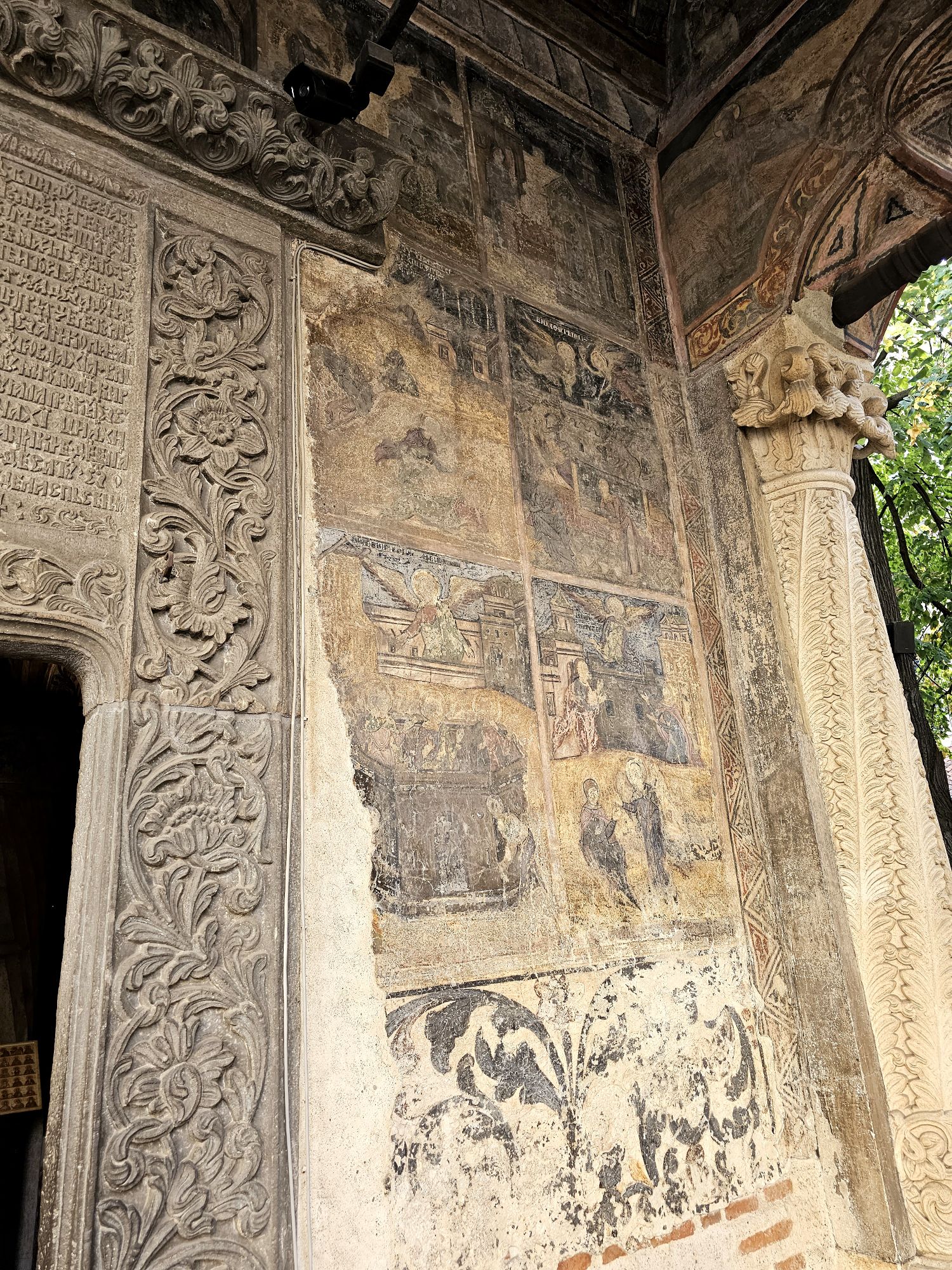
Across the square is St Anthony Church, the oldest church remaining in Bucharest from 1559. It was destroyed by fires in both 1611 and 1847 and rebuilt. Inside are beautiful frescoes in the neoclassical style, painted in 1852.
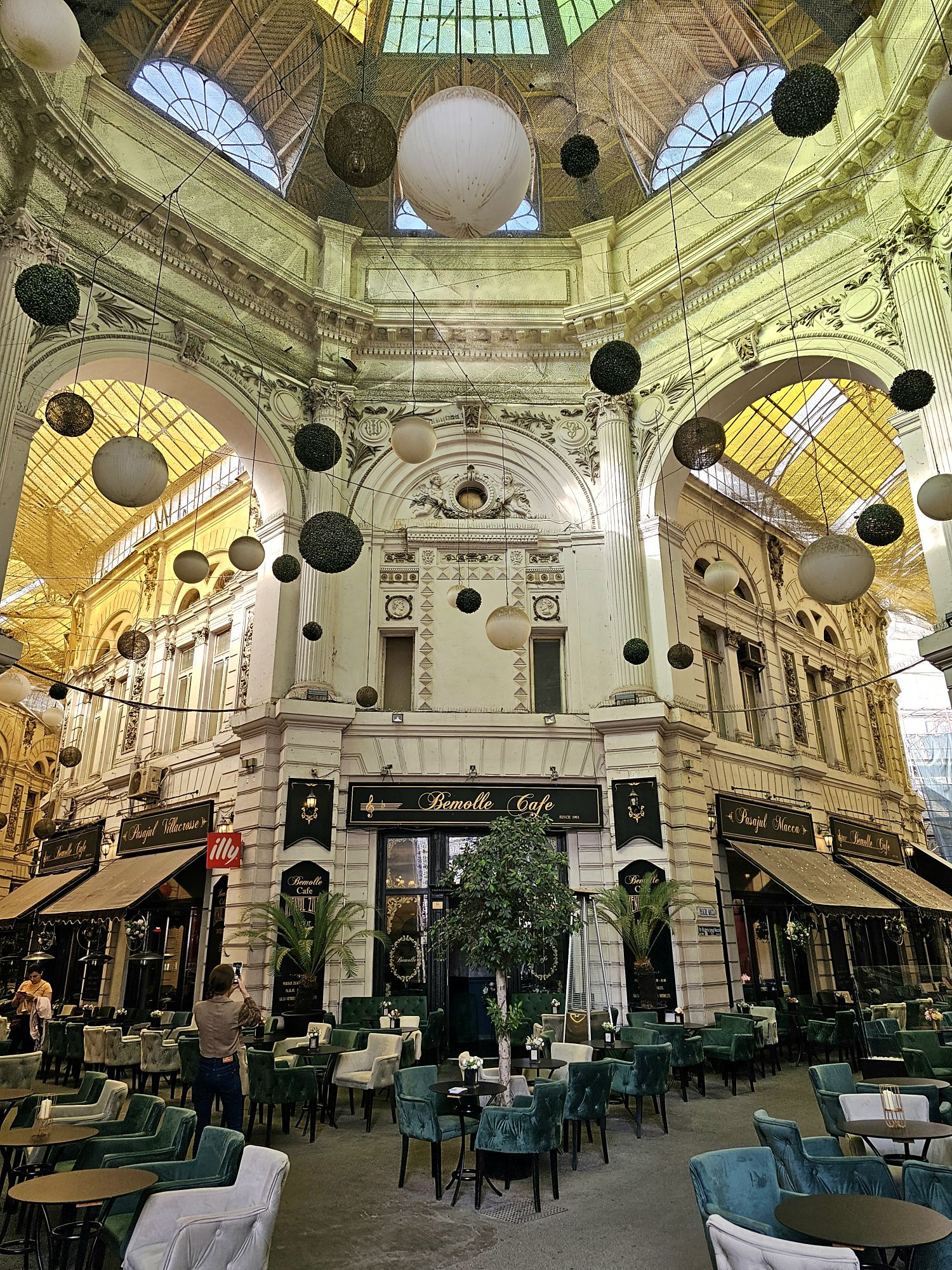
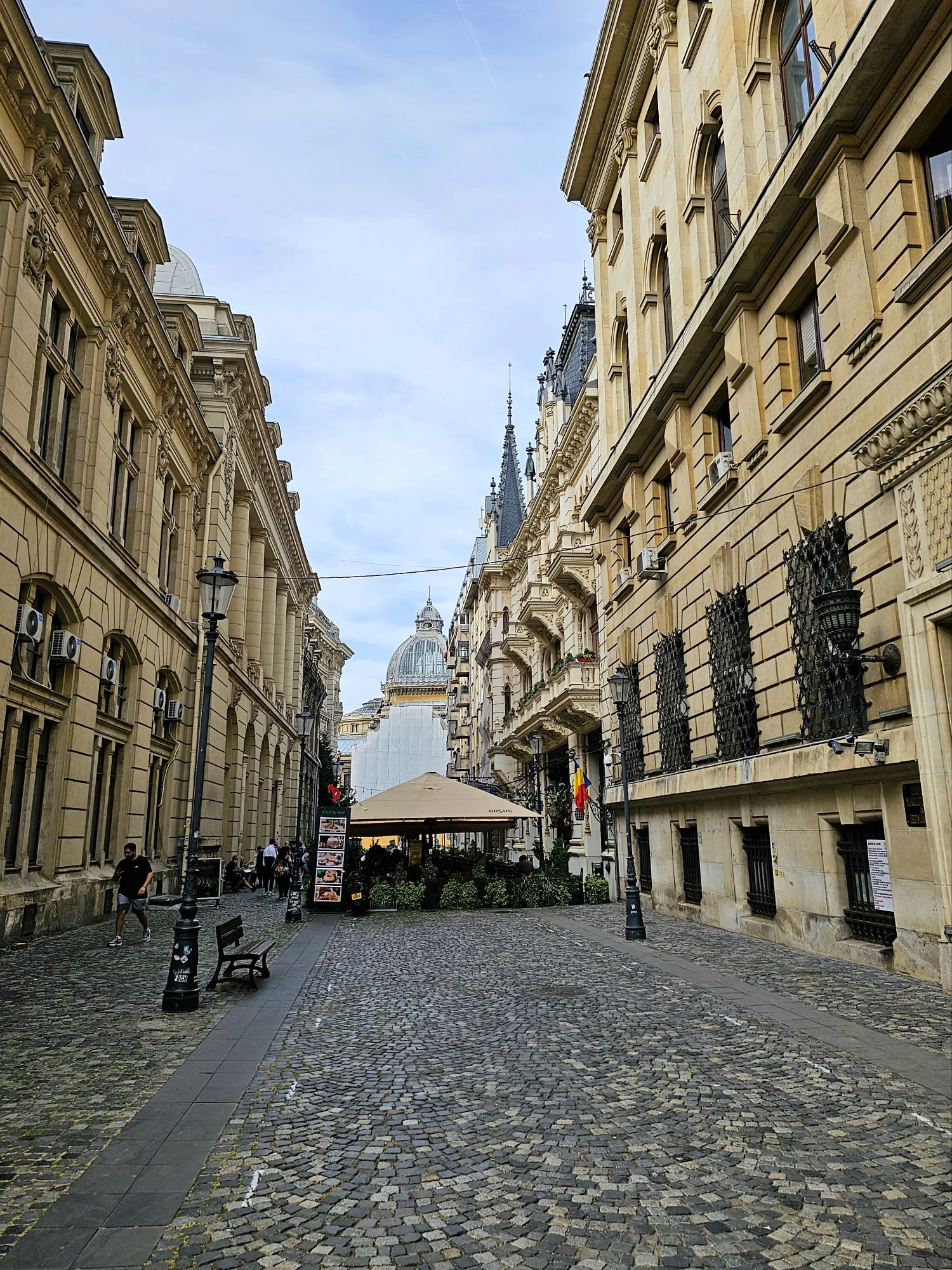
Thanks to its abundance of French-inspired architecture, Bucharest is often referred to as ‘Little Paris.’ A great example of this is the beautiful horseshoe-shaped passage in the heart of the Old Town known as Pasajul Macca-Vilacrosse, where today you will find cafes and eateries.
The most beautiful building, in my opinion, is the 18th-century Eastern Orthodox Church of Stavropoleos Monastery.
With its stunning architecture, ornamental motifs and paintings and secret courtyard housing cloisters behind, it’s the perfect secret spot to get away from the rest of the city and relax in silence for a little while. Definitely a must-see spot in Bucharest.
As a huge book lover, hearing there was a bookstore with six floors located in Bucharest, I had to find it. Cărturești Carusel, translated as ‘Carousel of Light,’ is situated in a restored 19th-century building in the heart of Bucharest’s Old Town.
Here, you will find well over ten thousand books and a cute cafe on the top floor. I could have easily spent hours here!
Revolution Square, near the university, is the site of the 1989 uprising that led to the end of the communist regime after Ceaușescu was captured and executed on Christmas Day.
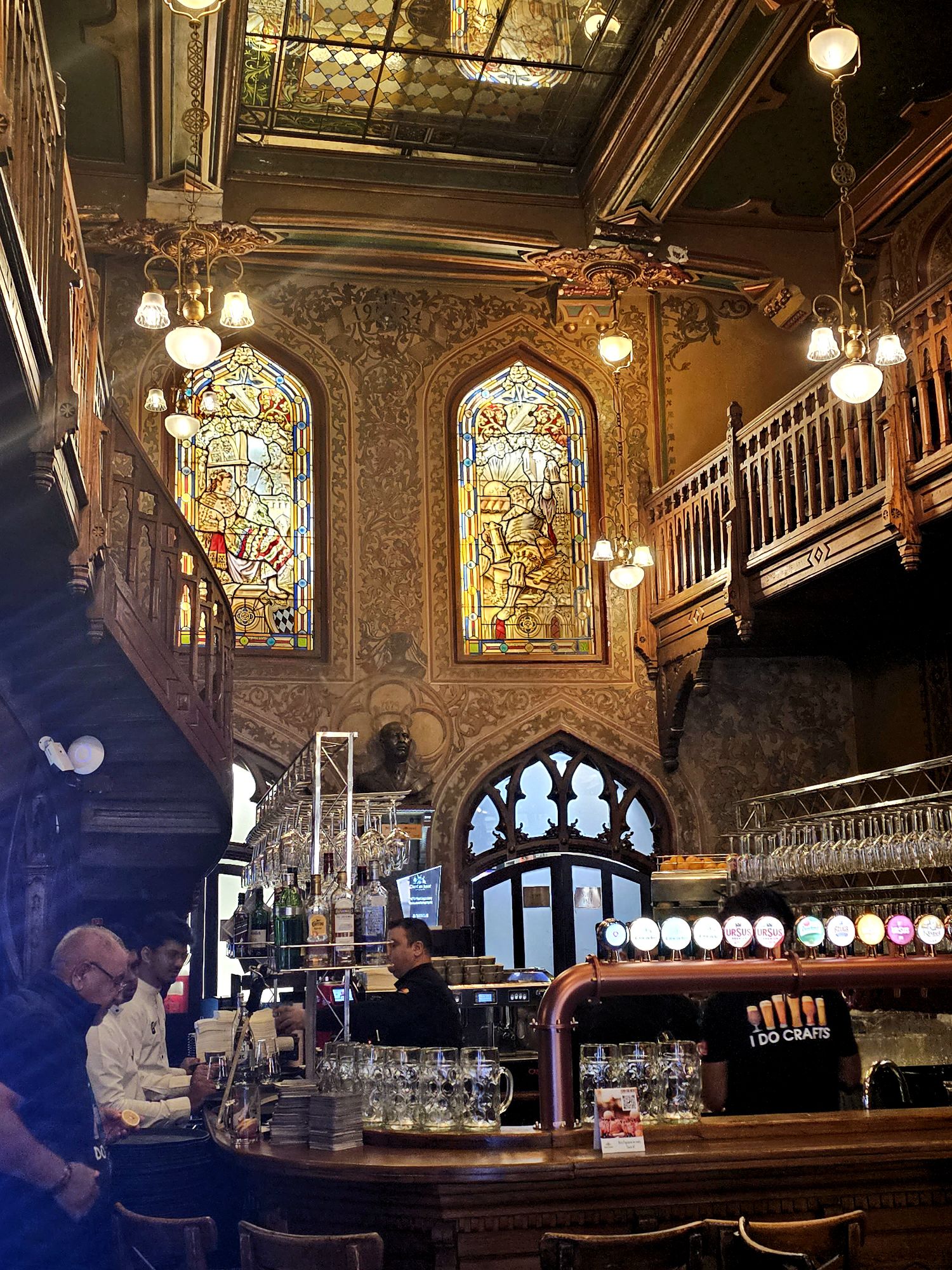
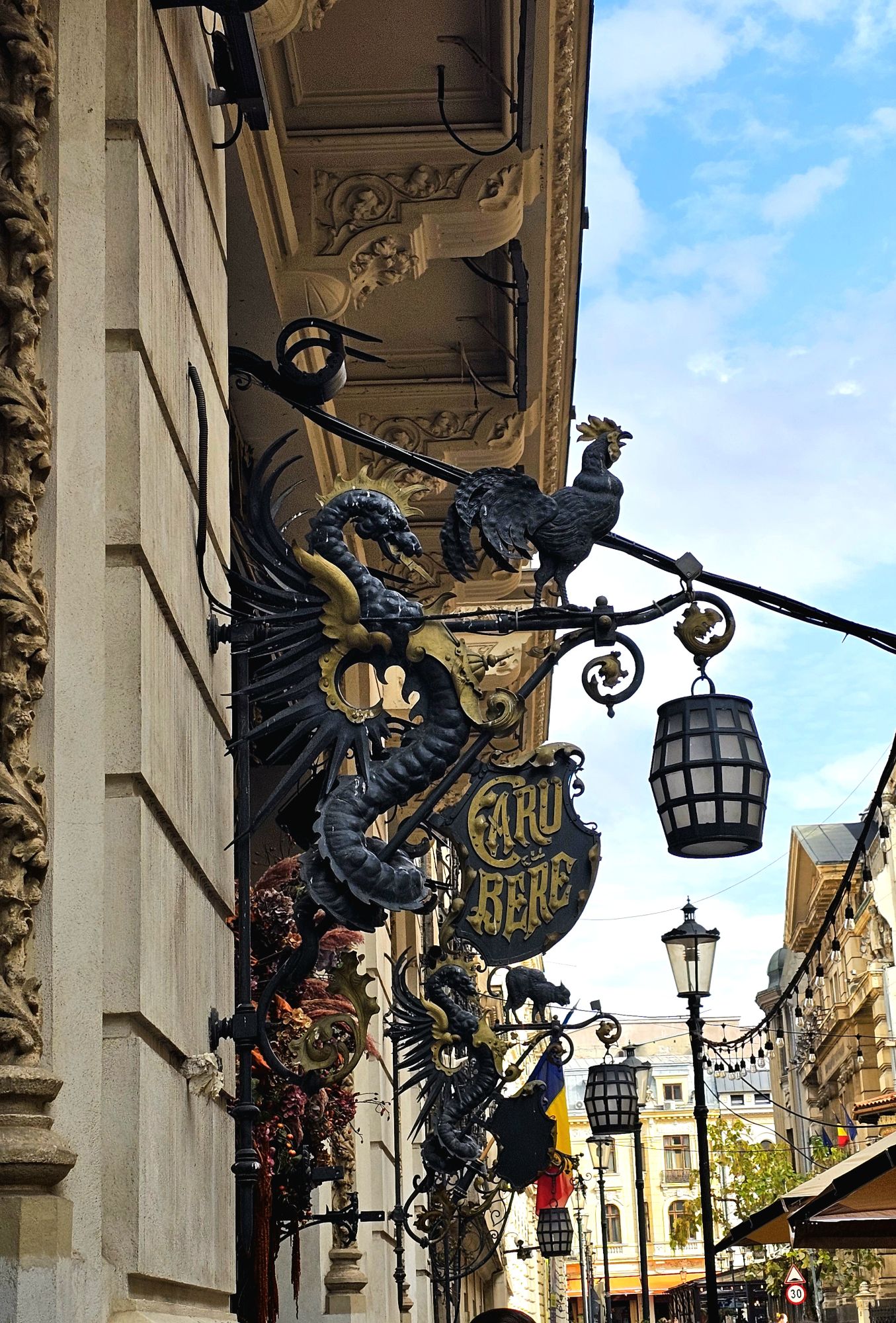
Take a break from exploring and enjoy a traditional Romanian meal at one of the oldest breweries in Bucharest, Caru’ cu bere. It began in 1879 as La Carul cu Bere(the beer wagon). At this time, the beer was brought to the brewery by horse-drawn wagons. For several years, the three Mircea brothers ran several beer houses in the area of the Villacros Passage, until one started construction of the Caru’ cu bere building in 1899.
The famous restaurant and brewery still stands there today. This gorgeous neo-gothic style building is filled with stained glass, paintings, mosaics, and carved panels on the inside, as well as a great bar area. There is also a nice patio and traditional live music and dance can be enjoyed most days.
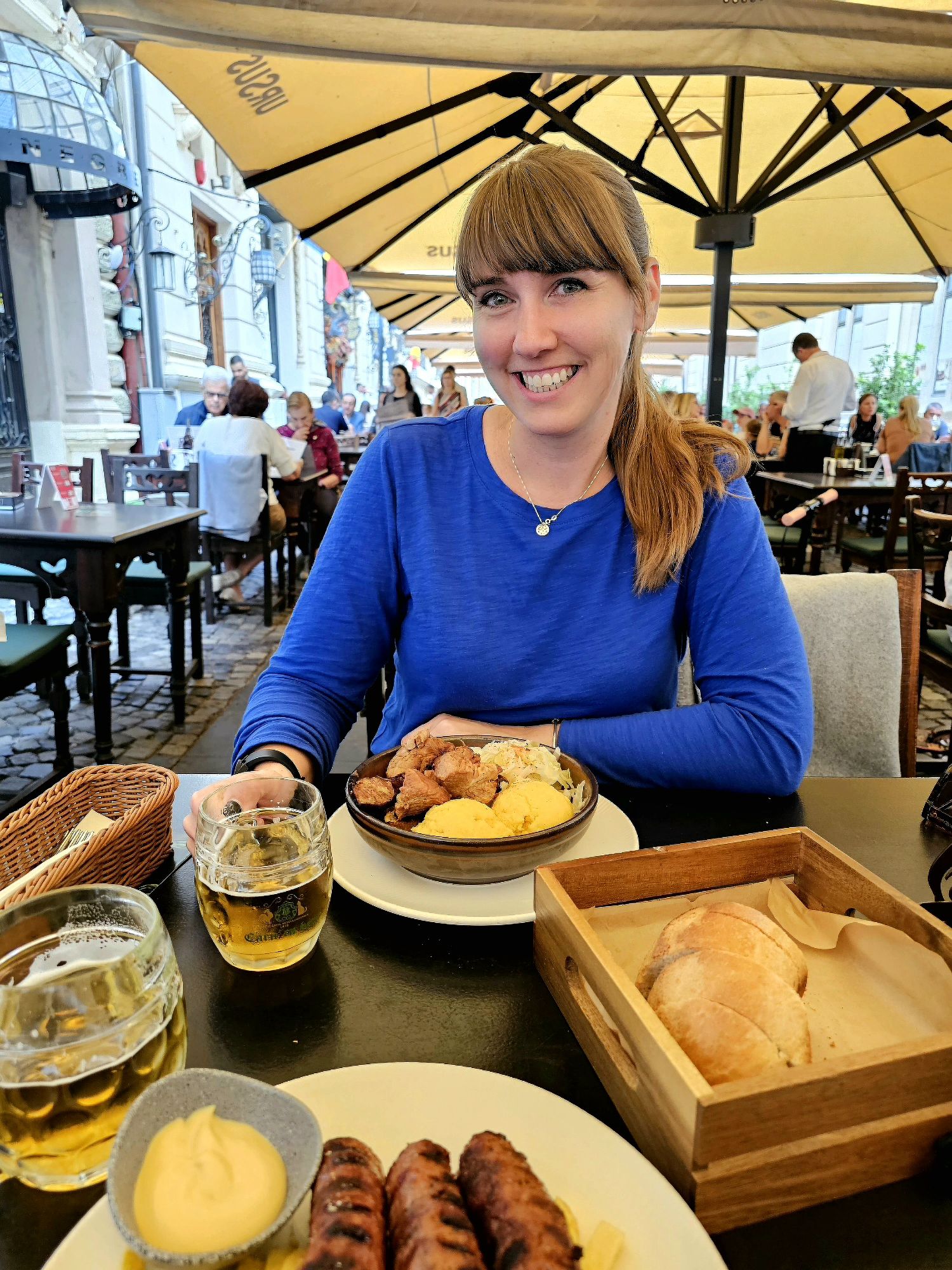
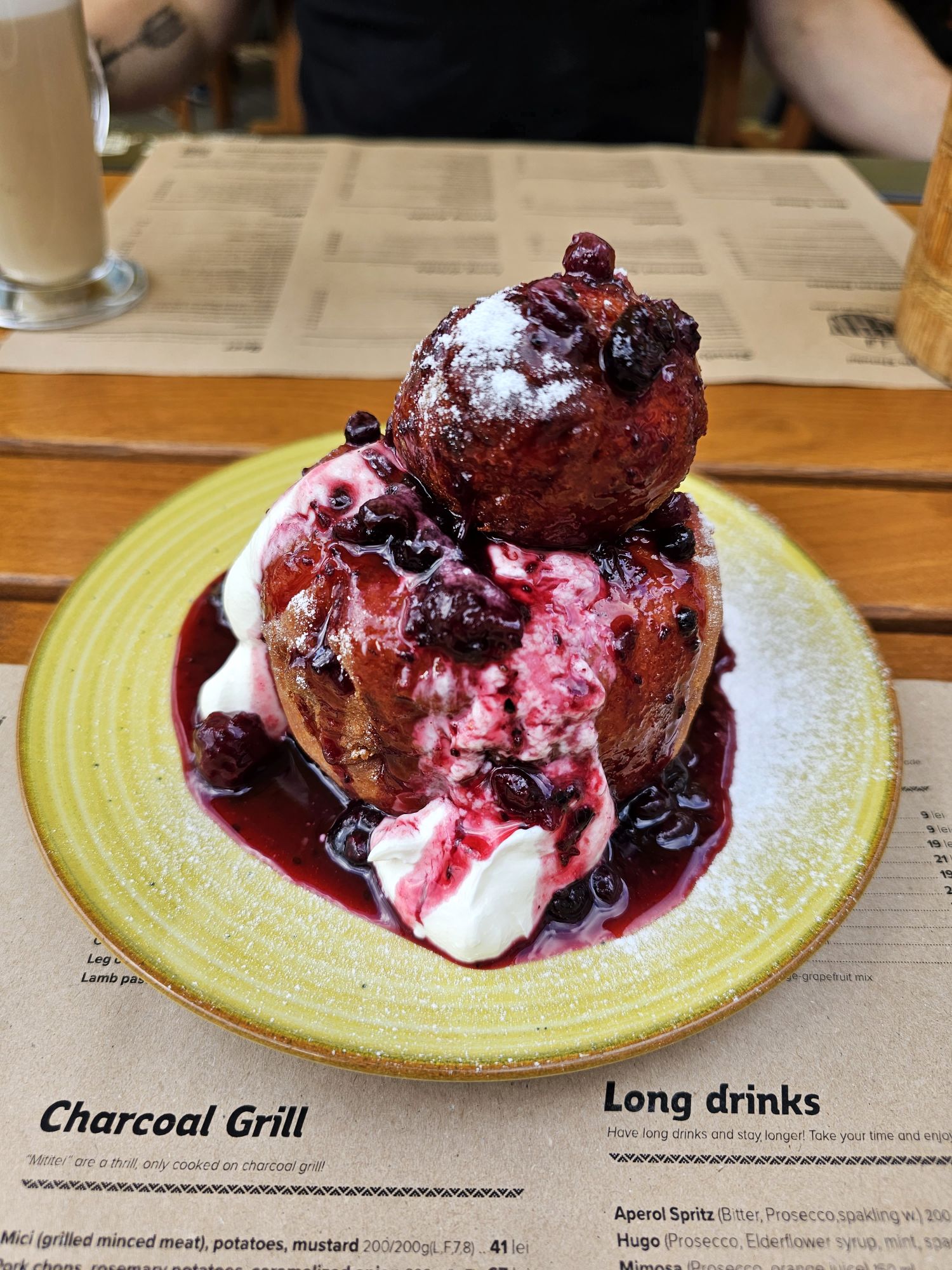
We enjoyed a pint of the beer made here and some traditional dishes, including Papanași (traditional Romanian fried doughnuts made with cottage cheese and topped with smetana and jam). So good!
We needed a few more hours here to make it to the Palace of the Parliament and the Roman Athenaeum, but we had a train to catch to Brasov, so we spent the last bit of time wandering around the beautiful streets of Old Town Bucharest before heading out.
Info
Train from Bucharest Henri Coandă International Airport to Bucharesti Nord Station 5 RON 20-25 mins
Subway system is convenient and easy to navigate. 2-ride ticket is 6 RON
As a huge Halloween fan, Bran Castle and Romania’s Transylvania region has been on my travel list for years.
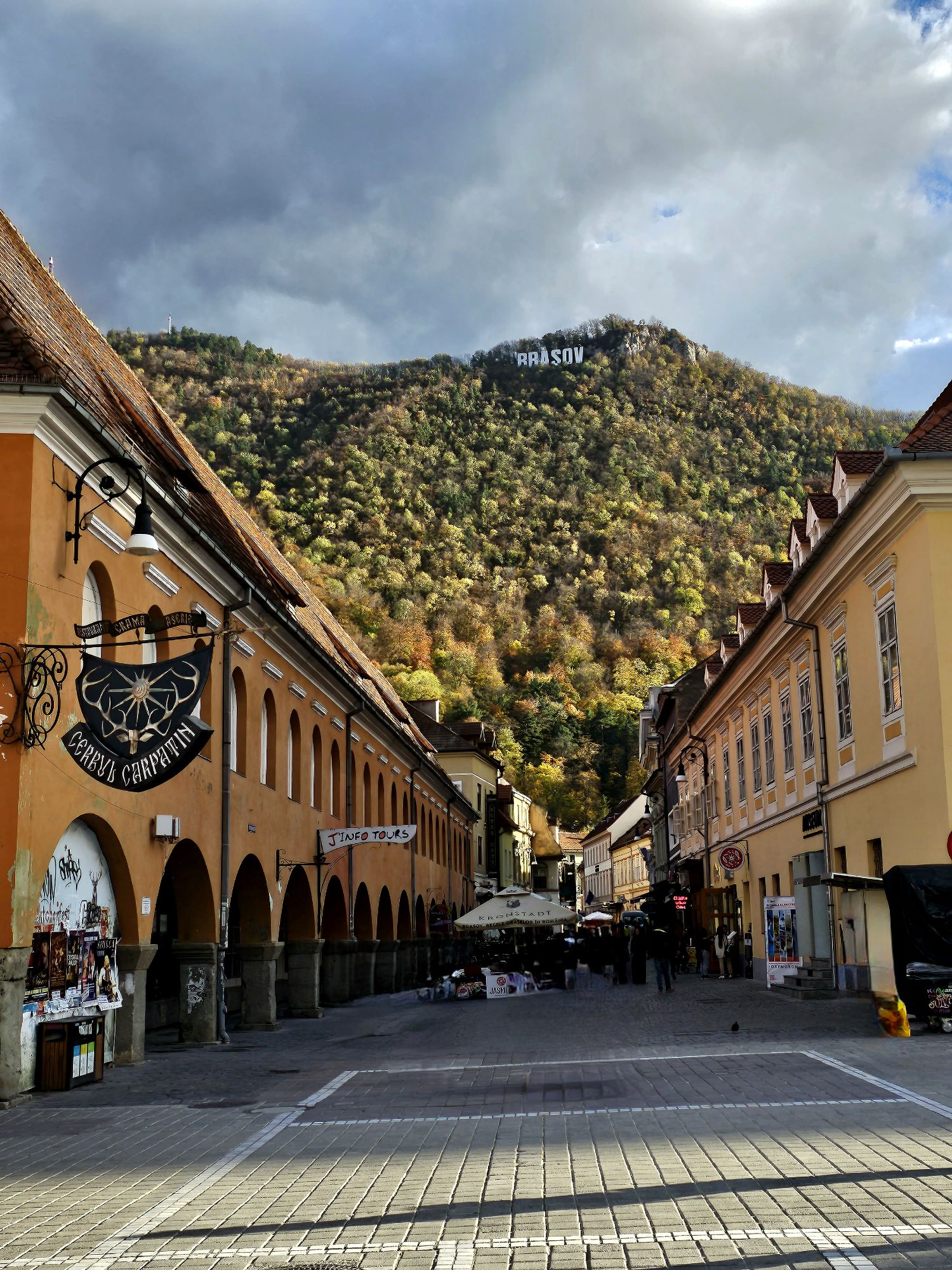
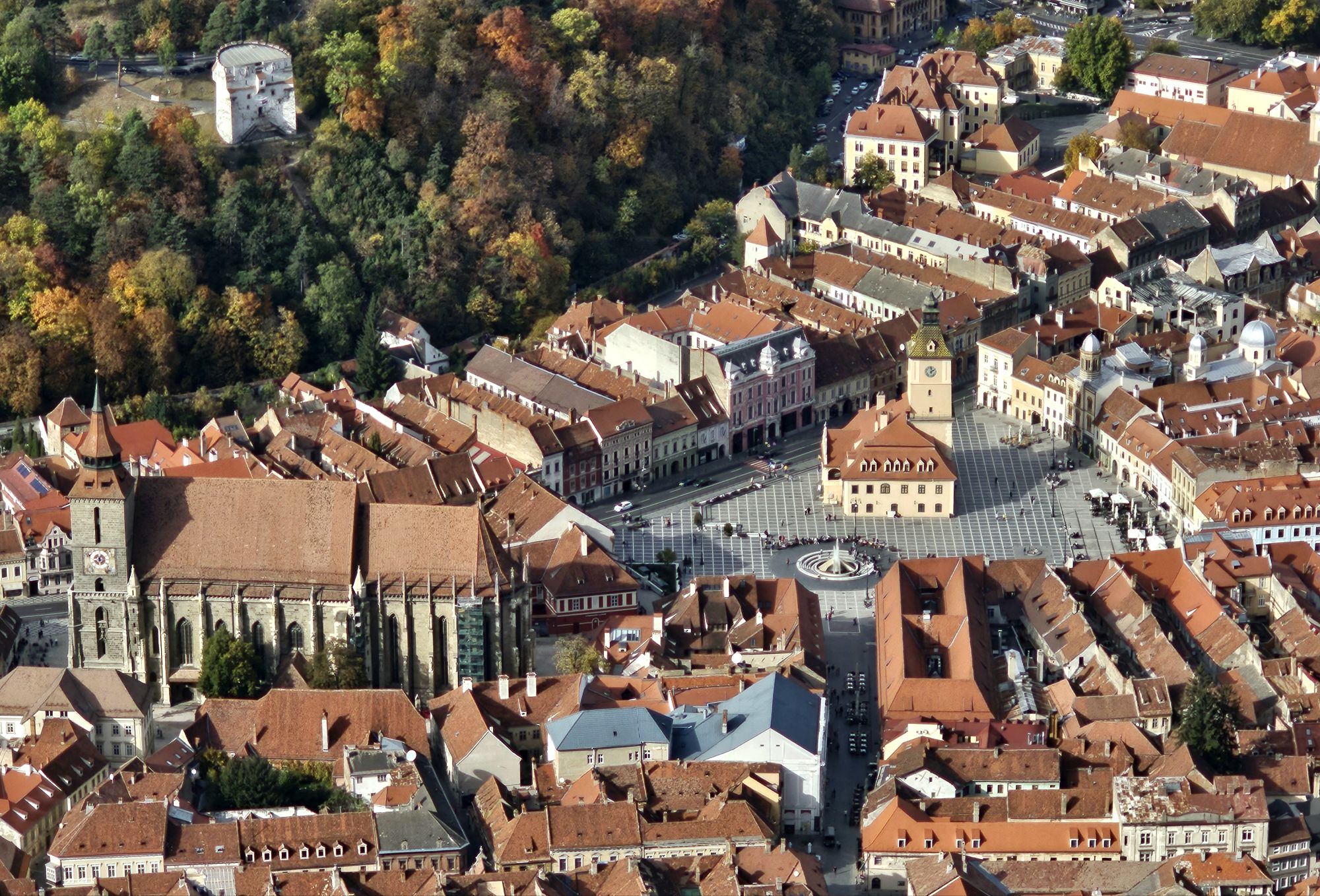
Arriving in Brasov’s Old Town, I immediately fell in love. This, to me, is exactly what a medieval European city should look like. Ringed by the Carpathian Mountains and filled with cobblestoned streets, medieval walls and colourful baroque buildings, Old Town looks like something out of a fairy tale.
Brasov was founded by the Teutonic Knights in 1211 and was settled by the Saxons in the 13th century, becoming one of Transylvania’s seven walled citadels. Brasov’s location became an important intersection, linking trade routes between the Ottoman Empire and Western Europe.
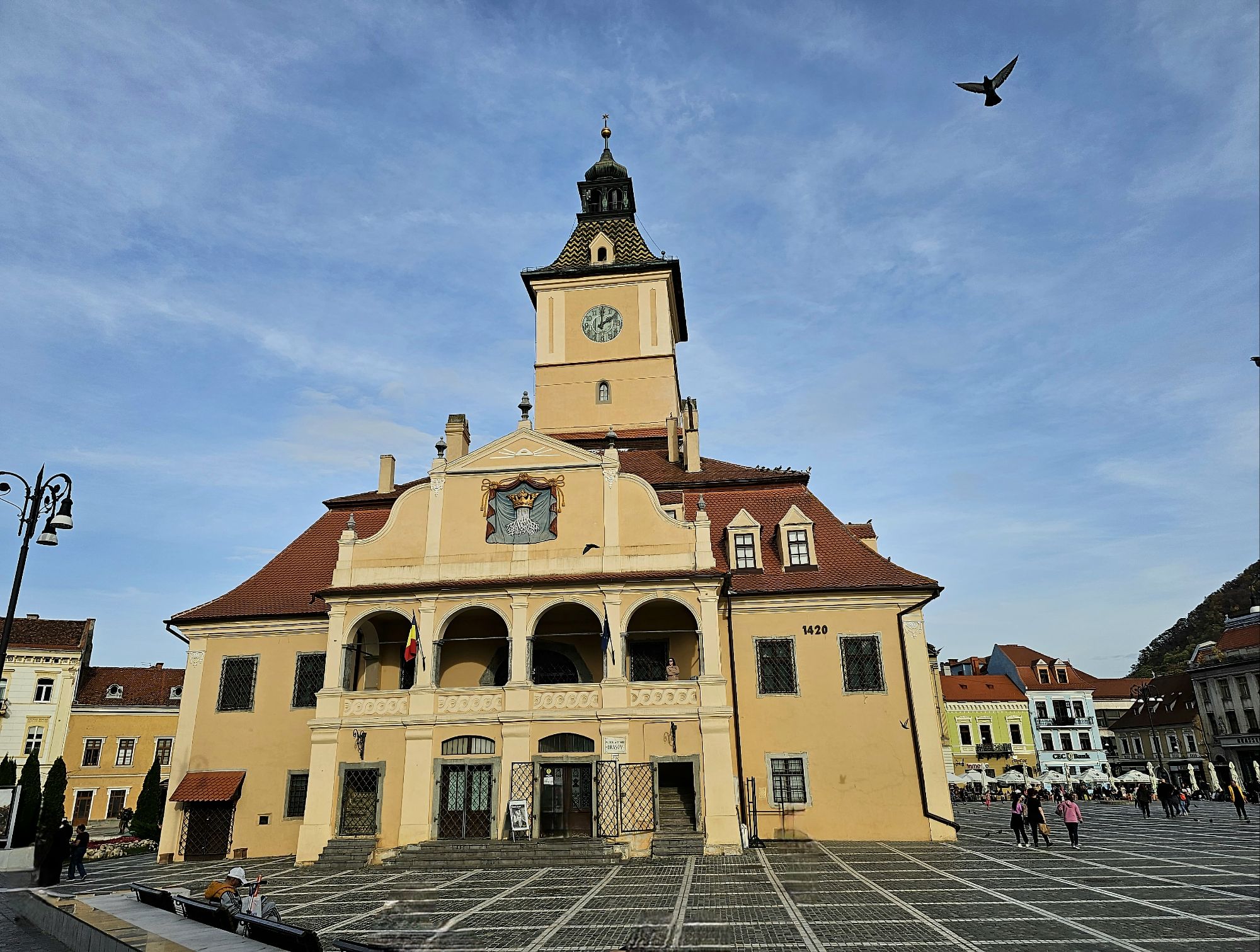
Our hotel, Casa Wagner, was located in Brasov’s main square, Piaţa Sfatului (Council Square), a large open area where medieval markets were held.
The hotel was originally built in 1477 and is the third oldest building located in the square that is also filled with shops, restaurants, and cafes, with Brasov Old Town Hall found in the centre.
Built in 1420, Casa Sfatului was the meeting place for the town’s council members for several centuries. Today, it is home to Brasov’s History Museum.
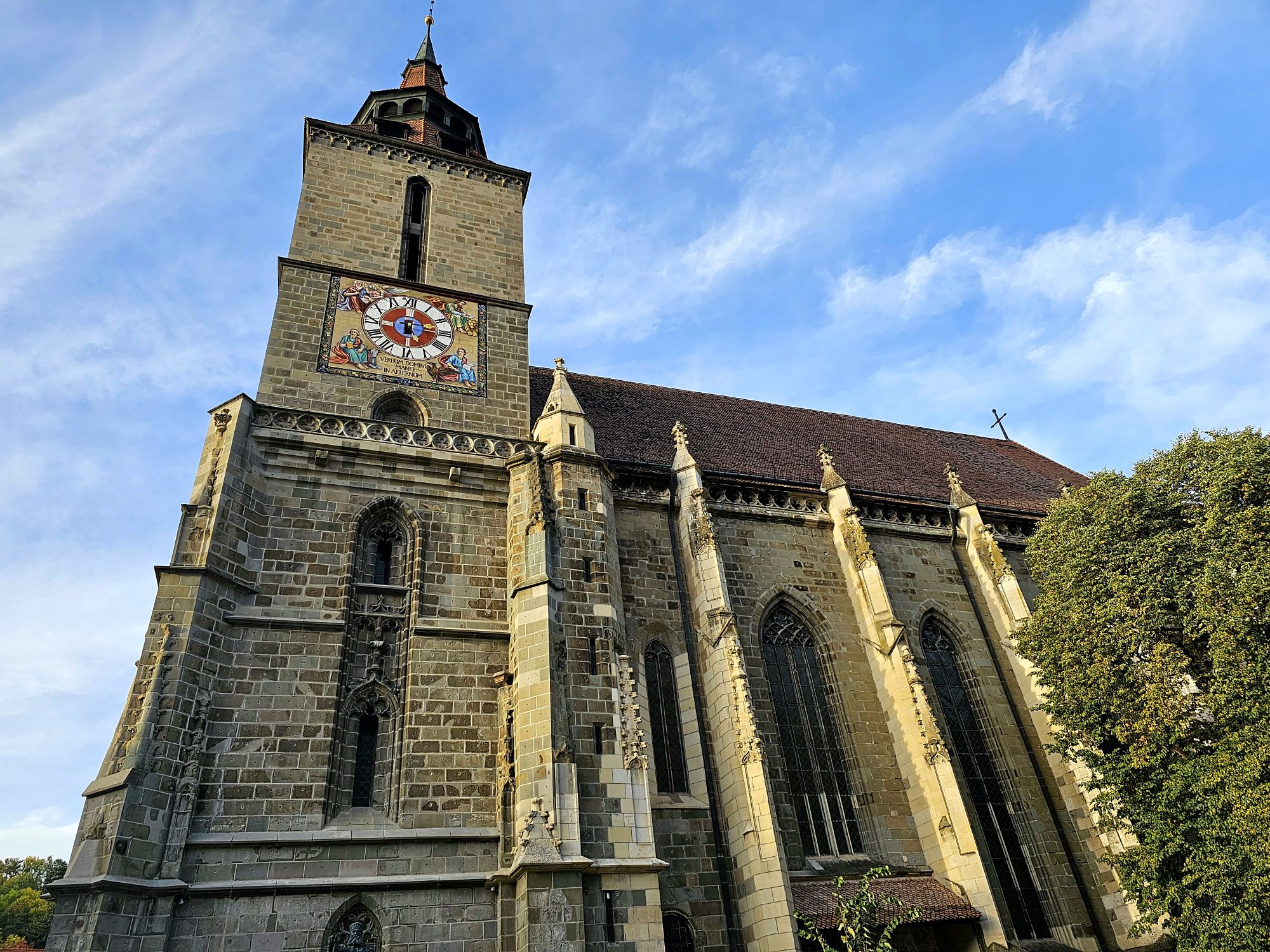
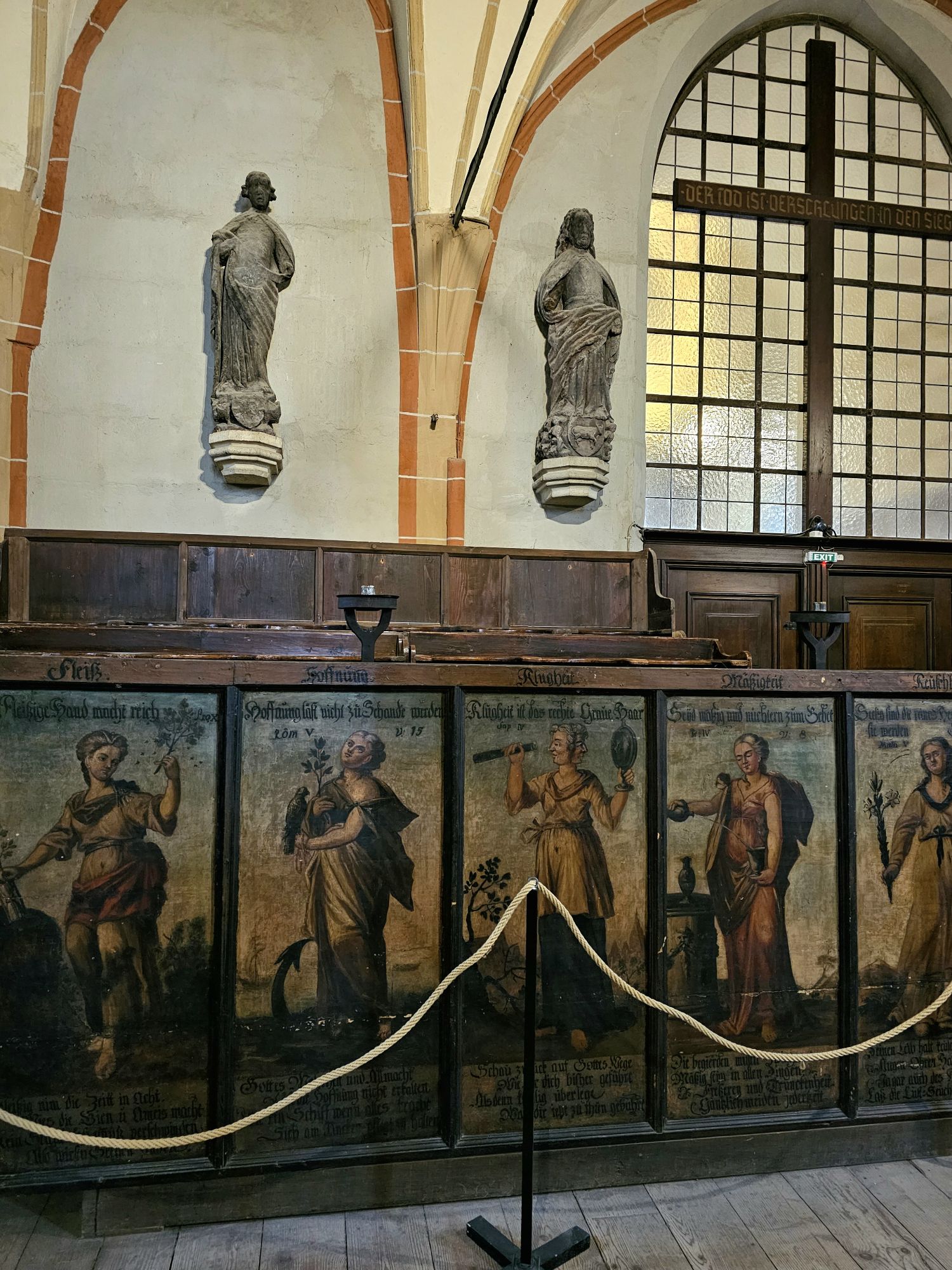
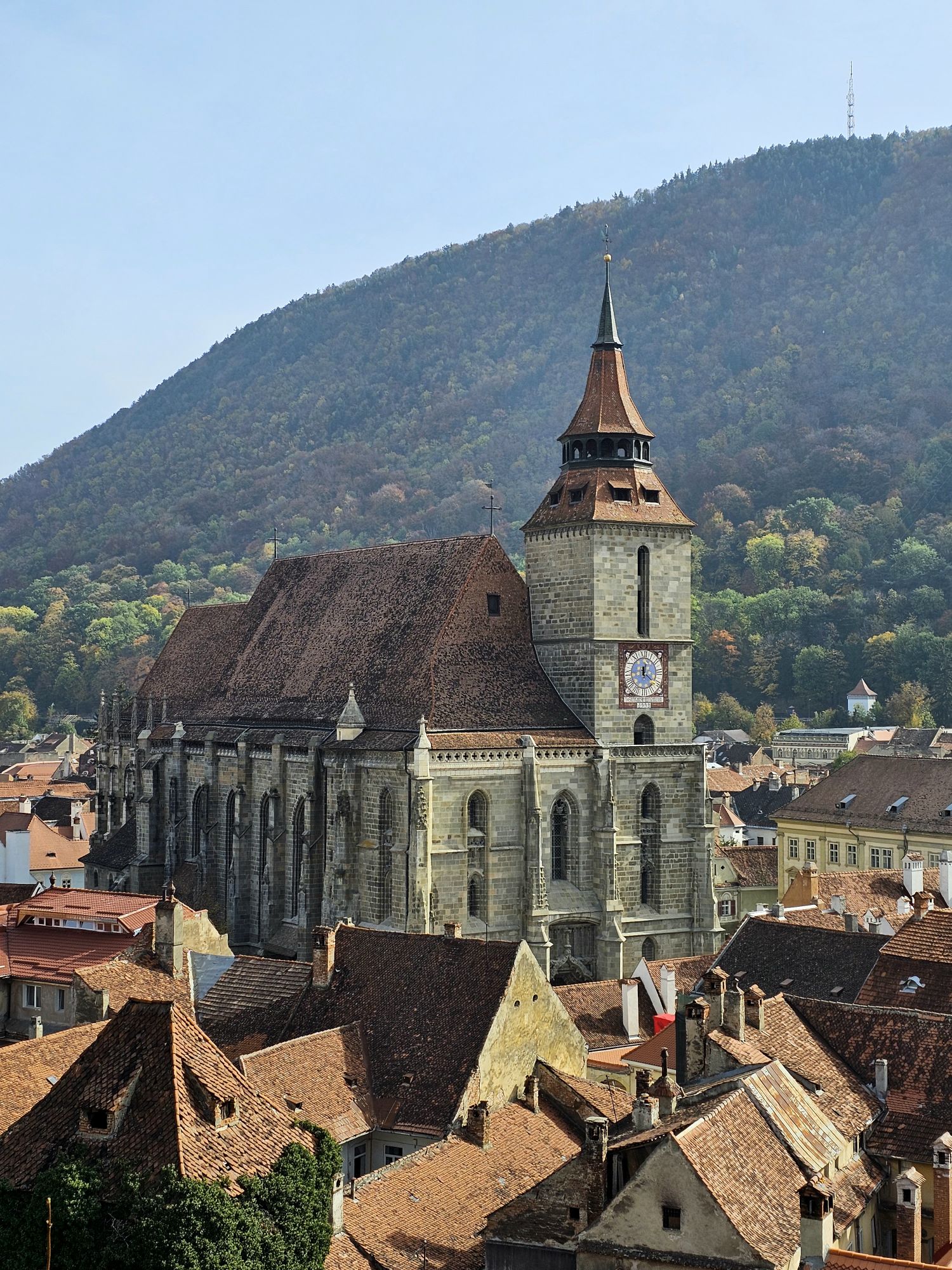
Just south of Council Square is the Black Church, the largest gothic structure in Romania and one of Brasov’s most famous sites. The church got its name after the flames and smoke of the ‘Great Fire’ in 1689 darkened its exterior walls. The church was originally built between 1385 and 1477. After the fire, restoration took 100 years.
Today, the church is a massive structure, with beautiful stained glass and statues located all around it. The bell tower stands 65m high and is home to the largest and heaviest church bell in Romania.
The Black Church’s massive pipe organ dates from 1839. It was built by Carl August Buchholz and takes up three floors and contains 3993 pipes! This massive organ still functions and concerts are performed several times a week.
Most of the original statues have been removed from the outer walls to preserve them and replicas have been put up in their place. You can find many of the originals inside the church. Entrance tickets can be purchased for 20 lei at the gift shop across from the church. It looks big from the outside, but once you walk through the large wooden doors, you see how truly big this church is.
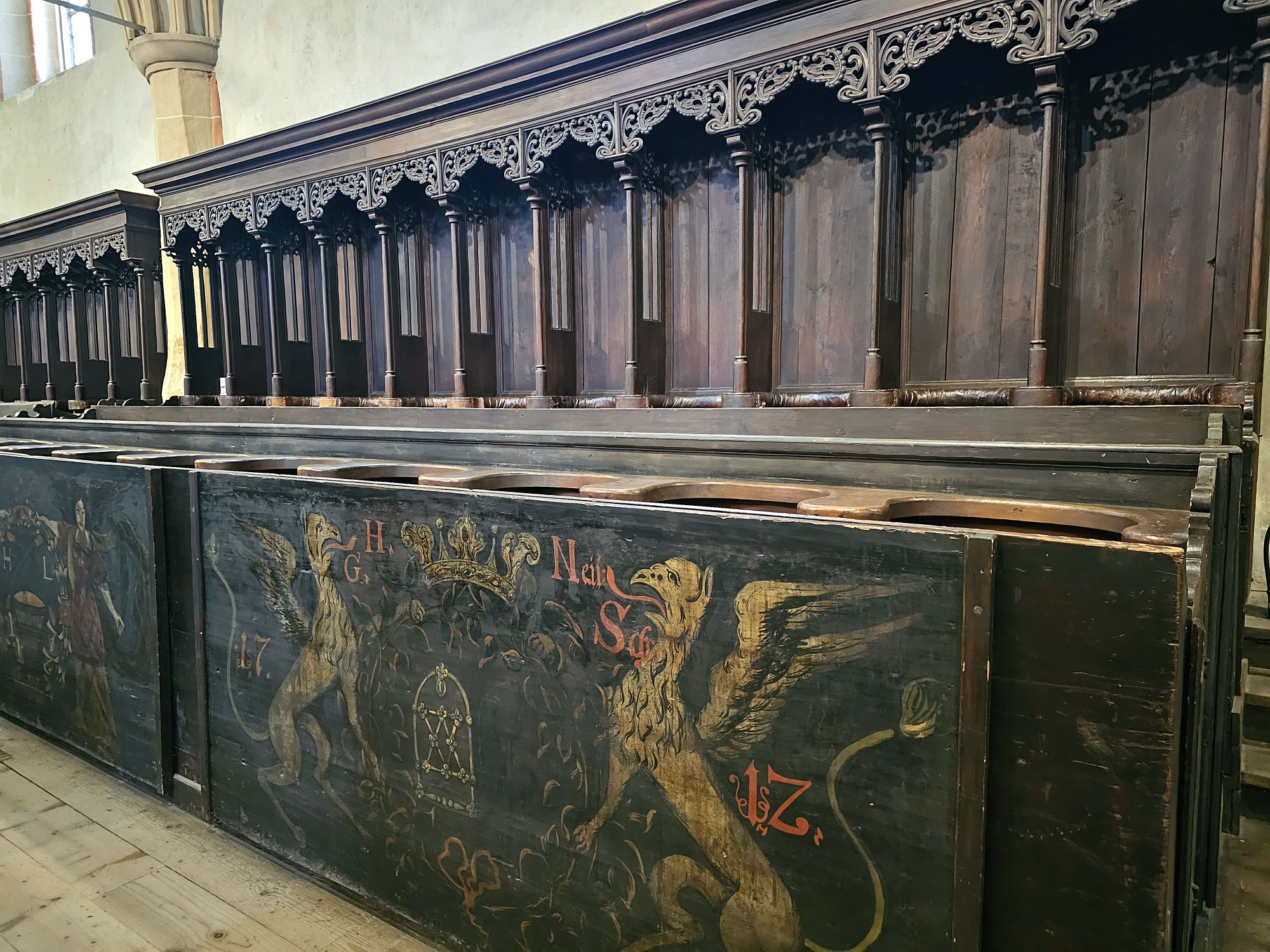
Another interesting historical piece in this church are the pews. When people first started to attend, they sat within their guilds. The more important your guild (teachers, town councillors, etc.), the closer you sat to the pulpit.
These pews were also more ornately decorated. Each guild could add carvings, paintings, ornamental elements, and symbols to represent their guild on the panel of the pew. The pews themselves were all fairly standard, except for the carpenter’s guild, who made sure to carve theirs more ornately when making all the pews. It was neat to walk around and see all the differences.
There was a small section containing tombstones with elaborate carvings of the person’s face. Apparently, this was a common thing to do among the wealthy, so they could be depicted in all their grandeur for eternity!
The various murals, paintings, and statues found throughout the church are also worth a look.
As I often do when exploring a new city, I joined up with a free walking tour to learn more about Brasov and all there was to see. We set out with our guide on a 2.5-hour walk around Old Town, where he told us lots of historic facts and local legends and pointed out the house where Vlad the Impaler’s mistress lived.
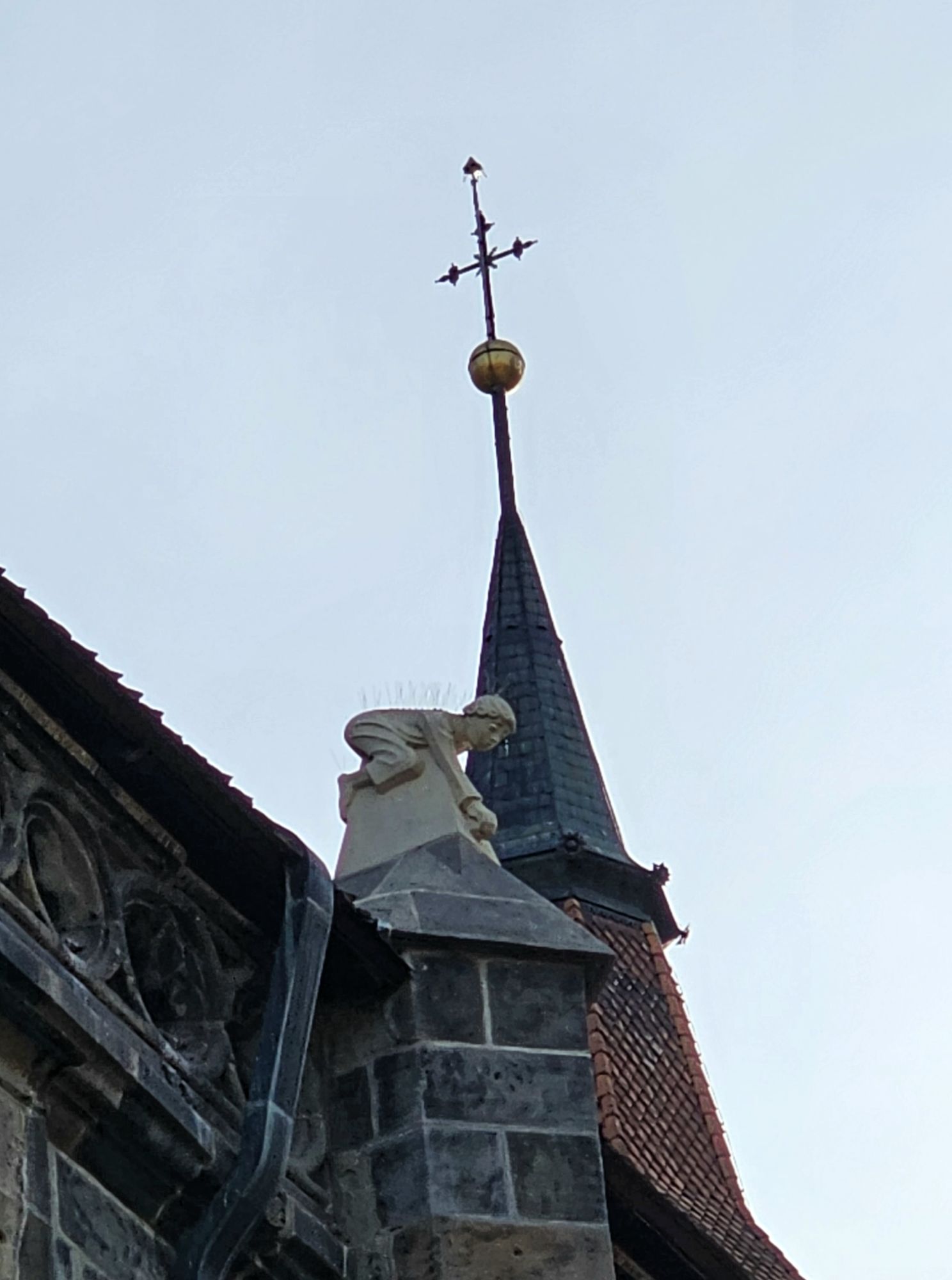
As we came to the Black Church, he pointed out one of the statues on the roof and told us how Brasov and a neighbouring city were competing to build the biggest and best church. They took this very seriously and only the master builder knew the full plan. One day, he found a little boy up on the roof looking at all they were doing. No one knew who this boy was, so they figured he must be a spy sent from the other town and he was pushed off the roof!
Now, a statue of a little boy looking over the edge can be found on the roof. Some say it was put there as a memorial; others say it’s a warning.
Rope Street, Strada Sforii, is one of the narrowest streets in Europe at 3.6 to 4 feet wide. As the houses were all connected, there was no quick way to get from one street to another, so Rope Street was used as an access route for firefighters. There is a statue of a Rope Lady at one end, pointing the way to the passage.
One legend says that Rope Street was a meeting place for lovers whose parents did not approve of their relationship, and that couples who kissed on Rope Street will forever be tied together.
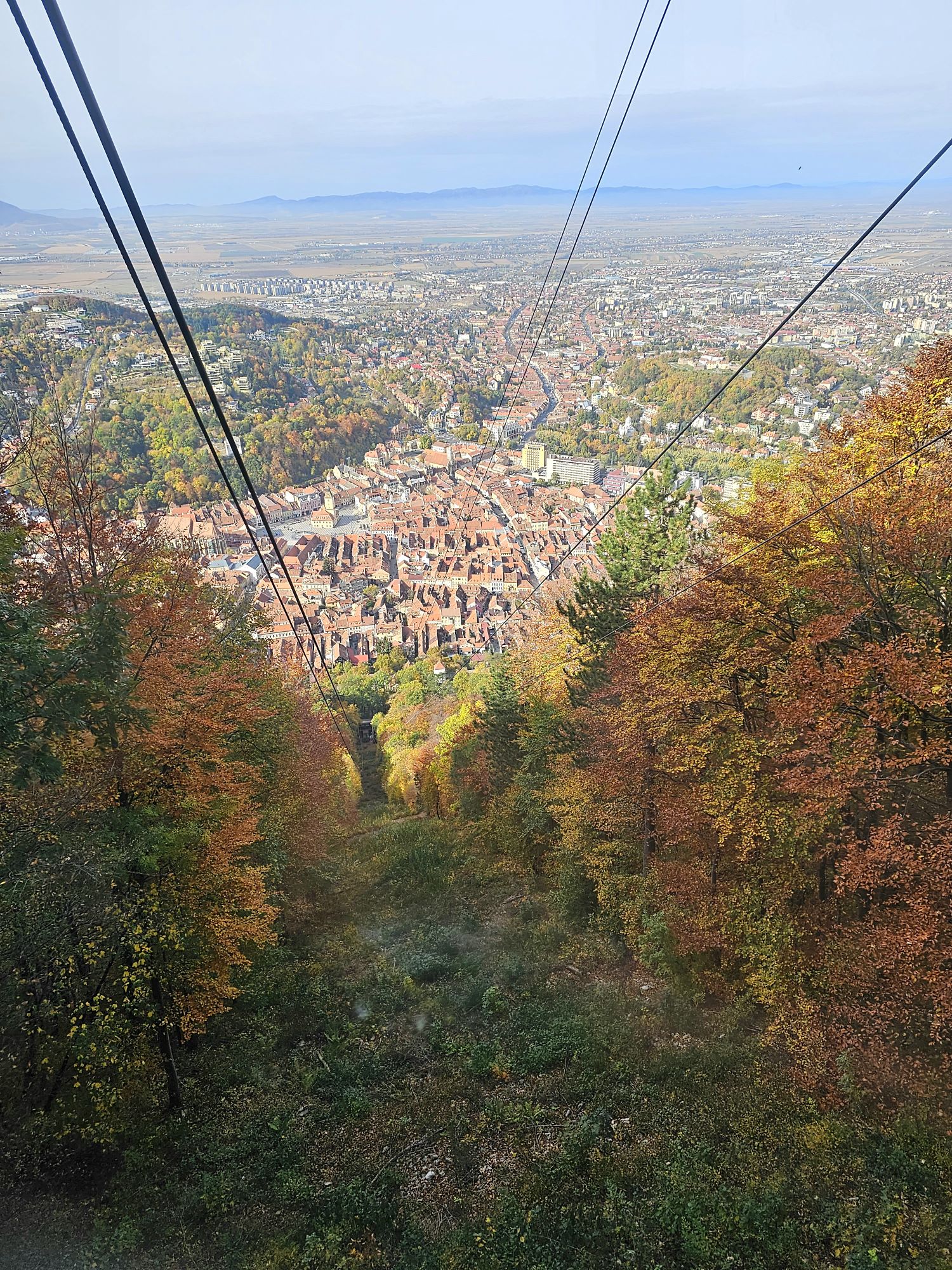
High above Brasov, in the Carpathian Mountains, is Mount Tampa. There are several different trails you can hike up the mountain or take the cable car (30 lei RT, Hours: 9:30 a.m. – 4 p.m.) to the top for a great view of the city and surrounding area.
From the upper cable car station, it’s a short walk along the path to the famous Brasov sign, where you will get the best views of the town from 955m above!
The cable car takes about 2.5 minutes to ascend to the top, and at less than $9 CAD ($6.50 USD) return, it’s definitely worth it. At the top, you will also find a small cafe and some more walking trails.
As we were there in October, all the leaves had begun to change colour, making the view even more spectacular. You could see all of Old Town, including a great view of the Black Church from above.
When Vlad Tepes (the Impaler) attacked Brasov in 1458, the citadel was destroyed and 40 merchants who refused to pay trade taxes were impaled, and displayed on top of the mountain. I much preferred the view of the fall foliage!
Catherine’s Gate, erected in 1559 by the Tailors’ Guild, is the only original gate to have survived from medieval times. During Saxon rule, Romanians weren’t allowed to own property inside the fortress and were only allowed to enter at certain times to sell their goods. They would be required to pay a toll before entering. At the time, these gates were the only way in and out of Brasov. Above the entrance, the tower bears the city’s coat of arms: a crown on a tree trunk.
Black Tower stands atop a rock on Starja Hill and is one of four defensive towers in Brasov built in the 15th century, and offers great views of the city.
Hunter’s Tower is another defensive tower in the citadel used for storing power during the Middle Ages.
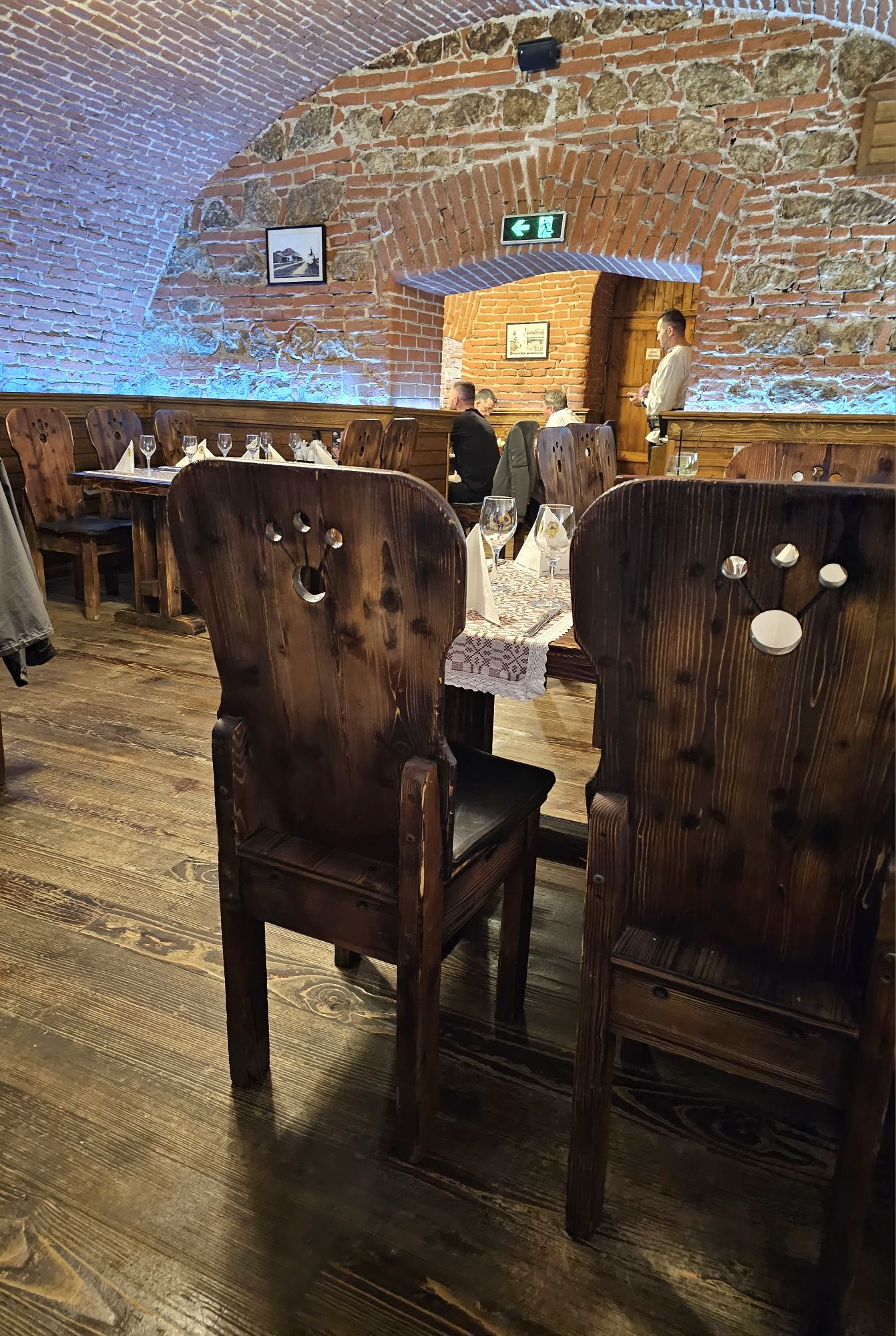
Once you’re done exploring for the day, enjoy a traditional Transylvanian dinner at Sergiana. Head down into the basement, where you will find cave-like dining rooms, servers in traditional Romanian attire, and a delicious variety of local Transylvanian dishes.
After dinner, check out Beraria Mustata for some local craft beer.
While the Council Square is great by day, be sure to check it out at night when it’s all lit up and the Hollywood style BRASOV sign is shining high up on Mt. Tampa.
And while you are in the area, a trip to Bran to see Bran Castle is a must! We spent half a day exploring Dracula’s Castle and the small town of Bran. More on that here.
Brasov is about 30 minutes from Bran. There are buses that will take you, but we found taking a Bolt or an Uber far more convenient.
Before catching our train back to Bucharest, we had to stop for one more delicious Papanași (traditional Romanian fried doughnuts made with cottage cheese and topped with smetana and jam) at La Ceaun in the main square.
Whether you are exploring Transylvania or just making your way to see Dracula’s Bran Castle, be sure to stop and explore Brasov on the way. You won’t be disappointed!
I’ve heard about Trader Sam’s Grog Grotto for years, but never made it there on any previous Disney trips. So, since we were there to celebrate my 40th birthday, I figured this was the perfect time to finally check out this Tiki hideaway.
This tropical Tiki bar is found in Disney World’s Polynesian Resort, just around the corner from the lobby.
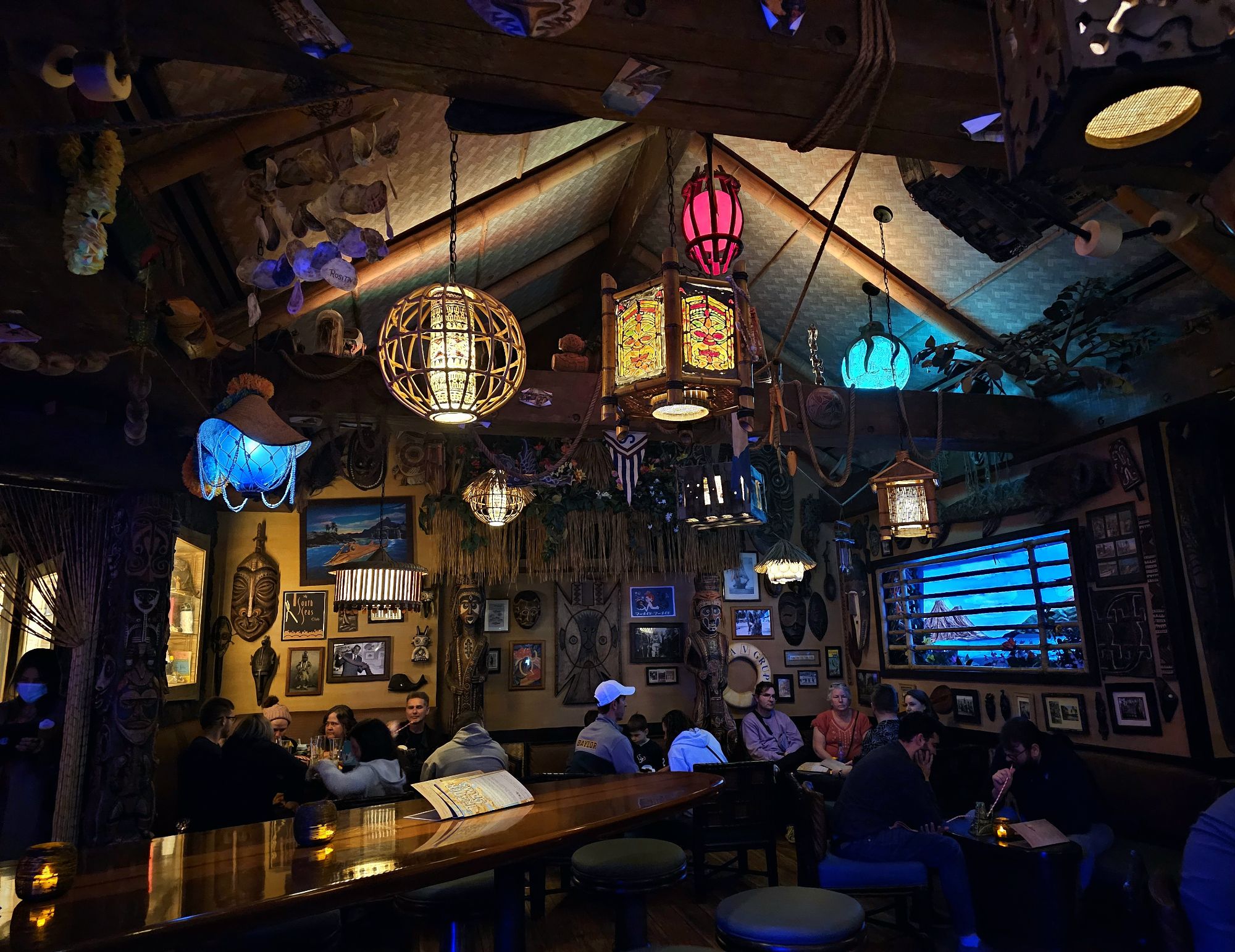
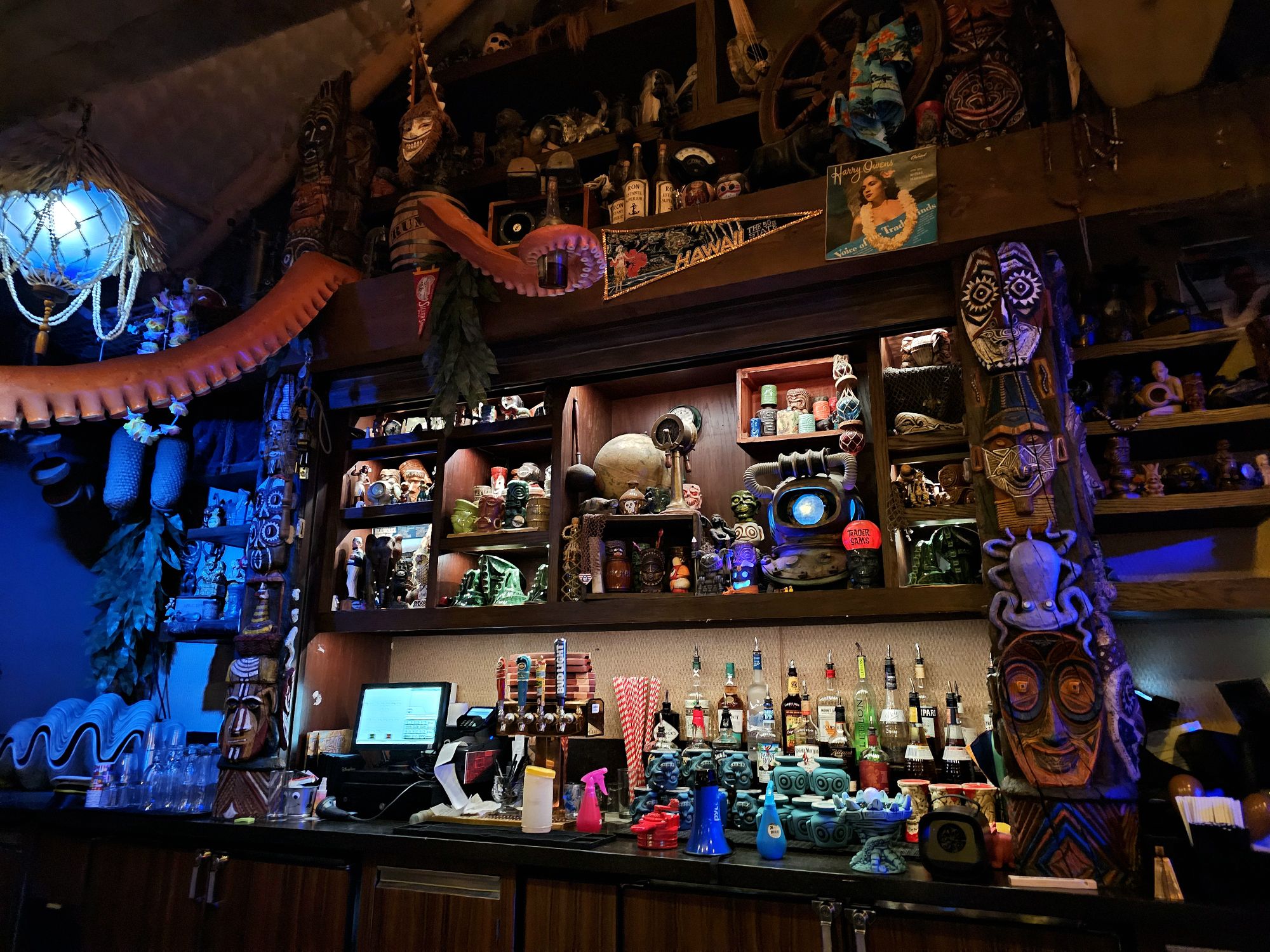
Through a plain-looking wooden door, you step into the enchanting world of the South Seas. The lounge itself is small and packed with ancient artefacts, hidden treasures, an erupting volcano, an angry Tiki god, and more covering the walls and ceiling.
The line starts around 2pm and it fills up fast, so be sure to get your name on the list right away.
When it was finally our turn, we got seats at the bar just as a thunderstorm began. The volcano erupted and everyone around us started chanting “Uh-Oa.” I immediately liked this place!
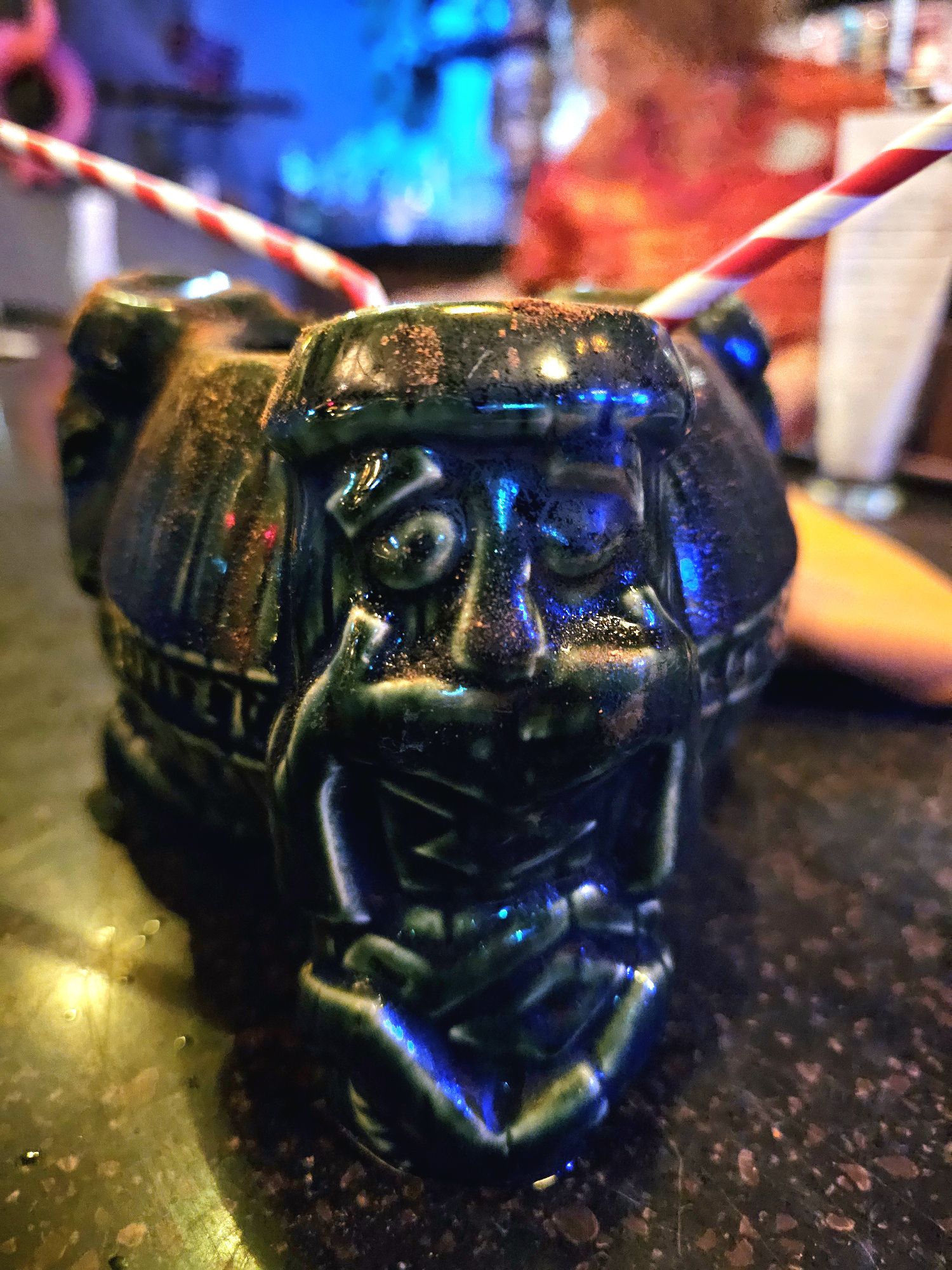
We started off with two of the drinks where you can also purchase the Tiki mug as a souvenir—the HippopotoMai-Tai and the Zombie.
The bartender, Alyssa, was amazing. She spent the next couple hours bringing great drinks and delivering bad jokes that had us laughing away. We soon learned that many of the drinks have some kind of action associated with them, from a thunderstorm, to everyone ‘swimming,’ to a little hippo coming out to visit when you order the HippopotoMai-Tai. The whole experience becomes very interactive, which only adds to the charm of this place.
The best one, however, in my opinion, is when you order the Uh-Oa, which is one you can share, and the whole bar starts chanting ‘Uh-Oa.’ Alyssa brought ours out and told us that we had angered ‘Uh-Oa’ by ordering this beverage and now we had to sacrifice it to appease her. She then lit our drink on fire and had us throw the cinnamon onto the flame to make it grow larger as we chanted her name. As this is happening, we are being sprayed with water as our sacrifice is ‘horrible’ and Uh-Oa comes out to curse us and then Alyssa stabs our drink to finalize the sacrifice. It is quite the little presentation and just made this drink even more enjoyable!
As I was looking around, I noticed a Tiki that looked like an octopus and found out it is the new limited edition blue Ursula Tiki mug that comes with a drink called Sign the Scroll (Kraken Black Spiced Rum, Royal Blue Curacao Liqueur, red passion fruit, and pomegranate juice and topped with an edible flower).
As The Little Mermaid is my favourite Disney movie, I of course needed to add this to the collection of Tiki mugs we were now taking home! The drink was delicious, probably my favourite of the night and so pretty to look at!
They have a great selection of drinks on the menu, but be sure to ask about the selection of drinks they have off the menu, like the TK-421 from Star Wars.
While it is mainly a bar, you will find a small selection of appetizers as well, like the Thai Chicken Flatbread, which was very tasty.
If, like me, you’ve missed the little spot of paradise on your previous Disney trips, I would highly recommend putting it on your must-do list on your next Disney adventure!


























































































































 Tales of a Travel Addict
Recent Comments